
Film Narrative Plot Scene Construction FILM NARRATIVE A


- Slides: 24
Film Narrative Plot & Scene Construction
FILM NARRATIVE A chain of events in a cause-effect relationship, occurring in time and space.
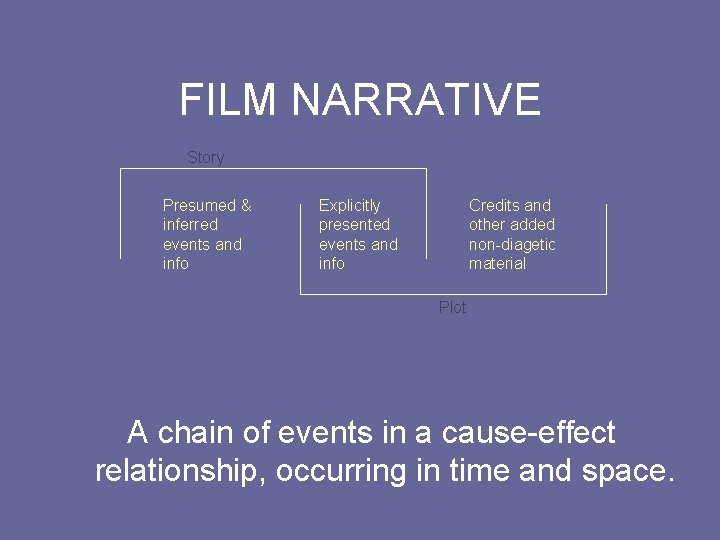
FILM NARRATIVE Story Presumed & inferred events and info Explicitly presented events and info Credits and other added non-diagetic material Plot A chain of events in a cause-effect relationship, occurring in time and space.
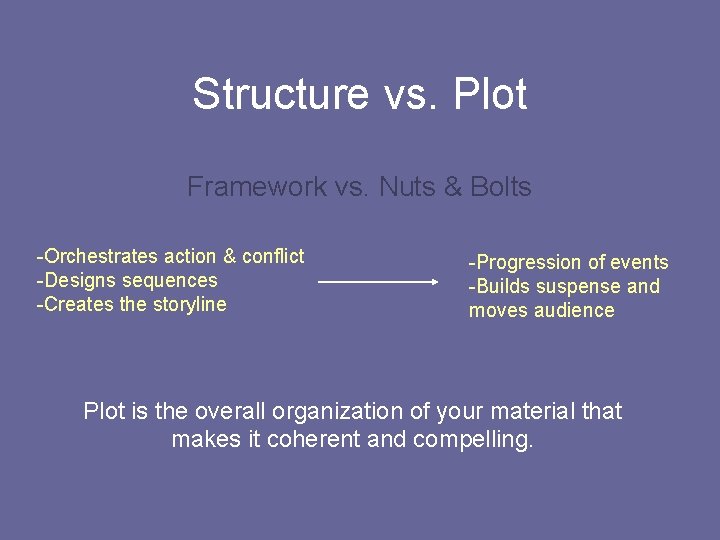
Structure vs. Plot Framework vs. Nuts & Bolts -Orchestrates action & conflict -Designs sequences -Creates the storyline -Progression of events -Builds suspense and moves audience Plot is the overall organization of your material that makes it coherent and compelling.
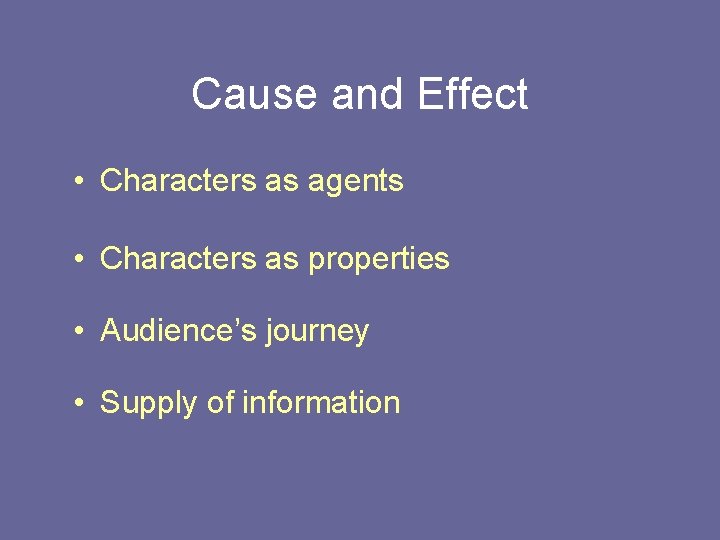
Cause and Effect • Characters as agents • Characters as properties • Audience’s journey • Supply of information
Cause and Effect Screenwriters build strong casual relationships through: 1. Cause & effect relationships between scenes 2. Rising conflict 3. Foreshadowing conflict
TIME As film spectators, we construct story time on the basis of that the plot presents. In Medias Res: in the middle of things The viewer speculates what went on before based on plot cues.
Time Construction The viewer considers these temporal factors: - Temporal Order - Temporal Duration - Temporal Frequency
SPACE The visible space between the frame is called screen space. Story space includes screen space and other locales that are spoken of, but never seen.
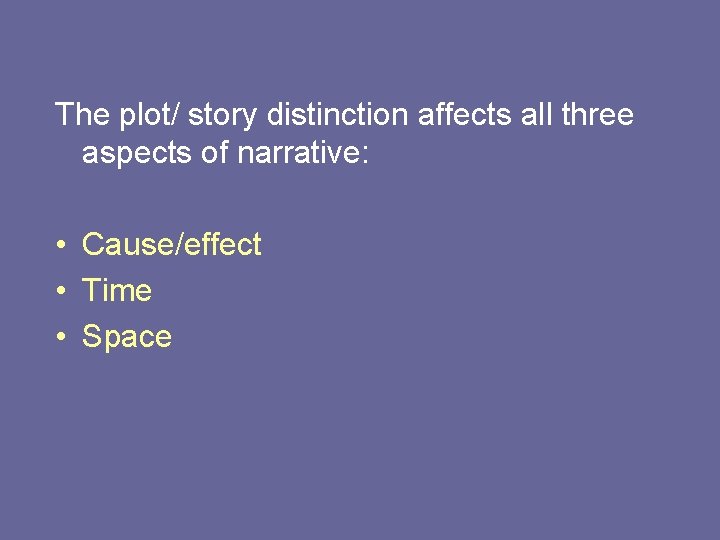
The plot/ story distinction affects all three aspects of narrative: • Cause/effect • Time • Space
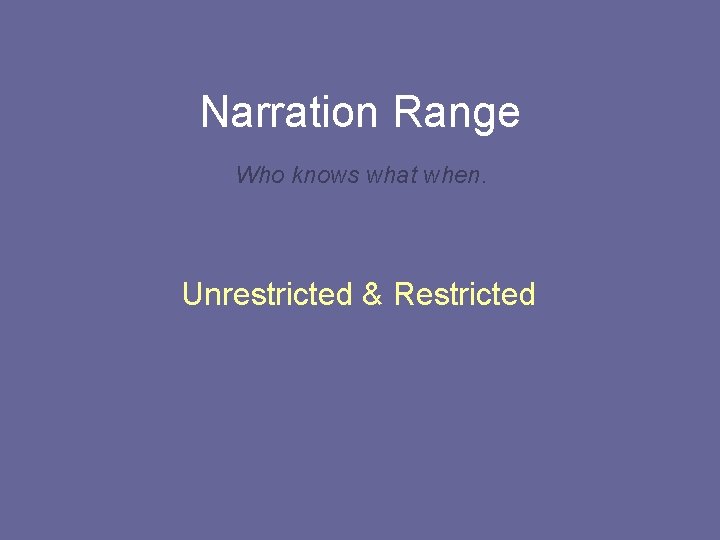
Narration Range Who knows what when. Unrestricted & Restricted
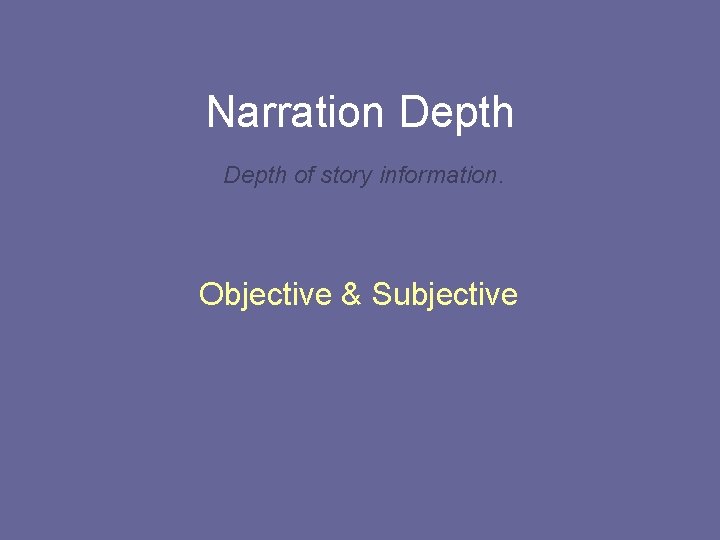
Narration Depth of story information. Objective & Subjective
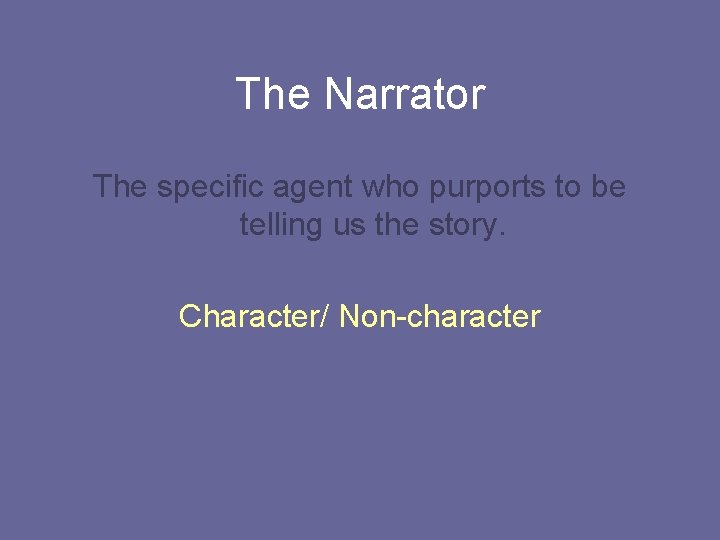
The Narrator The specific agent who purports to be telling us the story. Character/ Non-character
SCENES Screenplays are constructed from scenes, building and falling from a story climax. Scenes are UNITS OF ACTION: a single event or exchange between characters with a unity of time and place.
Units of Action Must accomplish one of three goals: 1. Advance the flow of events toward its inevitable conclusion 2. Advance the audience’s understanding of the main characters by illuminating them through behavior 3. Advance the audience’s understanding of the overall story by providing expository information.
Patterns of Development • Change in knowledge • Goal-oriented plot • Search or investigation • Journey
The Principals of Construction A character starts at a definite place or with a definite understanding of the dramatic situation. At the end of the scene, that character or another is in a slightly different place or has furthered his understanding of the conflict. One main point per scene!
Scene Progression The button: the point when the substance or action in a scene begins. Enter the scene at the latest moment possible.
Goals and Objectives Scene subtext: What the character needs in a scene/ what’s going on beneath the surface words and actions.
Techniques for Construction 1. 2. 3. 4. Who is in the scene? Where does it take place? What do the characters want in the scene? What do they need (the subtext in the scene)? 5. What are their attitudes? 6. Where is the conflict or tension coming from?
Think VISUALLY • If you didn’t have dialogue, how would you communicate the important idea of a scene? (meaningful action) • Have you seen this type of scene done before, and how can you do it differently?
Business The personal actions of a character/ what they occupy themselves with while alone or interacting with others.
HUMOR • Should be organic to the situation and not merely be an excuse to be funny. • Relieves emotional intensity and simultaneously heightens the seriousness or tragic implications of the action.
Comedy • • Exaggeration Depiction Overstatement Understatement Contrast Parody P. O. V. Obsession Suspense • • Create conflict Provide opposition Build expectation Increase tension Use surprises Create immediacy Establish consequences • Limit time • Maintain doubt