
Film Form All Art must have a form
- Slides: 24
Film Form • All Art must have a form. • Something to structure our experience. • What might a formless film be like? • What then is film form?
Film Form • Combination of all Narrative and Stylistic elements. • Examples of stylistic elements? • Narrative elements? • All of these elements serve a purpose and work together-body/car model. • Form is not opposite of content.
Form requires a Viewer • The other side of the equation is “us”: the audience • “We” come to the film with • a. expectations • b. experience • c. we search for meaning/we interpret
A. Form and Expectations • 1 st-We expect film to HAVE a form or order • We enjoy patterns-a minor element reappears, a joke repeats • 2 nd We have expectations about a particular film before we see it • Or when it starts with……
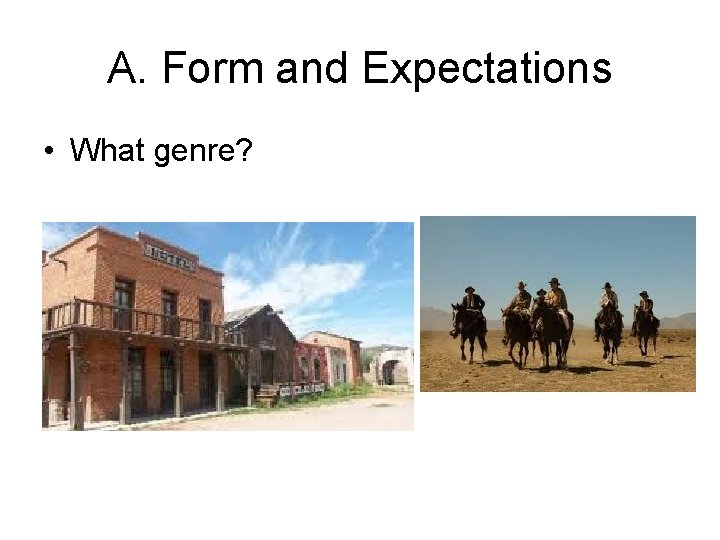
A. Form and Expectations • What genre?
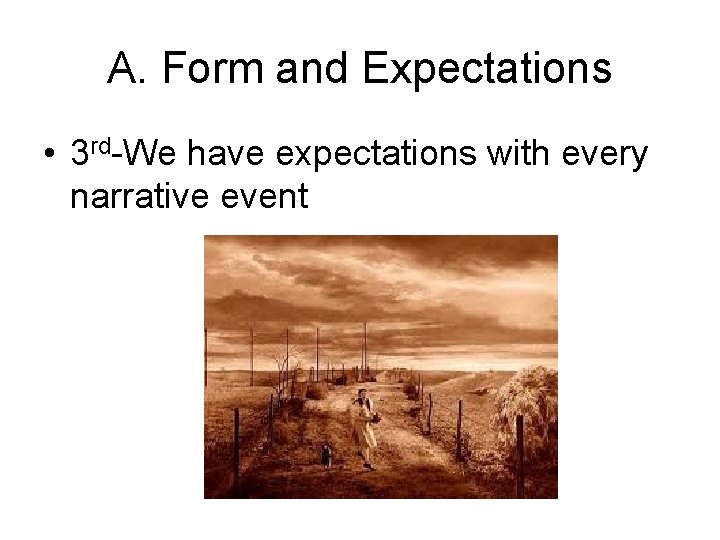
A. Form and Expectations • 3 rd-We have expectations with every narrative event
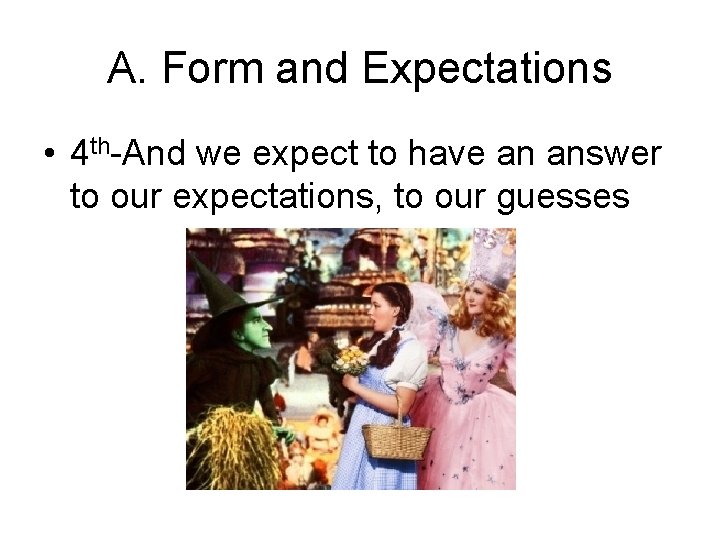
A. Form and Expectations • 4 th-And we expect to have an answer to our expectations, to our guesses
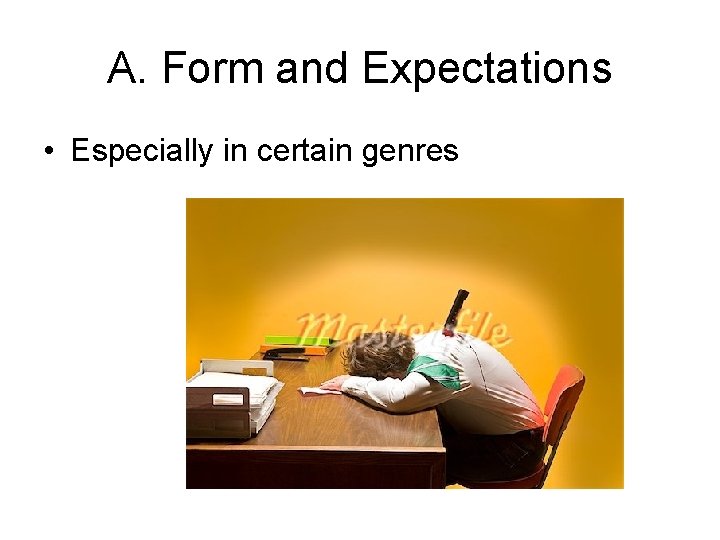
A. Form and Expectations • Especially in certain genres
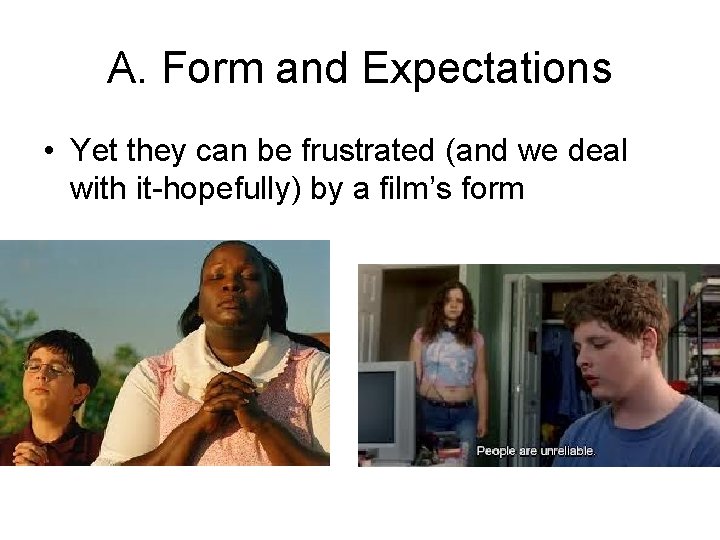
A. Form and Expectations • Yet they can be frustrated (and we deal with it-hopefully) by a film’s form
B. Form and Experience • Our experience with movies and their conventions also guides our expectations. • With narrative conventions-the opening will set up the plot, closure • Genre conventions-People will burst into song in a musical, car chase in action film
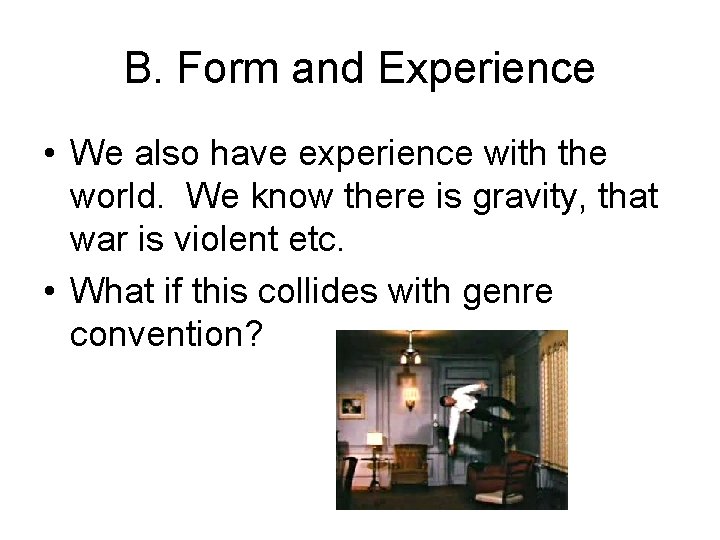
B. Form and Experience • We also have experience with the world. We know there is gravity, that war is violent etc. • What if this collides with genre convention?
Principles of Film Form • • • 1. Function 2. Similarity and Repetition 3. Difference and Variation 4. Development 5. Unity & Disunity The 5 are key to overall understanding of film form
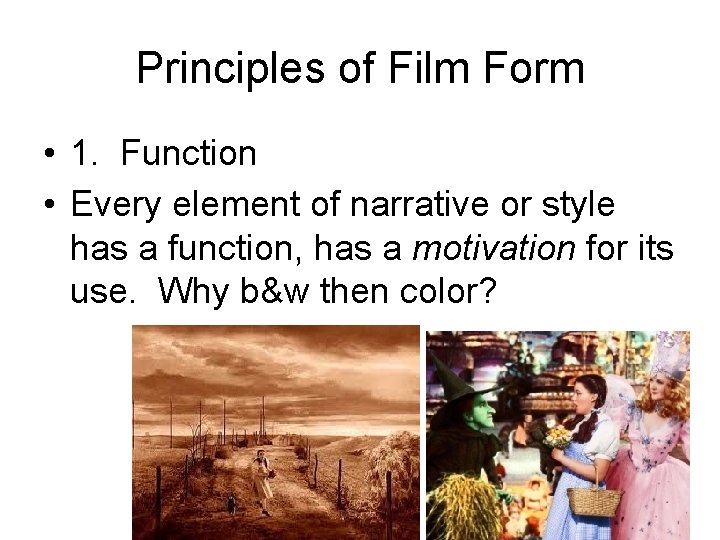
Principles of Film Form • 1. Function • Every element of narrative or style has a function, has a motivation for its use. Why b&w then color?
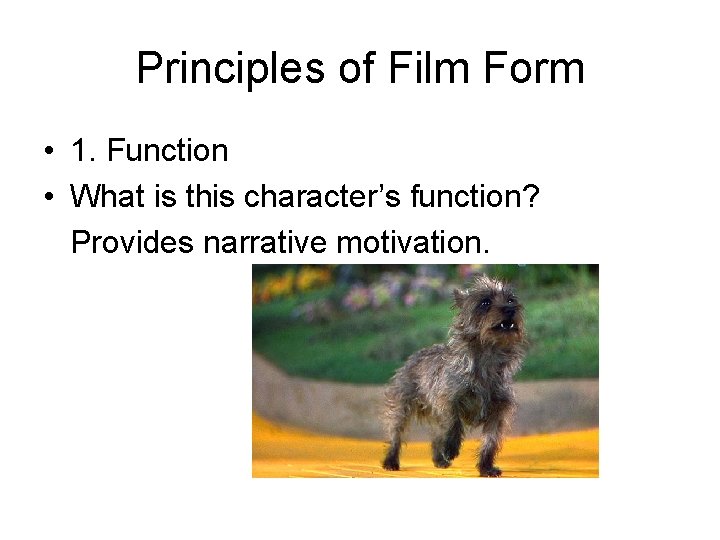
Principles of Film Form • 1. Function • What is this character’s function? Provides narrative motivation.
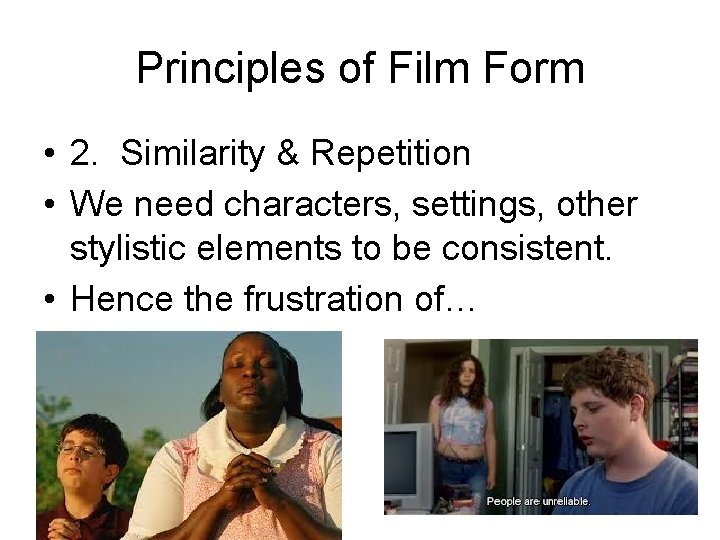
Principles of Film Form • 2. Similarity & Repetition • We need characters, settings, other stylistic elements to be consistent. • Hence the frustration of…
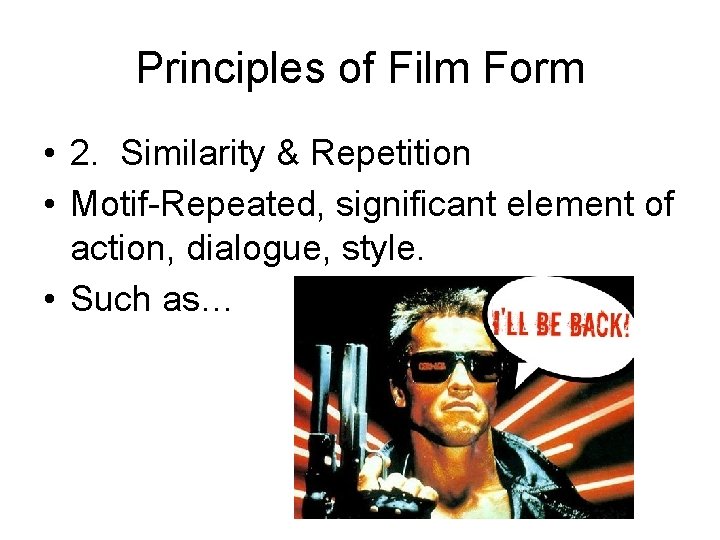
Principles of Film Form • 2. Similarity & Repetition • Motif-Repeated, significant element of action, dialogue, style. • Such as…
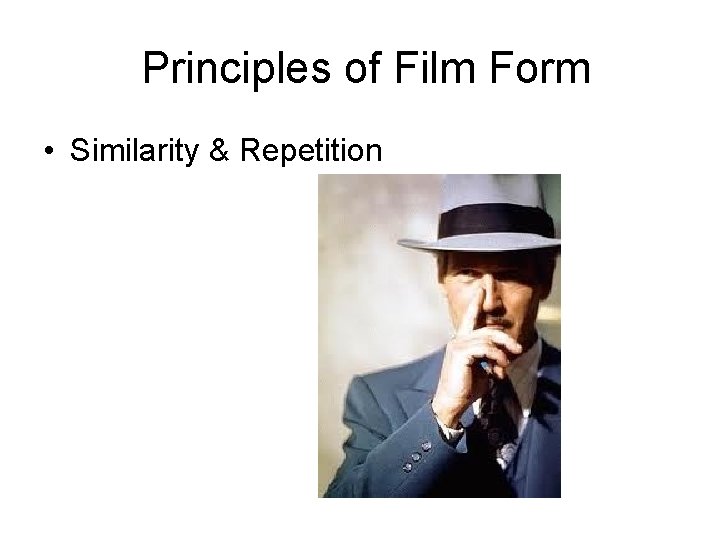
Principles of Film Form • Similarity & Repetition
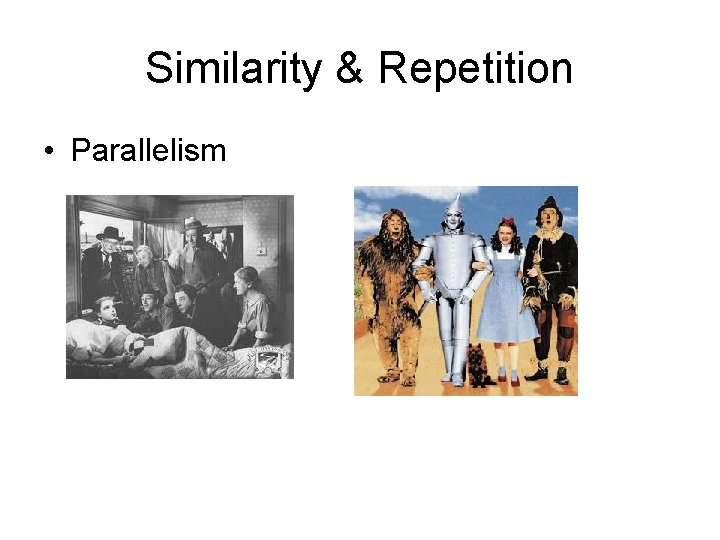
Similarity & Repetition • Parallelism
Principles of Film Form • 3. Difference and Variation • The characters aren’t exactly parallel in Wizard of Oz. They are different. • Obviously things change in a film. Settings might change, characters might die, disappear. • Even style can change-b&w to color
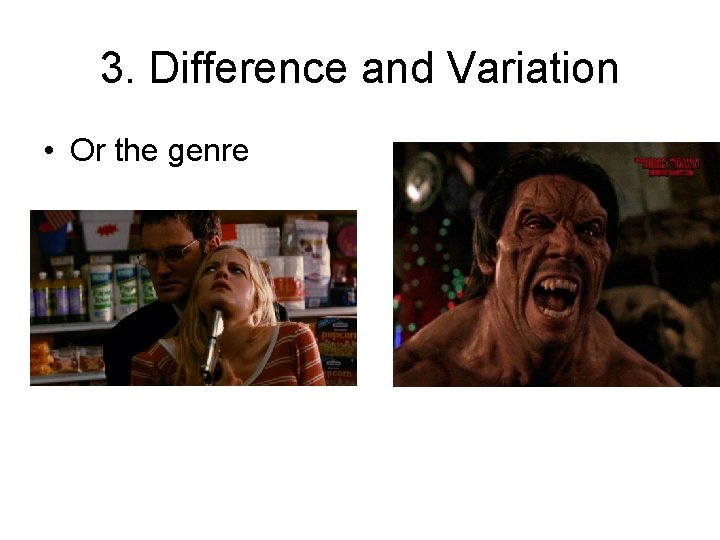
3. Difference and Variation • Or the genre
Principles of Film Form • 4. Development • How Similiarities and Differences work together? 2 + 3 = 4 • Compare first and last scenes of today’s film to compare what has developed, what has stayed the same.
Principles of Film Form • 5. Unity • At end a “tight” film ties everything up. • Yet-there’s a loose end in Wizard of Oz • The narrative and style have worked together.
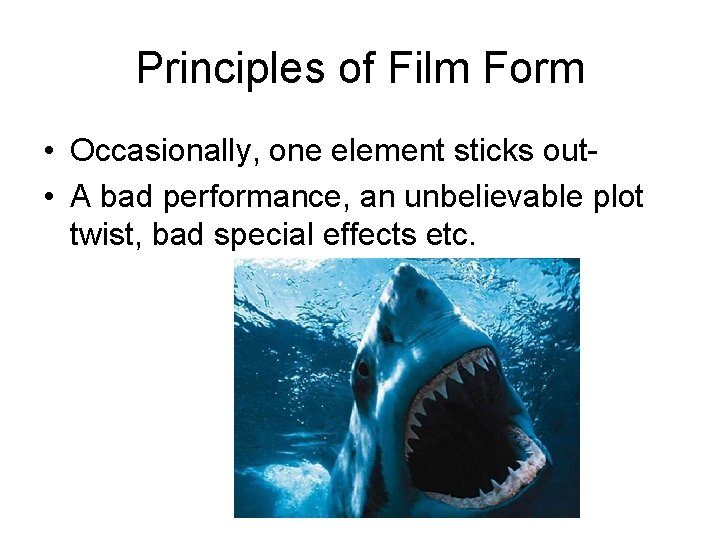
Principles of Film Form • Occasionally, one element sticks out • A bad performance, an unbelievable plot twist, bad special effects etc.
Classical Hollywood Form • • 1. Clear Story 2. Clear Time and Space 3. Clearly Developed Characters with a. Goals b. Psychology 4. Clear style 5. Narrative closure