
Figure ground segregation in video via averaging and

- Slides: 11
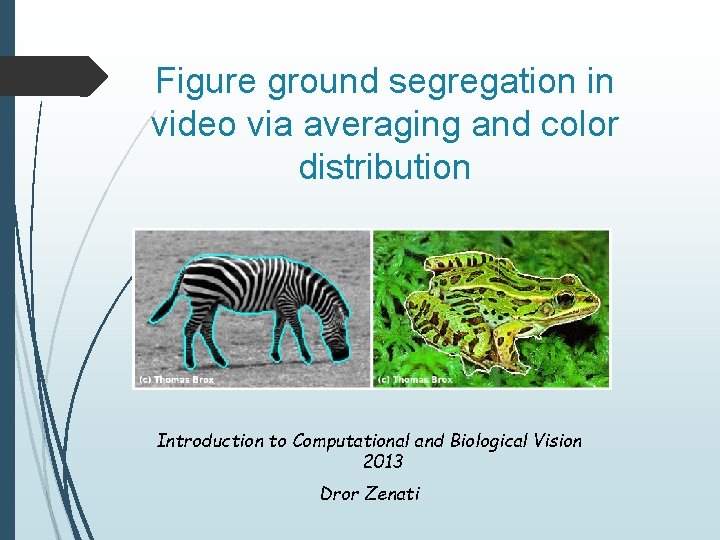
Figure ground segregation in video via averaging and color distribution Introduction to Computational and Biological Vision 2013 Dror Zenati
Introduction Motivation: q Sometimes it's quite important to be able track an object in a given video (tracking drivers in the road, identifying moving objects in night vision video etc. ) q What are the approaches for segmenting a figure from a set (>1) of images (I. e. video file)? Main goal: q To achieve a high quality of figure ground segregation (good segmentation).
Assumptions Background: Known background OR unknown background q Unknown background Camera: Stationary camera OR moving camera q Stationary camera Lighting: Fixed lights OR varying lights q Varying lighting
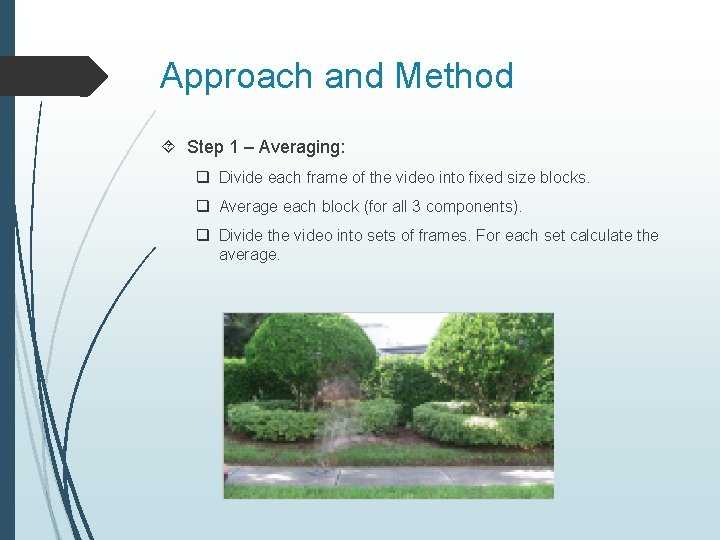
Approach and Method Step 1 – Averaging: q Divide each frame of the video into fixed size blocks. q Average each block (for all 3 components). q Divide the video into sets of frames. For each set calculate the average.
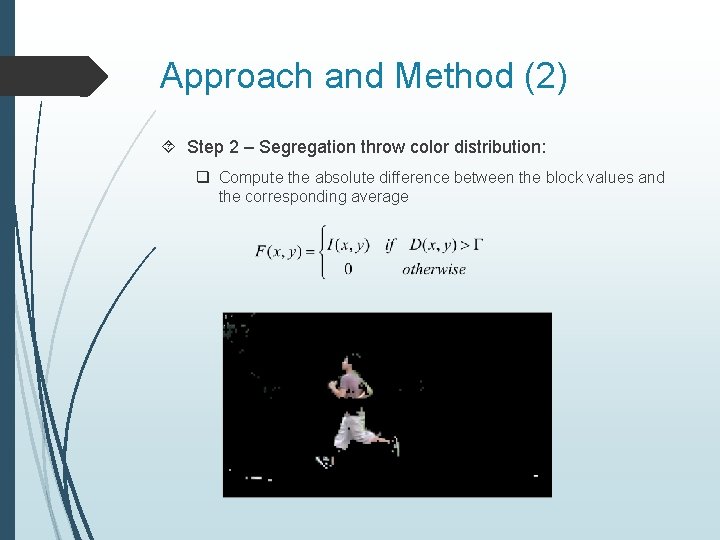
Approach and Method (2) Step 2 – Segregation throw color distribution: q Compute the absolute difference between the block values and the corresponding average
Approach and Method (3) Step 3 – Locate object components: q I had a sketch of the figure I want to segment but it wasn't accurate enough since there were a lot of noises. q Only figures with size bigger then 24*24 pixels considered as an object. § Remove noises. § Locate figures position
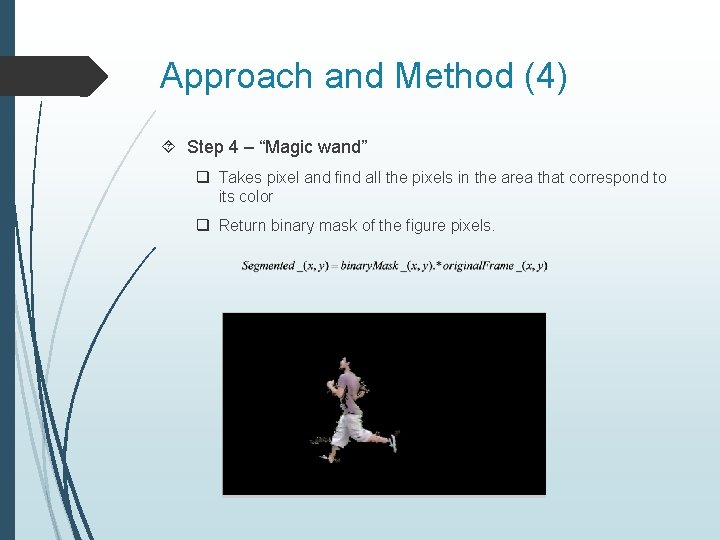
Approach and Method (4) Step 4 – “Magic wand” q Takes pixel and find all the pixels in the area that correspond to its color q Return binary mask of the figure pixels.
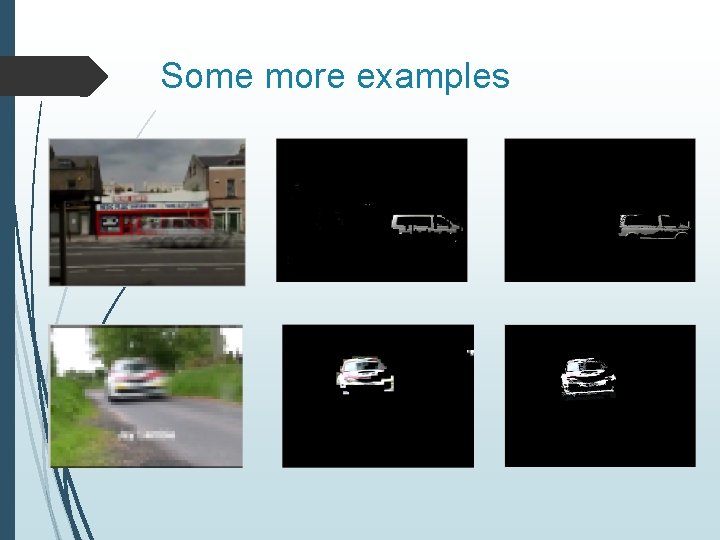
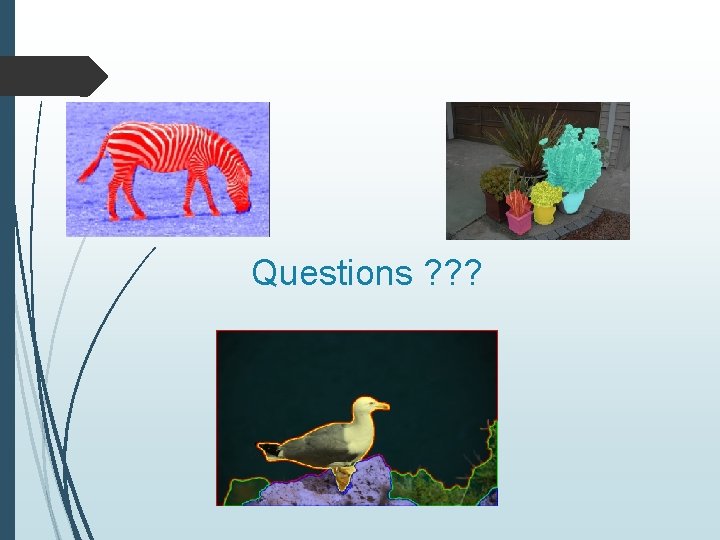
Some more examples
Conclusions The algorithm is done offline since it takes have calculations are made Thing that affect segmentation: q Object size q Object speed q Object location q Object color
Questions ? ? ?
Thank you