
Figure 7 02 Chapter 7 Big Ideas An
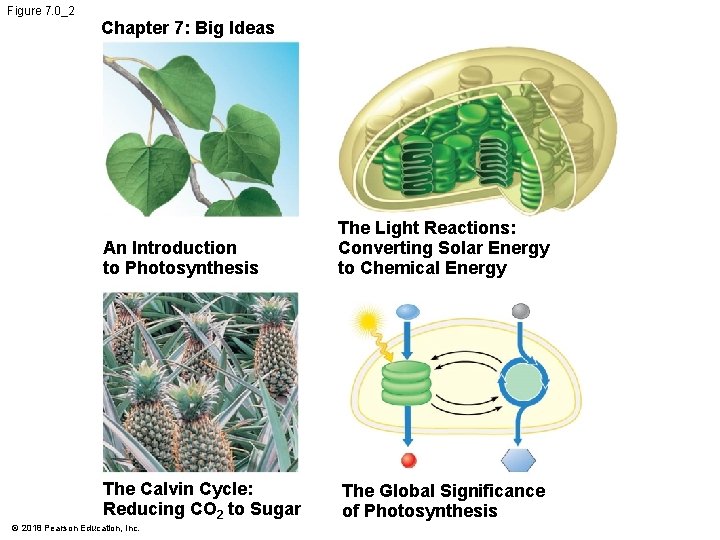
Figure 7. 0_2 Chapter 7: Big Ideas An Introduction to Photosynthesis The Light Reactions: Converting Solar Energy to Chemical Energy The Calvin Cycle: Reducing CO 2 to Sugar The Global Significance of Photosynthesis © 2018 Pearson Education, Inc.
AN INTRODUCTION TO PHOTOSYNTHESIS © 2018 Pearson Education, Inc.
7. 1 Photosynthesis fuels the biosphere • Plants, algae, and some photosynthetic protists and bacteria are photoautotrophs, the producers of food consumed by heterotrophic organisms. • Heterotrophs are consumers that feed on plants or animals or decompose organic material. Checkpoint question What do “self-feeding” photoautotrophs require from the environment to make their own food? © 2018 Pearson Education, Inc.
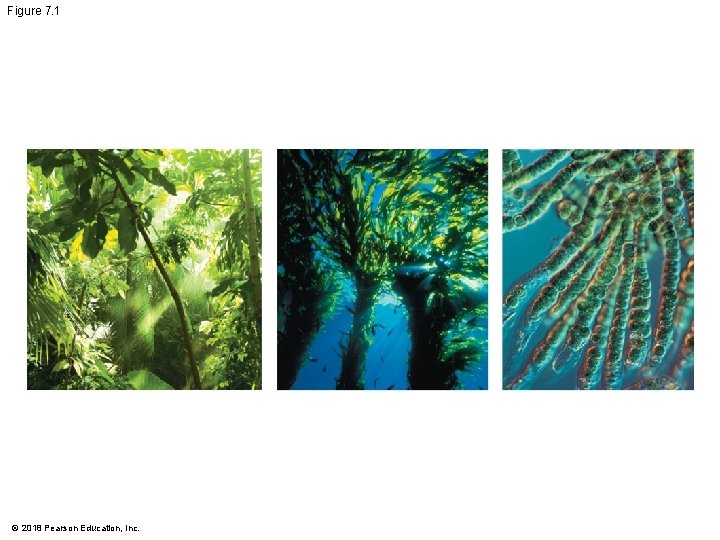
Figure 7. 1 © 2018 Pearson Education, Inc.
7. 2 Photosynthesis occurs in chloroplasts in plant cells • Chloroplasts are surrounded by a double membrane and contain stacks of thylakoids and a thick fluid called stroma. • Chlorophyll is a light-absorbing pigment in the chloroplasts that plays a central role in converting solar energy to chemical energy. Checkpoint question How do the reactant molecules of photosynthesis reach the chloroplasts in leaves? © 2018 Pearson Education, Inc.
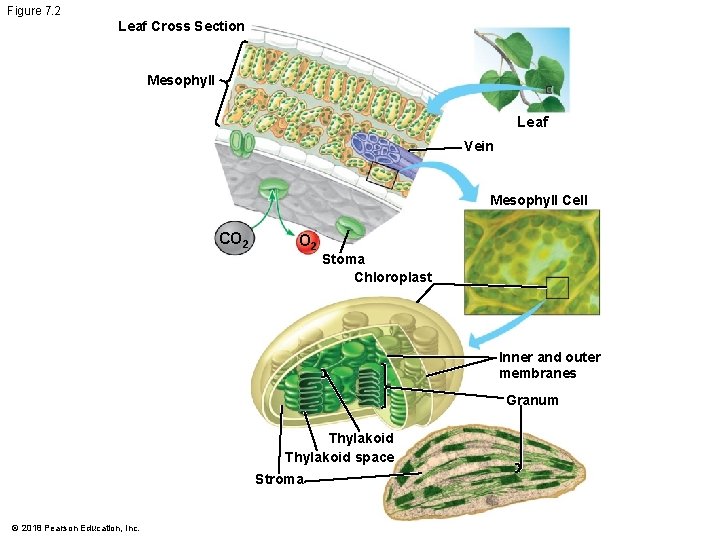
Figure 7. 2 Leaf Cross Section Mesophyll Leaf Vein Mesophyll Cell CO 2 Stoma Chloroplast Inner and outer membranes Granum Thylakoid space Stroma © 2018 Pearson Education, Inc.
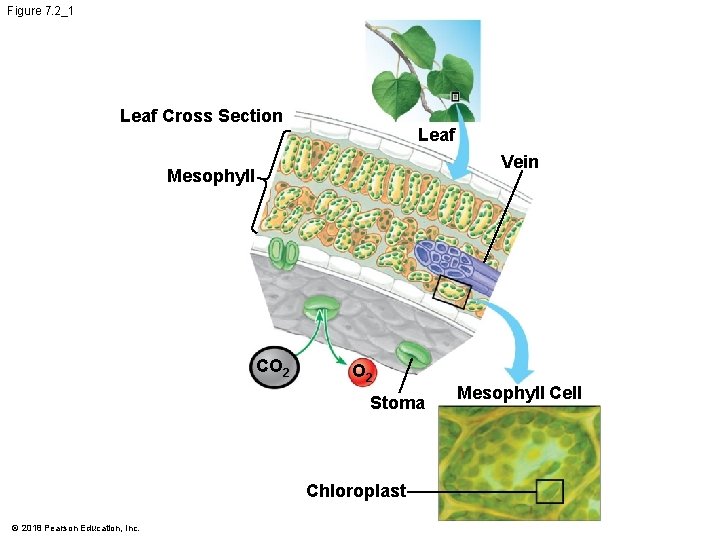
Figure 7. 2_1 Leaf Cross Section Leaf Vein Mesophyll CO 2 Stoma Chloroplast © 2018 Pearson Education, Inc. Mesophyll Cell
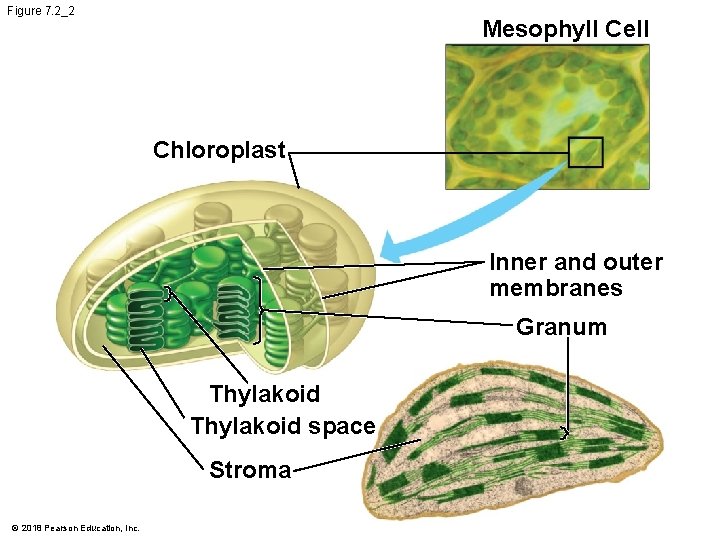
Figure 7. 2_2 Mesophyll Cell Chloroplast Inner and outer membranes Granum Thylakoid space Stroma © 2018 Pearson Education, Inc.
7. 3 Scientists traced the process of photosynthesis using isotopes • Experiments using both heavy and radioactive isotopes helped determine the details of the process of photosynthesis. Checkpoint question Photosynthesis produces billions of tons of carbohydrate a year. Where does most of the mass of this huge amount of organic matter come from? © 2018 Pearson Education, Inc.
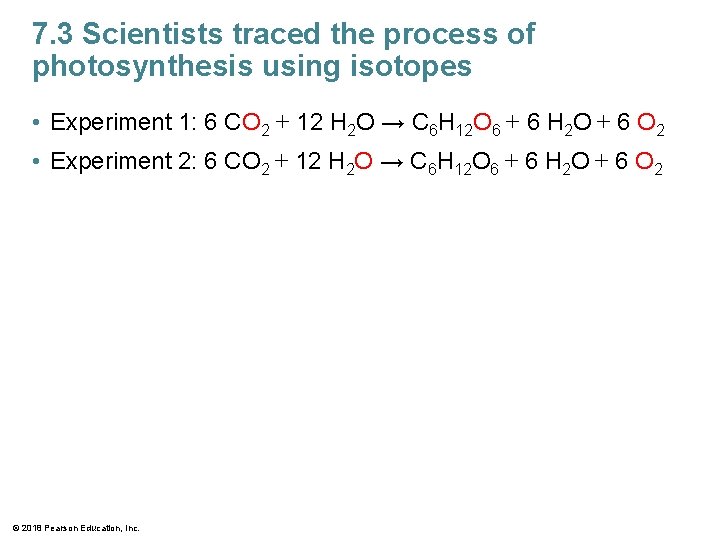
7. 3 Scientists traced the process of photosynthesis using isotopes • Experiment 1: 6 CO 2 + 12 H 2 O → C 6 H 12 O 6 + 6 H 2 O + 6 O 2 • Experiment 2: 6 CO 2 + 12 H 2 O → C 6 H 12 O 6 + 6 H 2 O + 6 O 2 © 2018 Pearson Education, Inc.
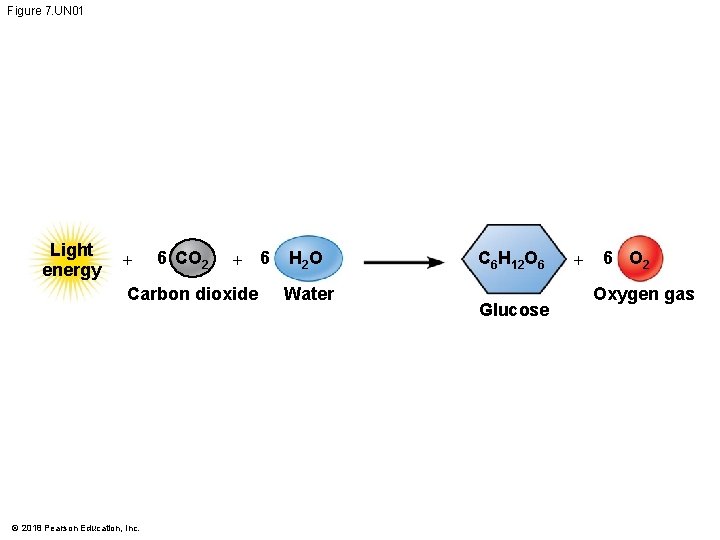
Figure 7. UN 01 Light energy + 6 CO 2 + 6 Carbon dioxide © 2018 Pearson Education, Inc. H 2 O Water C 6 H 12 O 6 Glucose + 6 O 2 Oxygen gas
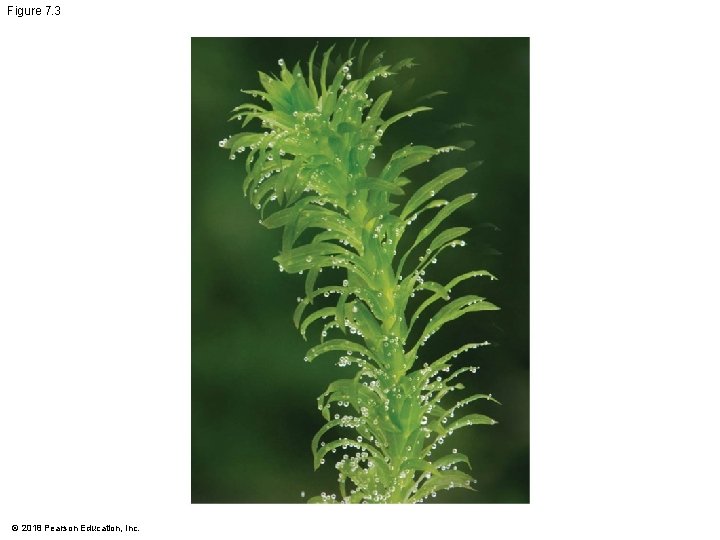
Figure 7. 3 © 2018 Pearson Education, Inc.
7. 4 Photosynthesis is a redox process, as is cellular respiration • Photosynthesis, like respiration, is a redox (oxidation-reduction) process. • In photosynthesis, H 2 O is oxidized and CO 2 is reduced. • Cellular respiration uses redox reactions to harvest the chemical energy stored in a glucose molecule. Checkpoint question Which redox process, photosynthesis or cellular respiration, is exergonic? Which redox process, photosynthesis or cellular respiration, is endergonic? © 2018 Pearson Education, Inc.
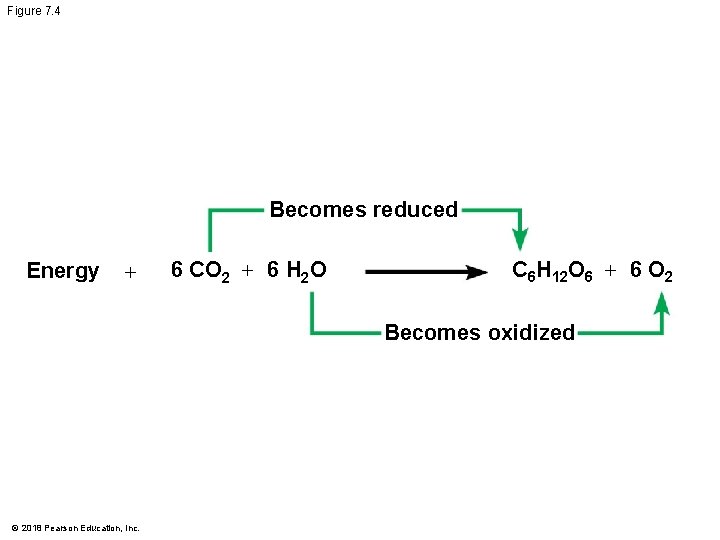
Figure 7. 4 Becomes reduced Energy + 6 CO 2 + 6 H 2 O C 6 H 12 O 6 + 6 O 2 Becomes oxidized © 2018 Pearson Education, Inc.
7. 5 Photosynthesis occurs in two stages, which are linked by ATP and NADPH • The light reactions occur in the thylakoids, producing ATP and NADPH for the Calvin cycle, which takes place in the stroma. • During the Calvin cycle, CO 2 is incorporated into organic compounds in a process called carbon fixation. Checkpoint question For chloroplasts to produce sugar from carbon dioxide in the dark, they would need to be supplied with ____ and ____. © 2018 Pearson Education, Inc.
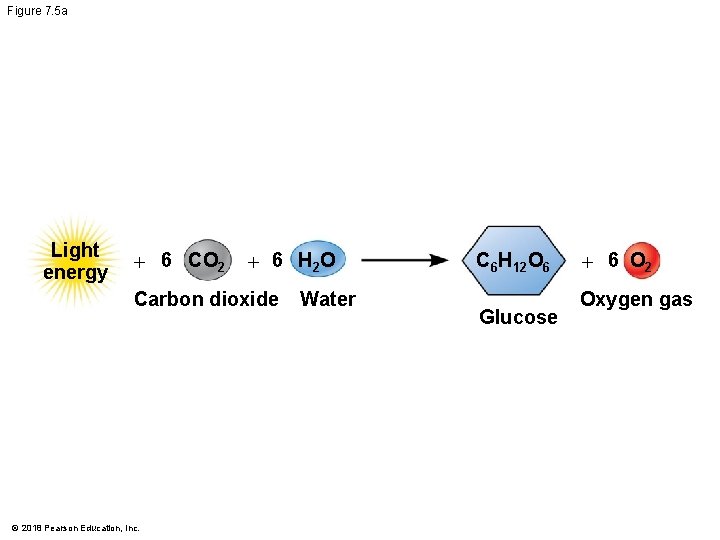
Figure 7. 5 a Light energy + 6 CO 2 + 6 H 2 O Carbon dioxide © 2018 Pearson Education, Inc. Water C 6 H 12 O 6 Glucose + 6 O 2 Oxygen gas
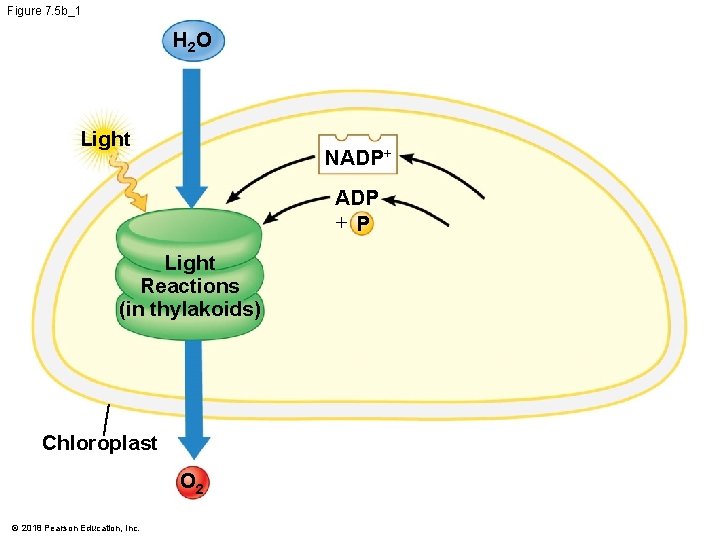
Figure 7. 5 b_1 H 2 O Light NADP+ ADP + P Light Reactions (in thylakoids) Chloroplast O 2 © 2018 Pearson Education, Inc.
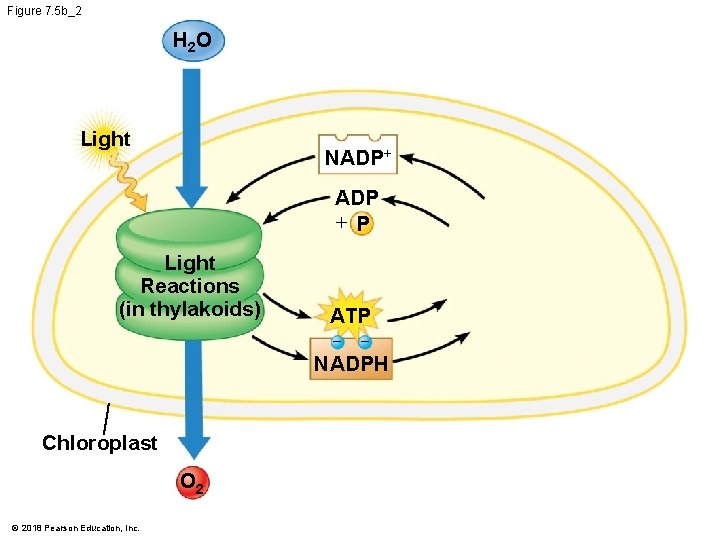
Figure 7. 5 b_2 H 2 O Light NADP+ ADP + P Light Reactions (in thylakoids) ATP − − NADPH Chloroplast O 2 © 2018 Pearson Education, Inc.
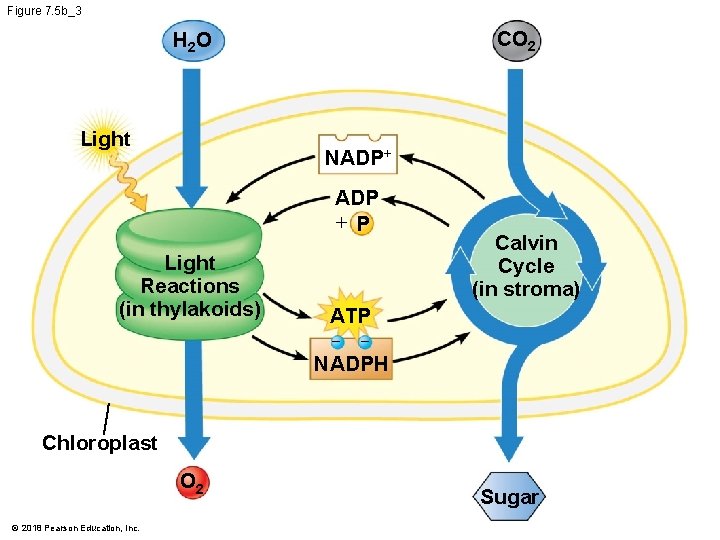
Figure 7. 5 b_3 CO 2 H 2 O Light NADP+ ADP + P Light Reactions (in thylakoids) Calvin Cycle (in stroma) ATP − − NADPH Chloroplast O 2 © 2018 Pearson Education, Inc. Sugar
THE LIGHT REACTIONS: CONVERTING SOLAR ENERGY TO CHEMICAL ENERGY © 2018 Pearson Education, Inc.
7. 6 Visible radiation absorbed by pigments drives the light reactions • Sunlight is a type of energy called electromagnetic energy or radiation. • Certain wavelengths of visible light are absorbed by chlorophyll and other pigments. • Carotenoids also function in photoprotection from excessive light. Checkpoint question What color of light is least effective at driving photosynthesis? Explain. © 2018 Pearson Education, Inc.
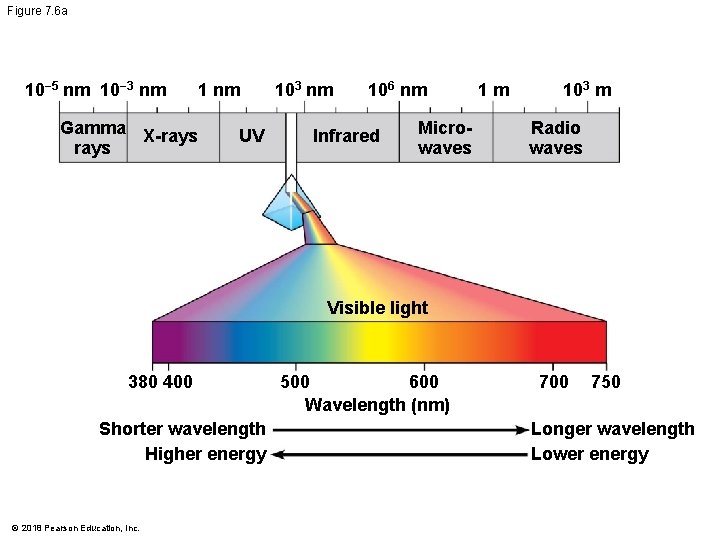
Figure 7. 6 a 10− 5 nm 10− 3 nm Gamma X-rays 1 nm UV 103 nm 106 nm Infrared Microwaves 1 m 103 m Radio waves Visible light 380 400 Shorter wavelength Higher energy © 2018 Pearson Education, Inc. 500 600 Wavelength (nm) 700 750 Longer wavelength Lower energy
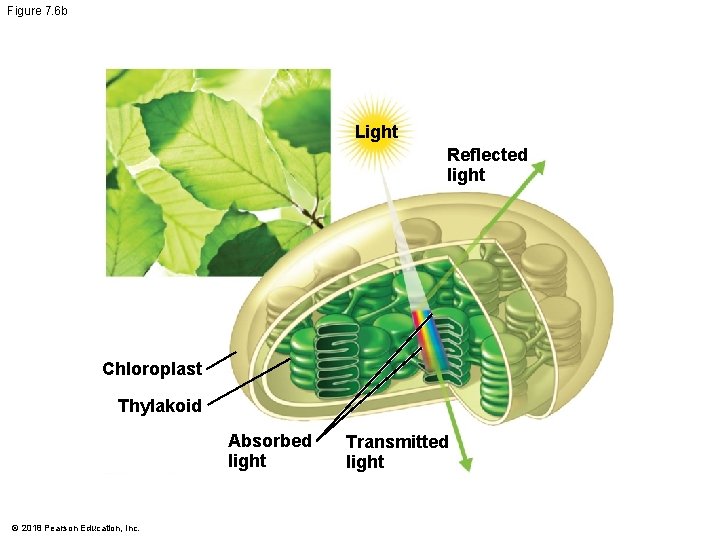
Figure 7. 6 b Light Reflected light Chloroplast Thylakoid Absorbed light © 2018 Pearson Education, Inc. Transmitted light
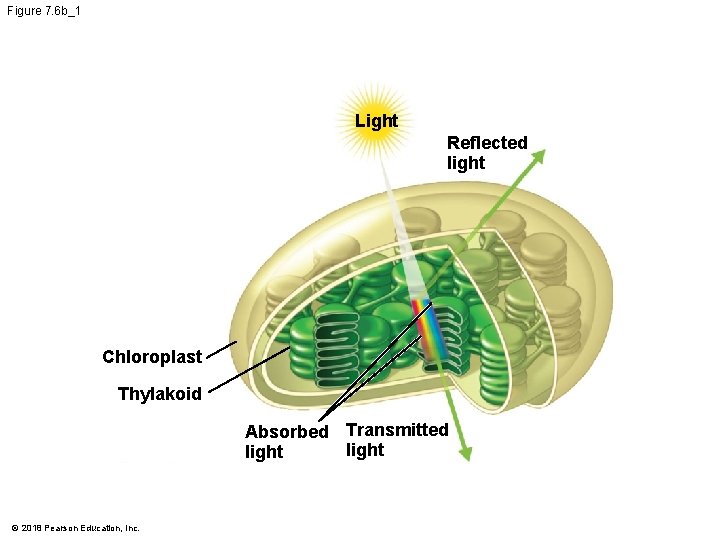
Figure 7. 6 b_1 Light Reflected light Chloroplast Thylakoid Absorbed Transmitted light © 2018 Pearson Education, Inc.
Figure 7. 6 b_2 © 2018 Pearson Education, Inc.
7. 7 Photosystems capture solar energy • Thylakoid membranes contain photosystems, each consisting of light-harvesting complexes and a reaction-center complex. • A primary electron acceptor receives photoexcited electrons from reaction-center chlorophyll a. Checkpoint question Compared with a solution of isolated chlorophyll, why do intact chloroplasts not release heat and light when illuminated? © 2018 Pearson Education, Inc.

Figure 7. 7 a_2 Energy of electron − Photon of light Heat Photon (fluorescence) Ground state Chlorophyll molecule © 2018 Pearson Education, Inc. Excited state
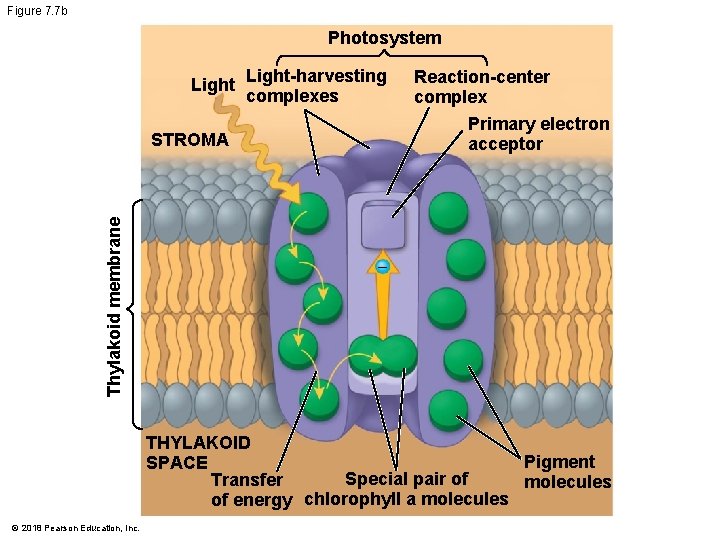
Figure 7. 7 b Photosystem Light-harvesting complexes Thylakoid membrane STROMA Reaction-center complex Primary electron acceptor − THYLAKOID Pigment SPACE Special pair of Transfer molecules of energy chlorophyll a molecules © 2018 Pearson Education, Inc.
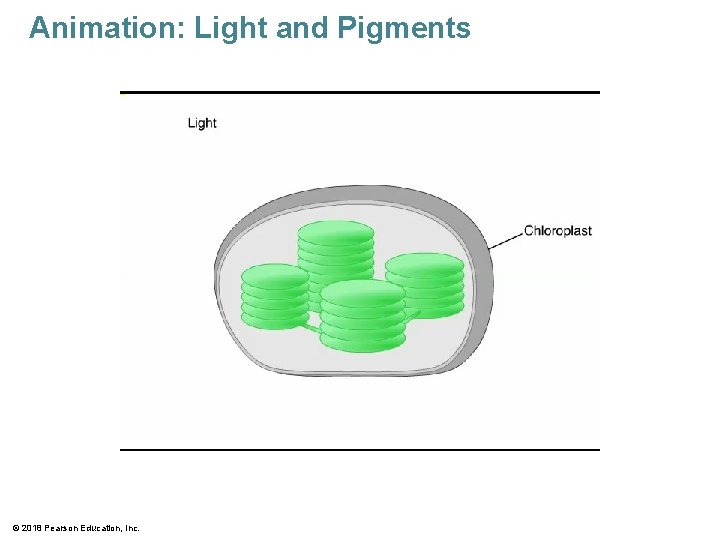
Animation: Light and Pigments © 2018 Pearson Education, Inc.
7. 8 Two photosystems connected by an electron transport chain convert light energy to the chemical energy of ATP and NADPH • Electrons shuttle from photosystem II to photosystem I, providing energy to make ATP, and then reduce NADP+ to NADPH. • Photosystem II regains electrons as water is split and O 2 released. © 2018 Pearson Education, Inc.
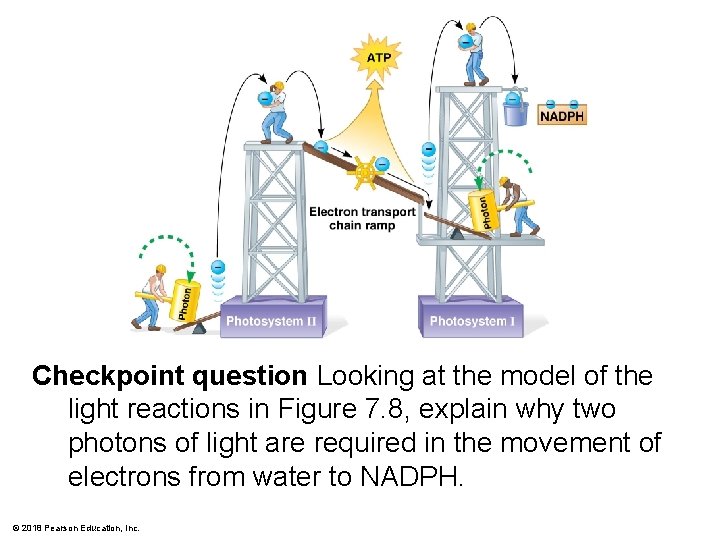
Checkpoint question Looking at the model of the light reactions in Figure 7. 8, explain why two photons of light are required in the movement of electrons from water to NADPH. © 2018 Pearson Education, Inc.
7. 9 VISUALIZING THE CONCEPT: The light reactions take place within the thylakoid membranes • In photophosphorylation, the electron transport chain pumps H+ into the thylakoid space. • The concentration gradient drives H+ back through ATP synthase, powering the synthesis of ATP. © 2018 Pearson Education, Inc.
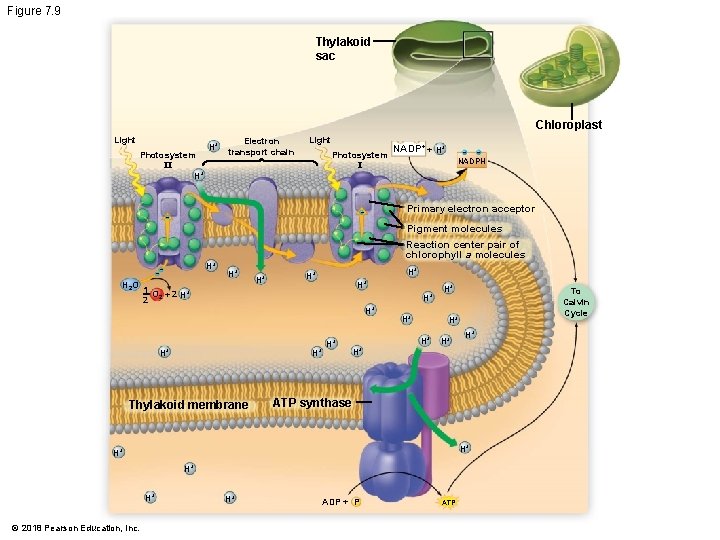
Figure 7. 9 Thylakoid sac Chloroplast Light Photosystem II H+ H+ Electron transport chain Light Photosystem I – – NADPH Primary electron acceptor – – NADP+ + H+ Pigment molecules Reaction center pair of chlorophyll a molecules – H 2 O H+ – H+ 1 O + 2 H+ 2 2 H+ H+ Thylakoid membrane H+ H+ ATP synthase H+ H+ © 2018 Pearson Education, Inc. To Calvin Cycle H+ ADP + P ATP
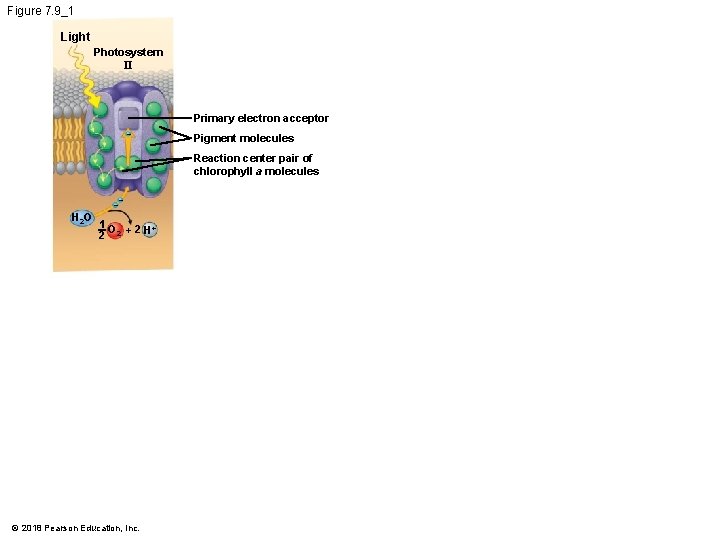
Figure 7. 9_1 Light Photosystem II Primary electron acceptor – Pigment molecules Reaction center pair of chlorophyll a molecules – H 2 O – 1 O 2 + 2 2 + H © 2018 Pearson Education, Inc.
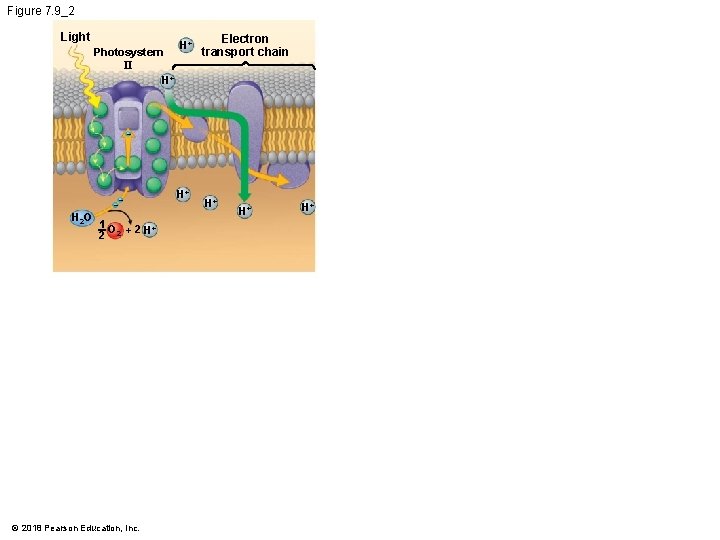
Figure 7. 9_2 Light Photosystem II H+ H+ Electron transport chain – – H 2 O – 1 O 2 + 2 2 + H © 2018 Pearson Education, Inc. H+ H+
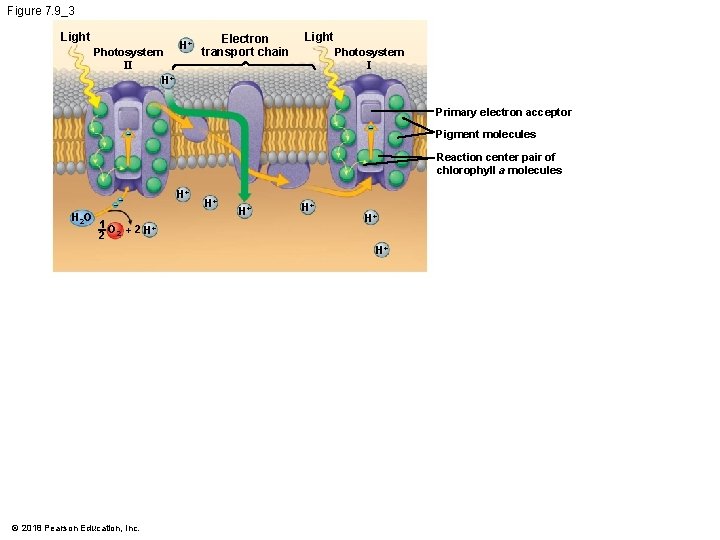
Figure 7. 9_3 Light Photosystem II H+ H+ Electron transport chain Light Photosystem I Primary electron acceptor – – Pigment molecules Reaction center pair of chlorophyll a molecules – H 2 O – 1 O 2 + 2 2 + H H+ H+ H+ © 2018 Pearson Education, Inc.
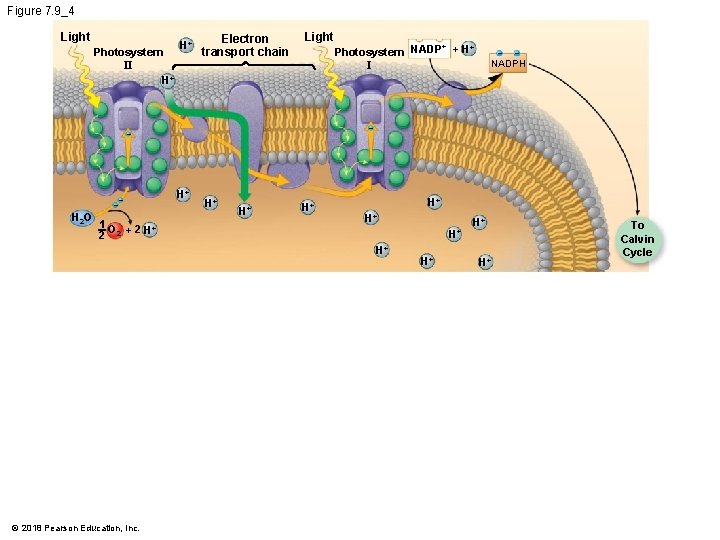
Figure 7. 9_4 Light Photosystem II H+ H+ Electron transport chain Light H 2 O – 1 O 2 + 2 2 + H H+ H+ – H+ H+ © 2018 Pearson Education, Inc. – NADPH – – – + + Photosystem NADP + H I H+ H+ H+ To Calvin Cycle
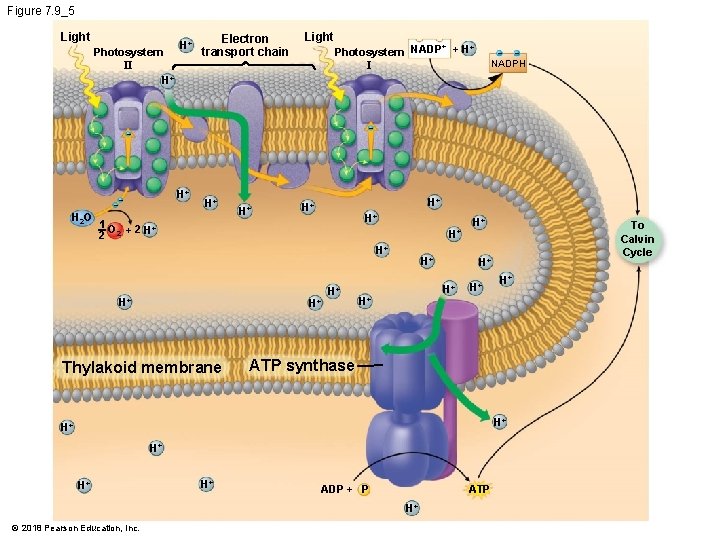
Figure 7. 9_5 Light Photosystem II H+ H+ Electron transport chain Light + + Photosystem NADP + H I H 2 O H+ – H+ H+ H+ 1 O 2 + 2 2 + H H+ H+ Thylakoid membrane H+ H+ H+ To Calvin Cycle H+ H+ H+ ATP synthase H+ H+ H+ ADP + P ATP H+ © 2018 Pearson Education, Inc. – – – NADPH
THE CALVIN CYCLE: REDUCING CO 2 TO SUGAR © 2018 Pearson Education, Inc.
7. 10 ATP and NADPH power sugar synthesis in the Calvin cycle • The steps of the Calvin cycle include • • carbon fixation, reduction, release of G 3 P, and regeneration of Ru. BP. • Using carbon from CO 2, electrons from NADPH, and energy from ATP, the cycle constructs G 3 P, which is used to build glucose and other organic molecules. © 2018 Pearson Education, Inc.
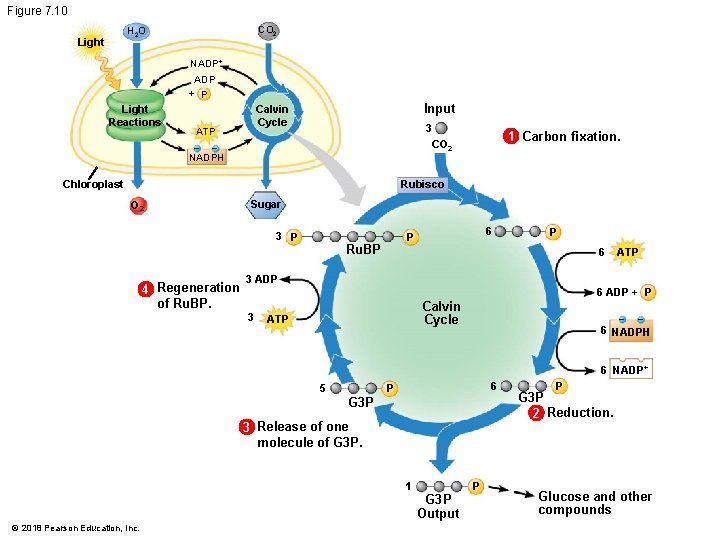
Figure 7. 10 CO 2 H 2 O Light NADP+ ADP + P Light Reactions Input Calvin Cycle ATP 3 1 Carbon fixation. CO 2 − − NADPH Chloroplast Rubisco O 2 Sugar 3 P 4 Regeneration of Ru. BP. 6 P Ru. BP P 6 ATP 3 ADP 6 ADP + P 3 Calvin Cycle ATP − − 6 NADPH 6 NADP+ 5 6 P G 3 P 3 Release of one molecule of G 3 P. 1 G 3 P Output © 2018 Pearson Education, Inc. P P G 3 P 2 Reduction. Glucose and other compounds
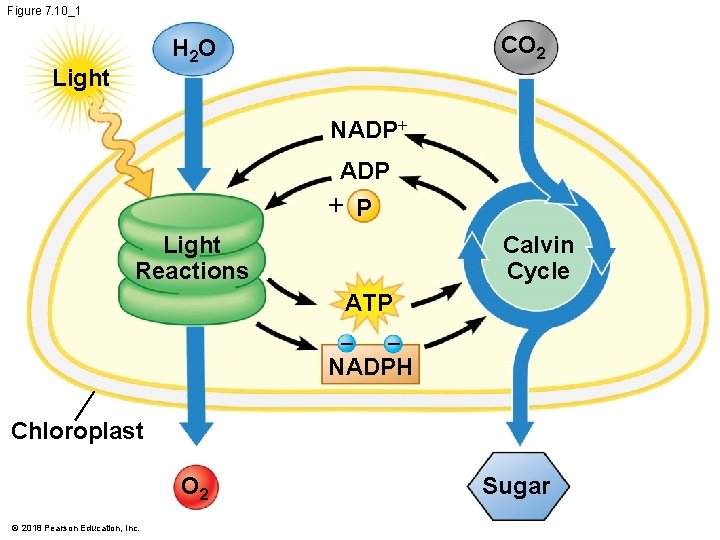
Figure 7. 10_1 CO 2 H 2 O Light NADP+ ADP + P Light Reactions Calvin Cycle ATP − − NADPH Chloroplast O 2 © 2018 Pearson Education, Inc. Sugar
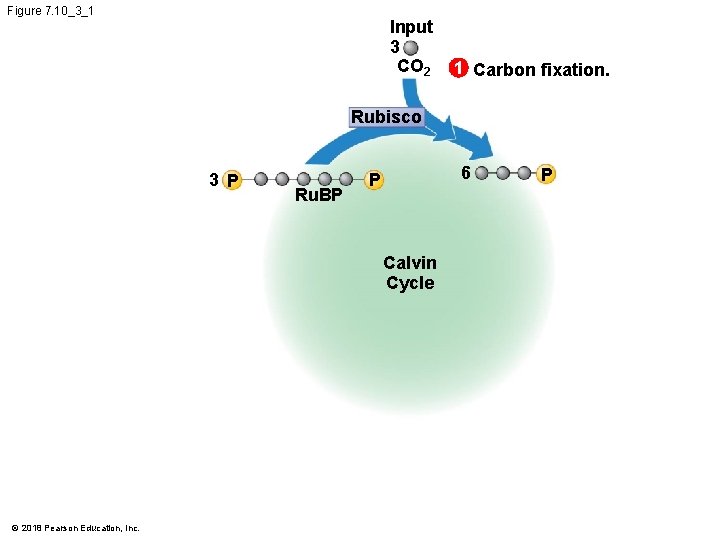
Figure 7. 10_3_1 Input 3 CO 2 1 Carbon fixation. Rubisco 3 P Ru. BP 6 P Calvin Cycle © 2018 Pearson Education, Inc. P
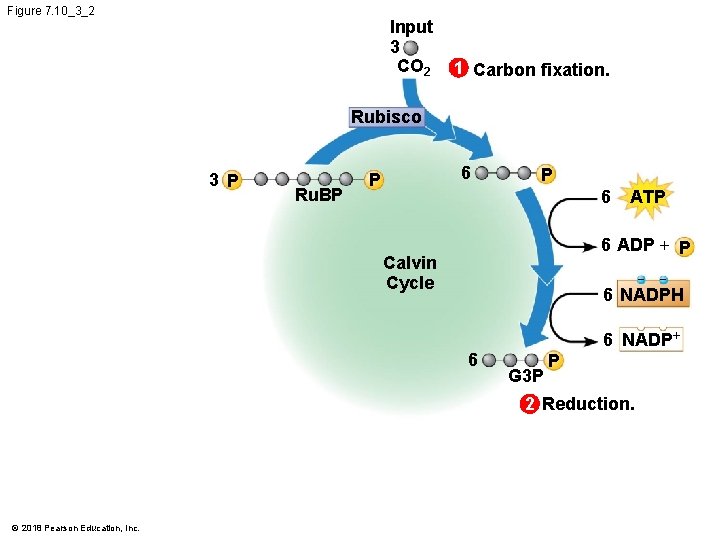
Figure 7. 10_3_2 Input 3 CO 2 1 Carbon fixation. Rubisco 3 P Ru. BP 6 P P 6 ATP 6 ADP + P Calvin Cycle − − 6 NADPH 6 NADP+ 6 G 3 P P 2 Reduction. © 2018 Pearson Education, Inc.
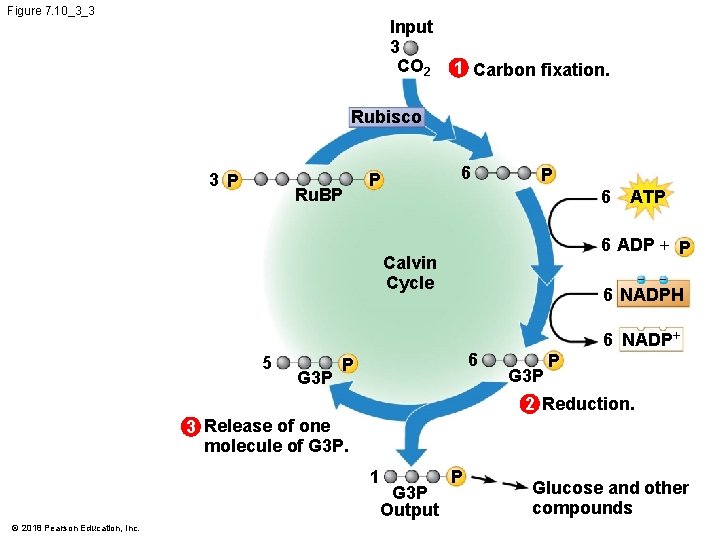
Figure 7. 10_3_3 Input 3 CO 2 1 Carbon fixation. Rubisco 3 P Ru. BP 6 P P 6 ATP 6 ADP + P Calvin Cycle − − 6 NADPH 6 NADP+ 5 G 3 P 6 P G 3 P P 2 Reduction. 3 Release of one molecule of G 3 P. 1 © 2018 Pearson Education, Inc. G 3 P Output P Glucose and other compounds
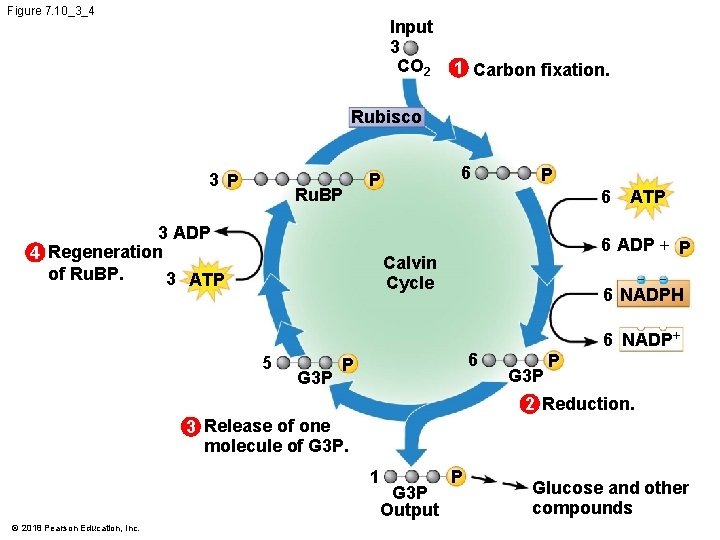
Figure 7. 10_3_4 Input 3 CO 2 1 Carbon fixation. Rubisco 3 P Ru. BP 6 P 3 ADP 4 Regeneration of Ru. BP. 3 ATP P 6 ATP 6 ADP + P Calvin Cycle − − 6 NADPH 6 NADP+ 5 G 3 P 6 P G 3 P P 2 Reduction. 3 Release of one molecule of G 3 P. 1 © 2018 Pearson Education, Inc. G 3 P Output P Glucose and other compounds
THE GLOBAL SIGNIFICANCE OF PHOTOSYNTHESIS © 2018 Pearson Education, Inc.
7. 12 Photosynthesis provides food and O 2 for almost all living organisms • Cellular respiration in the mitochondria of plant cells uses about 50% of the carbohydrates made by photosynthesis. • Sugars also serve as the starting material for making other organic molecules, such as proteins, lipids, and cellulose. • Many glucose molecules are linked together to make cellulose, the main component of cell walls. © 2018 Pearson Education, Inc.
7. 12 Photosynthesis provides food and O 2 for almost all living organisms Checkpoint question Explain this statement: No process is more important to the welfare of life on Earth than photosynthesis. © 2018 Pearson Education, Inc.
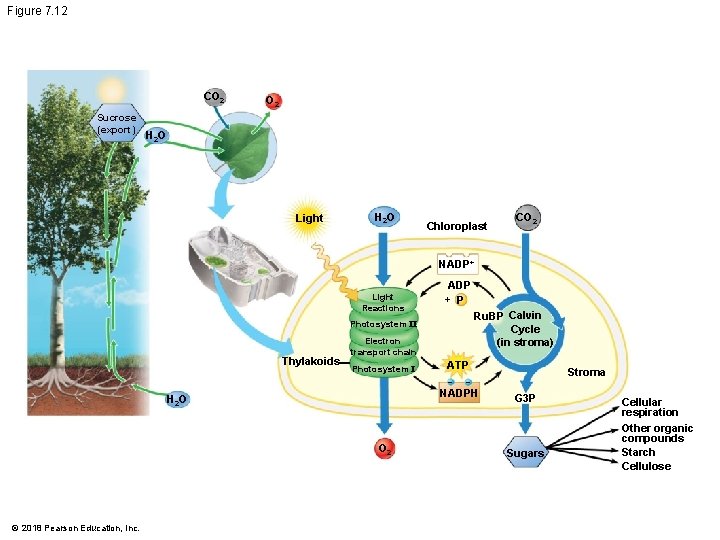
Figure 7. 12 CO 2 Sucrose (export) O 2 H 2 O Light H 2 O Chloroplast CO 2 NADP+ Light Reactions ADP + P Ru. BP Calvin Cycle (in stroma) Photosystem II Thylakoids Electron transport chain Photosystem I ATP − NADPH H 2 O O 2 © 2018 Pearson Education, Inc. Stroma − G 3 P Sugars Cellular respiration Other organic compounds Starch Cellulose
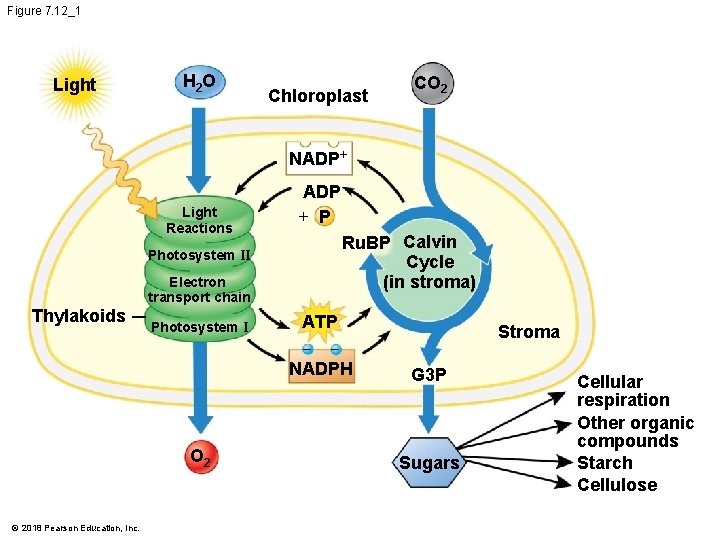
Figure 7. 12_1 Light H 2 O Chloroplast CO 2 NADP+ Light Reactions ADP + P Ru. BP Calvin Cycle (in stroma) Photosystem II Electron transport chain Thylakoids Photosystem I ATP − − NADPH O 2 © 2018 Pearson Education, Inc. Stroma G 3 P Sugars Cellular respiration Other organic compounds Starch Cellulose
Figure 7. 14 b © 2018 Pearson Education, Inc.
- Slides: 52