
FIGURE 4 1 1 1 DoseResponse Curve This



- Slides: 26
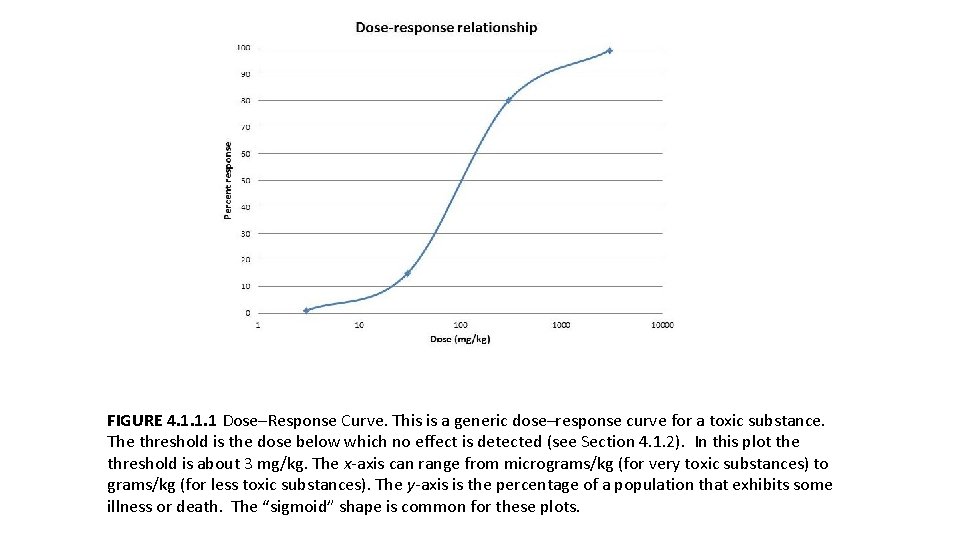
FIGURE 4. 1. 1. 1 Dose–Response Curve. This is a generic dose–response curve for a toxic substance. The threshold is the dose below which no effect is detected (see Section 4. 1. 2). In this plot the threshold is about 3 mg/kg. The x-axis can range from micrograms/kg (for very toxic substances) to grams/kg (for less toxic substances). The y-axis is the percentage of a population that exhibits some illness or death. The “sigmoid” shape is common for these plots.
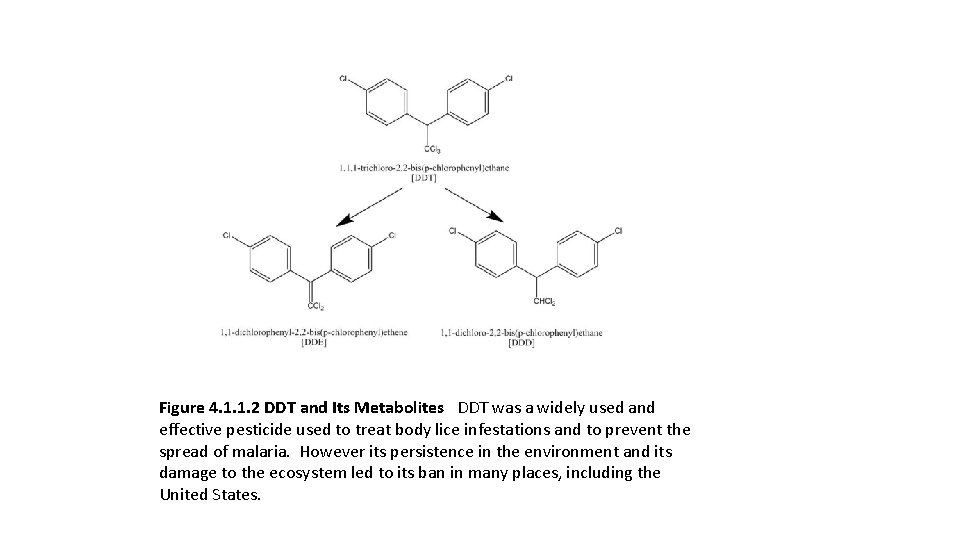
Figure 4. 1. 1. 2 DDT and Its Metabolites DDT was a widely used and effective pesticide used to treat body lice infestations and to prevent the spread of malaria. However its persistence in the environment and its damage to the ecosystem led to its ban in many places, including the United States.
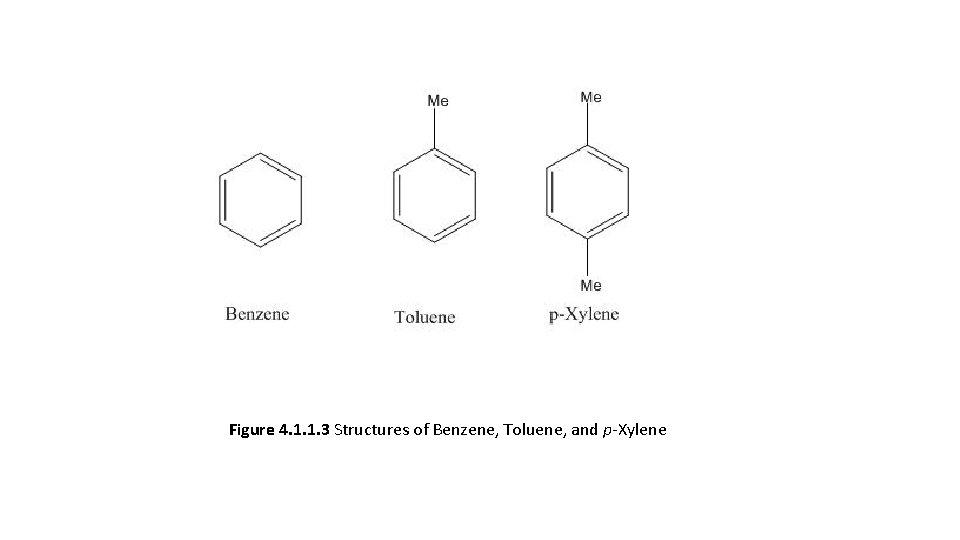
Figure 4. 1. 1. 3 Structures of Benzene, Toluene, and p-Xylene
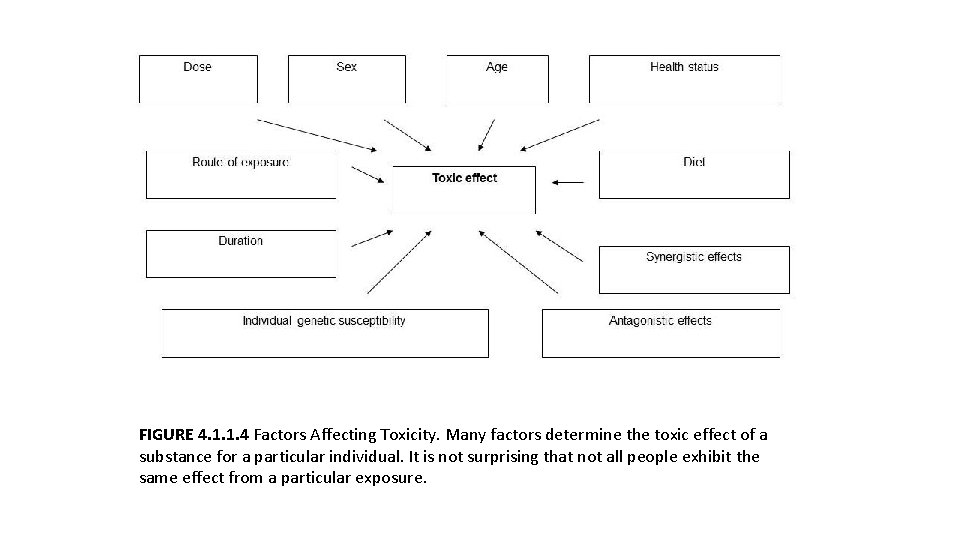
FIGURE 4. 1. 1. 4 Factors Affecting Toxicity. Many factors determine the toxic effect of a substance for a particular individual. It is not surprising that not all people exhibit the same effect from a particular exposure.
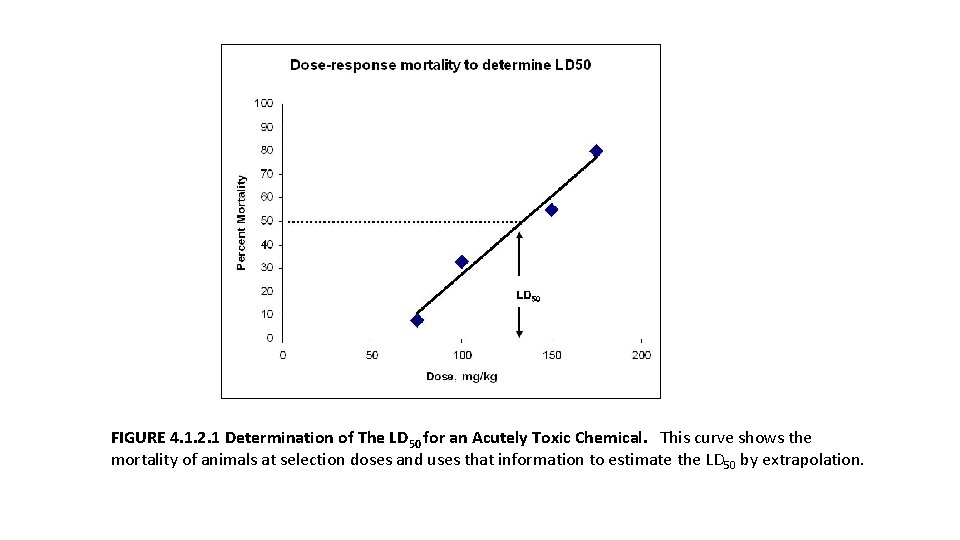
FIGURE 4. 1. 2. 1 Determination of The LD 50 for an Acutely Toxic Chemical. This curve shows the mortality of animals at selection doses and uses that information to estimate the LD 50 by extrapolation.
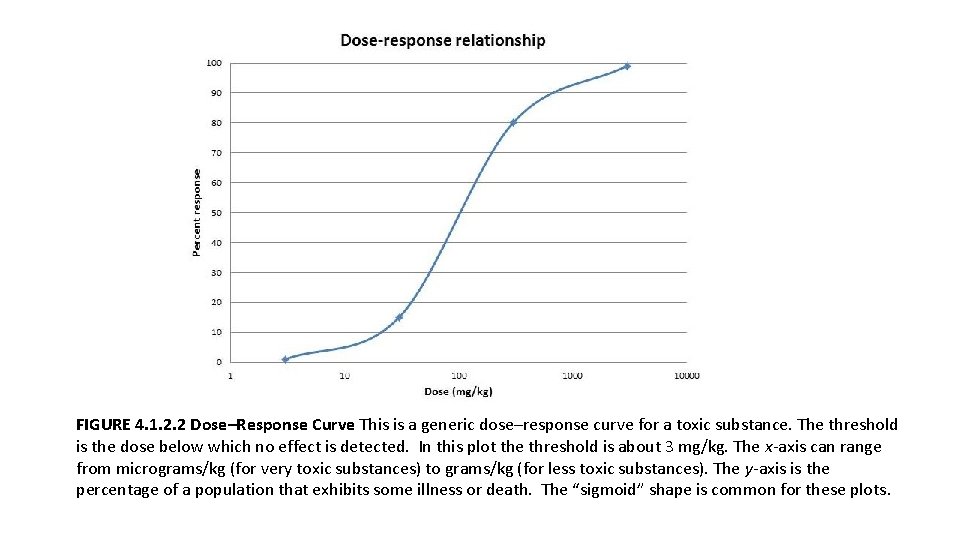
FIGURE 4. 1. 2. 2 Dose–Response Curve This is a generic dose–response curve for a toxic substance. The threshold is the dose below which no effect is detected. In this plot the threshold is about 3 mg/kg. The x-axis can range from micrograms/kg (for very toxic substances) to grams/kg (for less toxic substances). The y-axis is the percentage of a population that exhibits some illness or death. The “sigmoid” shape is common for these plots.
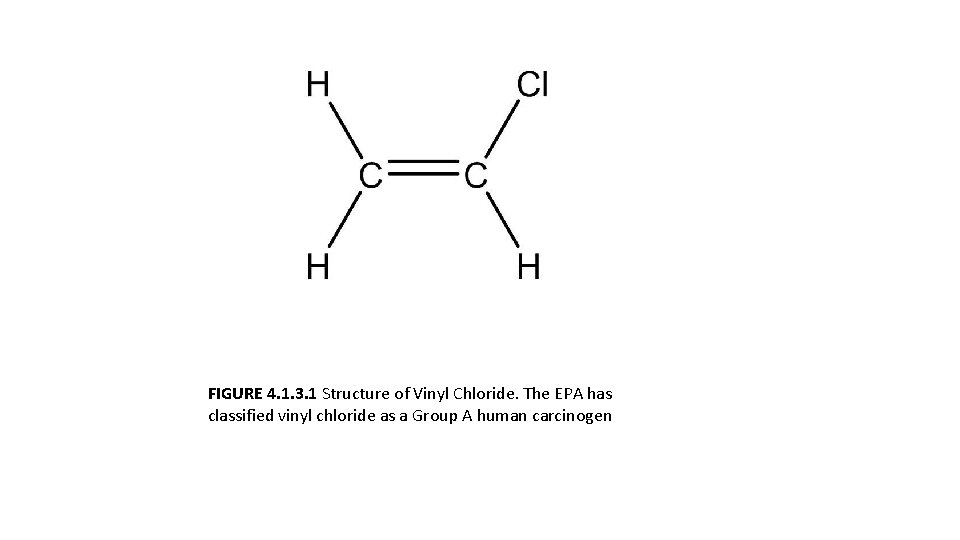
FIGURE 4. 1. 3. 1 Structure of Vinyl Chloride. The EPA has classified vinyl chloride as a Group A human carcinogen
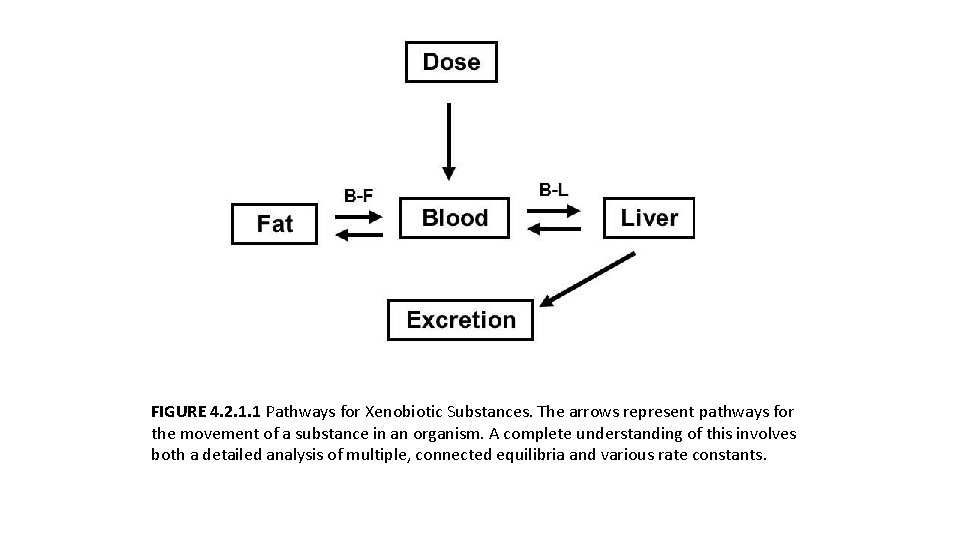
FIGURE 4. 2. 1. 1 Pathways for Xenobiotic Substances. The arrows represent pathways for the movement of a substance in an organism. A complete understanding of this involves both a detailed analysis of multiple, connected equilibria and various rate constants.
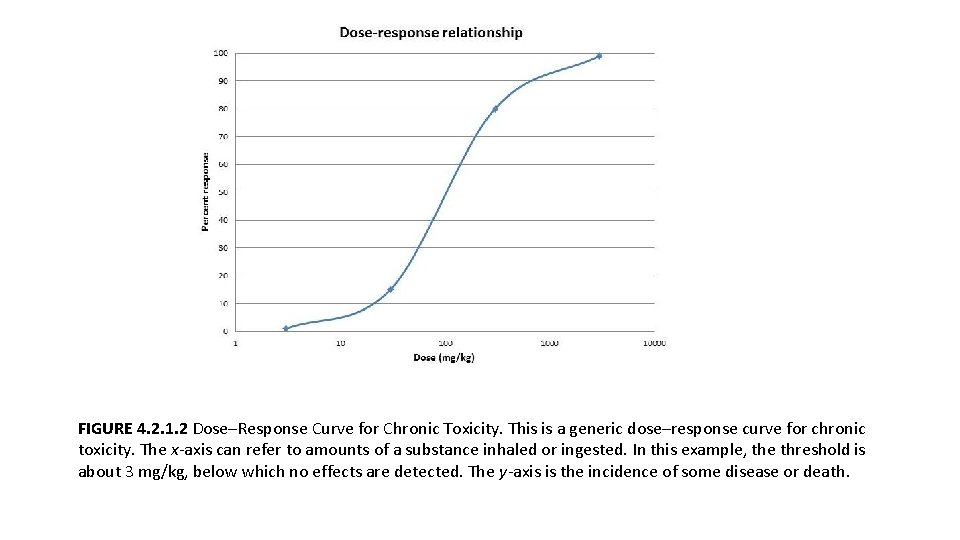
FIGURE 4. 2. 1. 2 Dose–Response Curve for Chronic Toxicity. This is a generic dose–response curve for chronic toxicity. The x-axis can refer to amounts of a substance inhaled or ingested. In this example, the threshold is about 3 mg/kg, below which no effects are detected. The y-axis is the incidence of some disease or death.
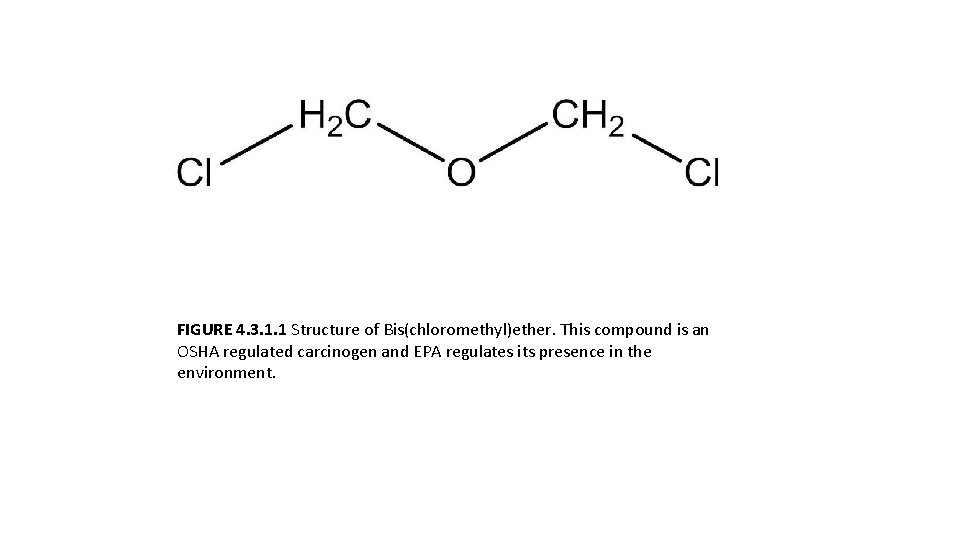
FIGURE 4. 3. 1. 1 Structure of Bis(chloromethyl)ether. This compound is an OSHA regulated carcinogen and EPA regulates its presence in the environment.
Figure 4. 3. 2. 1 CDC poster of good laboratory practices when handling biological agents. (Poster from U. S. Centers for Disease Control and Prevention).
FIGURE 4. 3. 2. 2 The biohazard symbol.
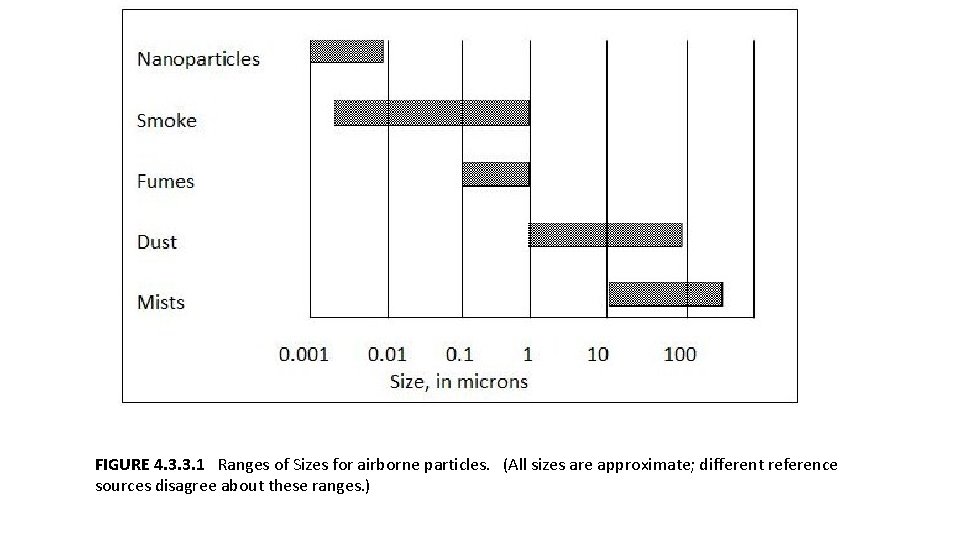
FIGURE 4. 3. 3. 1 Ranges of Sizes for airborne particles. (All sizes are approximate; different reference sources disagree about these ranges. )
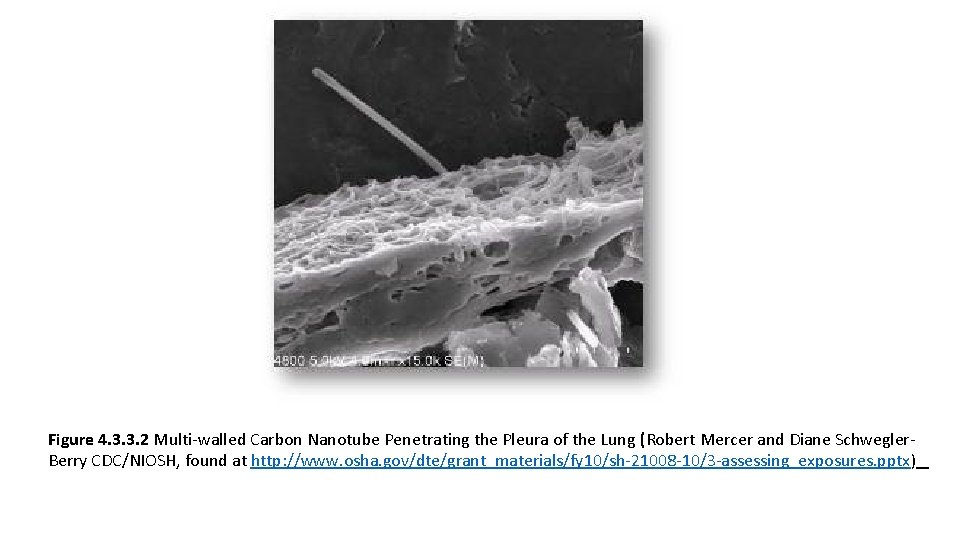
Figure 4. 3. 3. 2 Multi-walled Carbon Nanotube Penetrating the Pleura of the Lung (Robert Mercer and Diane Schwegler. Berry CDC/NIOSH, found at http: //www. osha. gov/dte/grant_materials/fy 10/sh-21008 -10/3 -assessing_exposures. pptx)
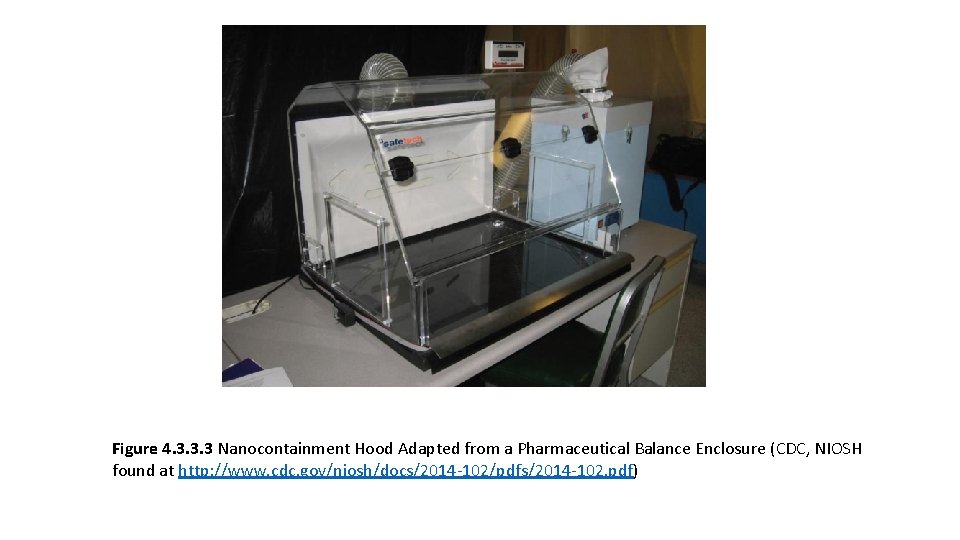
Figure 4. 3. 3. 3 Nanocontainment Hood Adapted from a Pharmaceutical Balance Enclosure (CDC, NIOSH found at http: //www. cdc. gov/niosh/docs/2014 -102/pdfs/2014 -102. pdf)
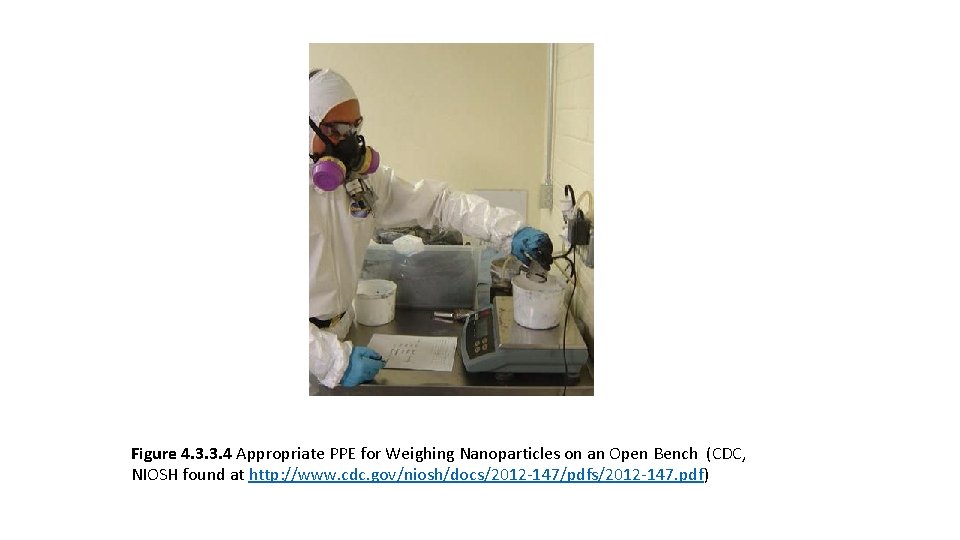
Figure 4. 3. 3. 4 Appropriate PPE for Weighing Nanoparticles on an Open Bench (CDC, NIOSH found at http: //www. cdc. gov/niosh/docs/2012 -147/pdfs/2012 -147. pdf)