
Figure 3 5 IP Packet Bit 0 0100
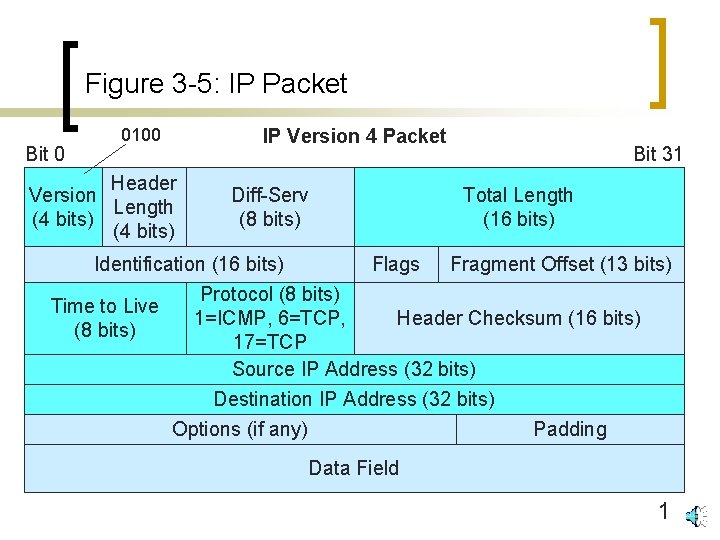
Figure 3 -5: IP Packet Bit 0 0100 IP Version 4 Packet Header Version Length (4 bits) Diff-Serv (8 bits) Identification (16 bits) Time to Live (8 bits) Bit 31 Total Length (16 bits) Flags Fragment Offset (13 bits) Protocol (8 bits) 1=ICMP, 6=TCP, Header Checksum (16 bits) 17=TCP Source IP Address (32 bits) Destination IP Address (32 bits) Options (if any) Padding Data Field 1
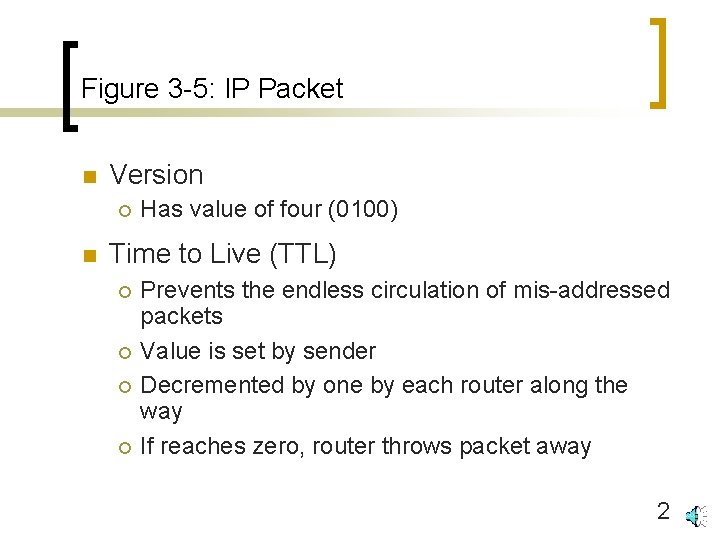
Figure 3 -5: IP Packet n Version ¡ n Has value of four (0100) Time to Live (TTL) ¡ ¡ Prevents the endless circulation of mis-addressed packets Value is set by sender Decremented by one by each router along the way If reaches zero, router throws packet away 2
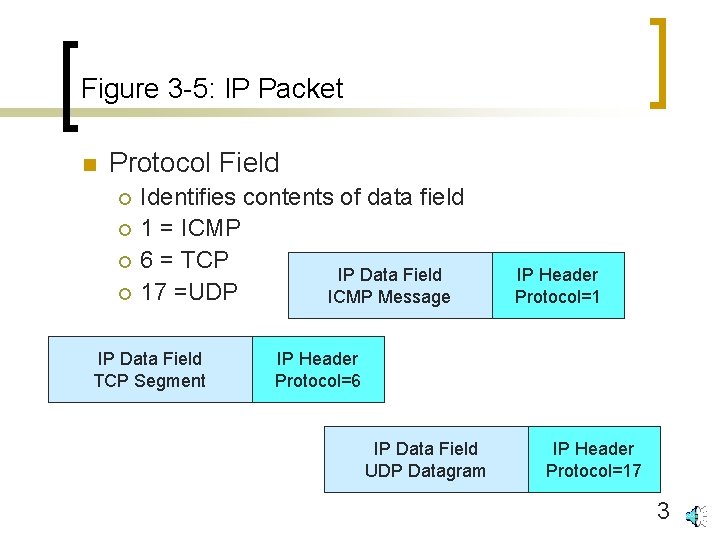
Figure 3 -5: IP Packet n Protocol Field ¡ ¡ Identifies contents of data field 1 = ICMP 6 = TCP IP Data Field 17 =UDP ICMP Message IP Data Field TCP Segment IP Header Protocol=1 IP Header Protocol=6 IP Data Field UDP Datagram IP Header Protocol=17 3
Figure 3 -5: IP Packet n Header checksum to check for errors in the header only ¡ ¡ ¡ n Faster than checking the whole packet Stops bad headers from causing problems IP Version 6 drops eve this checking Address Fields ¡ 32 bits long, of course n Options field(s) give optional parameters n Data field contains the payload of the packet. 4
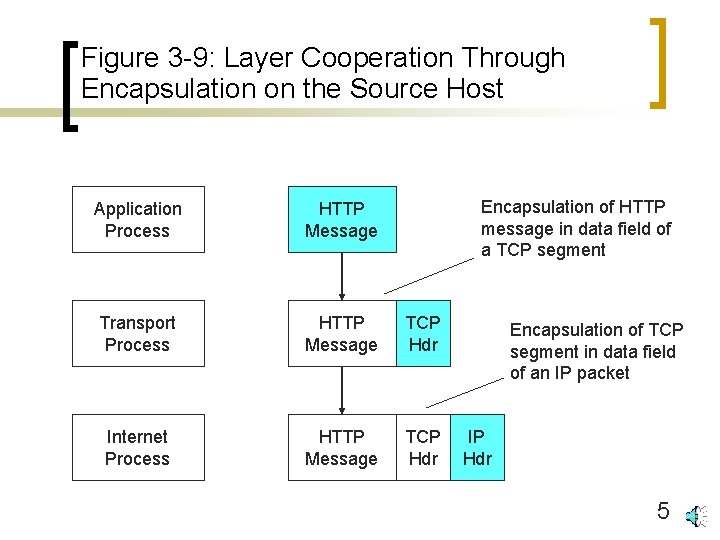
Figure 3 -9: Layer Cooperation Through Encapsulation on the Source Host Encapsulation of HTTP message in data field of a TCP segment Application Process HTTP Message Transport Process HTTP Message TCP Hdr Internet Process HTTP Message TCP Hdr Encapsulation of TCP segment in data field of an IP packet IP Hdr 5
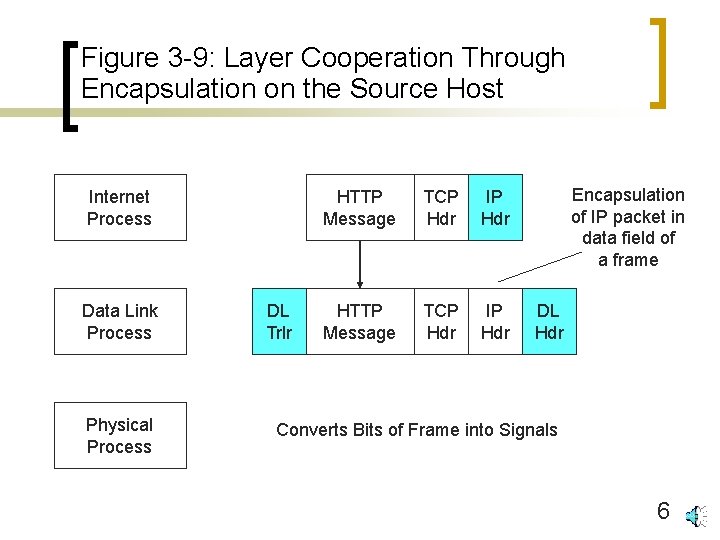
Figure 3 -9: Layer Cooperation Through Encapsulation on the Source Host Internet Process Data Link Process Physical Process DL Trlr HTTP Message TCP Hdr IP Hdr Encapsulation of IP packet in data field of a frame DL Hdr Converts Bits of Frame into Signals 6
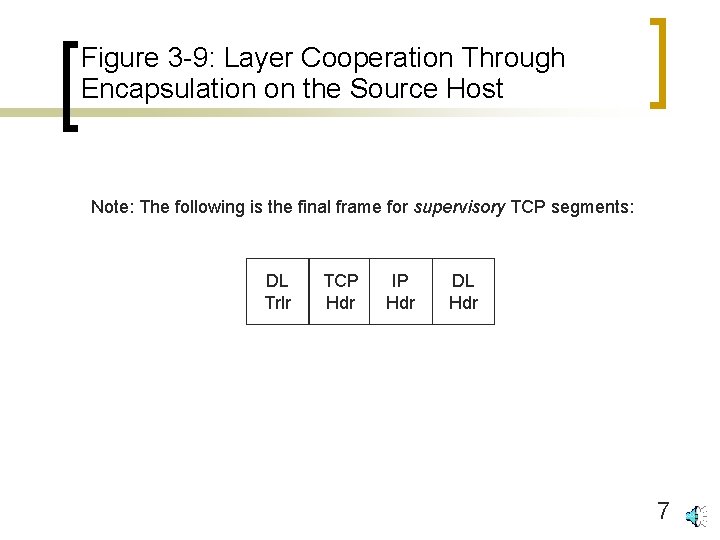
Figure 3 -9: Layer Cooperation Through Encapsulation on the Source Host Note: The following is the final frame for supervisory TCP segments: DL Trlr TCP Hdr IP Hdr DL Hdr 7

Figure 3 -10: Layer Cooperation Through Decapsulation on the Destination Host Decapsulation of HTTP message from data field of a TCP segment Application Process HTTP Message Transport Process HTTP Message TCP Hdr Internet Process HTTP Message TCP Hdr Decapsulation of TCP segment from data field of an IP packet IP Hdr 8
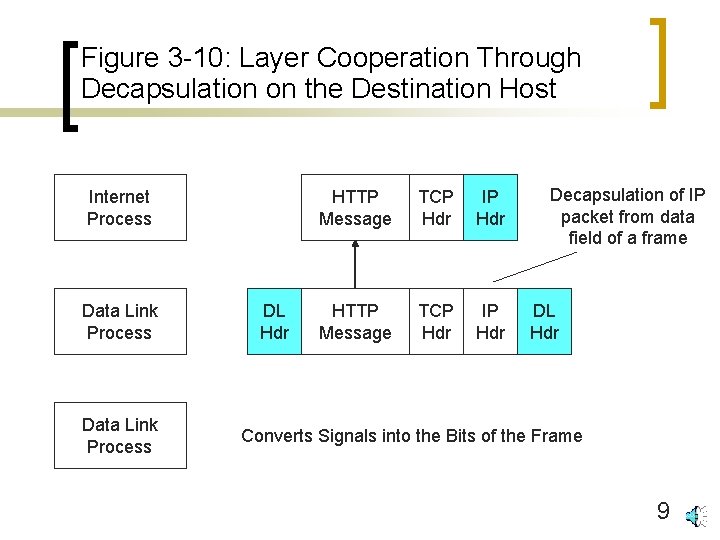
Figure 3 -10: Layer Cooperation Through Decapsulation on the Destination Host Internet Process Data Link Process DL Hdr HTTP Message TCP Hdr IP Hdr Decapsulation of IP packet from data field of a frame DL Hdr Converts Signals into the Bits of the Frame 9
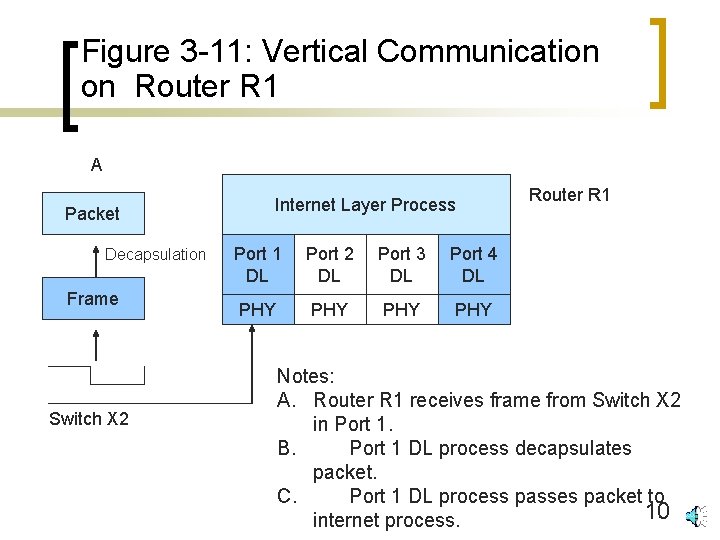
Figure 3 -11: Vertical Communication on Router R 1 A Packet Decapsulation Frame Switch X 2 Internet Layer Process Port 1 DL Port 2 DL Port 3 DL Port 4 DL PHY PHY Router R 1 Notes: A. Router R 1 receives frame from Switch X 2 in Port 1. B. Port 1 DL process decapsulates packet. C. Port 1 DL process passes packet to 10 internet process.
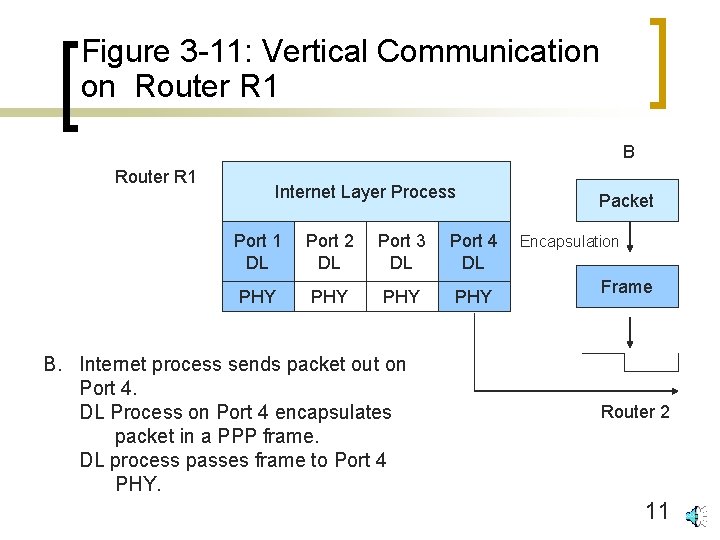
Figure 3 -11: Vertical Communication on Router R 1 B Router R 1 Internet Layer Process Port 1 DL Port 2 DL Port 3 DL Port 4 DL PHY PHY B. Internet process sends packet out on Port 4. DL Process on Port 4 encapsulates packet in a PPP frame. DL process passes frame to Port 4 PHY. Packet Encapsulation Frame Router 2 11
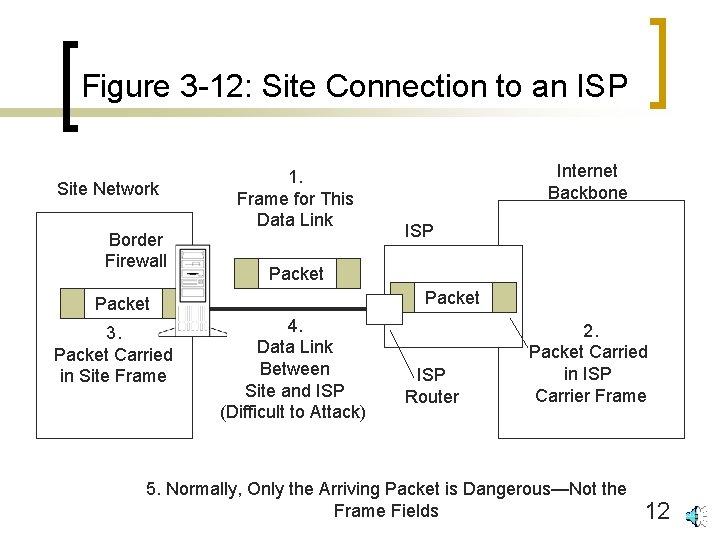
Figure 3 -12: Site Connection to an ISP Site Network Border Firewall 1. Frame for This Data Link ISP Packet 3. Packet Carried in Site Frame Internet Backbone 4. Data Link Between Site and ISP (Difficult to Attack) ISP Router 2. Packet Carried in ISP Carrier Frame 5. Normally, Only the Arriving Packet is Dangerous—Not the Frame Fields 12
- Slides: 12