
Figure 29 1 Preparing a karyotype a The
- Slides: 15
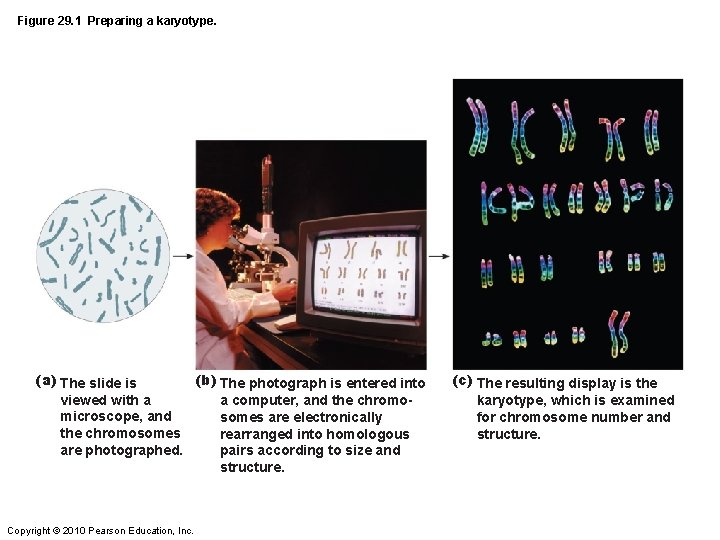
Figure 29. 1 Preparing a karyotype. (a) The slide is (b) The photograph is entered into viewed with a a computer, and the chromomicroscope, and somes are electronically the chromosomes rearranged into homologous are photographed. pairs according to size and structure. Copyright © 2010 Pearson Education, Inc. (c) The resulting display is the karyotype, which is examined for chromosome number and structure.
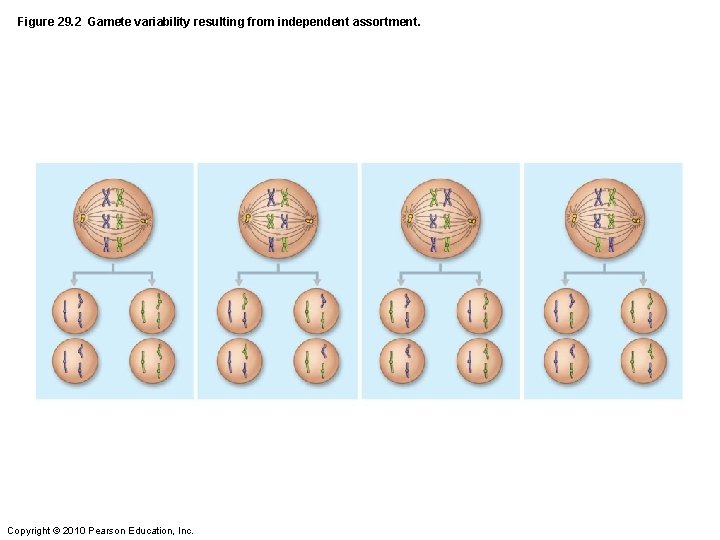
Figure 29. 2 Gamete variability resulting from independent assortment. Copyright © 2010 Pearson Education, Inc.
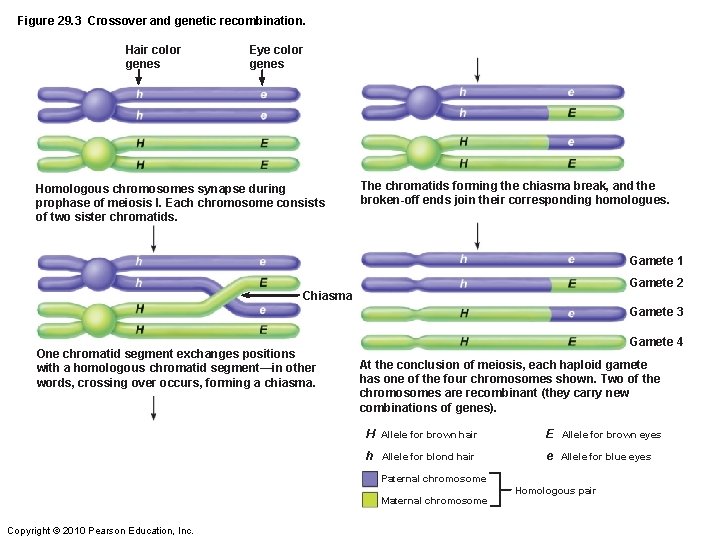
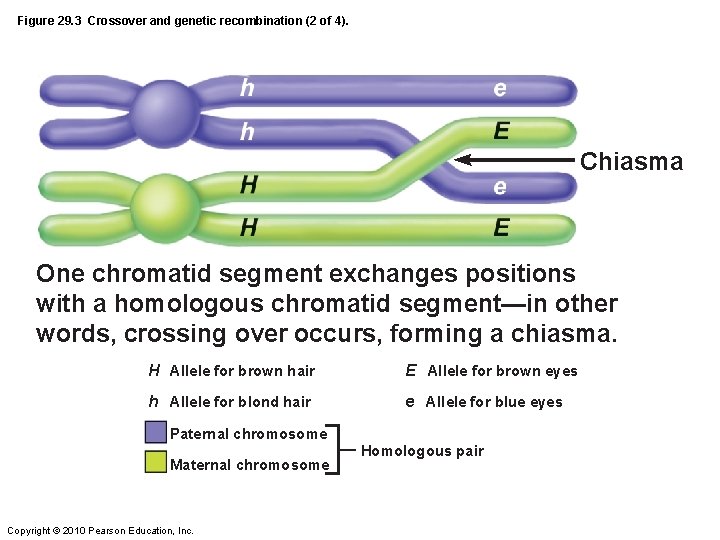
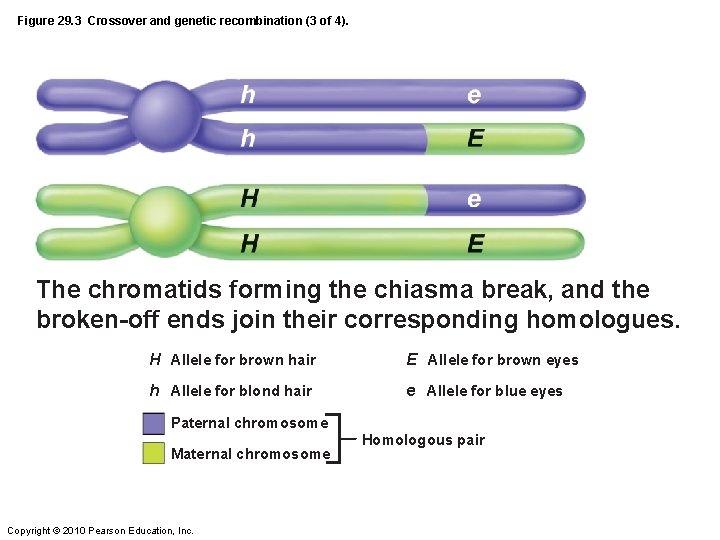
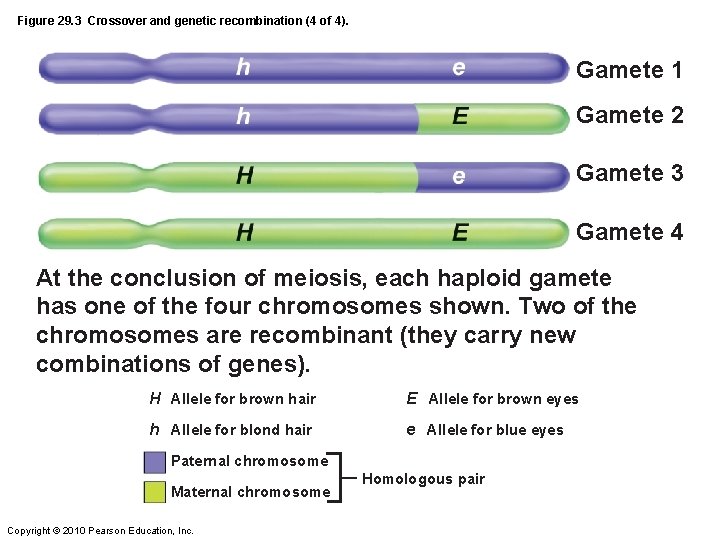
Figure 29. 3 Crossover and genetic recombination. Hair color genes Eye color genes Homologous chromosomes synapse during prophase of meiosis I. Each chromosome consists of two sister chromatids. The chromatids forming the chiasma break, and the broken-off ends join their corresponding homologues. Gamete 1 Gamete 2 Chiasma Gamete 3 One chromatid segment exchanges positions with a homologous chromatid segment—in other words, crossing over occurs, forming a chiasma. Gamete 4 At the conclusion of meiosis, each haploid gamete has one of the four chromosomes shown. Two of the chromosomes are recombinant (they carry new combinations of genes). H Allele for brown hair E Allele for brown eyes h Allele for blond hair e Allele for blue eyes Paternal chromosome Maternal chromosome Copyright © 2010 Pearson Education, Inc. Homologous pair
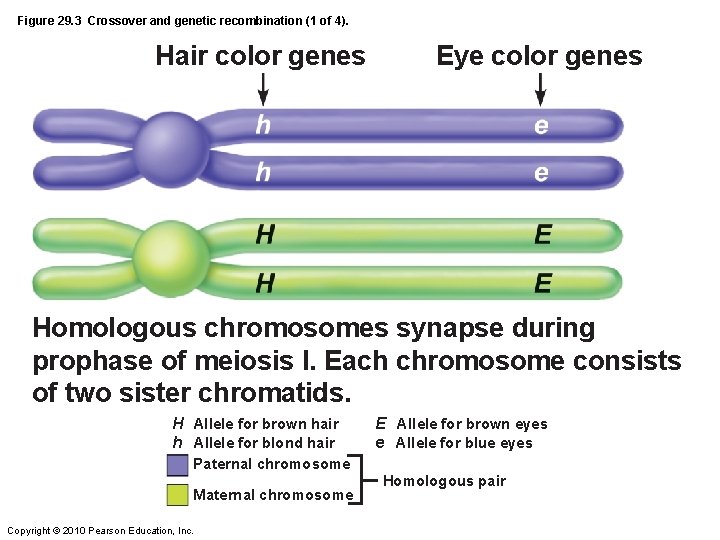
Figure 29. 3 Crossover and genetic recombination (1 of 4). Hair color genes Eye color genes Homologous chromosomes synapse during prophase of meiosis I. Each chromosome consists of two sister chromatids. H Allele for brown hair h Allele for blond hair E Allele for brown eyes e Allele for blue eyes Paternal chromosome Maternal chromosome Copyright © 2010 Pearson Education, Inc. Homologous pair
Figure 29. 3 Crossover and genetic recombination (2 of 4). Chiasma One chromatid segment exchanges positions with a homologous chromatid segment—in other words, crossing over occurs, forming a chiasma. H Allele for brown hair E Allele for brown eyes h Allele for blond hair e Allele for blue eyes Paternal chromosome Maternal chromosome Copyright © 2010 Pearson Education, Inc. Homologous pair
Figure 29. 3 Crossover and genetic recombination (3 of 4). The chromatids forming the chiasma break, and the broken-off ends join their corresponding homologues. H Allele for brown hair E Allele for brown eyes h Allele for blond hair e Allele for blue eyes Paternal chromosome Maternal chromosome Copyright © 2010 Pearson Education, Inc. Homologous pair
Figure 29. 3 Crossover and genetic recombination (4 of 4). Gamete 1 Gamete 2 Gamete 3 Gamete 4 At the conclusion of meiosis, each haploid gamete has one of the four chromosomes shown. Two of the chromosomes are recombinant (they carry new combinations of genes). H Allele for brown hair E Allele for brown eyes h Allele for blond hair e Allele for blue eyes Paternal chromosome Maternal chromosome Copyright © 2010 Pearson Education, Inc. Homologous pair
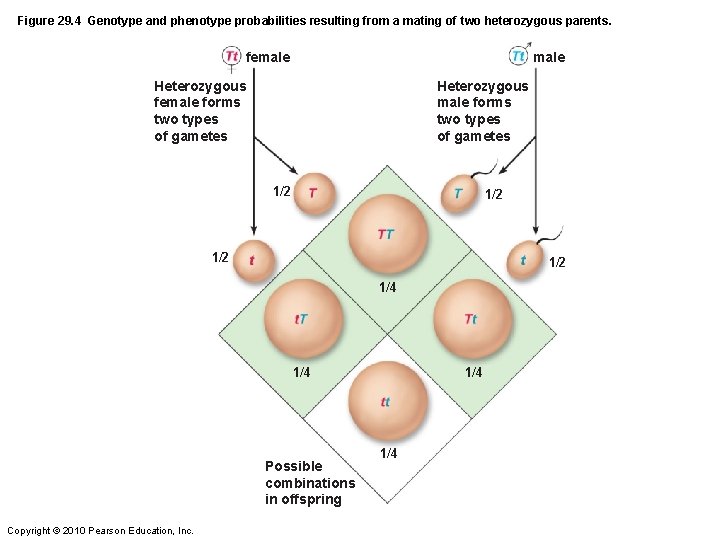
Figure 29. 4 Genotype and phenotype probabilities resulting from a mating of two heterozygous parents. female Heterozygous female forms two types of gametes Heterozygous male forms two types of gametes 1/2 1/2 1/4 1/4 Possible combinations in offspring Copyright © 2010 Pearson Education, Inc. 1/4
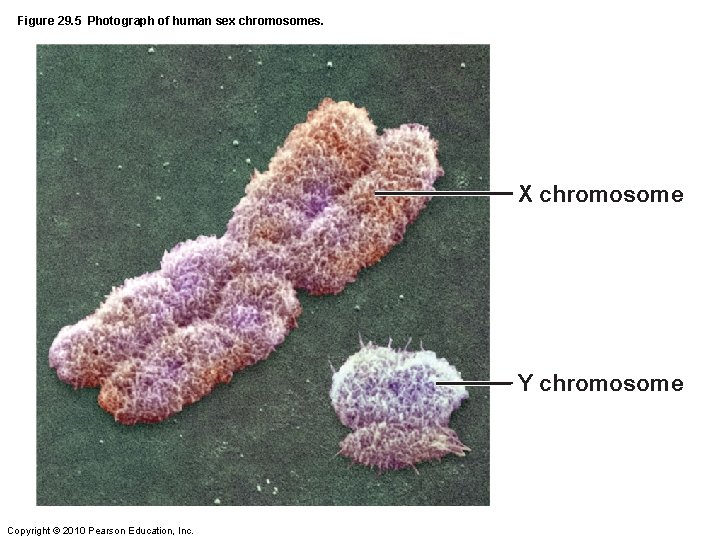
Figure 29. 5 Photograph of human sex chromosomes. X chromosome Y chromosome Copyright © 2010 Pearson Education, Inc.
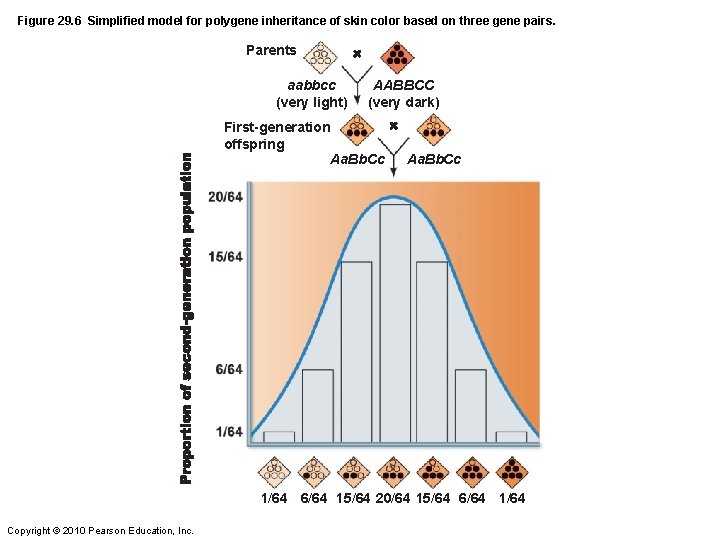
Figure 29. 6 Simplified model for polygene inheritance of skin color based on three gene pairs. Parents aabbcc (very light) AABBCC (very dark) First-generation offspring Aa. Bb. Cc 1/64 6/64 15/64 20/64 15/64 6/64 1/64 Copyright © 2010 Pearson Education, Inc.
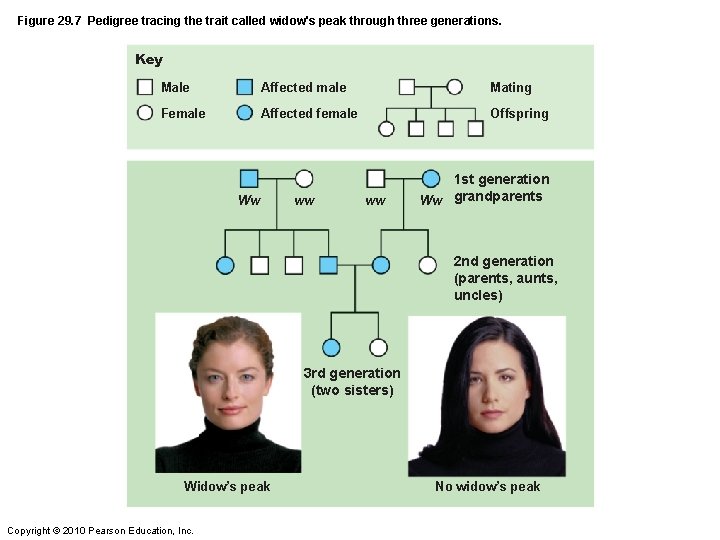
Figure 29. 7 Pedigree tracing the trait called widow's peak through three generations. Key Male Affected male Mating Female Affected female Offspring Ww ww ww 1 st generation Ww grandparents 2 nd generation (parents, aunts, uncles) 3 rd generation (two sisters) Widow’s peak Copyright © 2010 Pearson Education, Inc. No widow’s peak
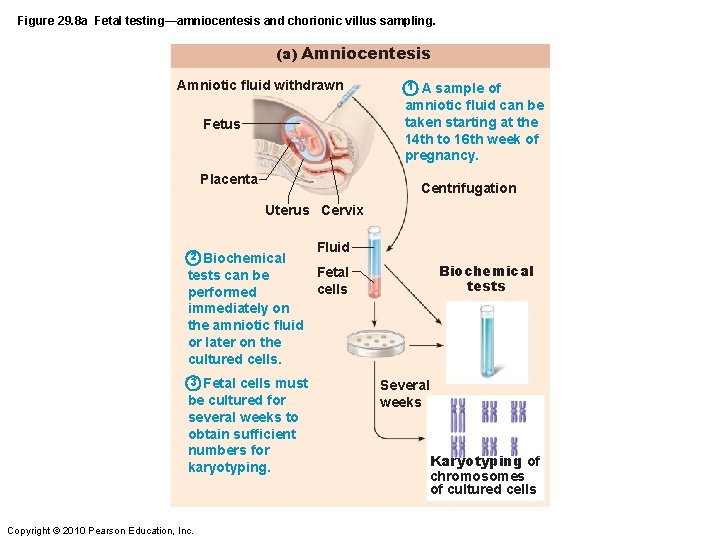
Figure 29. 8 a Fetal testing—amniocentesis and chorionic villus sampling. (a) Amniocentesis Amniotic fluid withdrawn Fetus Placenta 1 A sample of amniotic fluid can be taken starting at the 14 th to 16 th week of pregnancy. Centrifugation Uterus Cervix Fluid Biochemical Fetal tests can be cells performed immediately on the amniotic fluid or later on the cultured cells. 2 3 Fetal cells must be cultured for several weeks to obtain sufficient numbers for karyotyping. Copyright © 2010 Pearson Education, Inc. Biochemical tests Several weeks Karyotyping of chromosomes of cultured cells
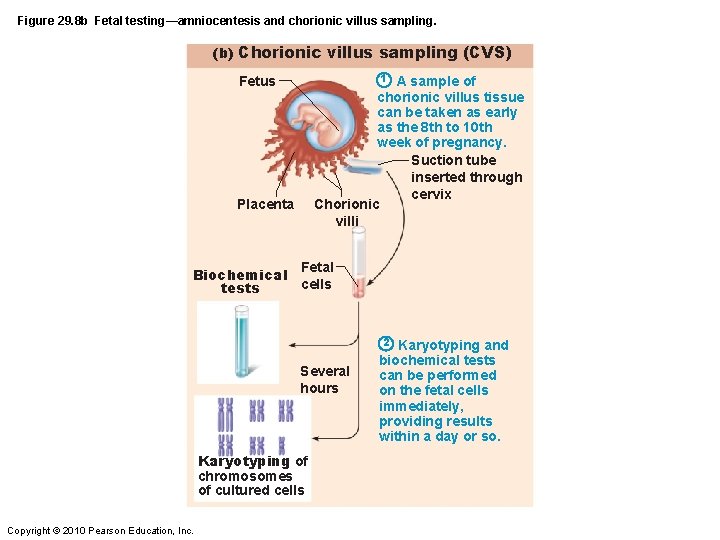
Figure 29. 8 b Fetal testing—amniocentesis and chorionic villus sampling. (b) Chorionic villus sampling (CVS) 1 Fetus A sample of chorionic villus tissue can be taken as early as the 8 th to 10 th week of pregnancy. Suction tube inserted through cervix Chorionic villi Placenta Fetal Biochemical cells tests 2 Several hours Karyotyping of chromosomes of cultured cells Copyright © 2010 Pearson Education, Inc. Karyotyping and biochemical tests can be performed on the fetal cells immediately, providing results within a day or so.
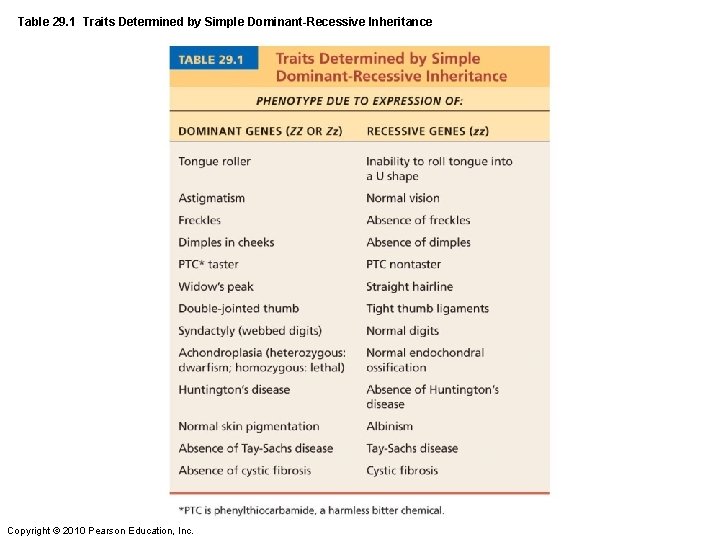
Table 29. 1 Traits Determined by Simple Dominant-Recessive Inheritance Copyright © 2010 Pearson Education, Inc.
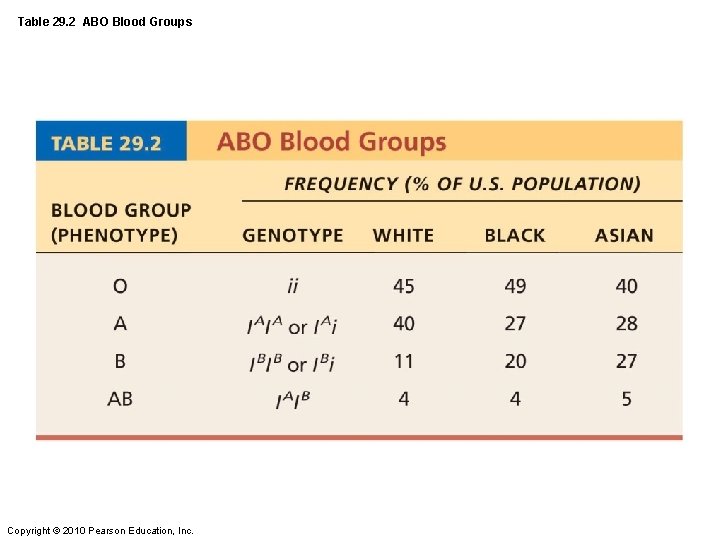
Table 29. 2 ABO Blood Groups Copyright © 2010 Pearson Education, Inc.