
Figure 24 1 Food guide pyramids Grains White
- Slides: 55
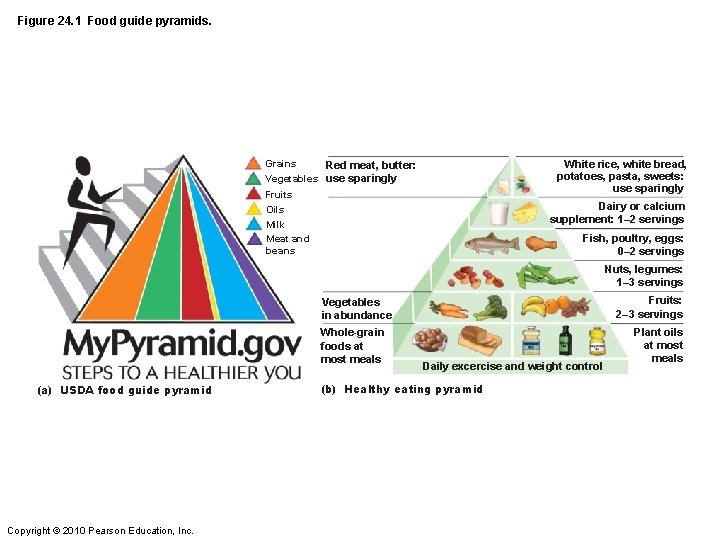
Figure 24. 1 Food guide pyramids. Grains White rice, white bread, potatoes, pasta, sweets: use sparingly Red meat, butter: Vegetables use sparingly Fruits Oils Dairy or calcium supplement: 1– 2 servings Milk Meat and beans Fish, poultry, eggs: 0– 2 servings Nuts, legumes: 1– 3 servings Fruits: 2– 3 servings Vegetables in abundance Whole-grain foods at most meals (a) USDA food guide pyramid Copyright © 2010 Pearson Education, Inc. Daily excercise and weight control (b) Healthy eating pyramid Plant oils at most meals
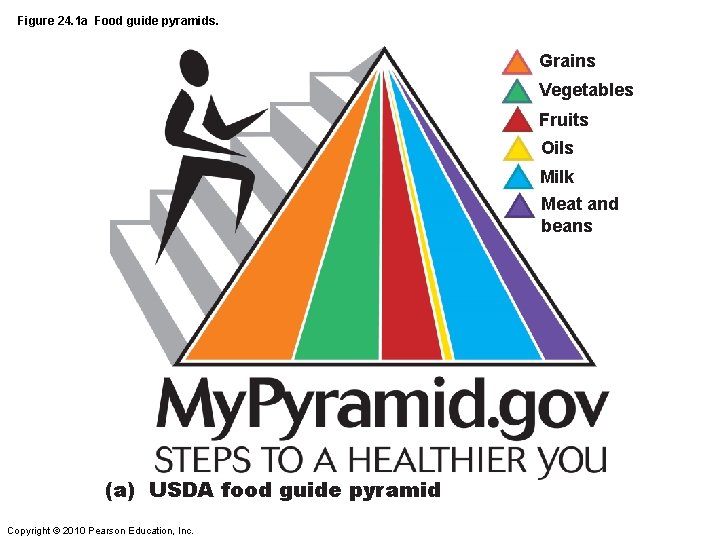
Figure 24. 1 a Food guide pyramids. Grains Vegetables Fruits Oils Milk Meat and beans (a) USDA food guide pyramid Copyright © 2010 Pearson Education, Inc.
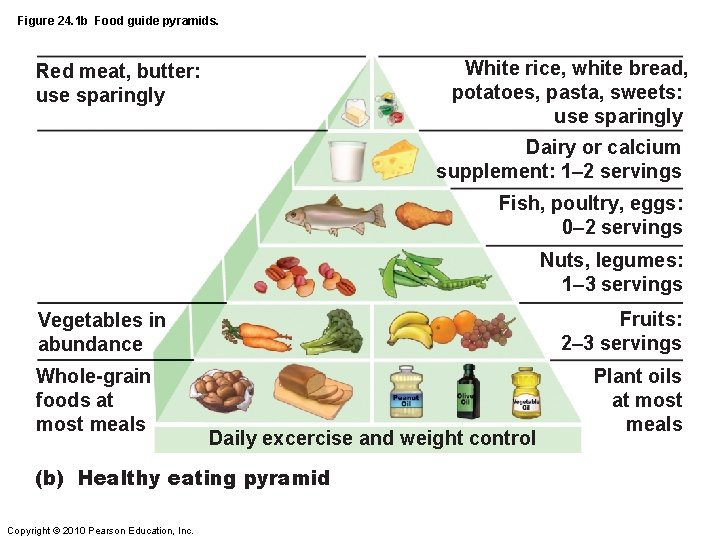
Figure 24. 1 b Food guide pyramids. White rice, white bread, potatoes, pasta, sweets: use sparingly Red meat, butter: use sparingly Dairy or calcium supplement: 1– 2 servings Fish, poultry, eggs: 0– 2 servings Nuts, legumes: 1– 3 servings Fruits: 2– 3 servings Vegetables in abundance Whole-grain foods at most meals Daily excercise and weight control (b) Healthy eating pyramid Copyright © 2010 Pearson Education, Inc. Plant oils at most meals
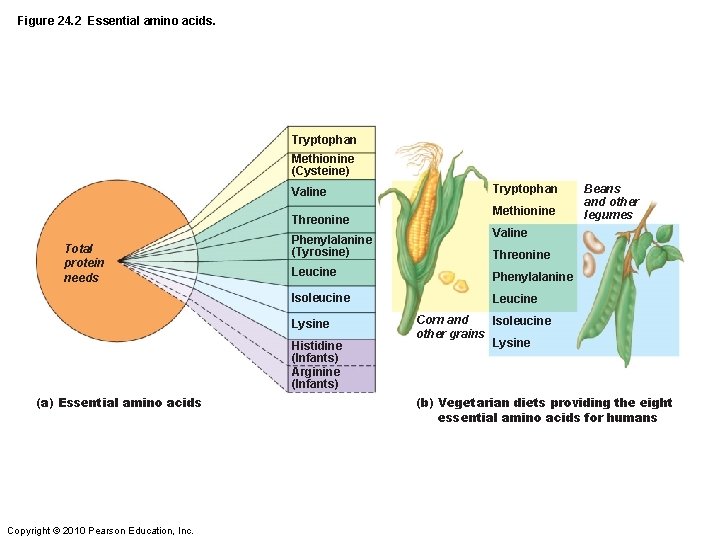
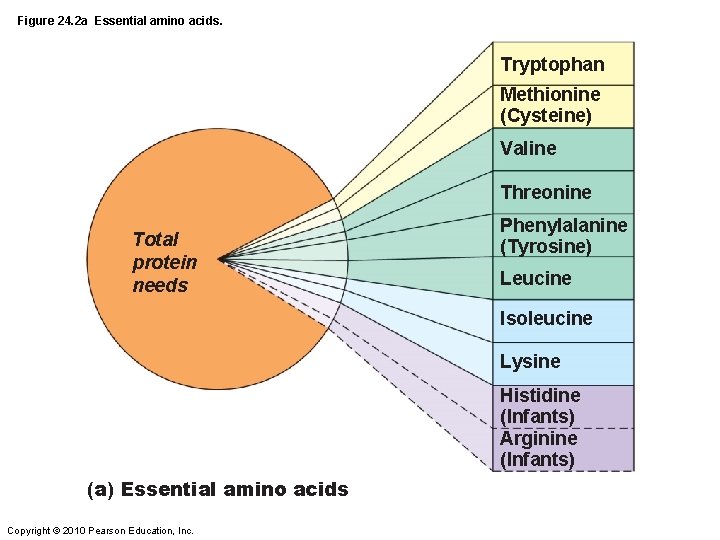
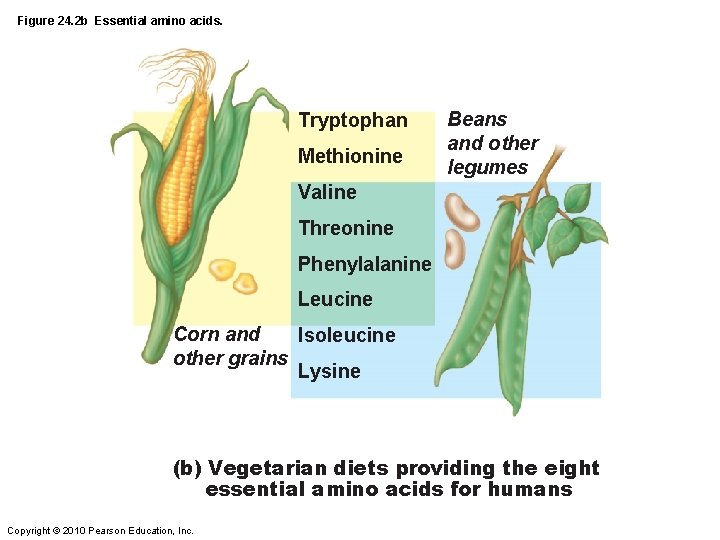
Figure 24. 2 Essential amino acids. Tryptophan Methionine (Cysteine) Valine Threonine Total protein needs Phenylalanine (Tyrosine) Beans and other legumes Valine Threonine Phenylalanine Isoleucine Leucine Histidine (Infants) Arginine (Infants) Copyright © 2010 Pearson Education, Inc. Methionine Leucine Lysine (a) Essential amino acids Tryptophan Corn and Isoleucine other grains Lysine (b) Vegetarian diets providing the eight essential amino acids for humans
Figure 24. 2 a Essential amino acids. Tryptophan Methionine (Cysteine) Valine Threonine Total protein needs Phenylalanine (Tyrosine) Leucine Isoleucine Lysine Histidine (Infants) Arginine (Infants) (a) Essential amino acids Copyright © 2010 Pearson Education, Inc.
Figure 24. 2 b Essential amino acids. Tryptophan Methionine Beans and other legumes Valine Threonine Phenylalanine Leucine Corn and Isoleucine other grains Lysine (b) Vegetarian diets providing the eight essential amino acids for humans Copyright © 2010 Pearson Education, Inc.
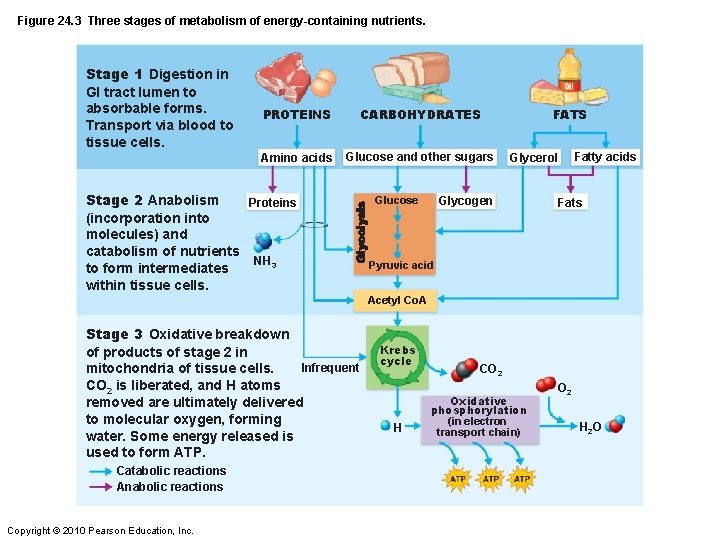
Figure 24. 3 Three stages of metabolism of energy-containing nutrients. Stage 1 Digestion in GI tract lumen to absorbable forms. Transport via blood to tissue cells. PROTEINS CARBOHYDRATES Amino acids Glucose and other sugars Stage 2 Anabolism Proteins (incorporation into molecules) and catabolism of nutrients NH 3 to form intermediates within tissue cells. FATS Glycerol Glycogen Glucose Fatty acids Fats Pyruvic acid Acetyl Co. A Stage 3 Oxidative breakdown of products of stage 2 in Infrequent mitochondria of tissue cells. CO 2 is liberated, and H atoms removed are ultimately delivered to molecular oxygen, forming water. Some energy released is used to form ATP. Catabolic reactions Anabolic reactions Copyright © 2010 Pearson Education, Inc. Krebs cycle H CO 2 Oxidative phosphorylation (in electron transport chain) O 2 H 2 O
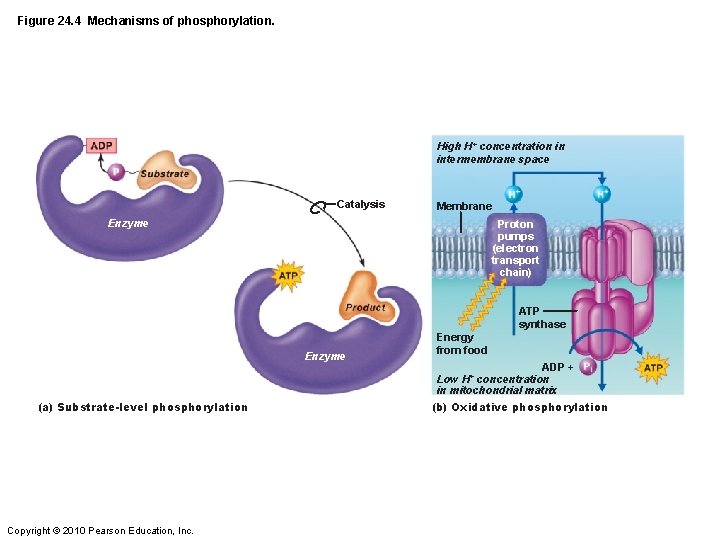
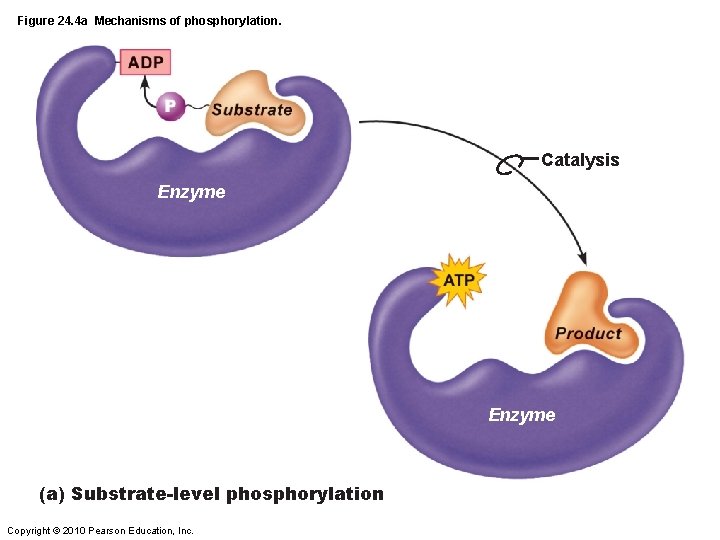
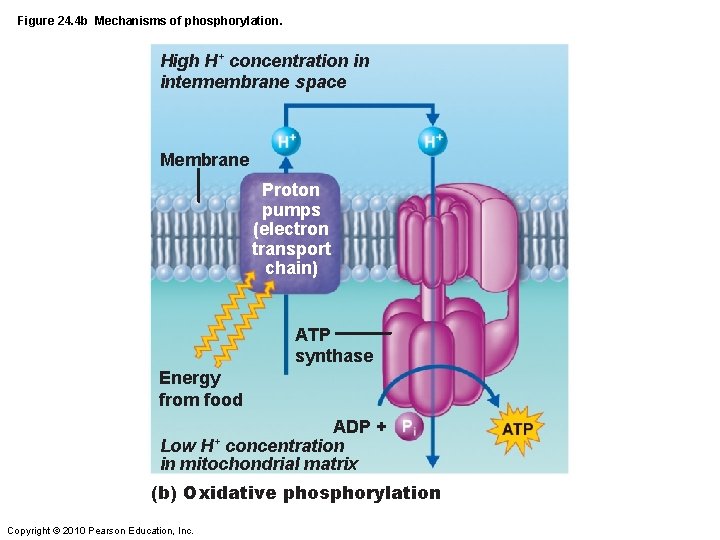
Figure 24. 4 Mechanisms of phosphorylation. High H+ concentration in intermembrane space Catalysis Membrane Enzyme Proton pumps (electron transport chain) ATP synthase Enzyme (a) Substrate-level phosphorylation Copyright © 2010 Pearson Education, Inc. Energy from food ADP + Low H+ concentration in mitochondrial matrix (b) Oxidative phosphorylation
Figure 24. 4 a Mechanisms of phosphorylation. Catalysis Enzyme (a) Substrate-level phosphorylation Copyright © 2010 Pearson Education, Inc.
Figure 24. 4 b Mechanisms of phosphorylation. High H+ concentration in intermembrane space Membrane Proton pumps (electron transport chain) ATP synthase Energy from food ADP + Low concentration in mitochondrial matrix H+ (b) Oxidative phosphorylation Copyright © 2010 Pearson Education, Inc.
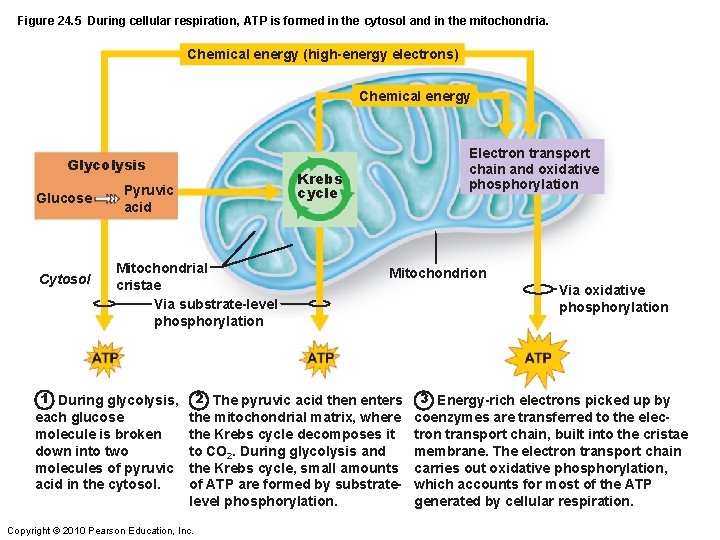
Figure 24. 5 During cellular respiration, ATP is formed in the cytosol and in the mitochondria. Chemical energy (high-energy electrons) Chemical energy Glycolysis Glucose Cytosol Krebs cycle Pyruvic acid Mitochondrial cristae Via substrate-level phosphorylation 1 During glycolysis, each glucose molecule is broken down into two molecules of pyruvic acid in the cytosol. Electron transport chain and oxidative phosphorylation Mitochondrion 2 The pyruvic acid then enters the mitochondrial matrix, where the Krebs cycle decomposes it to CO 2. During glycolysis and the Krebs cycle, small amounts of ATP are formed by substratelevel phosphorylation. Copyright © 2010 Pearson Education, Inc. Via oxidative phosphorylation 3 Energy-rich electrons picked up by coenzymes are transferred to the electron transport chain, built into the cristae membrane. The electron transport chain carries out oxidative phosphorylation, which accounts for most of the ATP generated by cellular respiration.
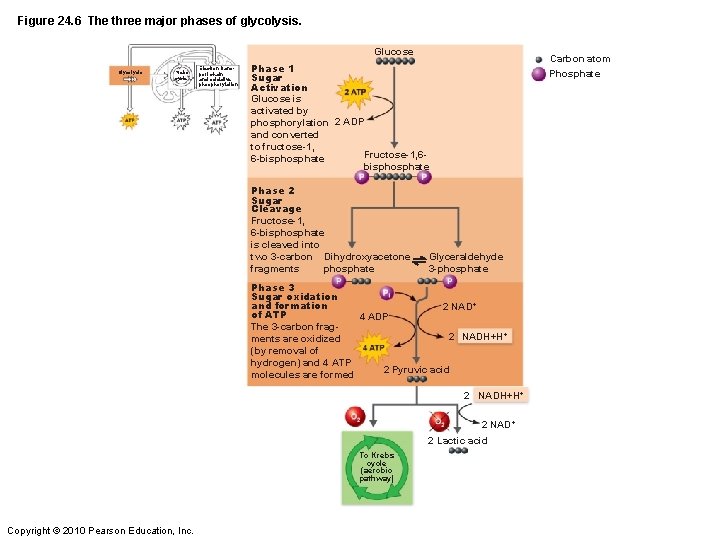
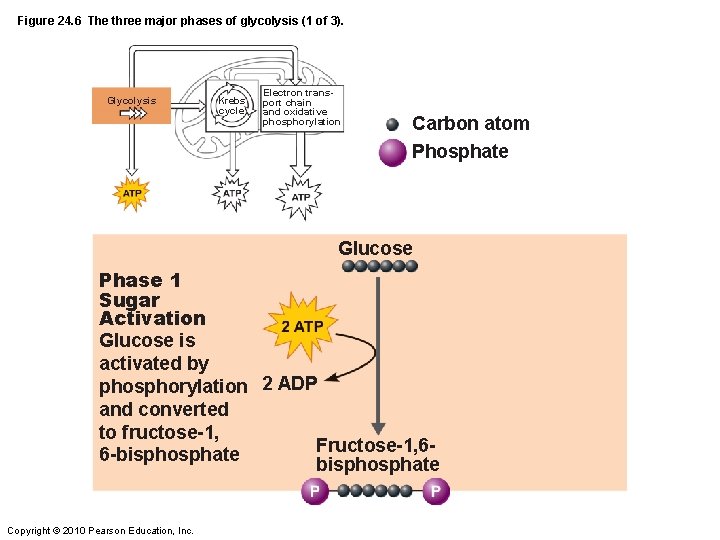
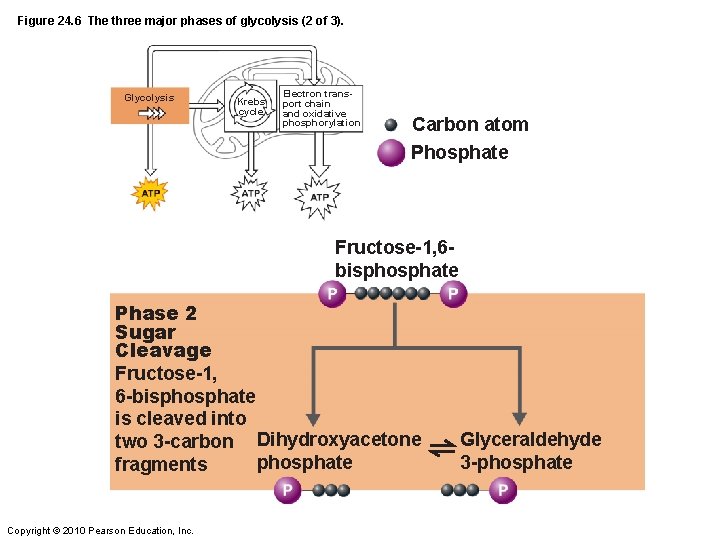
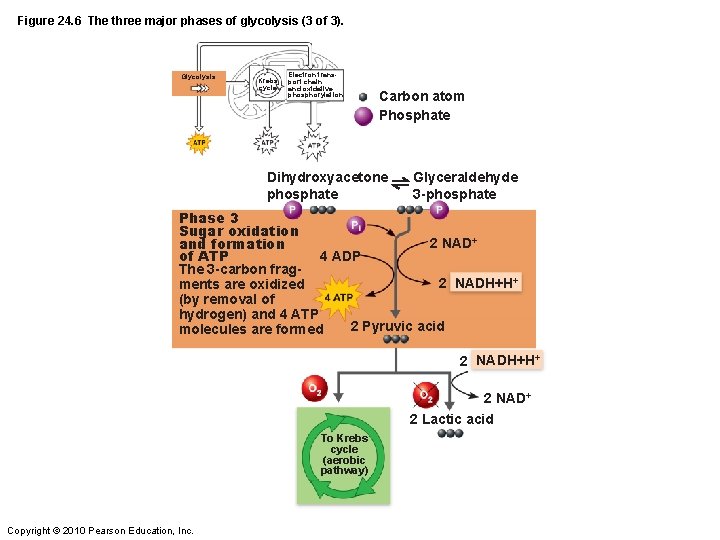
Figure 24. 6 The three major phases of glycolysis. Glucose Glycolysis Krebs cycle Electron transport chain and oxidative phosphorylation Carbon atom Phosphate Phase 1 Sugar Activation Glucose is activated by phosphorylation 2 ADP and converted to fructose-1, Fructose-1, 66 -bisphosphate Phase 2 Sugar Cleavage Fructose-1, 6 -bisphosphate is cleaved into two 3 -carbon Dihydroxyacetone fragments phosphate Glyceraldehyde 3 -phosphate Phase 3 Sugar oxidation and formation 2 NAD+ of ATP 4 ADP The 3 -carbon frag 2 NADH+H+ ments are oxidized (by removal of hydrogen) and 4 ATP 2 Pyruvic acid molecules are formed 2 NADH+H+ 2 NAD+ 2 Lactic acid To Krebs cycle (aerobic pathway) Copyright © 2010 Pearson Education, Inc.
Figure 24. 6 The three major phases of glycolysis (1 of 3). Glycolysis Krebs cycle Electron transport chain and oxidative phosphorylation Carbon atom Phosphate Glucose Phase 1 Sugar Activation Glucose is activated by phosphorylation 2 ADP and converted to fructose-1, Fructose-1, 66 -bisphosphate Copyright © 2010 Pearson Education, Inc.
Figure 24. 6 The three major phases of glycolysis (2 of 3). Glycolysis Krebs cycle Electron transport chain and oxidative phosphorylation Carbon atom Phosphate Fructose-1, 6 bisphosphate Phase 2 Sugar Cleavage Fructose-1, 6 -bisphosphate is cleaved into two 3 -carbon Dihydroxyacetone phosphate fragments Copyright © 2010 Pearson Education, Inc. Glyceraldehyde 3 -phosphate
Figure 24. 6 The three major phases of glycolysis (3 of 3). Glycolysis Krebs cycle Electron transport chain and oxidative phosphorylation Carbon atom Phosphate Dihydroxyacetone phosphate Glyceraldehyde 3 -phosphate Phase 3 Sugar oxidation 2 NAD+ and formation 4 ADP of ATP The 3 -carbon frag 2 NADH+H+ ments are oxidized (by removal of hydrogen) and 4 ATP 2 Pyruvic acid molecules are formed 2 NADH+H+ 2 NAD+ 2 Lactic acid To Krebs cycle (aerobic pathway) Copyright © 2010 Pearson Education, Inc.
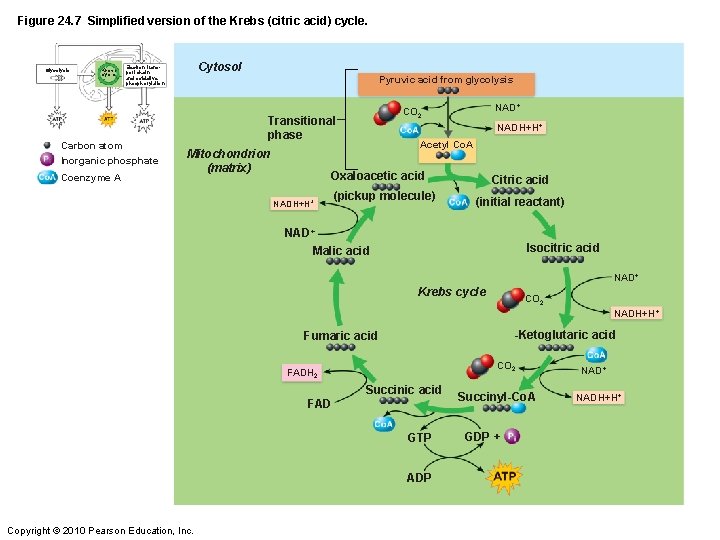
Figure 24. 7 Simplified version of the Krebs (citric acid) cycle. Glycolysis Krebs cycle Carbon atom Inorganic phosphate Coenzyme A Cytosol Electron transport chain and oxidative phosphorylation Pyruvic acid from glycolysis Transitional phase Mitochondrion (matrix) NAD+ CO 2 NADH+H+ Acetyl Co. A Oxaloacetic acid NADH+H+ (pickup molecule) Citric acid (initial reactant) NAD+ Malic acid Isocitric acid NAD+ Krebs cycle CO 2 NADH+H+ -Ketoglutaric acid Fumaric acid CO 2 FADH 2 Succinic acid FAD GTP ADP Copyright © 2010 Pearson Education, Inc. Succinyl-Co. A GDP + NADH+H+
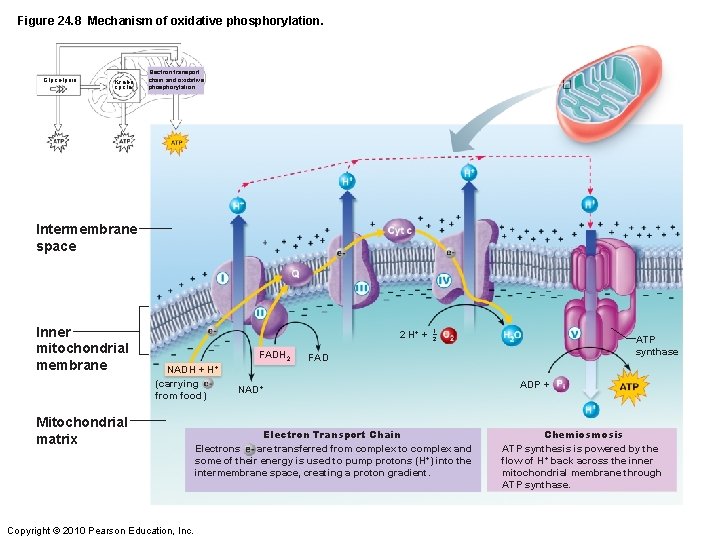
Figure 24. 8 Mechanism of oxidative phosphorylation. Glycolysis Krebs cycle Electron transport chain and oxidative phosphorylation Intermembrane space Inner mitochondrial membrane 2 H+ + FADH 2 NADH + (carrying from food) Mitochondrial matrix Copyright © 2010 Pearson Education, Inc. 1 2 ATP synthase FAD H+ NAD+ Electron Transport Chain Electrons are transferred from complex to complex and some of their energy is used to pump protons (H+) into the intermembrane space, creating a proton gradient. ADP + Chemiosmosis ATP synthesis is powered by the flow of H+ back across the inner mitochondrial membrane through ATP synthase.
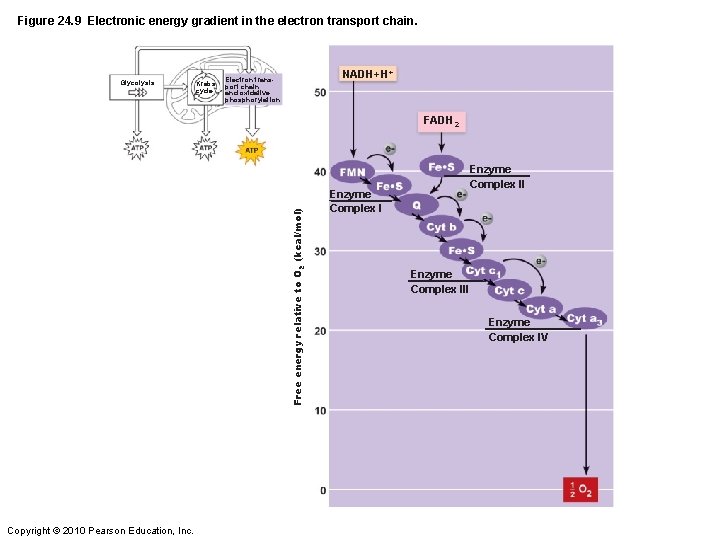
Figure 24. 9 Electronic energy gradient in the electron transport chain. Glycolysis Krebs cycle NADH+H+ Electron transport chain and oxidative phosphorylation Free energy relative to O 2 (kcal/mol) FADH 2 Copyright © 2010 Pearson Education, Inc. Enzyme Complex III Enzyme Complex IV
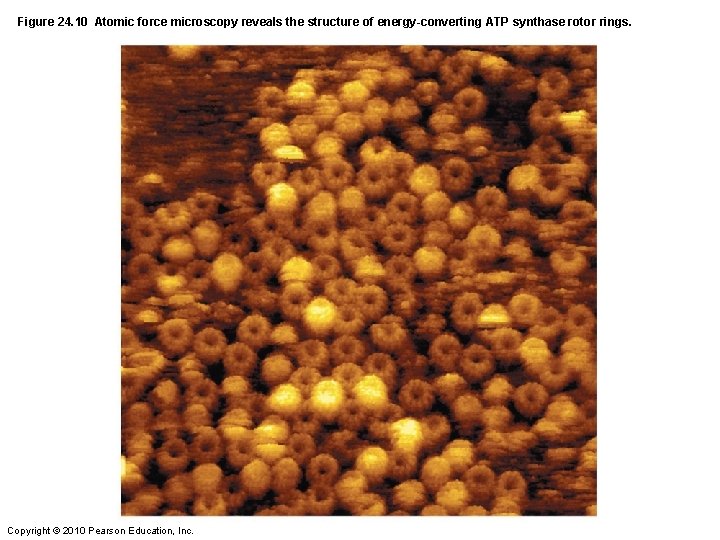
Figure 24. 10 Atomic force microscopy reveals the structure of energy-converting ATP synthase rotor rings. Copyright © 2010 Pearson Education, Inc.
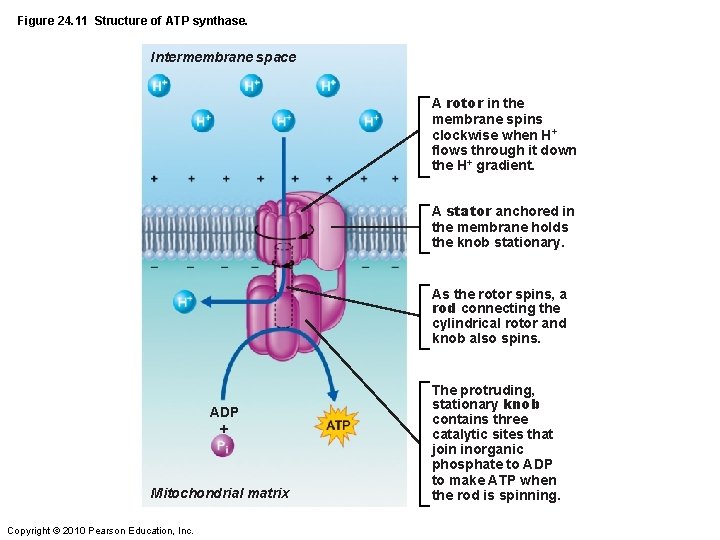
Figure 24. 11 Structure of ATP synthase. Intermembrane space A rotor in the membrane spins clockwise when H+ flows through it down the H+ gradient. A stator anchored in the membrane holds the knob stationary. As the rotor spins, a rod connecting the cylindrical rotor and knob also spins. ADP + Mitochondrial matrix Copyright © 2010 Pearson Education, Inc. The protruding, stationary knob contains three catalytic sites that join inorganic phosphate to ADP to make ATP when the rod is spinning.
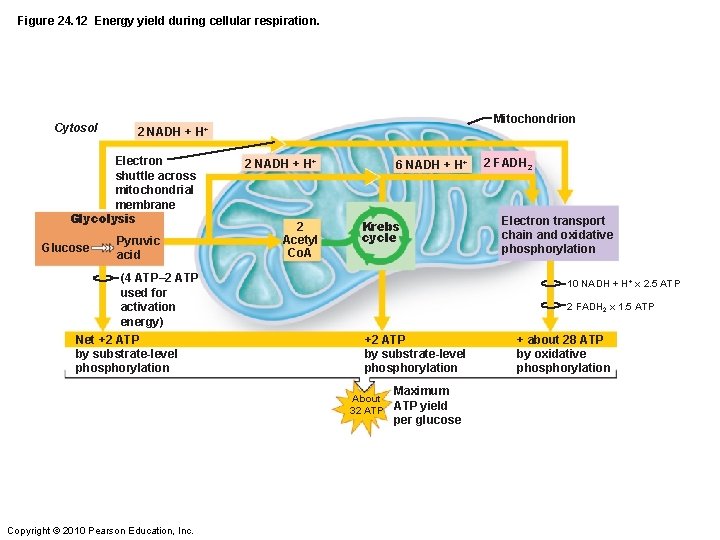
Figure 24. 12 Energy yield during cellular respiration. Cytosol Electron shuttle across mitochondrial membrane Glycolysis Glucose Mitochondrion 2 NADH + H+ Pyruvic acid 2 NADH + H+ 2 Acetyl Co. A 6 NADH + H+ Krebs cycle (4 ATP– 2 ATP used for activation energy) Net +2 ATP by substrate-level phosphorylation Electron transport chain and oxidative phosphorylation 10 NADH + H+ x 2. 5 ATP 2 FADH 2 x 1. 5 ATP +2 ATP by substrate-level phosphorylation About 32 ATP Copyright © 2010 Pearson Education, Inc. 2 FADH 2 Maximum ATP yield per glucose + about 28 ATP by oxidative phosphorylation
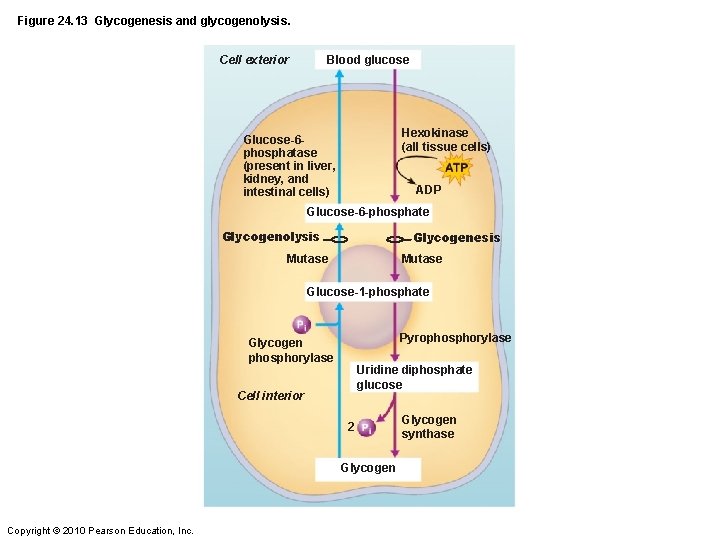
Figure 24. 13 Glycogenesis and glycogenolysis. Blood glucose Cell exterior Hexokinase (all tissue cells) Glucose-6 phosphatase (present in liver, kidney, and intestinal cells) ADP Glucose-6 -phosphate Glycogenolysis Glycogenesis Mutase Glucose-1 -phosphate Pyrophosphorylase Glycogen phosphorylase Uridine diphosphate glucose Cell interior 2 Glycogen Copyright © 2010 Pearson Education, Inc. Glycogen synthase
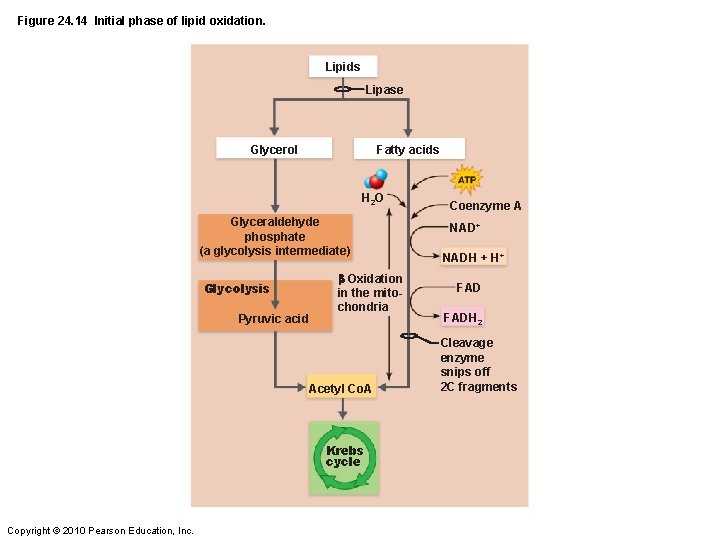
Figure 24. 14 Initial phase of lipid oxidation. Lipids Lipase Glycerol Fatty acids H 2 O Glyceraldehyde phosphate (a glycolysis intermediate) Glycolysis Pyruvic acid b Oxidation in the mitochondria Acetyl Co. A Krebs cycle Copyright © 2010 Pearson Education, Inc. Coenzyme A NAD+ NADH + H+ FADH 2 Cleavage enzyme snips off 2 C fragments
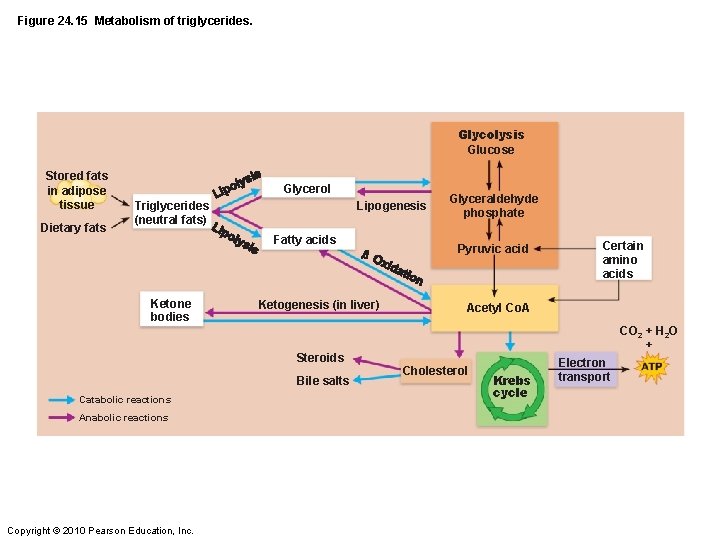
Figure 24. 15 Metabolism of triglycerides. Glycolysis Glucose Stored fats in adipose tissue Dietary fats Glycerol Triglycerides (neutral fats) Lipogenesis Fatty acids Ketone bodies Ketogenesis (in liver) Steroids Bile salts Catabolic reactions Anabolic reactions Copyright © 2010 Pearson Education, Inc. b Glyceraldehyde phosphate Pyruvic acid Certain amino acids Acetyl Co. A CO 2 + H 2 O + Cholesterol Krebs cycle Electron transport
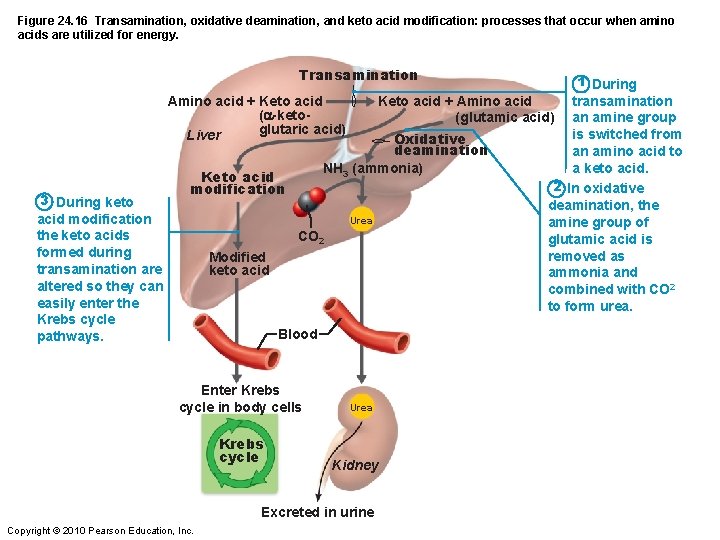
Figure 24. 16 Transamination, oxidative deamination, and keto acid modification: processes that occur when amino acids are utilized for energy. Transamination Amino acid + Keto acid (a-ketoglutaric acid) Liver 3 During keto acid modification the keto acids formed during transamination are altered so they can easily enter the Krebs cycle pathways. Urea CO 2 Modified keto acid Blood Enter Krebs cycle in body cells Krebs cycle Urea Kidney Excreted in urine Copyright © 2010 Pearson Education, Inc. transamination an amine group is switched from an amino acid to a keto acid. 2 In oxidative deamination, the amine group of glutamic acid is removed as ammonia and combined with CO 2 to form urea. Keto acid + Amino acid (glutamic acid) Oxidative deamination NH 3 (ammonia) Keto acid modification 1 During
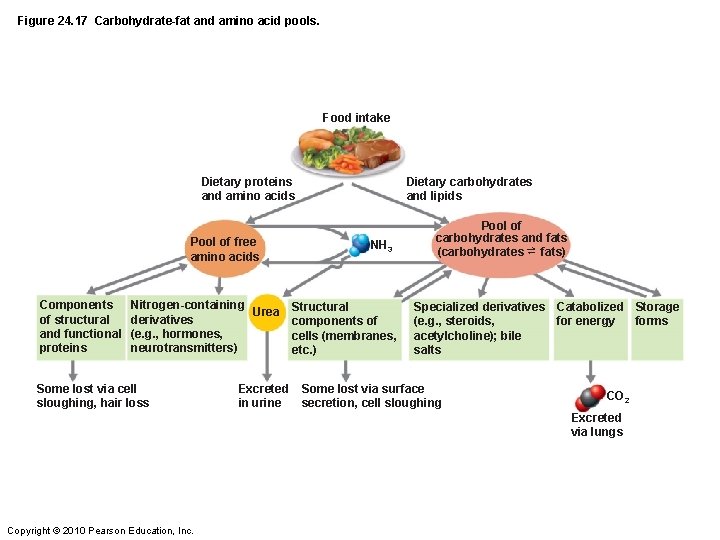
Figure 24. 17 Carbohydrate-fat and amino acid pools. Food intake Dietary proteins and amino acids Pool of free amino acids Components of structural and functional proteins Nitrogen-containing Urea derivatives (e. g. , hormones, neurotransmitters) Some lost via cell sloughing, hair loss Excreted in urine Dietary carbohydrates and lipids NH 3 Structural components of cells (membranes, etc. ) Pool of carbohydrates and fats (carbohydrates fats) Specialized derivatives Catabolized Storage (e. g. , steroids, for energy forms acetylcholine); bile salts Some lost via surface secretion, cell sloughing CO 2 Excreted via lungs Copyright © 2010 Pearson Education, Inc.
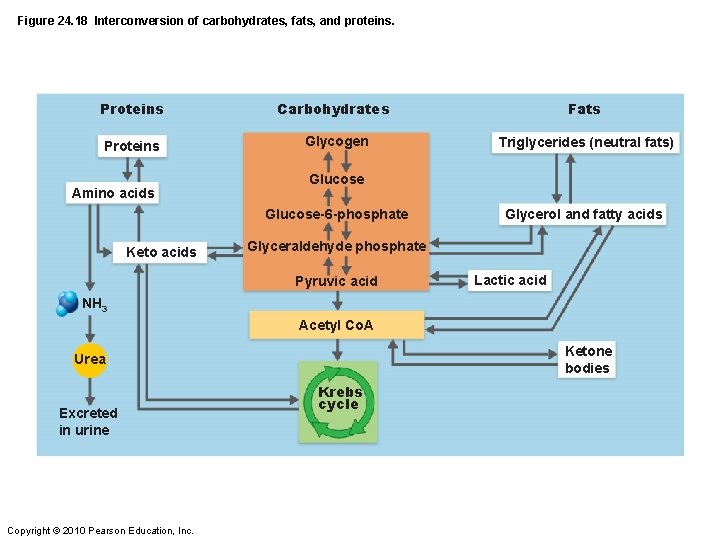
Figure 24. 18 Interconversion of carbohydrates, fats, and proteins. Proteins Carbohydrates Fats Proteins Glycogen Triglycerides (neutral fats) Amino acids Glucose-6 -phosphate Keto acids Glycerol and fatty acids Glyceraldehyde phosphate Pyruvic acid Lactic acid NH 3 Acetyl Co. A Ketone bodies Urea Excreted in urine Copyright © 2010 Pearson Education, Inc. Krebs cycle
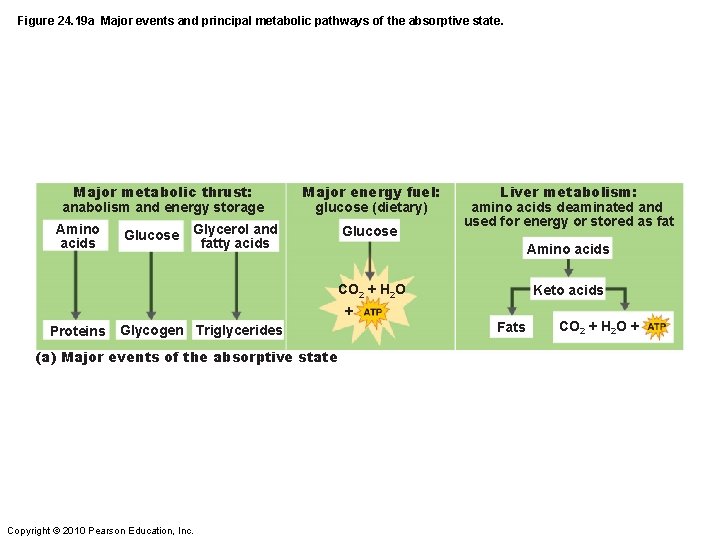
Figure 24. 19 a Major events and principal metabolic pathways of the absorptive state. Major metabolic thrust: anabolism and energy storage Amino acids Glucose Major energy fuel: glucose (dietary) Glycerol and fatty acids Glucose Liver metabolism: amino acids deaminated and used for energy or stored as fat Amino acids CO 2 + H 2 O Keto acids + Proteins Glycogen Triglycerides (a) Major events of the absorptive state Copyright © 2010 Pearson Education, Inc. Fats CO 2 + H 2 O +
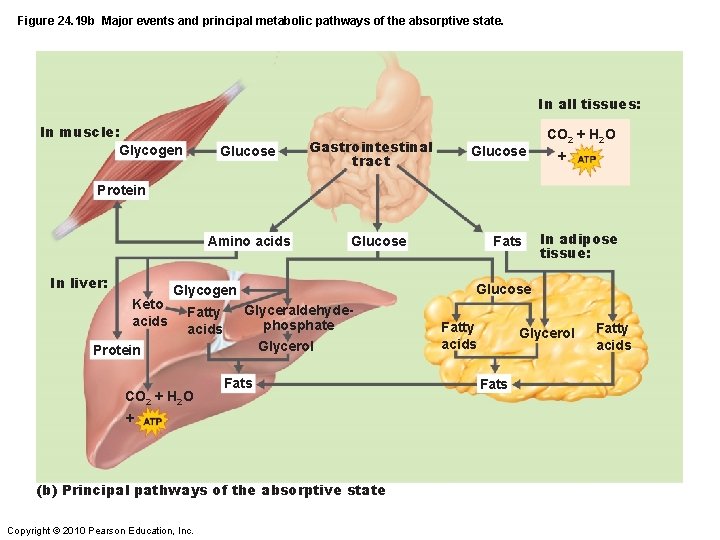
Figure 24. 19 b Major events and principal metabolic pathways of the absorptive state. In all tissues: In muscle: Glycogen Glucose Gastrointestinal tract Glucose CO 2 + H 2 O + Protein Amino acids In liver: Keto acids Glucose Glyceraldehydephosphate Glycerol Protein CO 2 + H 2 O Fats + (b) Principal pathways of the absorptive state Copyright © 2010 Pearson Education, Inc. In adipose tissue: Glucose Glycogen Fatty acids Glycerol Fats Fatty acids
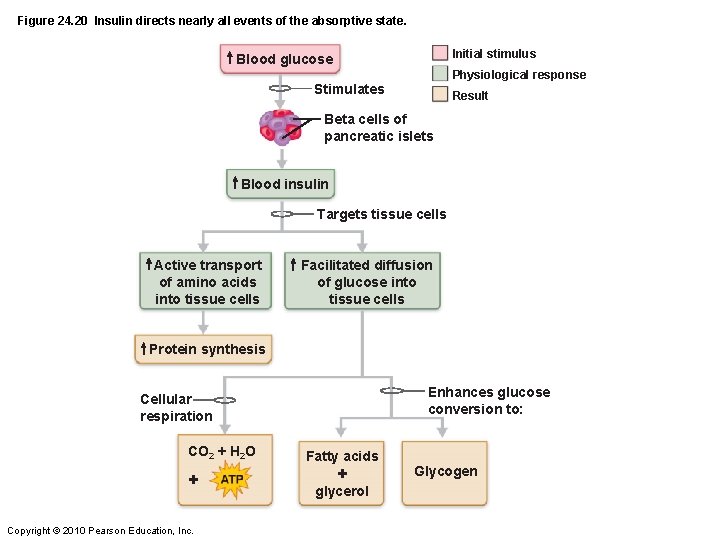
Figure 24. 20 Insulin directs nearly all events of the absorptive state. Initial stimulus Blood glucose Physiological response Stimulates Result Beta cells of pancreatic islets Blood insulin Targets tissue cells Active transport of amino acids into tissue cells Facilitated diffusion of glucose into tissue cells Protein synthesis Enhances glucose conversion to: Cellular respiration CO 2 + H 2 O + Copyright © 2010 Pearson Education, Inc. Fatty acids + glycerol Glycogen
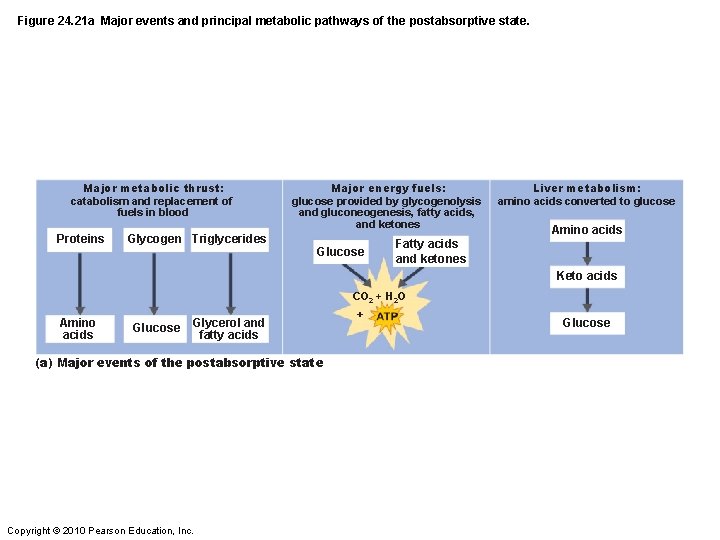
Figure 24. 21 a Major events and principal metabolic pathways of the postabsorptive state. Major metabolic thrust: catabolism and replacement of fuels in blood Proteins Glycogen Triglycerides Major energy fuels: glucose provided by glycogenolysis and gluconeogenesis, fatty acids, and ketones Glucose Liver metabolism: amino acids converted to glucose Amino acids Fatty acids and ketones Keto acids CO 2 + H 2 O Amino acids Glucose Glycerol and fatty acids (a) Major events of the postabsorptive state Copyright © 2010 Pearson Education, Inc. + Glucose
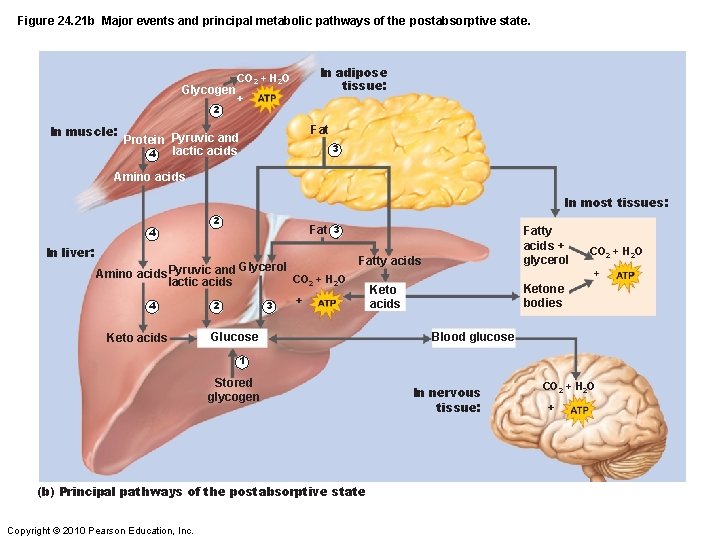
Figure 24. 21 b Major events and principal metabolic pathways of the postabsorptive state. Glycogen 2 In muscle: In adipose tissue: CO 2 + H 2 O + Fat Protein Pyruvic and lactic acids 4 3 Amino acids In most tissues: 4 2 In liver: Amino acids Pyruvic and lactic acids 4 Keto acids Fat 3 Glycerol 2 3 Fatty acids + glycerol Fatty acids CO 2 + H 2 O + Glucose CO 2 + H 2 O + Ketone bodies Keto acids Blood glucose 1 Stored glycogen (b) Principal pathways of the postabsorptive state Copyright © 2010 Pearson Education, Inc. In nervous tissue: CO 2 + H 2 O +
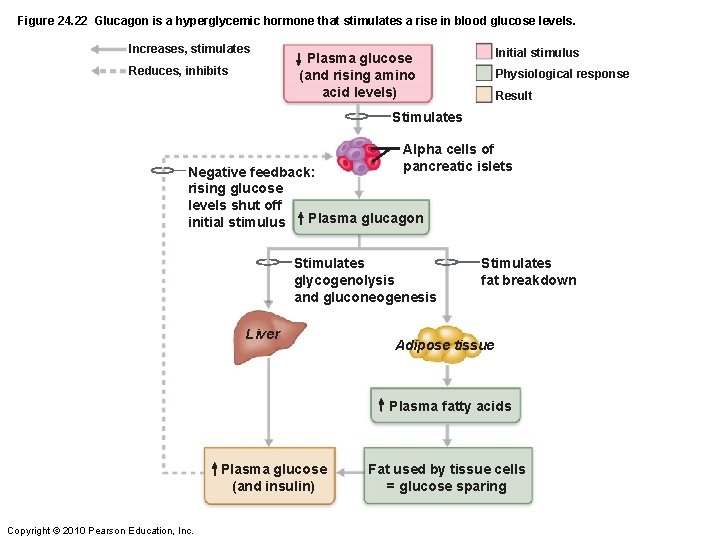
Figure 24. 22 Glucagon is a hyperglycemic hormone that stimulates a rise in blood glucose levels. Increases, stimulates Reduces, inhibits Initial stimulus Plasma glucose (and rising amino acid levels) Physiological response Result Stimulates Alpha cells of pancreatic islets Negative feedback: rising glucose levels shut off Plasma glucagon initial stimulus Stimulates glycogenolysis and gluconeogenesis Liver Stimulates fat breakdown Adipose tissue Plasma fatty acids Plasma glucose (and insulin) Copyright © 2010 Pearson Education, Inc. Fat used by tissue cells = glucose sparing
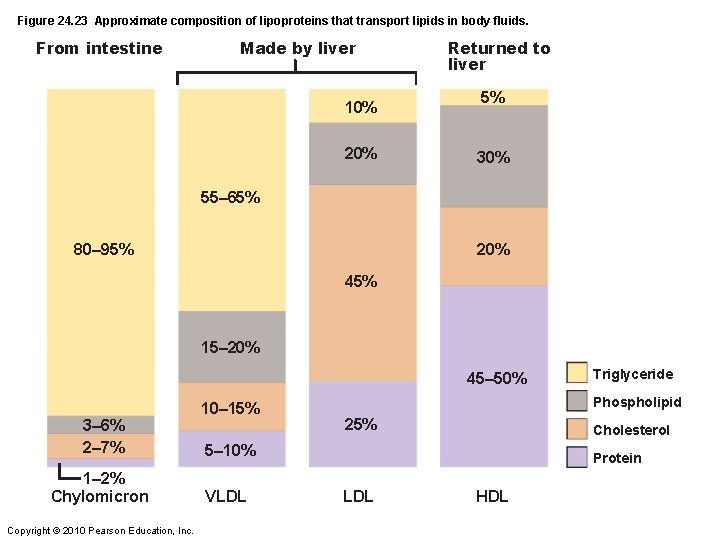
Figure 24. 23 Approximate composition of lipoproteins that transport lipids in body fluids. From intestine Made by liver 10% 20% Returned to liver 5% 30% 55– 65% 80– 95% 20% 45% 15– 20% 45– 50% 3– 6% 2– 7% 1– 2% Chylomicron Copyright © 2010 Pearson Education, Inc. 10– 15% Phospholipid 25% Cholesterol 5– 10% VLDL Triglyceride Protein LDL HDL
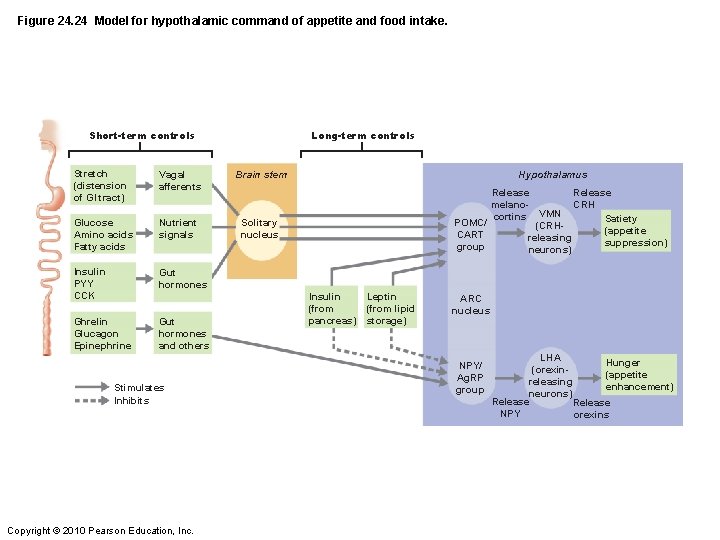
Figure 24. 24 Model for hypothalamic command of appetite and food intake. Short-term controls Long-term controls Stretch (distension of GI tract) Vagal afferents Brain stem Glucose Amino acids Fatty acids Nutrient signals Solitary nucleus Insulin PYY CCK Gut hormones Ghrelin Glucagon Epinephrine Gut hormones and others Stimulates Inhibits Copyright © 2010 Pearson Education, Inc. Hypothalamus Release melano. CRH cortins VMN Satiety POMC/ (CRH(appetite CART releasing suppression) group neurons) Insulin (from pancreas) Leptin (from lipid storage) ARC nucleus NPY/ Ag. RP group LHA Hunger (orexin(appetite releasing enhancement) neurons) Release NPY orexins
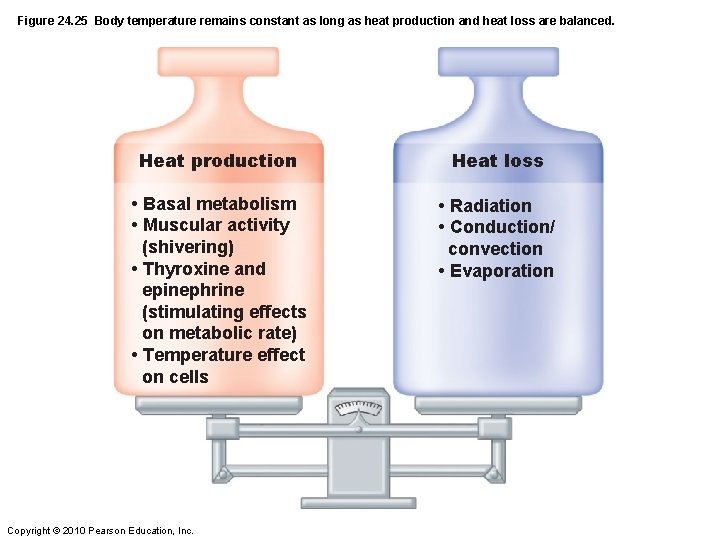
Figure 24. 25 Body temperature remains constant as long as heat production and heat loss are balanced. Heat production Heat loss • Basal metabolism • Muscular activity (shivering) • Thyroxine and epinephrine (stimulating effects on metabolic rate) • Temperature effect on cells • Radiation • Conduction/ convection • Evaporation Copyright © 2010 Pearson Education, Inc.
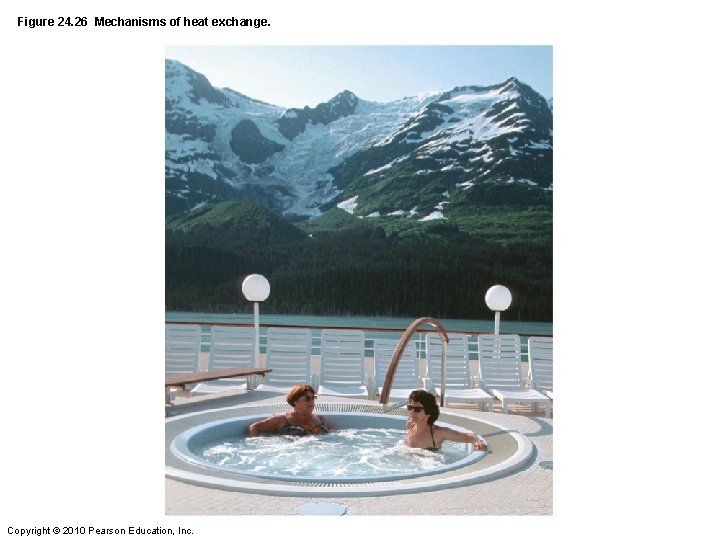
Figure 24. 26 Mechanisms of heat exchange. Copyright © 2010 Pearson Education, Inc.
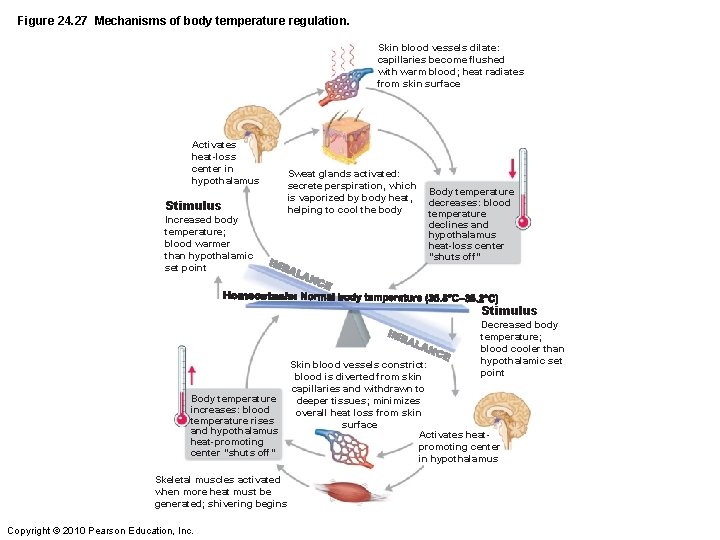
Figure 24. 27 Mechanisms of body temperature regulation. Skin blood vessels dilate: capillaries become flushed with warm blood; heat radiates from skin surface Activates heat-loss center in hypothalamus Stimulus Increased body temperature; blood warmer than hypothalamic set point Sweat glands activated: secrete perspiration, which is vaporized by body heat, helping to cool the body Body temperature decreases: blood temperature declines and hypothalamus heat-loss center “shuts off” Stimulus Decreased body temperature; blood cooler than hypothalamic set point Body temperature increases: blood temperature rises and hypothalamus heat-promoting center “shuts off” Skeletal muscles activated when more heat must be generated; shivering begins Copyright © 2010 Pearson Education, Inc. Skin blood vessels constrict: blood is diverted from skin capillaries and withdrawn to deeper tissues; minimizes overall heat loss from skin surface Activates heatpromoting center in hypothalamus
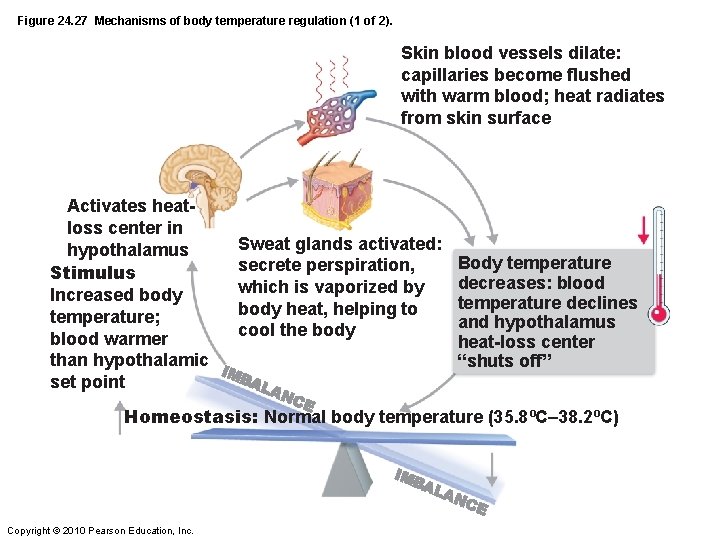
Figure 24. 27 Mechanisms of body temperature regulation (1 of 2). Skin blood vessels dilate: capillaries become flushed with warm blood; heat radiates from skin surface Activates heatloss center in hypothalamus Stimulus Increased body temperature; blood warmer than hypothalamic set point Sweat glands activated: secrete perspiration, which is vaporized by body heat, helping to cool the body Body temperature decreases: blood temperature declines and hypothalamus heat-loss center “shuts off” Homeostasis: Normal body temperature (35. 8ºC– 38. 2ºC) Copyright © 2010 Pearson Education, Inc.
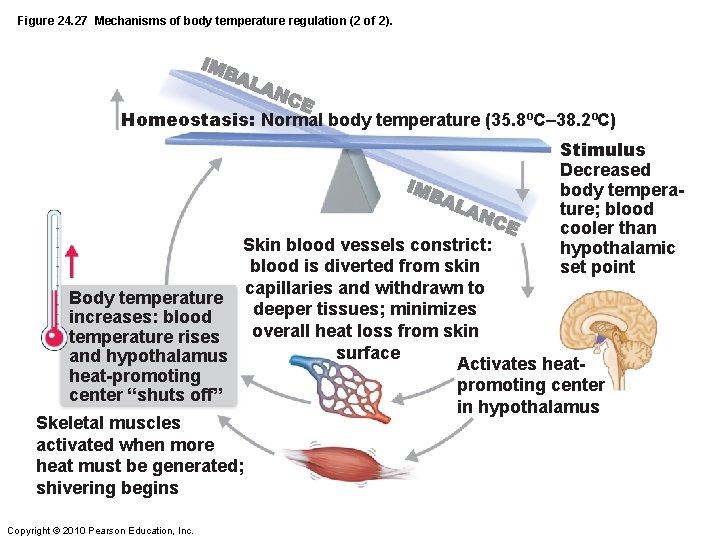
Figure 24. 27 Mechanisms of body temperature regulation (2 of 2). Homeostasis: Normal body temperature (35. 8ºC– 38. 2ºC) Stimulus Decreased body temperature; blood cooler than hypothalamic set point Skin blood vessels constrict: blood is diverted from skin capillaries and withdrawn to Body temperature deeper tissues; minimizes increases: blood overall heat loss from skin temperature rises surface and hypothalamus Activates heat-promoting center “shuts off” in hypothalamus Skeletal muscles activated when more heat must be generated; shivering begins Copyright © 2010 Pearson Education, Inc.
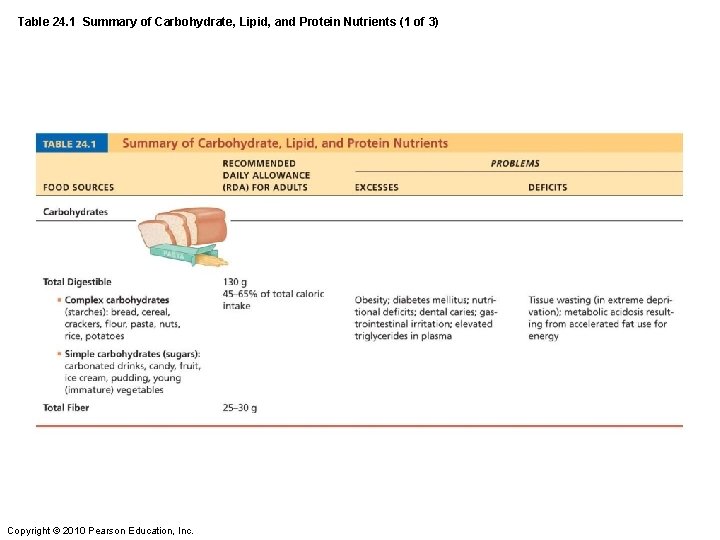
Table 24. 1 Summary of Carbohydrate, Lipid, and Protein Nutrients (1 of 3) Copyright © 2010 Pearson Education, Inc.
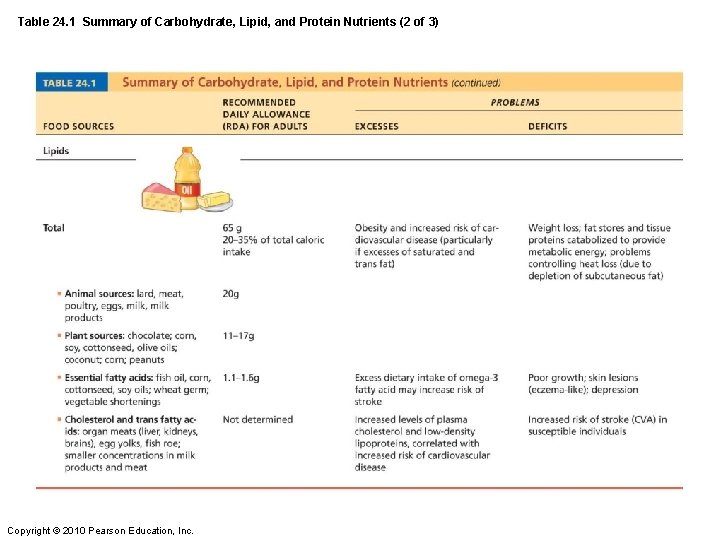
Table 24. 1 Summary of Carbohydrate, Lipid, and Protein Nutrients (2 of 3) Copyright © 2010 Pearson Education, Inc.
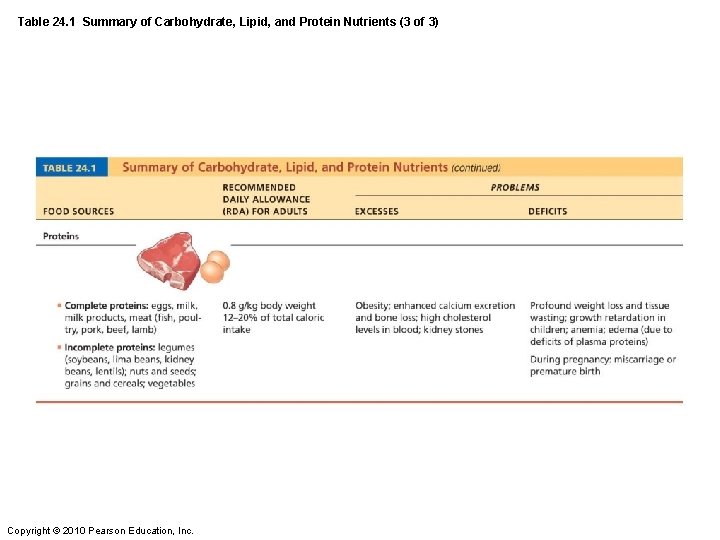
Table 24. 1 Summary of Carbohydrate, Lipid, and Protein Nutrients (3 of 3) Copyright © 2010 Pearson Education, Inc.
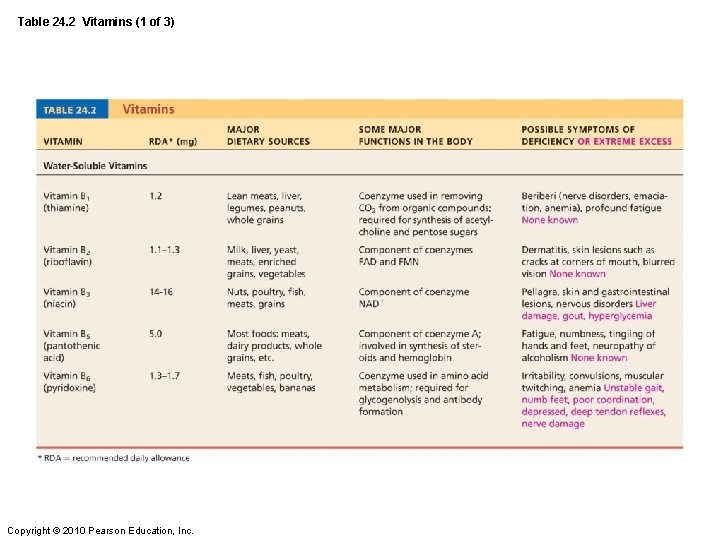
Table 24. 2 Vitamins (1 of 3) Copyright © 2010 Pearson Education, Inc.
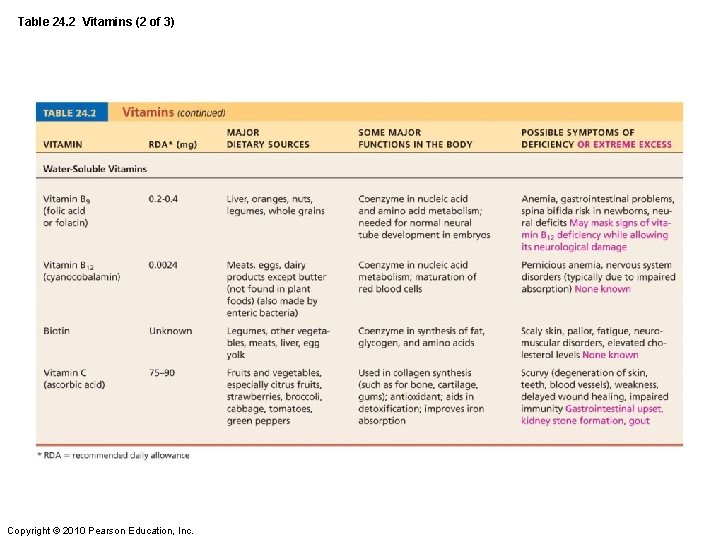
Table 24. 2 Vitamins (2 of 3) Copyright © 2010 Pearson Education, Inc.
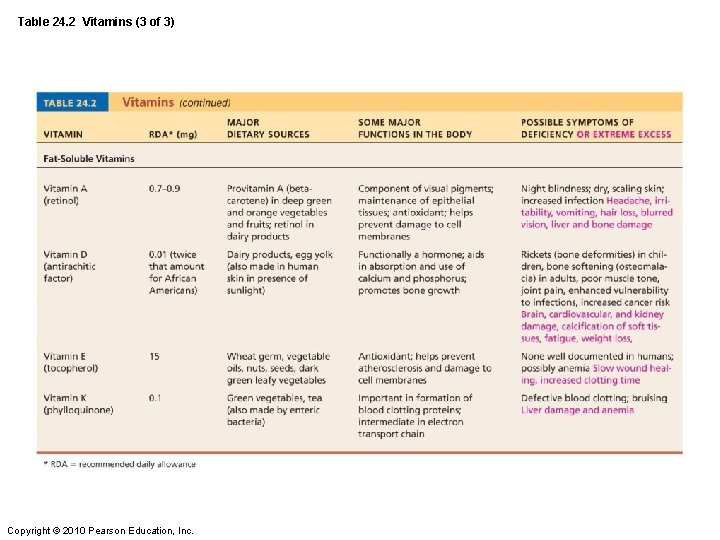
Table 24. 2 Vitamins (3 of 3) Copyright © 2010 Pearson Education, Inc.
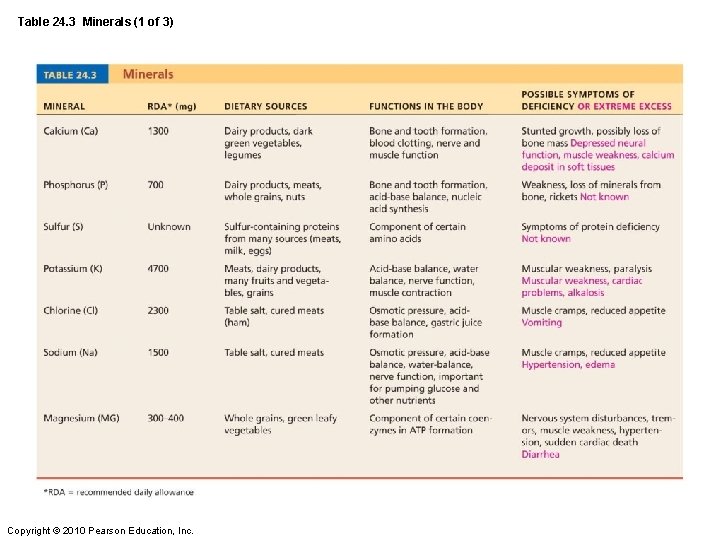
Table 24. 3 Minerals (1 of 3) Copyright © 2010 Pearson Education, Inc.
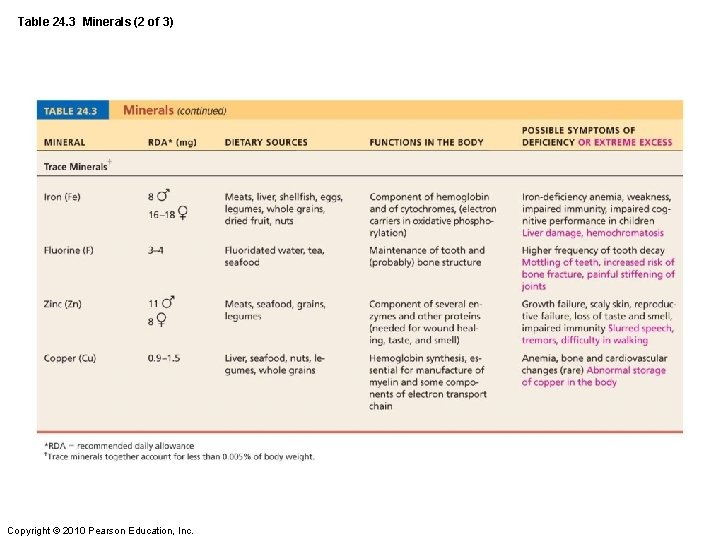
Table 24. 3 Minerals (2 of 3) Copyright © 2010 Pearson Education, Inc.
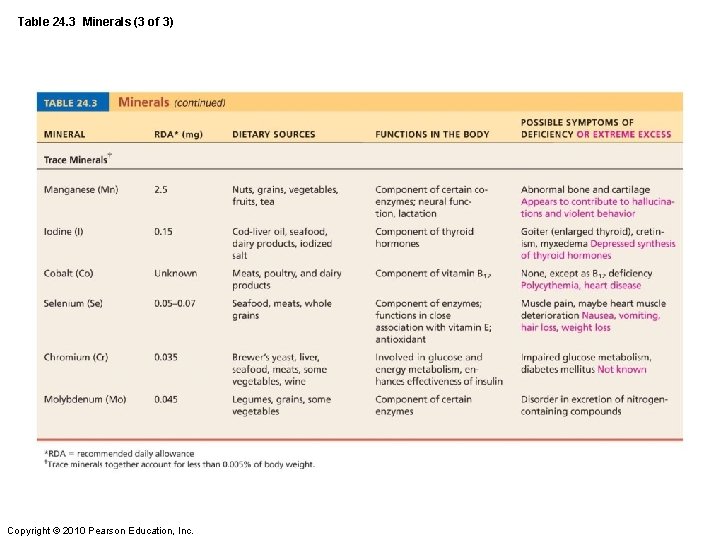
Table 24. 3 Minerals (3 of 3) Copyright © 2010 Pearson Education, Inc.
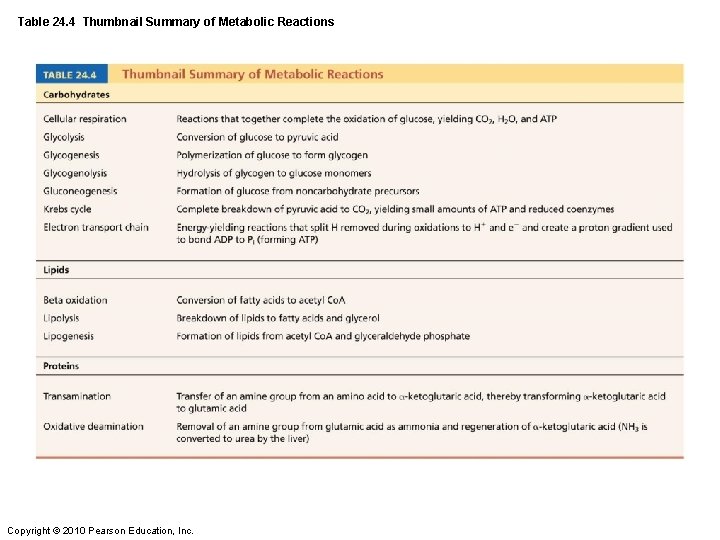
Table 24. 4 Thumbnail Summary of Metabolic Reactions Copyright © 2010 Pearson Education, Inc.
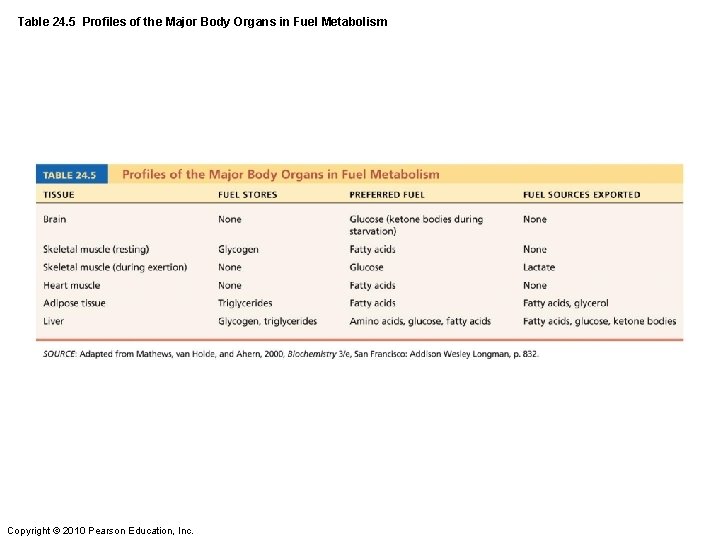
Table 24. 5 Profiles of the Major Body Organs in Fuel Metabolism Copyright © 2010 Pearson Education, Inc.
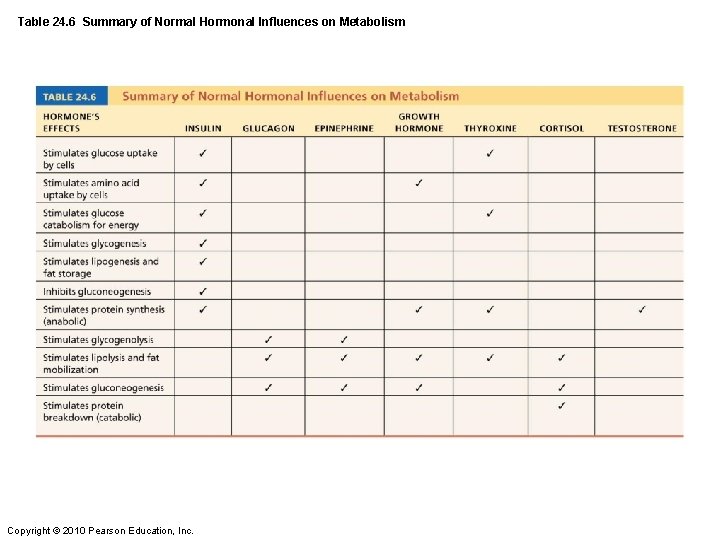
Table 24. 6 Summary of Normal Hormonal Influences on Metabolism Copyright © 2010 Pearson Education, Inc.
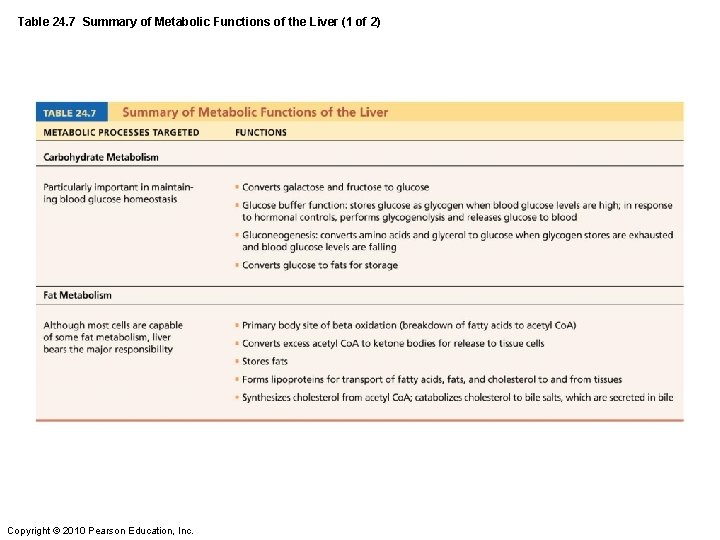
Table 24. 7 Summary of Metabolic Functions of the Liver (1 of 2) Copyright © 2010 Pearson Education, Inc.
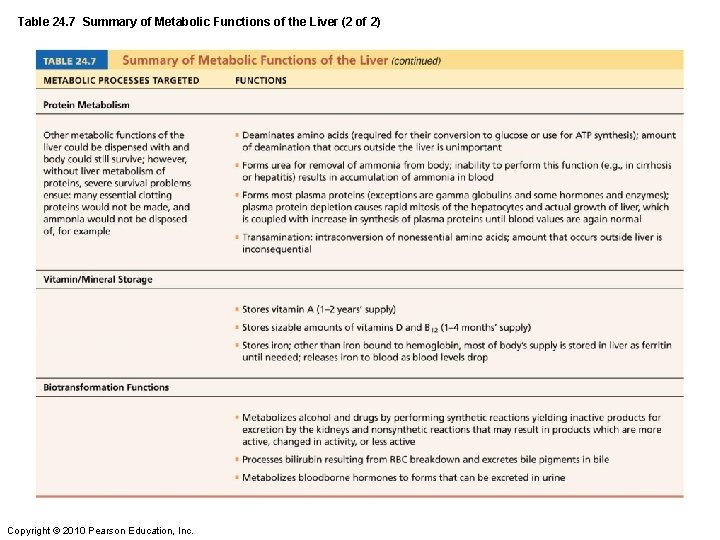
Table 24. 7 Summary of Metabolic Functions of the Liver (2 of 2) Copyright © 2010 Pearson Education, Inc.
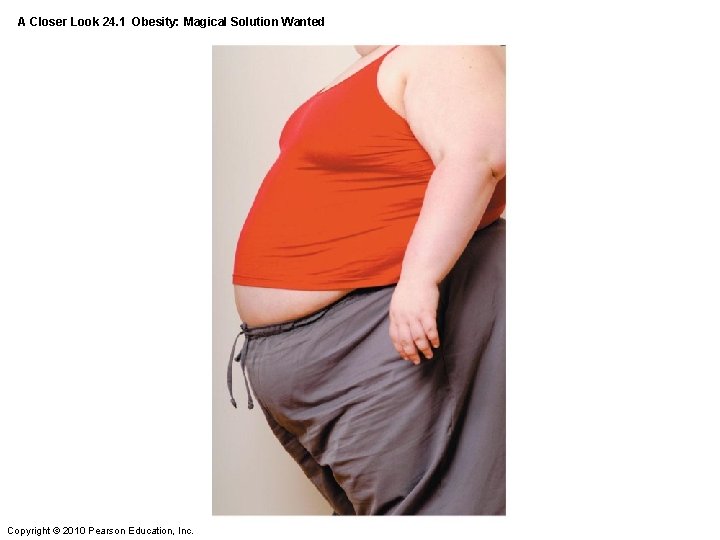
A Closer Look 24. 1 Obesity: Magical Solution Wanted Copyright © 2010 Pearson Education, Inc.