
Figure 21 1 The five basic components of
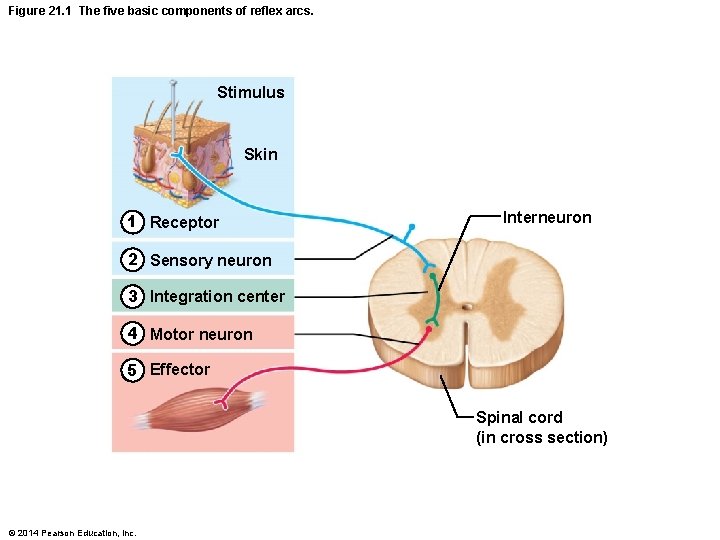
Figure 21. 1 The five basic components of reflex arcs. Stimulus Skin 1 Receptor Interneuron 2 Sensory neuron 3 Integration center 4 Motor neuron 5 Effector Spinal cord (in cross section) © 2014 Pearson Education, Inc.
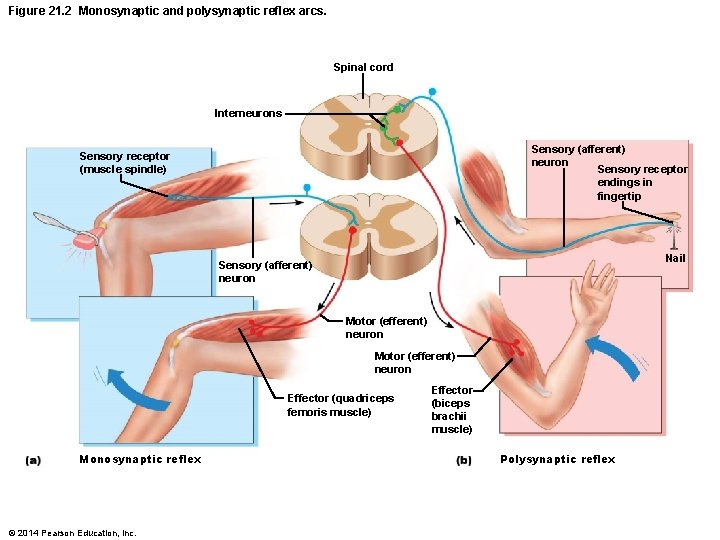
Figure 21. 2 Monosynaptic and polysynaptic reflex arcs. Spinal cord Interneurons Sensory (afferent) neuron Sensory receptor endings in fingertip Sensory receptor (muscle spindle) Nail Sensory (afferent) neuron Motor (efferent) neuron Effector (quadriceps femoris muscle) Monosynaptic reflex © 2014 Pearson Education, Inc. Effector (biceps brachii muscle) Polysynaptic reflex
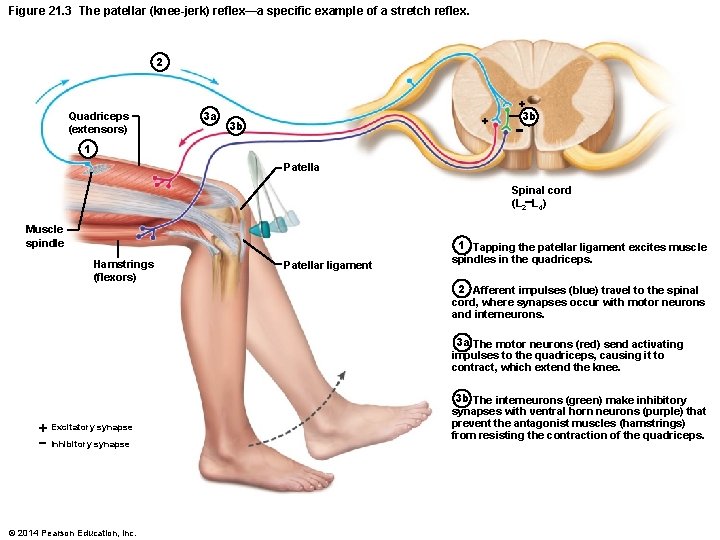
Figure 21. 3 The patellar (knee-jerk) reflex—a specific example of a stretch reflex. 2 Quadriceps (extensors) 3 a + 3 b 1 Patella Spinal cord (L 2 L 4) Muscle spindle Hamstrings (flexors) Patellar ligament 1 Tapping the patellar ligament excites muscle spindles in the quadriceps. 2 Afferent impulses (blue) travel to the spinal cord, where synapses occur with motor neurons and interneurons. 3 a The motor neurons (red) send activating impulses to the quadriceps, causing it to contract, which extend the knee. Excitatory synapse Inhibitory synapse © 2014 Pearson Education, Inc. 3 b The interneurons (green) make inhibitory synapses with ventral horn neurons (purple) that prevent the antagonist muscles (hamstrings) from resisting the contraction of the quadriceps.
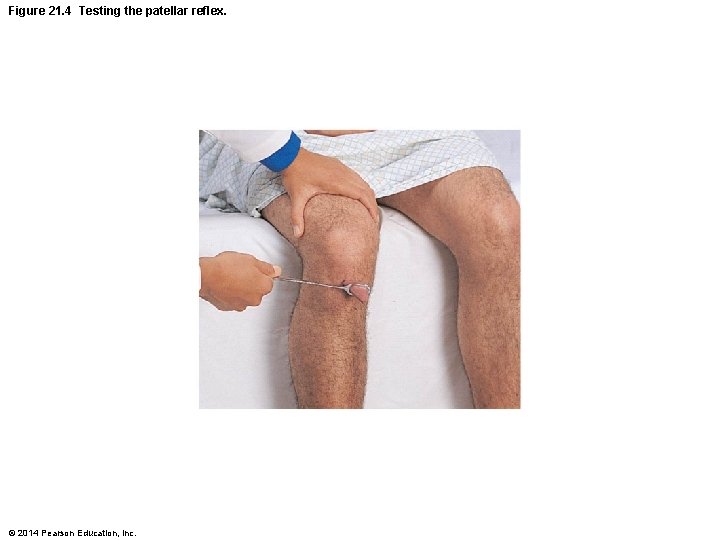
Figure 21. 4 Testing the patellar reflex. © 2014 Pearson Education, Inc.

Figure 21. 5 Testing the calcaneal tendon reflex. © 2014 Pearson Education, Inc.
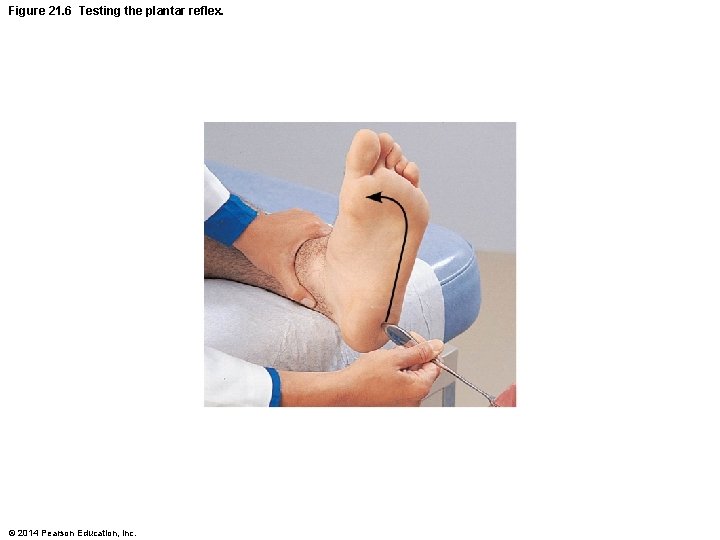
Figure 21. 6 Testing the plantar reflex. © 2014 Pearson Education, Inc.
- Slides: 6