
Figure 20 2 Overview of gene cloning with
- Slides: 19
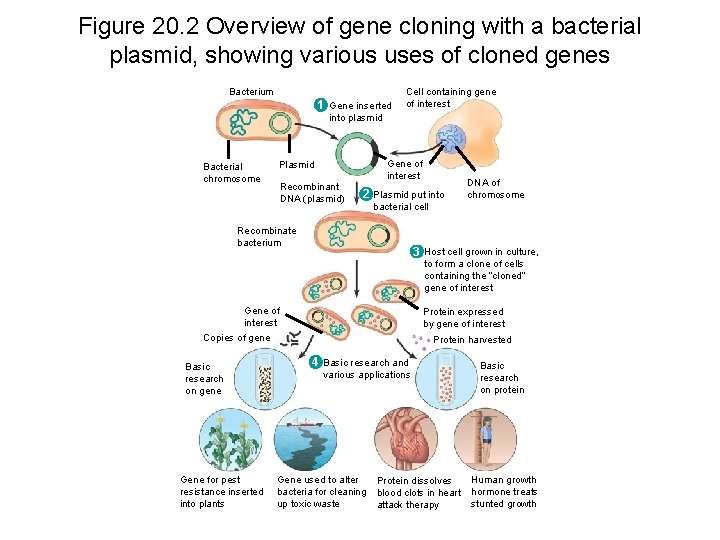
Figure 20. 2 Overview of gene cloning with a bacterial plasmid, showing various uses of cloned genes Bacterium 1 Gene inserted Cell containing gene of interest into plasmid Bacterial chromosome Gene of interest Plasmid Recombinant DNA (plasmid) 2 Plasmid put into DNA of chromosome bacterial cell Recombinate bacterium 3 Host cell grown in culture, to form a clone of cells containing the “cloned” gene of interest Gene of interest Copies of gene Basic research on gene Gene for pest resistance inserted into plants Protein expressed by gene of interest Protein harvested 4 Basic research and various applications Gene used to alter bacteria for cleaning up toxic waste Protein dissolves blood clots in heart attack therapy Basic research on protein Human growth hormone treats stunted growth
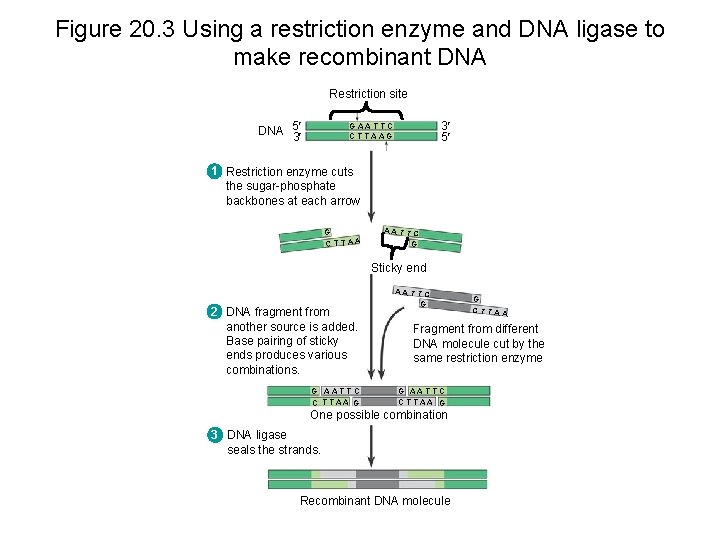
Figure 20. 3 Using a restriction enzyme and DNA ligase to make recombinant DNA Restriction site DNA 5 3 3 5 GAATTC CTTAAG 1 Restriction enzyme cuts the sugar-phosphate backbones at each arrow G CTTAA AATTC G Sticky end AATTC 2 DNA fragment from another source is added. Base pairing of sticky ends produces various combinations. G AATTC C TTAA G G G CTTAA Fragment from different DNA molecule cut by the same restriction enzyme G AATTC CTTAA G One possible combination 3 DNA ligase seals the strands. Recombinant DNA molecule
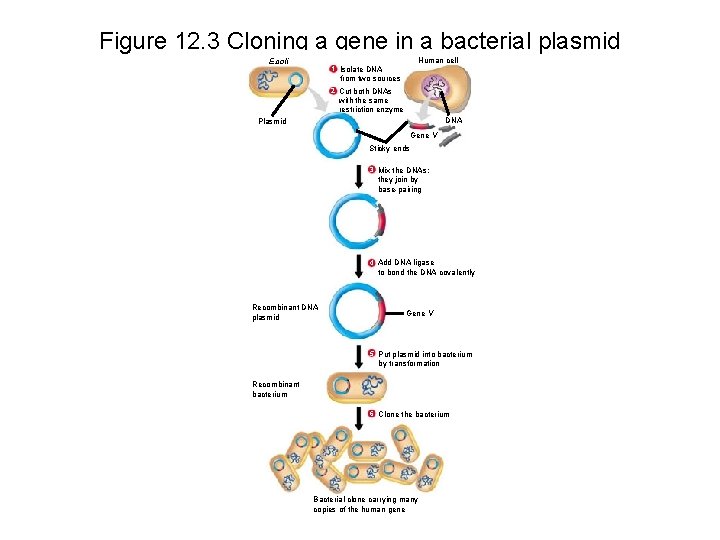
Figure 12. 3 Cloning a gene in a bacterial plasmid E. coli Human cell 1 Isolate DNA from two sources 2 Cut both DNAs with the same restriction enzyme DNA Plasmid Gene V Sticky ends 3 Mix the DNAs; they join by base-pairing 4 Add DNA ligase to bond the DNA covalently Recombinant DNA plasmid Gene V 5 Put plasmid into bacterium by transformation Recombinant bacterium 6 Clone the bacterium Bacterial clone carrying many copies of the human gene
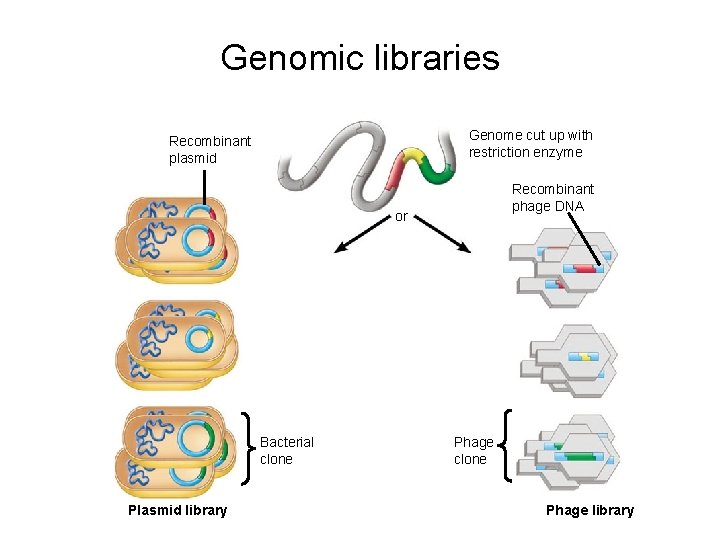
Genomic libraries Genome cut up with restriction enzyme Recombinant plasmid Recombinant phage DNA or Bacterial clone Plasmid library Phage clone Phage library
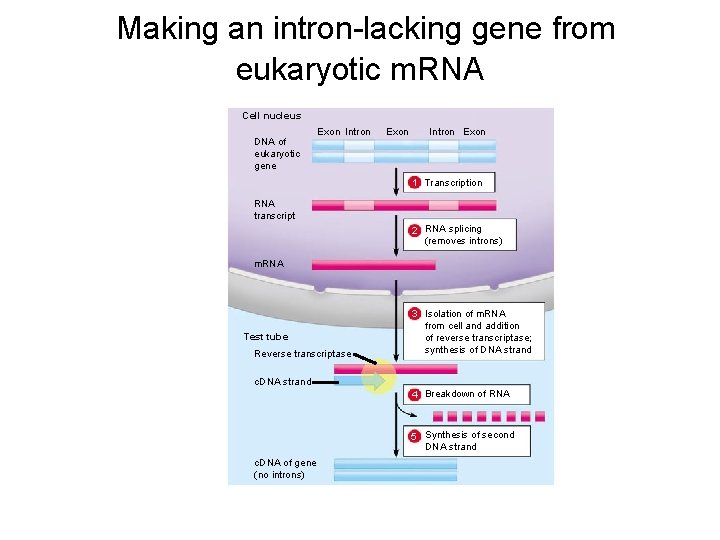
Making an intron-lacking gene from eukaryotic m. RNA Cell nucleus DNA of eukaryotic gene Exon Intron Exon 1 Transcription RNA transcript 2 RNA splicing (removes introns) m. RNA Test tube Reverse transcriptase 3 Isolation of m. RNA from cell and addition of reverse transcriptase; synthesis of DNA strand c. DNA strand 4 Breakdown of RNA 5 Synthesis of second DNA strand c. DNA of gene (no introns)
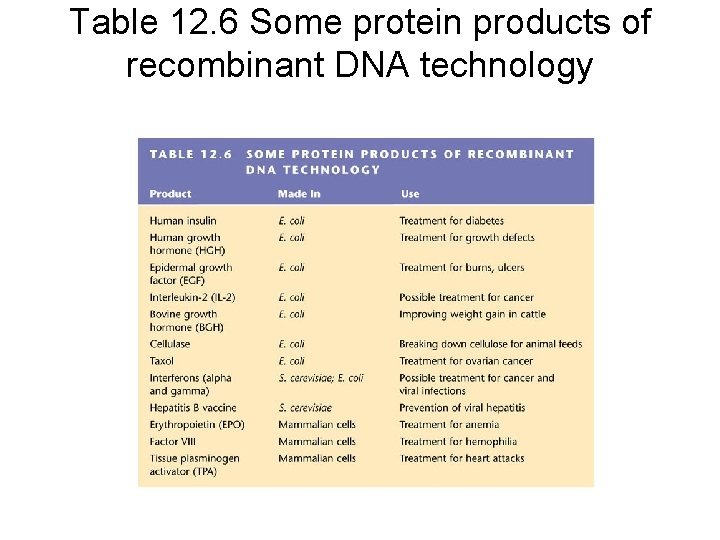
Table 12. 6 Some protein products of recombinant DNA technology
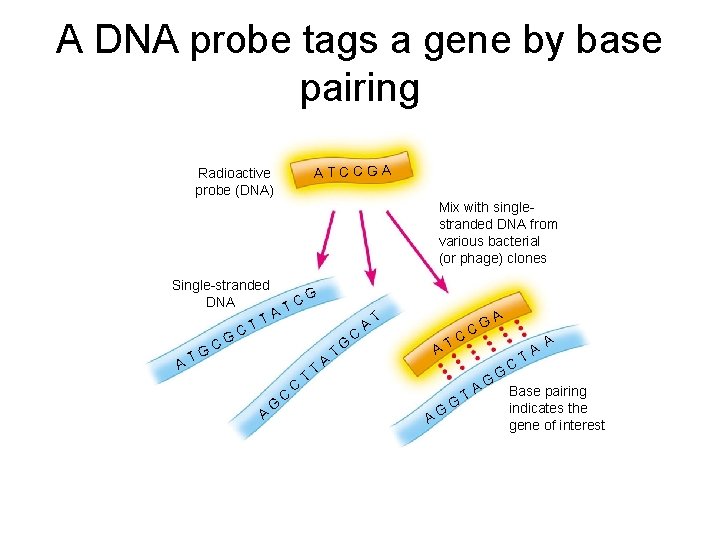
A DNA probe tags a gene by base pairing Radioactive probe (DNA) ATCCGA Mix with singlestranded DNA from various bacterial (or phage) clones Single-stranded CG DNA T T TA T A C GC G T A AT T T C C G A AT A G G CC G TA G C TA A Base pairing indicates the gene of interest
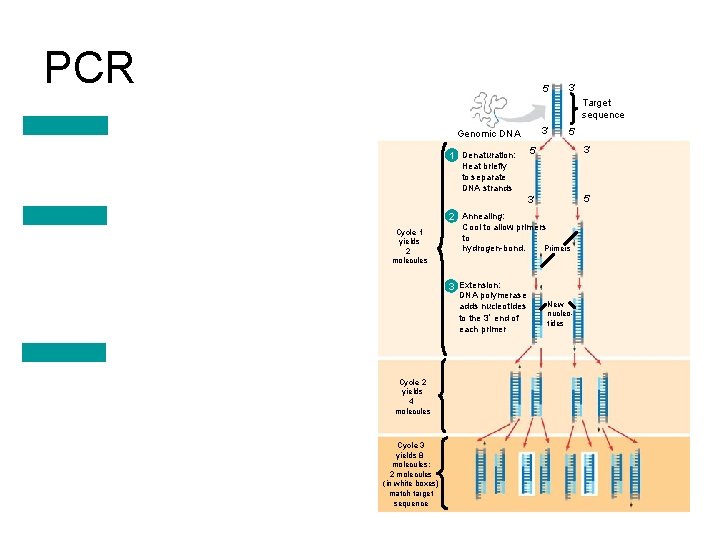
PCR 5 3 Target sequence 3 Genomic DNA 1 Denaturation: 5 5 3 3 5 Heat briefly to separate DNA strands 2 Annealing: Cycle 1 yields 2 molecules Cool to allow primers to Primers hydrogen-bond. 3 Extension: DNA polymerase adds nucleotides to the 3 end of each primer Cycle 2 yields 4 molecules Cycle 3 yields 8 molecules; 2 molecules (in white boxes) match target sequence New nucleotides
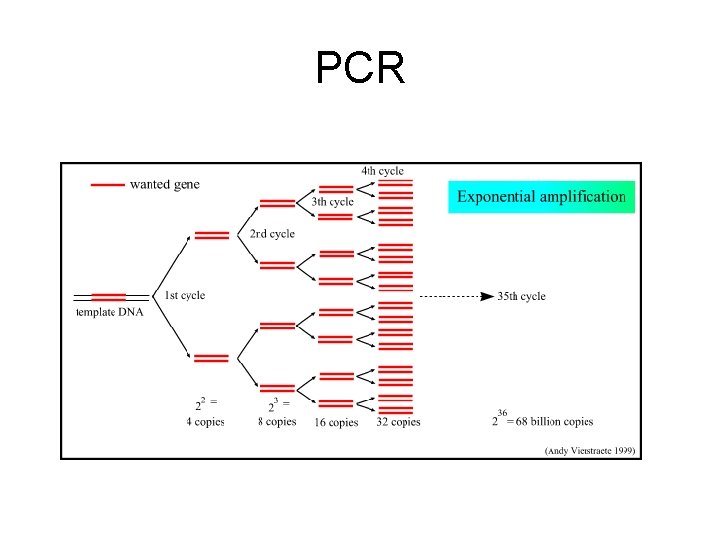
PCR
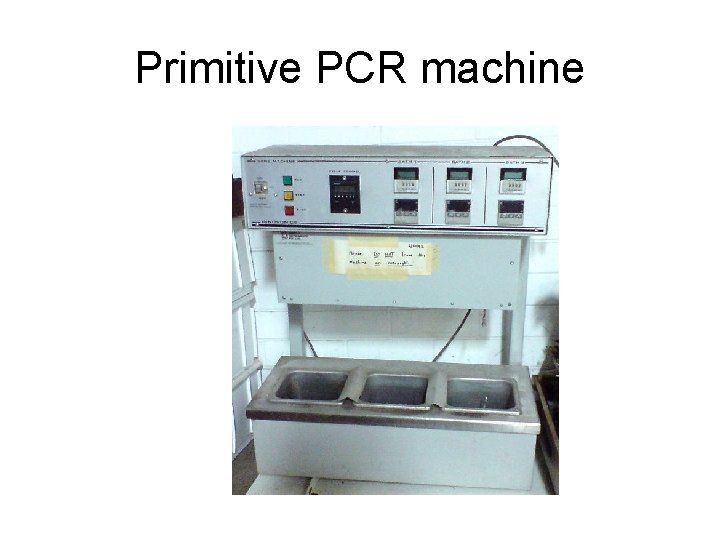
Primitive PCR machine
Applications for PCR • • DNA cloning for sequencing Functional analysis of genes Diagnosis of genetic diseases ID genetic fingerprints (i. e. forensics and paternity testing) • Detection and diagnosis of infectious diseases (e. g. H 1 N 1)
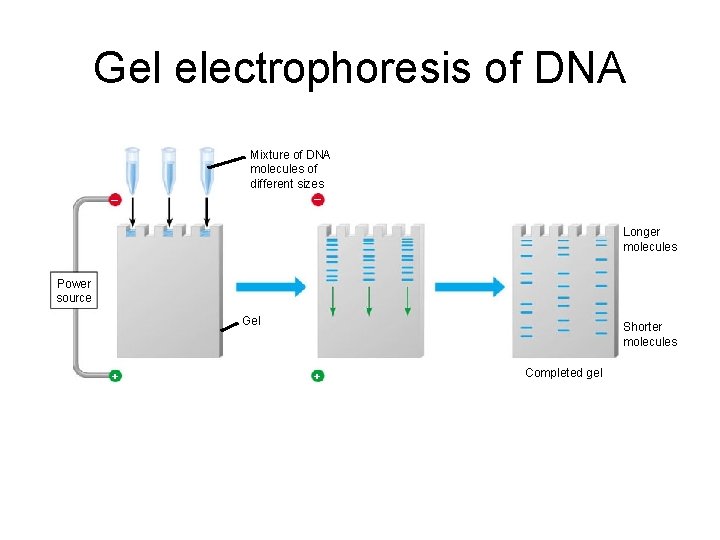
Gel electrophoresis of DNA Mixture of DNA molecules of different sizes – – Longer molecules Power source Gel + Shorter molecules + Completed gel
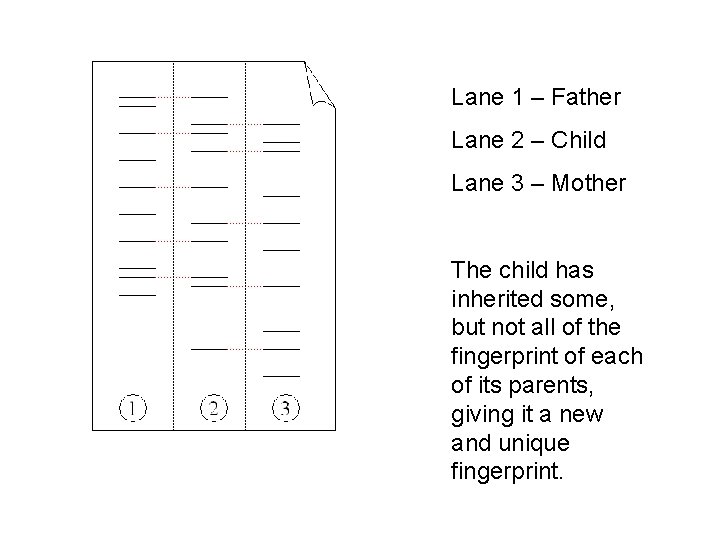
Lane 1 – Father Lane 2 – Child Lane 3 – Mother The child has inherited some, but not all of the fingerprint of each of its parents, giving it a new and unique fingerprint.
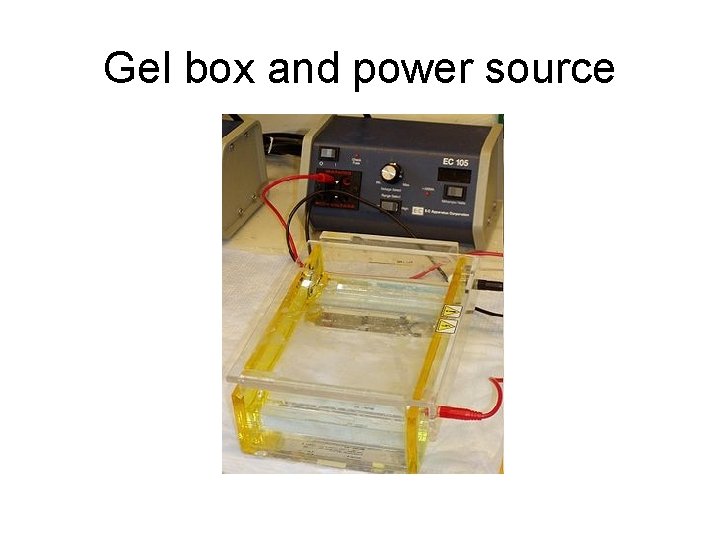
Gel box and power source
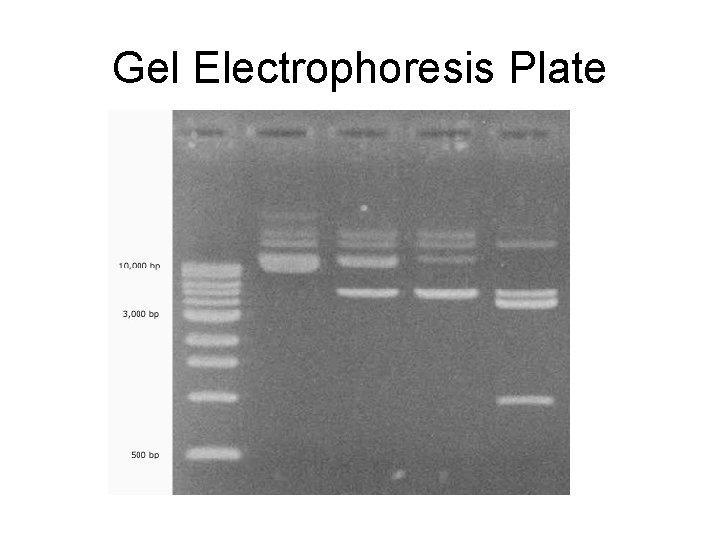
Gel Electrophoresis Plate
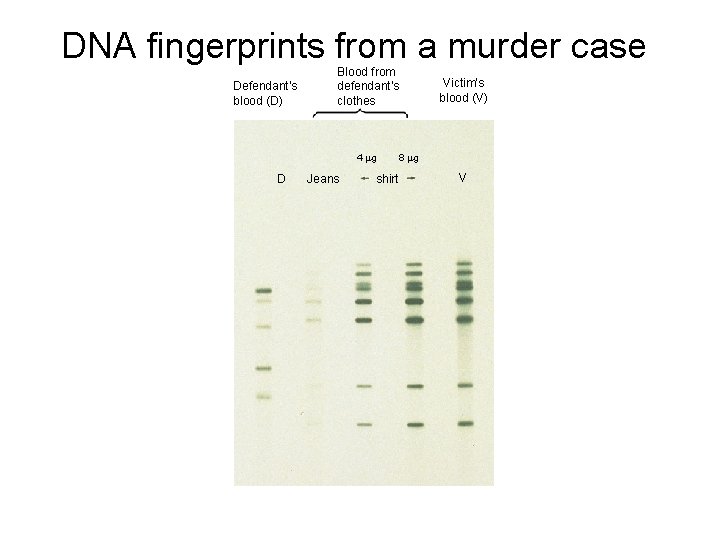
DNA fingerprints from a murder case Defendant’s blood (D) Blood from defendant’s clothes 4 g D Jeans shirt Victim’s blood (V) 8 g V
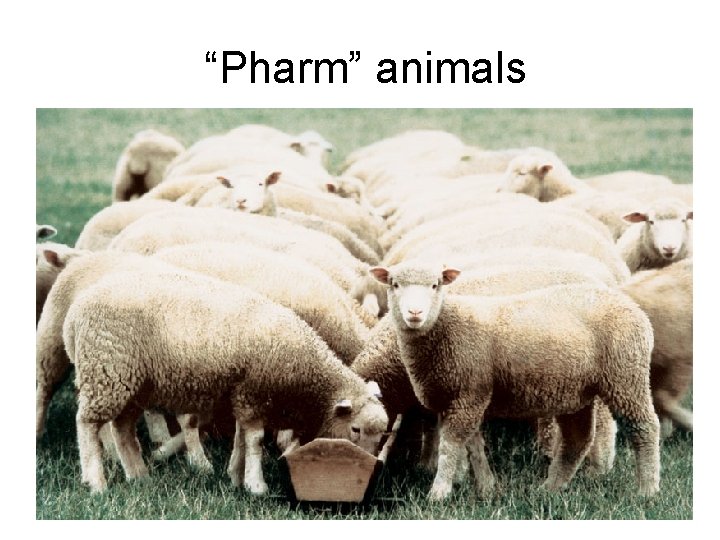
“Pharm” animals