
FIGURE 20 1 A typical generator alternator on
- Slides: 25
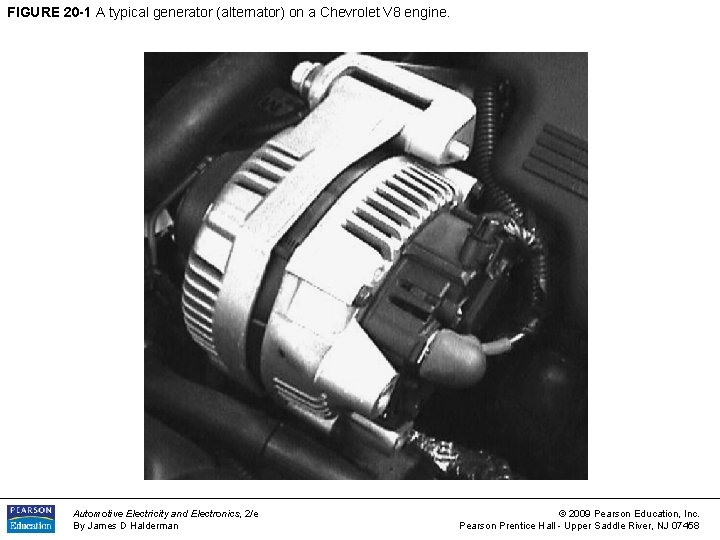
FIGURE 20 -1 A typical generator (alternator) on a Chevrolet V 8 engine. Automotive Electricity and Electronics, 2/e By James D Halderman © 2009 Pearson Education, Inc. Pearson Prentice Hall - Upper Saddle River, NJ 07458
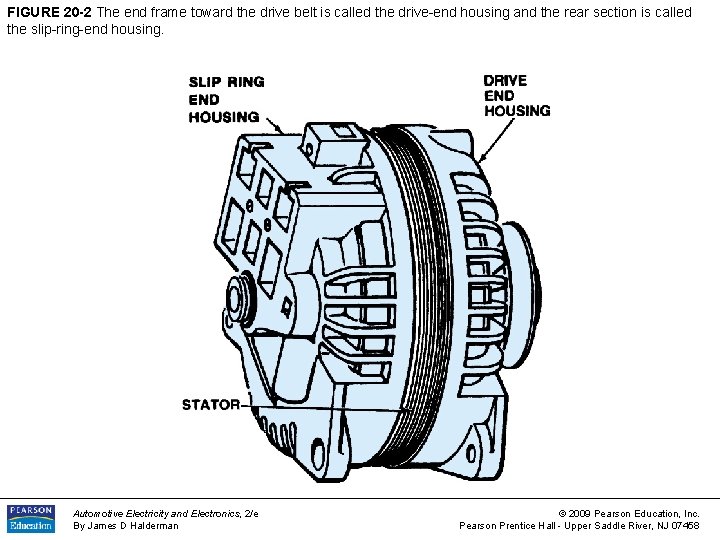
FIGURE 20 -2 The end frame toward the drive belt is called the drive-end housing and the rear section is called the slip-ring-end housing. Automotive Electricity and Electronics, 2/e By James D Halderman © 2009 Pearson Education, Inc. Pearson Prentice Hall - Upper Saddle River, NJ 07458
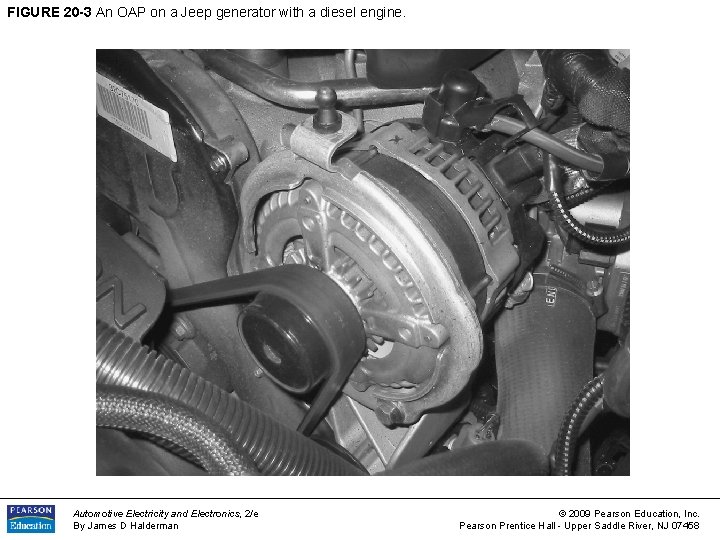
FIGURE 20 -3 An OAP on a Jeep generator with a diesel engine. Automotive Electricity and Electronics, 2/e By James D Halderman © 2009 Pearson Education, Inc. Pearson Prentice Hall - Upper Saddle River, NJ 07458
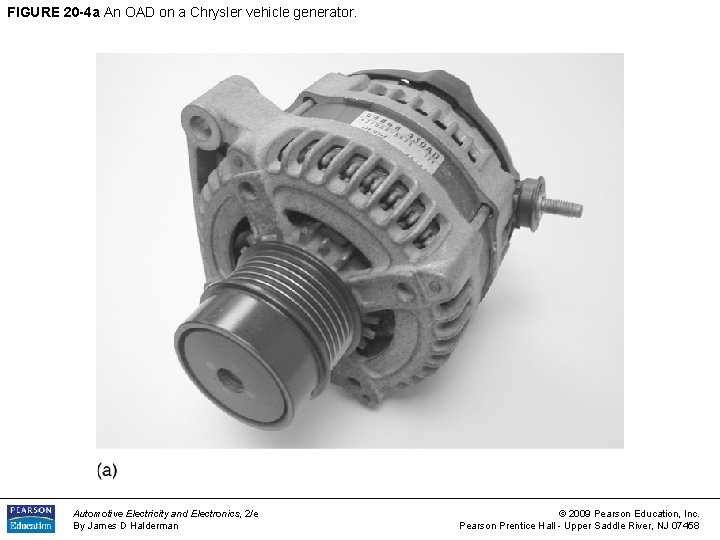
FIGURE 20 -4 a An OAD on a Chrysler vehicle generator. Automotive Electricity and Electronics, 2/e By James D Halderman © 2009 Pearson Education, Inc. Pearson Prentice Hall - Upper Saddle River, NJ 07458
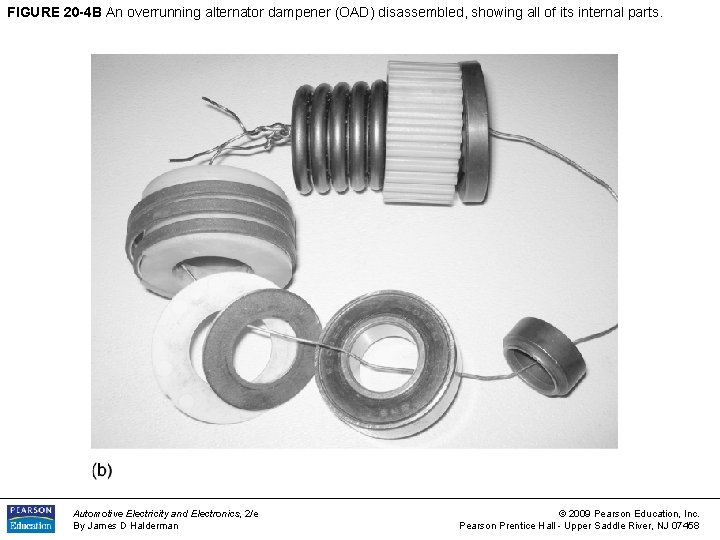
FIGURE 20 -4 B An overrunning alternator dampener (OAD) disassembled, showing all of its internal parts. Automotive Electricity and Electronics, 2/e By James D Halderman © 2009 Pearson Education, Inc. Pearson Prentice Hall - Upper Saddle River, NJ 07458
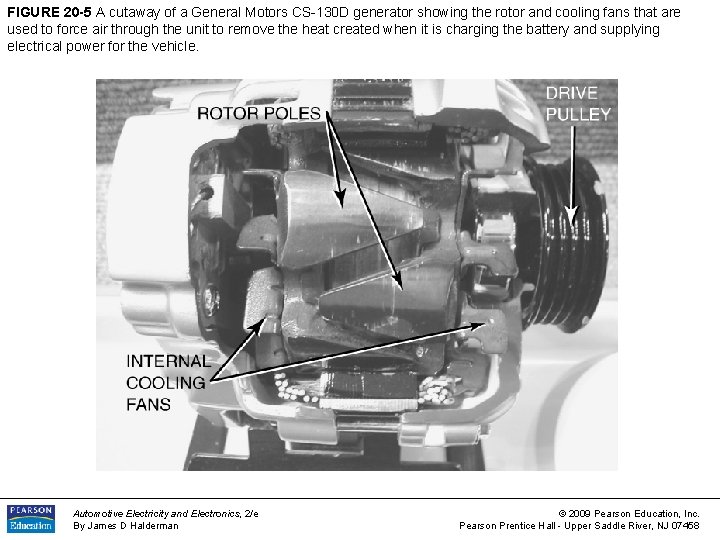
FIGURE 20 -5 A cutaway of a General Motors CS-130 D generator showing the rotor and cooling fans that are used to force air through the unit to remove the heat created when it is charging the battery and supplying electrical power for the vehicle. Automotive Electricity and Electronics, 2/e By James D Halderman © 2009 Pearson Education, Inc. Pearson Prentice Hall - Upper Saddle River, NJ 07458
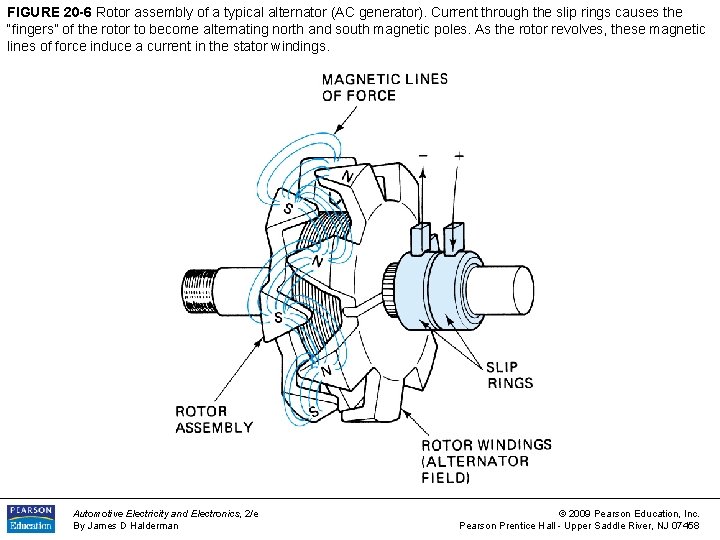
FIGURE 20 -6 Rotor assembly of a typical alternator (AC generator). Current through the slip rings causes the “fingers” of the rotor to become alternating north and south magnetic poles. As the rotor revolves, these magnetic lines of force induce a current in the stator windings. Automotive Electricity and Electronics, 2/e By James D Halderman © 2009 Pearson Education, Inc. Pearson Prentice Hall - Upper Saddle River, NJ 07458
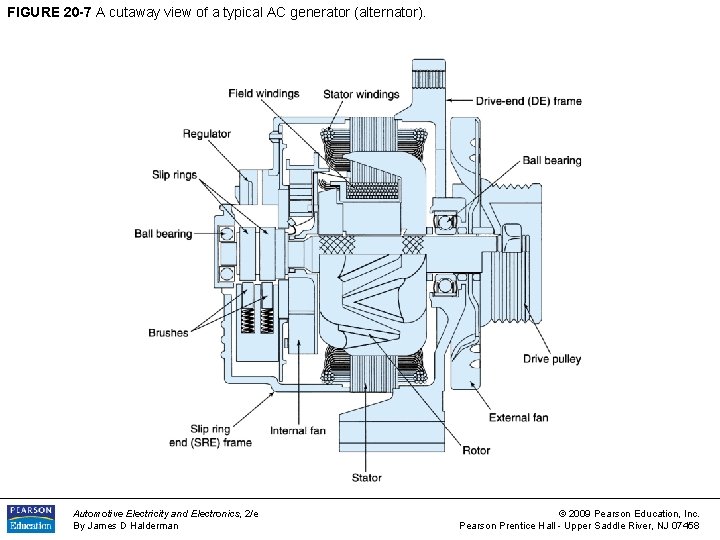
FIGURE 20 -7 A cutaway view of a typical AC generator (alternator). Automotive Electricity and Electronics, 2/e By James D Halderman © 2009 Pearson Education, Inc. Pearson Prentice Hall - Upper Saddle River, NJ 07458
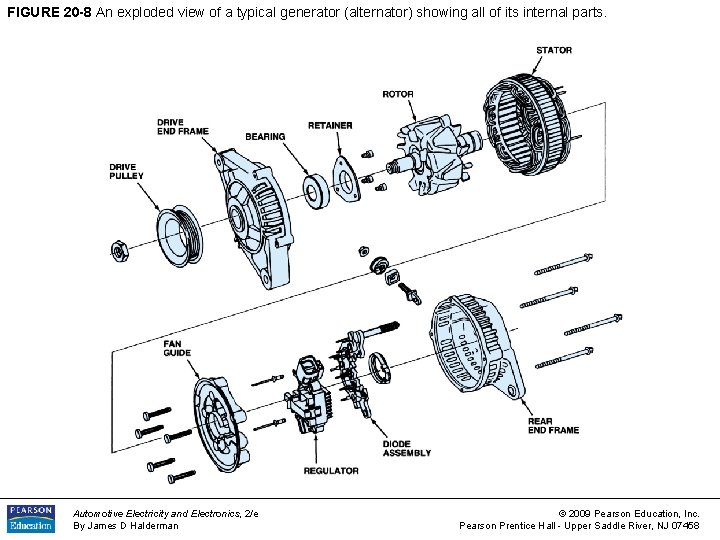
FIGURE 20 -8 An exploded view of a typical generator (alternator) showing all of its internal parts. Automotive Electricity and Electronics, 2/e By James D Halderman © 2009 Pearson Education, Inc. Pearson Prentice Hall - Upper Saddle River, NJ 07458
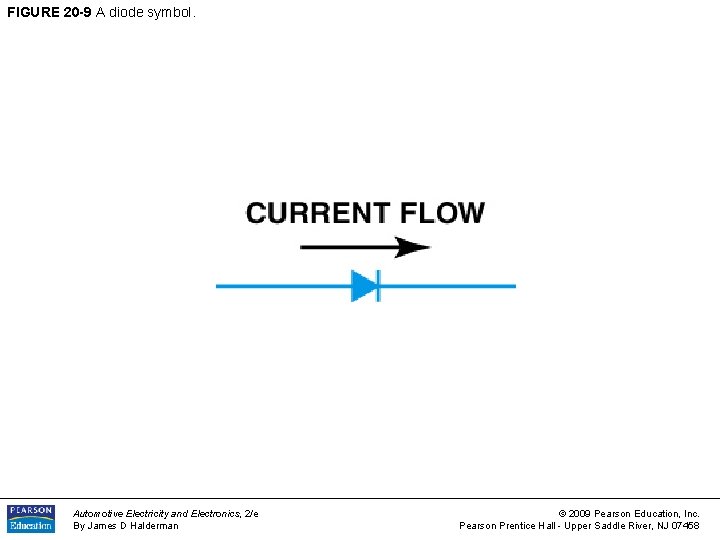
FIGURE 20 -9 A diode symbol. Automotive Electricity and Electronics, 2/e By James D Halderman © 2009 Pearson Education, Inc. Pearson Prentice Hall - Upper Saddle River, NJ 07458
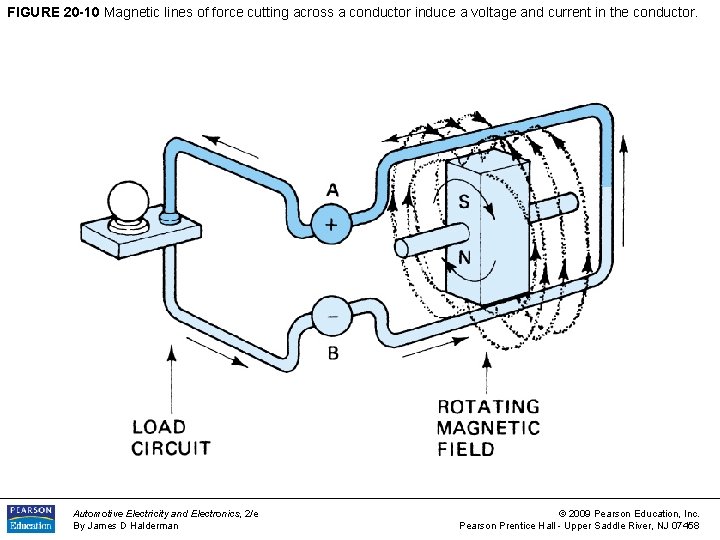
FIGURE 20 -10 Magnetic lines of force cutting across a conductor induce a voltage and current in the conductor. Automotive Electricity and Electronics, 2/e By James D Halderman © 2009 Pearson Education, Inc. Pearson Prentice Hall - Upper Saddle River, NJ 07458
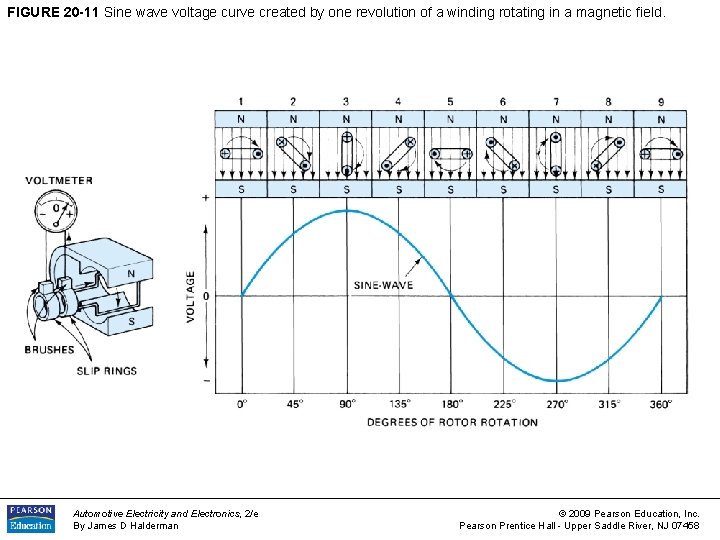
FIGURE 20 -11 Sine wave voltage curve created by one revolution of a winding rotating in a magnetic field. Automotive Electricity and Electronics, 2/e By James D Halderman © 2009 Pearson Education, Inc. Pearson Prentice Hall - Upper Saddle River, NJ 07458
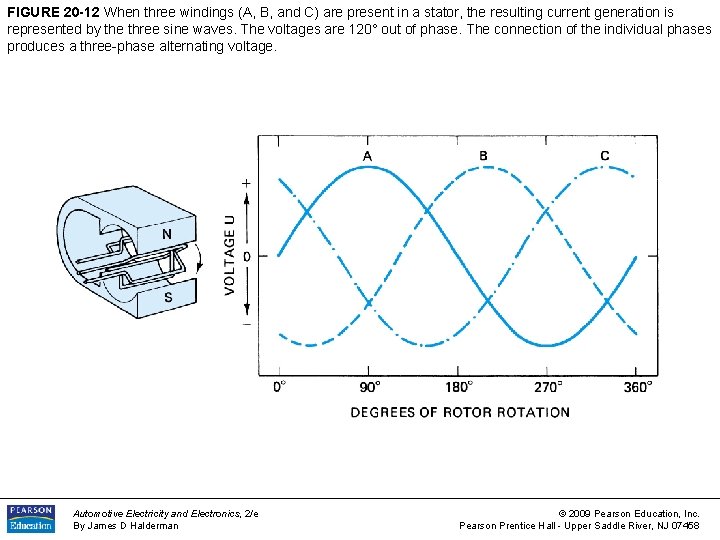
FIGURE 20 -12 When three windings (A, B, and C) are present in a stator, the resulting current generation is represented by the three sine waves. The voltages are 120° out of phase. The connection of the individual phases produces a three-phase alternating voltage. Automotive Electricity and Electronics, 2/e By James D Halderman © 2009 Pearson Education, Inc. Pearson Prentice Hall - Upper Saddle River, NJ 07458
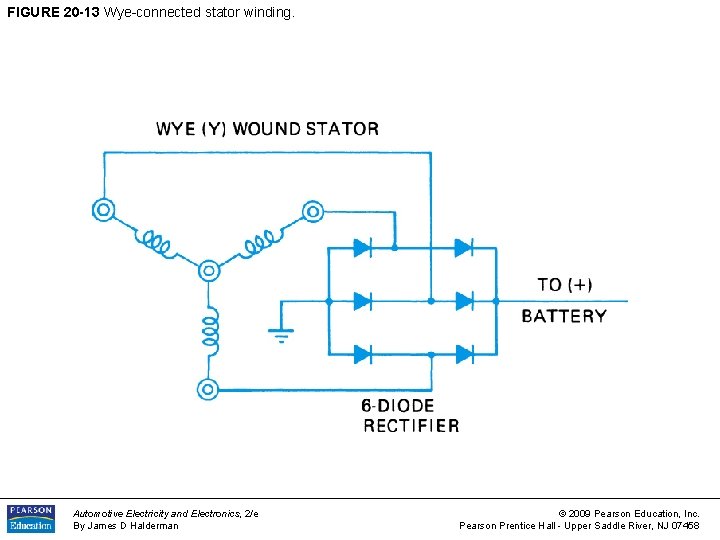
FIGURE 20 -13 Wye-connected stator winding. Automotive Electricity and Electronics, 2/e By James D Halderman © 2009 Pearson Education, Inc. Pearson Prentice Hall - Upper Saddle River, NJ 07458
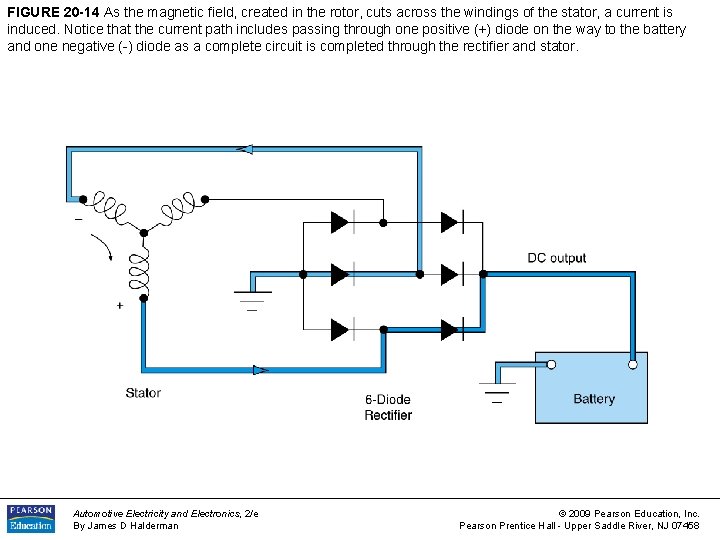
FIGURE 20 -14 As the magnetic field, created in the rotor, cuts across the windings of the stator, a current is induced. Notice that the current path includes passing through one positive (+) diode on the way to the battery and one negative (-) diode as a complete circuit is completed through the rectifier and stator. Automotive Electricity and Electronics, 2/e By James D Halderman © 2009 Pearson Education, Inc. Pearson Prentice Hall - Upper Saddle River, NJ 07458
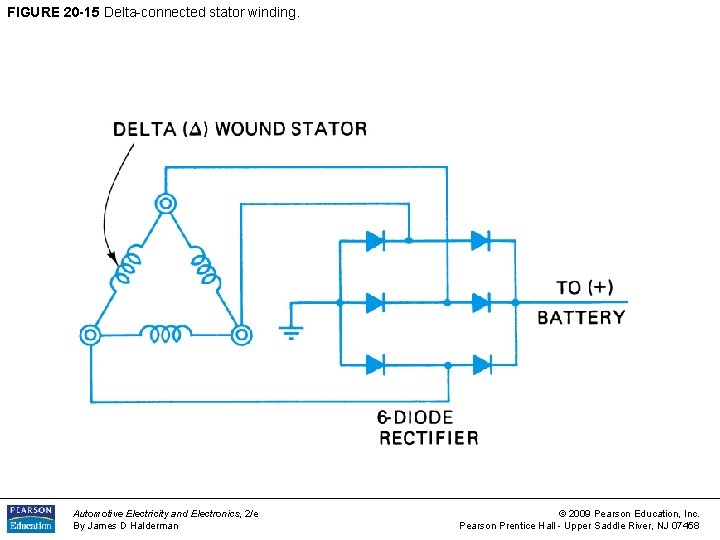
FIGURE 20 -15 Delta-connected stator winding. Automotive Electricity and Electronics, 2/e By James D Halderman © 2009 Pearson Education, Inc. Pearson Prentice Hall - Upper Saddle River, NJ 07458
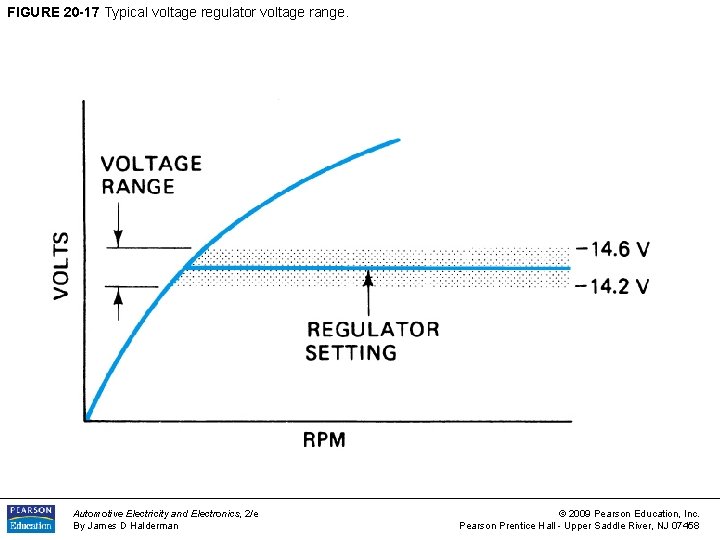
FIGURE 20 -17 Typical voltage regulator voltage range. Automotive Electricity and Electronics, 2/e By James D Halderman © 2009 Pearson Education, Inc. Pearson Prentice Hall - Upper Saddle River, NJ 07458
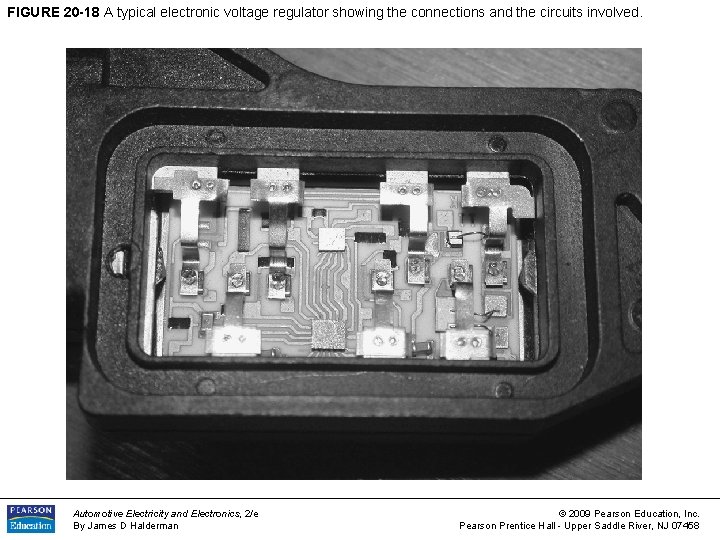
FIGURE 20 -18 A typical electronic voltage regulator showing the connections and the circuits involved. Automotive Electricity and Electronics, 2/e By James D Halderman © 2009 Pearson Education, Inc. Pearson Prentice Hall - Upper Saddle River, NJ 07458
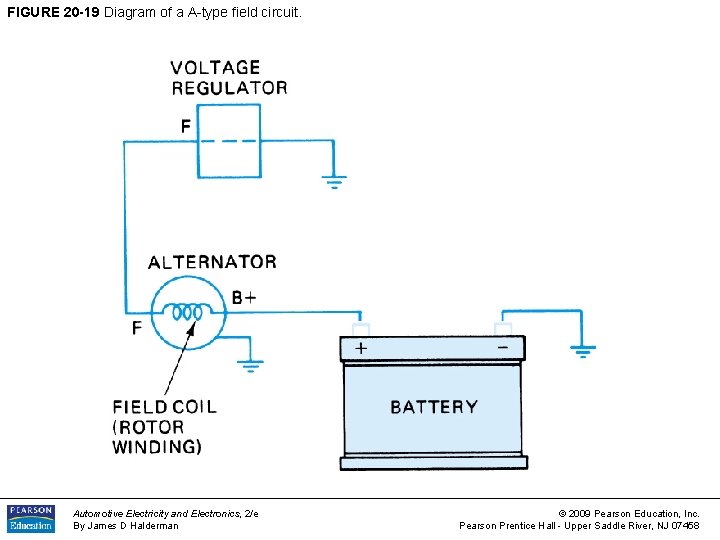
FIGURE 20 -19 Diagram of a A-type field circuit. Automotive Electricity and Electronics, 2/e By James D Halderman © 2009 Pearson Education, Inc. Pearson Prentice Hall - Upper Saddle River, NJ 07458
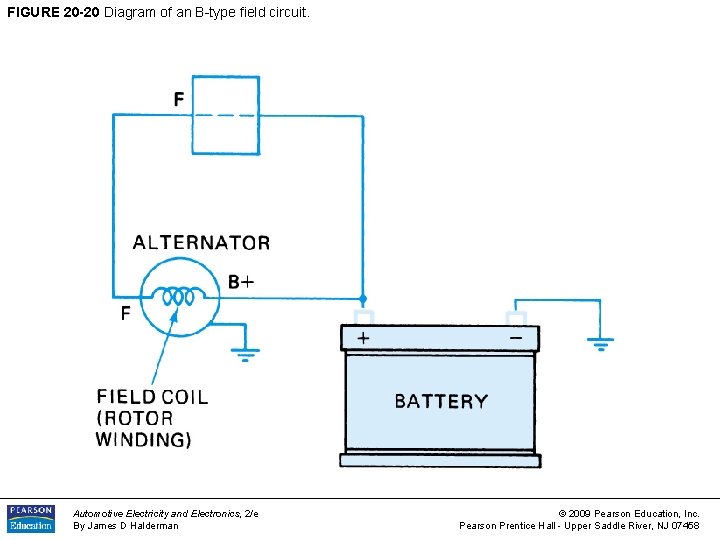
FIGURE 20 -20 Diagram of an B-type field circuit. Automotive Electricity and Electronics, 2/e By James D Halderman © 2009 Pearson Education, Inc. Pearson Prentice Hall - Upper Saddle River, NJ 07458
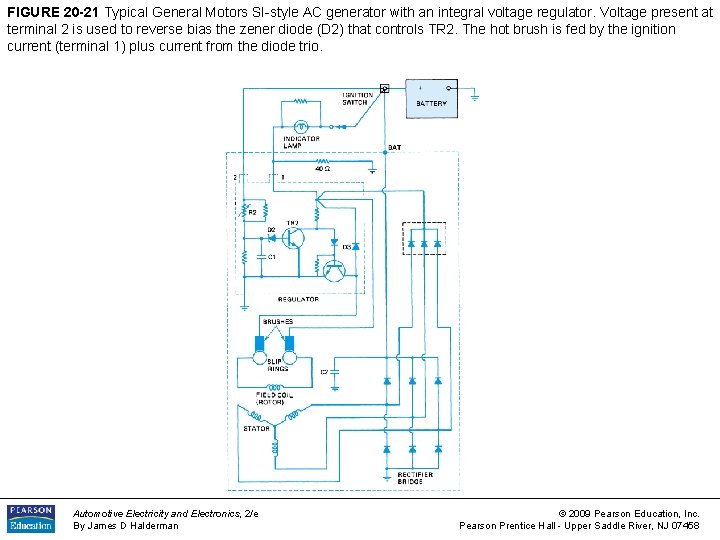
FIGURE 20 -21 Typical General Motors SI-style AC generator with an integral voltage regulator. Voltage present at terminal 2 is used to reverse bias the zener diode (D 2) that controls TR 2. The hot brush is fed by the ignition current (terminal 1) plus current from the diode trio. Automotive Electricity and Electronics, 2/e By James D Halderman © 2009 Pearson Education, Inc. Pearson Prentice Hall - Upper Saddle River, NJ 07458
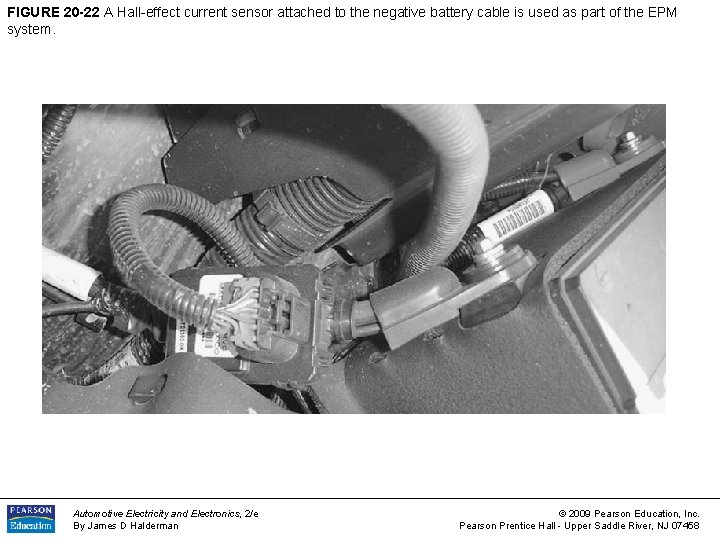
FIGURE 20 -22 A Hall-effect current sensor attached to the negative battery cable is used as part of the EPM system. Automotive Electricity and Electronics, 2/e By James D Halderman © 2009 Pearson Education, Inc. Pearson Prentice Hall - Upper Saddle River, NJ 07458
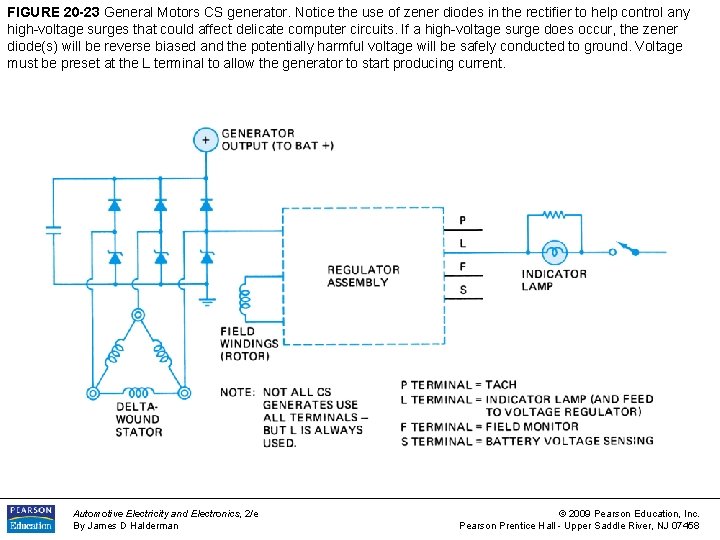
FIGURE 20 -23 General Motors CS generator. Notice the use of zener diodes in the rectifier to help control any high-voltage surges that could affect delicate computer circuits. If a high-voltage surge does occur, the zener diode(s) will be reverse biased and the potentially harmful voltage will be safely conducted to ground. Voltage must be preset at the L terminal to allow the generator to start producing current. Automotive Electricity and Electronics, 2/e By James D Halderman © 2009 Pearson Education, Inc. Pearson Prentice Hall - Upper Saddle River, NJ 07458
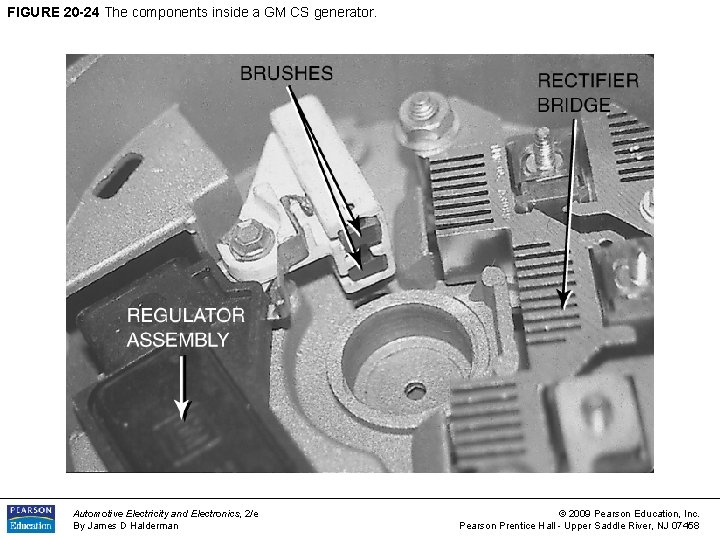
FIGURE 20 -24 The components inside a GM CS generator. Automotive Electricity and Electronics, 2/e By James D Halderman © 2009 Pearson Education, Inc. Pearson Prentice Hall - Upper Saddle River, NJ 07458
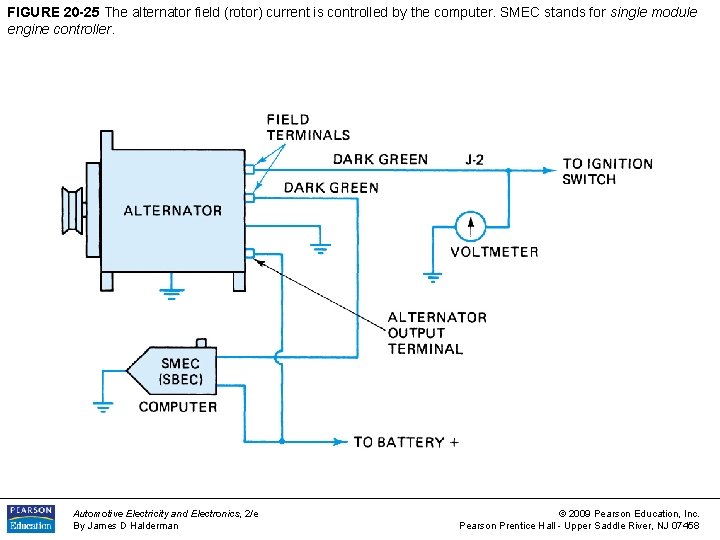
FIGURE 20 -25 The alternator field (rotor) current is controlled by the computer. SMEC stands for single module engine controller. Automotive Electricity and Electronics, 2/e By James D Halderman © 2009 Pearson Education, Inc. Pearson Prentice Hall - Upper Saddle River, NJ 07458