
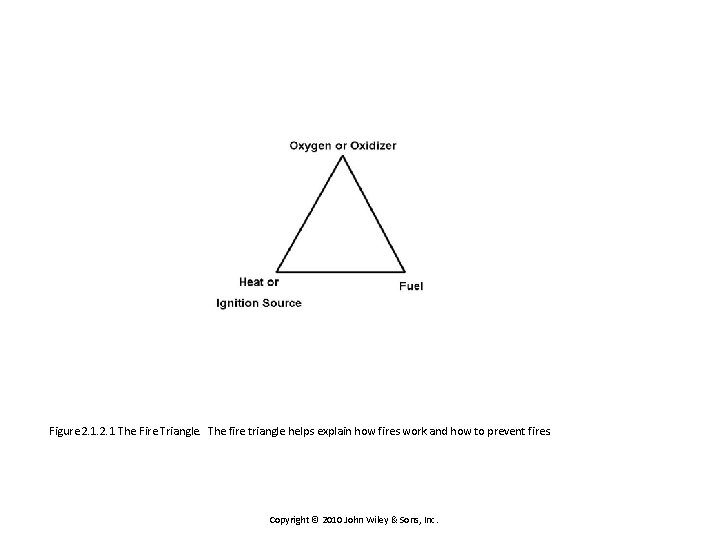
Figure 2 1 The Fire Triangle The fire





- Slides: 13
Figure 2. 1 The Fire Triangle. The fire triangle helps explain how fires work and how to prevent fires. Copyright © 2010 John Wiley & Sons, Inc.
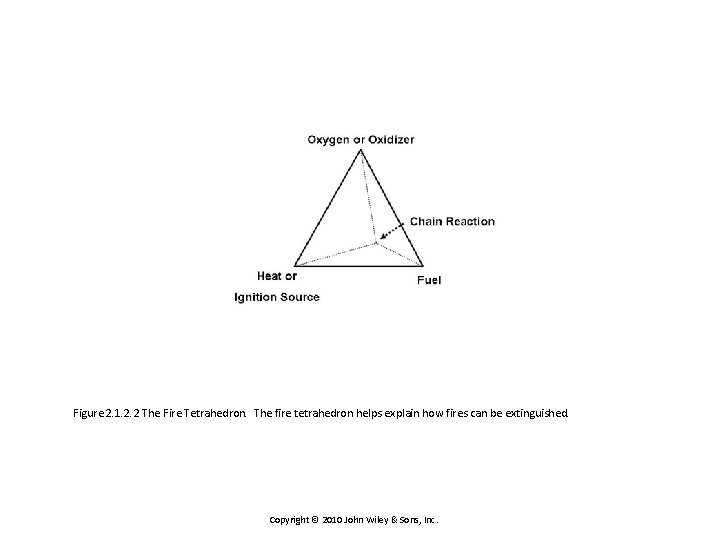
Figure 2. 1. 2. 2 The Fire Tetrahedron. The fire tetrahedron helps explain how fires can be extinguished. Copyright © 2010 John Wiley & Sons, Inc.
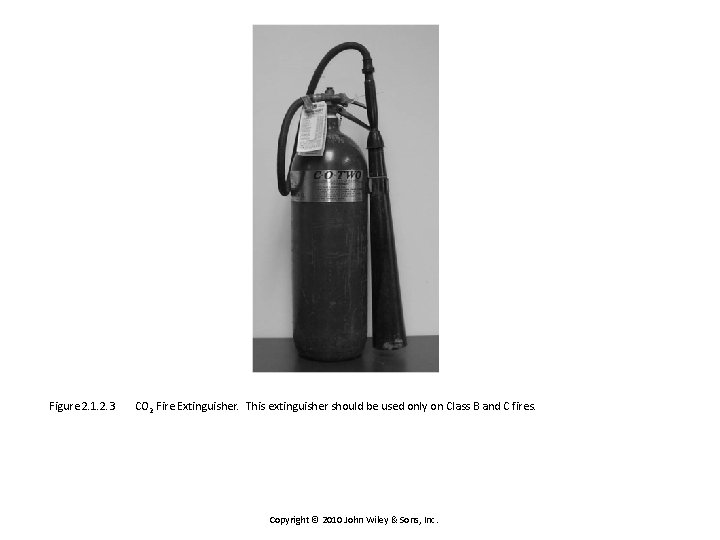
Figure 2. 1. 2. 3 CO 2 Fire Extinguisher. This extinguisher should be used only on Class B and C fires. Copyright © 2010 John Wiley & Sons, Inc.
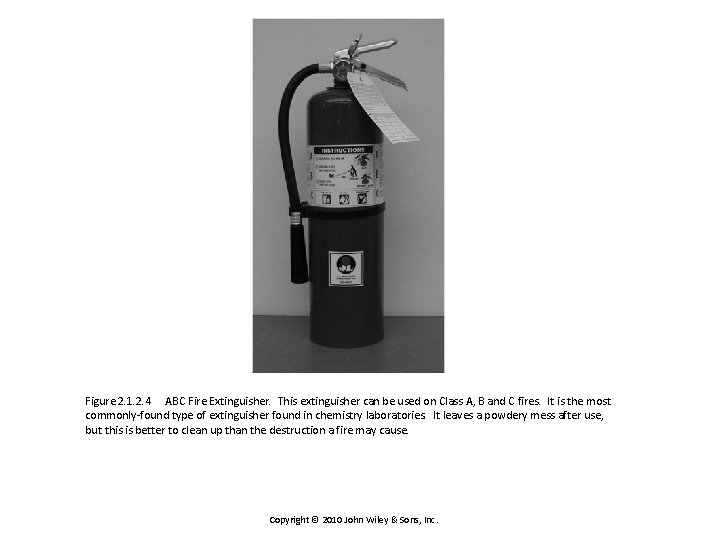
Figure 2. 1. 2. 4 ABC Fire Extinguisher. This extinguisher can be used on Class A, B and C fires. It is the most commonly-found type of extinguisher found in chemistry laboratories. It leaves a powdery mess after use, but this is better to clean up than the destruction a fire may cause. Copyright © 2010 John Wiley & Sons, Inc.
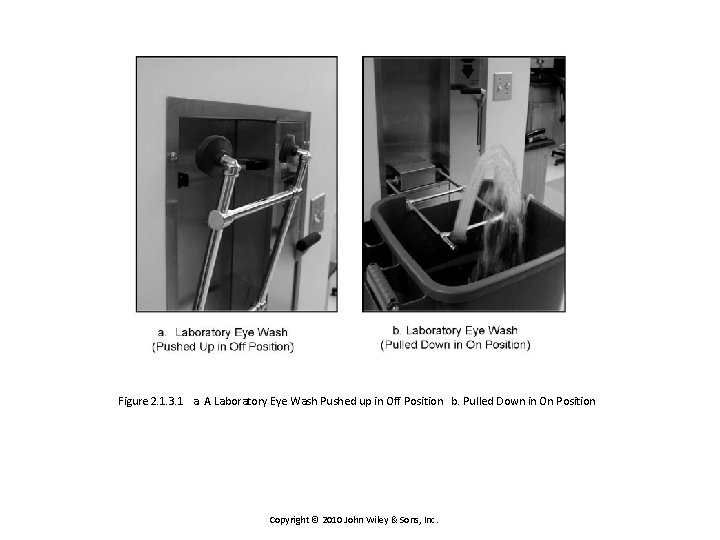
Figure 2. 1. 3. 1 a. A Laboratory Eye Wash Pushed up in Off Position b. Pulled Down in On Position Copyright © 2010 John Wiley & Sons, Inc.
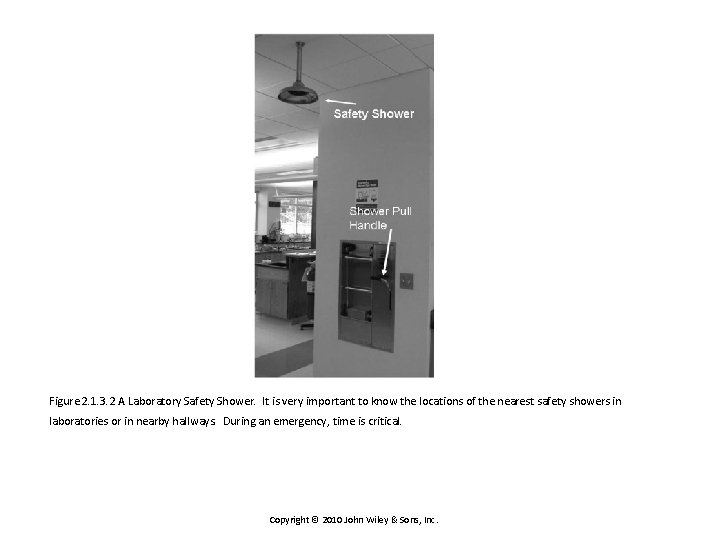
Figure 2. 1. 3. 2 A Laboratory Safety Shower. It is very important to know the locations of the nearest safety showers in laboratories or in nearby hallways. During an emergency, time is critical. Copyright © 2010 John Wiley & Sons, Inc.
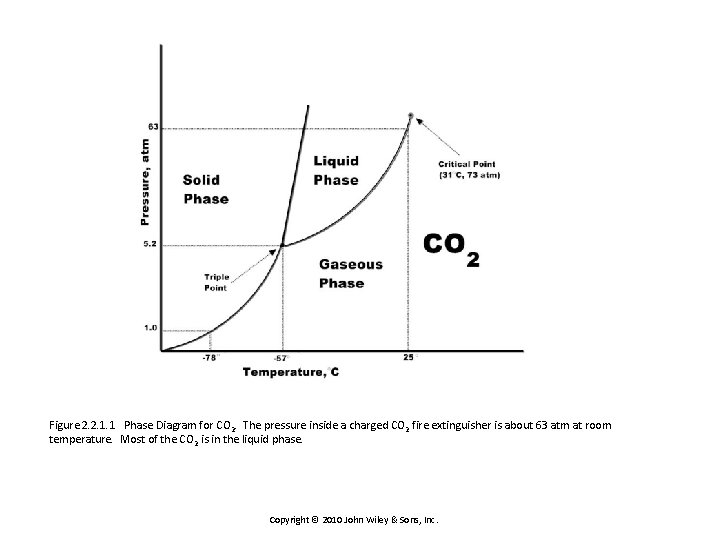
Figure 2. 2. 1. 1 Phase Diagram for CO 2. The pressure inside a charged CO 2 fire extinguisher is about 63 atm at room temperature. Most of the CO 2 is in the liquid phase. Copyright © 2010 John Wiley & Sons, Inc.
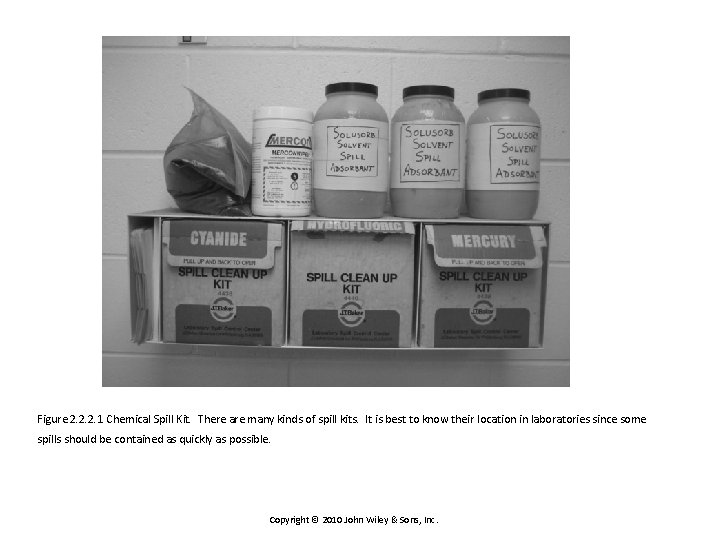
Figure 2. 2. 2. 1 Chemical Spill Kit. There are many kinds of spill kits. It is best to know their location in laboratories since some spills should be contained as quickly as possible. Copyright © 2010 John Wiley & Sons, Inc.
Figure Copyright © 2010 John Wiley & Sons, Inc.
Figure Copyright © 2010 John Wiley & Sons, Inc.
Figure Copyright © 2010 John Wiley & Sons, Inc.
Figure Copyright © 2010 John Wiley & Sons, Inc.
Figure Copyright © 2010 John Wiley & Sons, Inc.