
Figure 2 1 Relationship of Problem Definition and

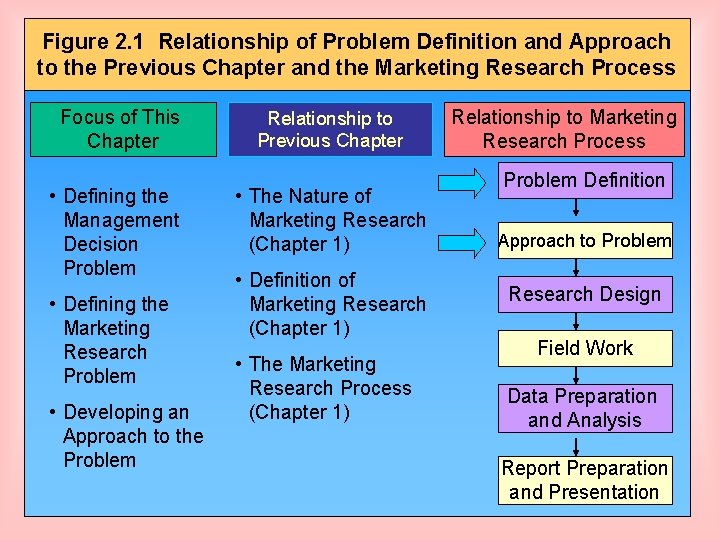
Figure 2. 1 Relationship of Problem Definition and Approach to the Previous Chapter and the Marketing Research Process Focus of This Chapter • Defining the Management Decision Problem • Defining the Marketing Research Problem • Developing an Approach to the Problem Relationship to Previous Chapter • The Nature of Marketing Research (Chapter 1) • Definition of Marketing Research (Chapter 1) • The Marketing Research Process (Chapter 1) Relationship to Marketing Research Process Problem Definition Approach to Problem Research Design Field Work Data Preparation and Analysis Report Preparation and Presentation
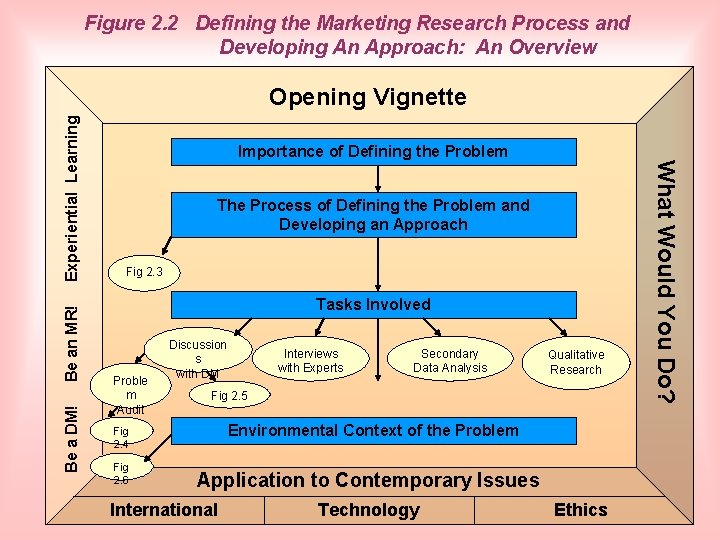
Figure 2. 2 Defining the Marketing Research Process and Developing An Approach: An Overview Be an MR! Be a DM! Importance of Defining the Problem The Process of Defining the Problem and Developing an Approach Fig 2. 3 Tasks Involved Proble m Audit Discussion s with DM Secondary Data Analysis Qualitative Research Fig 2. 5 Environmental Context of the Problem Fig 2. 4 Fig 2. 6 Interviews with Experts Application to Contemporary Issues International Technology Ethics What Would You Do? Experiential Learning Opening Vignette
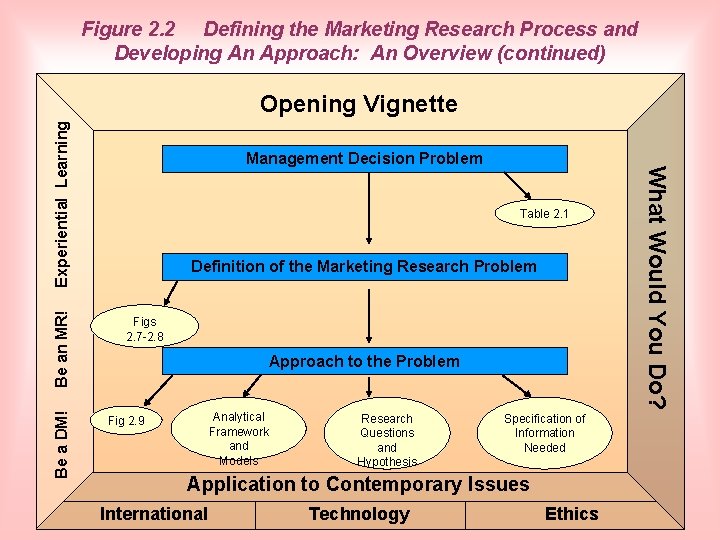
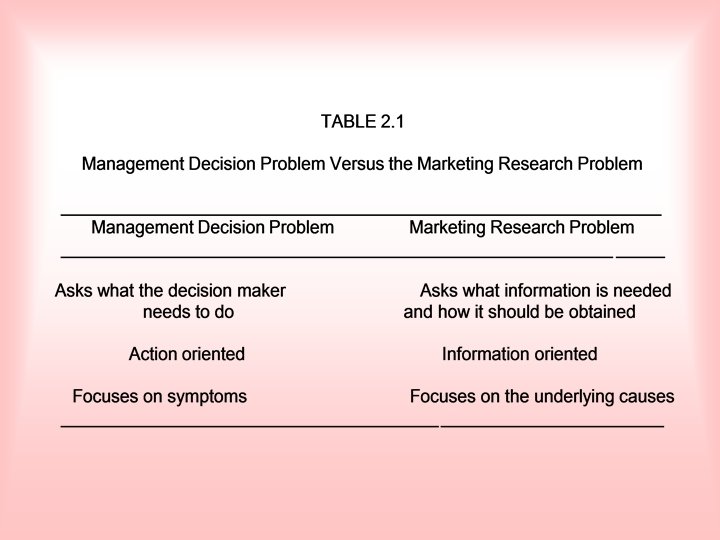
Figure 2. 2 Defining the Marketing Research Process and Developing An Approach: An Overview (continued) Be an MR! Be a DM! Management Decision Problem Table 2. 1 Definition of the Marketing Research Problem Figs 2. 7 -2. 8 Approach to the Problem Analytical Framework and Models Fig 2. 9 Research Questions and Hypothesis Specification of Information Needed Application to Contemporary Issues International Technology Ethics What Would You Do? Experiential Learning Opening Vignette
Poblem definition • Problem definition involves starting the general problem and identifying the specific components of the marketing research problem. • Only when the marketing research problem has been clearly defined can research be designed and conducted properly. • All the effort, time, and money spent from this point on will be wasted if the problem is misunderstood or ill defined.

Tasks involved with problem identification • The tasks involved with problem definition consist of discussions with the decision makers, interviews with industry experts and other knowledgeable individuals, analysis of secondary data, and sometimes qualitative research. These tasks help the researcher to understand the background of the problem by analyzing the environmental context. • Certain environmental factors bearing on the problem should be evaluated. Understanding the environmental context facilitates the identification of the management decision problem. Then the management decision problem is translated to marketing research problem.
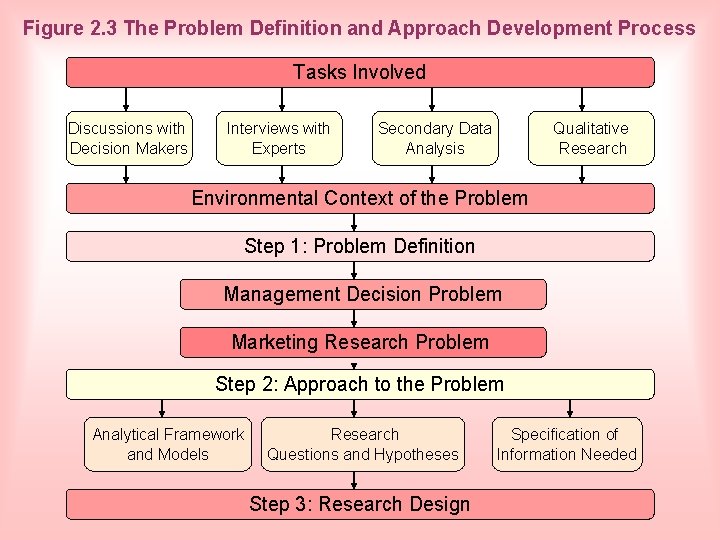
Figure 2. 3 The Problem Definition and Approach Development Process Tasks Involved Discussions with Decision Makers Interviews with Experts Secondary Data Analysis Qualitative Research Environmental Context of the Problem Step 1: Problem Definition Management Decision Problem Marketing Research Problem Step 2: Approach to the Problem Analytical Framework and Models Research Questions and Hypotheses Step 3: Research Design Specification of Information Needed
Tasks Involved in Problem Definition • Discussions with Decision Makers • Interviews with Industry Experts • Secondary Data Analysis • Qualitative Research
Discussions with decision makers • Discussions with decision makers (DM) are extremely important. The DM needs to understand the capabilities and limitations of research. Research provides information relevant to management decisions, but it cannot provide solutions because solutions require managerial judgement. Conversely, the researcher needs to understand the nature of the decision managers face and what they hope to learn from the research.
The Problem Audit The problem audit provides a useful framework for interacting with the DM and identifying the underlying causes of the problem. The problem audit is a comprehensive examination of a marketing problem with the purpose of understanding its origin and nature. 1. The events that led to the decision that action is needed; the history of the problem. 2. The alternative courses of action available to the DM. 3. The criteria that will be used to evaluate the alternative courses of action. 4. The potential actions that are likely to be suggested based on the research findings. 5. The information that is needed to answer the DM's questions. 6. The manner in which the DM will use each item of information in making the decision. 7. The corporate culture as it relates to decision making.

Figure 2. 4 Conducting a Problem Audit History of the Problem Alternative Courses of Action Available to DM Criteria for Evaluating Alternative Courses Nature of Potential Actions Based on Research Information Needed to Answer the DM’s Questions How Will Each Item of Information Be Used by the DM? Corporate Decision-Making Culture
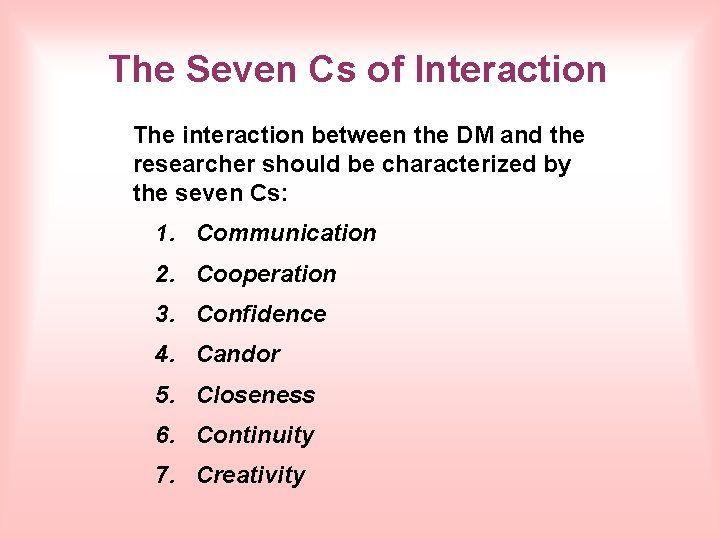
The Seven Cs of Interaction The interaction between the DM and the researcher should be characterized by the seven Cs: 1. Communication 2. Cooperation 3. Confidence 4. Candor 5. Closeness 6. Continuity 7. Creativity

Interviews wıth industry experts • Interviews with industry experts, individuals knowledgeable about the firm and the industry, may help formulate the marketing research problem. • Typically, expert information is obtained by unstructured personal interviews.
Secondary data analysis • Secondary data are data collected for some purpose rather than the problem at hand. Primary data, on the other hand, are originated by the researcher for the specific purpose of addressing the research problem. Analysis of secondary data is an essential step in the problem definition process: Primary data should not be collected until the available secondary data have been fully analyzed.
Qualitative research • Sometimes qualitative research must be undertaken to gain an understanding of the problem and its underlying factors. Qualitative research is unstructured, exploratory in natüre, based on small samples, and may utilize populat qualitative techniques such as focus groups. Dept-interviews, projective techniques. Other exploratory research techniques, such as pilot surveys and case studies may also be undertaken.
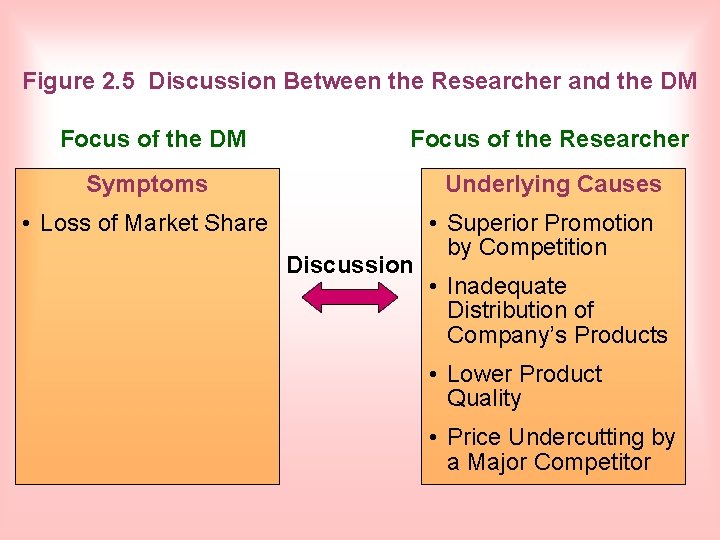
Figure 2. 5 Discussion Between the Researcher and the DM Focus of the Researcher Symptoms Underlying Causes • Loss of Market Share Discussion • Superior Promotion by Competition • Inadequate Distribution of Company’s Products • Lower Product Quality • Price Undercutting by a Major Competitor
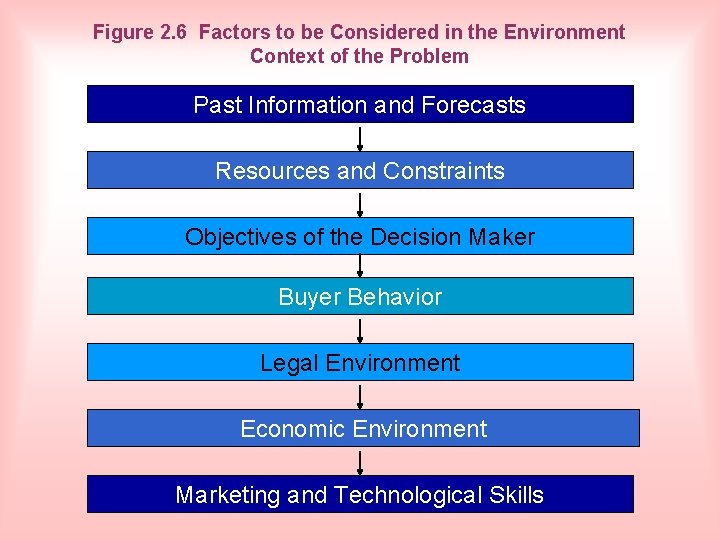
Figure 2. 6 Factors to be Considered in the Environment Context of the Problem Past Information and Forecasts Resources and Constraints Objectives of the Decision Maker Buyer Behavior Legal Environment Economic Environment Figure 2. 4 Conducting a Problem Audit Marketing and Technological Skills
Past Information • Past information and forecasts of trends with respect to sales, market share, profitabity, technology, population, demographics, and lifestyle can help researcher understand the underlying marketing research problem. Where approprate, this kind of analysis should be carried out at the industry and firm level. For example, if a firm’s sales have decreased but industry sales have increased, the problem will be very different than if the industry sales have also decreased.
Resources and Constraints • To formulate a marketing research problem of appropriate scope, it is necessary to take into account both the resources available, such as money and skills, and the constraints on the organization, such as cost and time.
Objectives • Decisions are made to accomplish objectives. The formulation of the management decision problem must be based on a clear understanding of two types of objectives: (1) the organizational objectives, and the personal objectives of the decision maker. For the project to be successful, it must serve the objectives of the organization and decision maker.
Buyer Behavior 1) 2) 3) 4) 5) 6) 7) Buyer behavior is a central component of the environmental context. In most marketing decision, the problem can ultimately be traced to predicting the response of buyers to specific actions by the marketer. The buyer behavior factors should be considered include: The number and geographical location of the buyers and nonbuyers. Demographic and psychological characteristics Product consumption habits and the consumption of related product categories Media consumption behavior and response to promotions Price sensitivity Retail outlet patronized Buyer preferences
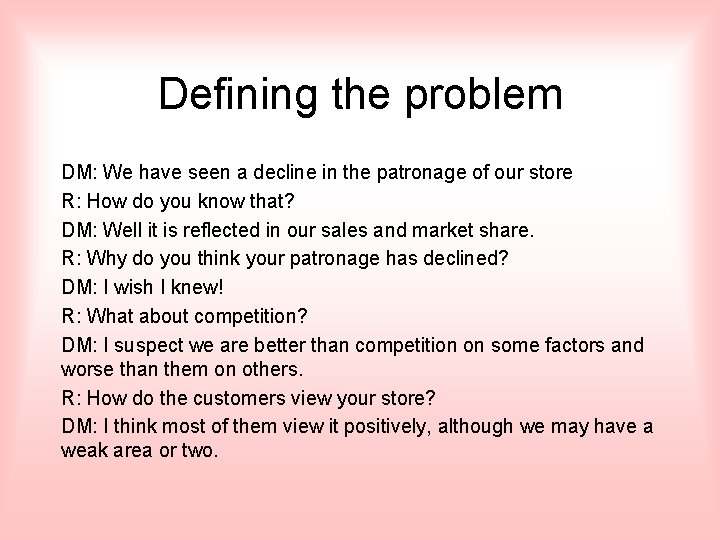
Defining the problem DM: We have seen a decline in the patronage of our store R: How do you know that? DM: Well it is reflected in our sales and market share. R: Why do you think your patronage has declined? DM: I wish I knew! R: What about competition? DM: I suspect we are better than competition on some factors and worse than them on others. R: How do the customers view your store? DM: I think most of them view it positively, although we may have a weak area or two.
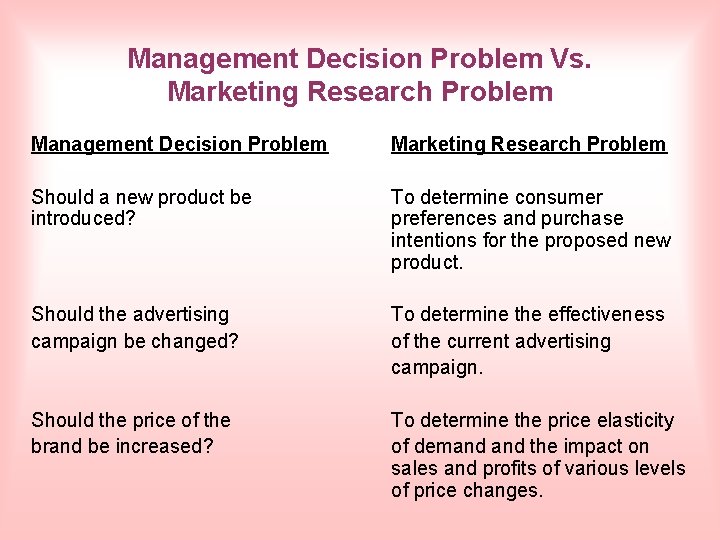
Management Decision Problem Vs. Marketing Research Problem Management Decision Problem Marketing Research Problem Should a new product be introduced? To determine consumer preferences and purchase intentions for the proposed new product. Should the advertising campaign be changed? To determine the effectiveness of the current advertising campaign. Should the price of the brand be increased? To determine the price elasticity of demand the impact on sales and profits of various levels of price changes.
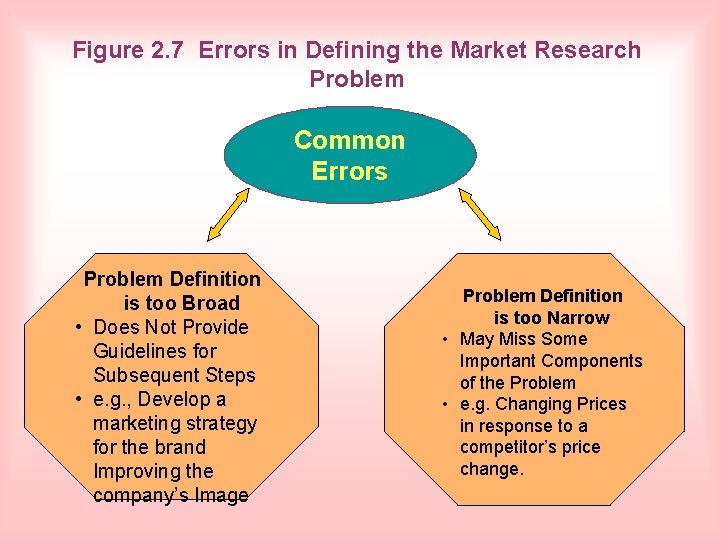
Figure 2. 7 Errors in Defining the Market Research Problem Common Errors Problem Definition is too Broad • Does Not Provide Guidelines for Subsequent Steps • e. g. , Develop a marketing strategy for the brand Improving the company’s Image Problem Definition is too Narrow • May Miss Some Important Components of the Problem • e. g. Changing Prices in response to a competitor’s price change.
Defining marketing research problem • The likelihood of committing either type of error in problem definition can be reduced by stating the marketing research problem in broad, general terms and identifying its specific components. The broad statement provides perspective on the problem and acts as a safeguard against committing the second type of error. The specific components focus on the key aspects of the problem and provide clear guidelines on how to proceed further, thereby reducing the likelihood of the first type of error.
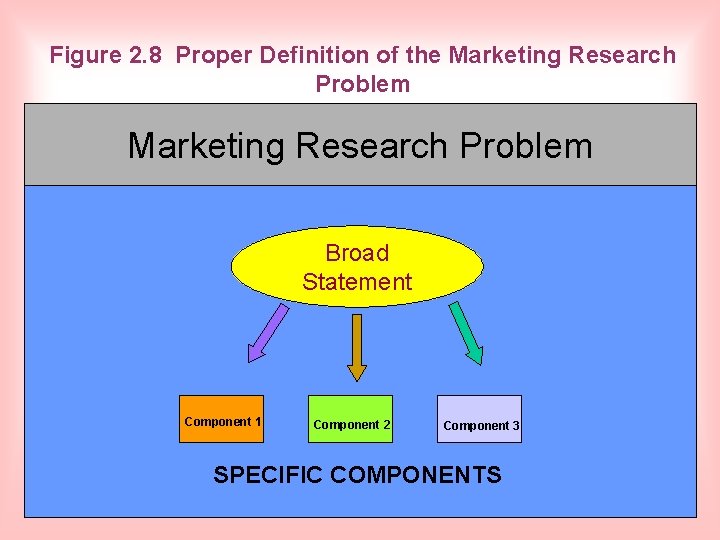
Figure 2. 8 Proper Definition of the Marketing Research Problem Broad Statement Component 1 Component 2 Component 3 SPECIFIC COMPONENTS
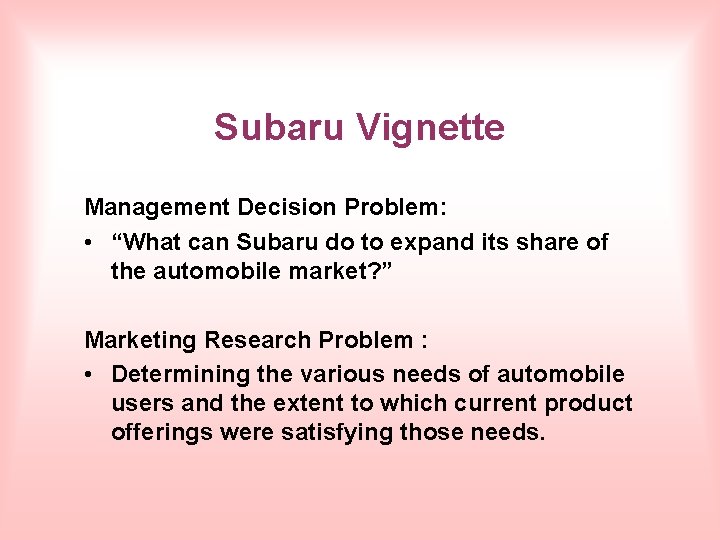
Subaru Vignette Management Decision Problem: • “What can Subaru do to expand its share of the automobile market? ” Marketing Research Problem : • Determining the various needs of automobile users and the extent to which current product offerings were satisfying those needs.
Subaru: Specific Components 1. What needs do buyers of passenger cars, station wagons, and sports utility vehicles seek to satisfy? 2. How well do existing automobile product offerings meet these needs? 3. Is there a segment of the automobile market whose needs are not being adequately met? 4. What automobile features does the segment identified in number 3 desire? 5. What is the demographic and psychographic profile of the identified segment?
Components of an Approach § Analytical Framework and Model § Research Questions and hypotheses § Specification of the Information Needed

Objective/theoretical framework • In general research should be based on objective evidence and supported by theory. A theory is a conceptual scheme based on foundational statements called axioms, which are assumed to be true. Objective evidence (evidence that is unbiased and supported by empirical findings) is gathered by compiling relevant findings from secondary sources. Likewise, an appropriate theory to guide the research might be identified by reviewing academic literature contained in books, journal articles, and monographs.
Models An analytical model is a set of variables and their interrelationships designed to represent, in whole or in part, some real system or process. In verbal models, the variables and their relationships are stated in prose form. Such models may be mere restatements of the main tenets of a theory.
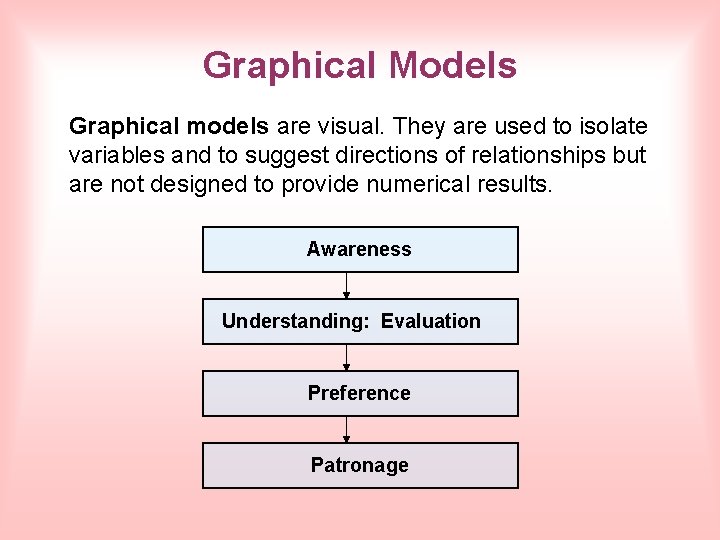
Graphical Models Graphical models are visual. They are used to isolate variables and to suggest directions of relationships but are not designed to provide numerical results. Awareness Understanding: Evaluation Preference Patronage
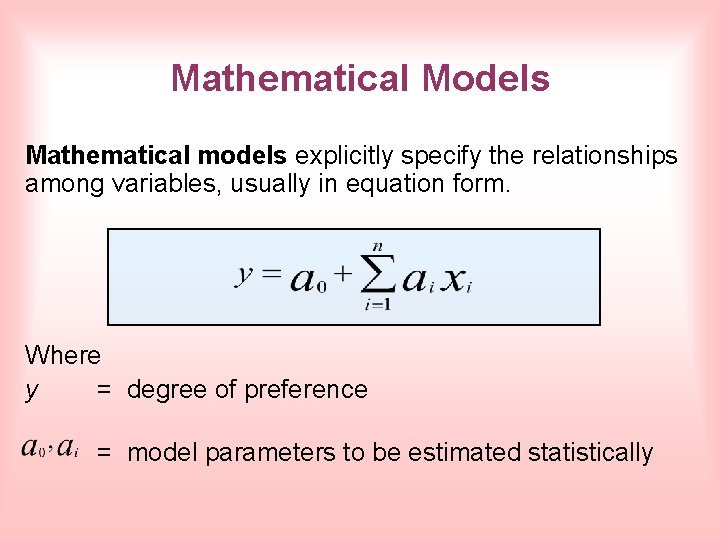
Mathematical Models Mathematical models explicitly specify the relationships among variables, usually in equation form. Where y = degree of preference = model parameters to be estimated statistically
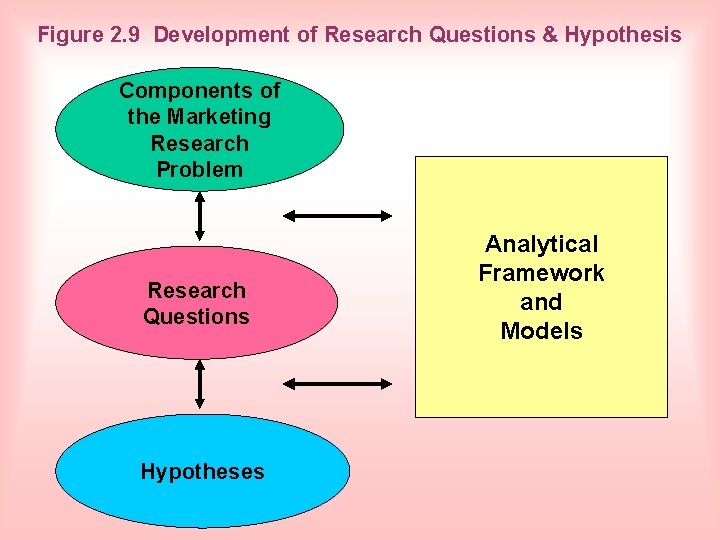
Figure 2. 9 Development of Research Questions & Hypothesis Components of the Marketing Research Problem Research Questions Hypotheses Analytical Framework and Models
Research Questions and Hypotheses • Research questions (RQs) are refined statements of the specific components of the problem. • A hypothesis (H) is an unproven statement or proposition about a factor or phenomenon that is of interest to the researcher. Often, a hypothesis is a possible answer to the research question.
Subaru Vignette • RQ : What is the overlap between the features sought by station wagon buyers and buyers of sports utility vehicles (SUV)? • H 1 : The buyers of station wagons rate certain features of SUVs as important. • H 2 : The buyers of SUVs rate certain features of station wagons as important.
Specification of information needed • By focusing on each component of the problem and the analytical framework and models, research questions, and hypotheses, the researcher can determine what information should be obtained.
Subaru Vignette Component 1 • Needs of buyers of passenger cars operationalized in terms of the attributes or features desired in an automobile. • Needs of buyers of station wagons operationalized in terms of the attributes or features desired in an automobile. • Needs of buyers of sports utility vehicles operationalized in terms of the attributes or features desired in an automobile.
Subaru Vignette Component 2 • Evaluation of passenger cars on the desired attributes. • Evaluation of station wagons on the desired attributes. • Evaluation of sports utility vehicles on the desired attributes.
Subaru Vignette Component 3 • No new information to be collected Component 4 • No new information to be collected Component 5 • Demographic and psychographic characteristics Type and number of automobiles owned
- Slides: 41