
Figure 17 1 Embryonic development of the human
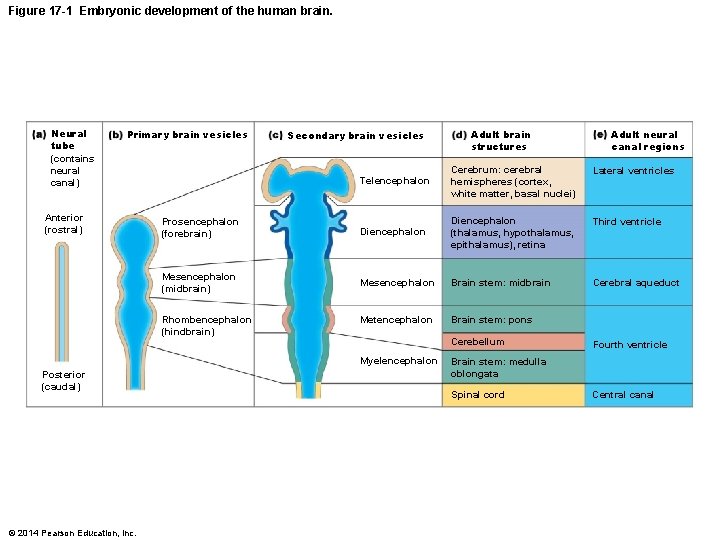
Figure 17 -1 Embryonic development of the human brain. Neural tube (contains neural canal) Primary brain vesicles Anterior (rostral) Secondary brain vesicles Cerebrum: cerebral hemispheres (cortex, white matter, basal nuclei) Lateral ventricles Prosencephalon (forebrain) Diencephalon (thalamus, hypothalamus, epithalamus), retina Third ventricle Mesencephalon (midbrain) Mesencephalon Brain stem: midbrain Cerebral aqueduct Metencephalon Brain stem: pons Cerebellum Myelencephalon © 2014 Pearson Education, Inc. Adult neural canal regions Telencephalon Rhombencephalon (hindbrain) Posterior (caudal) Adult brain structures Fourth ventricle Brain stem: medulla oblongata Spinal cord Central canal
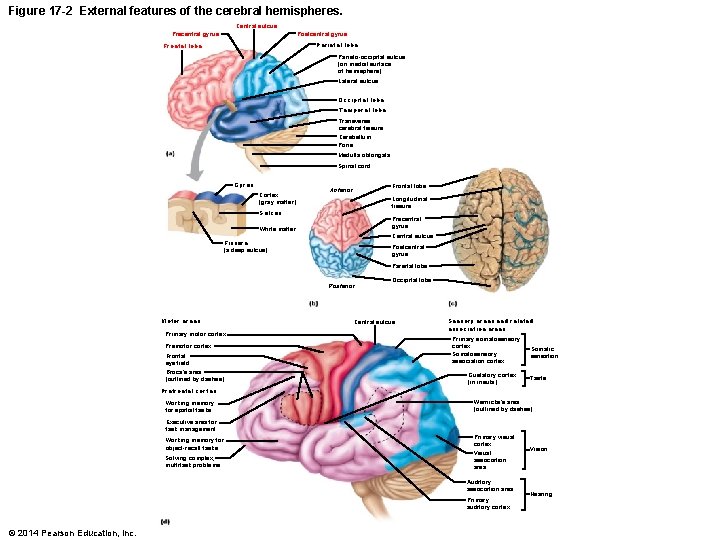
Figure 17 -2 External features of the cerebral hemispheres. Central sulcus Precentral gyrus Postcentral gyrus Parietal lobe Frontal lobe Parieto-occipital sulcus (on medial surface of hemisphere) Lateral sulcus Occipital lobe Temporal lobe Transverse cerebral fissure Cerebellum Pons Medulla oblongata Spinal cord Gyrus Cortex (gray matter) Frontal lobe Anterior Longitudinal fissure Sulcus Precentral gyrus White matter Central sulcus Fissure (a deep sulcus) Postcentral gyrus Parietal lobe Occipital lobe Posterior Motor areas Primary motor cortex Premotor cortex Frontal eye field Broca’s area (outlined by dashes) Central sulcus Sensory areas and related association areas Primary somatosensory cortex Somatosensory association cortex Gustatory cortex (in insula) Somatic sensation Taste Prefrontal cortex Working memory for spatial tasks Wernicke’s area (outlined by dashes) Executive area for task management Working memory for object-recall tasks Solving complex, multitask problems Primary visual cortex Visual association area Auditory association area Primary auditory cortex © 2014 Pearson Education, Inc. Vision Hearing
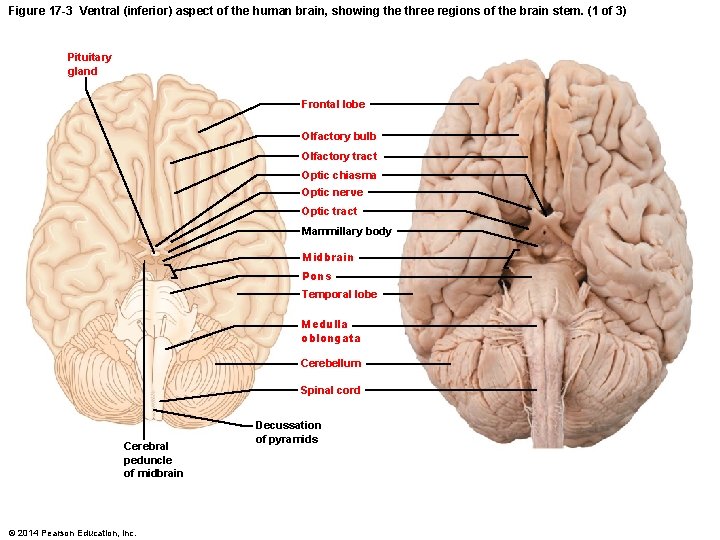
Figure 17 -3 Ventral (inferior) aspect of the human brain, showing the three regions of the brain stem. (1 of 3) Pituitary gland Frontal lobe Olfactory bulb Olfactory tract Optic chiasma Optic nerve Optic tract Mammillary body Midbrain Pons Temporal lobe Medulla oblongata Cerebellum Spinal cord Cerebral peduncle of midbrain © 2014 Pearson Education, Inc. Decussation of pyramids
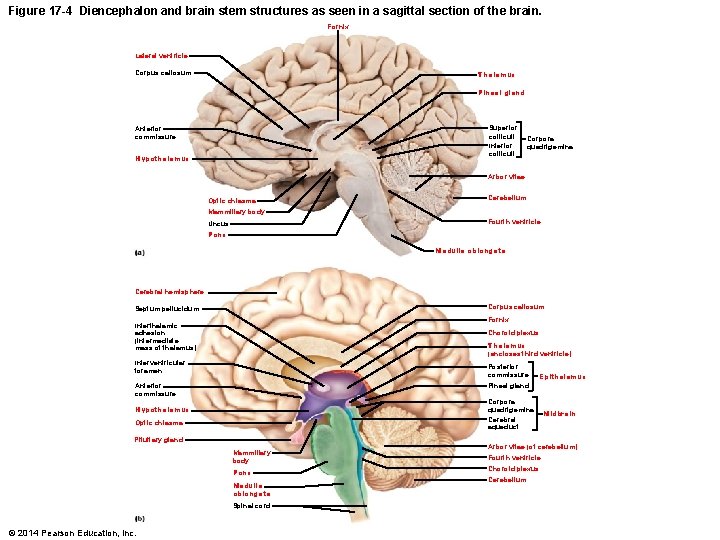
Figure 17 -4 Diencephalon and brain stem structures as seen in a sagittal section of the brain. Fornix Lateral ventricle Corpus callosum Thalamus Pineal gland Superior colliculi Inferior colliculi Anterior commissure Hypothalamus Corpora quadrigemina Arbor vitae Optic chiasma Cerebellum Mammillary body Fourth ventricle Uncus Pons Medulla oblongata Cerebral hemisphere Corpus callosum Septum pellucidum Fornix Interthalamic adhesion (intermediate mass of thalamus) Choroid plexus Thalamus (encloses third ventricle) Interventricular foramen Posterior commissure Corpora quadrigemina Cerebral aqueduct Hypothalamus Optic chiasma Pituitary gland Mammillary body Pons Medulla oblongata Spinal cord © 2014 Pearson Education, Inc. Epithalamus Pineal gland Anterior commissure Midbrain Arbor vitae (of cerebellum) Fourth ventricle Choroid plexus Cerebellum
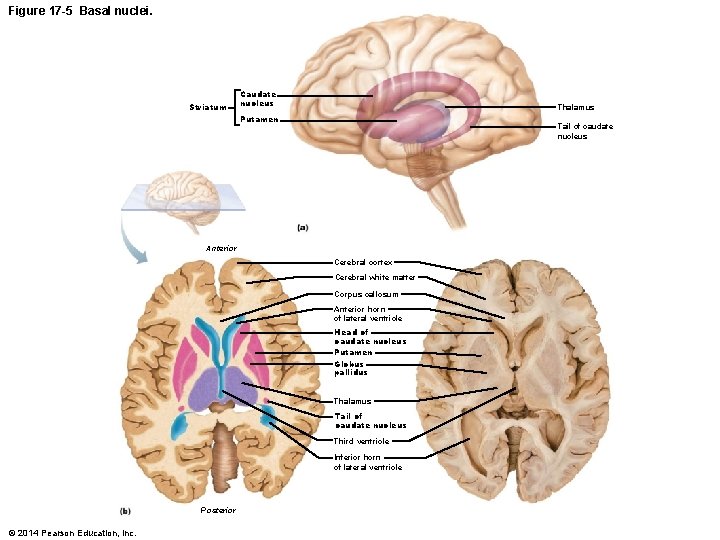
Figure 17 -5 Basal nuclei. Striatum Caudate nucleus Thalamus Putamen Tail of caudate nucleus Anterior Cerebral cortex Cerebral white matter Corpus callosum Anterior horn of lateral ventricle Head of caudate nucleus Putamen Globus pallidus Thalamus Tail of caudate nucleus Third ventricle Inferior horn of lateral ventricle Posterior © 2014 Pearson Education, Inc.
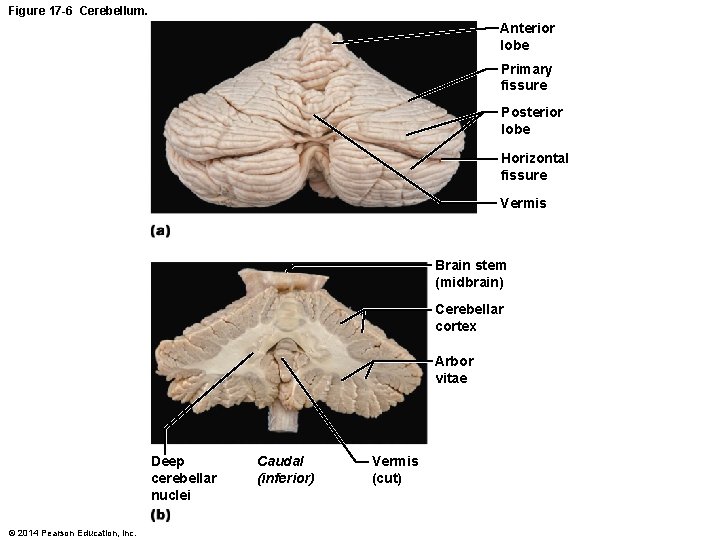
Figure 17 -6 Cerebellum. Anterior lobe Primary fissure Posterior lobe Horizontal fissure Vermis Brain stem (midbrain) Cerebellar cortex Arbor vitae Deep cerebellar nuclei © 2014 Pearson Education, Inc. Caudal (inferior) Vermis (cut)
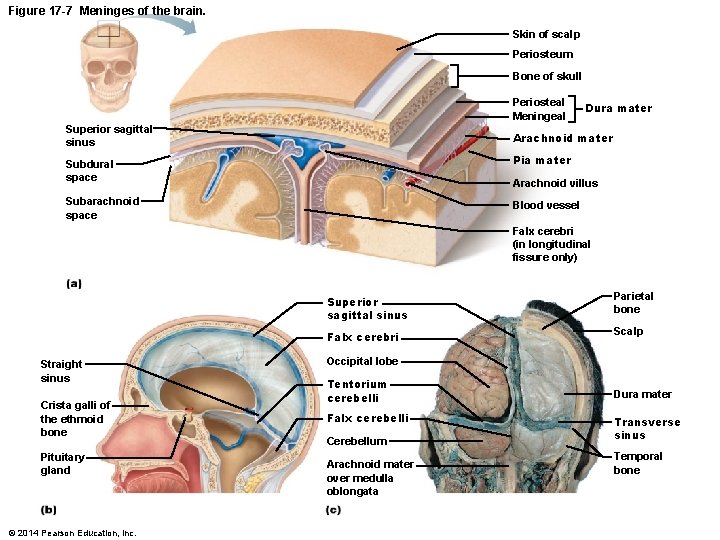
Figure 17 -7 Meninges of the brain. Skin of scalp Periosteum Bone of skull Periosteal Meningeal Superior sagittal sinus Dura mater Arachnoid mater Pia mater Subdural space Arachnoid villus Subarachnoid space Blood vessel Falx cerebri (in longitudinal fissure only) Straight sinus Crista galli of the ethmoid bone Pituitary gland © 2014 Pearson Education, Inc. Superior sagittal sinus Parietal bone Falx cerebri Scalp Occipital lobe Tentorium cerebelli Falx cerebelli Cerebellum Arachnoid mater over medulla oblongata Dura mater Transverse sinus Temporal bone
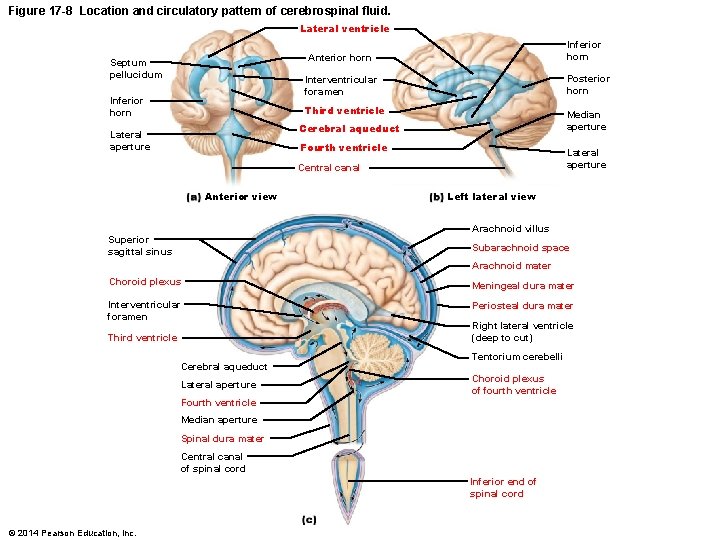
Figure 17 -8 Location and circulatory pattern of cerebrospinal fluid. Lateral ventricle Inferior horn Anterior horn Septum pellucidum Posterior horn Interventricular foramen Inferior horn Third ventricle Median aperture Cerebral aqueduct Lateral aperture Fourth ventricle Lateral aperture Central canal Anterior view Left lateral view Arachnoid villus Superior sagittal sinus Subarachnoid space Arachnoid mater Choroid plexus Meningeal dura mater Interventricular foramen Periosteal dura mater Third ventricle Cerebral aqueduct Lateral aperture Right lateral ventricle (deep to cut) Tentorium cerebelli Choroid plexus of fourth ventricle Fourth ventricle Median aperture Spinal dura mater Central canal of spinal cord Inferior end of spinal cord © 2014 Pearson Education, Inc.
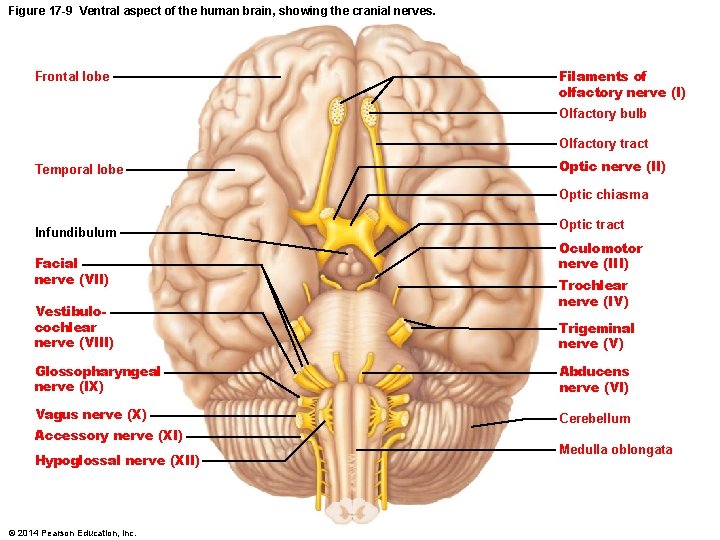
Figure 17 -9 Ventral aspect of the human brain, showing the cranial nerves. Frontal lobe Filaments of olfactory nerve (I) Olfactory bulb Olfactory tract Temporal lobe Optic nerve (II) Optic chiasma Infundibulum Facial nerve (VII) Vestibulocochlear nerve (VIII) Optic tract Oculomotor nerve (III) Trochlear nerve (IV) Trigeminal nerve (V) Glossopharyngeal nerve (IX) Abducens nerve (VI) Vagus nerve (X) Cerebellum Accessory nerve (XI) Hypoglossal nerve (XII) © 2014 Pearson Education, Inc. Medulla oblongata
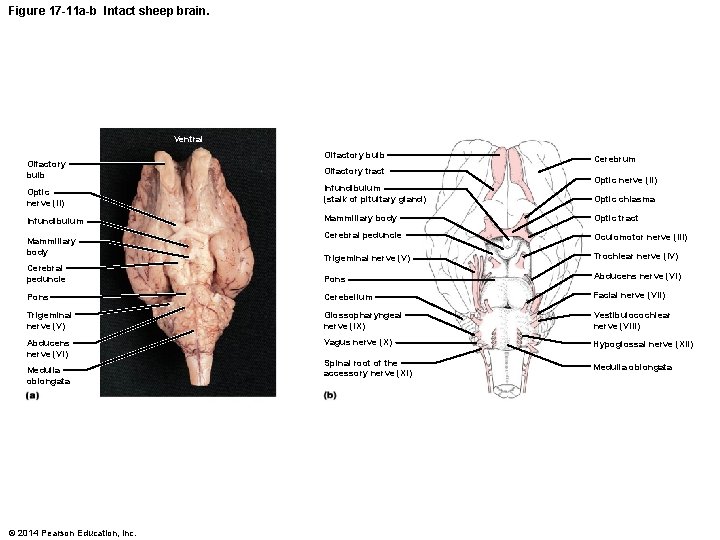
Figure 17 -11 a-b Intact sheep brain. Ventral Olfactory bulb Cerebrum Olfactory bulb Olfactory tract Optic nerve (II) Infundibulum (stalk of pituitary gland) Infundibulum Mammillary body Optic tract Cerebral peduncle Oculomotor nerve (III) Trigeminal nerve (V) Trochlear nerve (IV) Pons Abducens nerve (VI) Pons Cerebellum Facial nerve (VII) Trigeminal nerve (V) Glossopharyngeal nerve (IX) Vestibulocochlear nerve (VIII) Abducens nerve (VI) Vagus nerve (X) Hypoglossal nerve (XII) Spinal root of the accessory nerve (XI) Medulla oblongata Mammillary body Cerebral peduncle Medulla oblongata © 2014 Pearson Education, Inc. Optic nerve (II) Optic chiasma
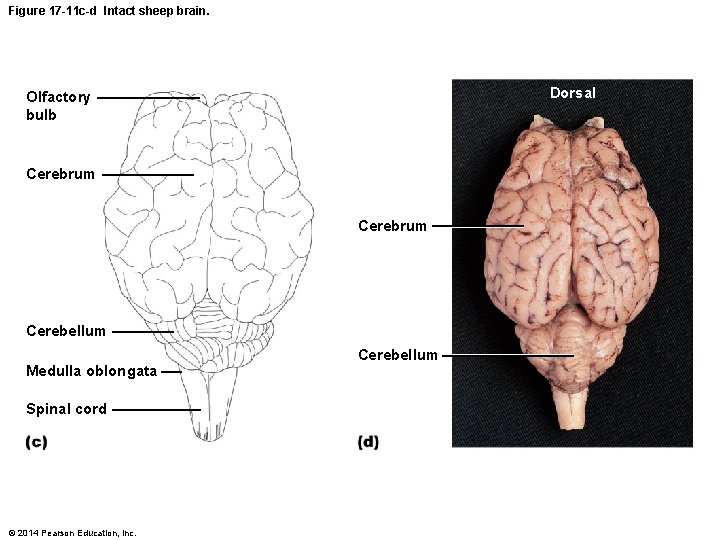
Figure 17 -11 c-d Intact sheep brain. Dorsal Olfactory bulb Cerebrum Cerebellum Medulla oblongata Spinal cord © 2014 Pearson Education, Inc. Cerebellum
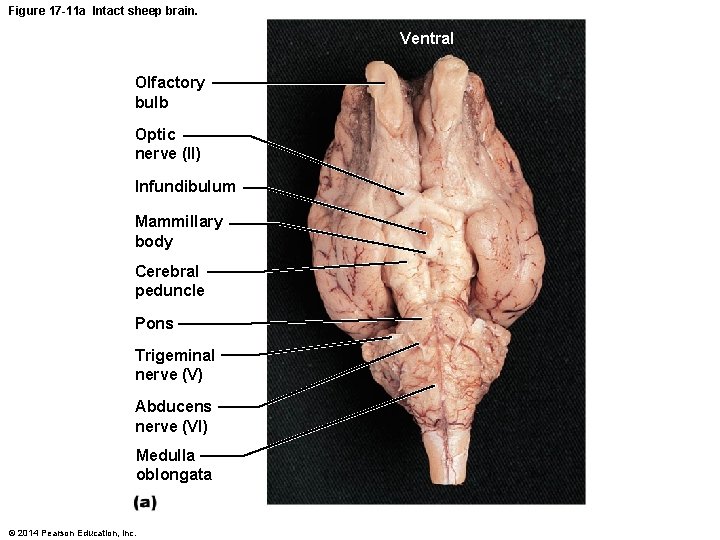
Figure 17 -11 a Intact sheep brain. Ventral Olfactory bulb Optic nerve (II) Infundibulum Mammillary body Cerebral peduncle Pons Trigeminal nerve (V) Abducens nerve (VI) Medulla oblongata © 2014 Pearson Education, Inc.
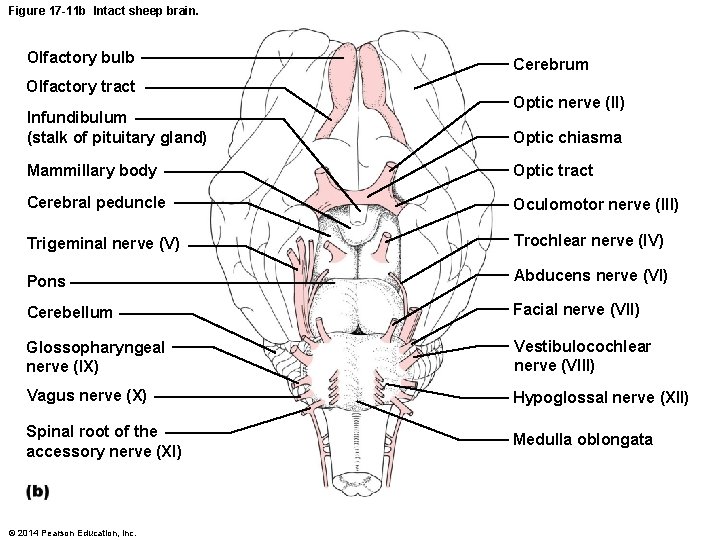
Figure 17 -11 b Intact sheep brain. Olfactory bulb Olfactory tract Infundibulum (stalk of pituitary gland) Cerebrum Optic nerve (II) Optic chiasma Mammillary body Optic tract Cerebral peduncle Oculomotor nerve (III) Trigeminal nerve (V) Trochlear nerve (IV) Pons Abducens nerve (VI) Cerebellum Facial nerve (VII) Glossopharyngeal nerve (IX) Vestibulocochlear nerve (VIII) Vagus nerve (X) Hypoglossal nerve (XII) Spinal root of the accessory nerve (XI) Medulla oblongata © 2014 Pearson Education, Inc.
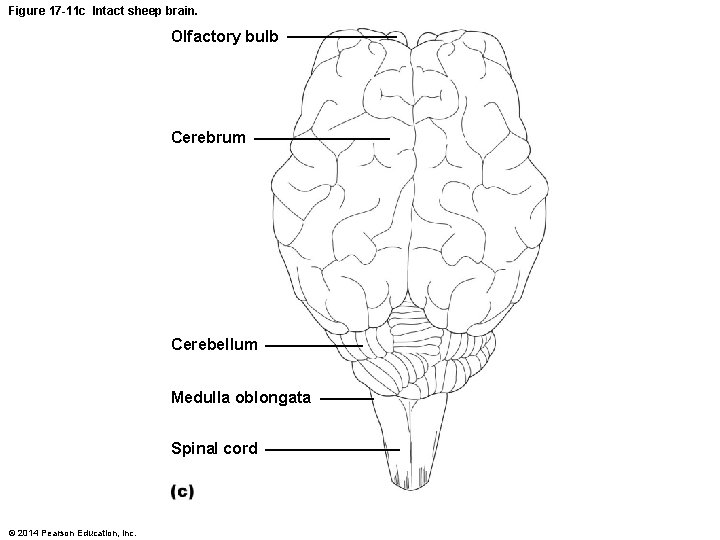
Figure 17 -11 c Intact sheep brain. Olfactory bulb Cerebrum Cerebellum Medulla oblongata Spinal cord © 2014 Pearson Education, Inc.
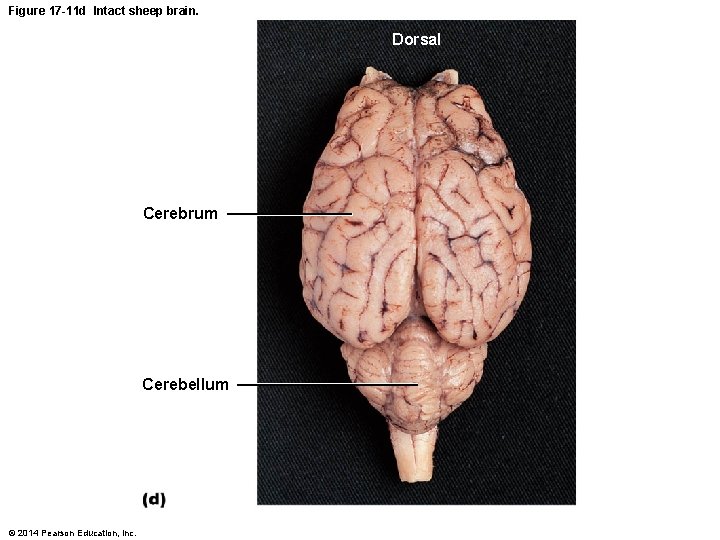
Figure 17 -11 d Intact sheep brain. Dorsal Cerebrum Cerebellum © 2014 Pearson Education, Inc.
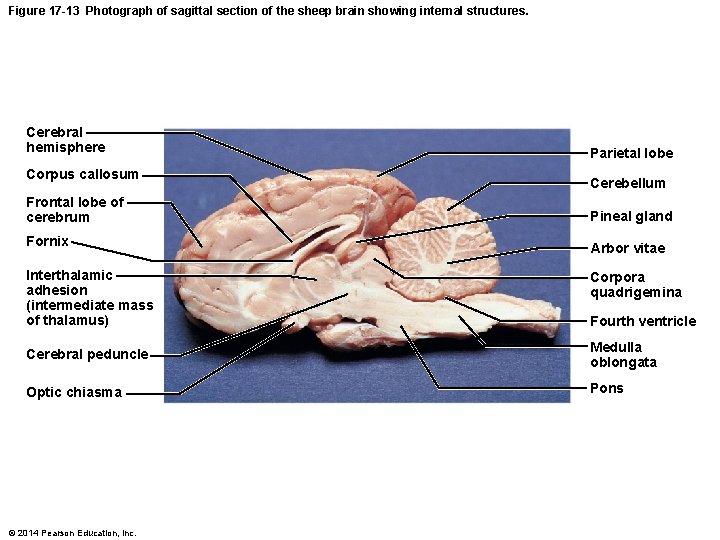
Figure 17 -13 Photograph of sagittal section of the sheep brain showing internal structures. Cerebral hemisphere Corpus callosum Parietal lobe Cerebellum Frontal lobe of cerebrum Pineal gland Fornix Arbor vitae Interthalamic adhesion (intermediate mass of thalamus) Corpora quadrigemina Fourth ventricle Cerebral peduncle Medulla oblongata Optic chiasma Pons © 2014 Pearson Education, Inc.
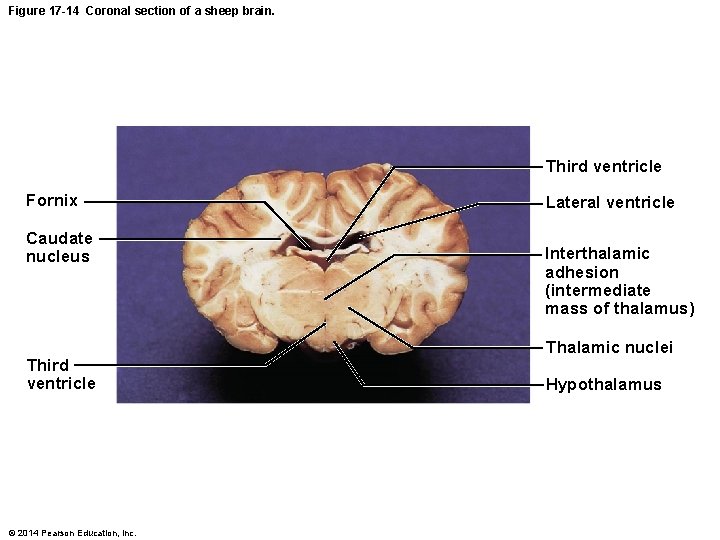
Figure 17 -14 Coronal section of a sheep brain. Third ventricle Fornix Caudate nucleus Third ventricle © 2014 Pearson Education, Inc. Lateral ventricle Interthalamic adhesion (intermediate mass of thalamus) Thalamic nuclei Hypothalamus
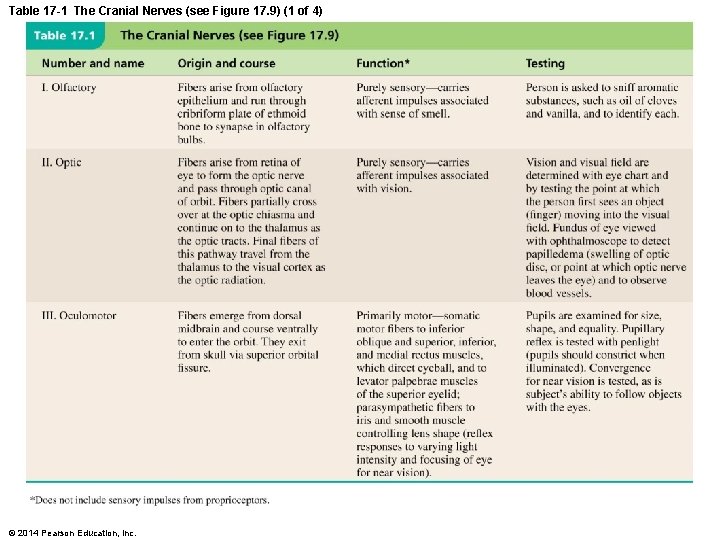
Table 17 -1 The Cranial Nerves (see Figure 17. 9) (1 of 4) © 2014 Pearson Education, Inc.
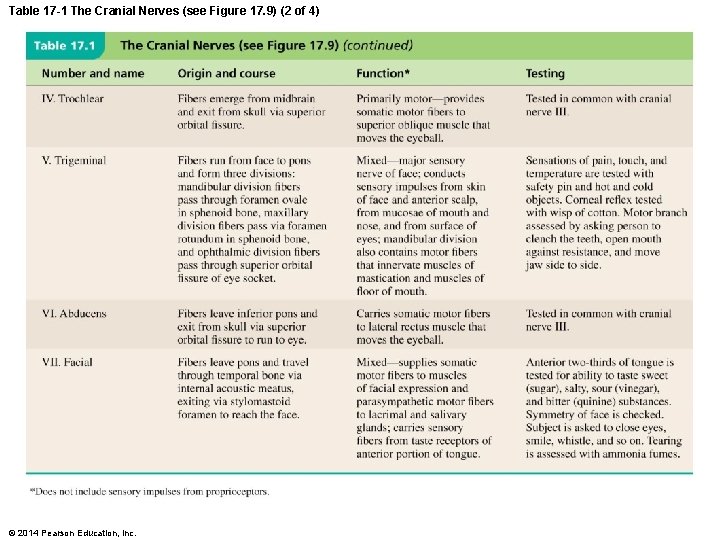
Table 17 -1 The Cranial Nerves (see Figure 17. 9) (2 of 4) © 2014 Pearson Education, Inc.
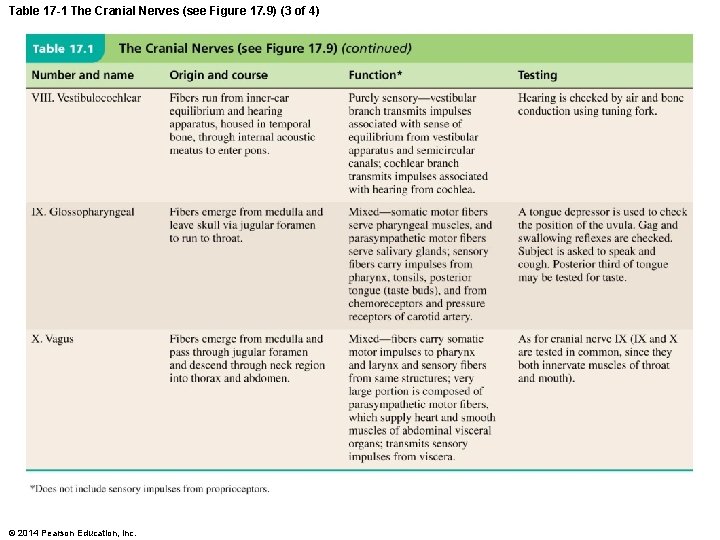
Table 17 -1 The Cranial Nerves (see Figure 17. 9) (3 of 4) © 2014 Pearson Education, Inc.
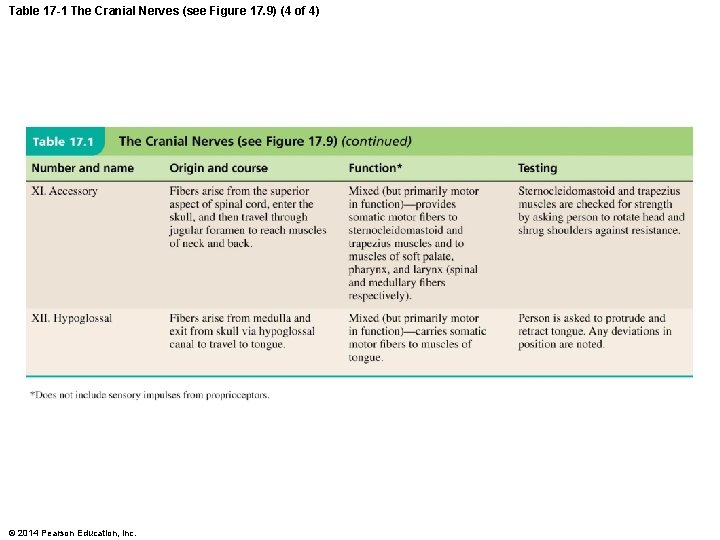
Table 17 -1 The Cranial Nerves (see Figure 17. 9) (4 of 4) © 2014 Pearson Education, Inc.
- Slides: 21