
Figure 16 1 Location of selected endocrine organs
- Slides: 40
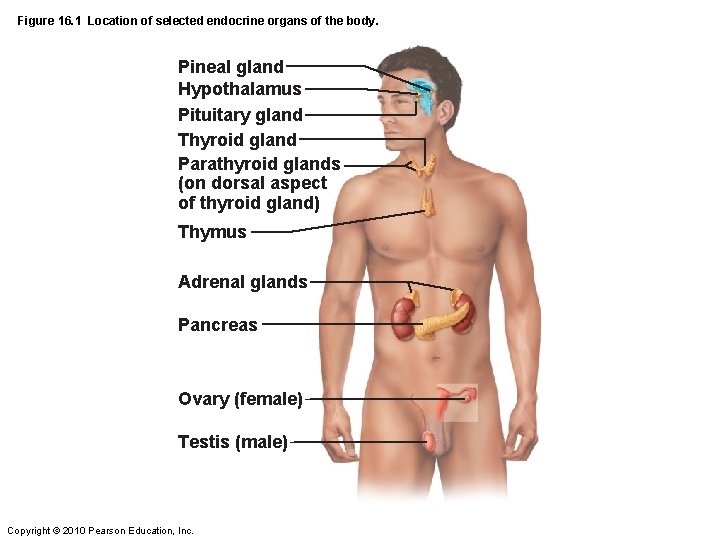
Figure 16. 1 Location of selected endocrine organs of the body. Pineal gland Hypothalamus Pituitary gland Thyroid gland Parathyroid glands (on dorsal aspect of thyroid gland) Thymus Adrenal glands Pancreas Ovary (female) Testis (male) Copyright © 2010 Pearson Education, Inc.
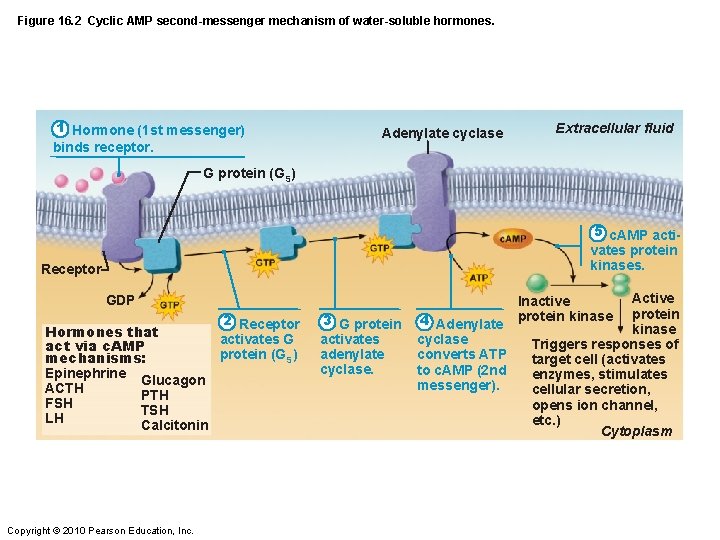
Figure 16. 2 Cyclic AMP second-messenger mechanism of water-soluble hormones. 1 Hormone (1 st messenger) binds receptor. Adenylate cyclase Extracellular fluid G protein (GS) 5 c. AMP acti- vates protein kinases. Receptor GDP 2 Receptor Hormones that activates G act via c. AMP protein (GS) mechanisms: Epinephrine Glucagon ACTH PTH FSH TSH LH Calcitonin Copyright © 2010 Pearson Education, Inc. 3 G protein activates adenylate cyclase. 4 Adenylate cyclase converts ATP to c. AMP (2 nd messenger). Active protein kinase Triggers responses of target cell (activates enzymes, stimulates cellular secretion, opens ion channel, etc. ) Cytoplasm Inactive protein kinase
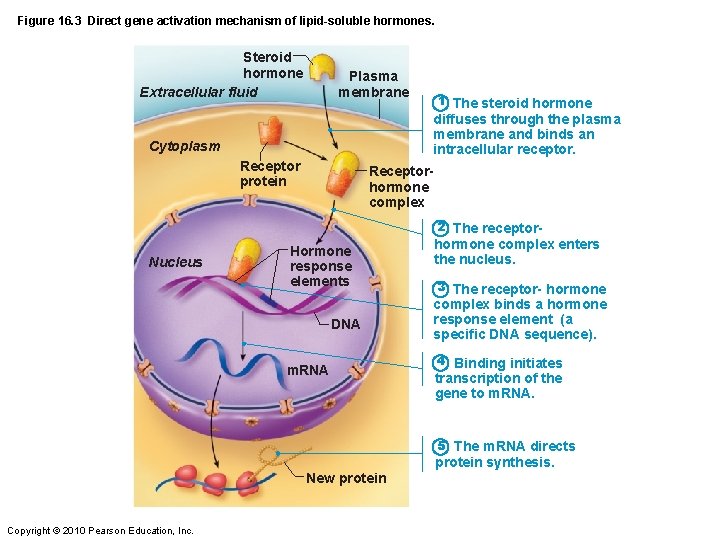
Figure 16. 3 Direct gene activation mechanism of lipid-soluble hormones. Steroid hormone Extracellular fluid Plasma membrane 1 The steroid hormone diffuses through the plasma membrane and binds an intracellular receptor. Cytoplasm Receptor protein Receptorhormone complex 2 The receptor- Nucleus Hormone response elements DNA m. RNA hormone complex enters the nucleus. 3 The receptor- hormone complex binds a hormone response element (a specific DNA sequence). 4 Binding initiates transcription of the gene to m. RNA. 5 The m. RNA directs protein synthesis. New protein Copyright © 2010 Pearson Education, Inc.
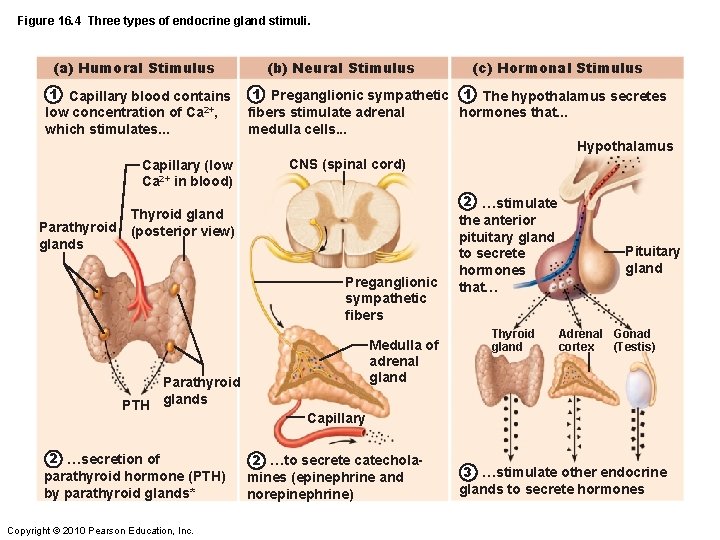
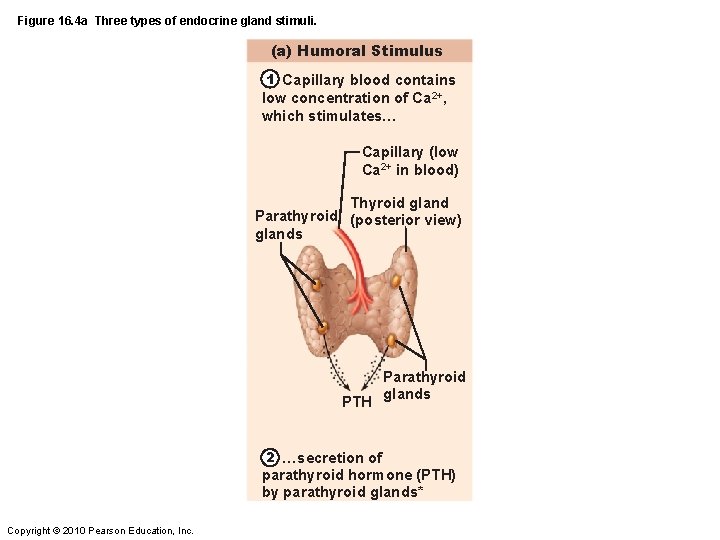
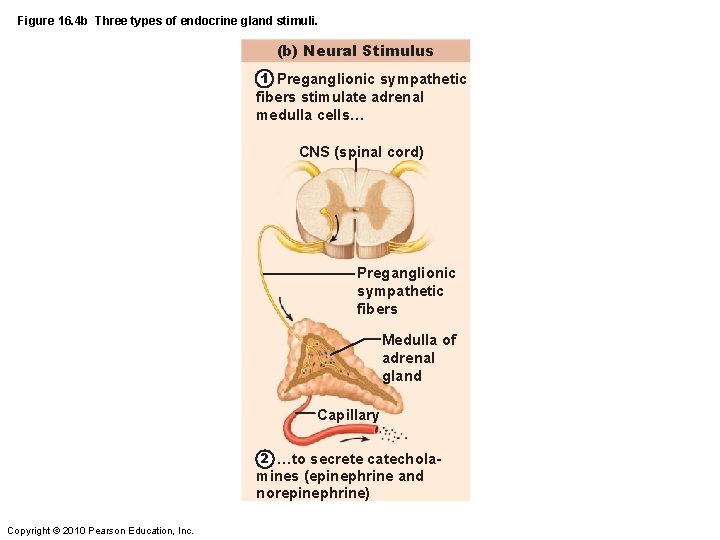
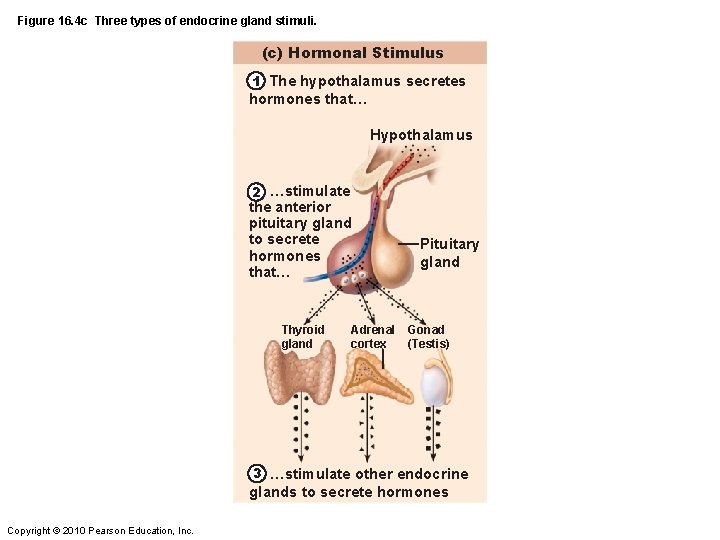
Figure 16. 4 Three types of endocrine gland stimuli. (a) Humoral Stimulus (b) Neural Stimulus (c) Hormonal Stimulus 1 Capillary blood contains 1 Preganglionic sympathetic 1 The hypothalamus secretes low concentration of Ca 2+, which stimulates. . . fibers stimulate adrenal medulla cells. . . hormones that. . . Hypothalamus Capillary (low Ca 2+ in blood) Parathyroid glands CNS (spinal cord) 2 …stimulate Thyroid gland (posterior view) Preganglionic sympathetic fibers Parathyroid PTH glands 2 …secretion of parathyroid hormone (PTH) by parathyroid glands* Copyright © 2010 Pearson Education, Inc. Medulla of adrenal gland the anterior pituitary gland to secrete hormones that… Thyroid gland Pituitary gland Adrenal Gonad cortex (Testis) Capillary 2 …to secrete catechola- mines (epinephrine and norepinephrine) 3 …stimulate other endocrine glands to secrete hormones
Figure 16. 4 a Three types of endocrine gland stimuli. (a) Humoral Stimulus 1 Capillary blood contains low concentration of Ca 2+, which stimulates… Capillary (low Ca 2+ in blood) Thyroid gland Parathyroid (posterior view) glands PTH Parathyroid glands 2 …secretion of parathyroid hormone (PTH) by parathyroid glands* Copyright © 2010 Pearson Education, Inc.
Figure 16. 4 b Three types of endocrine gland stimuli. (b) Neural Stimulus 1 Preganglionic sympathetic fibers stimulate adrenal medulla cells… CNS (spinal cord) Preganglionic sympathetic fibers Medulla of adrenal gland Capillary 2 …to secrete catechola- mines (epinephrine and norepinephrine) Copyright © 2010 Pearson Education, Inc.
Figure 16. 4 c Three types of endocrine gland stimuli. (c) Hormonal Stimulus 1 The hypothalamus secretes hormones that… Hypothalamus 2 …stimulate the anterior pituitary gland to secrete hormones that… Thyroid gland Adrenal cortex Pituitary gland Gonad (Testis) 3 …stimulate other endocrine glands to secrete hormones Copyright © 2010 Pearson Education, Inc.
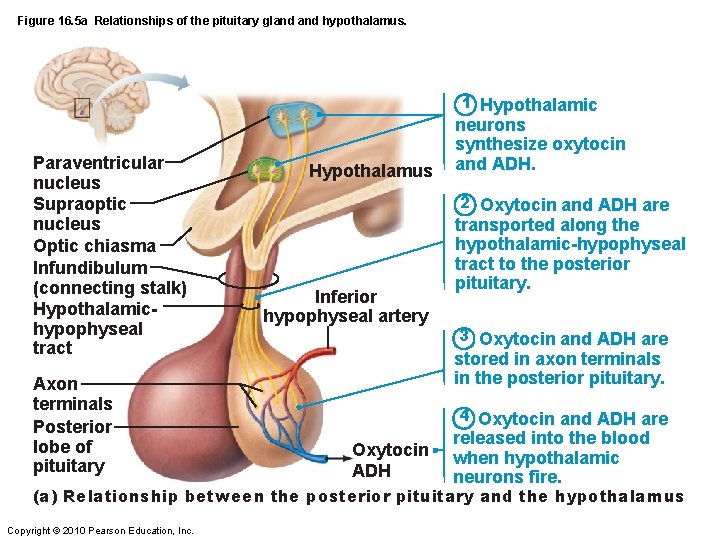
Figure 16. 5 a Relationships of the pituitary gland hypothalamus. 1 Hypothalamic Paraventricular nucleus Supraoptic nucleus Optic chiasma Infundibulum (connecting stalk) Hypothalamichypophyseal tract Axon terminals Posterior lobe of pituitary Hypothalamus neurons synthesize oxytocin and ADH. 2 Oxytocin and ADH are Inferior hypophyseal artery transported along the hypothalamic-hypophyseal tract to the posterior pituitary. 3 Oxytocin and ADH are stored in axon terminals in the posterior pituitary. 4 Oxytocin and ADH are Oxytocin ADH released into the blood when hypothalamic neurons fire. (a) Relationship between the posterior pituitary and the hypothalamus Copyright © 2010 Pearson Education, Inc.
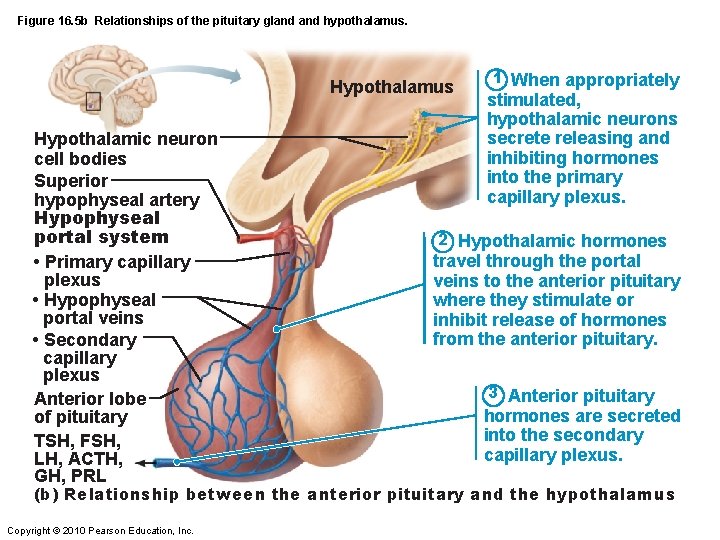
Figure 16. 5 b Relationships of the pituitary gland hypothalamus. Hypothalamus Hypothalamic neuron cell bodies Superior hypophyseal artery Hypophyseal portal system • Primary capillary plexus • Hypophyseal portal veins • Secondary capillary plexus Anterior lobe of pituitary TSH, FSH, LH, ACTH, GH, PRL 1 When appropriately stimulated, hypothalamic neurons secrete releasing and inhibiting hormones into the primary capillary plexus. 2 Hypothalamic hormones travel through the portal veins to the anterior pituitary where they stimulate or inhibit release of hormones from the anterior pituitary. 3 Anterior pituitary hormones are secreted into the secondary capillary plexus. (b) Relationship between the anterior pituitary and the hypothalamus Copyright © 2010 Pearson Education, Inc.
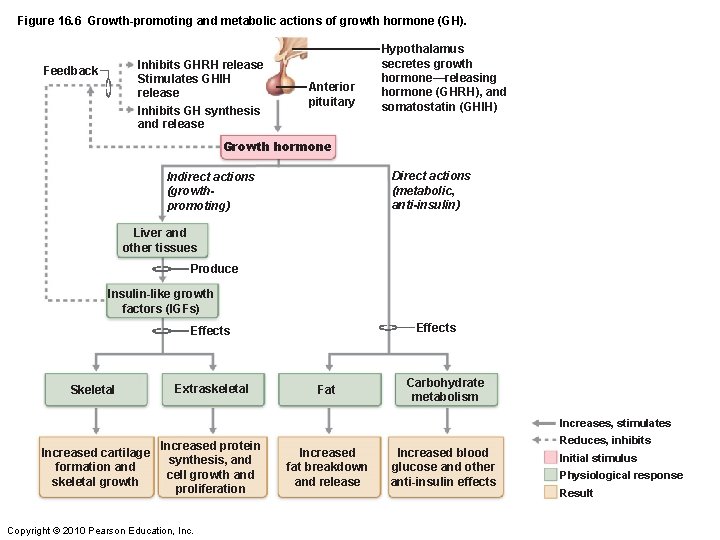
Figure 16. 6 Growth-promoting and metabolic actions of growth hormone (GH). Inhibits GHRH release Stimulates GHIH release Inhibits GH synthesis and release Feedback Anterior pituitary Hypothalamus secretes growth hormone—releasing hormone (GHRH), and somatostatin (GHIH) Growth hormone Direct actions (metabolic, anti-insulin) Indirect actions (growthpromoting) Liver and other tissues Produce Insulin-like growth factors (IGFs) Effects Skeletal Extraskeletal Fat Carbohydrate metabolism Increases, stimulates Increased cartilage formation and skeletal growth Increased protein synthesis, and cell growth and proliferation Copyright © 2010 Pearson Education, Increased fat breakdown and release Increased blood glucose and other anti-insulin effects Reduces, inhibits Initial stimulus Physiological response Result
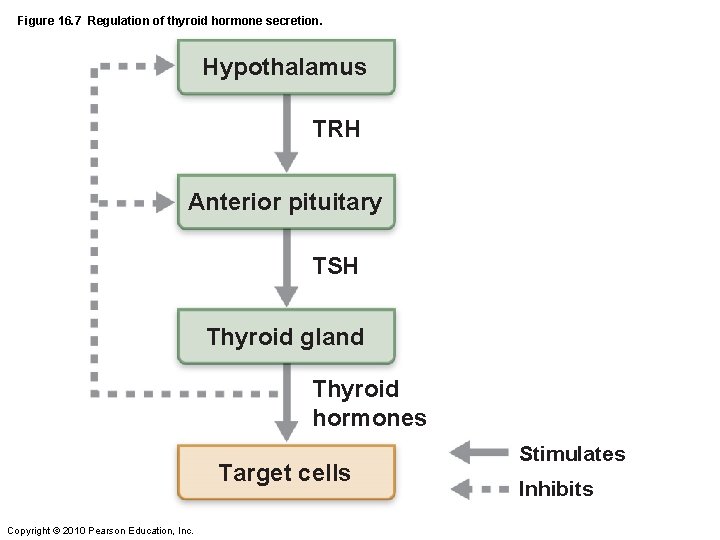
Figure 16. 7 Regulation of thyroid hormone secretion. Hypothalamus TRH Anterior pituitary TSH Thyroid gland Thyroid hormones Target cells Copyright © 2010 Pearson Education, Inc. Stimulates Inhibits
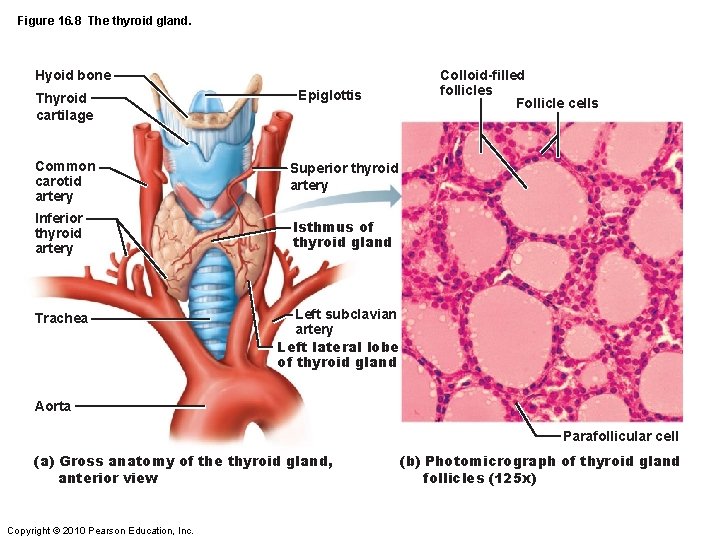
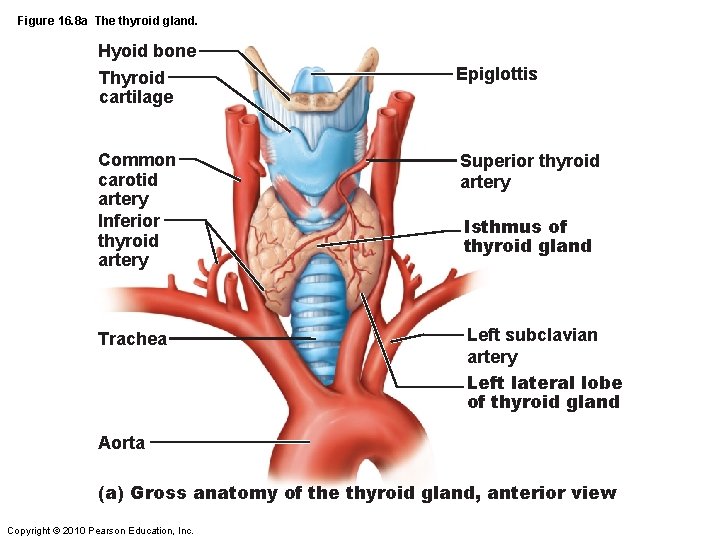
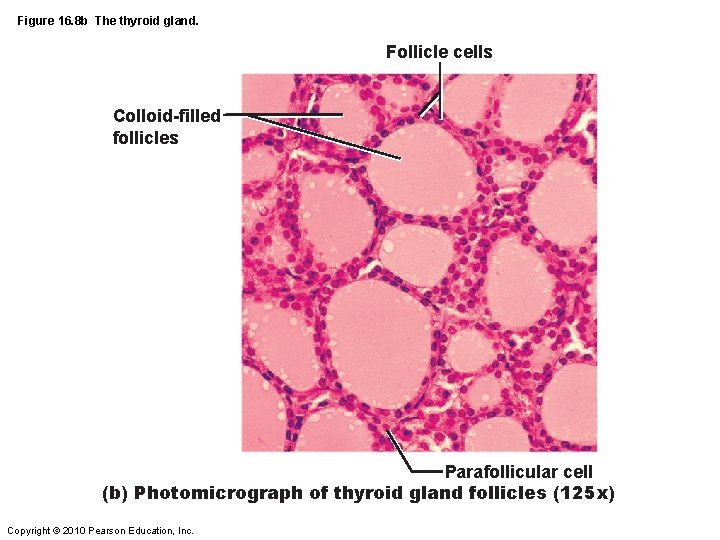
Figure 16. 8 The thyroid gland. Hyoid bone Thyroid cartilage Epiglottis Common carotid artery Superior thyroid artery Inferior thyroid artery Isthmus of thyroid gland Trachea Colloid-filled follicles Follicle cells Left subclavian artery Left lateral lobe of thyroid gland Aorta Parafollicular cell (a) Gross anatomy of the thyroid gland, anterior view Copyright © 2010 Pearson Education, Inc. (b) Photomicrograph of thyroid gland follicles (125 x)
Figure 16. 8 a The thyroid gland. Hyoid bone Thyroid cartilage Common carotid artery Inferior thyroid artery Trachea Epiglottis Superior thyroid artery Isthmus of thyroid gland Left subclavian artery Left lateral lobe of thyroid gland Aorta (a) Gross anatomy of the thyroid gland, anterior view Copyright © 2010 Pearson Education, Inc.
Figure 16. 8 b The thyroid gland. Follicle cells Colloid-filled follicles Parafollicular cell (b) Photomicrograph of thyroid gland follicles (125 x) Copyright © 2010 Pearson Education, Inc.
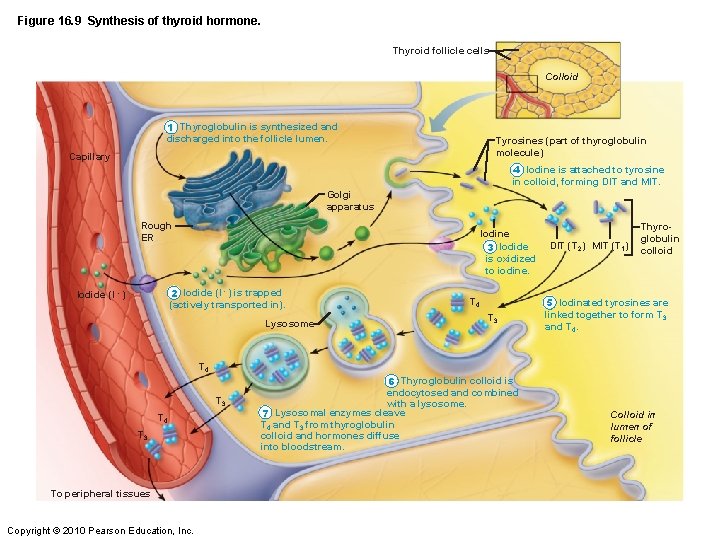
Figure 16. 9 Synthesis of thyroid hormone. Thyroid follicle cells Colloid 1 Thyroglobulin is synthesized and discharged into the follicle lumen. Tyrosines (part of thyroglobulin molecule) Capillary 4 Iodine is attached to tyrosine in colloid, forming DIT and MIT. Golgi apparatus Rough ER Iodine 3 Iodide is oxidized to iodine. 2 Iodide (I - ) is trapped (actively transported in). Iodide (I - ) Lysosome T 4 T 3 DIT (T 2) MIT (T 1) Thyroglobulin colloid 5 Iodinated tyrosines are linked together to form T 3 and T 4 T 3 To peripheral tissues Copyright © 2010 Pearson Education, Inc. 6 Thyroglobulin colloid is endocytosed and combined with a lysosome. 7 Lysosomal enzymes cleave T 4 and T 3 from thyroglobulin colloid and hormones diffuse into bloodstream. Colloid in lumen of follicle
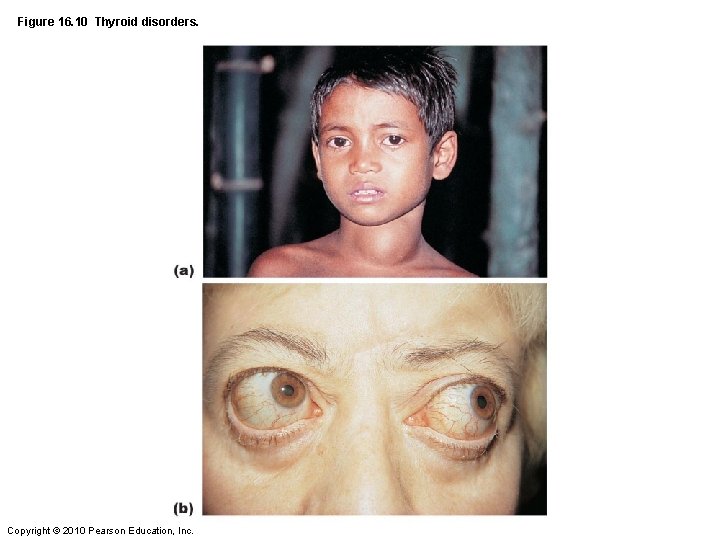
Figure 16. 10 Thyroid disorders. Copyright © 2010 Pearson Education, Inc.
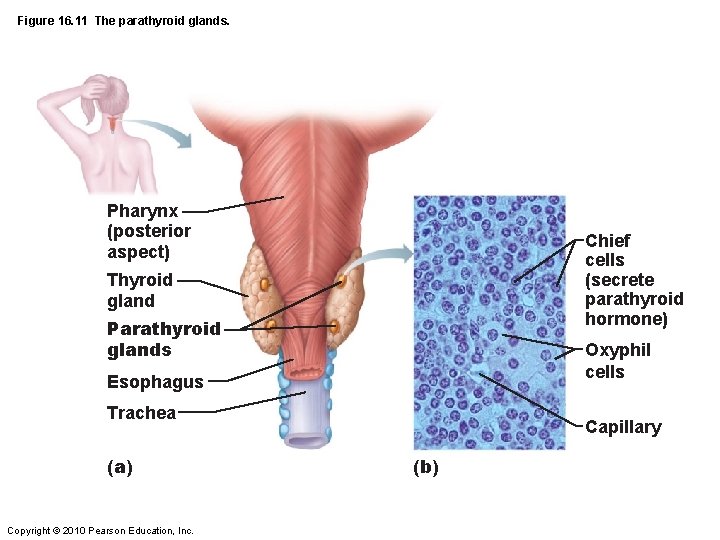
Figure 16. 11 The parathyroid glands. Pharynx (posterior aspect) Chief cells (secrete parathyroid hormone) Thyroid gland Parathyroid glands Oxyphil cells Esophagus Trachea (a) Copyright © 2010 Pearson Education, Inc. Capillary (b)
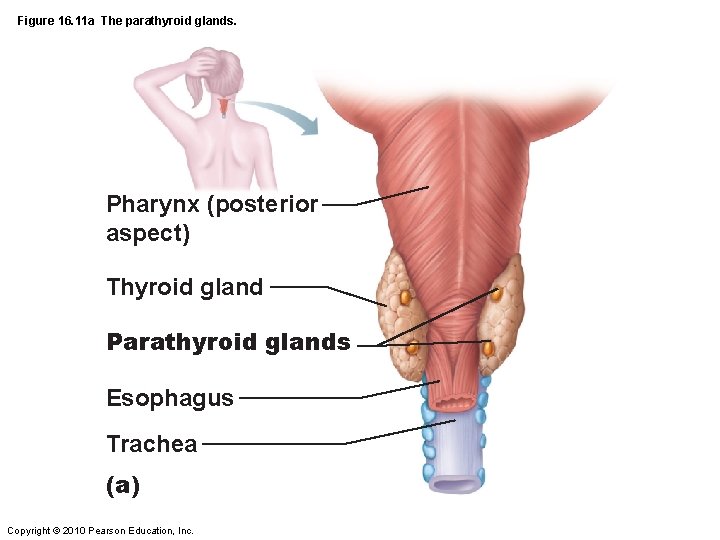
Figure 16. 11 a The parathyroid glands. Pharynx (posterior aspect) Thyroid gland Parathyroid glands Esophagus Trachea (a) Copyright © 2010 Pearson Education, Inc.
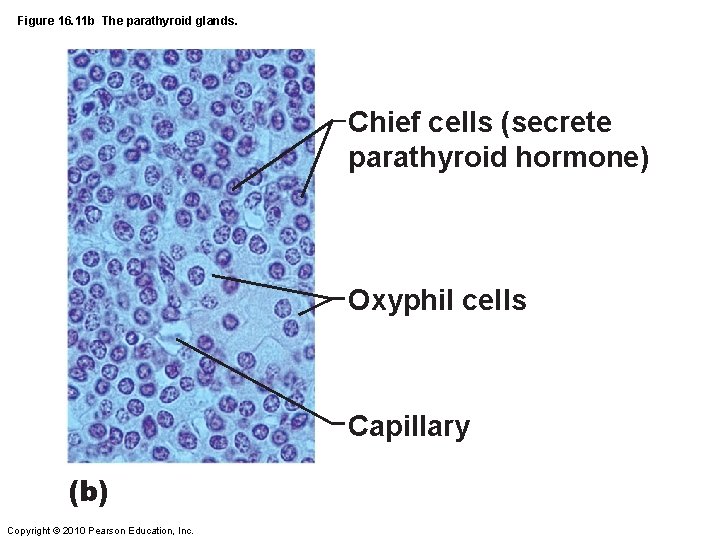
Figure 16. 11 b The parathyroid glands. Chief cells (secrete parathyroid hormone) Oxyphil cells Capillary (b) Copyright © 2010 Pearson Education, Inc.
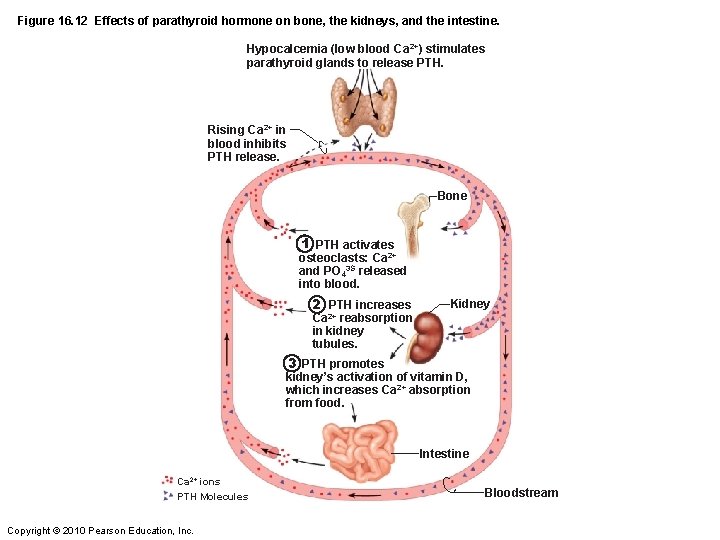
Figure 16. 12 Effects of parathyroid hormone on bone, the kidneys, and the intestine. Hypocalcemia (low blood Ca 2+) stimulates parathyroid glands to release PTH. Rising Ca 2+ in blood inhibits PTH release. Bone 1 PTH activates osteoclasts: Ca 2+ and PO 43 S released into blood. 2 PTH increases Kidney Ca 2+ reabsorption in kidney tubules. 3 PTH promotes kidney’s activation of vitamin D, which increases Ca 2+ absorption from food. Intestine Ca 2+ ions PTH Molecules Copyright © 2010 Pearson Education, Inc. Bloodstream
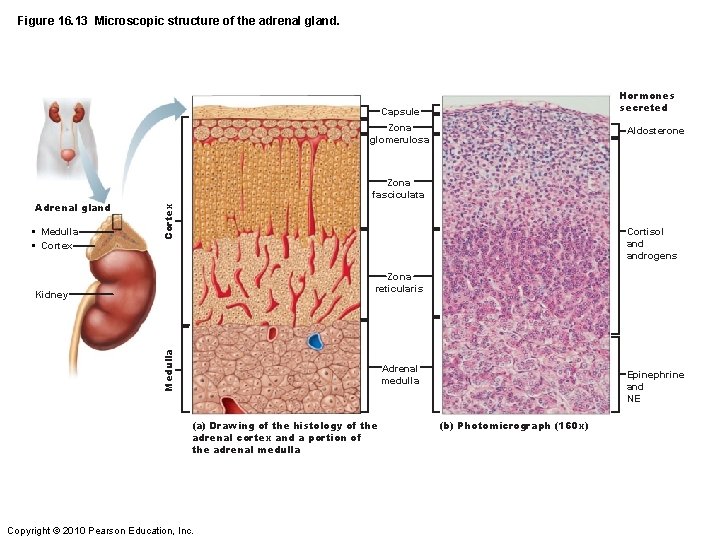
Figure 16. 13 Microscopic structure of the adrenal gland. Hormones secreted Capsule Zona glomerulosa Aldosterone Adrenal gland • Medulla • Cortex Zona fasciculata Cortisol androgens Zona reticularis Medulla Kidney Adrenal medulla (a) Drawing of the histology of the adrenal cortex and a portion of the adrenal medulla Copyright © 2010 Pearson Education, Inc. Epinephrine and NE (b) Photomicrograph (160 x)
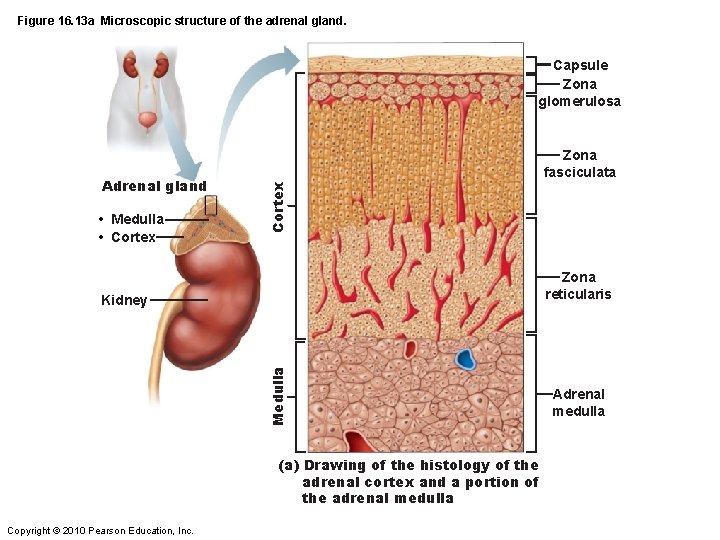
Figure 16. 13 a Microscopic structure of the adrenal gland. Capsule Zona glomerulosa • Medulla • Cortex Adrenal gland Zona fasciculata Zona reticularis Medulla Kidney (a) Drawing of the histology of the adrenal cortex and a portion of the adrenal medulla Copyright © 2010 Pearson Education, Inc. Adrenal medulla
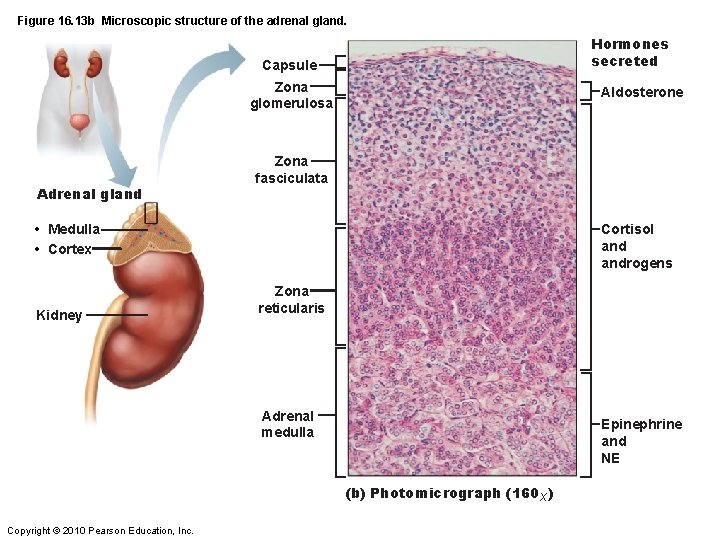
Figure 16. 13 b Microscopic structure of the adrenal gland. Hormones secreted Capsule Zona glomerulosa Adrenal gland Aldosterone Zona fasciculata Cortisol androgens • Medulla • Cortex Kidney Zona reticularis Adrenal medulla Epinephrine and NE (b) Photomicrograph (160 x ) Copyright © 2010 Pearson Education, Inc.
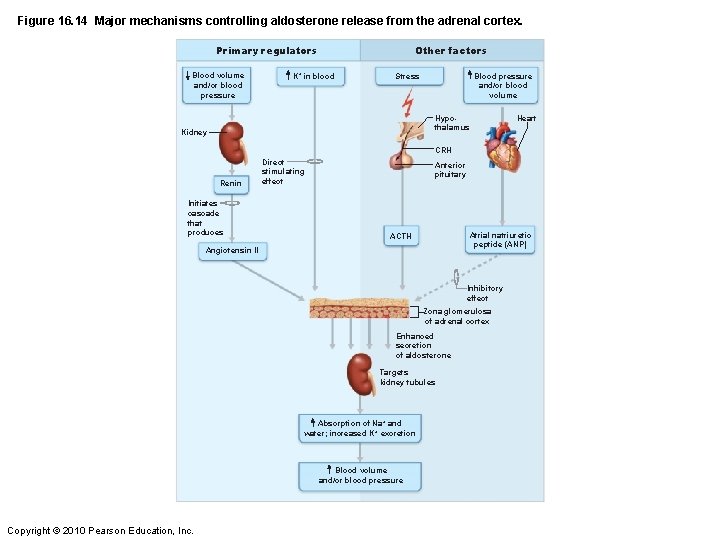
Figure 16. 14 Major mechanisms controlling aldosterone release from the adrenal cortex. Primary regulators Blood volume and/or blood pressure Other factors K+ in blood Stress Blood pressure and/or blood volume Hypothalamus Kidney Heart CRH Renin Initiates cascade that produces Direct stimulating effect Anterior pituitary Atrial natriuretic peptide (ANP) ACTH Angiotensin II Inhibitory effect Zona glomerulosa of adrenal cortex Enhanced secretion of aldosterone Targets kidney tubules Absorption of Na+ and water; increased K + excretion Blood volume and/or blood pressure Copyright © 2010 Pearson Education, Inc.
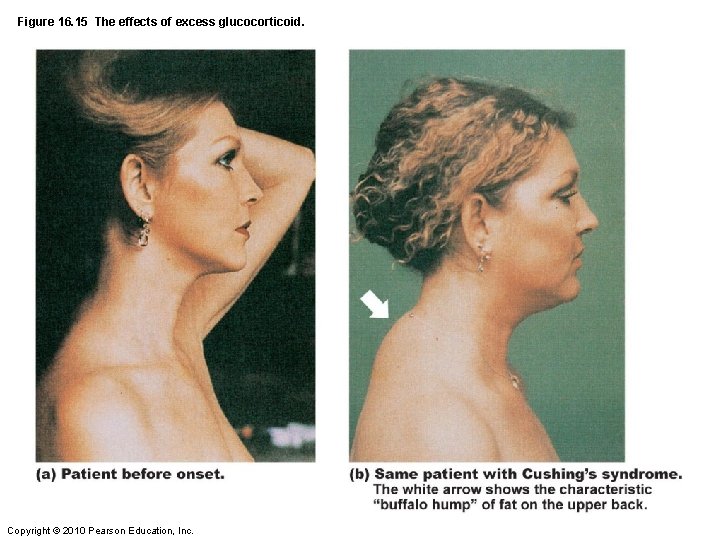
Figure 16. 15 The effects of excess glucocorticoid. Copyright © 2010 Pearson Education, Inc.
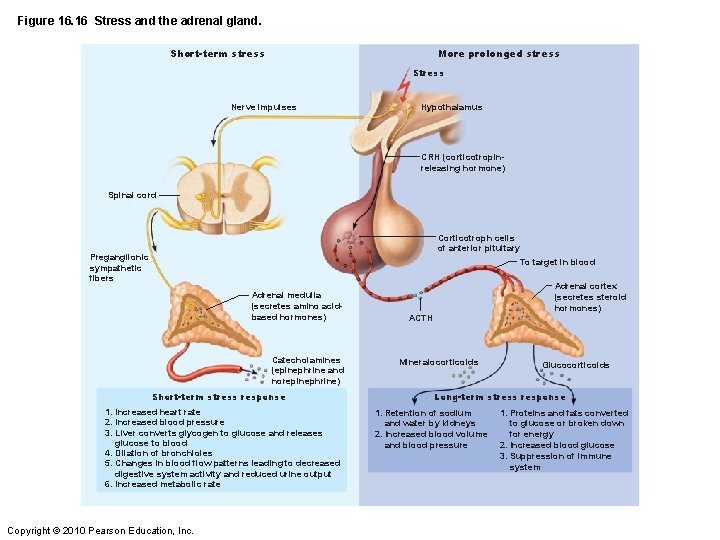
Figure 16. 16 Stress and the adrenal gland. Short-term stress More prolonged stress Stress Nerve impulses Hypothalamus CRH (corticotropinreleasing hormone) Spinal cord Corticotroph cells of anterior pituitary To target in blood Preganglionic sympathetic fibers Adrenal medulla (secretes amino acidbased hormones) Catecholamines (epinephrine and norepinephrine) Short-term stress response 1. Increased heart rate 2. Increased blood pressure 3. Liver converts glycogen to glucose and releases glucose to blood 4. Dilation of bronchioles 5. Changes in blood flow patterns leading to decreased digestive system activity and reduced urine output 6. Increased metabolic rate Copyright © 2010 Pearson Education, Inc. Adrenal cortex (secretes steroid hormones) ACTH Mineralocorticoids Glucocorticoids Long-term stress response 1. Retention of sodium and water by kidneys 2. Increased blood volume and blood pressure 1. Proteins and fats converted to glucose or broken down for energy 2. Increased blood glucose 3. Suppression of immune system
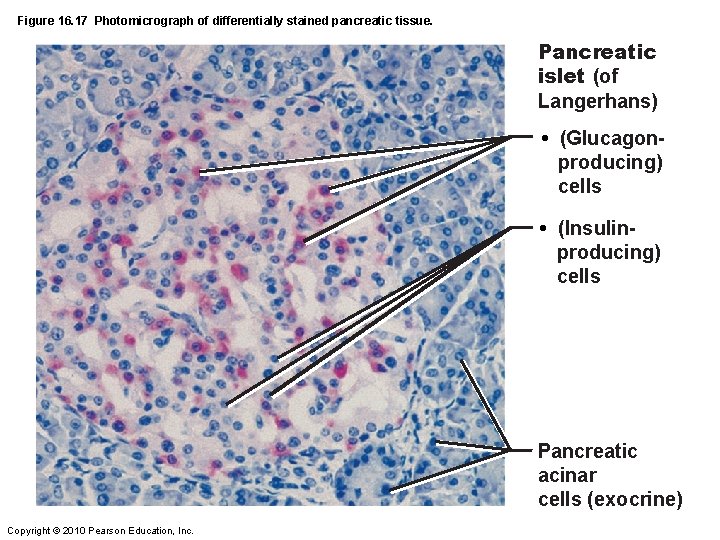
Figure 16. 17 Photomicrograph of differentially stained pancreatic tissue. Pancreatic islet (of Langerhans) • (Glucagonproducing) cells • (Insulinproducing) cells Pancreatic acinar cells (exocrine) Copyright © 2010 Pearson Education, Inc.
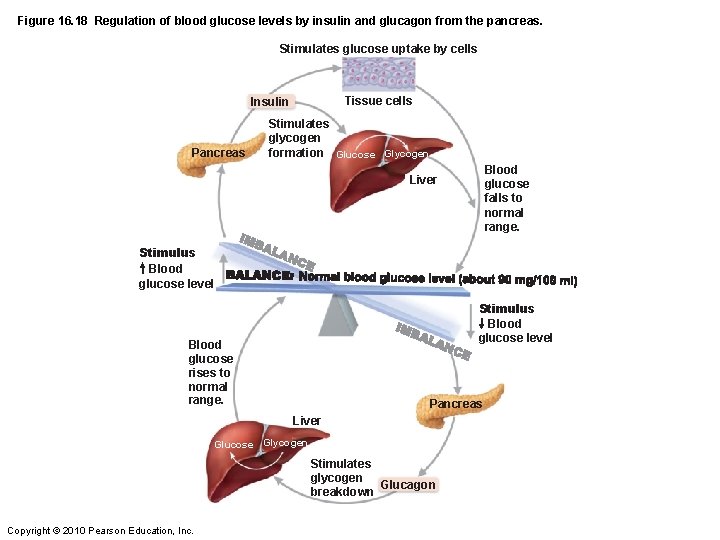
Figure 16. 18 Regulation of blood glucose levels by insulin and glucagon from the pancreas. Stimulates glucose uptake by cells Tissue cells Insulin Pancreas Stimulates glycogen formation Glucose Glycogen Blood glucose falls to normal range. Liver Stimulus Blood glucose level Blood glucose rises to normal range. Pancreas Liver Glucose Glycogen Stimulates glycogen Glucagon breakdown Copyright © 2010 Pearson Education, Inc.
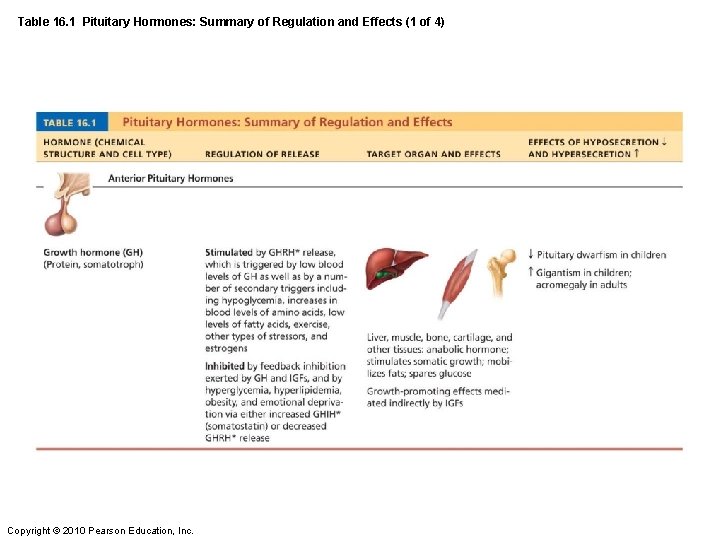
Table 16. 1 Pituitary Hormones: Summary of Regulation and Effects (1 of 4) Copyright © 2010 Pearson Education, Inc.
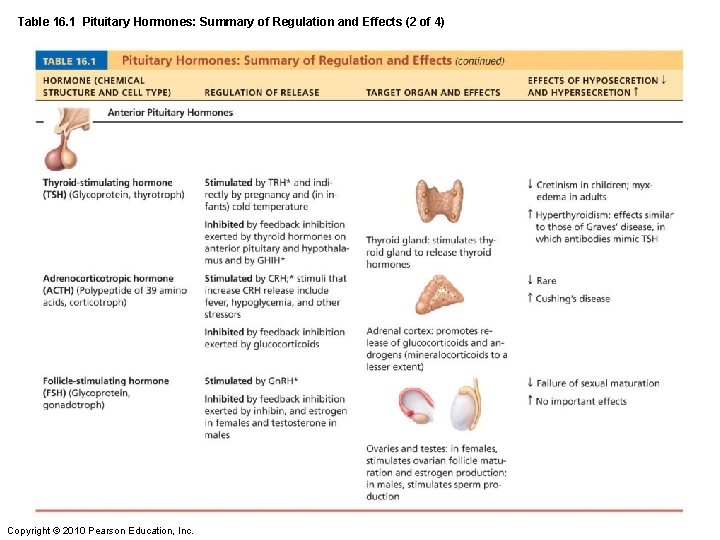
Table 16. 1 Pituitary Hormones: Summary of Regulation and Effects (2 of 4) Copyright © 2010 Pearson Education, Inc.
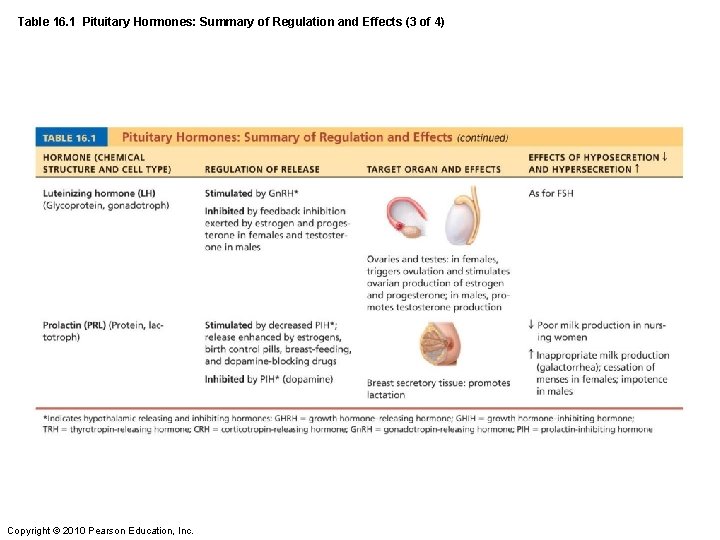
Table 16. 1 Pituitary Hormones: Summary of Regulation and Effects (3 of 4) Copyright © 2010 Pearson Education, Inc.
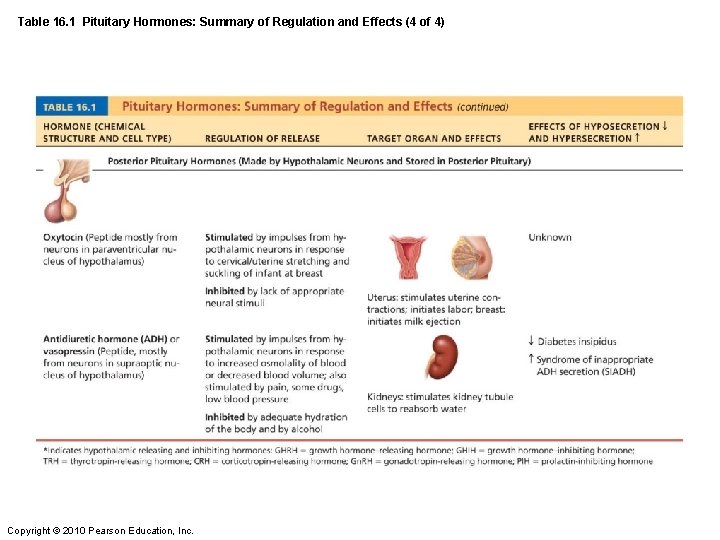
Table 16. 1 Pituitary Hormones: Summary of Regulation and Effects (4 of 4) Copyright © 2010 Pearson Education, Inc.
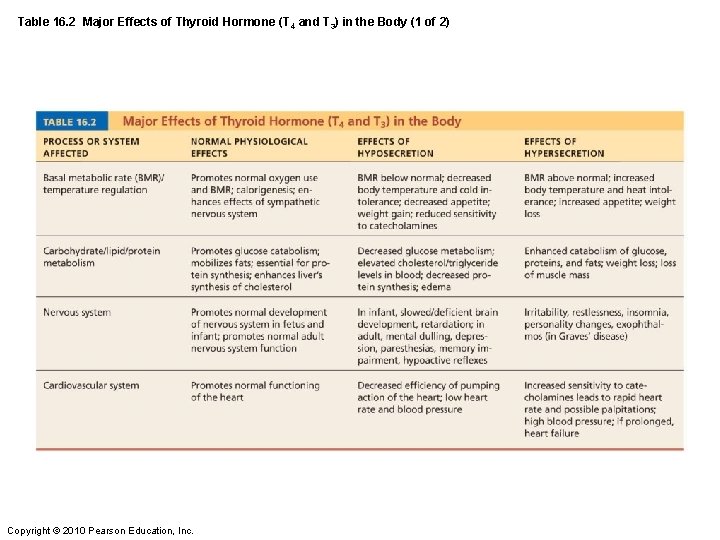
Table 16. 2 Major Effects of Thyroid Hormone (T 4 and T 3) in the Body (1 of 2) Copyright © 2010 Pearson Education, Inc.
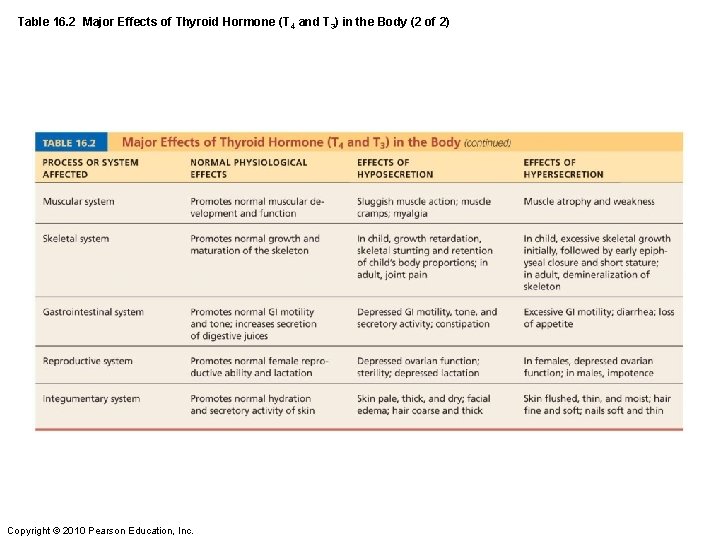
Table 16. 2 Major Effects of Thyroid Hormone (T 4 and T 3) in the Body (2 of 2) Copyright © 2010 Pearson Education, Inc.
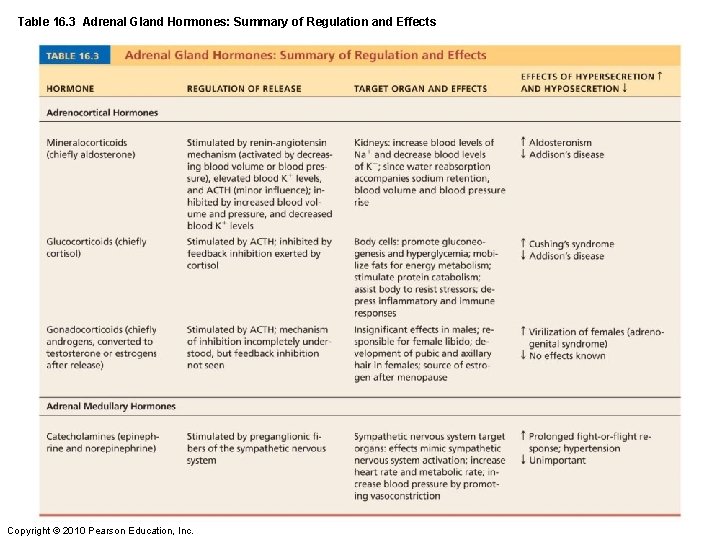
Table 16. 3 Adrenal Gland Hormones: Summary of Regulation and Effects Copyright © 2010 Pearson Education, Inc.
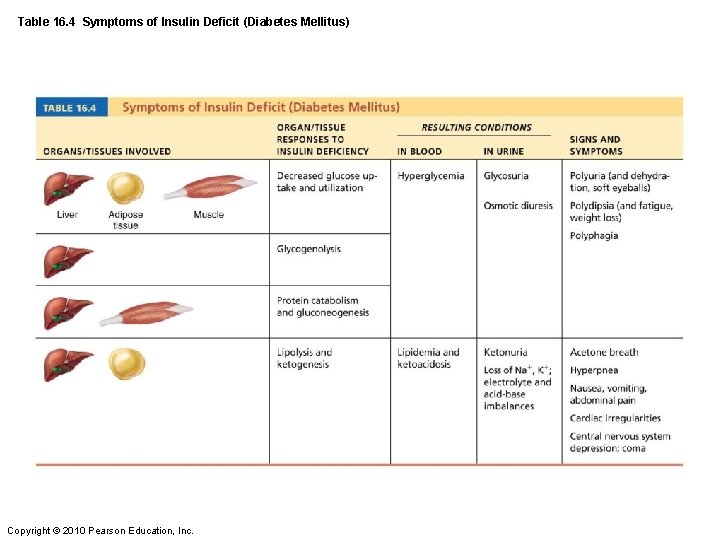
Table 16. 4 Symptoms of Insulin Deficit (Diabetes Mellitus) Copyright © 2010 Pearson Education, Inc.
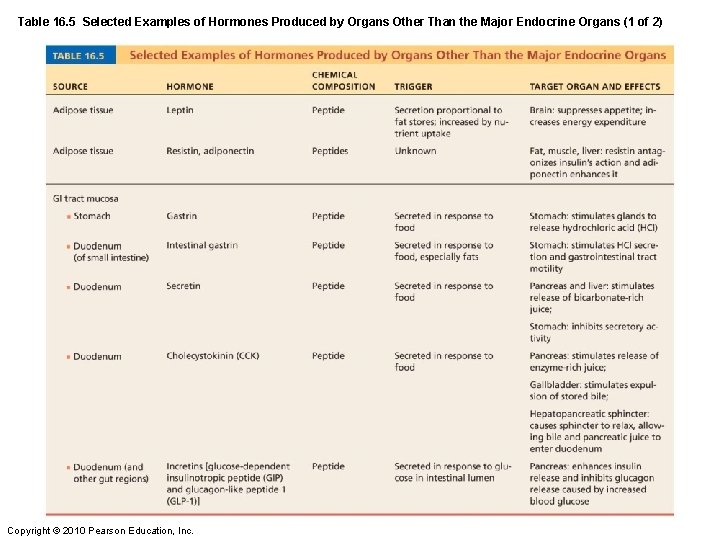
Table 16. 5 Selected Examples of Hormones Produced by Organs Other Than the Major Endocrine Organs (1 of 2) Copyright © 2010 Pearson Education, Inc.
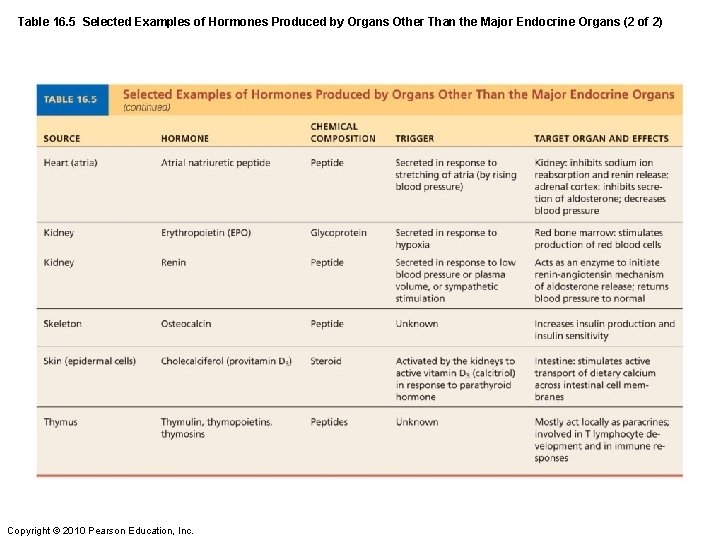
Table 16. 5 Selected Examples of Hormones Produced by Organs Other Than the Major Endocrine Organs (2 of 2) Copyright © 2010 Pearson Education, Inc.
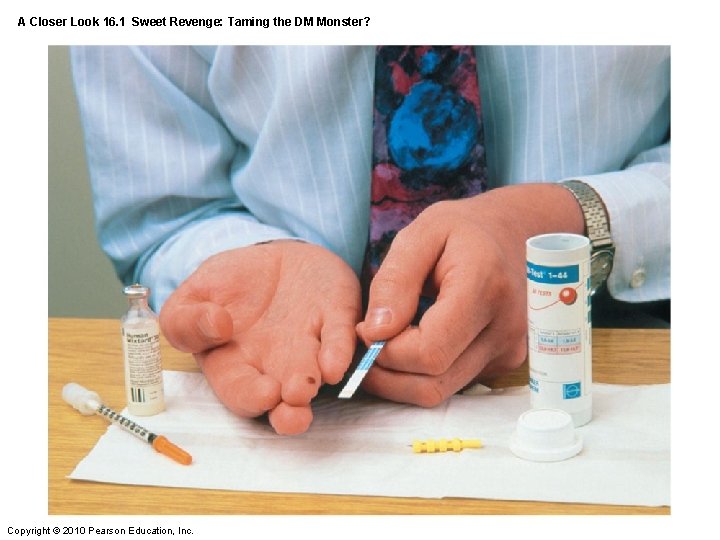
A Closer Look 16. 1 Sweet Revenge: Taming the DM Monster? Copyright © 2010 Pearson Education, Inc.
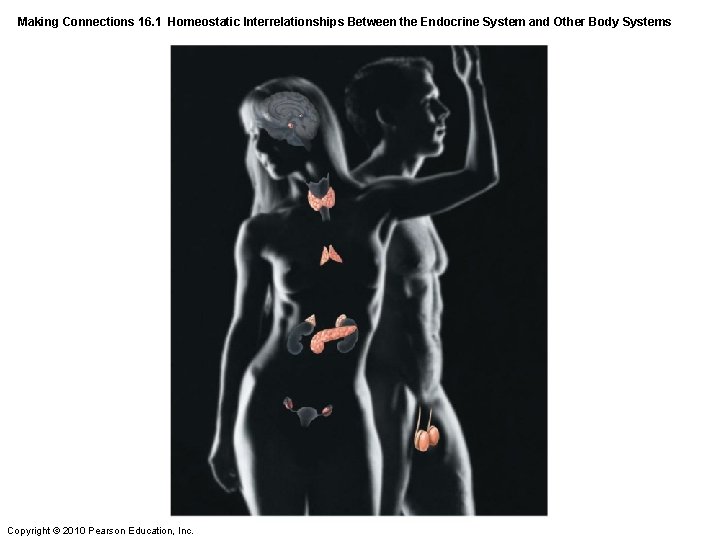
Making Connections 16. 1 Homeostatic Interrelationships Between the Endocrine System and Other Body Systems Copyright © 2010 Pearson Education, Inc.