
Figure 14 1 Human factors requirements Systems Engineering
- Slides: 14
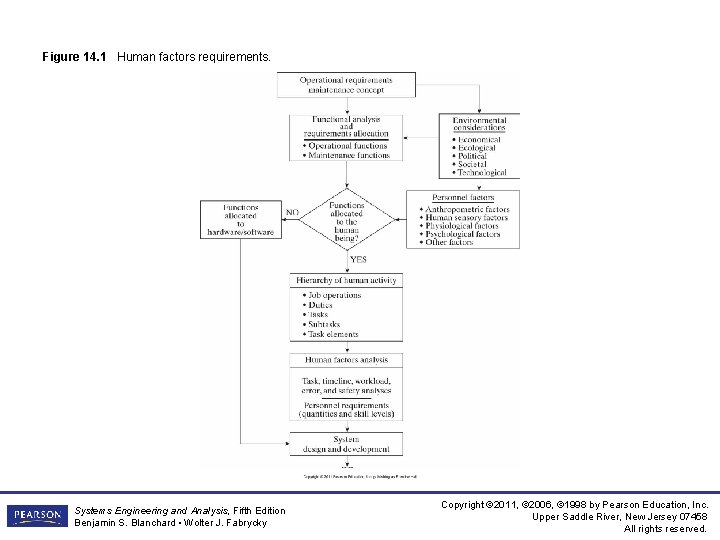
Figure 14. 1 Human factors requirements. Systems Engineering and Analysis, Fifth Edition Benjamin S. Blanchard • Wolter J. Fabrycky Copyright © 2011, © 2006, © 1998 by Pearson Education, Inc. Upper Saddle River, New Jersey 07458 All rights reserved.
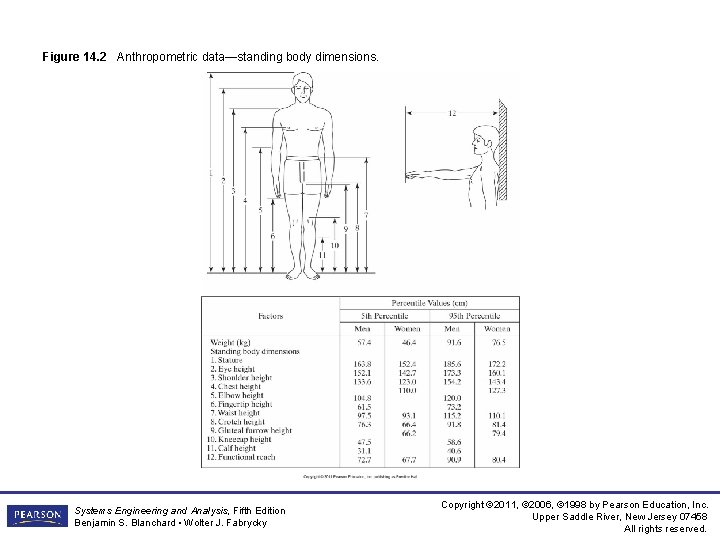
Figure 14. 2 Anthropometric data—standing body dimensions. Systems Engineering and Analysis, Fifth Edition Benjamin S. Blanchard • Wolter J. Fabrycky Copyright © 2011, © 2006, © 1998 by Pearson Education, Inc. Upper Saddle River, New Jersey 07458 All rights reserved.
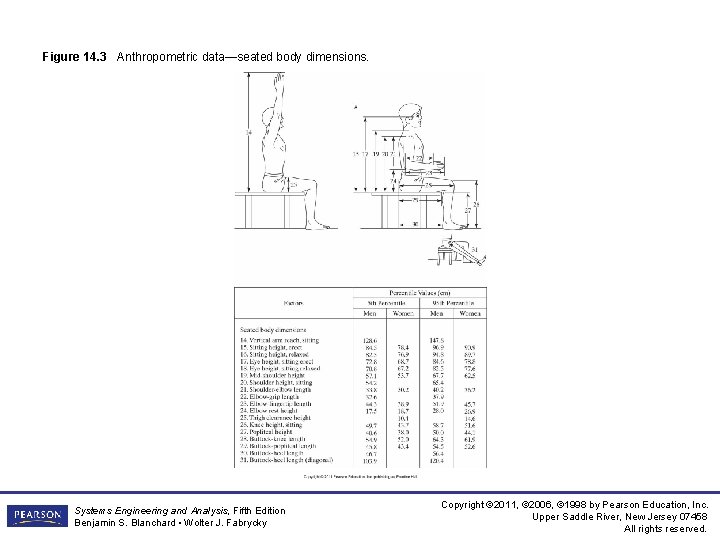
Figure 14. 3 Anthropometric data—seated body dimensions. Systems Engineering and Analysis, Fifth Edition Benjamin S. Blanchard • Wolter J. Fabrycky Copyright © 2011, © 2006, © 1998 by Pearson Education, Inc. Upper Saddle River, New Jersey 07458 All rights reserved.
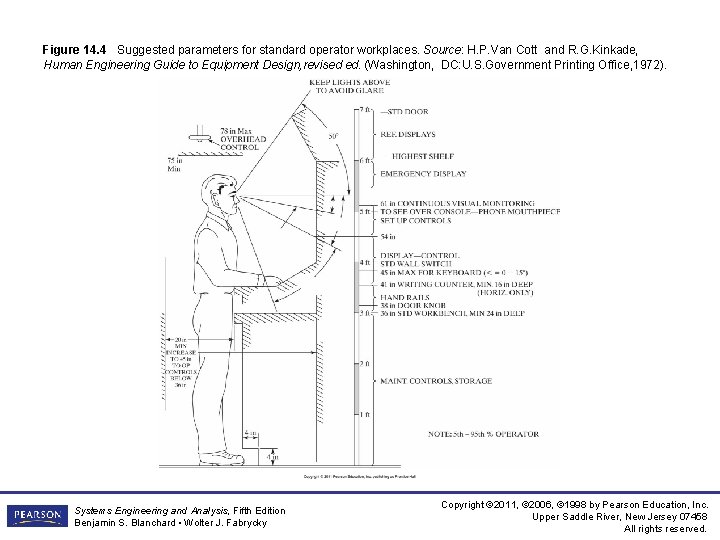
Figure 14. 4 Suggested parameters for standard operator workplaces. Source: H. P. Van Cott and R. G. Kinkade, Human Engineering Guide to Equipment Design, revised ed. (Washington, DC: U. S. Government Printing Office, 1972). Systems Engineering and Analysis, Fifth Edition Benjamin S. Blanchard • Wolter J. Fabrycky Copyright © 2011, © 2006, © 1998 by Pearson Education, Inc. Upper Saddle River, New Jersey 07458 All rights reserved.
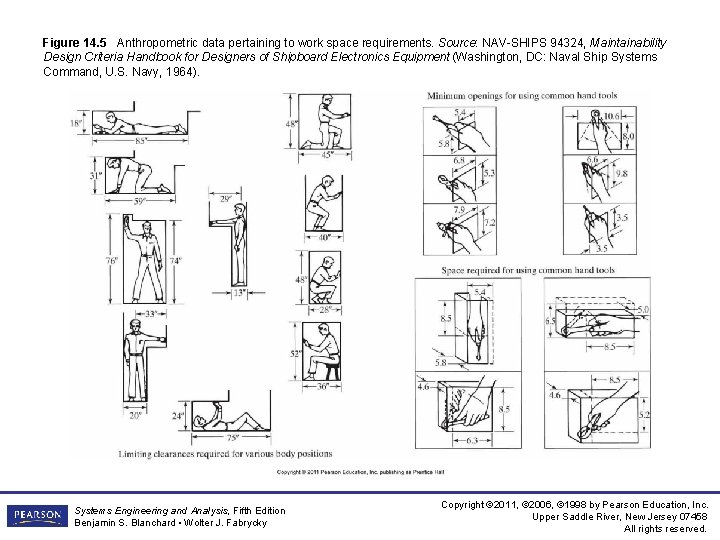
Figure 14. 5 Anthropometric data pertaining to work space requirements. Source: NAV-SHIPS 94324, Maintainability Design Criteria Handbook for Designers of Shipboard Electronics Equipment (Washington, DC: Naval Ship Systems Command, U. S. Navy, 1964). Systems Engineering and Analysis, Fifth Edition Benjamin S. Blanchard • Wolter J. Fabrycky Copyright © 2011, © 2006, © 1998 by Pearson Education, Inc. Upper Saddle River, New Jersey 07458 All rights reserved.
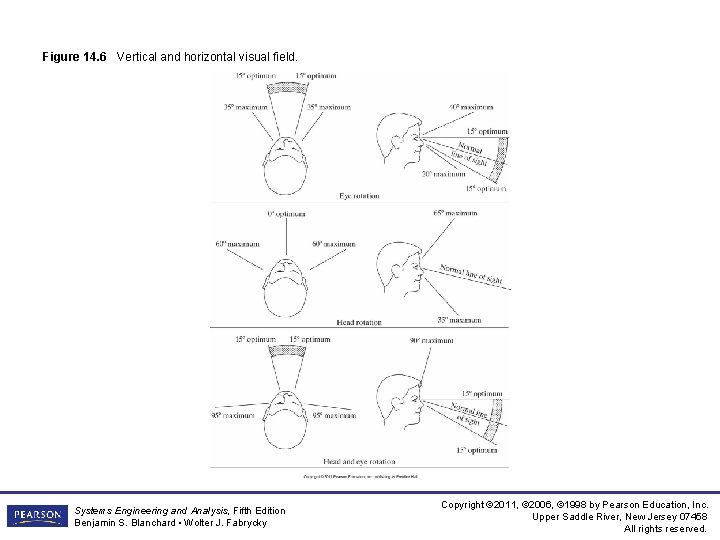
Figure 14. 6 Vertical and horizontal visual field. Systems Engineering and Analysis, Fifth Edition Benjamin S. Blanchard • Wolter J. Fabrycky Copyright © 2011, © 2006, © 1998 by Pearson Education, Inc. Upper Saddle River, New Jersey 07458 All rights reserved.
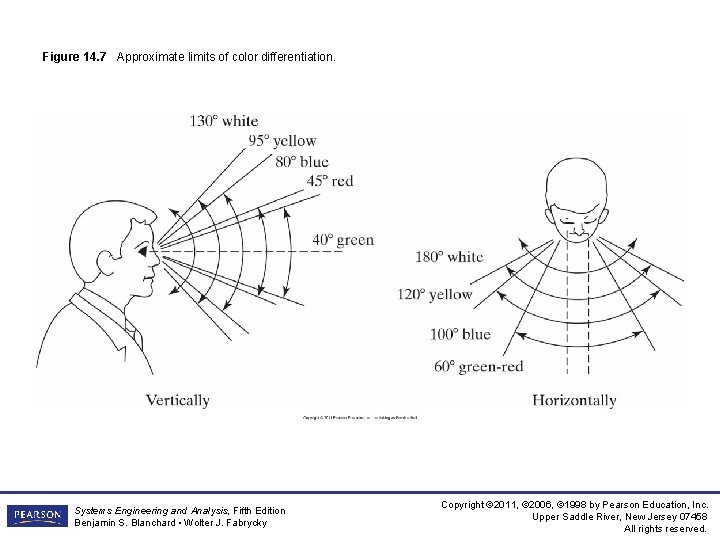
Figure 14. 7 Approximate limits of color differentiation. Systems Engineering and Analysis, Fifth Edition Benjamin S. Blanchard • Wolter J. Fabrycky Copyright © 2011, © 2006, © 1998 by Pearson Education, Inc. Upper Saddle River, New Jersey 07458 All rights reserved.
Systems Engineering and Analysis, Fifth Edition Benjamin S. Blanchard • Wolter J. Fabrycky Copyright © 2011, © 2006, © 1998 by Pearson Education, Inc. Upper Saddle River, New Jersey 07458 All rights reserved.
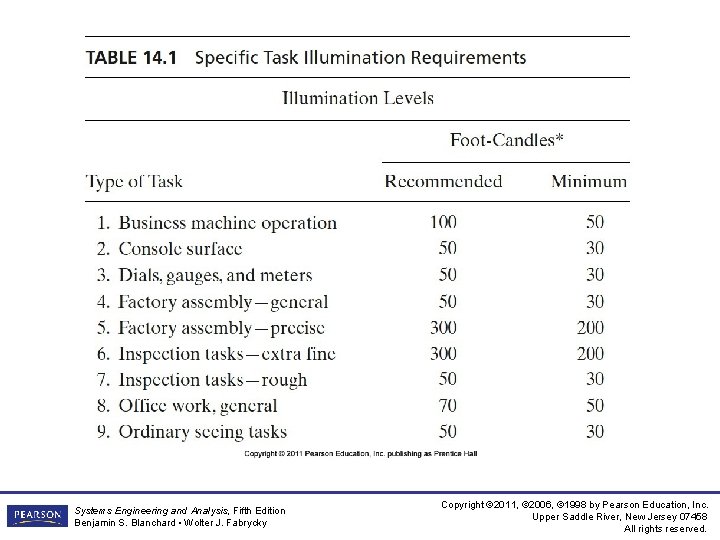
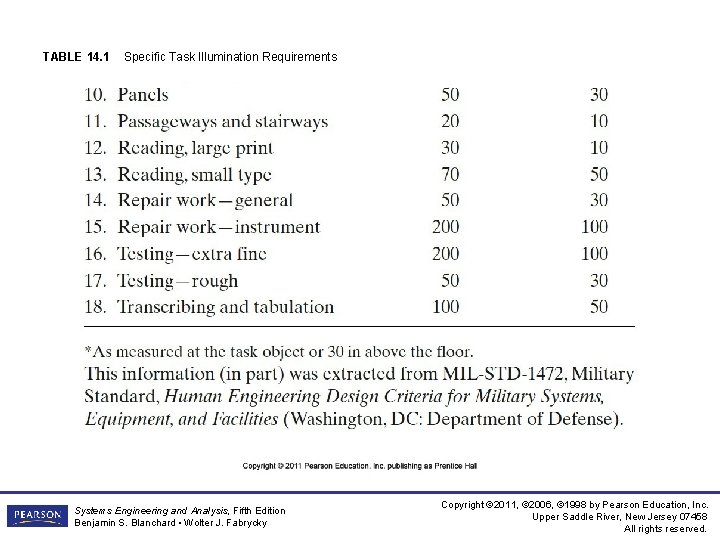
TABLE 14. 1 Specific Task Illumination Requirements Systems Engineering and Analysis, Fifth Edition Benjamin S. Blanchard • Wolter J. Fabrycky Copyright © 2011, © 2006, © 1998 by Pearson Education, Inc. Upper Saddle River, New Jersey 07458 All rights reserved.
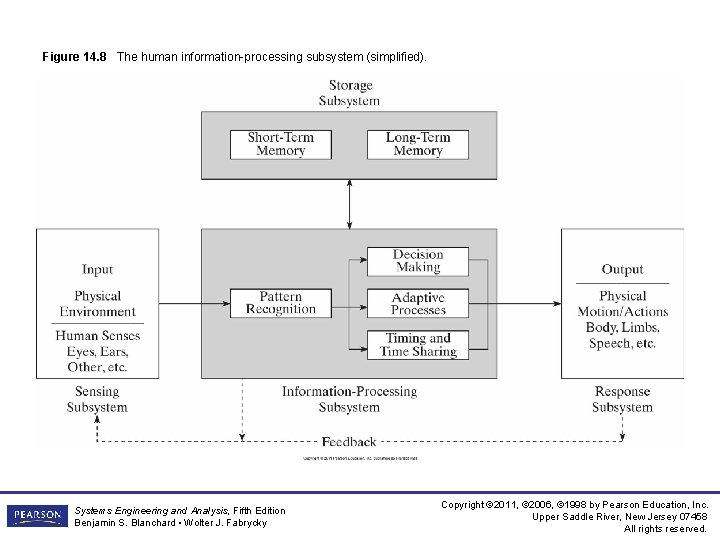
Figure 14. 8 The human information-processing subsystem (simplified). Systems Engineering and Analysis, Fifth Edition Benjamin S. Blanchard • Wolter J. Fabrycky Copyright © 2011, © 2006, © 1998 by Pearson Education, Inc. Upper Saddle River, New Jersey 07458 All rights reserved.
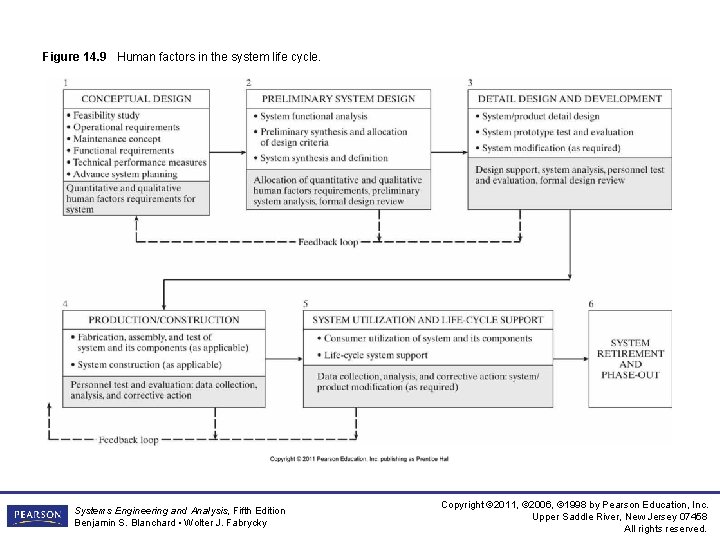
Figure 14. 9 Human factors in the system life cycle. Systems Engineering and Analysis, Fifth Edition Benjamin S. Blanchard • Wolter J. Fabrycky Copyright © 2011, © 2006, © 1998 by Pearson Education, Inc. Upper Saddle River, New Jersey 07458 All rights reserved.
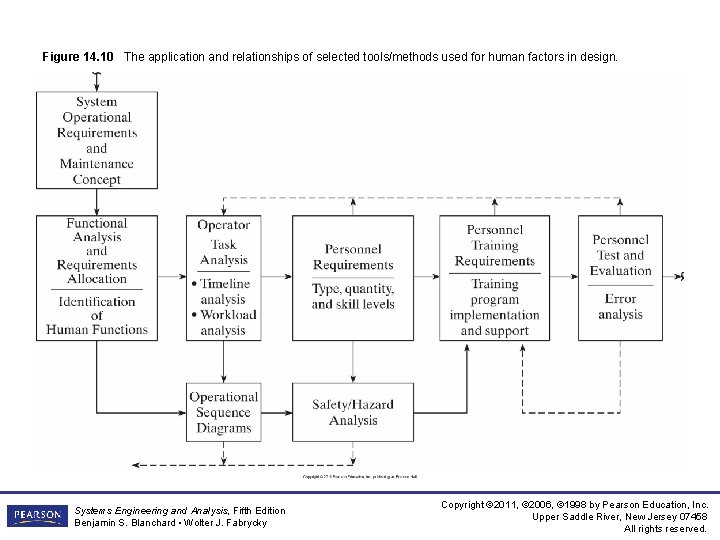
Figure 14. 10 The application and relationships of selected tools/methods used for human factors in design. Systems Engineering and Analysis, Fifth Edition Benjamin S. Blanchard • Wolter J. Fabrycky Copyright © 2011, © 2006, © 1998 by Pearson Education, Inc. Upper Saddle River, New Jersey 07458 All rights reserved.
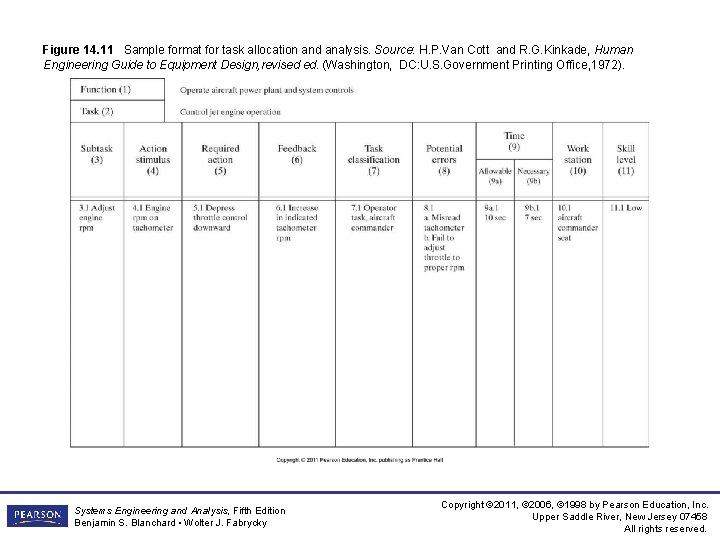
Figure 14. 11 Sample format for task allocation and analysis. Source: H. P. Van Cott and R. G. Kinkade, Human Engineering Guide to Equipment Design, revised ed. (Washington, DC: U. S. Government Printing Office, 1972). Systems Engineering and Analysis, Fifth Edition Benjamin S. Blanchard • Wolter J. Fabrycky Copyright © 2011, © 2006, © 1998 by Pearson Education, Inc. Upper Saddle River, New Jersey 07458 All rights reserved.
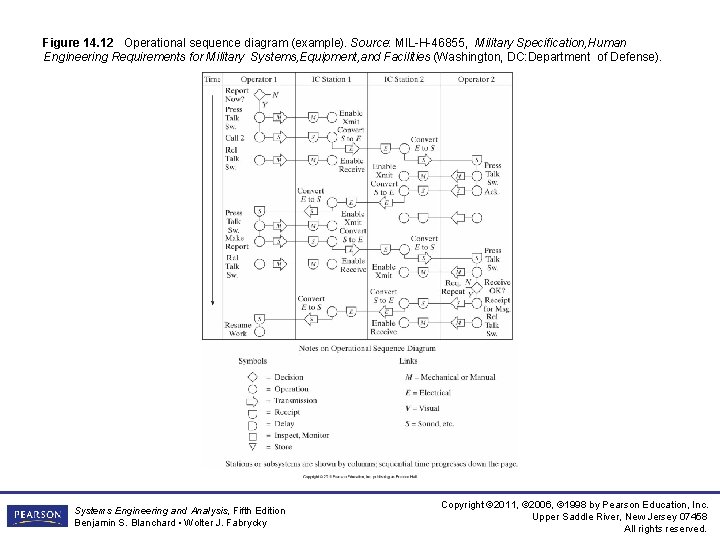
Figure 14. 12 Operational sequence diagram (example). Source: MIL-H-46855, Military Specification, Human Engineering Requirements for Military Systems, Equipment, and Facilities (Washington, DC: Department of Defense). Systems Engineering and Analysis, Fifth Edition Benjamin S. Blanchard • Wolter J. Fabrycky Copyright © 2011, © 2006, © 1998 by Pearson Education, Inc. Upper Saddle River, New Jersey 07458 All rights reserved.