
Figure 14 0 2 Chapter 14 Big Ideas
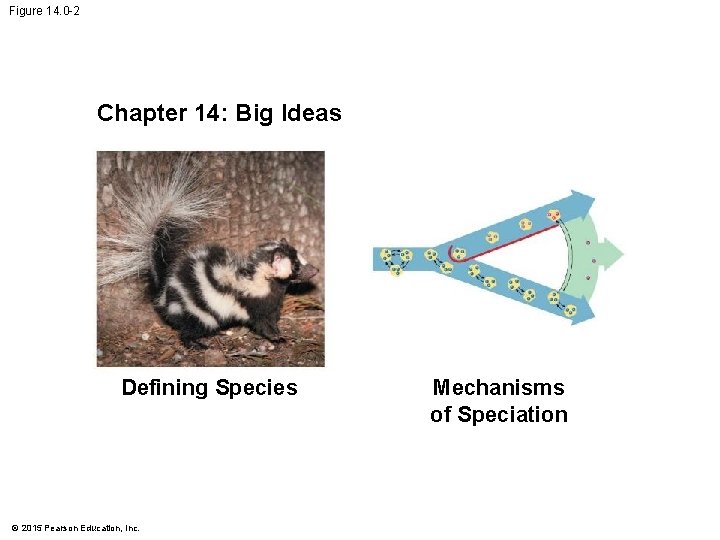
Figure 14. 0 -2 Chapter 14: Big Ideas Defining Species © 2015 Pearson Education, Inc. Mechanisms of Speciation
DEFINING SPECIES © 2015 Pearson Education, Inc.
14. 1 The origin of species is the source of biological diversity • Darwin was eager to explore landforms newly emerged from the sea when he came to the Galápagos Islands. • He noted that these volcanic islands, despite their geologic youth, were teeming with plants and animals found nowhere else in the world. • He realized that these species, like the islands, were relatively new. © 2015 Pearson Education, Inc.
14. 1 The origin of species is the source of biological diversity • Microevolution is the change in the gene pool of a population from one generation to the next. • Speciation is the process by which one species splits into two or more species. • Each time speciation occurs, the diversity of life increases. © 2015 Pearson Education, Inc.
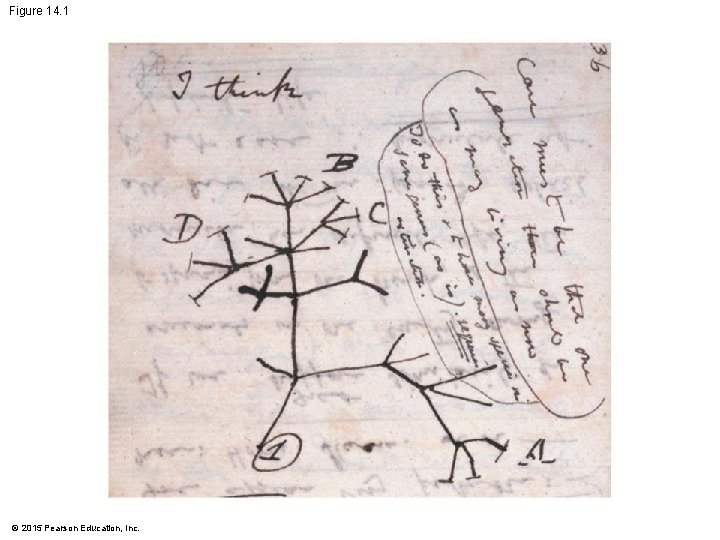
Figure 14. 1 © 2015 Pearson Education, Inc.
14. 1 The origin of species is the source of biological diversity • Over the course of 3. 5 billion years, • an ancestral species first gave rise to two or more different species, • which then branched to new lineages, • which branched again, • until we arrive at the millions of species that live, or once lived, on Earth. © 2015 Pearson Education, Inc.
14. 2 There are several ways to define a species • The word species is from the Latin for “kind” or “appearance. ” • Although the basic idea of species as distinct lifeforms seems intuitive, devising a more formal definition is not easy and raises questions. • In many cases, the differences between two species are obvious. In other cases, the differences between two species are not so obvious. © 2015 Pearson Education, Inc.
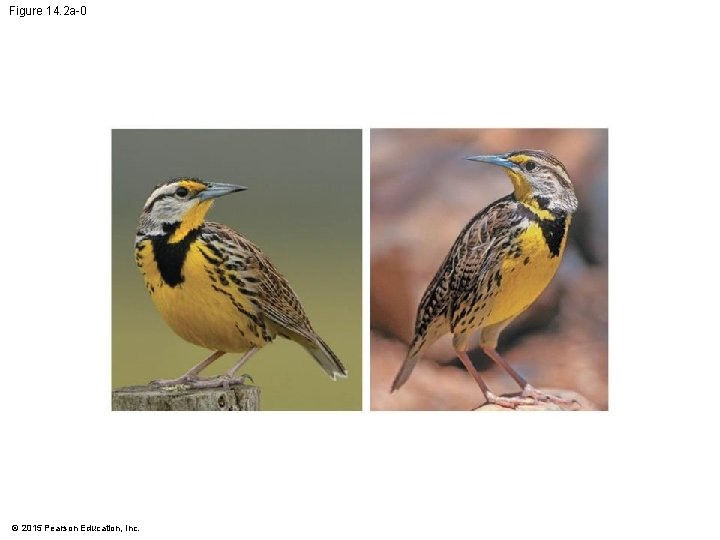
Figure 14. 2 a-0 © 2015 Pearson Education, Inc.
14. 2 There are several ways to define a species • How similar are members of the same species? • Whereas the individuals of many species exhibit fairly limited variation in physical appearance, certain other species—our own, for example—seem extremely varied. © 2015 Pearson Education, Inc.

Figure 14. 2 b © 2015 Pearson Education, Inc.
14. 2 There are several ways to define a species • The biological species concept defines a species as a group of populations whose members have the potential to interbreed in nature and produce fertile offspring (offspring that themselves can reproduce). • Thus, members of a biological species are united by being reproductively compatible, at least potentially. © 2015 Pearson Education, Inc.
14. 2 There are several ways to define a species • Reproductive isolation • prevents genetic exchange (gene flow) and • maintains a boundary between species. • But there are some pairs of clearly distinct species that do occasionally interbreed. • The resulting offspring are called hybrids. • An example is the grizzly bear (Ursus arctos) and the polar bear (Ursus maritimus), whose hybrid offspring have been called “grolar bears. ” © 2015 Pearson Education, Inc.
14. 2 There are several ways to define a species • There are other instances in which applying the biological species concept is problematic. • There is no way to determine whether organisms that are now known only through fossils were once able to interbreed. • Reproductive isolation does not apply to prokaryotes or other organisms that reproduce only asexually. • Therefore, alternate species concepts can be useful. © 2015 Pearson Education, Inc.

14. 2 There are several ways to define a species • The morphological species concept • classifies organisms based on observable physical traits and • can be applied to asexual organisms and fossils. • However, there is some subjectivity in deciding which traits to use. © 2015 Pearson Education, Inc.

14. 2 There are several ways to define a species • The ecological species concept • defines a species by its ecological niche and • focuses on unique adaptations to particular roles in a biological community. • For example, two species may be similar in appearance but distinguishable based on what they eat or the depth of water in which they are usually found. © 2015 Pearson Education, Inc.
14. 2 There are several ways to define a species • The phylogenetic species concept defines a species as the smallest group of individuals that share a common ancestor and thus form one branch of the tree of life. • Biologists trace the phylogenetic history of a species by comparing its • morphology, • DNA sequences, or • biochemical pathways. • However, agreeing on the amount of difference required to establish separate species remains a challenge. © 2015 Pearson Education, Inc.
14. 3 VISUALIZING THE CONCEPT: Reproductive barriers keep species separate • Reproductive barriers • serve to isolate the gene pools of species and • prevent interbreeding. • Depending on whether they function before or after zygotes form, reproductive barriers are categorized as • prezygotic or • postzygotic. © 2015 Pearson Education, Inc.
14. 3 VISUALIZING THE CONCEPT: Reproductive barriers keep species separate • Five types of prezygotic barriers prevent mating or fertilization between species. 1. In habitat isolation, there is a lack of opportunity for mates to encounter each other. 2. In temporal isolation, there is breeding at different times or seasons. © 2015 Pearson Education, Inc.
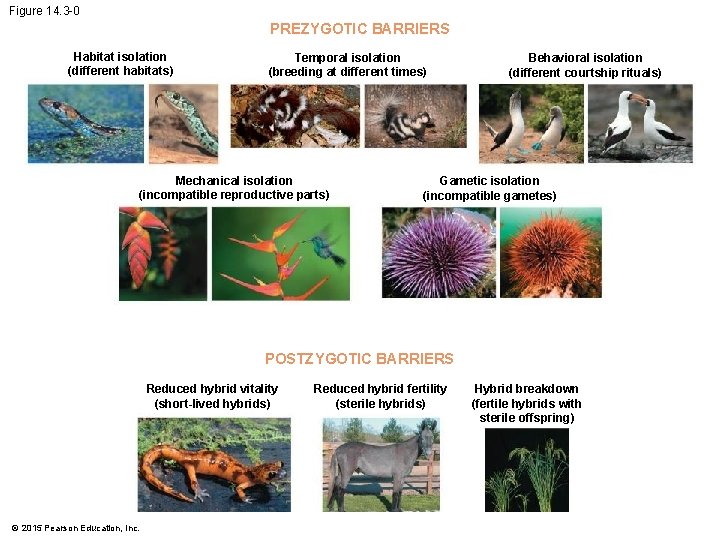
Figure 14. 3 -0 PREZYGOTIC BARRIERS Habitat isolation (different habitats) Temporal isolation (breeding at different times) Mechanical isolation (incompatible reproductive parts) Behavioral isolation (different courtship rituals) Gametic isolation (incompatible gametes) POSTZYGOTIC BARRIERS Reduced hybrid vitality (short-lived hybrids) © 2015 Pearson Education, Inc. Reduced hybrid fertility (sterile hybrids) Hybrid breakdown (fertile hybrids with sterile offspring)
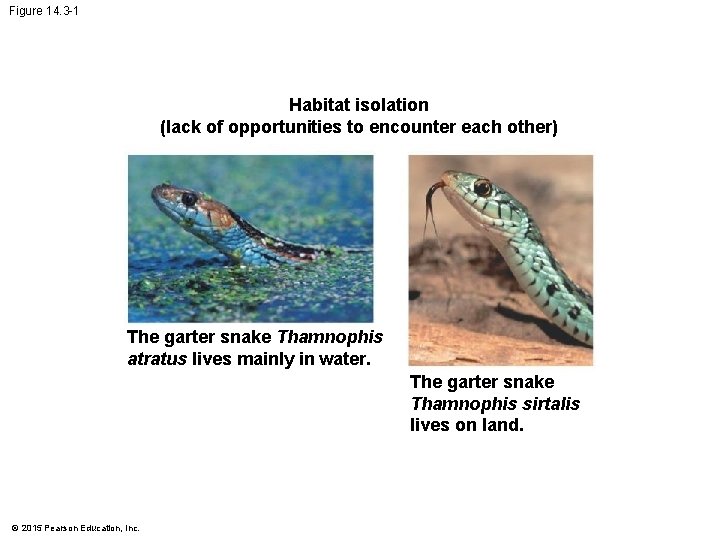
Figure 14. 3 -1 Habitat isolation (lack of opportunities to encounter each other) The garter snake Thamnophis atratus lives mainly in water. The garter snake Thamnophis sirtalis lives on land. © 2015 Pearson Education, Inc.
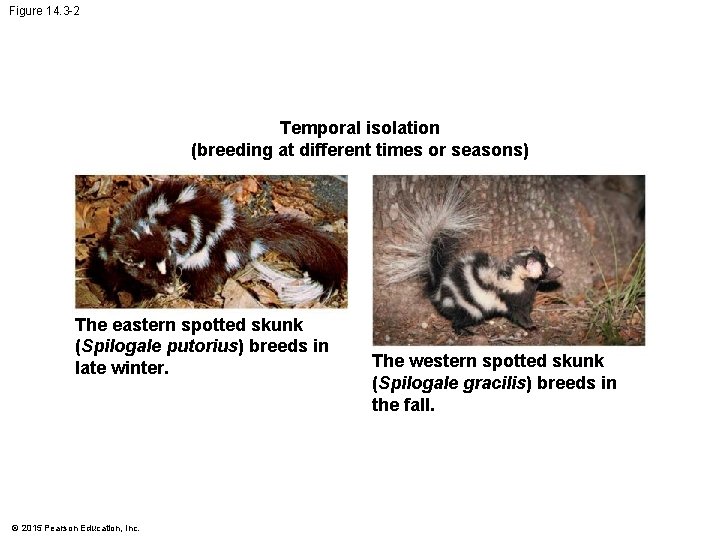
Figure 14. 3 -2 Temporal isolation (breeding at different times or seasons) The eastern spotted skunk (Spilogale putorius) breeds in late winter. © 2015 Pearson Education, Inc. The western spotted skunk (Spilogale gracilis) breeds in the fall.
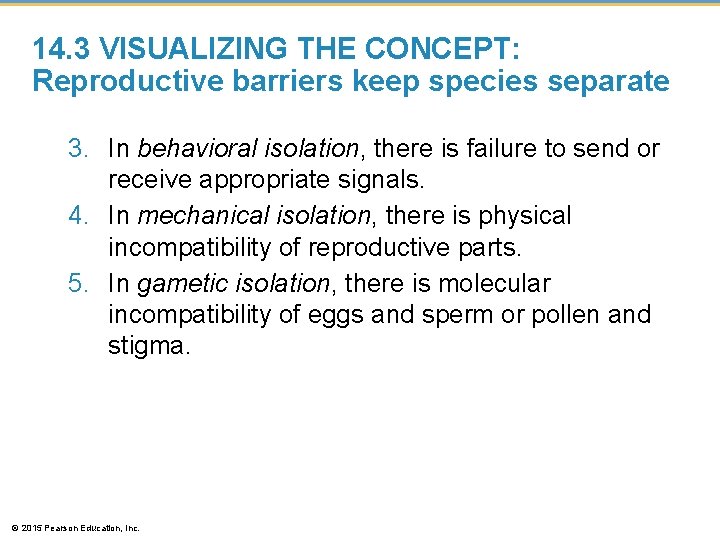
14. 3 VISUALIZING THE CONCEPT: Reproductive barriers keep species separate 3. In behavioral isolation, there is failure to send or receive appropriate signals. 4. In mechanical isolation, there is physical incompatibility of reproductive parts. 5. In gametic isolation, there is molecular incompatibility of eggs and sperm or pollen and stigma. © 2015 Pearson Education, Inc.
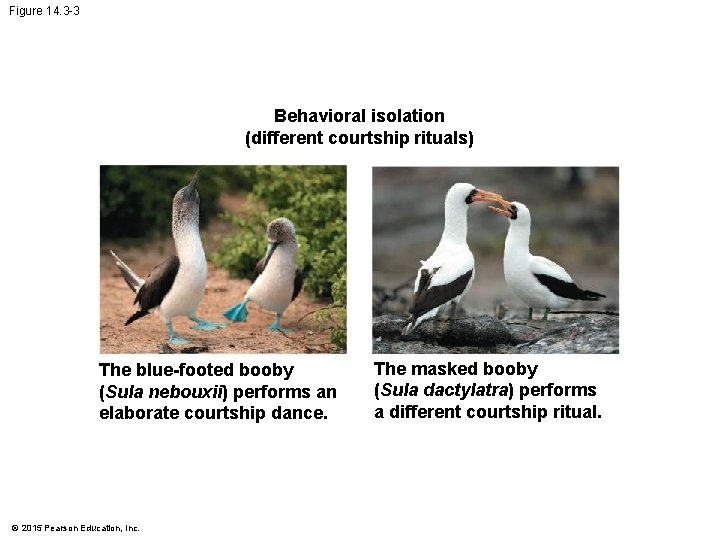
Figure 14. 3 -3 Behavioral isolation (different courtship rituals) The blue-footed booby (Sula nebouxii) performs an elaborate courtship dance. © 2015 Pearson Education, Inc. The masked booby (Sula dactylatra) performs a different courtship ritual.
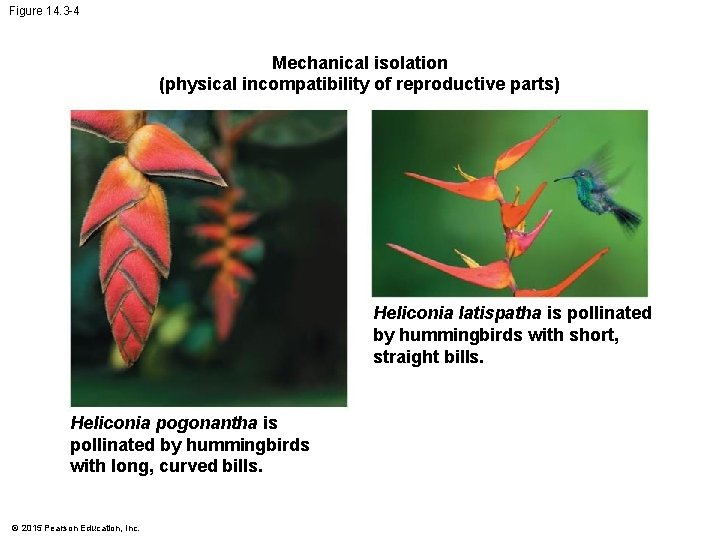
Figure 14. 3 -4 Mechanical isolation (physical incompatibility of reproductive parts) Heliconia latispatha is pollinated by hummingbirds with short, straight bills. Heliconia pogonantha is pollinated by hummingbirds with long, curved bills. © 2015 Pearson Education, Inc.
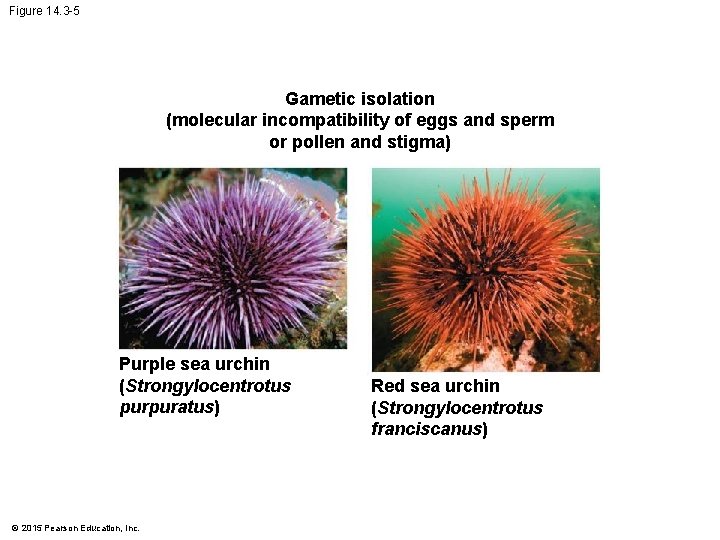
Figure 14. 3 -5 Gametic isolation (molecular incompatibility of eggs and sperm or pollen and stigma) Purple sea urchin (Strongylocentrotus purpuratus) © 2015 Pearson Education, Inc. Red sea urchin (Strongylocentrotus franciscanus)
14. 3 VISUALIZING THE CONCEPT: Reproductive barriers keep species separate • Three types of postzygotic barriers operate after hybrid zygotes have formed. 1. In reduced hybrid viability, interaction of parental genes impairs the hybrid’s development or survival. 2. In reduced hybrid fertility, hybrids are vigorous but cannot produce viable offspring. 3. In hybrid breakdown, hybrids are viable and fertile, but their offspring are feeble or sterile. © 2015 Pearson Education, Inc.
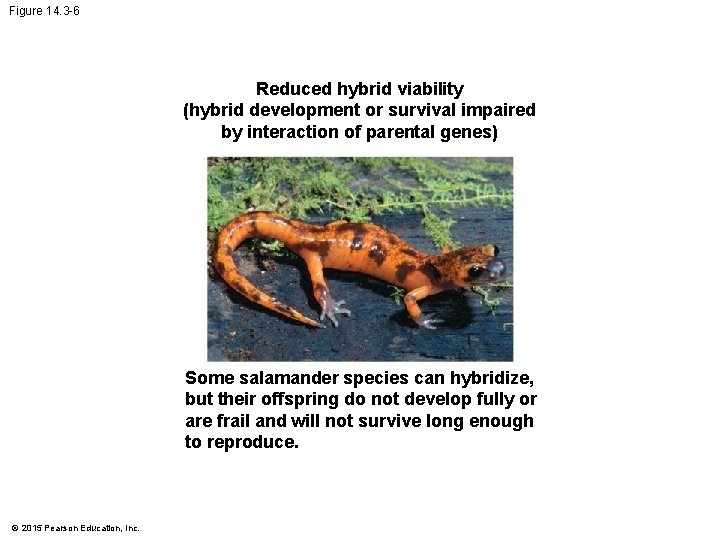
Figure 14. 3 -6 Reduced hybrid viability (hybrid development or survival impaired by interaction of parental genes) Some salamander species can hybridize, but their offspring do not develop fully or are frail and will not survive long enough to reproduce. © 2015 Pearson Education, Inc.
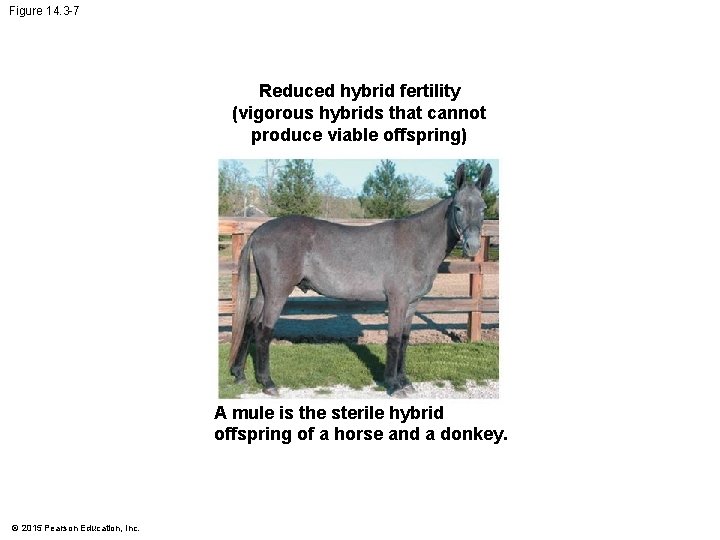
Figure 14. 3 -7 Reduced hybrid fertility (vigorous hybrids that cannot produce viable offspring) A mule is the sterile hybrid offspring of a horse and a donkey. © 2015 Pearson Education, Inc.
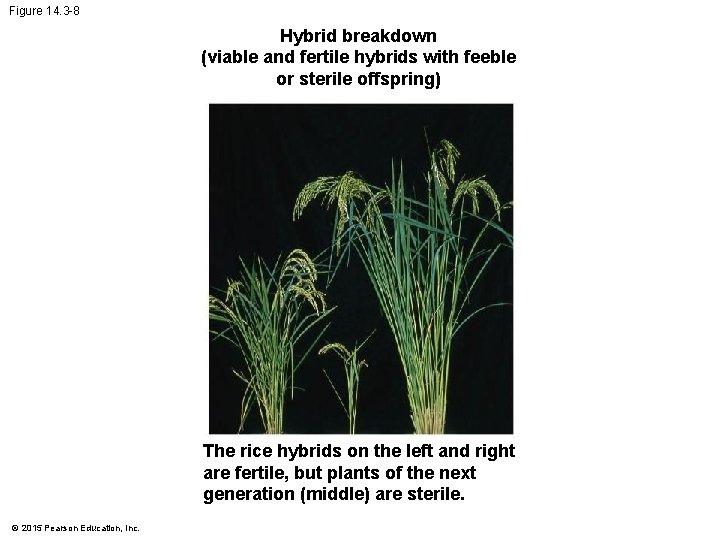
Figure 14. 3 -8 Hybrid breakdown (viable and fertile hybrids with feeble or sterile offspring) The rice hybrids on the left and right are fertile, but plants of the next generation (middle) are sterile. © 2015 Pearson Education, Inc.
MECHANISMS OF SPECIATION © 2015 Pearson Education, Inc.
14. 4 In allopatric speciation, geographic isolation leads to speciation • A key event in the origin of a new species is the separation of a population from other populations of the same species. • With its gene pool isolated, the splinter population can follow its own evolutionary course. • Changes in allele frequencies caused by natural selection, genetic drift, and mutation will not be diluted by alleles entering from other populations (gene flow). © 2015 Pearson Education, Inc.
14. 4 In allopatric speciation, geographic isolation leads to speciation • In allopatric speciation, the initial block to gene flow may come from a geographic barrier that isolates a population. © 2015 Pearson Education, Inc.
14. 4 In allopatric speciation, geographic isolation leads to speciation • Several geologic processes can isolate populations. • A mountain range may emerge and gradually split a population of organisms that can inhabit only lowlands. • A large lake may subside until there are several smaller lakes, isolating certain fish populations. • Continents themselves can split and move apart. • Allopatric speciation can also occur when individuals colonize a remote area and become geographically isolated from the parent population. © 2015 Pearson Education, Inc.
14. 4 In allopatric speciation, geographic isolation leads to speciation • How large must a geographic barrier be to keep allopatric populations apart? • The answer depends on the ability of the organisms to move. • Birds, mountain lions, and coyotes can easily cross mountain ranges. • In contrast, small rodents may find a canyon or a wide river a formidable barrier. The Grand Canyon and Colorado River separate two species of antelope squirrels. © 2015 Pearson Education, Inc.
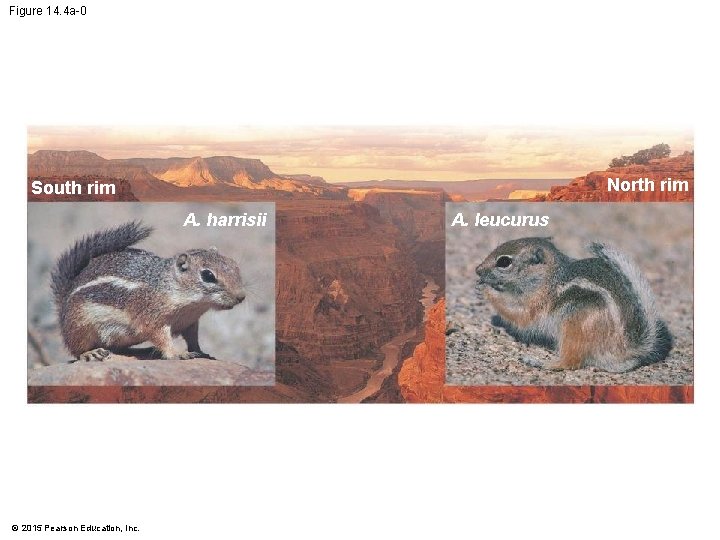
Figure 14. 4 a-0 North rim South rim A. harrisii © 2015 Pearson Education, Inc. A. leucurus
14. 6 Sympatric speciation takes place without geographic isolation • Sympatric speciation occurs when a new species arises within the same geographic area as its parent species. • How can reproductive isolation develop when members of sympatric populations remain in contact with each other? • Gene flow between populations may be reduced by • polyploidy, • habitat differentiation, or • sexual selection. © 2015 Pearson Education, Inc.
14. 6 Sympatric speciation takes place without geographic isolation • Many plant species have originated from sympatric speciation that occurs when accidents during cell division result in extra sets of chromosomes. • New species formed in this way are polyploid, in that their cells have more than two complete sets of chromosomes. © 2015 Pearson Education, Inc.
14. 6 Sympatric speciation takes place without geographic isolation • Sympatric speciation can result from polyploidy • within a species (by self-fertilization) or • between two species (by hybridization). © 2015 Pearson Education, Inc.
14. 7 EVOLUTION CONNECTION: The origin of most plant species can be traced to polyploid speciation • Plant biologists estimate that 80% of all living plant species are descendants of ancestors that formed by polyploid speciation. • Hybridization between two species accounts for most of these species, perhaps because of the adaptive advantage of the diverse genes a hybrid inherits from different parental species. © 2015 Pearson Education, Inc.
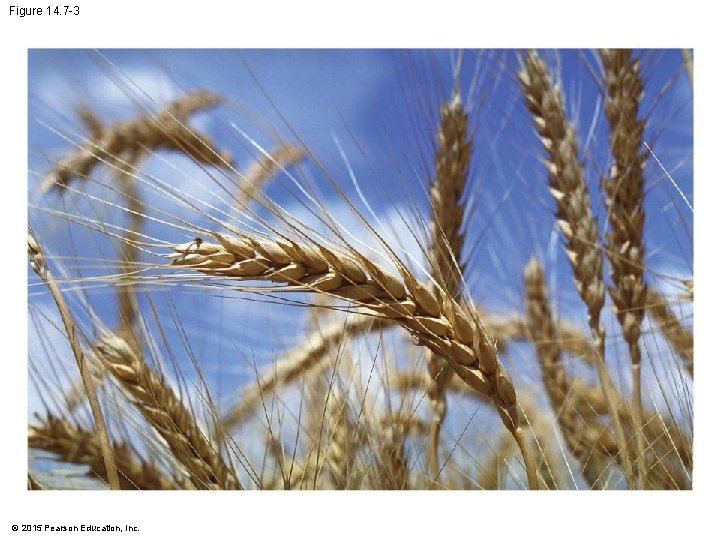
Figure 14. 7 -3 © 2015 Pearson Education, Inc.
14. 7 EVOLUTION CONNECTION: The origin of most plant species can be traced to polyploid speciation • Wheat • has been domesticated for at least 10, 000 years and • is the most widely cultivated plant in the world. • Bread wheat, Triticum aestivum, is • a polyploid with 42 chromosomes and • the result of hybridization and polyploidy. © 2015 Pearson Education, Inc.
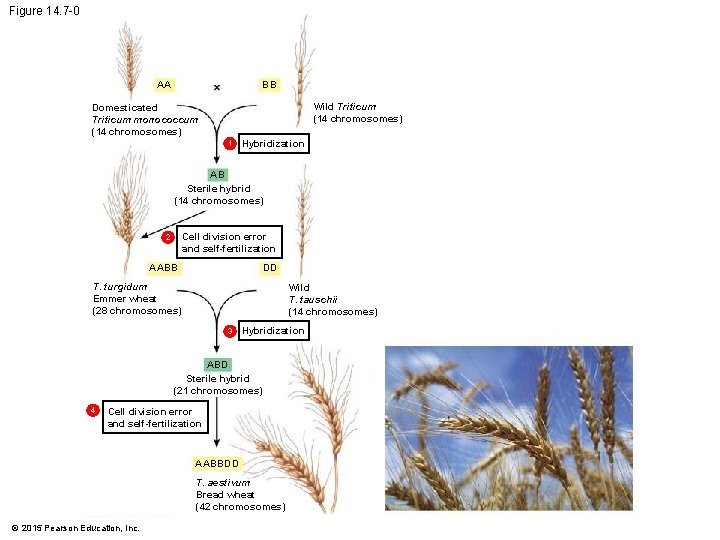
Figure 14. 7 -0 AA BB Wild Triticum (14 chromosomes) Domesticated Triticum monococcum (14 chromosomes) 1 Hybridization AB Sterile hybrid (14 chromosomes) Cell division error and self-fertilization 2 DD AABB T. turgidum Emmer wheat (28 chromosomes) Wild T. tauschii (14 chromosomes) 3 Hybridization ABD Sterile hybrid (21 chromosomes) 4 Cell division error and self-fertilization AABBDD T. aestivum Bread wheat (42 chromosomes) © 2015 Pearson Education, Inc.
14. 8 Isolated islands are often showcases of speciation • Isolated island chains are often inhabited by unique collections of species. • Islands that have physically diverse habitats and that are far enough apart to permit populations to evolve in isolation but close enough to allow occasional dispersions to occur are often the sites of multiple speciation events. • The evolution of many diverse species from a common ancestor is known as adaptive radiation. © 2015 Pearson Education, Inc.
14. 8 Isolated islands are often showcases of speciation • The Galápagos Archipelago • is located about 900 km (560 miles) west of Ecuador, • is one of the world’s great showcases of adaptive radiation, • was formed naked from underwater volcanoes from 5 million to 1 million years ago, • was colonized gradually from other islands and the South America mainland, and • has many species of plants and animals found nowhere else in the world. © 2015 Pearson Education, Inc.
14. 8 Isolated islands are often showcases of speciation • The Galápagos Islands currently have 14 species of closely related finches, called Darwin’s finches, because Darwin collected them during his aroundthe-world voyage on the Beagle. • These birds • share many finchlike traits, • differ in their feeding habits and their beaks, specialized for what they eat, and • arose through adaptive radiation. © 2015 Pearson Education, Inc.
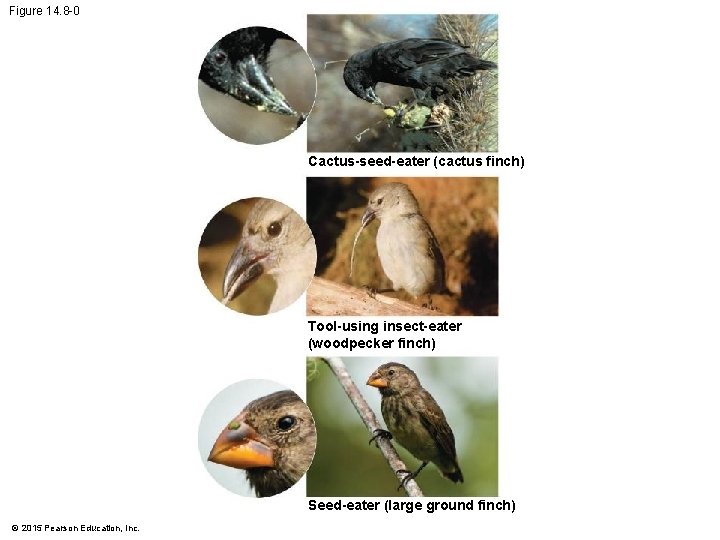
Figure 14. 8 -0 Cactus-seed-eater (cactus finch) Tool-using insect-eater (woodpecker finch) Seed-eater (large ground finch) © 2015 Pearson Education, Inc.
14. 10 Hybrid zones provide opportunities to study reproductive isolation • What happens when separated populations of closely related species come back into contact with each other? • Biologists try to answer such questions by studying hybrid zones, regions in which members of different species meet and mate to produce at least some hybrid offspring. • Figure 14. 10 A illustrates the formation of a hybrid zone, starting with the ancestral species. © 2015 Pearson Education, Inc.
14. 11 Speciation can occur rapidly or slowly • There are two models for the tempo of speciation. 1. The punctuated equilibria model draws on the fossil record, where species change most as they arise from an ancestral species and then change relatively little for the rest of their existence. 2. Other species appear to have evolved more gradually. • The time interval between speciation events varies from a few thousand years to tens of millions of years. © 2015 Pearson Education, Inc.
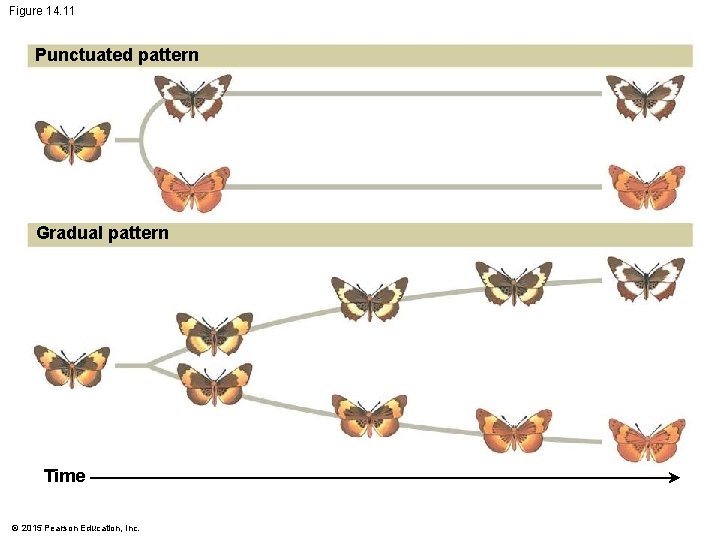
Figure 14. 11 Punctuated pattern Gradual pattern Time © 2015 Pearson Education, Inc.
- Slides: 49