
Figure 11 1 A typical engine coolant temperature
- Slides: 9
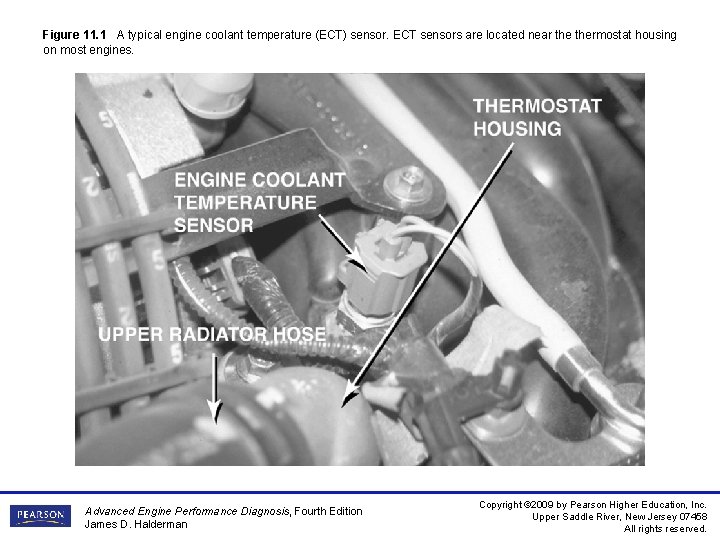
Figure 11. 1 A typical engine coolant temperature (ECT) sensor. ECT sensors are located near thermostat housing on most engines. Advanced Engine Performance Diagnosis, Fourth Edition James D. Halderman Copyright © 2009 by Pearson Higher Education, Inc. Upper Saddle River, New Jersey 07458 All rights reserved.
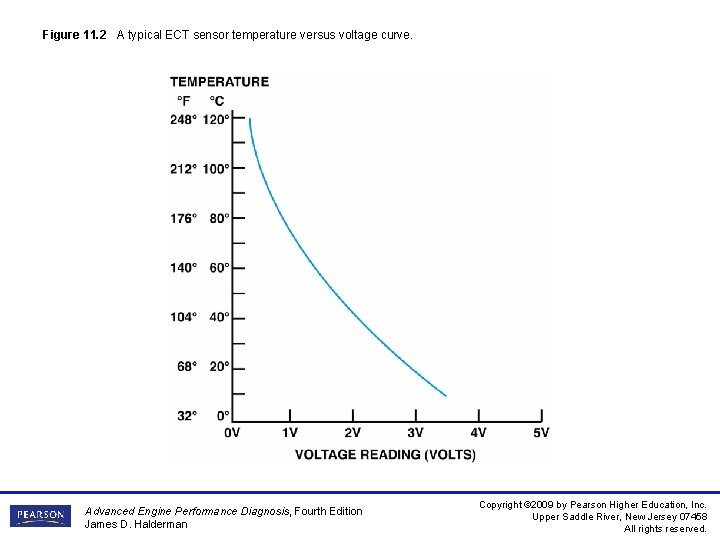
Figure 11. 2 A typical ECT sensor temperature versus voltage curve. Advanced Engine Performance Diagnosis, Fourth Edition James D. Halderman Copyright © 2009 by Pearson Higher Education, Inc. Upper Saddle River, New Jersey 07458 All rights reserved.
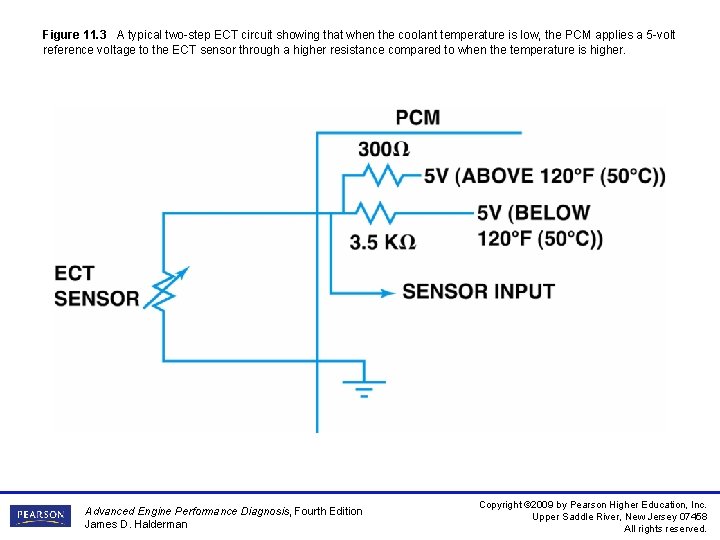
Figure 11. 3 A typical two-step ECT circuit showing that when the coolant temperature is low, the PCM applies a 5 -volt reference voltage to the ECT sensor through a higher resistance compared to when the temperature is higher. Advanced Engine Performance Diagnosis, Fourth Edition James D. Halderman Copyright © 2009 by Pearson Higher Education, Inc. Upper Saddle River, New Jersey 07458 All rights reserved.
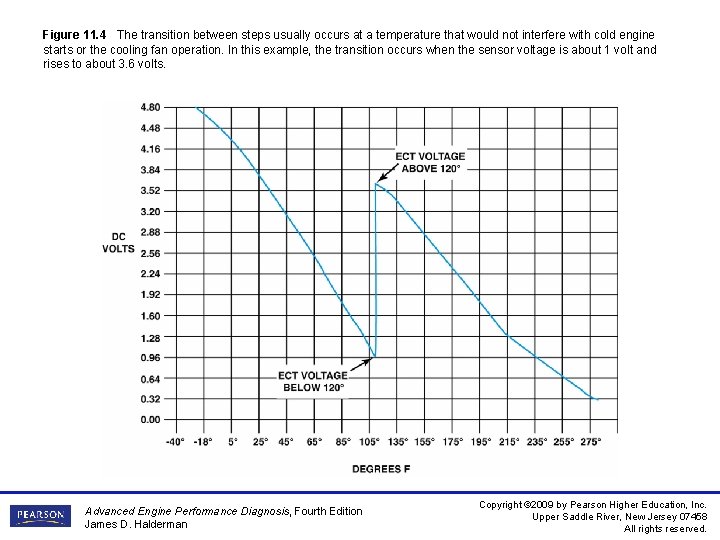
Figure 11. 4 The transition between steps usually occurs at a temperature that would not interfere with cold engine starts or the cooling fan operation. In this example, the transition occurs when the sensor voltage is about 1 volt and rises to about 3. 6 volts. Advanced Engine Performance Diagnosis, Fourth Edition James D. Halderman Copyright © 2009 by Pearson Higher Education, Inc. Upper Saddle River, New Jersey 07458 All rights reserved.
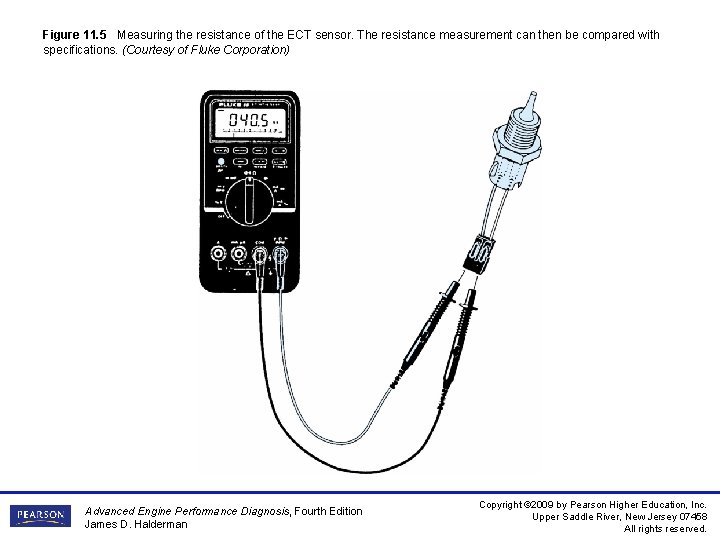
Figure 11. 5 Measuring the resistance of the ECT sensor. The resistance measurement can then be compared with specifications. (Courtesy of Fluke Corporation) Advanced Engine Performance Diagnosis, Fourth Edition James D. Halderman Copyright © 2009 by Pearson Higher Education, Inc. Upper Saddle River, New Jersey 07458 All rights reserved.
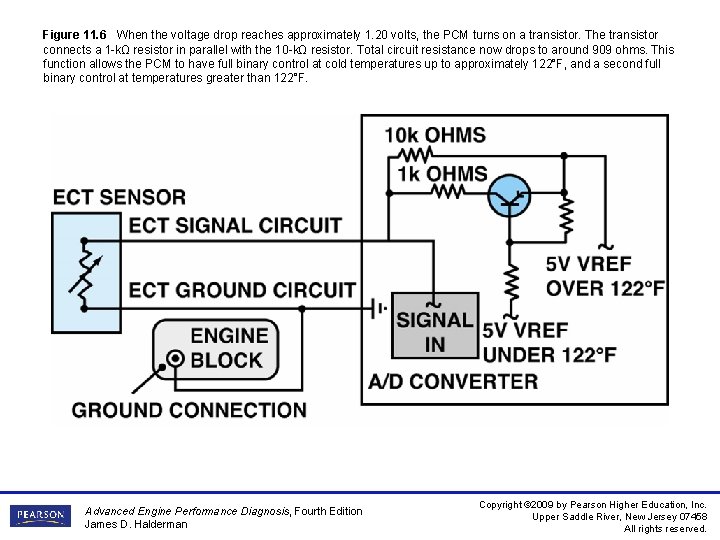
Figure 11. 6 When the voltage drop reaches approximately 1. 20 volts, the PCM turns on a transistor. The transistor connects a 1 -kΩ resistor in parallel with the 10 -kΩ resistor. Total circuit resistance now drops to around 909 ohms. This function allows the PCM to have full binary control at cold temperatures up to approximately 122°F, and a second full binary control at temperatures greater than 122°F. Advanced Engine Performance Diagnosis, Fourth Edition James D. Halderman Copyright © 2009 by Pearson Higher Education, Inc. Upper Saddle River, New Jersey 07458 All rights reserved.
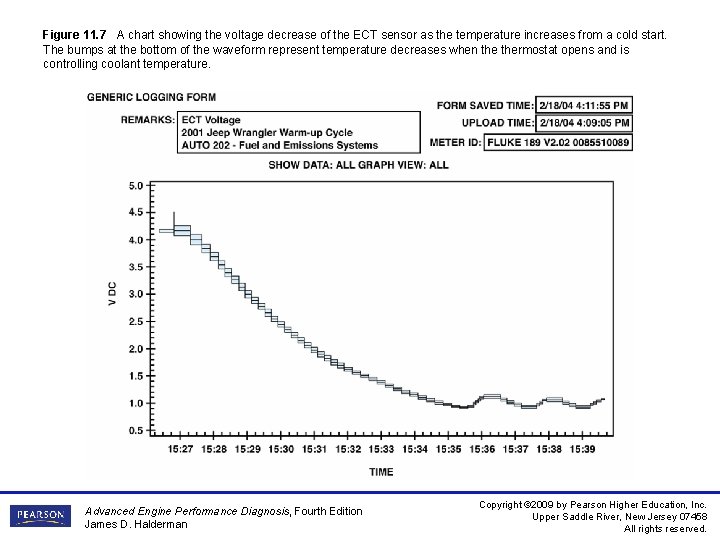
Figure 11. 7 A chart showing the voltage decrease of the ECT sensor as the temperature increases from a cold start. The bumps at the bottom of the waveform represent temperature decreases when thermostat opens and is controlling coolant temperature. Advanced Engine Performance Diagnosis, Fourth Edition James D. Halderman Copyright © 2009 by Pearson Higher Education, Inc. Upper Saddle River, New Jersey 07458 All rights reserved.
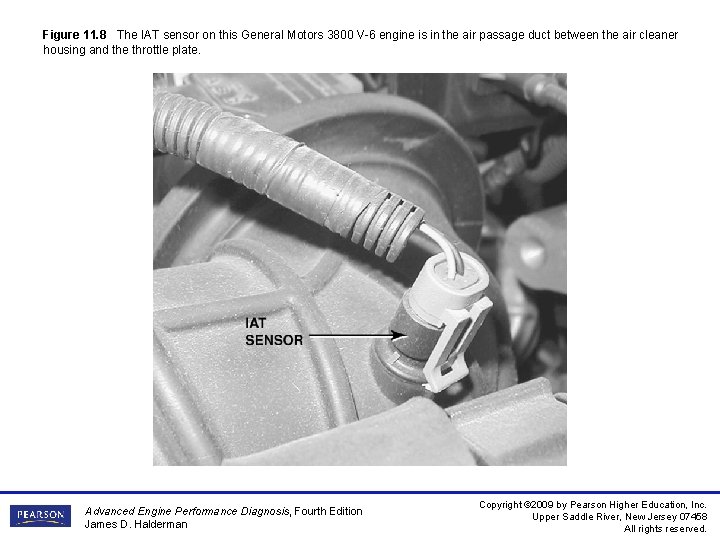
Figure 11. 8 The IAT sensor on this General Motors 3800 V-6 engine is in the air passage duct between the air cleaner housing and the throttle plate. Advanced Engine Performance Diagnosis, Fourth Edition James D. Halderman Copyright © 2009 by Pearson Higher Education, Inc. Upper Saddle River, New Jersey 07458 All rights reserved.
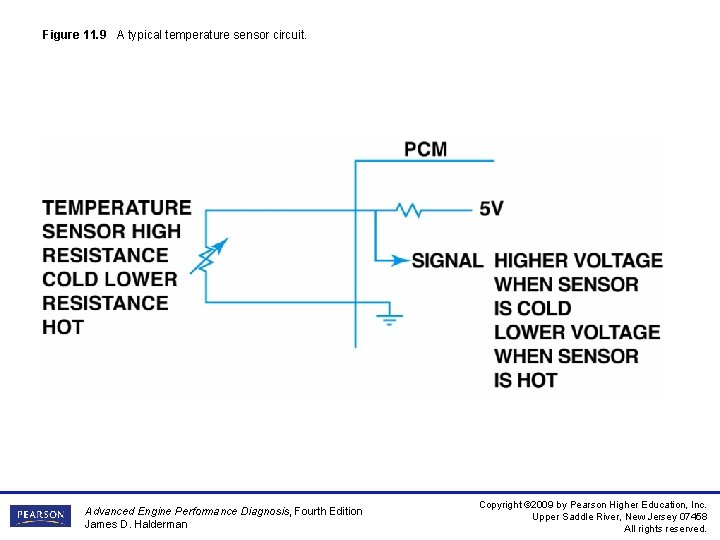
Figure 11. 9 A typical temperature sensor circuit. Advanced Engine Performance Diagnosis, Fourth Edition James D. Halderman Copyright © 2009 by Pearson Higher Education, Inc. Upper Saddle River, New Jersey 07458 All rights reserved.