
Figure 1 Example of a conceptual representation of
- Slides: 7
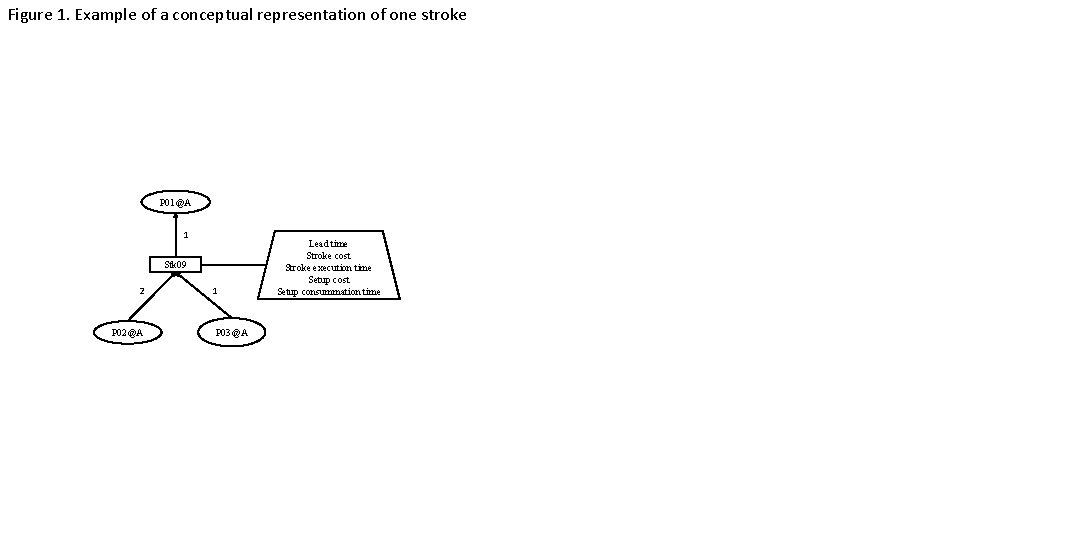
Figure 1. Example of a conceptual representation of one stroke P 01@A 1 Stk 09 2 P 02@A 1 P 03@A Lead time Stroke cost Stroke execution time Setup cost Setup consummation time
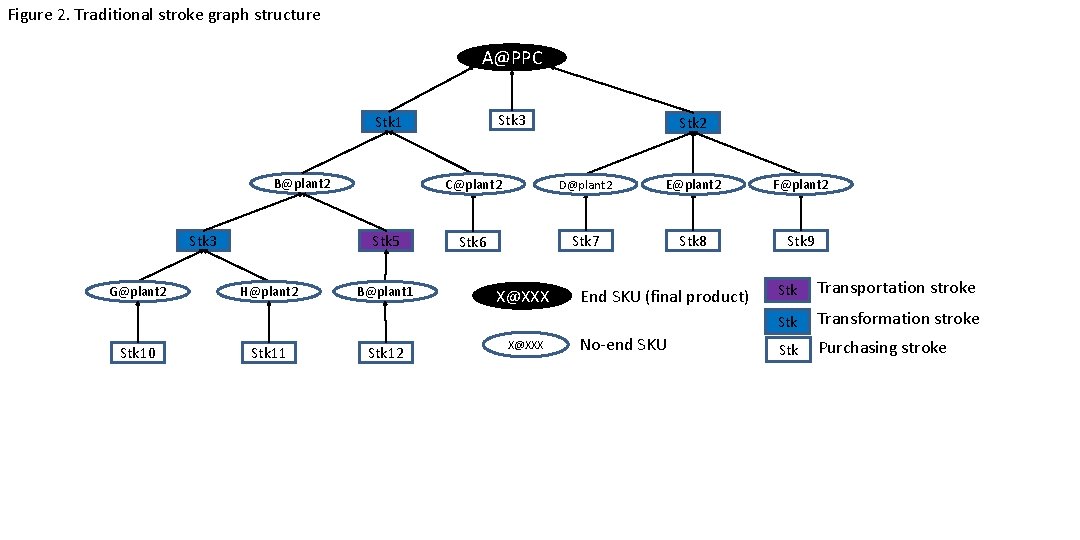
Figure 2. Traditional stroke graph structure A@PPC Stk 3 Stk 1 B@plant 2 Stk 3 G@plant 2 Stk 10 Stk 5 H@plant 2 Stk 11 B@plant 1 Stk 12 Stk 2 C@plant 2 D@plant 2 E@plant 2 F@plant 2 Stk 6 Stk 7 Stk 8 Stk 9 X@XXX End SKU (final product) No-end SKU Stk Transportation stroke Stk Transformation stroke Stk Purchasing stroke
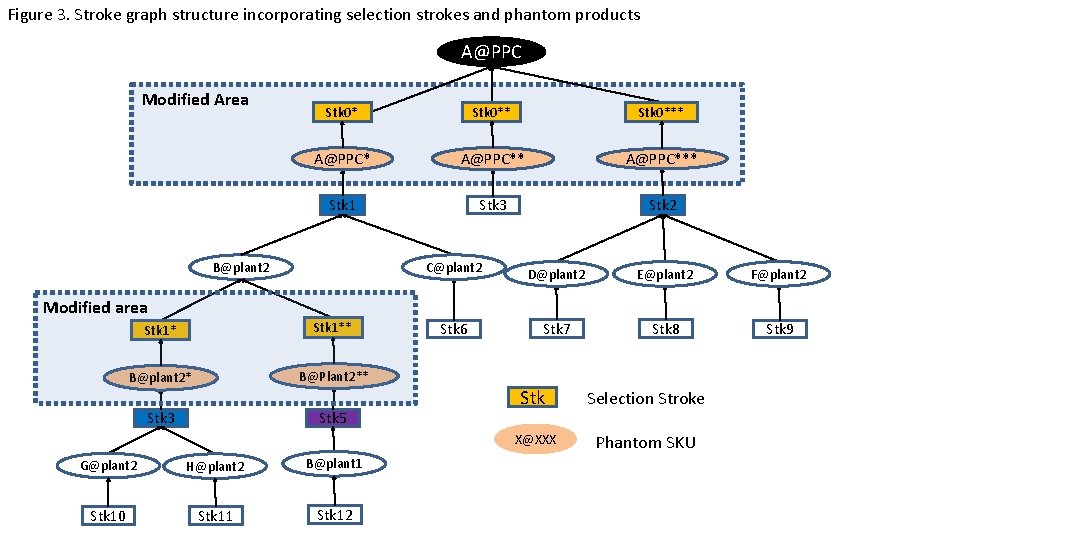
Figure 3. Stroke graph structure incorporating selection strokes and phantom products A@PPC Modified Area Stk 0*** A@PPC*** Stk 1 Stk 3 Stk 2 B@plant 2 C@plant 2 D@plant 2 E@plant 2 F@plant 2 Stk 6 Stk 7 Stk 8 Stk 9 Modified area Stk 1** B@plant 2* B@Plant 2** Stk 3 Stk 5 G@plant 2 H@plant 2 B@plant 1 Stk 10 Stk 11 Stk 12 Stk Selection Stroke X@XXX Phantom SKU
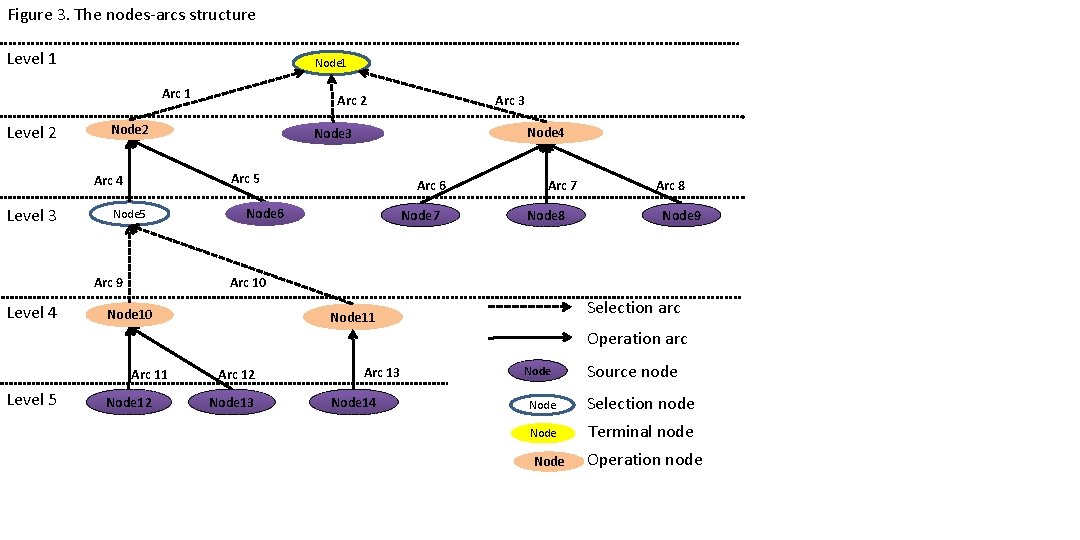
Figure 3. The nodes-arcs structure Level 1 Node 1 Arc 1 Level 2 Node 2 Level 3 Node 5 Arc 6 Node 7 Arc 7 Node 8 Arc 8 Node 9 Arc 10 Arc 9 Level 4 Node 3 Arc 5 Arc 4 Arc 3 Arc 2 Node 10 Selection arc Node 11 Operation arc Arc 11 Level 5 Node 12 Arc 12 Node 13 Arc 13 Node 14 Node Source node Node Selection node Node Terminal node Node Operation node
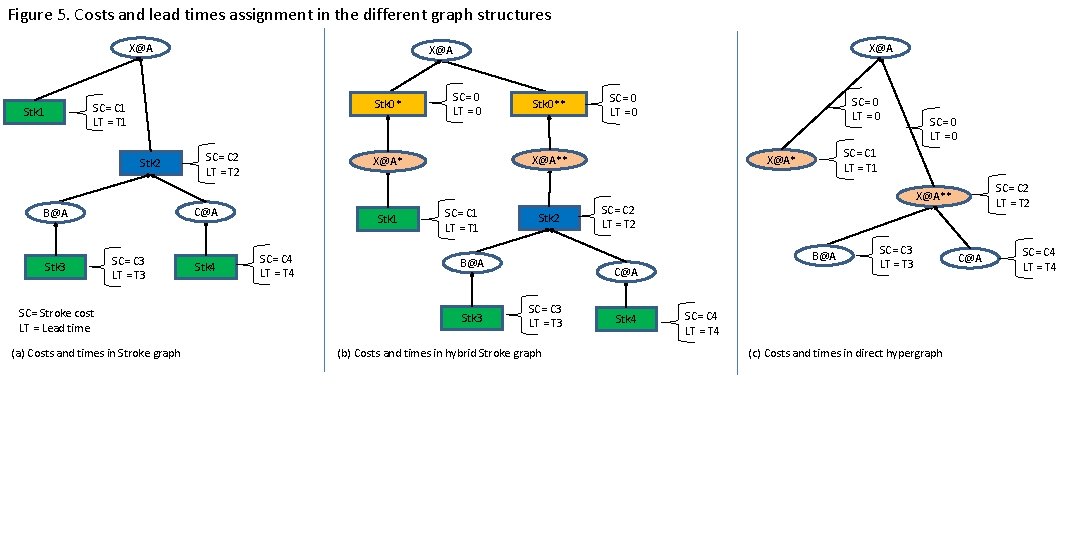
Figure 5. Costs and lead times assignment in the different graph structures X@A Stk 0* SC= C 1 LT = T 1 Stk 2 Stk 3 SC= C 2 LT = T 2 SC= C 3 LT = T 3 SC= Stroke cost LT = Lead time (a) Costs and times in Stroke graph Stk 4 SC= 0 LT = 0 Stk 1 SC= C 4 LT = T 4 Stk 0** SC= 0 LT = 0 SC= C 1 LT = T 1 Stk 2 Stk 3 SC= C 2 LT = T 2 C@A SC= C 3 LT = T 3 (b) Costs and times in hybrid Stroke graph Stk 4 SC= C 2 LT = T 2 X@A** B@A SC= 0 LT = 0 SC= C 1 LT = T 1 X@A** X@A* C@A B@A X@A SC= C 3 LT = T 3 SC= C 4 LT = T 4 (c) Costs and times in direct hypergraph C@A SC= C 4 LT = T 4
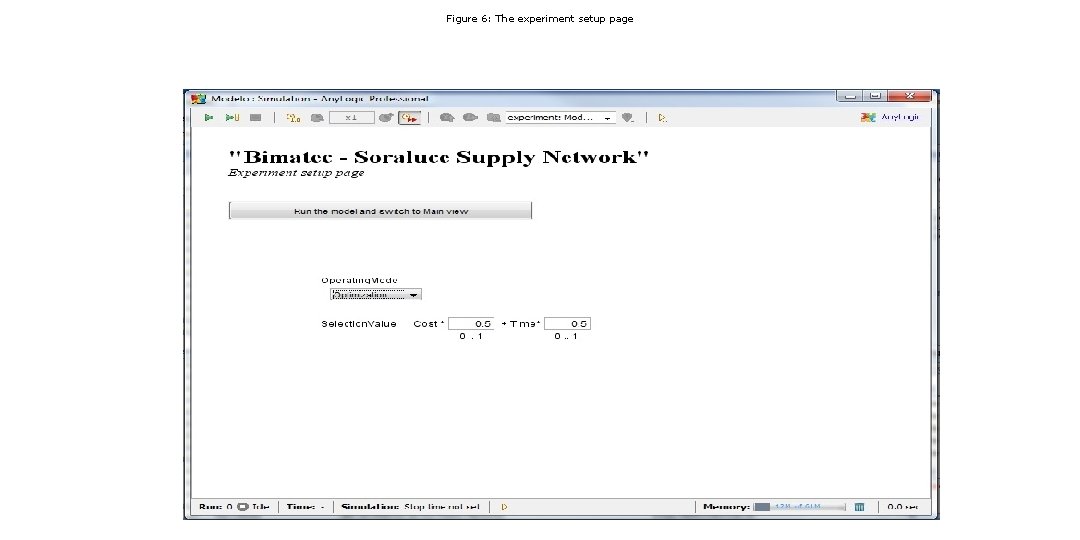
Figure 6: The experiment setup page
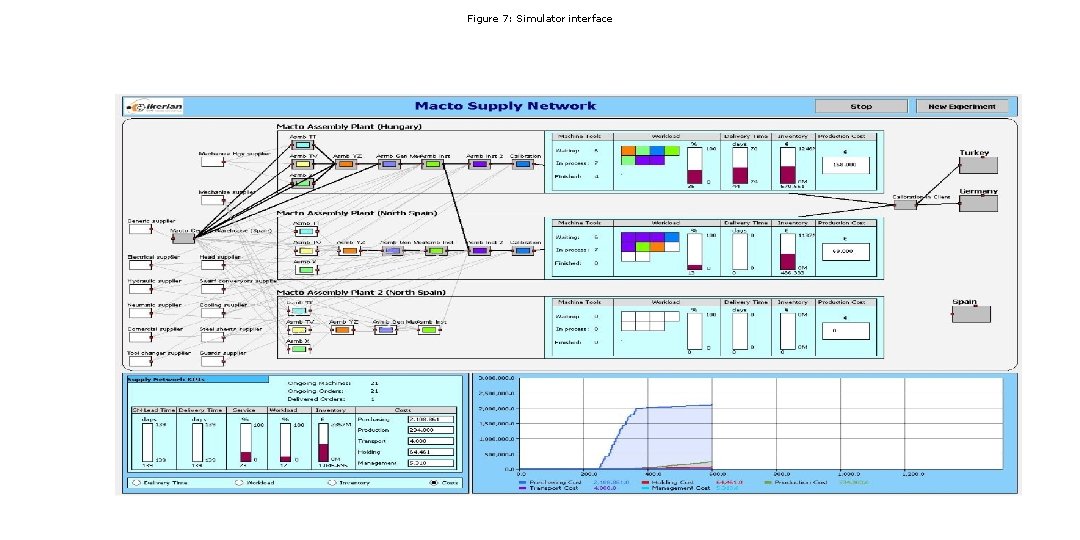
Figure 7: Simulator interface