
Figure 1 a Lumen Blood apical membrane basolateral
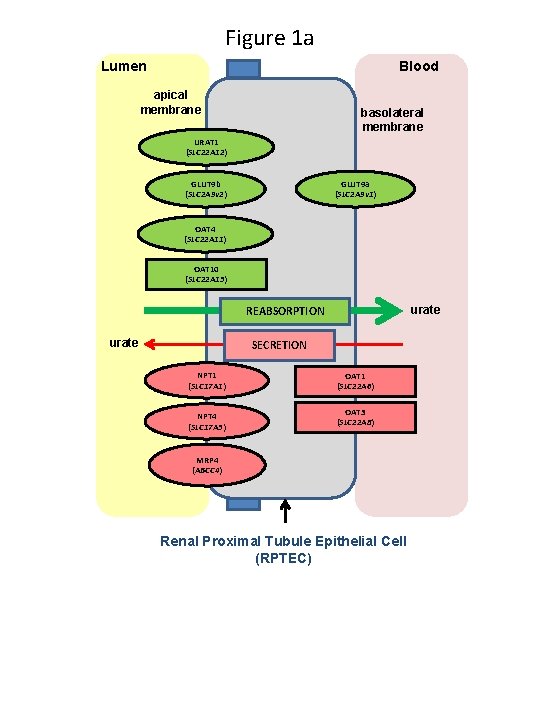
Figure 1 a Lumen Blood apical membrane basolateral membrane URAT 1 (SLC 22 A 12) GLUT 9 b (SLC 2 A 9 v 2) GLUT 9 a (SLC 2 A 9 v 1) OAT 4 (SLC 22 A 11) OAT 10 (SLC 22 A 13) urate REABSORPTION urate SECRETION NPT 1 (SLC 17 A 1) OAT 1 (SLC 22 A 6) NPT 4 (SLC 17 A 3) OAT 3 (SLC 22 A 8) MRP 4 (ABCC 4) Renal Proximal Tubule Epithelial Cell (RPTEC)
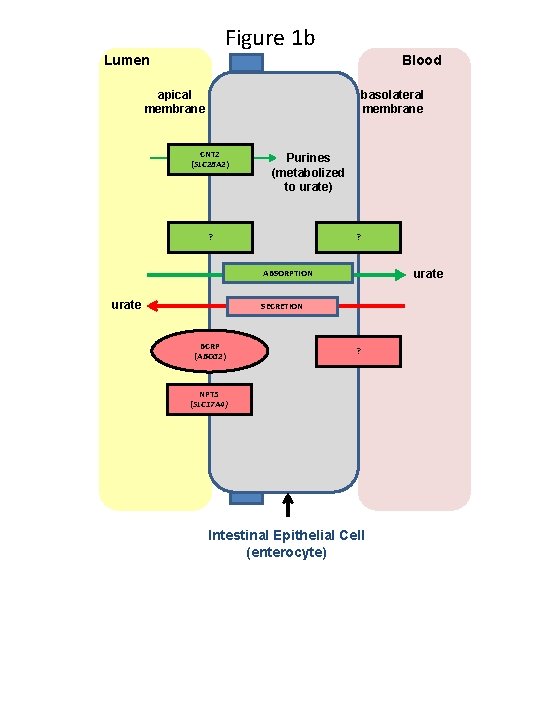
Figure 1 b Lumen Blood apical membrane basolateral membrane CNT 2 (SLC 28 A 2) Purines (metabolized to urate) ? ? ABSORPTION urate SECRETION BCRP (ABCG 2) ? NPT 5 (SLC 17 A 4) Intestinal Epithelial Cell (enterocyte)
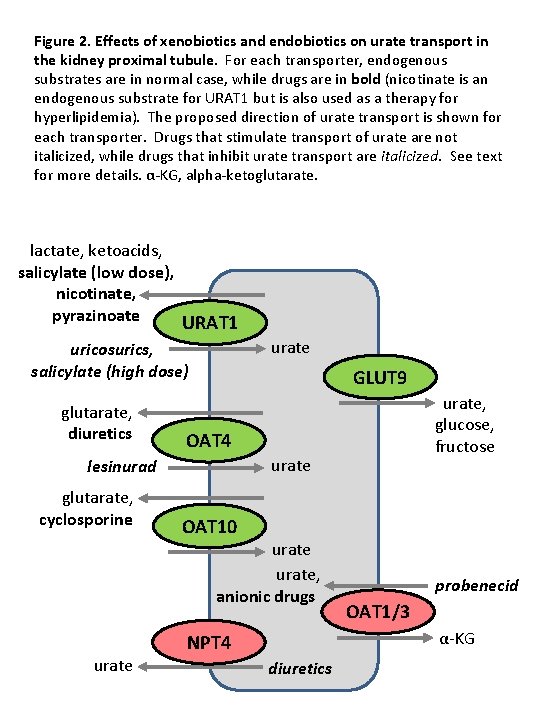
Figure 2. Effects of xenobiotics and endobiotics on urate transport in the kidney proximal tubule. For each transporter, endogenous substrates are in normal case, while drugs are in bold (nicotinate is an endogenous substrate for URAT 1 but is also used as a therapy for hyperlipidemia). The proposed direction of urate transport is shown for each transporter. Drugs that stimulate transport of urate are not italicized, while drugs that inhibit urate transport are italicized. See text for more details. α-KG, alpha-ketoglutarate. lactate, ketoacids, salicylate (low dose), nicotinate, pyrazinoate URAT 1 uricosurics, salicylate (high dose) glutarate, diuretics GLUT 9 urate OAT 10 urate, anionic drugs probenecid OAT 1/3 α-KG NPT 4 urate, glucose, fructose OAT 4 lesinurad glutarate, cyclosporine urate diuretics
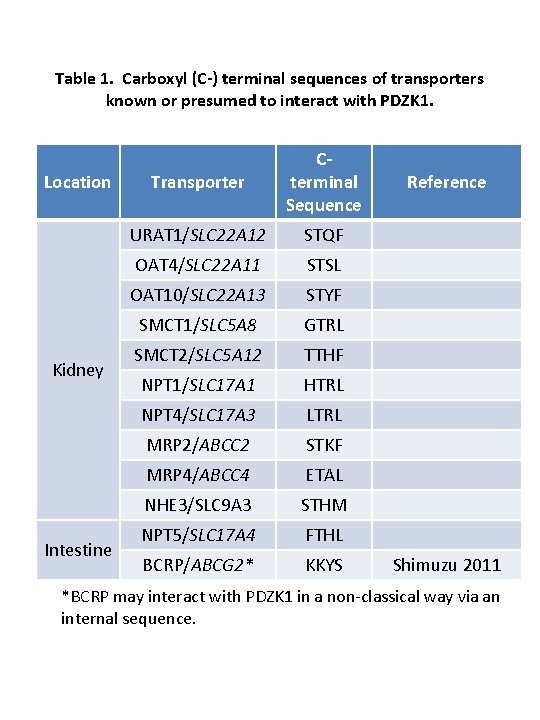
Table 1. Carboxyl (C-) terminal sequences of transporters known or presumed to interact with PDZK 1. Location Kidney Intestine Transporter Cterminal Sequence URAT 1/SLC 22 A 12 STQF OAT 4/SLC 22 A 11 STSL OAT 10/SLC 22 A 13 STYF SMCT 1/SLC 5 A 8 GTRL SMCT 2/SLC 5 A 12 TTHF NPT 1/SLC 17 A 1 HTRL NPT 4/SLC 17 A 3 LTRL MRP 2/ABCC 2 STKF MRP 4/ABCC 4 ETAL NHE 3/SLC 9 A 3 STHM NPT 5/SLC 17 A 4 FTHL BCRP/ABCG 2* KKYS Reference Shimuzu 2011 *BCRP may interact with PDZK 1 in a non-classical way via an internal sequence.
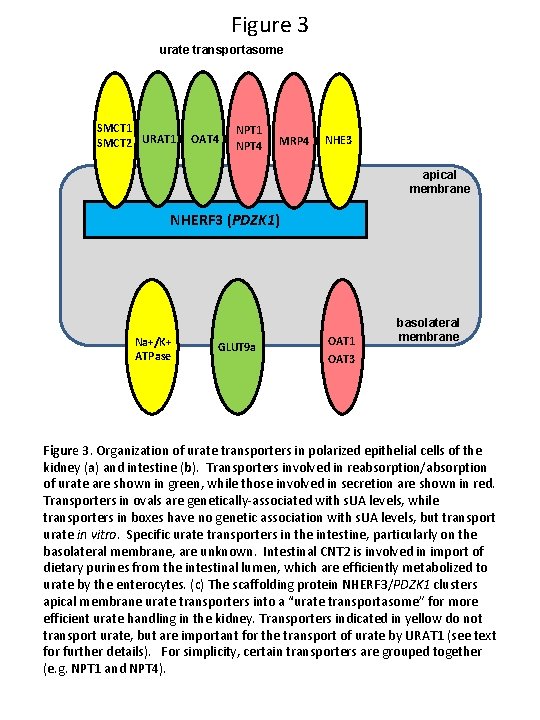
Figure 3 urate transportasome SMCT 1 SMCT 2 URAT 1 OAT 4 NPT 1 NPT 4 MRP 4 NHE 3 apical membrane NHERF 3 (PDZK 1) Na+/K+ ATPase GLUT 9 a OAT 1 OAT 3 basolateral membrane Figure 3. Organization of urate transporters in polarized epithelial cells of the kidney (a) and intestine (b). Transporters involved in reabsorption/absorption of urate are shown in green, while those involved in secretion are shown in red. Transporters in ovals are genetically-associated with s. UA levels, while transporters in boxes have no genetic association with s. UA levels, but transport urate in vitro. Specific urate transporters in the intestine, particularly on the basolateral membrane, are unknown. Intestinal CNT 2 is involved in import of dietary purines from the intestinal lumen, which are efficiently metabolized to urate by the enterocytes. (c) The scaffolding protein NHERF 3/PDZK 1 clusters apical membrane urate transporters into a “urate transportasome” for more efficient urate handling in the kidney. Transporters indicated in yellow do not transport urate, but are important for the transport of urate by URAT 1 (see text for further details). For simplicity, certain transporters are grouped together (e. g. NPT 1 and NPT 4).
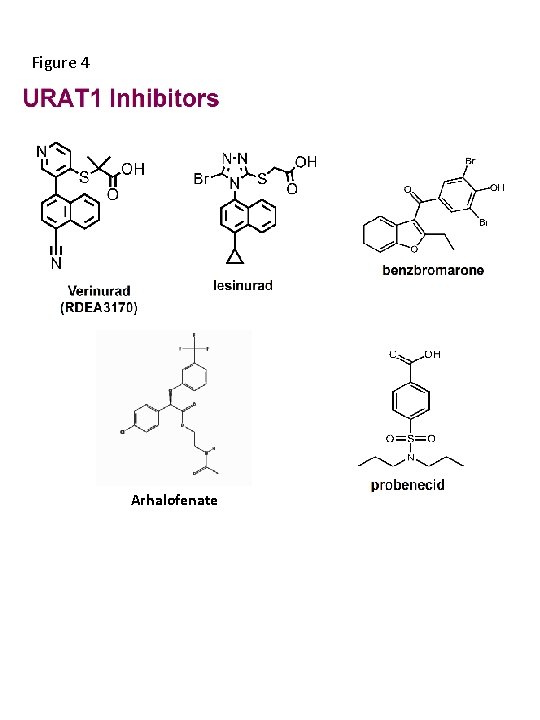
Figure 4 Arhalofenate
- Slides: 6