
Figurative Language What Is Figurative Language l l
- Slides: 14
Figurative Language
What Is Figurative Language? l l l Figurative language is language based on some sort of comparison that is not literally true. Example: Suzie’s endless gossiping droned in our ears like the buzzing of a bee. Figurative language – – – is a natural part of everyday speech is the most important means of imaginative expression in poetry makes us see ordinary objects in a new way
Figure of Speech l A figure of speech compares one thing to another, seemingly unlike thing. Three common figures of speech are – – – simile metaphor personification
Similes l use the word like, as, than, or resembles to compare two seemingly unlike things.
Metaphors l compare two unlike things without using the connective like, as, than, or resembles. – Metaphors allow us to speak and write in a kind of imaginative shorthand.
Direct Metaphors l l say that something is something else. Example: My soul is an enchanted boat
Implied Metaphors l l l suggest a comparison between two things instead of stating it directly. Example: He picked up the scent of food from the cafeteria. Stay out of his way. He’s on the prowl for a hot meal. *Even single words can contain implied metaphors.
Extended Metaphors l l are developed over several lines of a literary work. Example: All the world's a stage, And all the men and women merely players. They have their exits and their entrances; And one man in his time plays many parts, His acts being seven ages.
Personification l l is a figure of speech in which a nonhuman thing or abstract idea is talked about as if it were human. Example: Somewhere the wind-flowers fling their heads back, stirred by an impetuous wind.
Appeals
The different types of appeals l In speeches and debates, each person makes a claim or states their purpose. This can also be considered theme of the speech. The writer or speaker then must support his or her claim by “appealing” to the audience in various ways to try to gain their support. There are three different types of appeals that the writer or speaker might use.
Logical Appeals l l l use reasons and evidence to convince readers. Reasons are statements that explain why an author holds an opinion or view. Reasons must always be supported by evidence. Common Types of Evidence Facts Statistics (number facts) Examples Quotations or opinions by experts
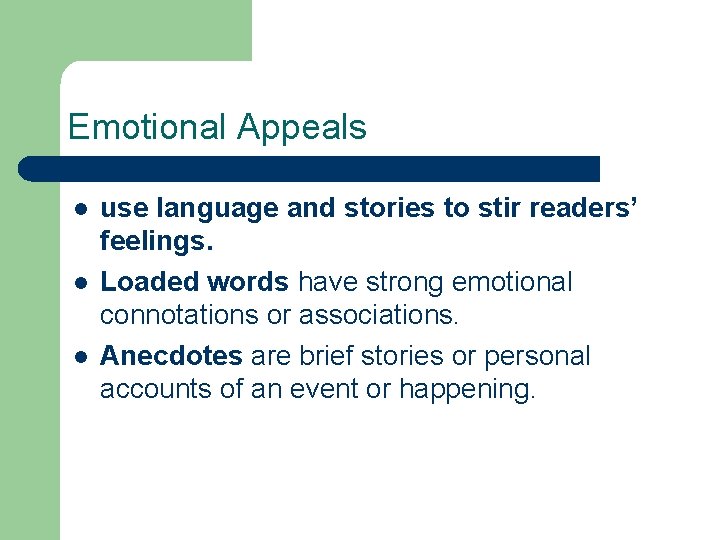
Emotional Appeals l l l use language and stories to stir readers’ feelings. Loaded words have strong emotional connotations or associations. Anecdotes are brief stories or personal accounts of an event or happening.
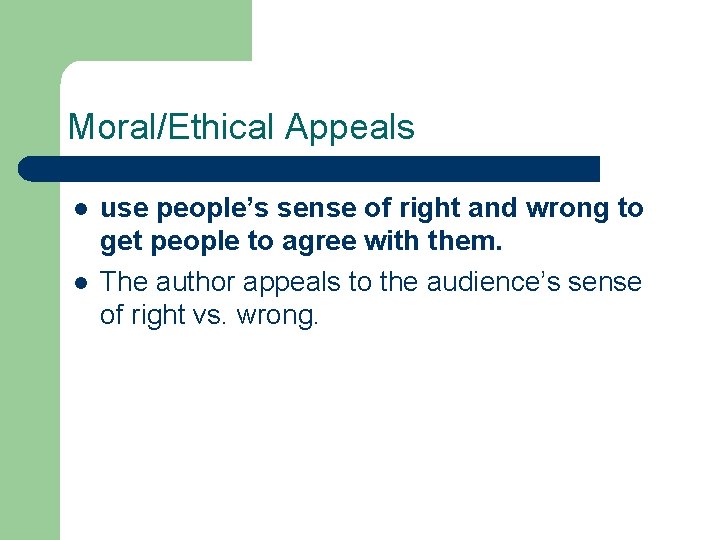
Moral/Ethical Appeals l l use people’s sense of right and wrong to get people to agree with them. The author appeals to the audience’s sense of right vs. wrong.