
Figurative Language Review v Figurative language is v
- Slides: 18
Figurative Language Review v Figurative language is… v Language that cannot be taken literally. Language that does not mean exactly what it says, so we have to interpret it!
Why use figurative language? v Comparison v Emphasis v Clarity v When an author uses figurative language it is purposeful – for a specific effect (to make us visualize, to emphasize an idea, etc)
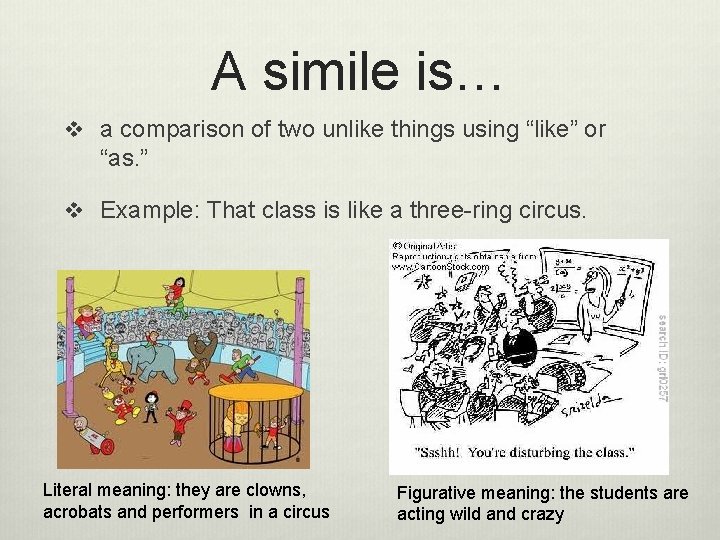
A simile is… v a comparison of two unlike things using “like” or “as. ” v Example: That class is like a three-ring circus. Literal meaning: they are clowns, acrobats and performers in a circus Figurative meaning: the students are acting wild and crazy
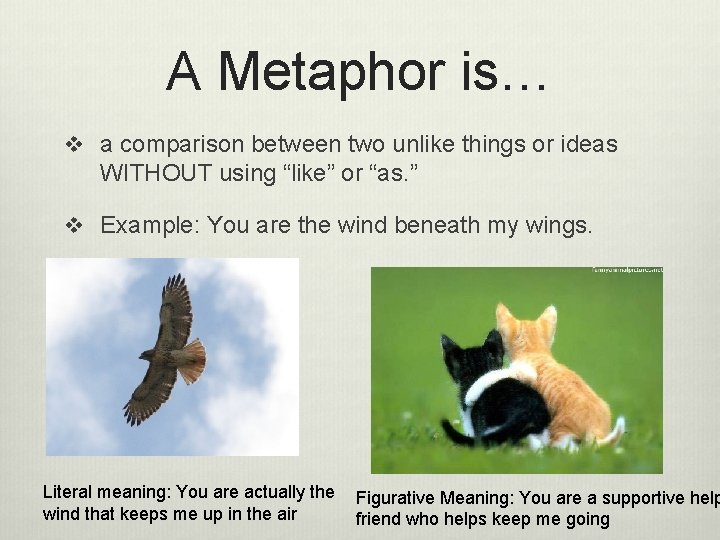
A Metaphor is… v a comparison between two unlike things or ideas WITHOUT using “like” or “as. ” v Example: You are the wind beneath my wings. Literal meaning: You are actually the wind that keeps me up in the air Figurative Meaning: You are a supportive help friend who helps keep me going
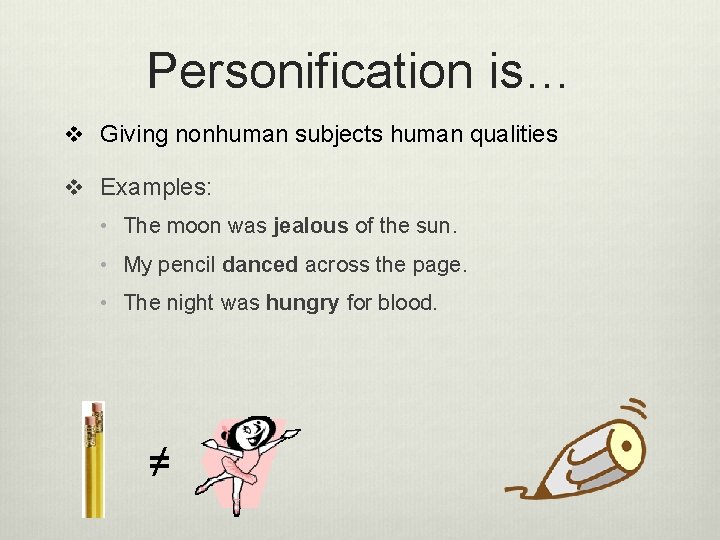
Personification is… v Giving nonhuman subjects human qualities v Examples: • The moon was jealous of the sun. • My pencil danced across the page. • The night was hungry for blood. ≠
Practice v On the next few slides there will be a passage with a piece of figurative language. Identify whether it is an example of a…. v Metaphor v Simile v Personification
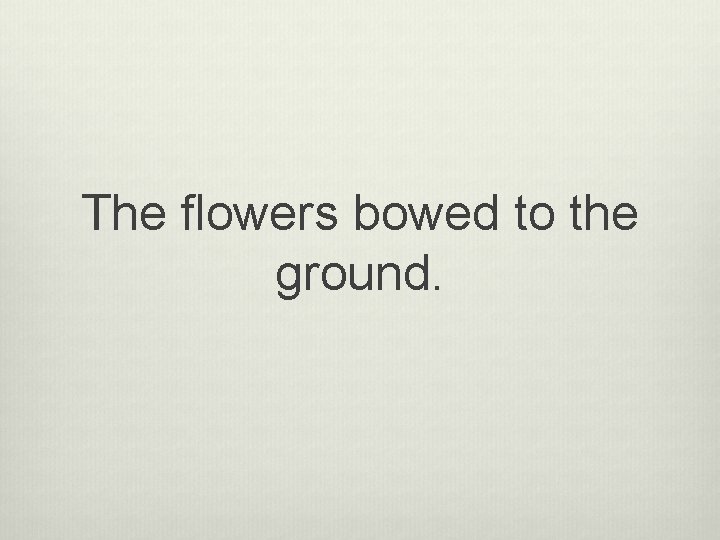
The flowers bowed to the ground.
Answer: Personification
Your momma is as fat as a whale.
Answer: Simile
It’s raining men.
Answer: Metaphor
Lady Montague drowned in a sea of grief (after Romeo is sent out of Verona).
Answer: Metaphor
When Ms. Hannon gave the evil eye, silence crept over the classroom.
Answer: Personification
My love is as boundless as the sea.
Answer: Simile