
FIGURATIVE LANGUAGE LEARNING GOAL I will be able
FIGURATIVE LANGUAGE
LEARNING GOAL: I will be able to identify figurative language(simile, metaphor, idiom, personification, onomatopoeia, hyperbole, alliteration, consonance, assonance) within text.
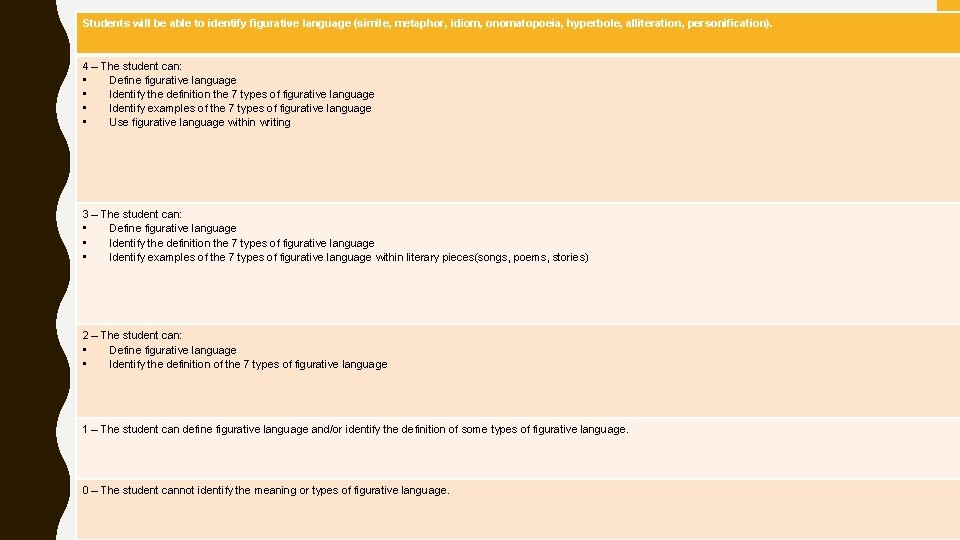
Students will be able to identify figurative language (simile, metaphor, idiom, onomatopoeia, hyperbole, alliteration, personification). 4 – The student can: • Define figurative language • Identify the definition the 7 types of figurative language • Identify examples of the 7 types of figurative language • Use figurative language within writing 3 – The student can: • Define figurative language • Identify the definition the 7 types of figurative language • Identify examples of the 7 types of figurative language within literary pieces(songs, poems, stories) 2 – The student can: • Define figurative language • Identify the definition of the 7 types of figurative language 1 – The student can define figurative language and/or identify the definition of some types of figurative language. 0 – The student cannot identify the meaning or types of figurative language.
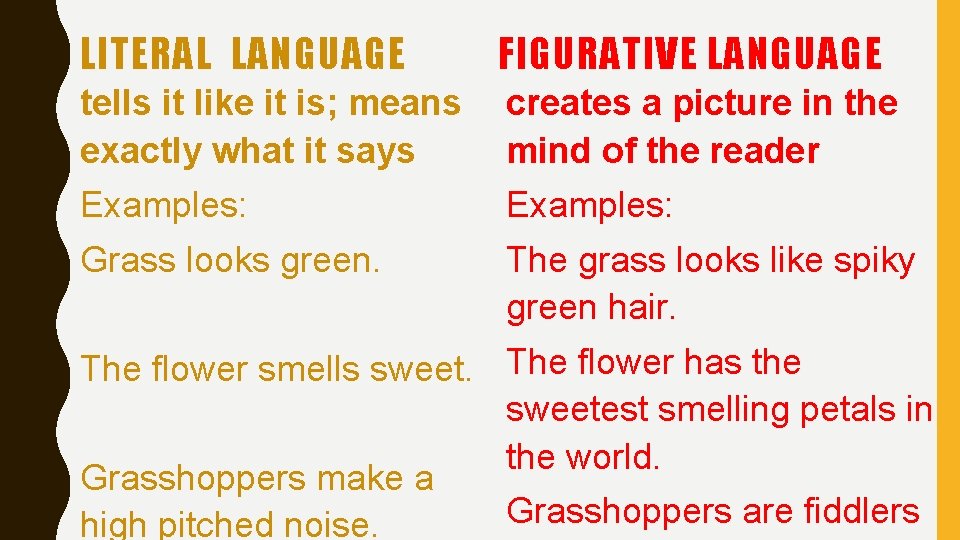
LITERAL LANGUAGE FIGURATIVE LANGUAGE tells it like it is; means exactly what it says creates a picture in the mind of the reader Examples: Grass looks green. The grass looks like spiky green hair. The flower smells sweet. The flower has the sweetest smelling petals in the world. Grasshoppers make a Grasshoppers are fiddlers high pitched noise.

SIMILE • Compares two unlike things using words such as “like” or “as” • Example>>>>> >
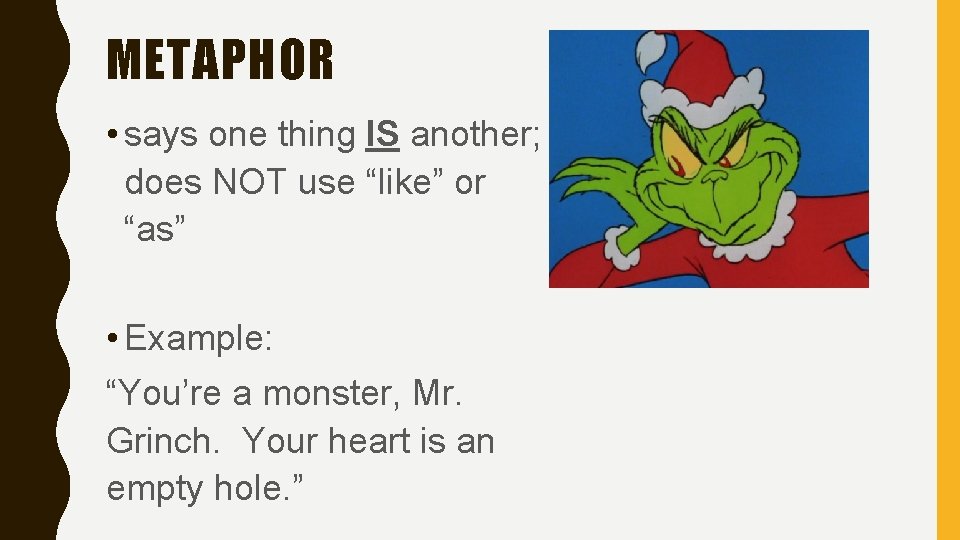
METAPHOR • says one thing IS another; does NOT use “like” or “as” • Example: “You’re a monster, Mr. Grinch. Your heart is an empty hole. ”

HYPERBOLE • An exaggeration or overstatement • Example: “I’ve told you a million times. ” • http: //safeshare. tv/v/ss 56954525873 c 4
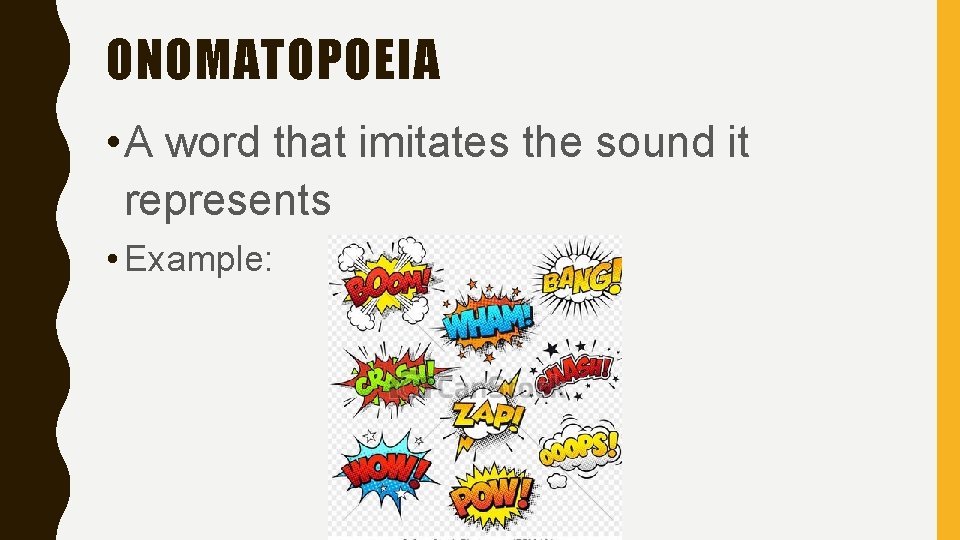
ONOMATOPOEIA • A word that imitates the sound it represents • Example:
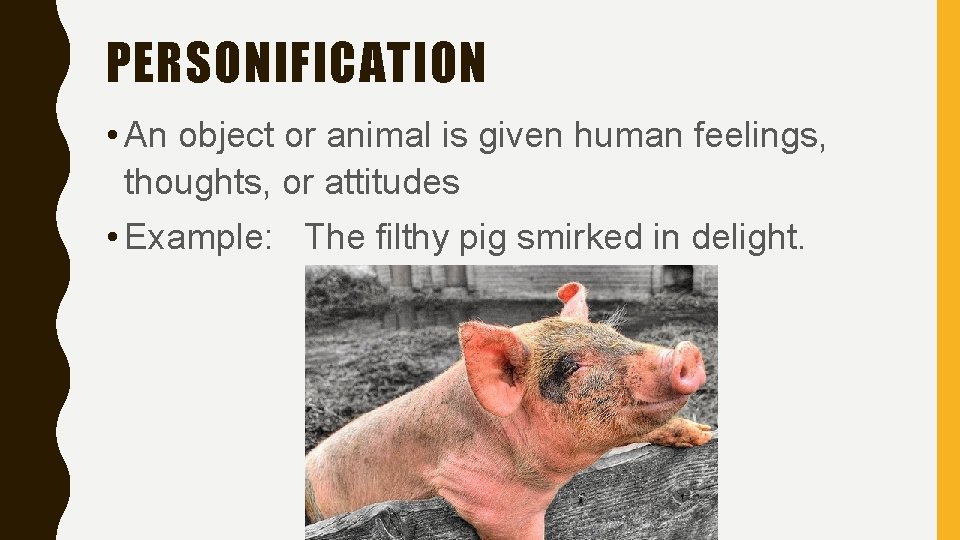
PERSONIFICATION • An object or animal is given human feelings, thoughts, or attitudes • Example: The filthy pig smirked in delight.
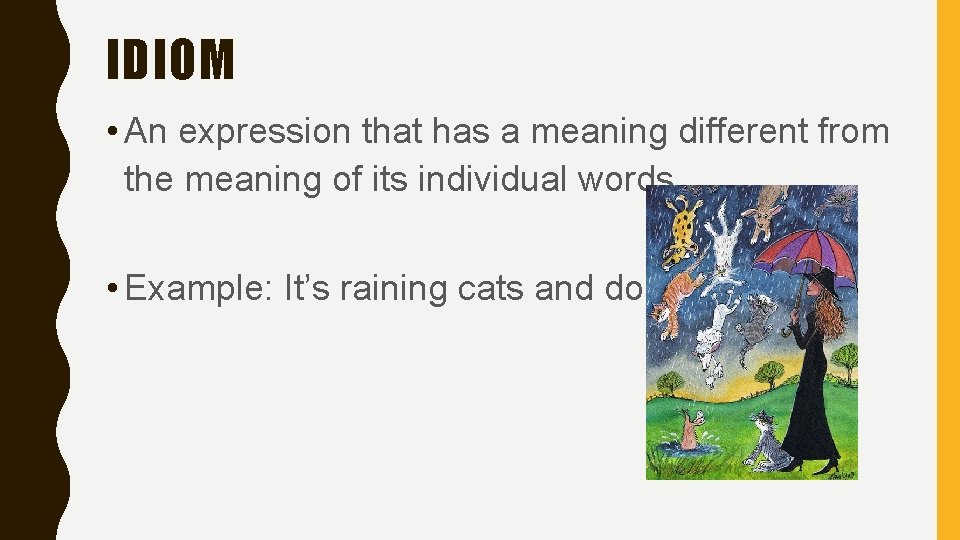
IDIOM • An expression that has a meaning different from the meaning of its individual words • Example: It’s raining cats and dogs.
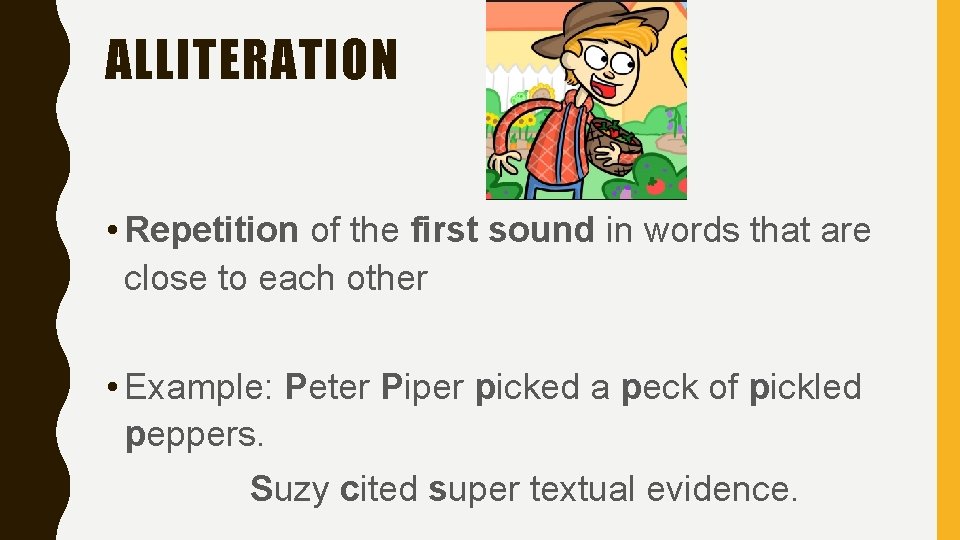
ALLITERATION • Repetition of the first sound in words that are close to each other • Example: Peter Piper picked a peck of pickled peppers. Suzy cited super textual evidence.
CONSONANCE • Repetition of a consonant sound in words of close proximity • Example: Pitter-patter, pitter-patter
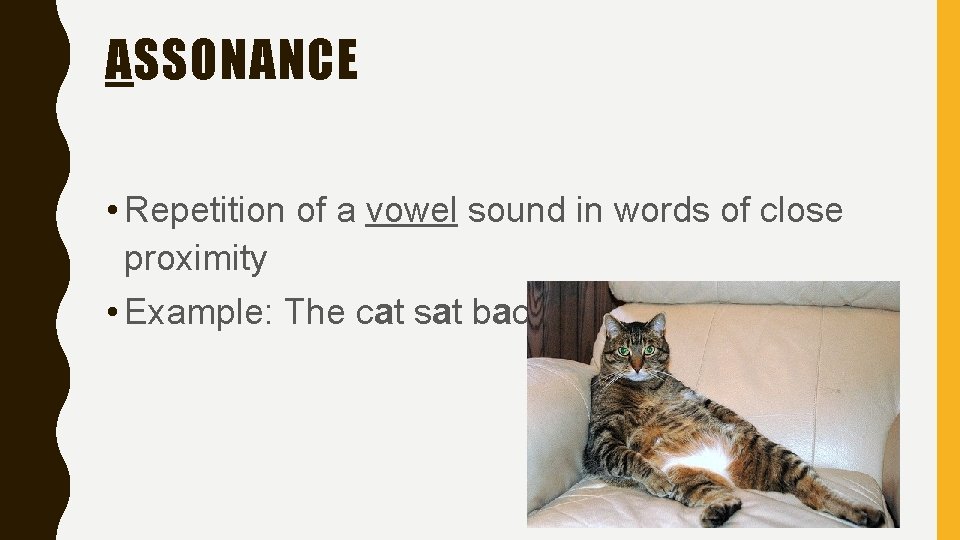
ASSONANCE • Repetition of a vowel sound in words of close proximity • Example: The cat sat back.
- Slides: 13