
Figurative Language Fun Figures of Speech Literal vs


- Slides: 19
Figurative Language= Fun Figures of Speech
Literal vs. Figurative • To understand figurative language, we must understand the difference between literal and figurative. literal figurative
Literal • To be literal is to mean what you say. • For example: If I tell you, “Sit down in your seat. ” I mean it literally: literally “Sit down in your seat. ” • My meaning is exactly what I say. There is no other interpretation.
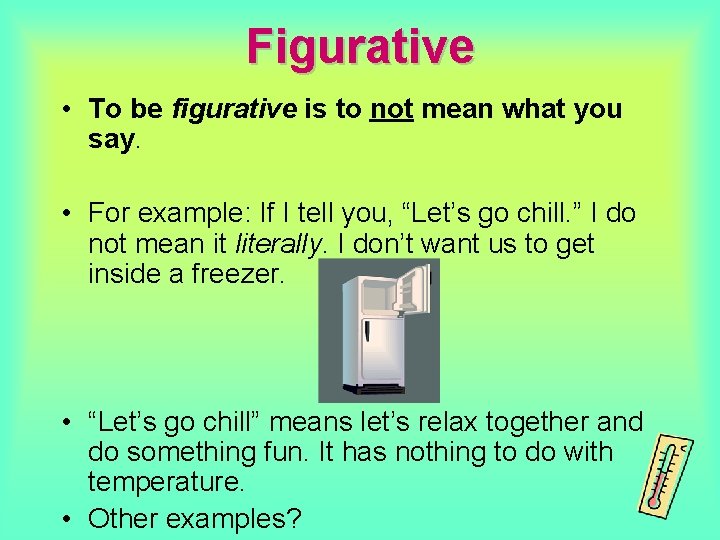
Figurative • To be figurative is to not mean what you say. • For example: If I tell you, “Let’s go chill. ” I do not mean it literally. I don’t want us to get inside a freezer. • “Let’s go chill” means let’s relax together and do something fun. It has nothing to do with temperature. • Other examples?
Confused? Think of it this way: Literal as real Figurative as imaginary or exaggerated
Figurative Language Defined as: • Descriptive language that should not be taken literally • Techniques to make your writing more interesting, vivid, and dramatic! We will be looking at 7 techniques (also known as figures of speech). Ex: Simile, Metaphor, Alliteration, Onomatopoeia, Hyperbole, Personification, and Idiom.
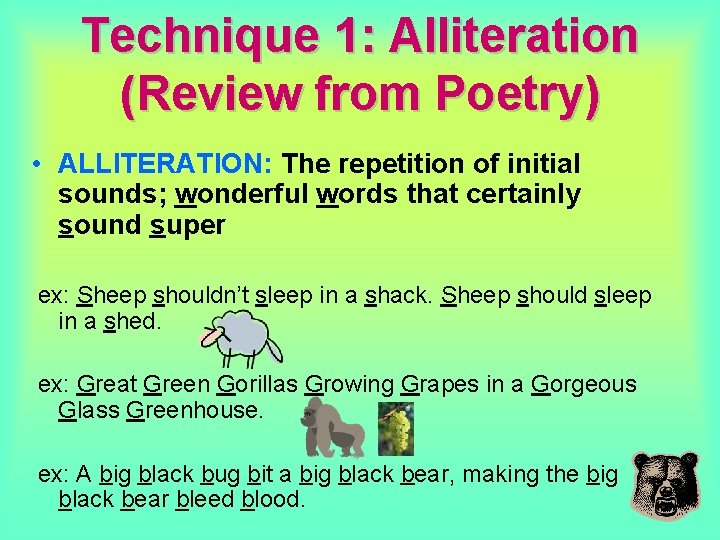
Technique 1: Alliteration (Review from Poetry) • ALLITERATION: The repetition of initial sounds; wonderful words that certainly sound super ex: Sheep shouldn’t sleep in a shack. Sheep should sleep in a shed. ex: Great Green Gorillas Growing Grapes in a Gorgeous Glass Greenhouse. ex: A big black bug bit a big black bear, making the big black bear bleed blood.
Literature Examples of Alliteration (available for independent reading) • Animalia • Away From Home • Tongue Twisters • New Kid on the Block
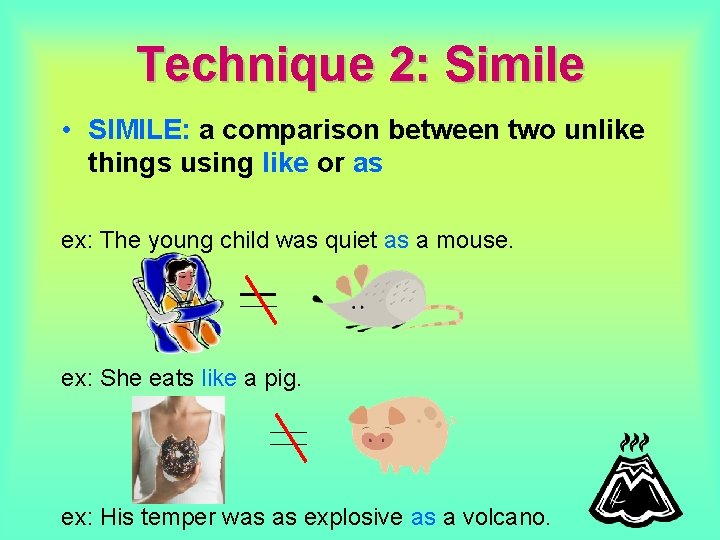
Technique 2: Simile • SIMILE: a comparison between two unlike things using like or as ex: The young child was quiet as a mouse. ex: She eats like a pig. ex: His temper was as explosive as a volcano.
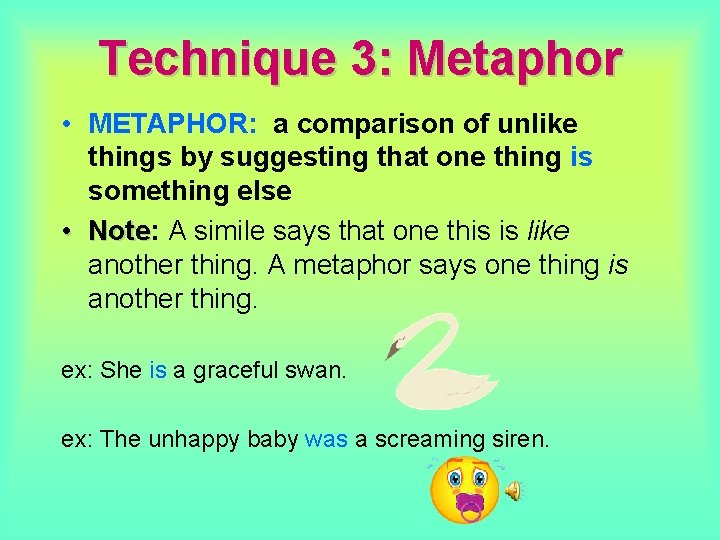
Technique 3: Metaphor • METAPHOR: a comparison of unlike things by suggesting that one thing is something else • Note: A simile says that one this is like Note another thing. A metaphor says one thing is another thing. ex: She is a graceful swan. ex: The unhappy baby was a screaming siren.
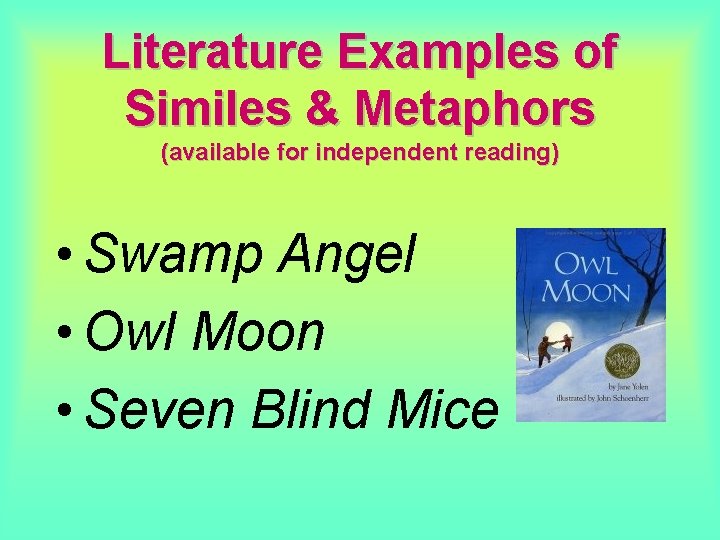
Literature Examples of Similes & Metaphors (available for independent reading) • Swamp Angel • Owl Moon • Seven Blind Mice
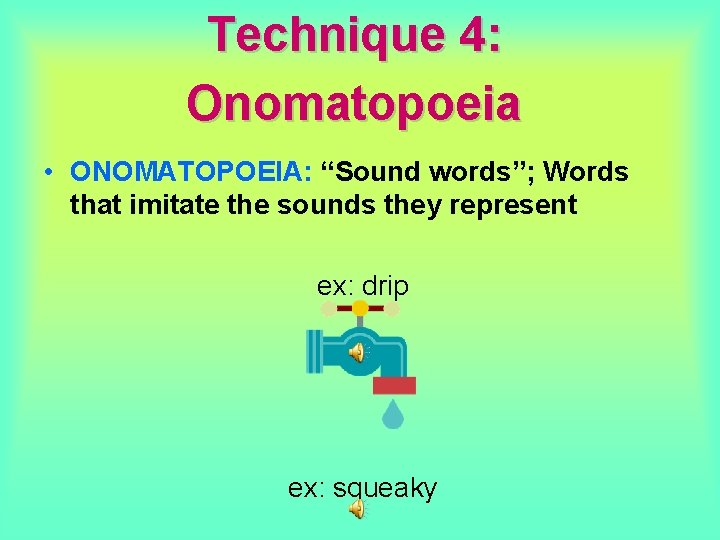
Technique 4: Onomatopoeia • ONOMATOPOEIA: “Sound words”; Words that imitate the sounds they represent ex: drip ex: squeaky
Literature Examples of Onomatopoeias (available for independent reading) • The Great Pumpkin Switch • Listen to the Rain
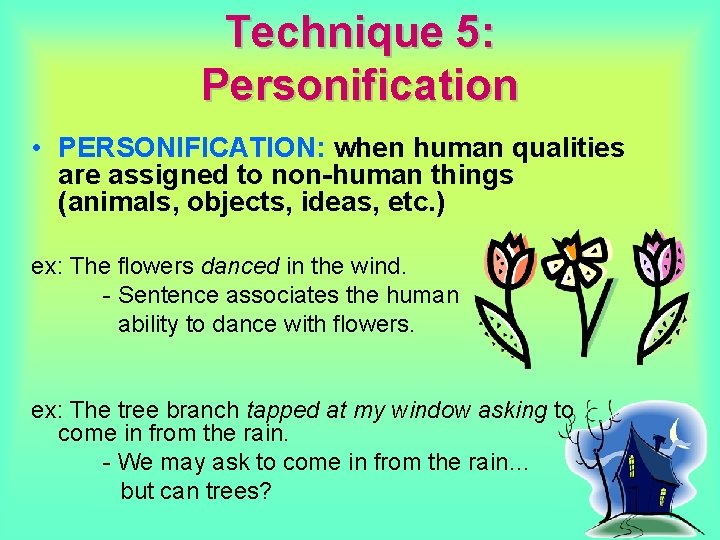
Technique 5: Personification • PERSONIFICATION: when human qualities are assigned to non-human things (animals, objects, ideas, etc. ) ex: The flowers danced in the wind. - Sentence associates the human ability to dance with flowers. ex: The tree branch tapped at my window asking to come in from the rain. - We may ask to come in from the rain… but can trees?
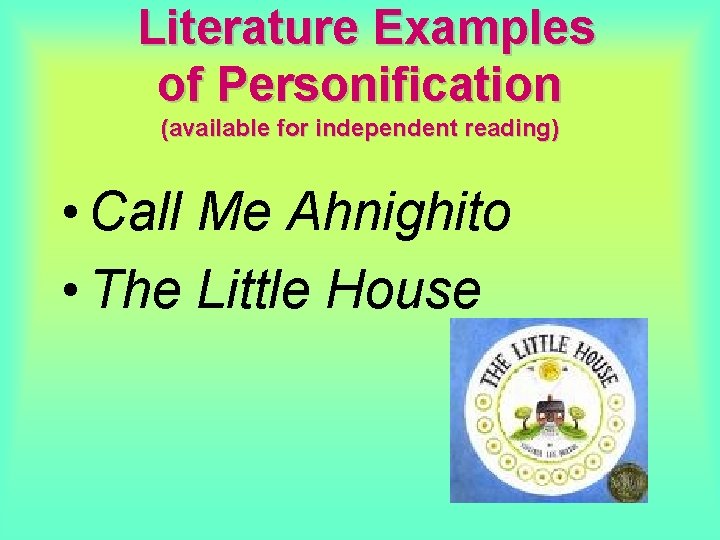
Literature Examples of Personification (available for independent reading) • Call Me Ahnighito • The Little House
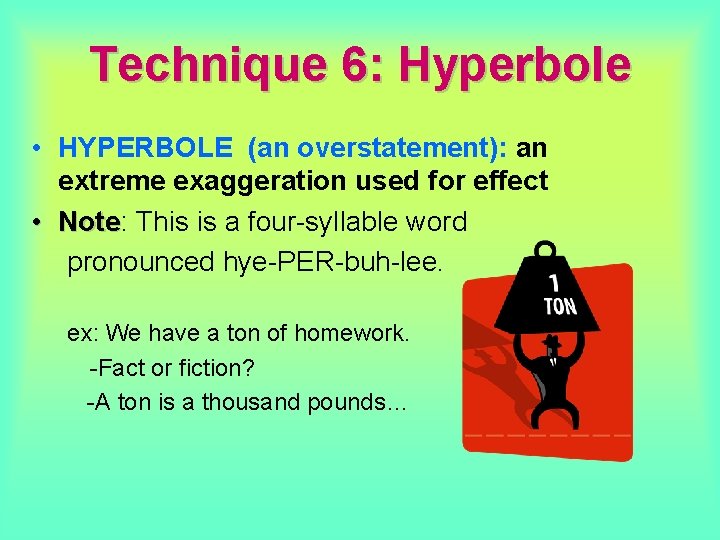
Technique 6: Hyperbole • HYPERBOLE (an overstatement): an extreme exaggeration used for effect • Note: Note This is a four-syllable word pronounced hye-PER-buh-lee. ex: We have a ton of homework. -Fact or fiction? -A ton is a thousand pounds…
Literature Examples of Hyperboles (available for independent reading) • Where the Sidewalk Ends Ex: “WHO” (pg 63) • There Was an Old Lady Who Swallowed a Bat!
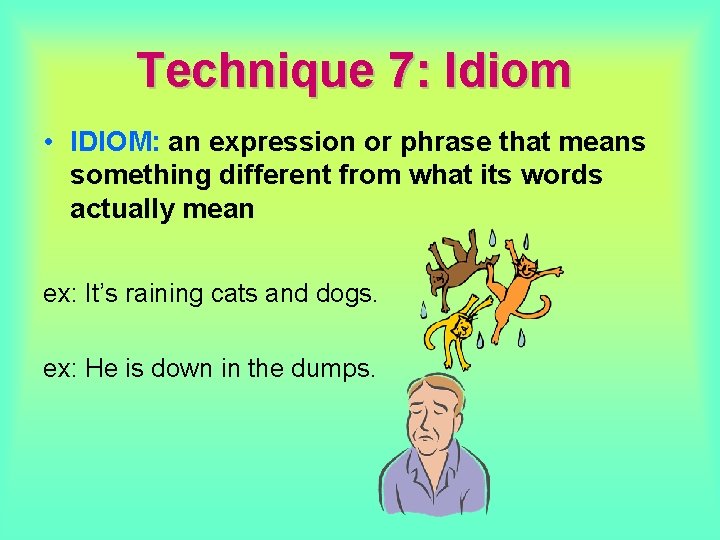
Technique 7: Idiom • IDIOM: an expression or phrase that means something different from what its words actually mean ex: It’s raining cats and dogs. ex: He is down in the dumps.
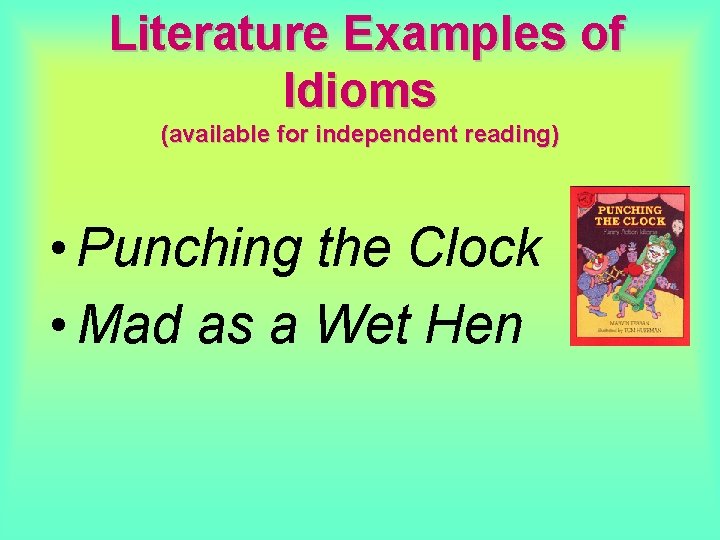
Literature Examples of Idioms (available for independent reading) • Punching the Clock • Mad as a Wet Hen