
Figurative Language Flash Cards Simile Comparison of two
- Slides: 7
Figurative Language Flash Cards
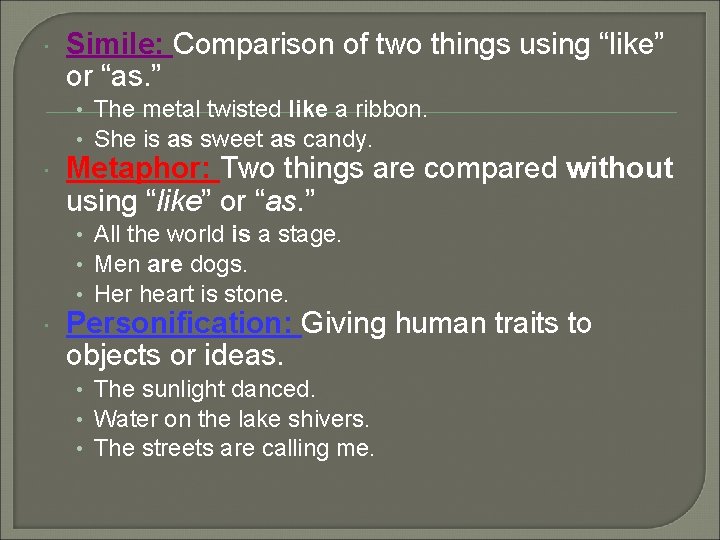
Simile: Comparison of two things using “like” or “as. ” • The metal twisted like a ribbon. • She is as sweet as candy. Metaphor: Two things are compared without using “like” or “as. ” • All the world is a stage. • Men are dogs. • Her heart is stone. Personification: Giving human traits to objects or ideas. • The sunlight danced. • Water on the lake shivers. • The streets are calling me.
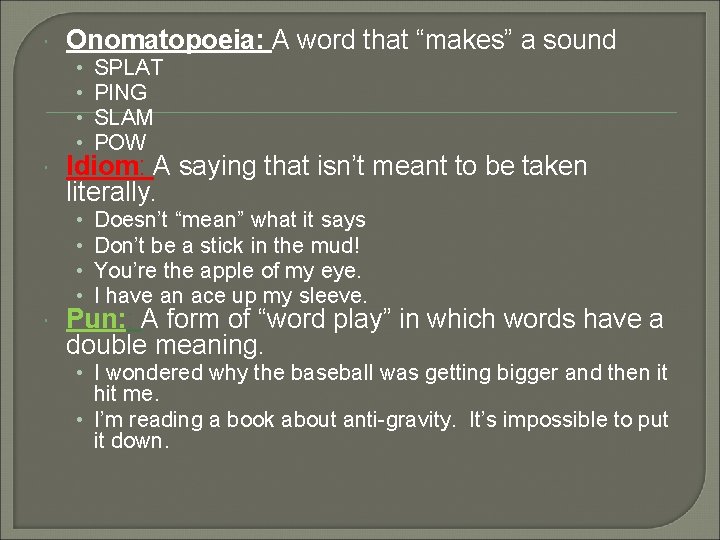
Onomatopoeia: A word that “makes” a sound • • SPLAT PING SLAM POW • • Doesn’t “mean” what it says Don’t be a stick in the mud! You’re the apple of my eye. I have an ace up my sleeve. Idiom: A saying that isn’t meant to be taken literally. Pun: : A form of “word play” in which words have a double meaning. • I wondered why the baseball was getting bigger and then it hit me. • I’m reading a book about anti-gravity. It’s impossible to put it down.
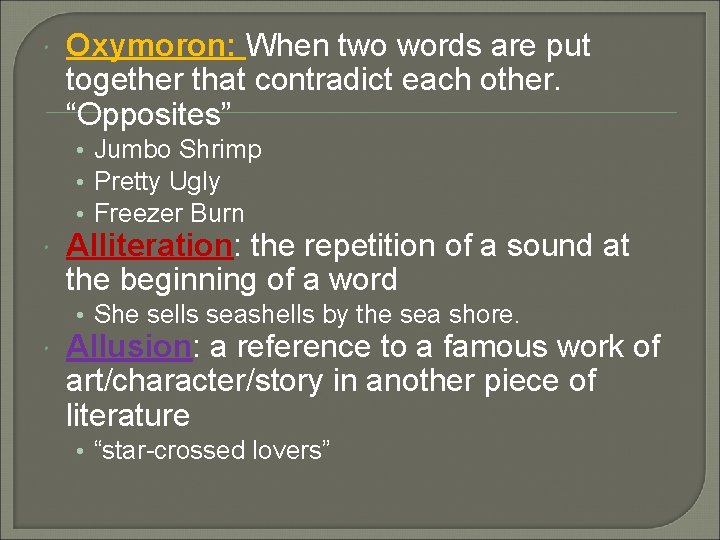
Oxymoron: When two words are put together that contradict each other. “Opposites” • Jumbo Shrimp • Pretty Ugly • Freezer Burn Alliteration: the repetition of a sound at the beginning of a word • She sells seashells by the sea shore. Allusion: a reference to a famous work of art/character/story in another piece of literature • “star-crossed lovers”
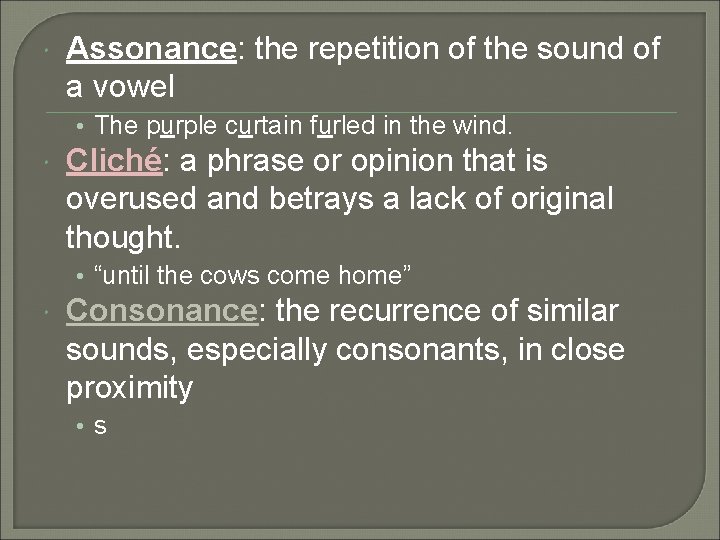
Assonance: the repetition of the sound of a vowel • The purple curtain furled in the wind. Cliché: a phrase or opinion that is overused and betrays a lack of original thought. • “until the cows come home” Consonance: the recurrence of similar sounds, especially consonants, in close proximity • s
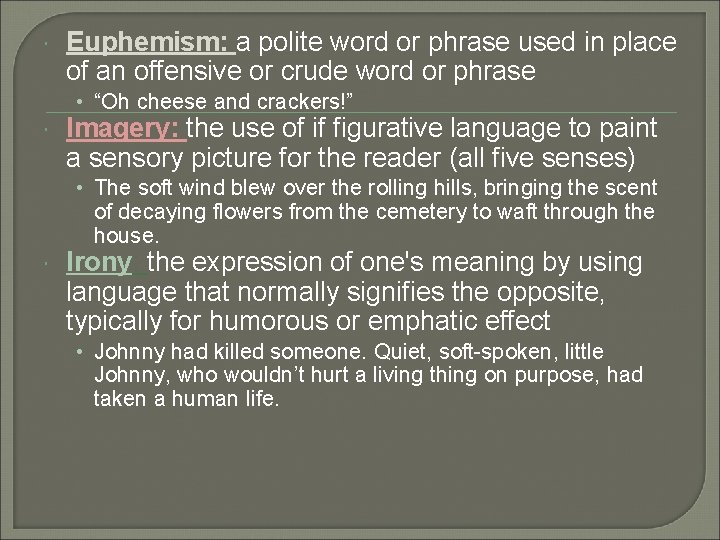
Euphemism: a polite word or phrase used in place of an offensive or crude word or phrase • “Oh cheese and crackers!” Imagery: the use of if figurative language to paint a sensory picture for the reader (all five senses) • The soft wind blew over the rolling hills, bringing the scent of decaying flowers from the cemetery to waft through the house. Irony: the expression of one's meaning by using language that normally signifies the opposite, typically for humorous or emphatic effect • Johnny had killed someone. Quiet, soft-spoken, little Johnny, who wouldn’t hurt a living thing on purpose, had taken a human life.
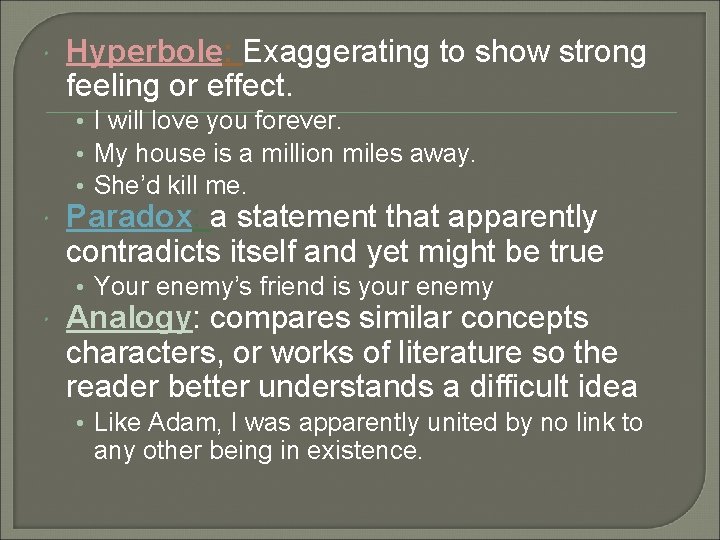
Hyperbole: Exaggerating to show strong feeling or effect. • I will love you forever. • My house is a million miles away. • She’d kill me. Paradox: a statement that apparently contradicts itself and yet might be true • Your enemy’s friend is your enemy Analogy: compares similar concepts characters, or works of literature so the reader better understands a difficult idea • Like Adam, I was apparently united by no link to any other being in existence.