
Figurative Language Figurative Language The opposite of literal

- Slides: 25
Figurative Language
Figurative Language The opposite of literal language is figurative language. Figurative language is language that means more than what it says on the surface. • A writers tool • It helps the reader to visualize (see) what the writer is thinking – It puts a picture in the readers mind
What is figurative language? • Whenever you describe something by comparing it with something else, you are using figurative language.
Types of Figurative Language • • • Simile Metaphor Personification Alliteration Repetition Onomatopoeia Hyperbole Imagery Idioms
Simile a direct comparison between two unlike things usually using the words “like” or “as”
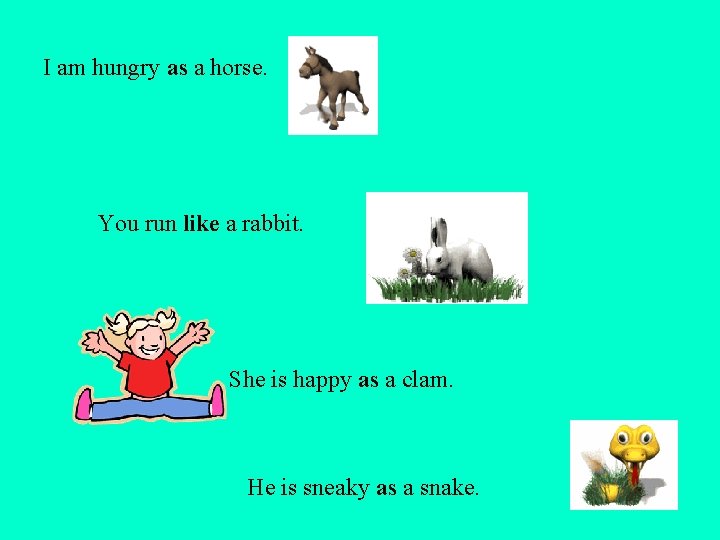
I am hungry as a horse. You run like a rabbit. She is happy as a clam. He is sneaky as a snake.
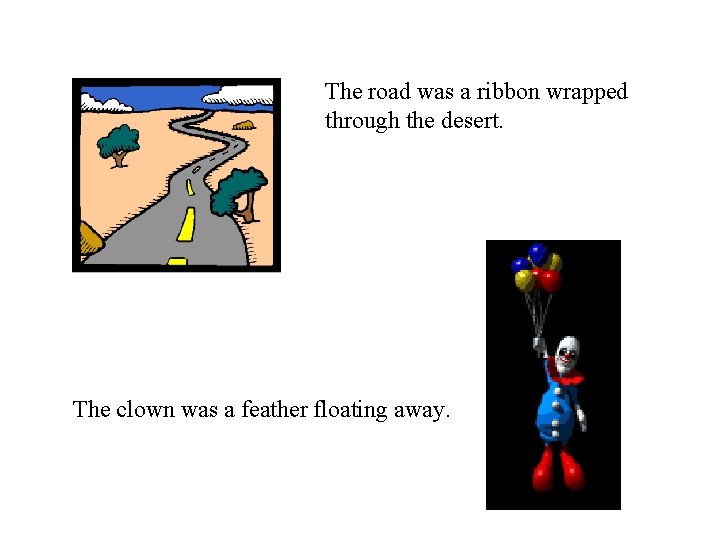
The road was a ribbon wrapped through the desert. The clown was a feather floating away.
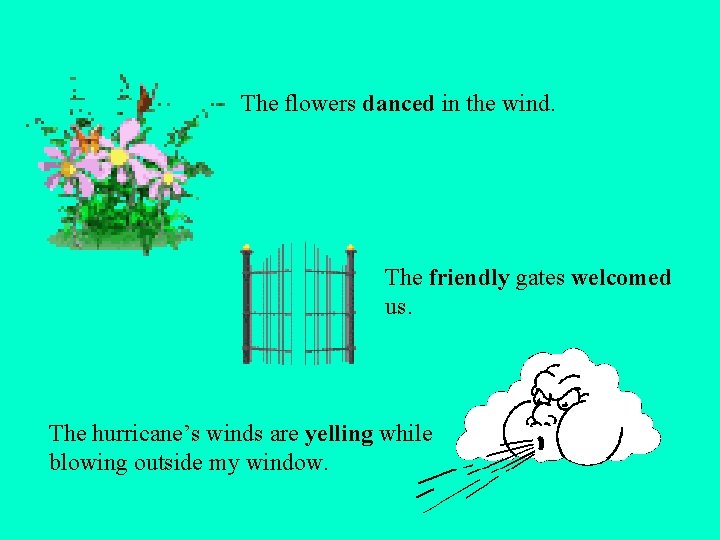
The flowers danced in the wind. The friendly gates welcomed us. The hurricane’s winds are yelling while blowing outside my window.
Alliteration (continued) Alliteration: when the first sounds in words repeat. Example Peter Piper picked a pickled pepper. We lurk late. We shoot straight.
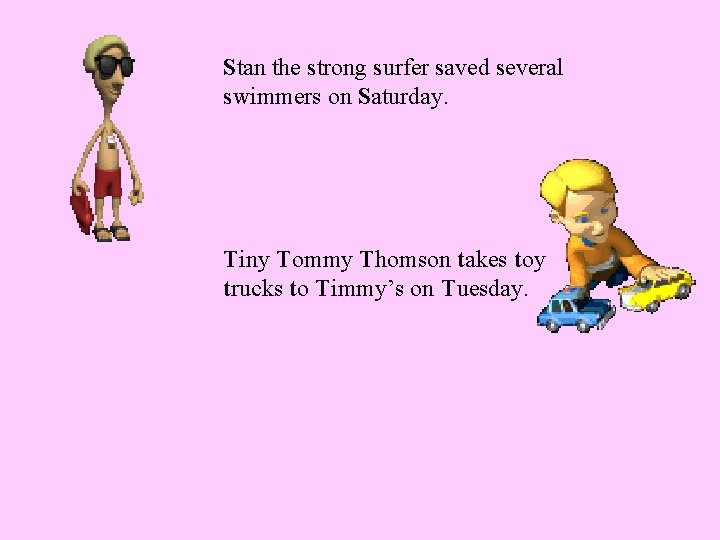
Stan the strong surfer saved several swimmers on Saturday. Tiny Tommy Thomson takes toy trucks to Timmy’s on Tuesday.
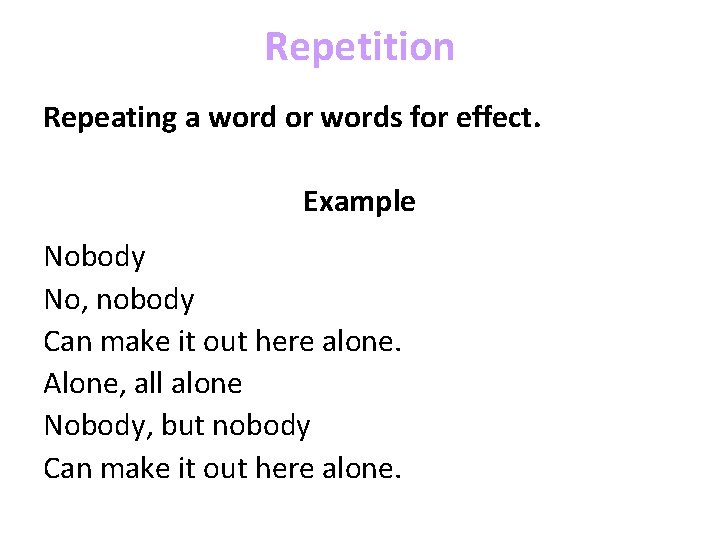
Repetition Repeating a word or words for effect. Example Nobody No, nobody Can make it out here alone. Alone, all alone Nobody, but nobody Can make it out here alone.
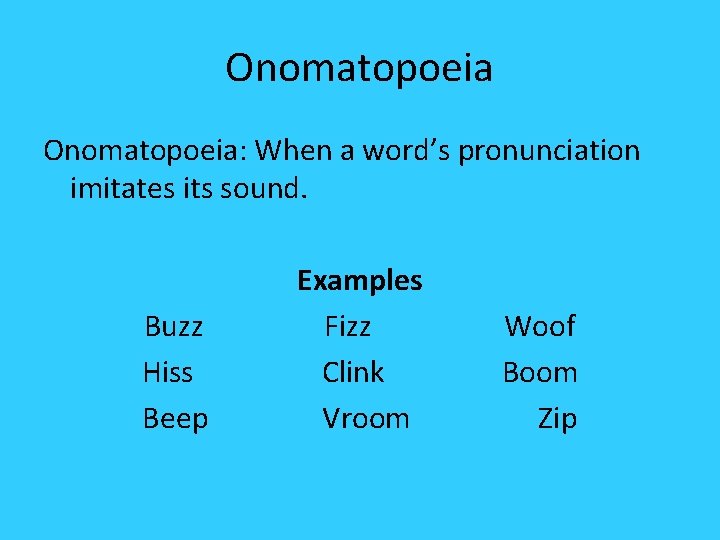
Onomatopoeia: When a word’s pronunciation imitates its sound. Buzz Hiss Beep Examples Fizz Clink Vroom Woof Boom Zip
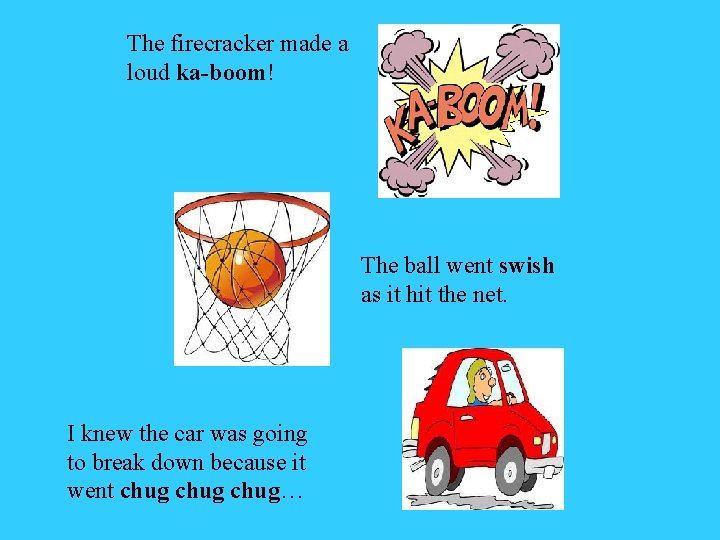
The firecracker made a loud ka-boom! The ball went swish as it hit the net. I knew the car was going to break down because it went chug…
Hyperbole • An exaggerated statement used to heighten effect. It is not used to mislead the reader, but to emphasize a point. Example: She’s said so on several million occasions.
Imagery • Language that appeals to the senses. Descriptions of people or objects stated in terms of our senses. • Sight • Hearing • Touch • Taste • Smell
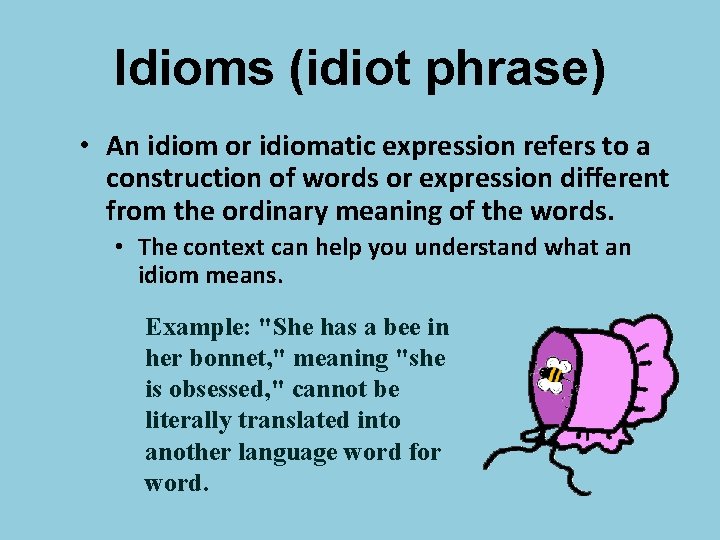
Idioms (idiot phrase) • An idiom or idiomatic expression refers to a construction of words or expression different from the ordinary meaning of the words. • The context can help you understand what an idiom means. Example: "She has a bee in her bonnet, " meaning "she is obsessed, " cannot be literally translated into another language word for word.
Idioms (continued) • An expression that carries a different meaning because of the context in which it is used – “slang” terms Examples “Up the creek without a paddle” “On top of the world” “Fingers crossed” “Shake a leg” or “Break a leg” “Put a lid on it” “It’s raining cats and dogs”
Irony • When a speaker intends something entirely different than what is said – Say it one way, but “secretly” mean it the opposite way • An outcome that is not expected. Something that is not supposed to happen Example An old man turns 98, he wins the lottery and dies the next day. It’s like rain on your wedding day,
OXYMORON • 2 things that contradict each other • Opposites • Examples: – The Walking Dead – The Great Depression – Jumbo Shrimp – Run Slowly – Original Copy
Figurative Language Resources • • • Eye on Idioms (Online PPT) Paint by Idioms (Game) Alliteration or Simile? (Quiz) Similes and Metaphors (PPT) The Search for Similes, Metaphors, and Idioms (PPT) Alliteration (PPT) Onomatopoeia (PPT) Personification (PPT) Hyperbole (PPT) Idioms (PPT) Simile (PPT)
Teaching Similes and Metaphors • Alliteration Lesson Plan and Resources http: //volweb. utk. edu/Schools/bedford/harrisms/1 allitera. htm • Hyperbole- Lesson Plans and Resources http: //volweb. utk. edu/Schools/bedford/harrisms/10 lesson. htm • Idiom Lesson Plan http: //volweb. utk. edu/Schools/bedford/harrisms/6 lesson. htm • Imagery- Lesson Plans and Resources http: //volweb. utk. edu/Schools/bedford/harrisms/imagery 2. htm • Lesson Plan for Puns http: //volweb. utk. edu/Schools/bedford/harrisms/5 lesson. htm • Onomatopoeia- Lesson Plans and Resources http: //volweb. utk. edu/Schools/bedford/harrisms/9 lesson. htm • Personification Lesson Plans and Resources http: //volweb. utk. edu/Schools/bedford/harrisms/7 lesson. htm • Proverbs- Lesson Plans and Resources http: //volweb. utk. edu/Schools/bedford/harrisms/proverbs 2. htm