
Figurative Language Dont be an oxymoron know your
Figurative Language Don’t be an oxymoron… know your literary terms!!
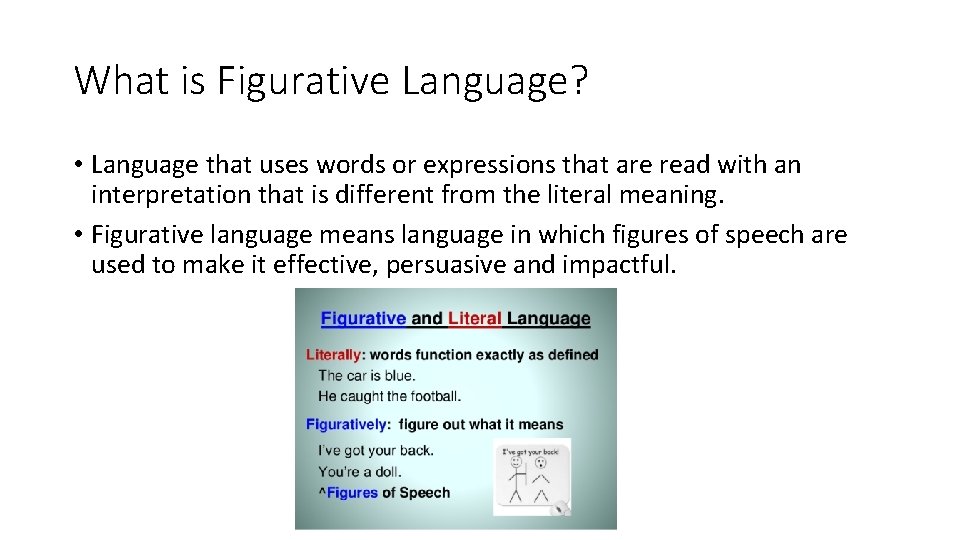
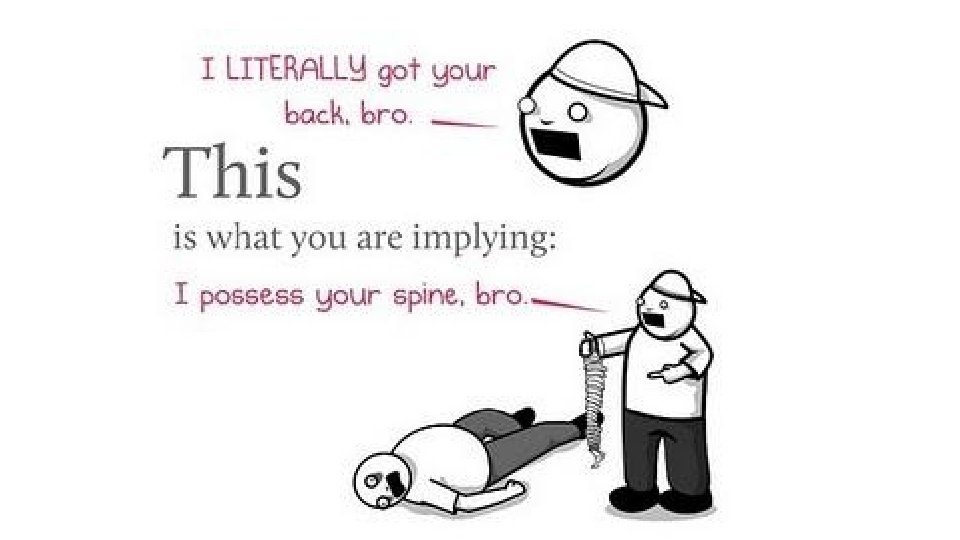
What is Figurative Language? • Language that uses words or expressions that are read with an interpretation that is different from the literal meaning. • Figurative language means language in which figures of speech are used to make it effective, persuasive and impactful.
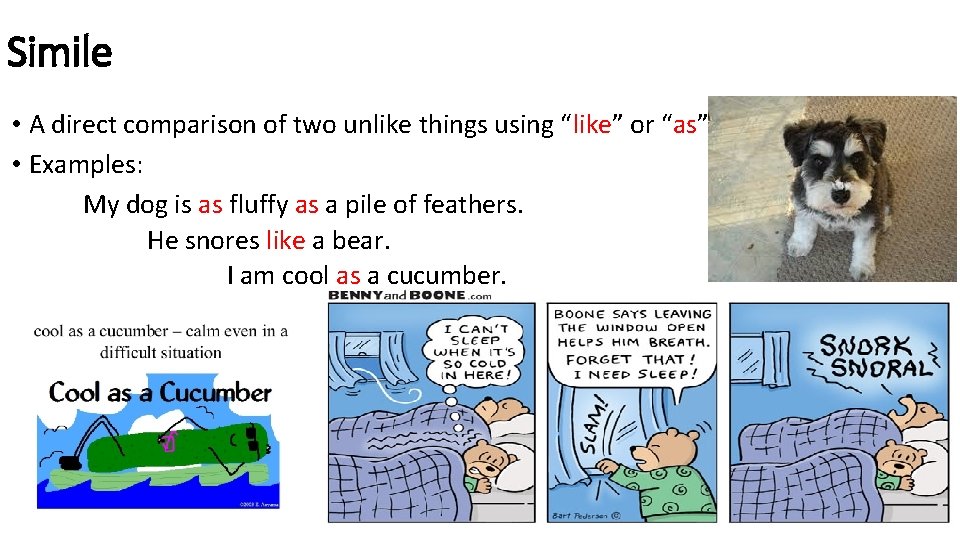
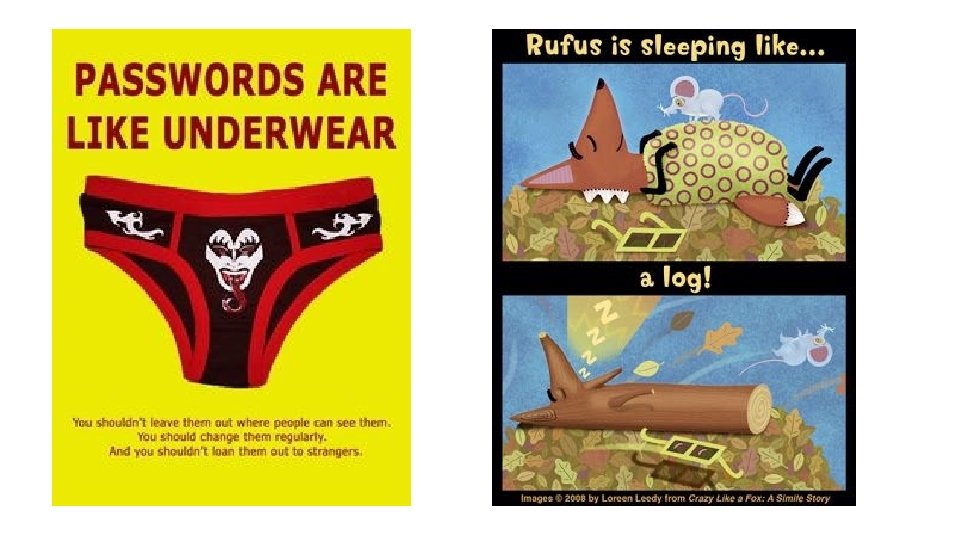
Simile • A direct comparison of two unlike things using “like” or “as” • Examples: My dog is as fluffy as a pile of feathers. He snores like a bear. I am cool as a cucumber.
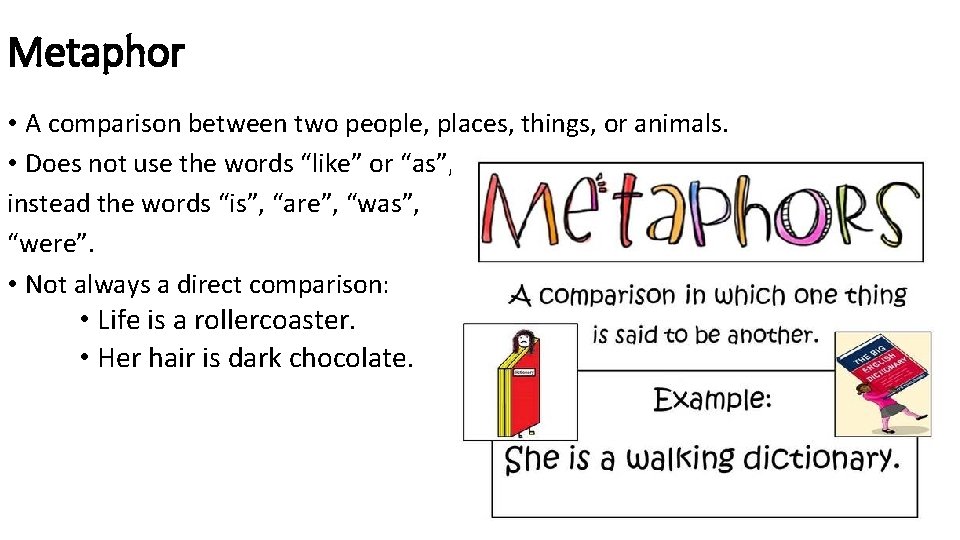
Metaphor • A comparison between two people, places, things, or animals. • Does not use the words “like” or “as”, instead the words “is”, “are”, “was”, “were”. • Not always a direct comparison: • Life is a rollercoaster. • Her hair is dark chocolate.

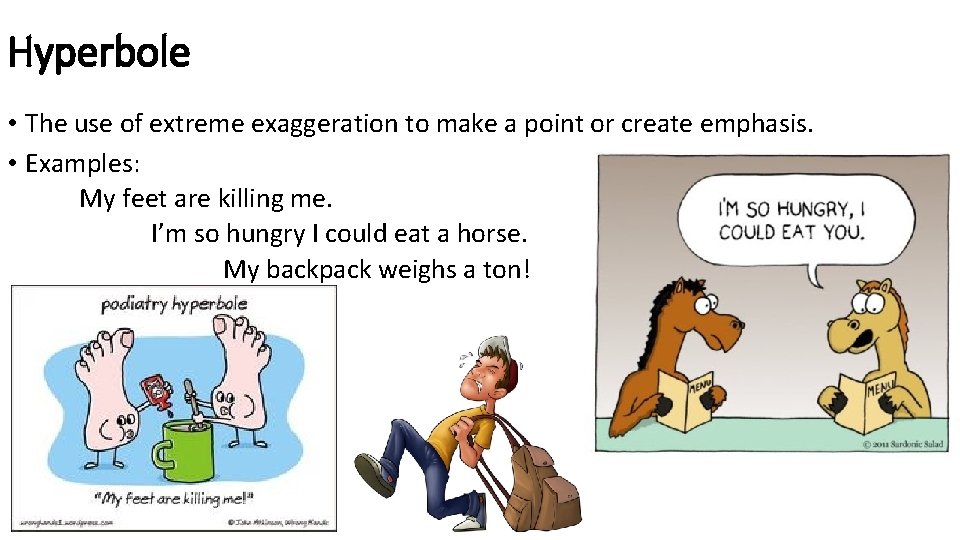
Hyperbole • The use of extreme exaggeration to make a point or create emphasis. • Examples: My feet are killing me. I’m so hungry I could eat a horse. My backpack weighs a ton!
Alliteration • Repetition of the first sound in a series of multiple words. • Examples: Little Lulu likes little loopy laces. Frank fought ferociously. Farhana phoned France from her flight. Daniel Radcliffe: Alphabet Aerobics https: //www. youtube. com/watch? v=a. Kd. V 5 Fv. XLu. I (start at 1: 00)
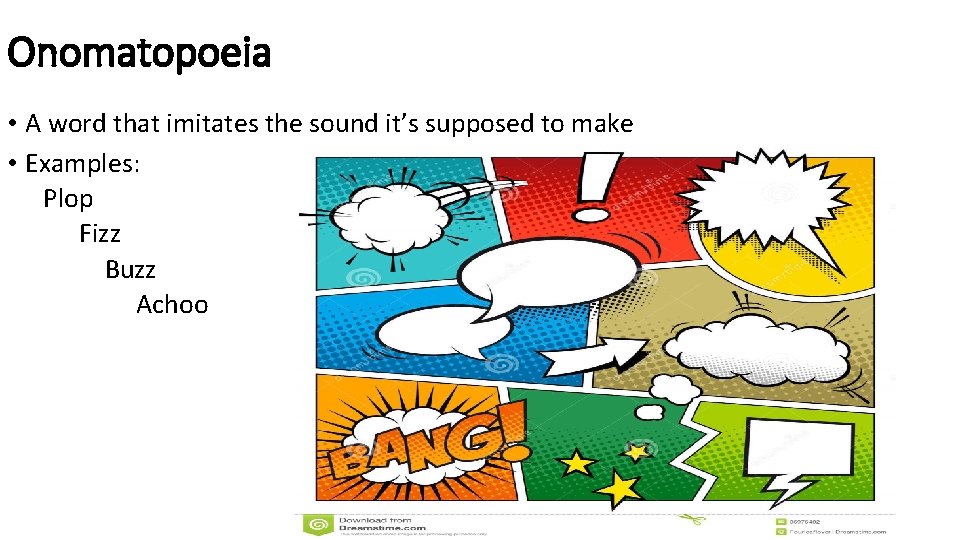
Onomatopoeia • A word that imitates the sound it’s supposed to make • Examples: Plop Fizz Buzz Achoo
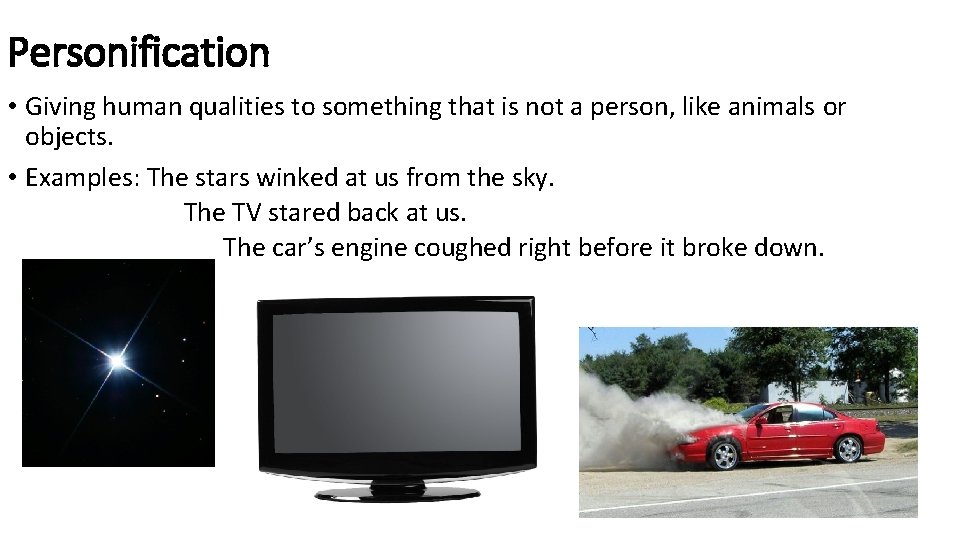
Personification • Giving human qualities to something that is not a person, like animals or objects. • Examples: The stars winked at us from the sky. The TV stared back at us. The car’s engine coughed right before it broke down.
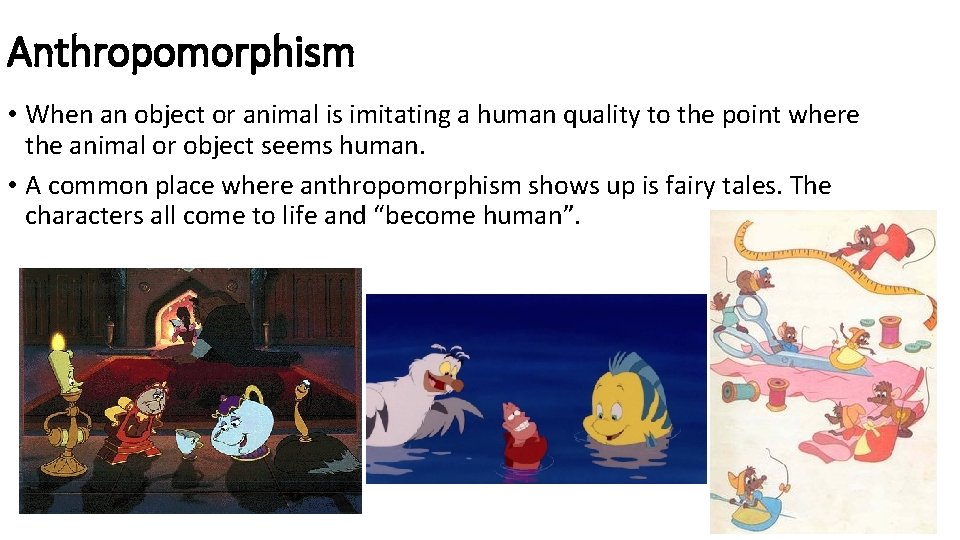
Anthropomorphism • When an object or animal is imitating a human quality to the point where the animal or object seems human. • A common place where anthropomorphism shows up is fairy tales. The characters all come to life and “become human”.
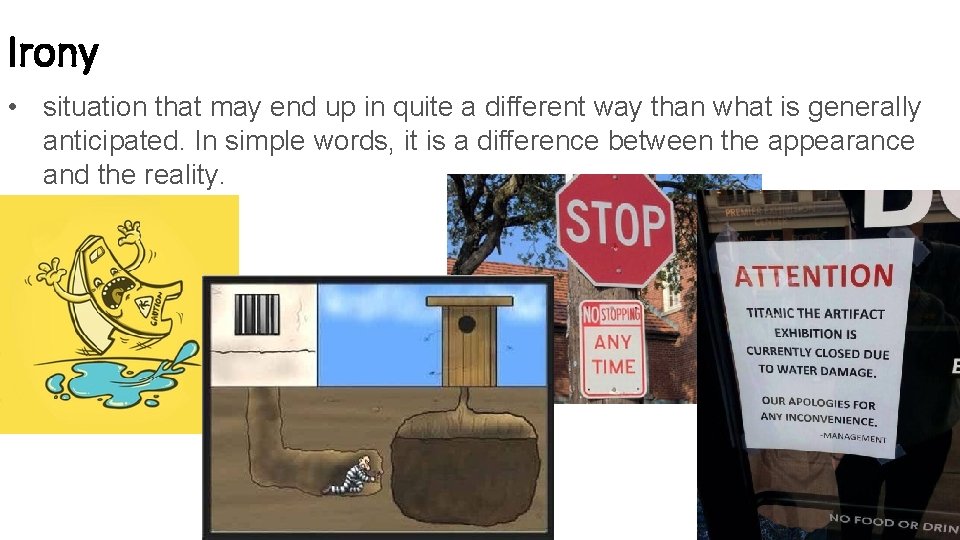
Irony • situation that may end up in quite a different way than what is generally anticipated. In simple words, it is a difference between the appearance and the reality.
Where’s the irony? Remember Archduke of Austria Franz Ferdinand? No? Well he's the guy who got shot and then World War I happened. Yep. Moving right along. He and his wife were touring Sarajevo when a group of assassins tried to bomb his cavalcade. The bomb bounced off and rolled under another car, but Ferdinand freaked and insisted they deviate from their planned route. Because of this change, his driver got lost, and they wound up right outside a deli where the final assassin, after learning about the unsuccessful plot, went to drown his sorrows at the bottom of a sandwich. The assassin stepped out of the deli, saw the car, and killed Ferdinand with the "shot heard 'round the world. "
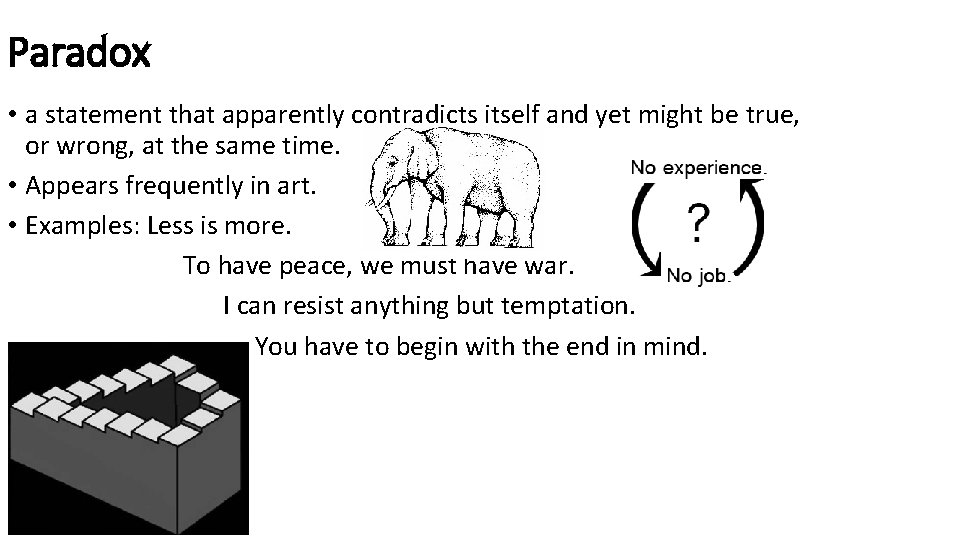
Paradox • a statement that apparently contradicts itself and yet might be true, or wrong, at the same time. • Appears frequently in art. • Examples: Less is more. To have peace, we must have war. I can resist anything but temptation. You have to begin with the end in mind.
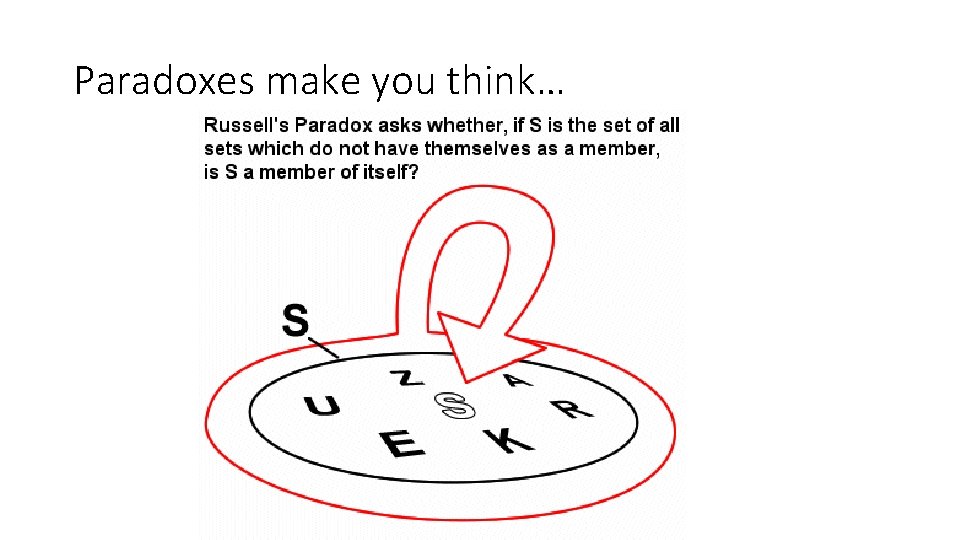
Paradoxes make you think…
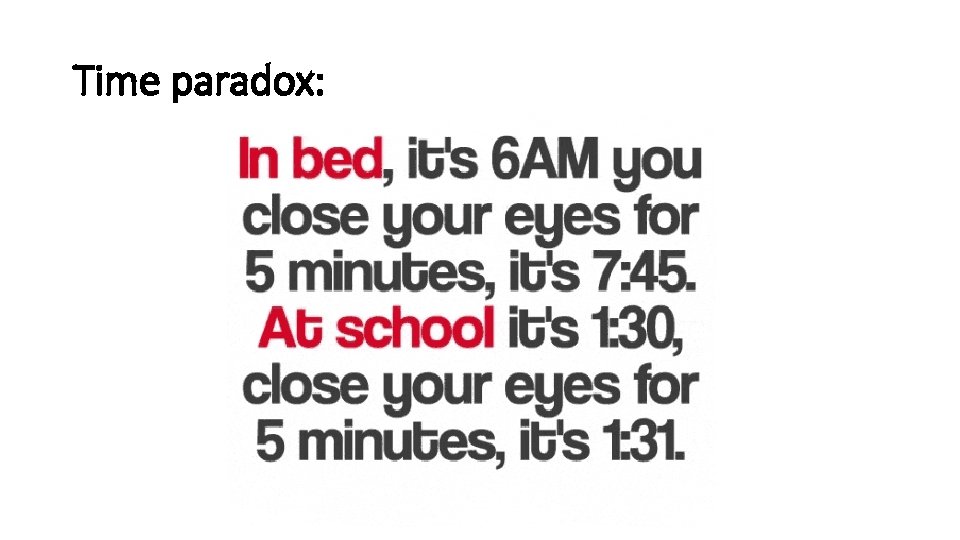
Time paradox:
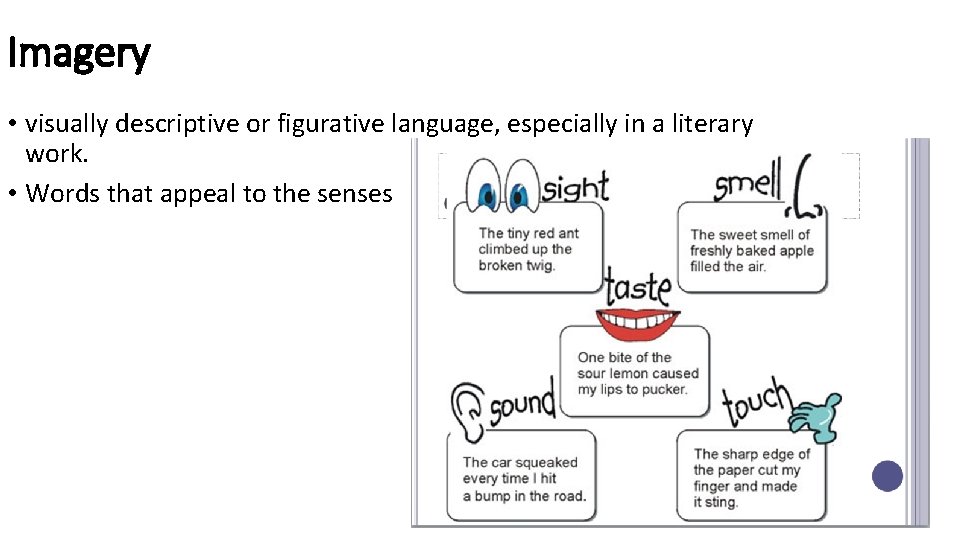
Imagery • visually descriptive or figurative language, especially in a literary work. • Words that appeal to the senses
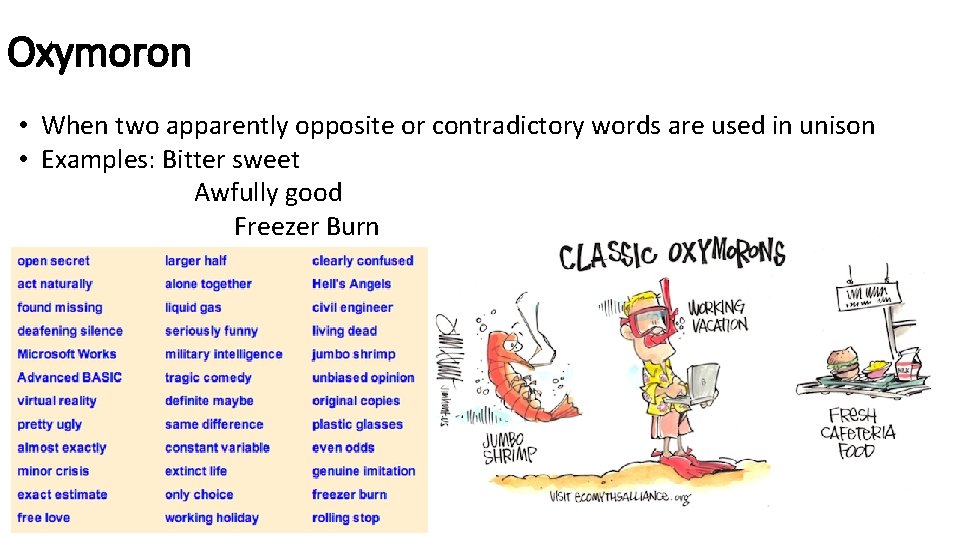
Oxymoron • When two apparently opposite or contradictory words are used in unison • Examples: Bitter sweet Awfully good Freezer Burn
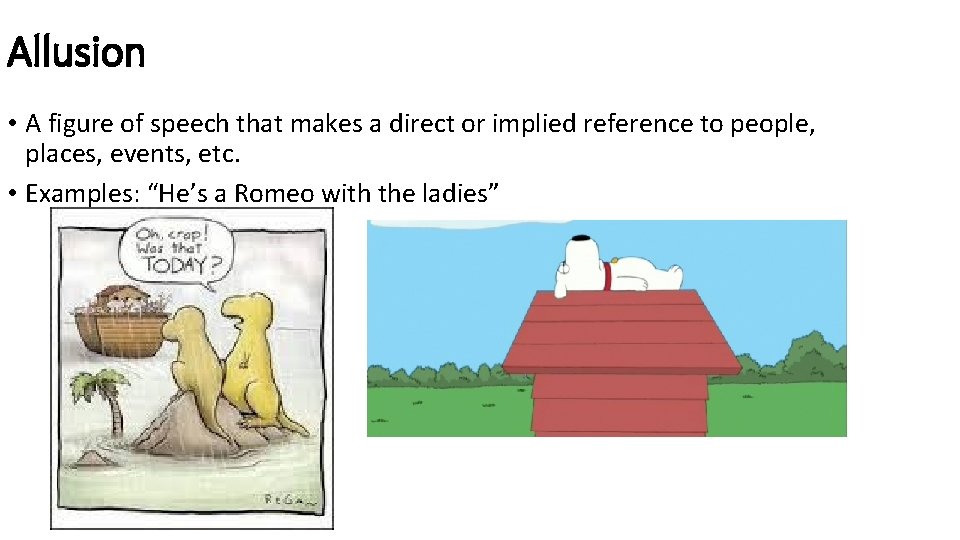
Allusion • A figure of speech that makes a direct or implied reference to people, places, events, etc. • Examples: “He’s a Romeo with the ladies”
Idiom • https: //www. youtube. com/watch? v=6 l 64 Ep. Gmwyc • an expression that cannot be understood from the meanings of its separate words but that has a separate meaning of its own. Can’t be taken literally. • Differs in each language so if you try to translate an idiom to another language it won’t carry the same meaning because it would translate the words literally. • Examples: A little bird told me (someone who wants to stay anonymous has told you a secret) A pain in the neck (someone who’s annoying) Piece of cake (something easy) When pigs fly (something impossible or highly improbable) Be my guest (go ahead) Meet me halfway (compromise with me)
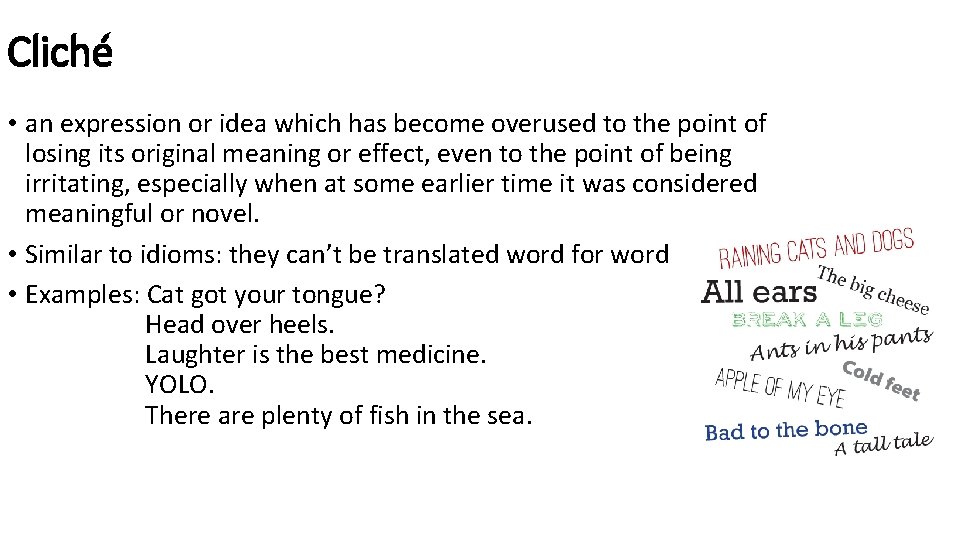
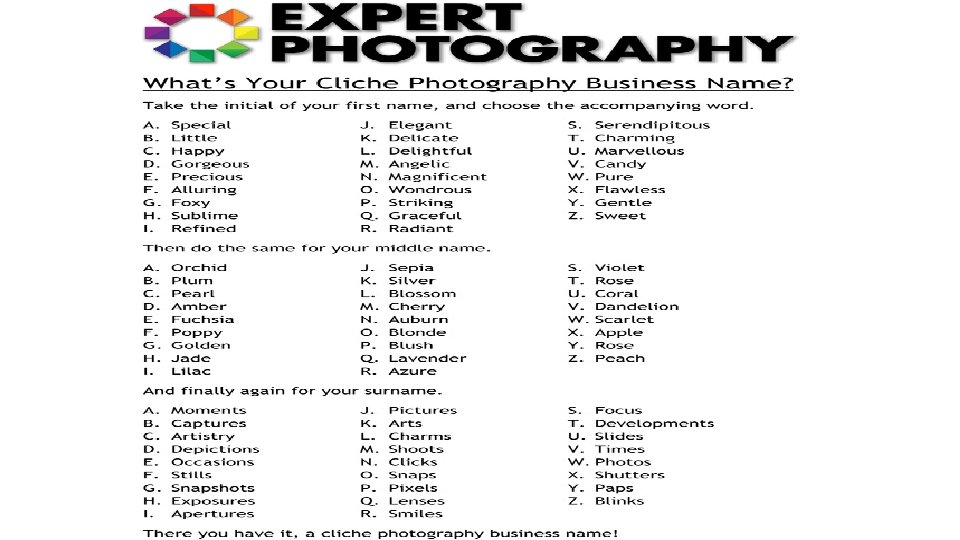
Cliché • an expression or idea which has become overused to the point of losing its original meaning or effect, even to the point of being irritating, especially when at some earlier time it was considered meaningful or novel. • Similar to idioms: they can’t be translated word for word • Examples: Cat got your tongue? Head over heels. Laughter is the best medicine. YOLO. There are plenty of fish in the sea.
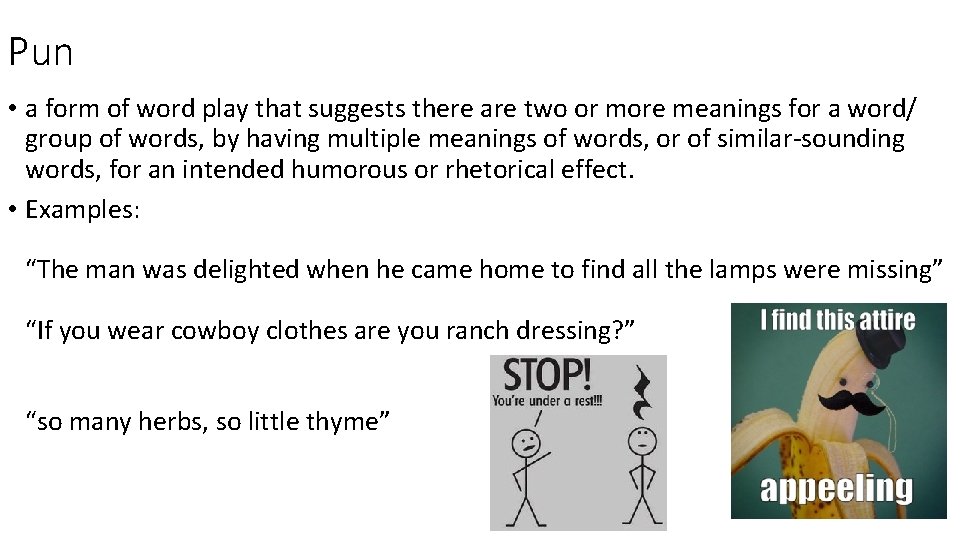
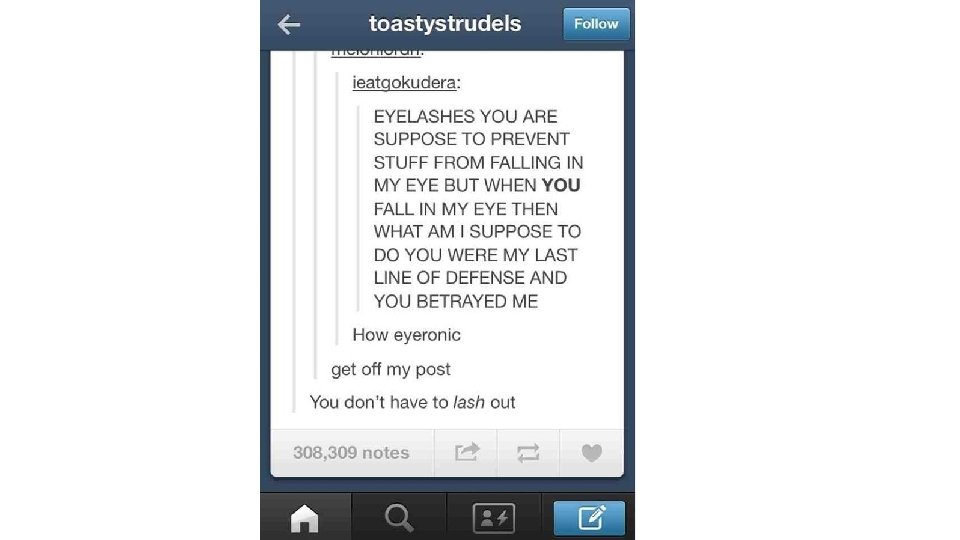
Pun • a form of word play that suggests there are two or more meanings for a word/ group of words, by having multiple meanings of words, or of similar-sounding words, for an intended humorous or rhetorical effect. • Examples: “The man was delighted when he came home to find all the lamps were missing” “If you wear cowboy clothes are you ranch dressing? ” “so many herbs, so little thyme”
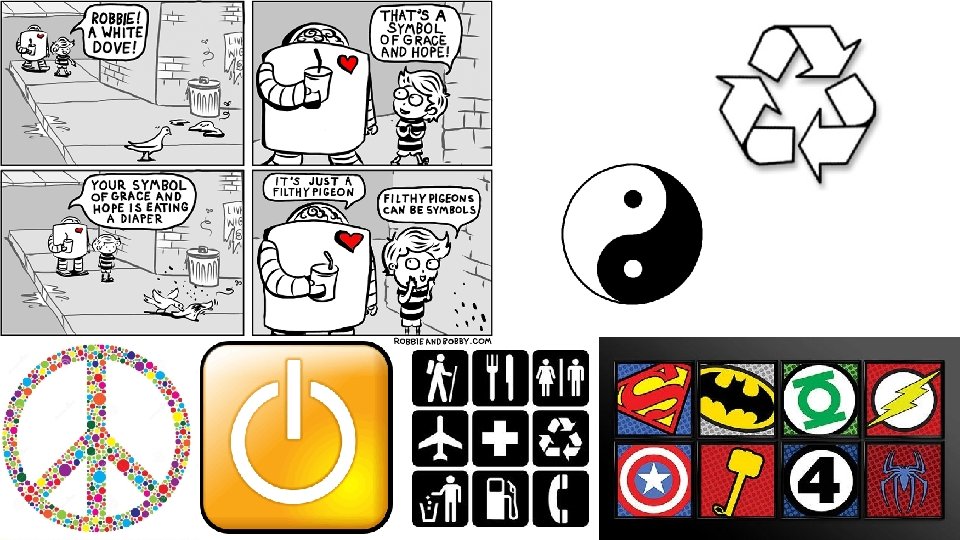
Symbolism • the practice of representing things by symbols, or of investing things with a symbolic meaning or character. • The use of symbols to signify ideas and qualities by giving them symbolic meanings that are different from their literal sense. • Examples where symbolism is found: colors: White symbolizes peace everyday objects: mirror symbolizes vanity, broken mirror symbolizes bad luck flowers: Roses symbolize romance animals: Dove represents peace foods: apples can symbolize education, teachers, or sin (Snow White) numbers: 3, 13, 7

The Porcelain Unicorn • https: //www. youtube. com/watch? v=h. RMc. PJr. Wm-g
Word Crimes – “Weird Al” Yankovic • https: //www. youtube. com/watch? v=8 Gv 0 H-v. Po. Dc

Review!! • Speed dating activity
- Slides: 34