
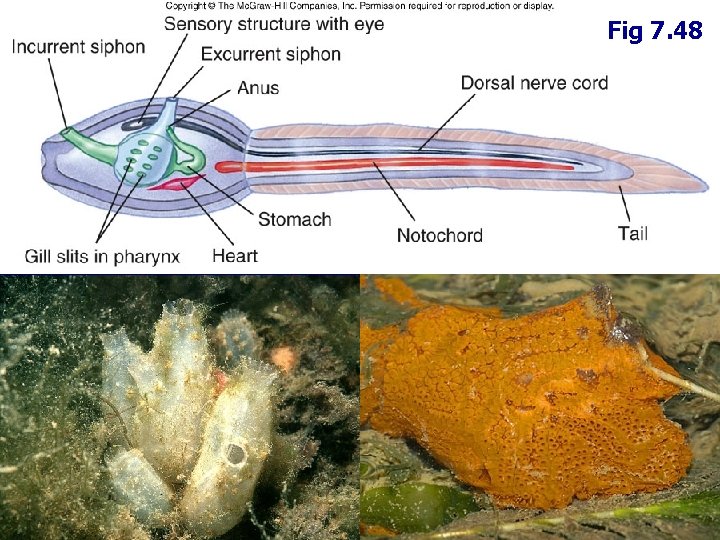
Fig 7 48 I Chordata A Urochordata Tunicates
- Slides: 15
Fig 7. 48
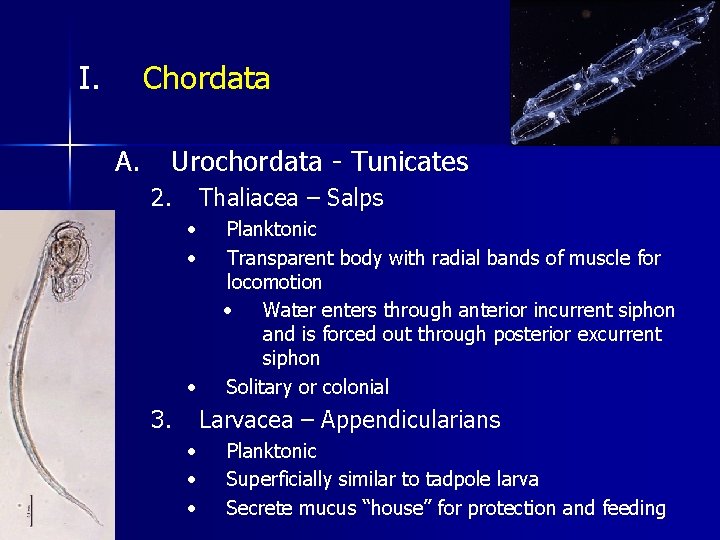
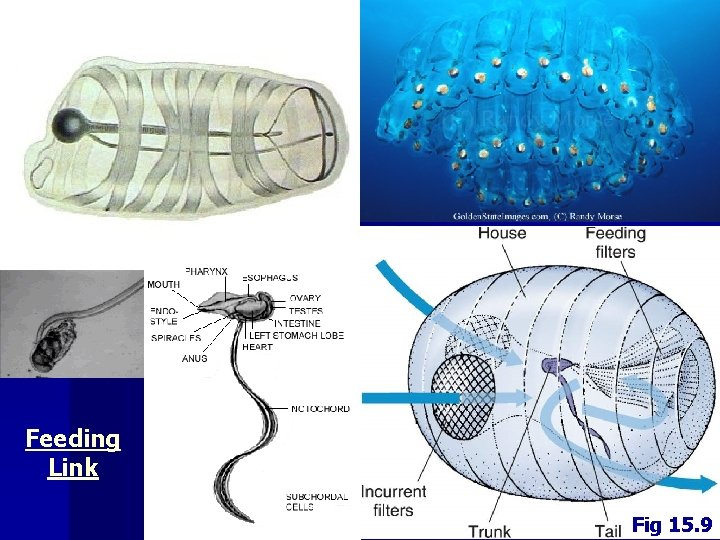
I. Chordata A. Urochordata - Tunicates 2. Thaliacea – Salps • • • 3. Planktonic Transparent body with radial bands of muscle for locomotion • Water enters through anterior incurrent siphon and is forced out through posterior excurrent siphon Solitary or colonial Larvacea – Appendicularians • • • Planktonic Superficially similar to tadpole larva Secrete mucus “house” for protection and feeding
Feeding Link Fig 15. 9
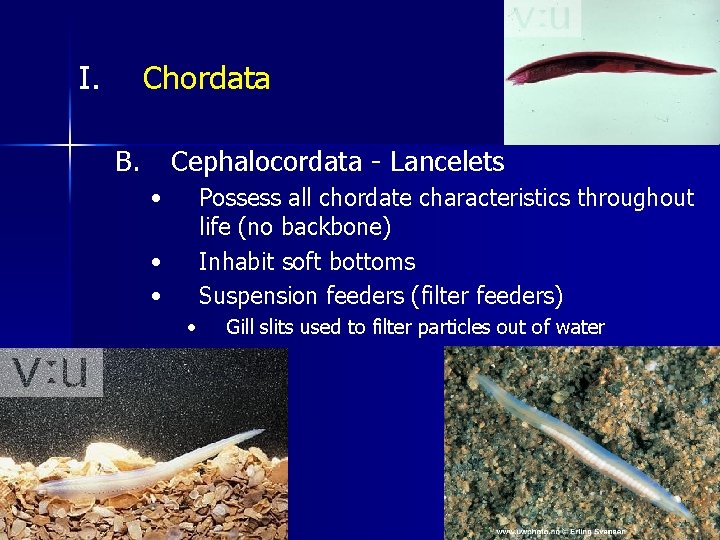
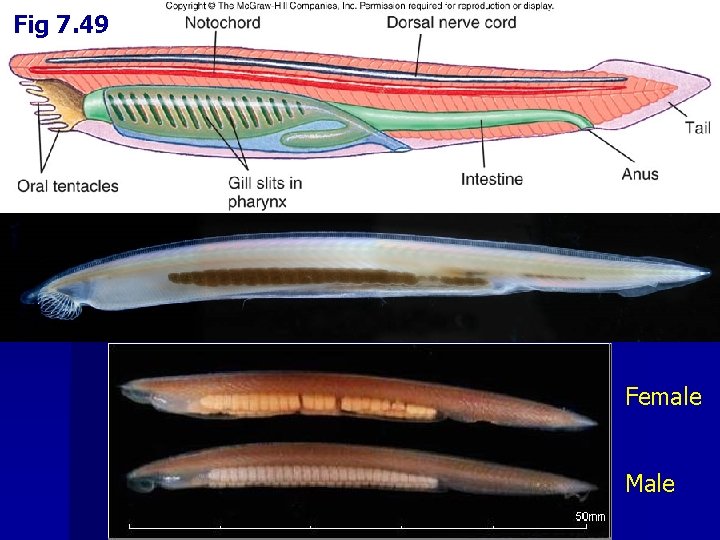
I. Chordata B. Cephalocordata - Lancelets • Possess all chordate characteristics throughout life (no backbone) Inhabit soft bottoms Suspension feeders (filter feeders) • • • Gill slits used to filter particles out of water
Fig 7. 49 Female Male
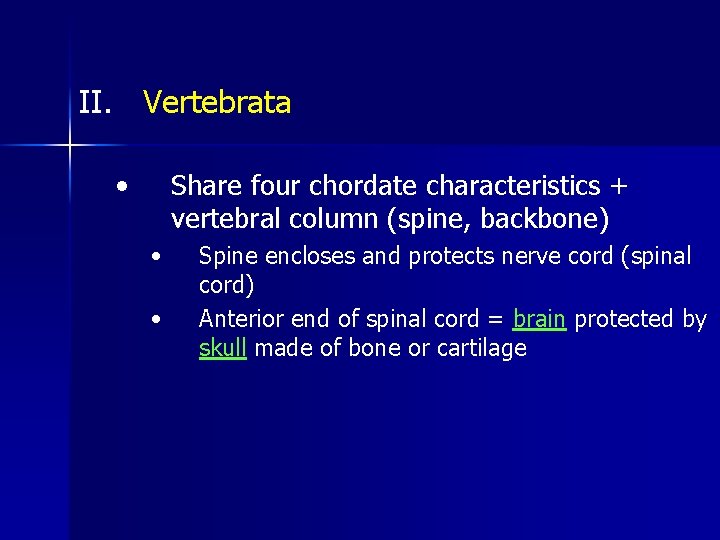
II. Vertebrata • Share four chordate characteristics + vertebral column (spine, backbone) • • Spine encloses and protects nerve cord (spinal cord) Anterior end of spinal cord = brain protected by skull made of bone or cartilage
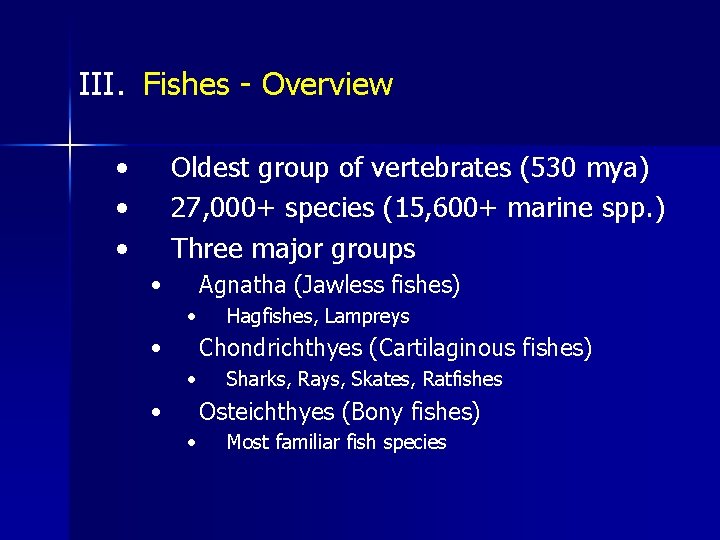
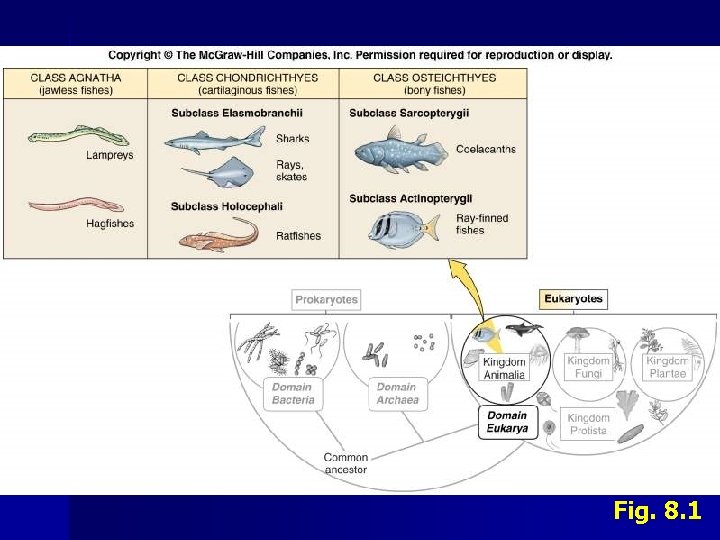
III. Fishes - Overview • • • Oldest group of vertebrates (530 mya) 27, 000+ species (15, 600+ marine spp. ) Three major groups • Agnatha (Jawless fishes) • • Hagfishes, Lampreys Chondrichthyes (Cartilaginous fishes) • • Sharks, Rays, Skates, Ratfishes Osteichthyes (Bony fishes) • Most familiar fish species
Fig. 8. 1
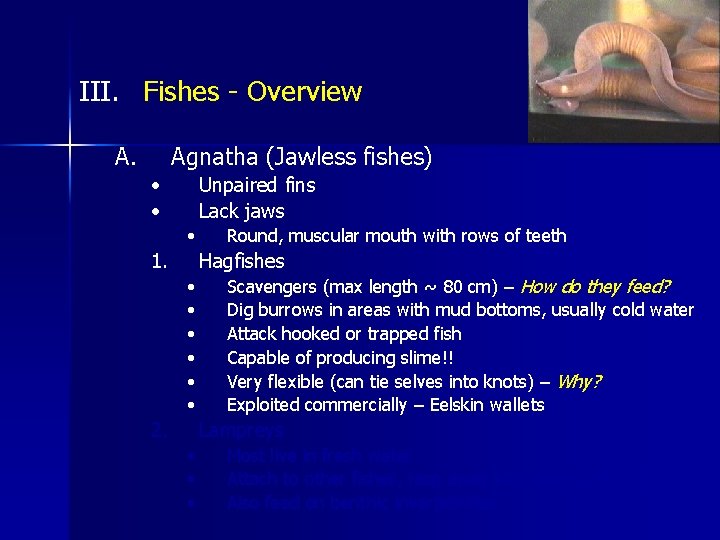
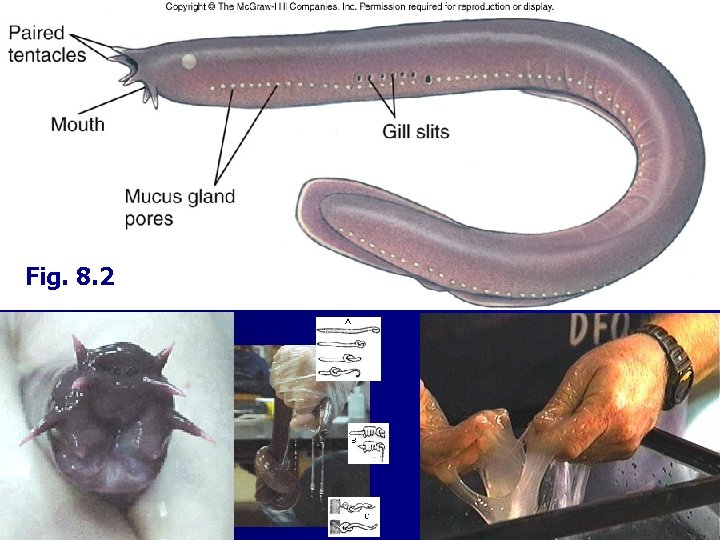
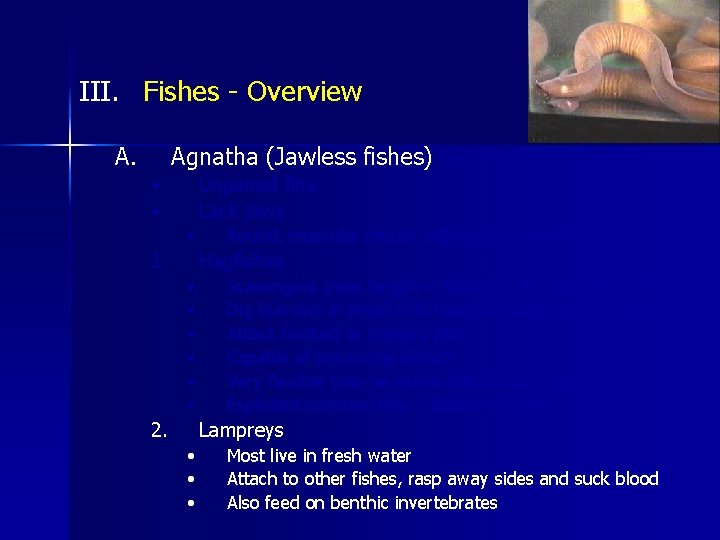
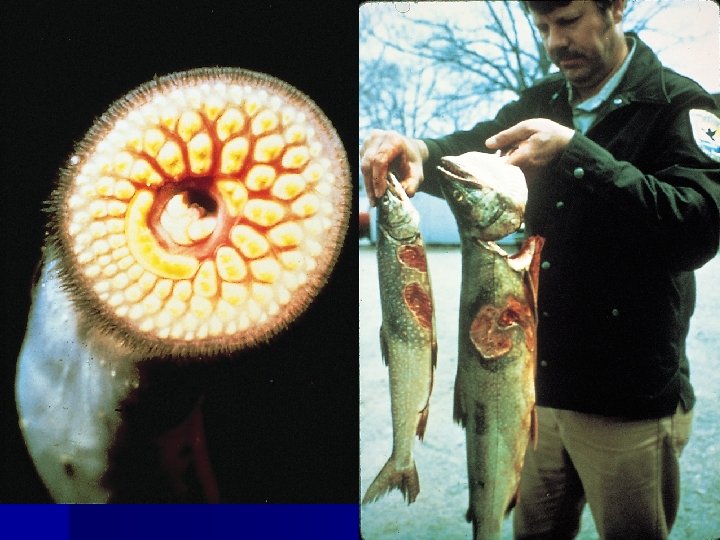
III. Fishes - Overview A. Agnatha (Jawless fishes) • • Unpaired fins Lack jaws • 1. Round, muscular mouth with rows of teeth Hagfishes • • • 2. Scavengers (max length ~ 80 cm) – How do they feed? Dig burrows in areas with mud bottoms, usually cold water Attack hooked or trapped fish Capable of producing slime!! Very flexible (can tie selves into knots) – Why? Exploited commercially – Eelskin wallets Lampreys • • • Most live in fresh water Attach to other fishes, rasp away sides and suck blood Also feed on benthic invertebrates
Fig. 8. 2
III. Fishes - Overview A. Agnatha (Jawless fishes) • • Unpaired fins Lack jaws • 1. Round, muscular mouth with rows of teeth Hagfishes • • • 2. Scavengers (max length ~ 80 cm) – How do they feed? Dig burrows in areas with mud bottoms, usually cold water Attack hooked or trapped fish Capable of producing slime!! Very flexible (can tie selves into knots) – Why? Exploited commercially – Eelskin wallets Lampreys • • • Most live in fresh water Attach to other fishes, rasp away sides and suck blood Also feed on benthic invertebrates
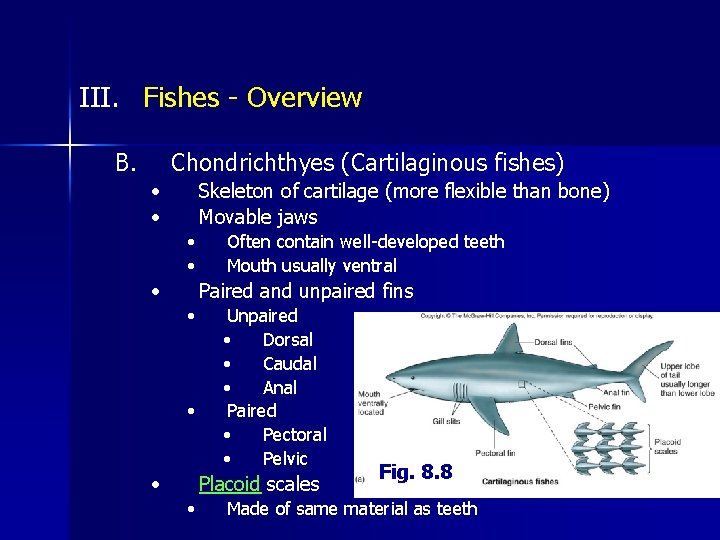
III. Fishes - Overview B. Chondrichthyes (Cartilaginous fishes) • • Skeleton of cartilage (more flexible than bone) Movable jaws • • • Often contain well-developed teeth Mouth usually ventral Paired and unpaired fins • • • Unpaired • Dorsal • Caudal • Anal Paired • Pectoral • Pelvic Placoid scales • Fig. 8. 8 Made of same material as teeth
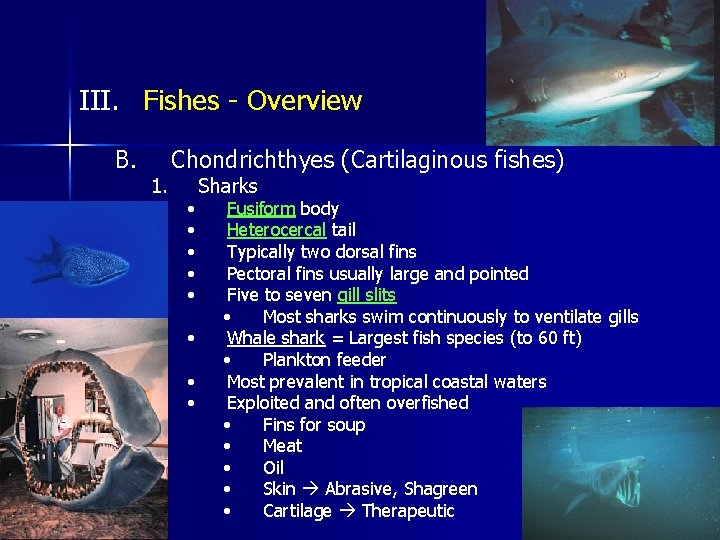
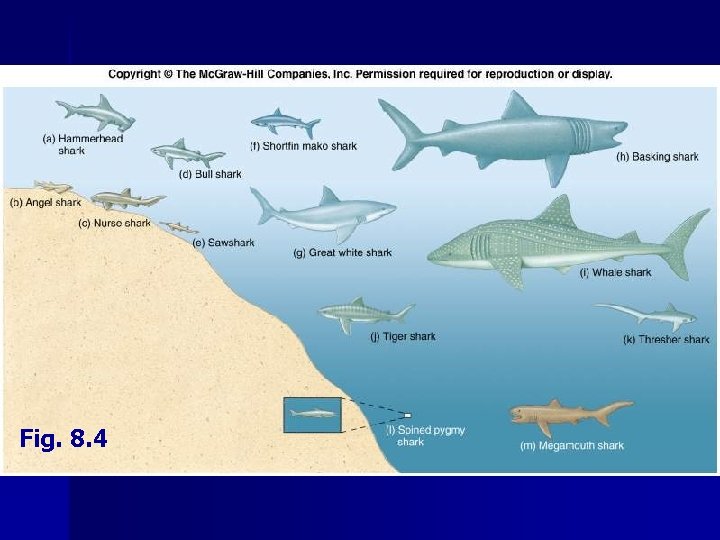
III. Fishes - Overview B. 1. Chondrichthyes (Cartilaginous fishes) • • Sharks Fusiform body Heterocercal tail Typically two dorsal fins Pectoral fins usually large and pointed Five to seven gill slits • Most sharks swim continuously to ventilate gills Whale shark = Largest fish species (to 60 ft) • Plankton feeder Most prevalent in tropical coastal waters Exploited and often overfished • Fins for soup • Meat • Oil • Skin Abrasive, Shagreen • Cartilage Therapeutic
Fig. 8. 4