
Fig 18 8 1 A Eukaryotic Gene Enhancer
- Slides: 29
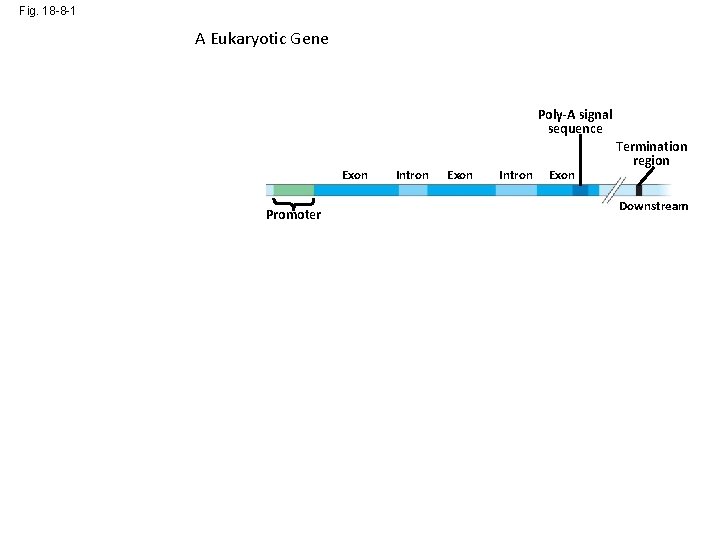
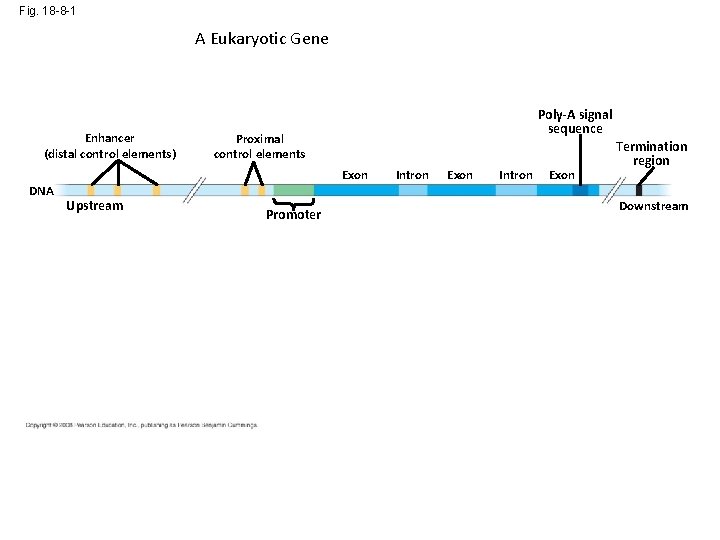
Fig. 18 -8 -1 A Eukaryotic Gene Enhancer (distal control elements) DNA Poly-A signal sequence Proximal control elements Exon Upstream Promoter Intron Exon Termination region Downstream
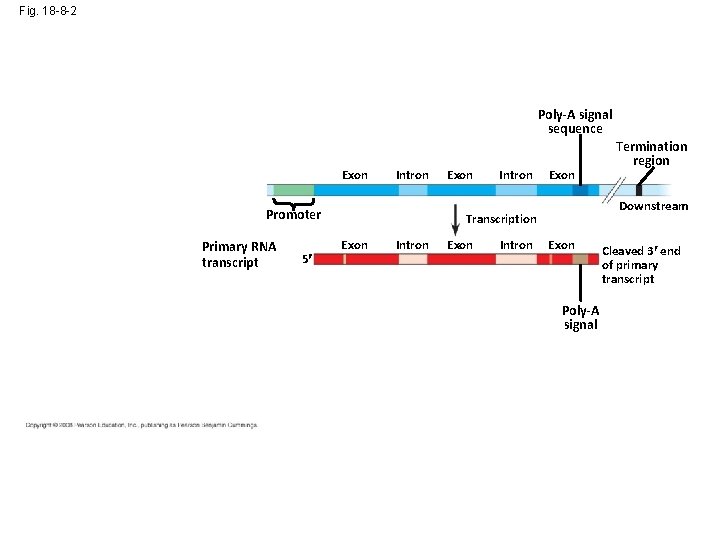
Fig. 18 -8 -2 Poly-A signal sequence Enhancer (distal control elements) DNA Exon Upstream Intron Promoter Primary RNA transcript 5 Exon Intron Exon Downstream Transcription Exon Intron Termination region Exon Poly-A signal Cleaved 3 end of primary transcript
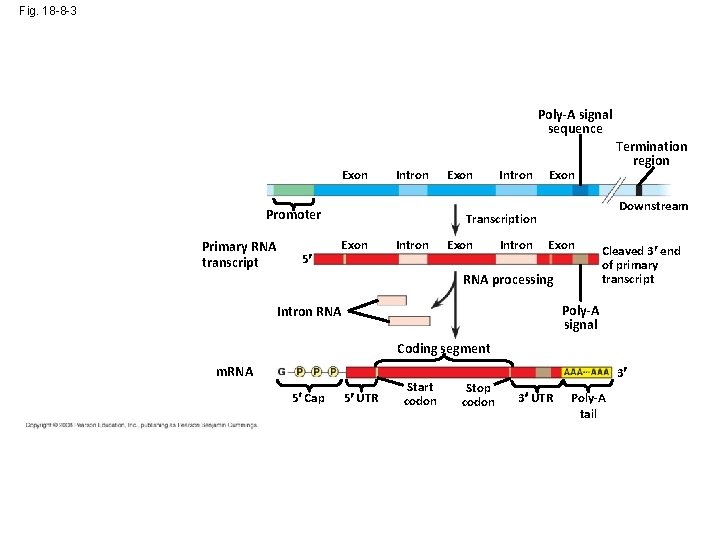
Fig. 18 -8 -3 Poly-A signal sequence Enhancer (distal control elements) DNA Exon Upstream Intron Promoter Primary RNA transcript 5 Exon Intron Termination region Exon Downstream Transcription Exon Intron Exon RNA processing Cleaved 3 end of primary transcript Poly-A signal Intron RNA Coding segment m. RNA 5 Cap 5 UTR Start codon Stop codon 3 3 UTR Poly-A tail
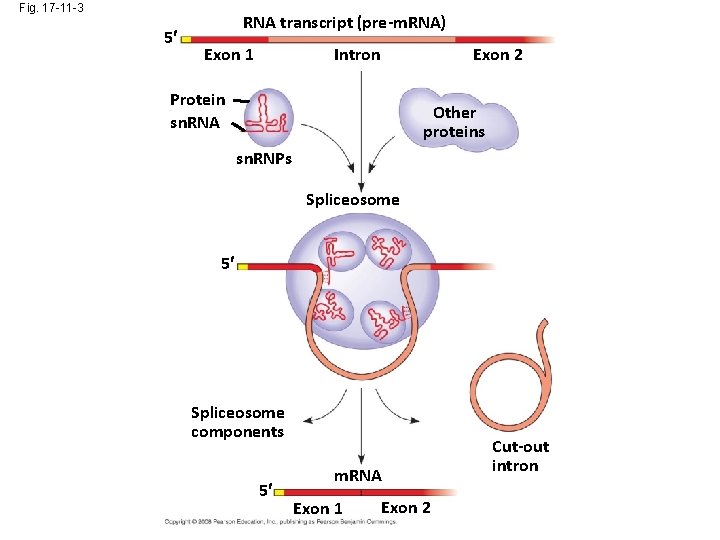
Fig. 17 -11 -3 5 RNA transcript (pre-m. RNA) Exon 1 Intron Exon 2 Protein sn. RNA Other proteins sn. RNPs Spliceosome 5 Spliceosome components 5 m. RNA Exon 1 Exon 2 Cut-out intron
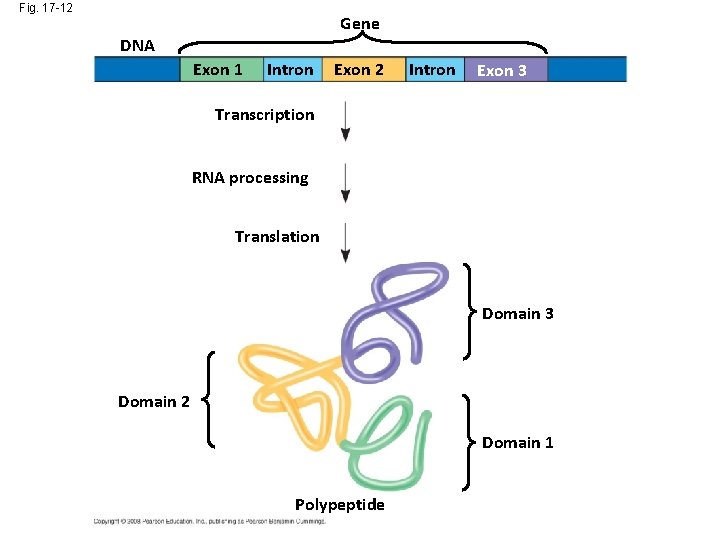
Fig. 17 -12 Gene DNA Exon 1 Intron Exon 2 Intron Exon 3 Transcription RNA processing Translation Domain 3 Domain 2 Domain 1 Polypeptide
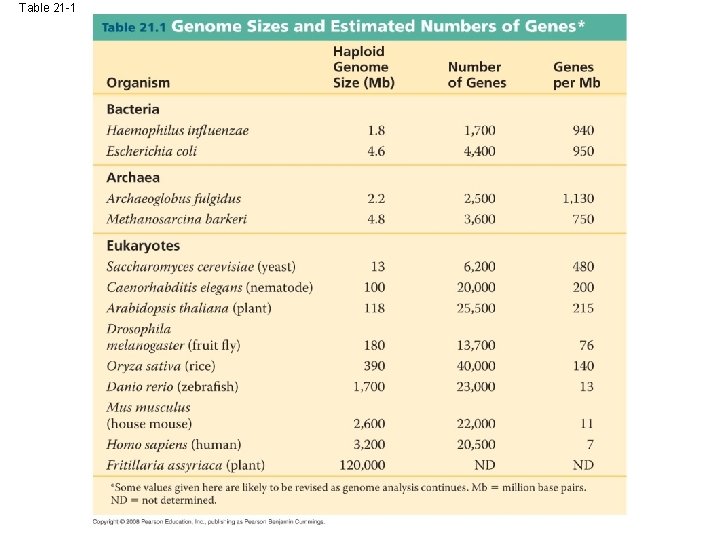
Table 21 -1
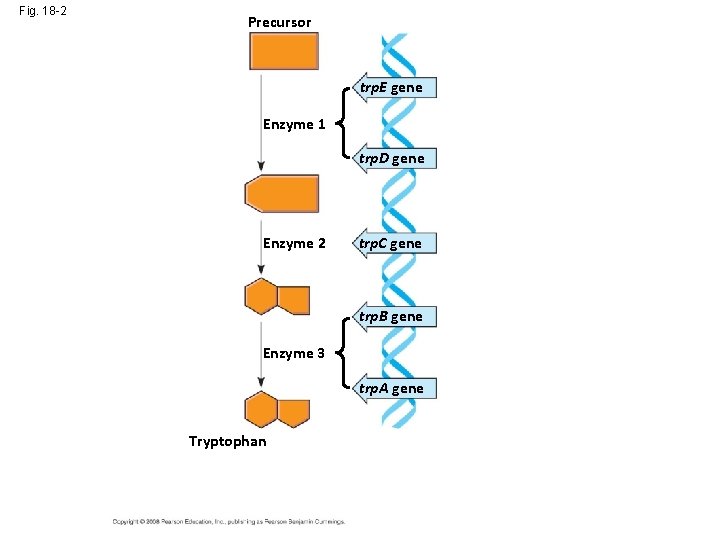
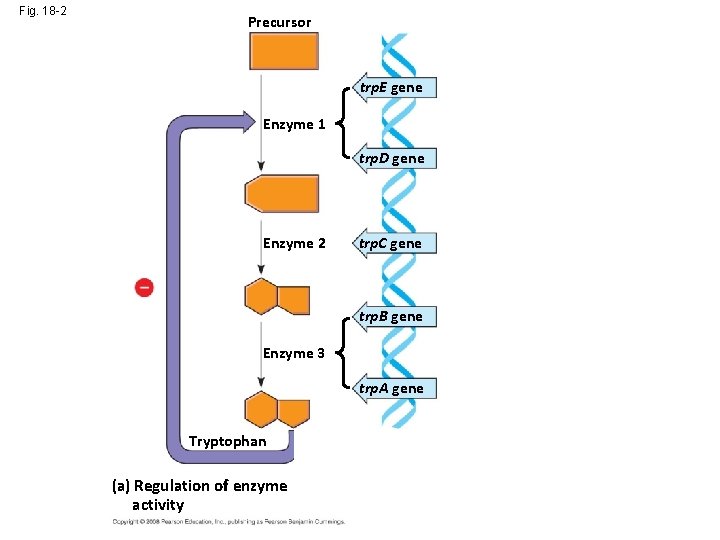
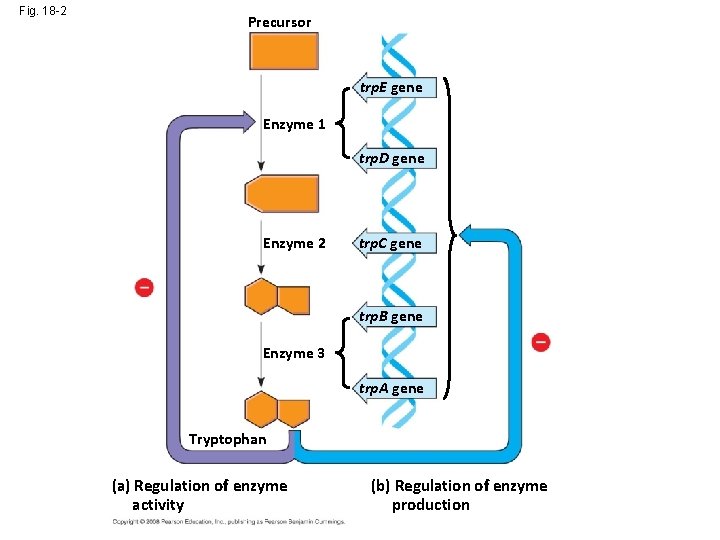
Fig. 18 -2 Precursor Feedback inhibition trp. E gene Enzyme 1 trp. D gene Regulation of gene expression Enzyme 2 trp. C gene trp. B gene Enzyme 3 trp. A gene Tryptophan (a) Regulation of enzyme activity (b) Regulation of enzyme production
Fig. 18 -2 Precursor trp. E gene Enzyme 1 trp. D gene Regulation of gene expression Enzyme 2 trp. C gene trp. B gene Enzyme 3 trp. A gene Tryptophan (a) Regulation of enzyme activity (b) Regulation of enzyme production
Fig. 18 -2 Precursor trp. E gene Enzyme 1 trp. D gene Enzyme 2 trp. C gene trp. B gene Enzyme 3 trp. A gene Tryptophan (a) Regulation of enzyme activity (b) Regulation of enzyme production
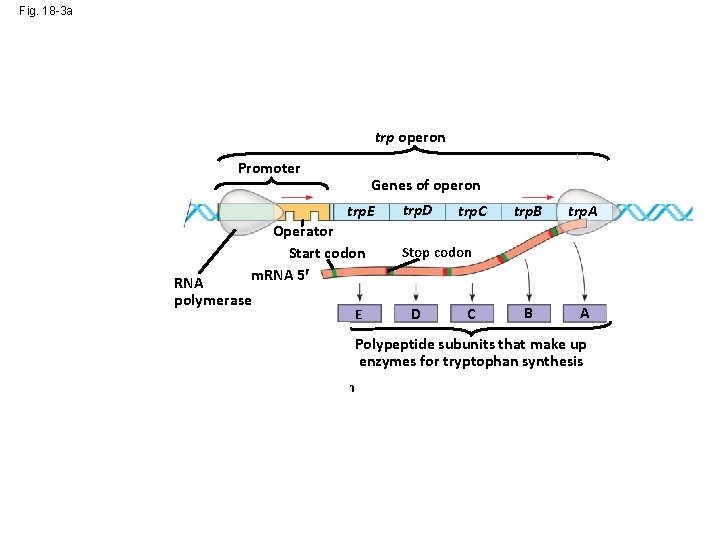
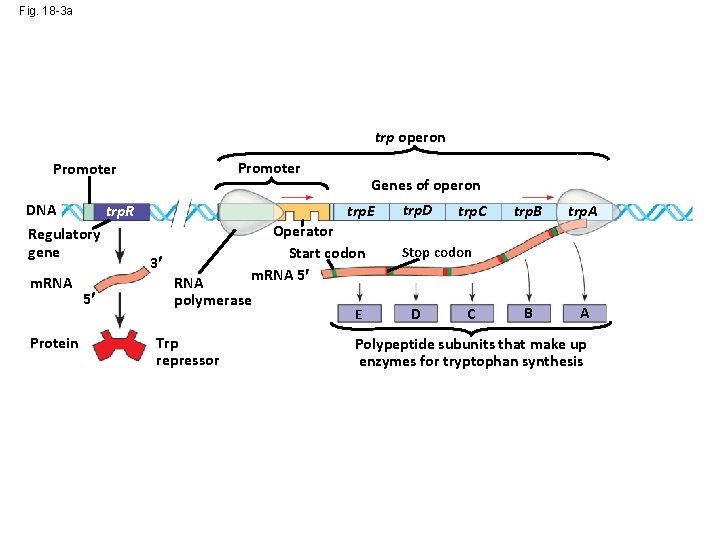
Fig. 18 -3 a trp operon Promoter DNA trp. R Regulatory gene m. RNA Protein 5 Genes of operon trp. E 3 Operator Start codon m. RNA 5 RNA polymerase Inactive repressor E trp. D trp. C trp. B trp. A B A Stop codon D C Polypeptide subunits that make up enzymes for tryptophan synthesis (a) Tryptophan absent, repressor inactive, operon on
Fig. 18 -3 a trp operon Promoter DNA trp. R Regulatory gene m. RNA Protein 5 Genes of operon trp. E 3 Operator Start codon m. RNA 5 RNA polymerase Trp repressor E trp. D trp. C trp. B trp. A B A Stop codon D C Polypeptide subunits that make up enzymes for tryptophan synthesis (a) Tryptophan absent, repressor inactive, operon on
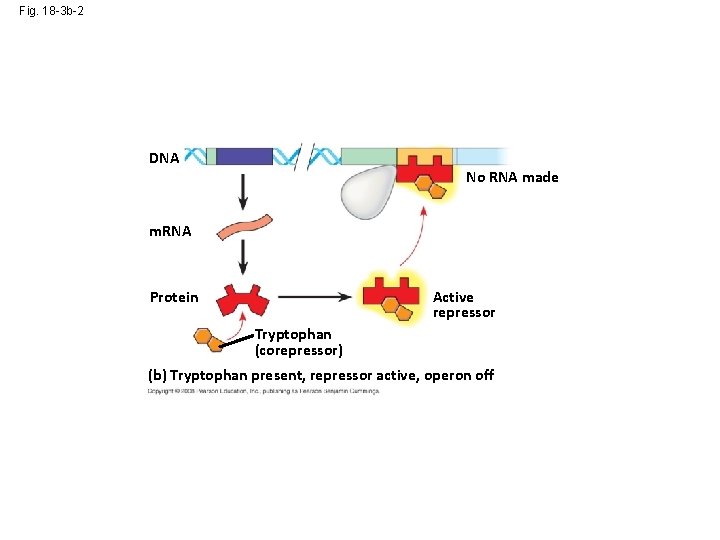
Fig. 18 -3 b-2 DNA No RNA made m. RNA Protein Active repressor Tryptophan (corepressor) (b) Tryptophan present, repressor active, operon off
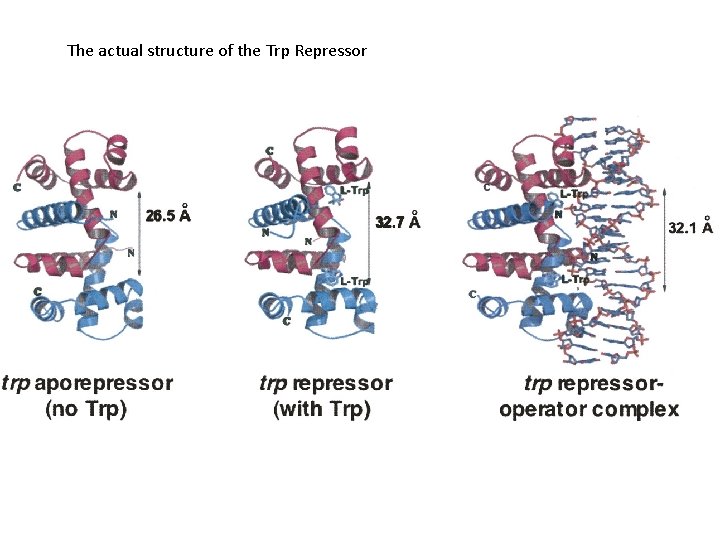
The actual structure of the Trp Repressor
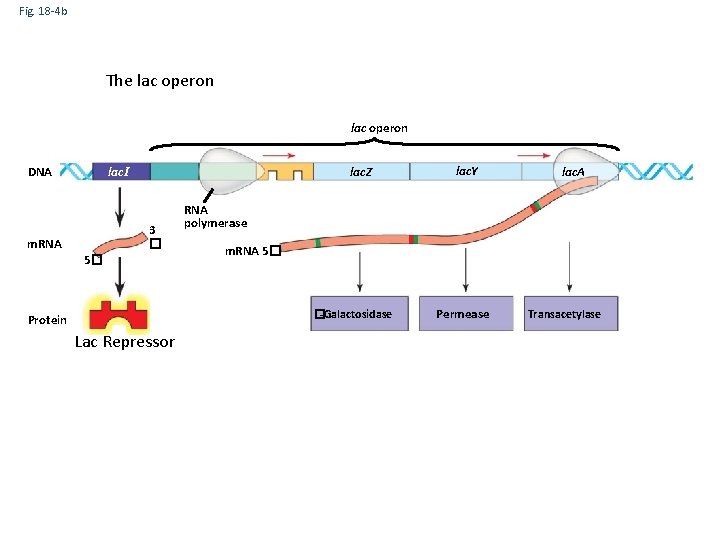
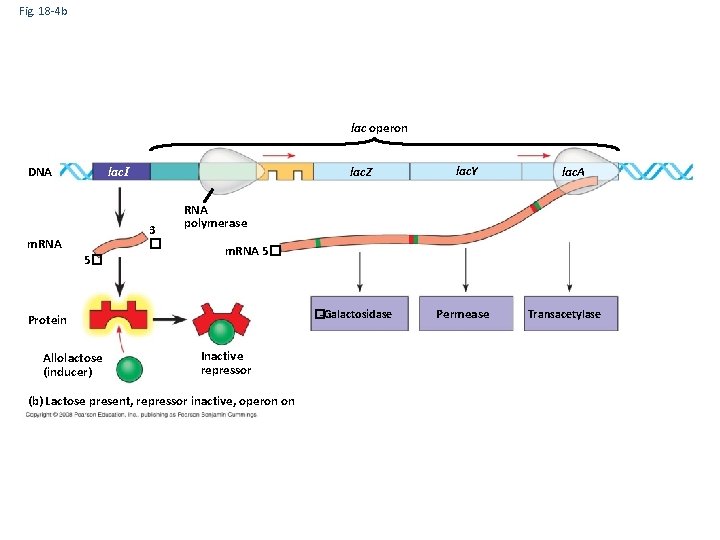
Fig. 18 -4 b The lac operon DNA lac. I lac. Z 3 � m. RNA 5� �-Galactosidase Allolactose (inducer) lac. A RNA polymerase Protein Lac Repressor lac. Y Inactive repressor (b) Lactose present, repressor inactive, operon on Permease Transacetylase
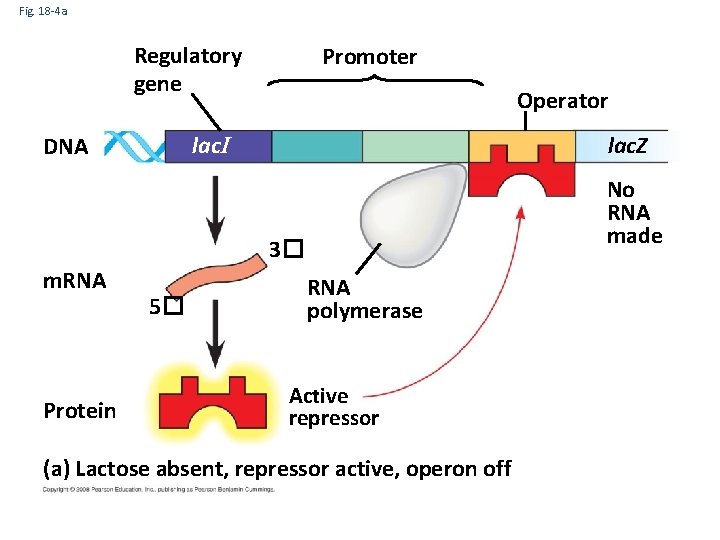
Fig. 18 -4 a Regulatory gene Promoter Operator lac. I DNA lac. Z No RNA made 3� m. RNA Protein 5� RNA polymerase Active repressor (a) Lactose absent, repressor active, operon off
Fig. 18 -4 b lac operon DNA lac. I lac. Z 3 � m. RNA 5� lac. A RNA polymerase m. RNA 5� �-Galactosidase Protein Allolactose (inducer) lac. Y Inactive repressor (b) Lactose present, repressor inactive, operon on Permease Transacetylase
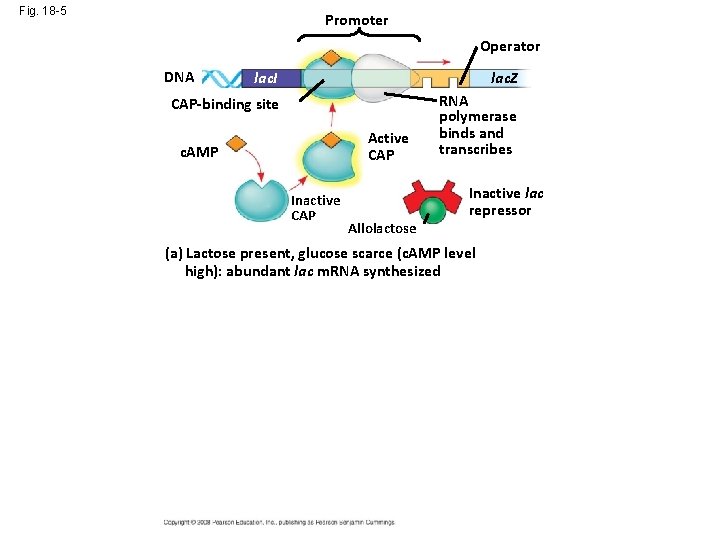
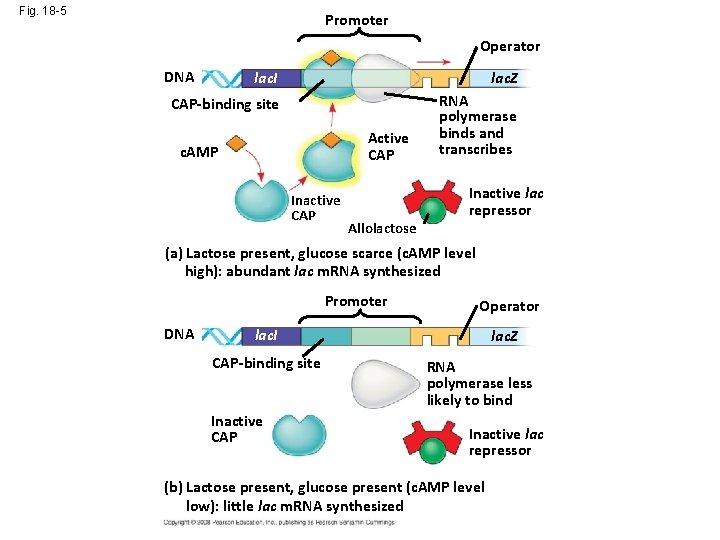
Fig. 18 -5 Promoter Operator DNA lac. I lac. Z CAP-binding site RNA polymerase binds and transcribes Active CAP c. AMP Inactive CAP Allolactose Inactive lac repressor (a) Lactose present, glucose scarce (c. AMP level high): abundant lac m. RNA synthesized Promoter DNA Operator lac. I CAP-binding site Inactive CAP lac. Z RNA polymerase less likely to bind Inactive lac repressor (b) Lactose present, glucose present (c. AMP level low): little lac m. RNA synthesized
Fig. 18 -5 Promoter Operator DNA lac. I lac. Z CAP-binding site RNA polymerase binds and transcribes Active CAP c. AMP Inactive CAP Allolactose Inactive lac repressor (a) Lactose present, glucose scarce (c. AMP level high): abundant lac m. RNA synthesized Promoter DNA Operator lac. I CAP-binding site Inactive CAP lac. Z RNA polymerase less likely to bind Inactive lac repressor (b) Lactose present, glucose present (c. AMP level low): little lac m. RNA synthesized
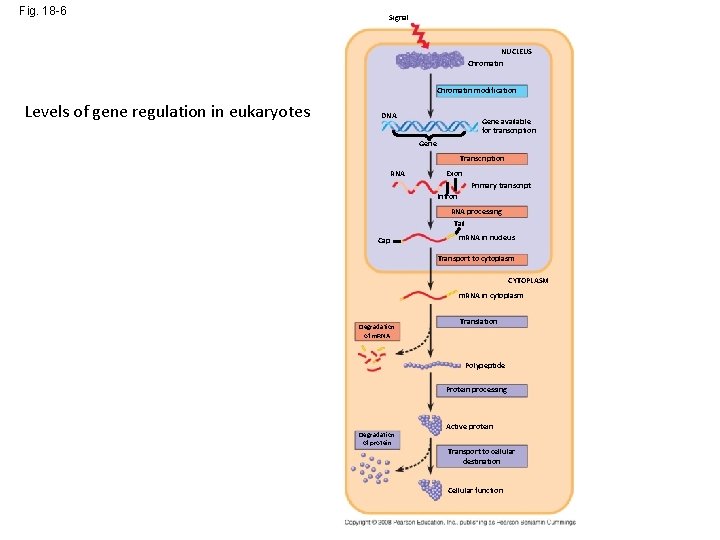
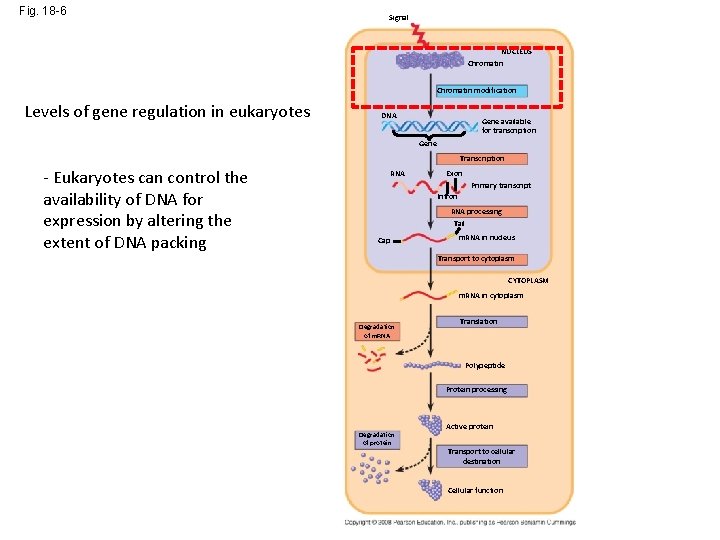
Fig. 18 -6 Signal NUCLEUS Chromatin modification Levels of gene regulation in eukaryotes DNA Gene available for transcription Gene Transcription RNA Exon Primary transcript Intron RNA processing Tail Cap m. RNA in nucleus Transport to cytoplasm CYTOPLASM m. RNA in cytoplasm Degradation of m. RNA Translation Polypeptide Protein processing Degradation of protein Active protein Transport to cellular destination Cellular function
Fig. 18 -6 Signal NUCLEUS Chromatin modification Levels of gene regulation in eukaryotes DNA Gene available for transcription Gene Transcription RNA Exon Primary transcript Intron RNA processing Tail Cap m. RNA in nucleus Transport to cytoplasm CYTOPLASM m. RNA in cytoplasm Degradation of m. RNA Translation Polypeptide Protein processing Degradation of protein Active protein Transport to cellular destination Cellular function
Fig. 18 -8 -1 A Eukaryotic Gene Enhancer (distal control elements) DNA Poly-A signal sequence Proximal control elements Exon Upstream Promoter Intron Exon Termination region Downstream
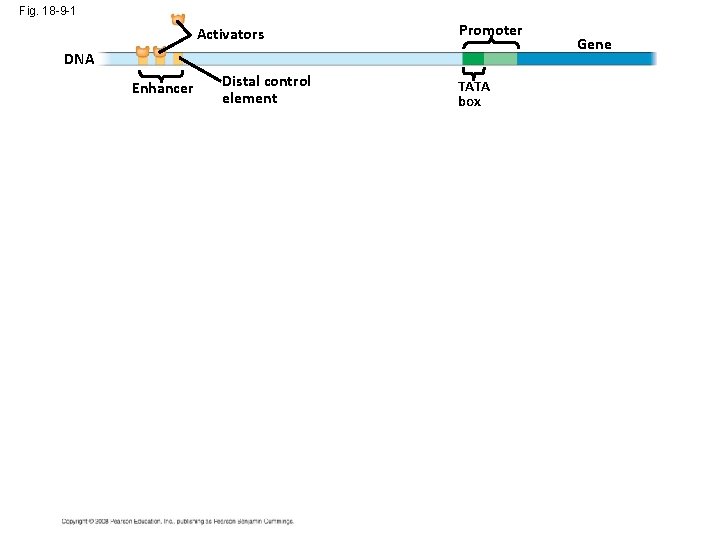
Fig. 18 -9 -1 Activators Promoter DNA Enhancer Distal control element TATA box Gene
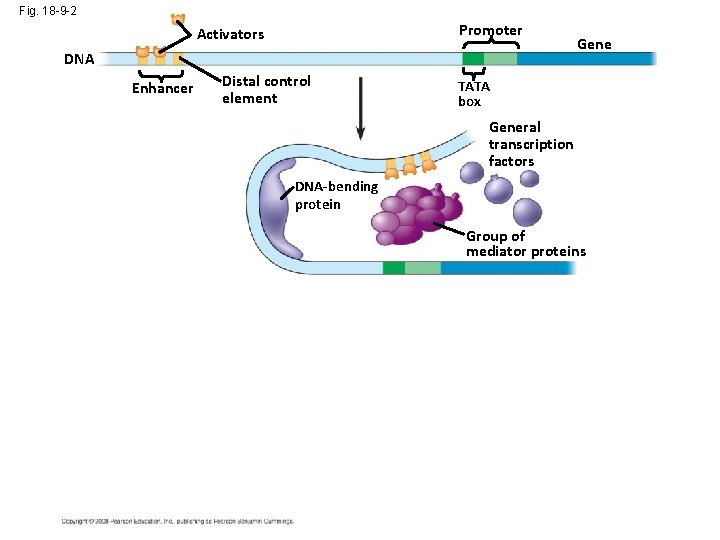
Fig. 18 -9 -2 Promoter Activators DNA Enhancer Distal control element Gene TATA box General transcription factors DNA-bending protein Group of mediator proteins
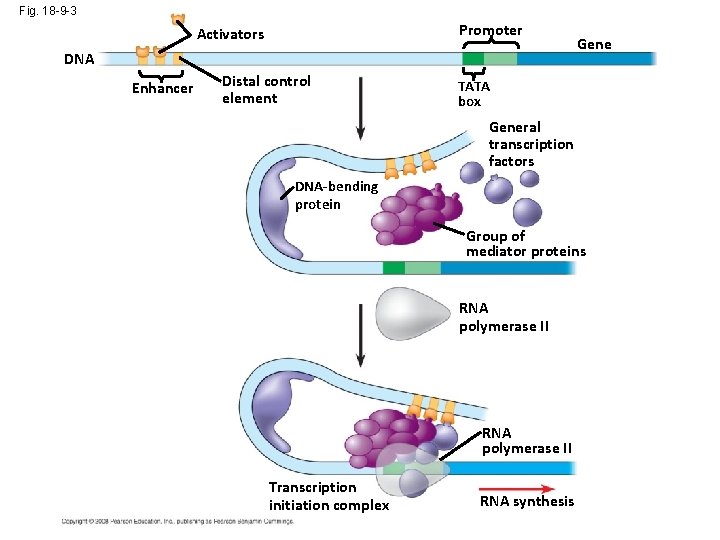
Fig. 18 -9 -3 Promoter Activators DNA Enhancer Distal control element Gene TATA box General transcription factors DNA-bending protein Group of mediator proteins RNA polymerase II Transcription initiation complex RNA synthesis
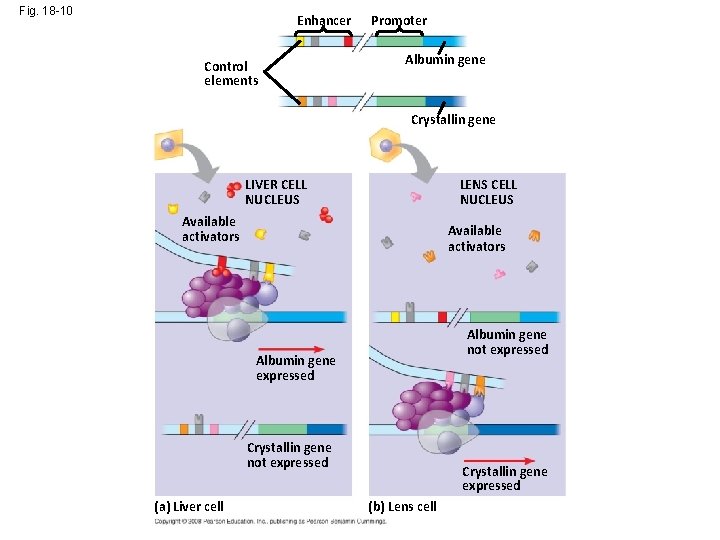
Fig. 18 -10 Enhancer Control elements Promoter Albumin gene Crystallin gene LIVER CELL NUCLEUS LENS CELL NUCLEUS Available activators Albumin gene not expressed Albumin gene expressed Crystallin gene not expressed (a) Liver cell Crystallin gene expressed (b) Lens cell
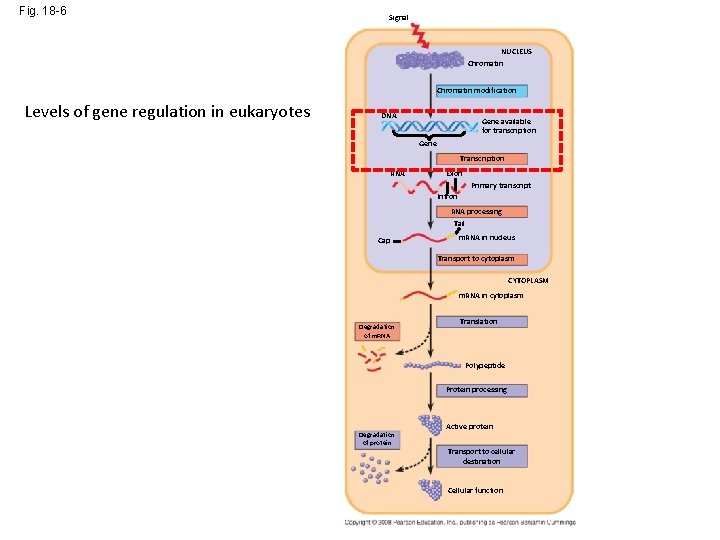
Fig. 18 -6 Signal NUCLEUS Chromatin modification Levels of gene regulation in eukaryotes DNA Gene available for transcription Gene Transcription - Eukaryotes can control the availability of DNA for expression by altering the extent of DNA packing RNA Exon Primary transcript Intron RNA processing Tail Cap m. RNA in nucleus Transport to cytoplasm CYTOPLASM m. RNA in cytoplasm Degradation of m. RNA Translation Polypeptide Protein processing Degradation of protein Active protein Transport to cellular destination Cellular function
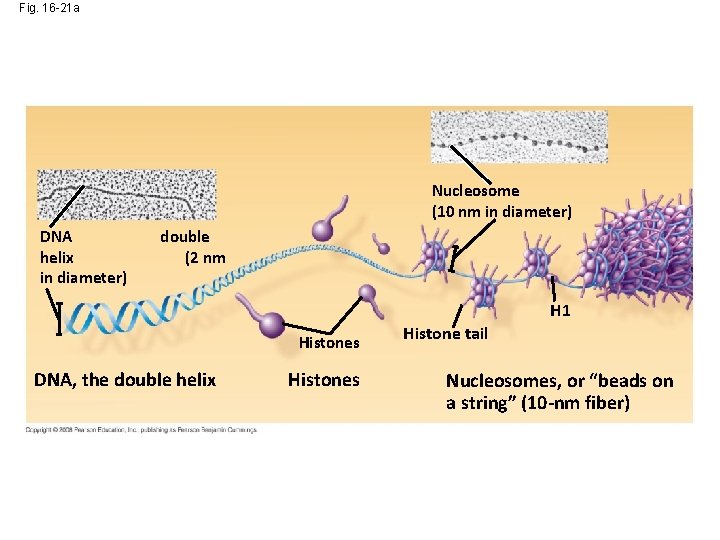
Fig. 16 -21 a Nucleosome (10 nm in diameter) DNA helix in diameter) double (2 nm H 1 Histones DNA, the double helix Histones Histone tail Nucleosomes, or “beads on a string” (10 -nm fiber)
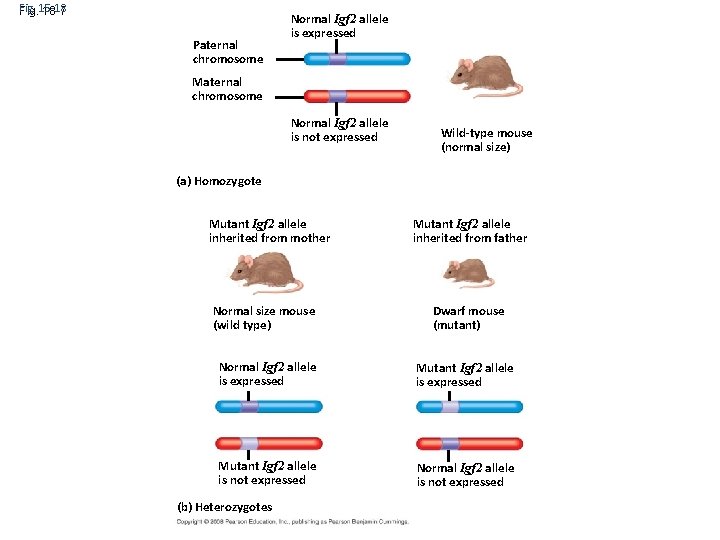
Fig. 15 -18 18 -7 Paternal chromosome Normal Igf 2 allele is expressed Maternal chromosome Normal Igf 2 allele is not expressed (a) Homozygote DNA double. Igf 2 helix Mutant allele inherited from mother Histone tails Wild-type mouse (normal size) Amino acids available for chemical modification Mutant Igf 2 allele inherited from father (a) Histone tails protrude outward from a nucleosome Normal size mouse Dwarf mouse (wild type) Normal Igf 2 allele is expressed Unacetylated histones (mutant) Mutant Igf 2 allele is expressed Acetylated histones Mutant Igf 2 allele Normal Igf 2 allele is not expressed (b) Acetylation of histone tails promotes loose chromatin structure that permits transcription (b) Heterozygotes
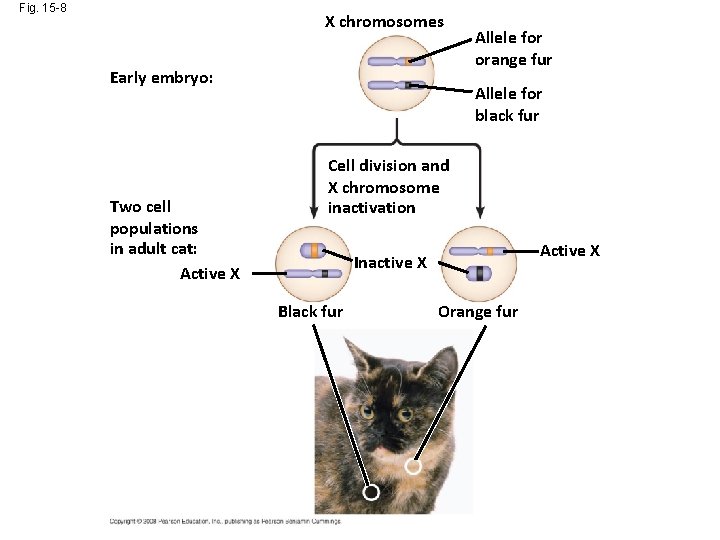
Fig. 15 -8 X chromosomes Early embryo: Two cell populations in adult cat: Active X Allele for orange fur Allele for black fur Cell division and X chromosome inactivation Active X Inactive X Black fur Orange fur