
Fifes Childrens Services Practice Development Session 1 November
Fife’s Children’s Services Practice Development Session 1 November 2017
Local updates: Refresh of key documents: • Child Wellbeing Pathway • Single & Multi agency Chronology • Information Sharing Guidance • Fife’s Child’s Plan New: • Practice Development Model • Online practitioners website
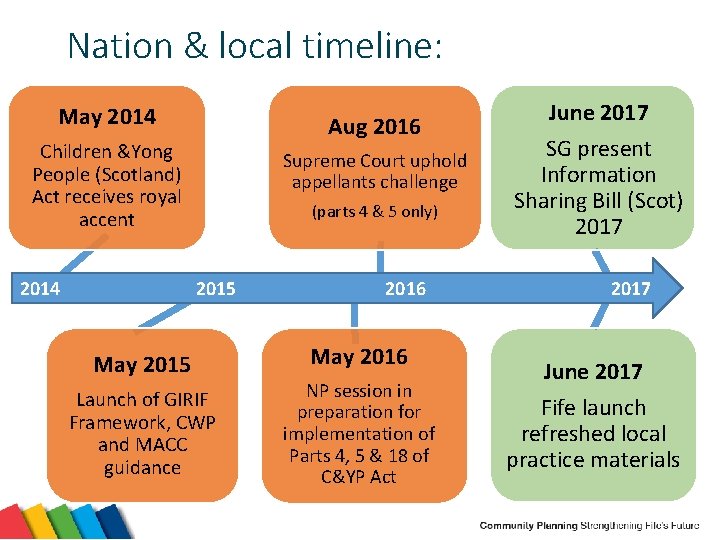
Nation & local timeline: May 2014 Aug 2016 Children &Yong People (Scotland) Act receives royal accent 2014 Supreme Court uphold appellants challenge (parts 4 & 5 only) 2015 May 2015 Launch of GIRIF Framework, CWP and MACC guidance 2016 May 2016 NP session in preparation for implementation of Parts 4, 5 & 18 of C&YP Act June 2017 SG present Information Sharing Bill (Scot) 2017 June 2017 Fife launch refreshed local practice materials
A Practice Development Model for Fife

The Model for Fife:
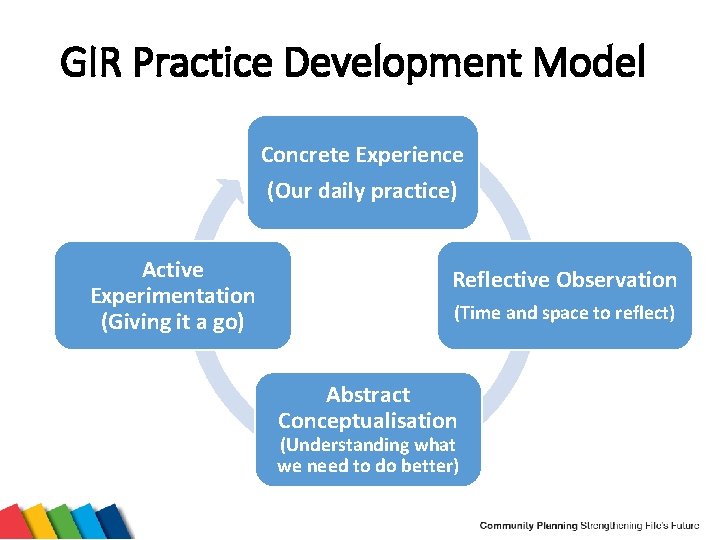
GIR Practice Development Model Concrete Experience (Our daily practice) Active Experimentation (Giving it a go) Reflective Observation (Time and space to reflect) Abstract Conceptualisation (Understanding what we need to do better)
Making our Partnerships Work
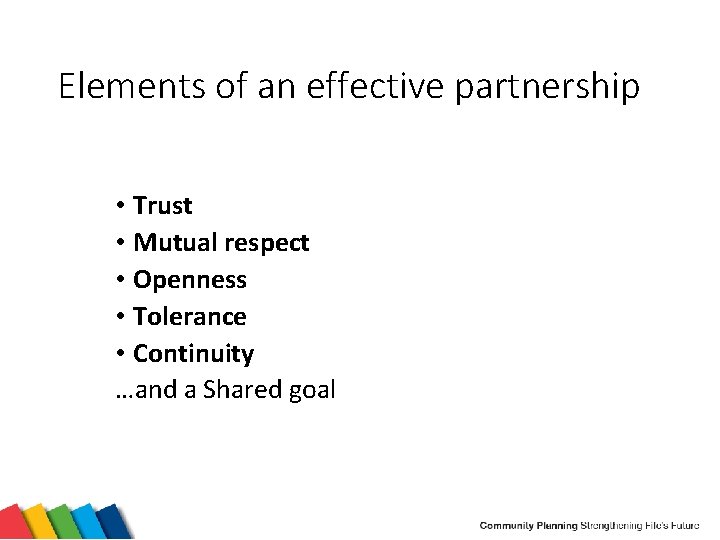
Elements of an effective partnership • Trust • Mutual respect • Openness • Tolerance • Continuity …and a Shared goal
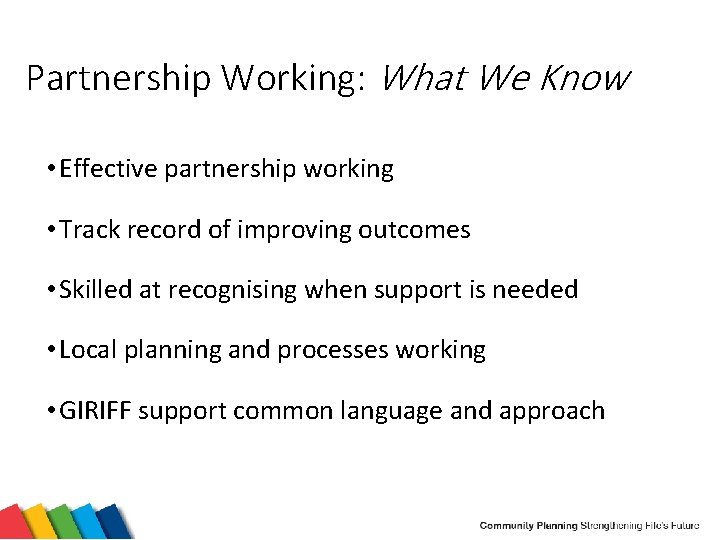
Partnership Working: What We Know • Effective partnership working • Track record of improving outcomes • Skilled at recognising when support is needed • Local planning and processes working • GIRIFF support common language and approach
Table Discussion Partnership working: 1. What’s working, what can we build on? 2. What are the challenges? 3. What solutions can we find ourselves? 4. What do we need to focus on getting better at through the practice development programme?
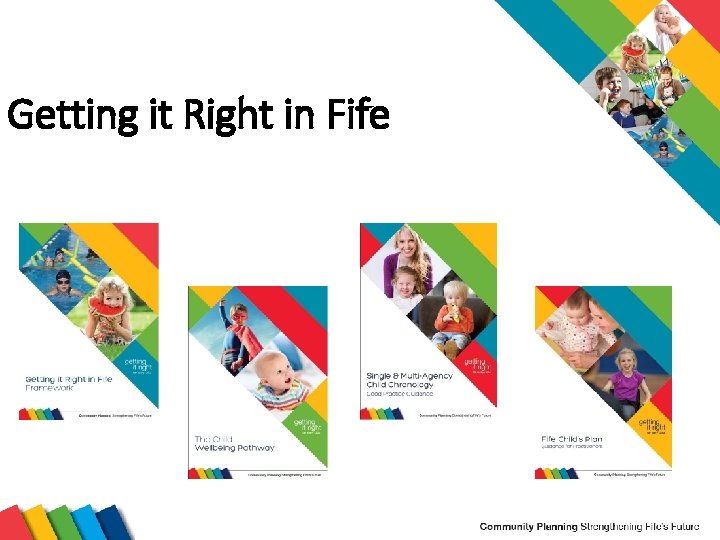
Getting it Right in Fife
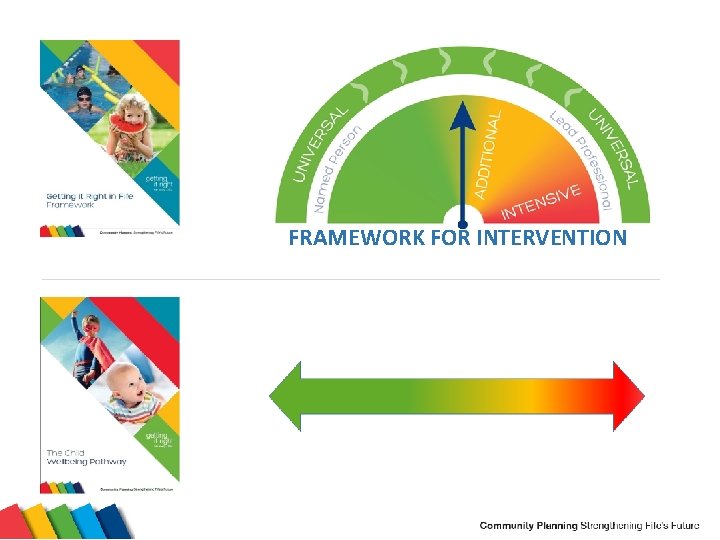
FRAMEWORK FOR INTERVENTION
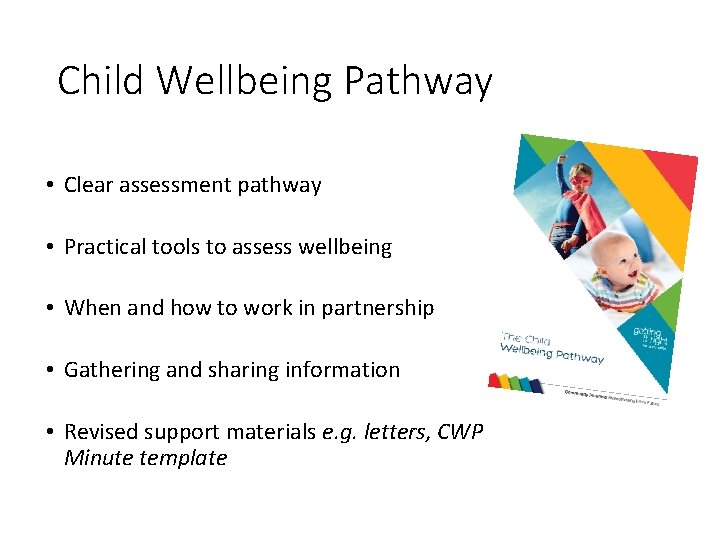
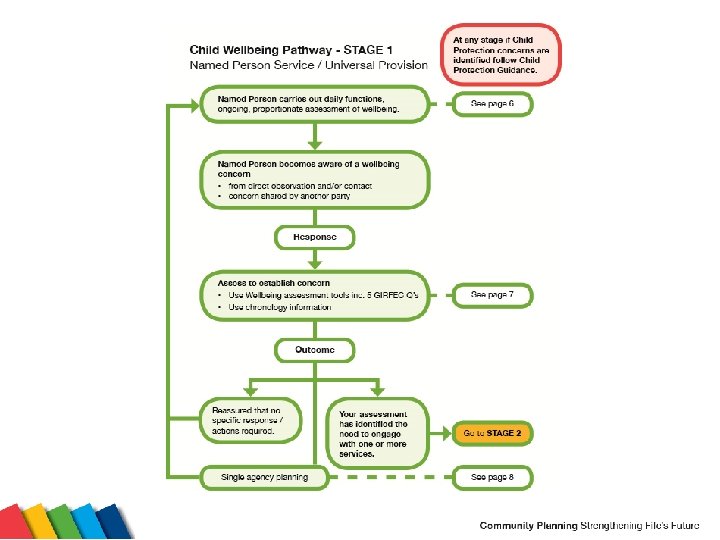
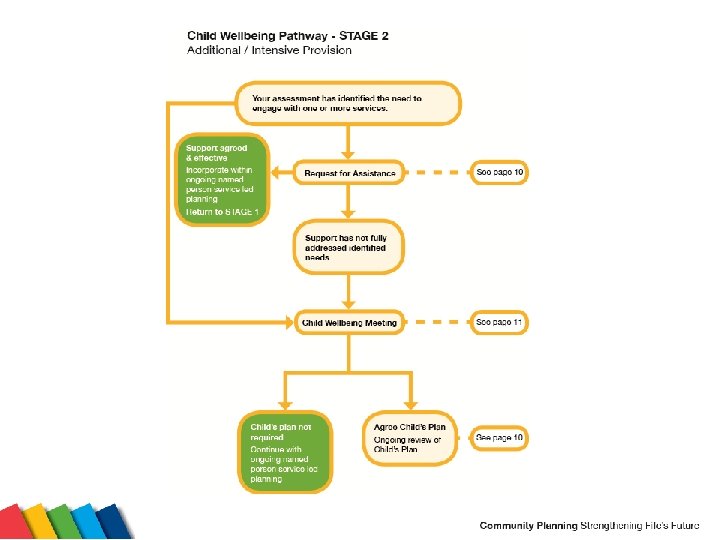
Child Wellbeing Pathway • Clear assessment pathway • Practical tools to assess wellbeing • When and how to work in partnership • Gathering and sharing information • Revised support materials e. g. letters, CWP Minute template
Information Sharing
Information Sharing
Single & Multi-Agency Chronologies
Child Chronology A chronology sets out details of key events in a child’s life in sequential date order using a specified format, and is used to support assessment, analysis, decision making and planning
Purpose of Chronology A tool for collating and managing significant information about a child or young person’s wellbeing It is … It isn’t … • Accurate • Factual • Succinct • Child focussed • Dynamic • End in itself • Replacement for case record or discussions • Replacement for professional judgement • List of every contact
Child’s Plan
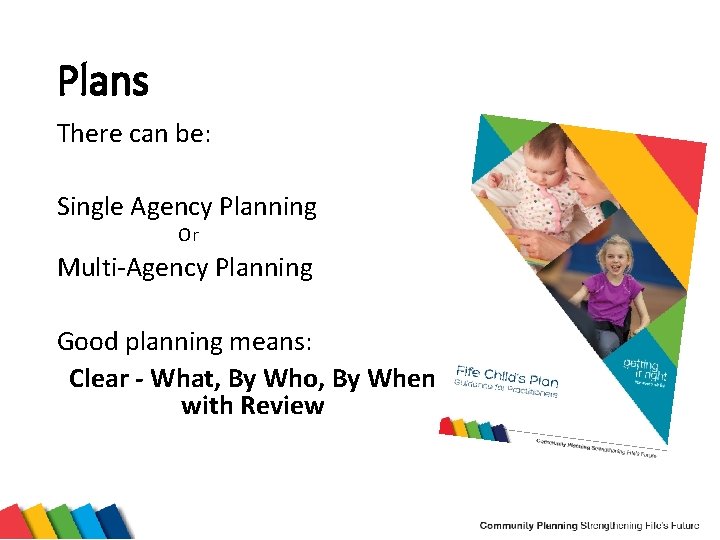
Plans There can be: Single Agency Planning Or Multi-Agency Planning Good planning means: Clear - What, By Who, By When with Review
Two considerations • Is the child or young person’s wellbeing currently adversely affected, or likely to be? • Can this wellbeing need be met by the current universal services and within the wellbeing pathway child’s planning process?
Who might require a Childs Plan? : § Looked after children § Those on child protection register § Children with significant additional support needs § Young people with complex mental / physical health needs § Those in crisis and requiring considerable support form a number of agencies
Discussion Questions: 1. What’s working, what can we build on? 2. What are the challenges? 3. What solutions can we find ourselves? 4. What do we need to focus on getting better at through the practice development programme?
Session 2 - Feb/March 2018 • Case example – “the Dunphy Family” • CWP Pathway flow chart • Prevention / early intervention • Signposting and effective early planning
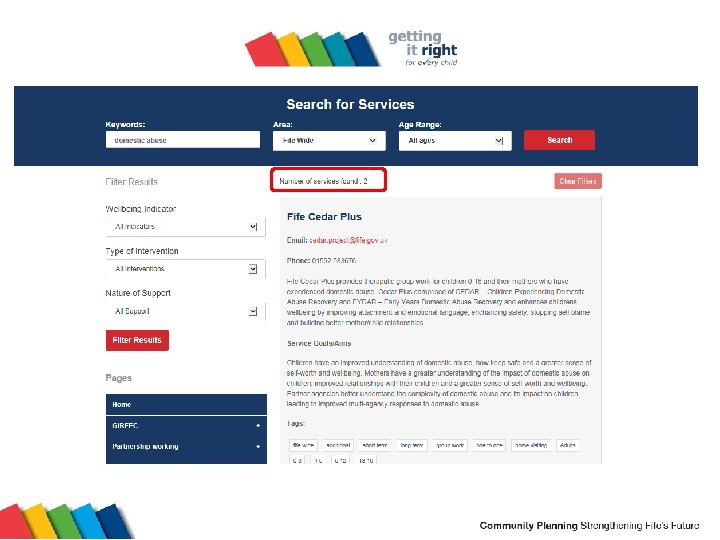
Professional Development Website www. GIRFEC. fife. scot
Professionals Website VIDEO: http: //sho. co/19 D 97
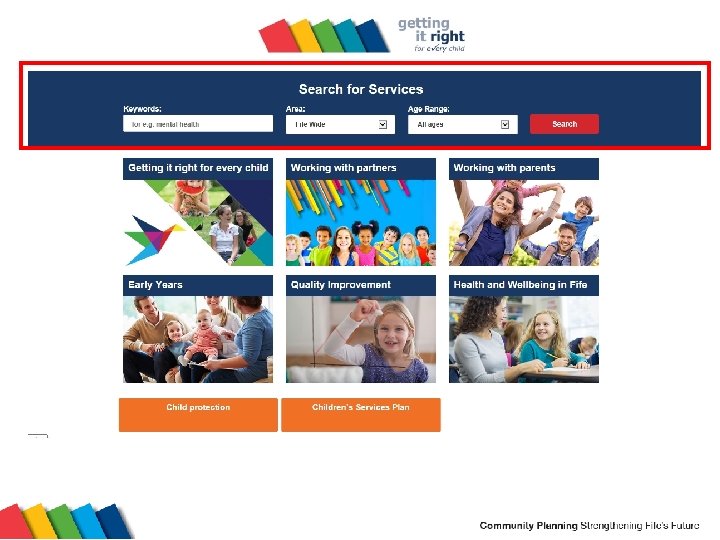
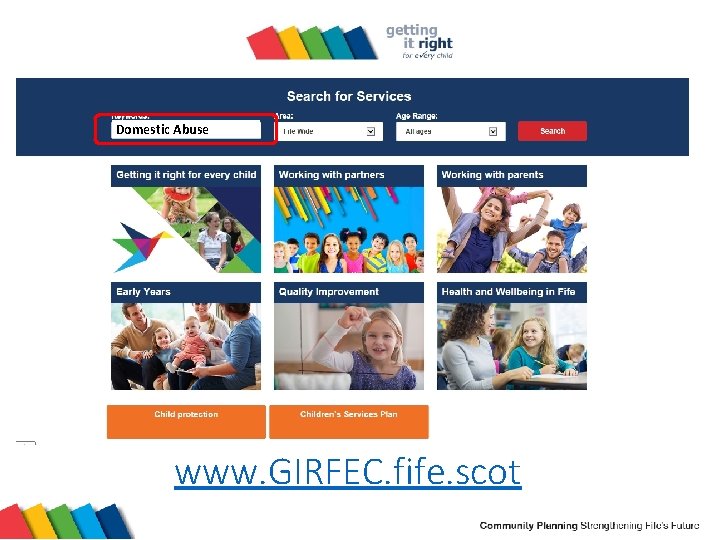
Domestic Abuse www. GIRFEC. fife. scot
Professionals Website www. GIRFEC. fife. scot
…Thank you!
- Slides: 33