
Field Plots Agricultural Research Dr Bob Kemerait Dr
Field Plots & Agricultural Research Dr. Bob Kemerait & Dr. Eric Prostko University of Georgia Cooperative Extension Service April 2001

SAFETY FIRST
Topics • Demonstration plots vs replicated field trials • Importance of replications • Common experimental designs – CRD, RCBD, Split-plot, Factorial – Small plots or large plots? • Plot maintenance • Data analysis & “significance” • Steps for a successful trial
Demonstration Plots • Objectives – example/information for growers – simple qualitative comparisons • Advantages – simple to coordinate – simple to assess • Disadvantages – not very useful for quantitative study – may oversimplify issue
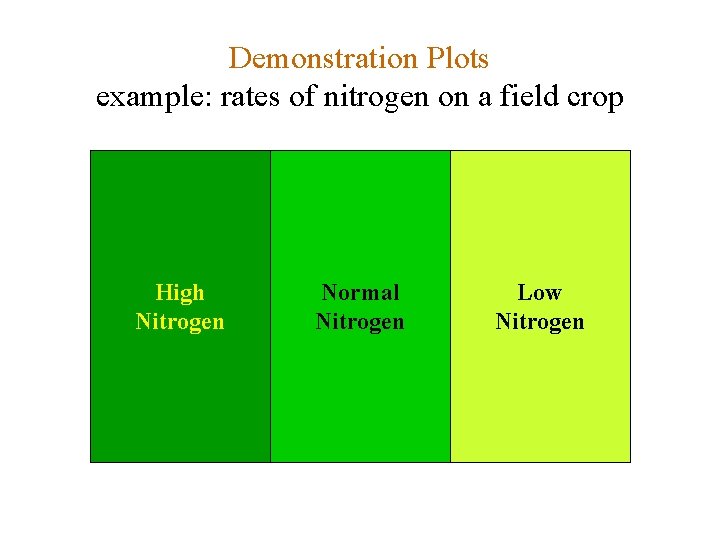
Demonstration Plots example: rates of nitrogen on a field crop High Nitrogen Normal Nitrogen Low Nitrogen

Replicated Field Plots • Objectives – desire to statistically compare treatments, varieties, etc. • Advantages – results recognized by scientific community – results suitable for making decisions • Disadvantages – more complicated to conduct
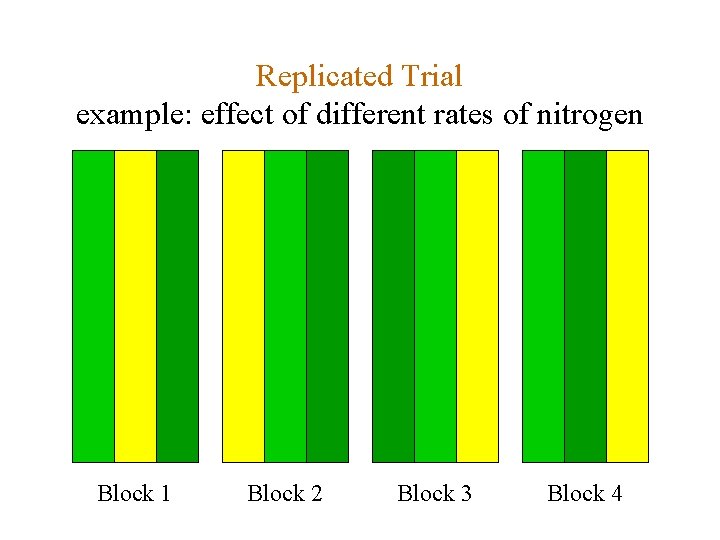
Replicated Trial example: effect of different rates of nitrogen Block 1 Block 2 Block 3 Block 4
How many replications are enough? • Generally, the more, the better! – increased “degrees of freedom” – easier to differentiate similar means – better assessment of variation within plot area • But consider………… – land constraints – time constraints – material constrains – (chemical, plants, etc. )
You want how many reps? ? ? !!!! • Minimum number varies with discipline and researcher • Absolute minimum: 3 reps • Foliar fungicide programs: we like to see at least 4 reps • For soilborne diseases, including nematodes - we like 5 and even 6 reps – uneven distribution of organisms in the soil
Common Types of Experimental Design • There is more than one type! – all of these designs are replicated • completely randomized design – appropriate if no variation in plot area • randomized complete block design – consider ONE source of variation in field!! • split-plot design – two treatment levels, consider interactions • factorial design
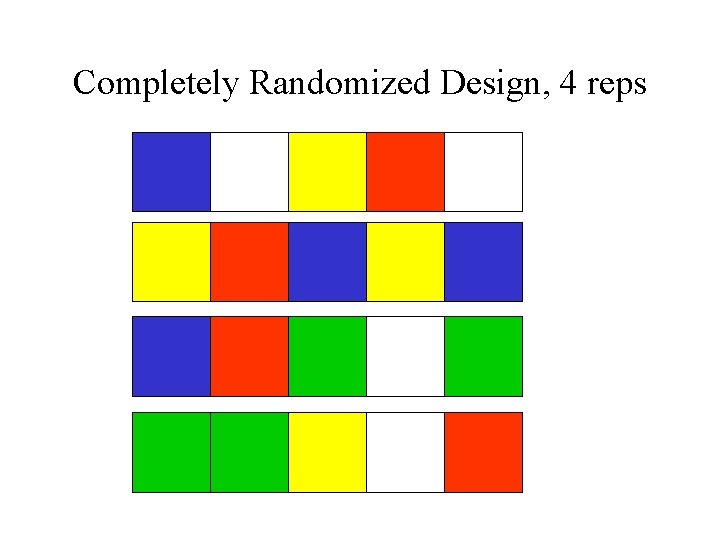
Completely Randomized Design, 4 reps
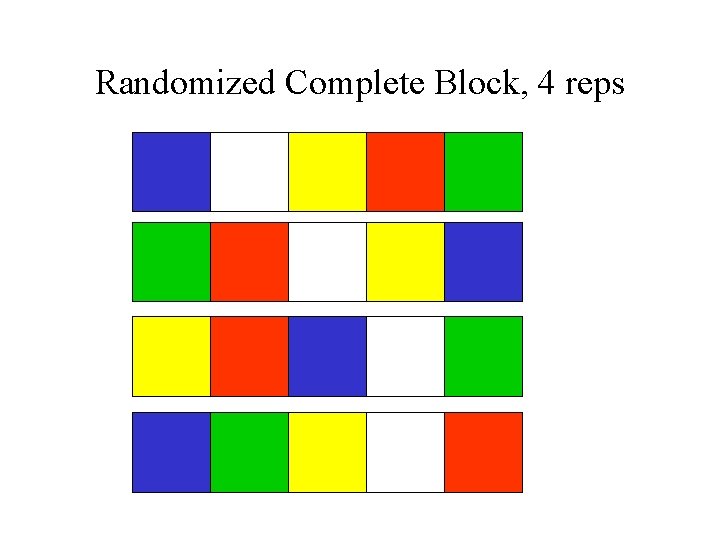
Randomized Complete Block, 4 reps
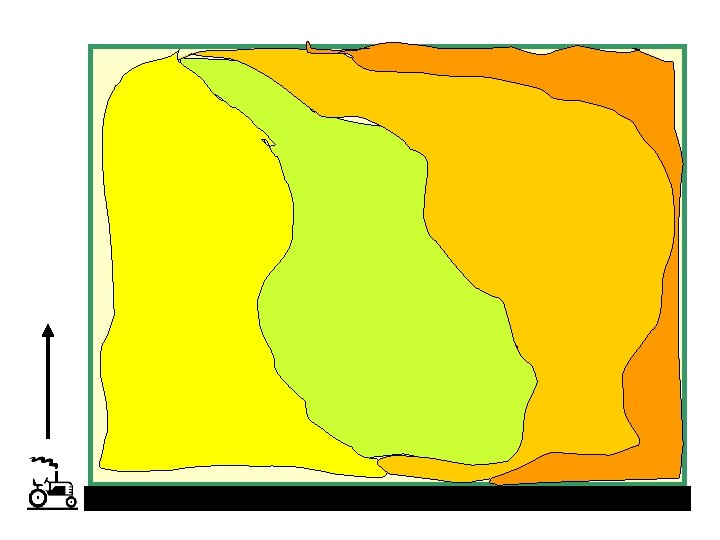
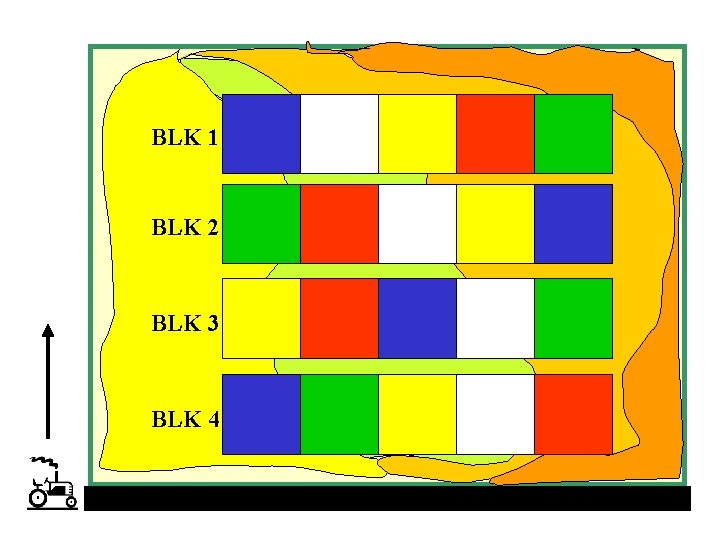
BLK 1 BLK 2 BLK 3 BLK 4
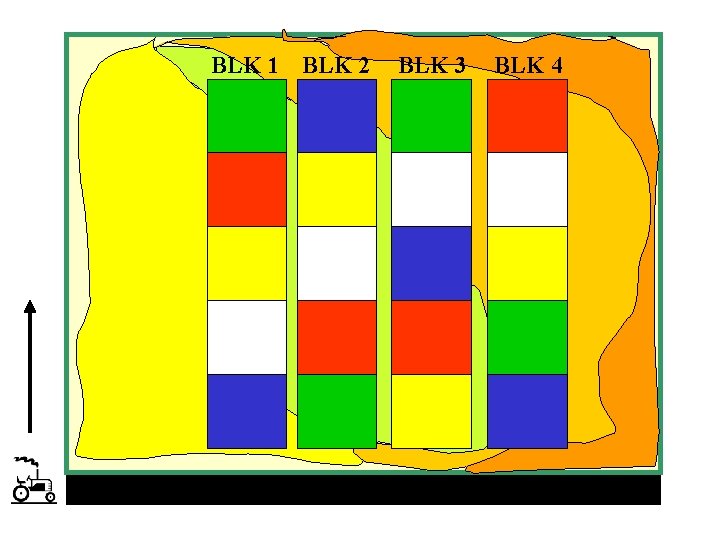
BLK 1 BLK 2 BLK 3 BLK 4
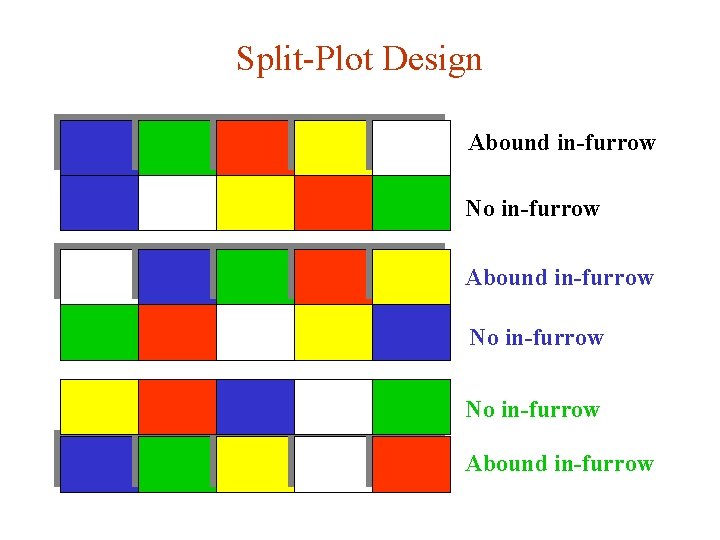
Split-Plot Design Abound in-furrow No in-furrow Abound in-furrow
Plot Maintenance • • Importance cannot be overlooked Uniformity in planting Careful calibration of spray equipment Fertility Weed control Insect control Disease control Field Tours & PRIDE
Data Analysis • Statistical analysis can be tricky – consider specialists as references • Statistical Packages/Software – SAS----MSTAT----ARM • Analysis of Variance – are treatments significantly different? • Mean Separations – which means are different? – (Fisher’s Protected LSD)
What’s so significant about “significance”? • Frequent question • Confusion over meaning • agricultural standard: 95% (usually) • “At the 95% confidence level, we can be sure that these means are different at least 95% of the time. ”
Getting Started with a Field Trial • • • Carefully determine your objectives Decide on (limited) treatments Develop an experimental design & plot plan Secure necessary equipment and materials Identify a conscientious cooperator Choose your field site CAREFULLY Remain safety oriented Keep careful notes Ask for help

GOOD LUCK!
- Slides: 21