
Field Information and Coordination Support Section FICSS Camp


- Slides: 39
Field Information and Coordination Support Section FICSS Camp Mapping in UNHCR’s Context Karl Steinacker, Chief, FICSS/DOS steinack@unhcr. org Luc St-Pierre, Senior GIS Officer stpierre@unhcr. org
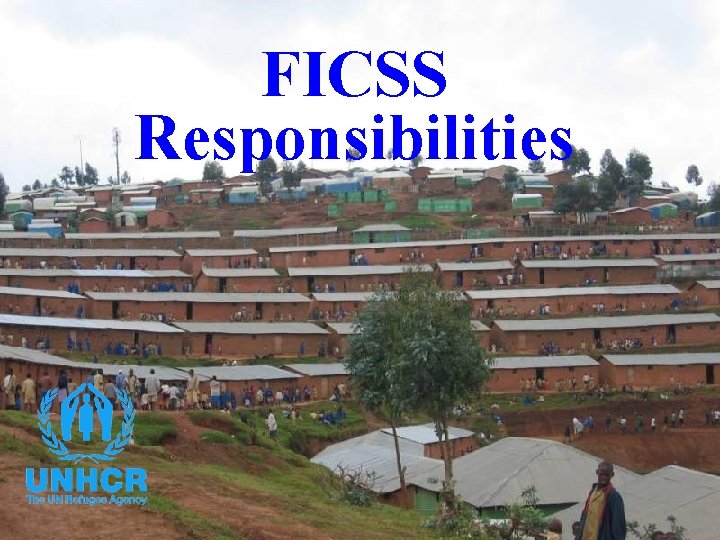
FICSS Responsibilities
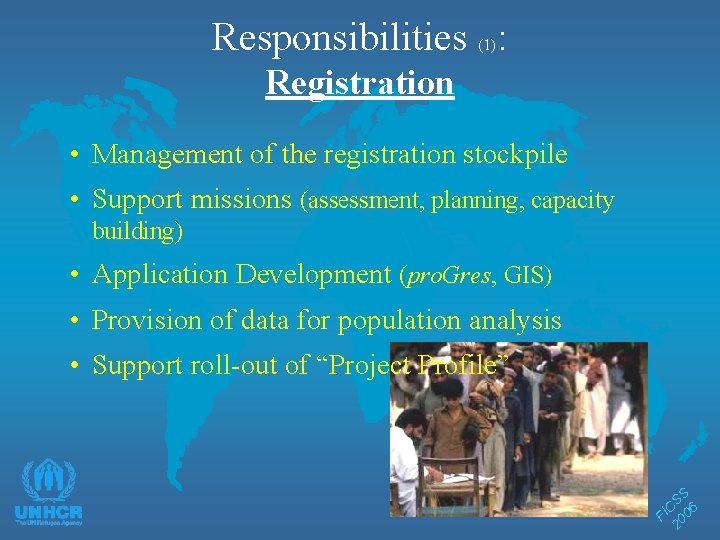
Responsibilities : (1) Registration • Management of the registration stockpile • Support missions (assessment, planning, capacity building) • Application Development (pro. Gres, GIS) • Provision of data for population analysis FI 20 CSS 06 • Support roll-out of “Project Profile”
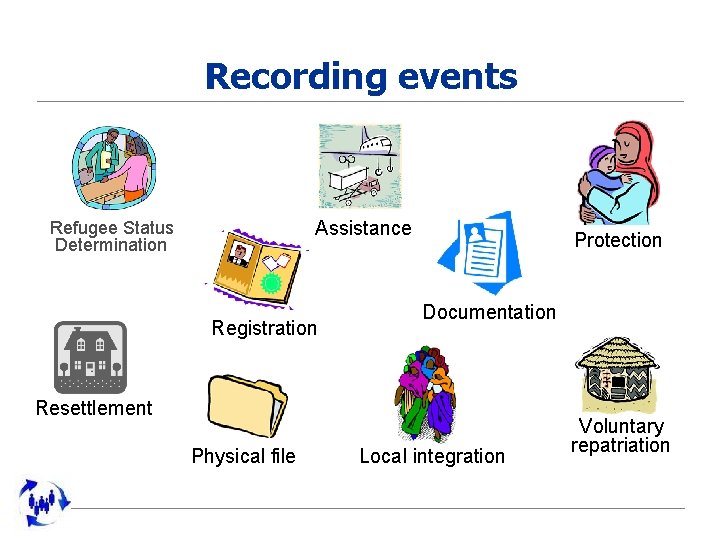
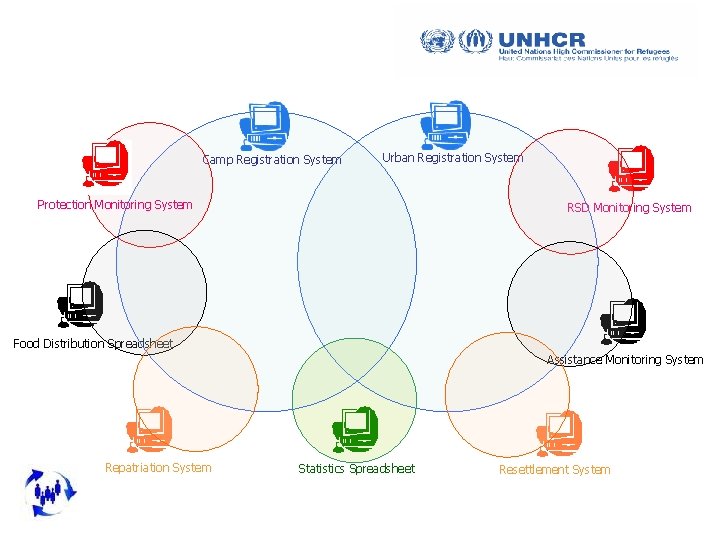
Recording events Assistance Refugee Status Determination Registration Protection Documentation Resettlement Physical file Local integration Voluntary repatriation
Camp Registration System Urban Registration System Protection Monitoring System RSD Monitoring System Food Distribution Spreadsheet Assistance Monitoring System Repatriation System Statistics Spreadsheet Resettlement System
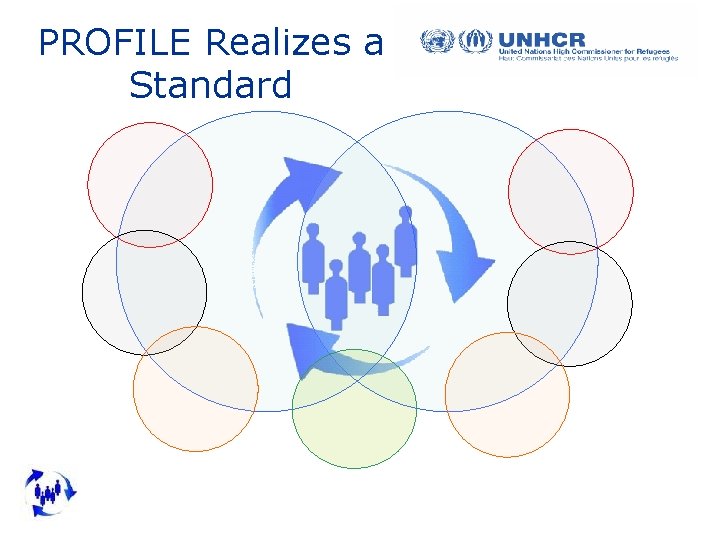
PROFILE Realizes a Standard
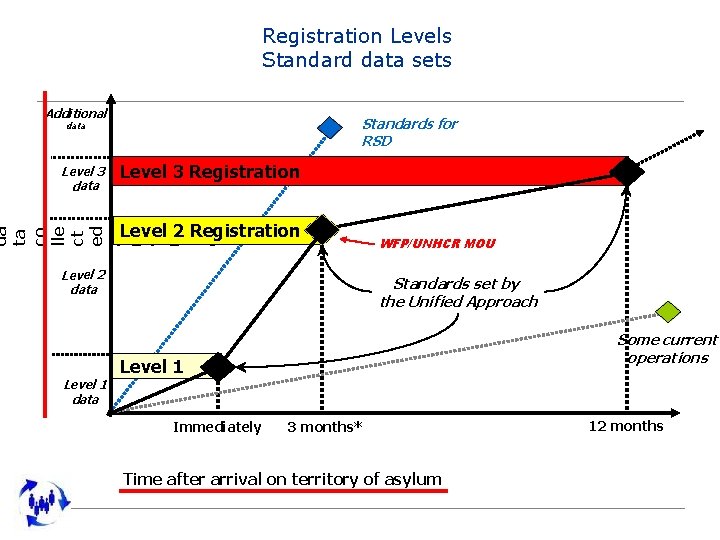
Registration Levels Standard data sets Additional Standards for RSD data Level 3 Registration da ta co lle ct ed a nd ve rif ie d Level 2 Registration Level 2 data Level 1 data WFP/UNHCR MOU Standards set by the Unified Approach Some current operations Level 1 Immediately 3 months* Time after arrival on territory of asylum 12 months
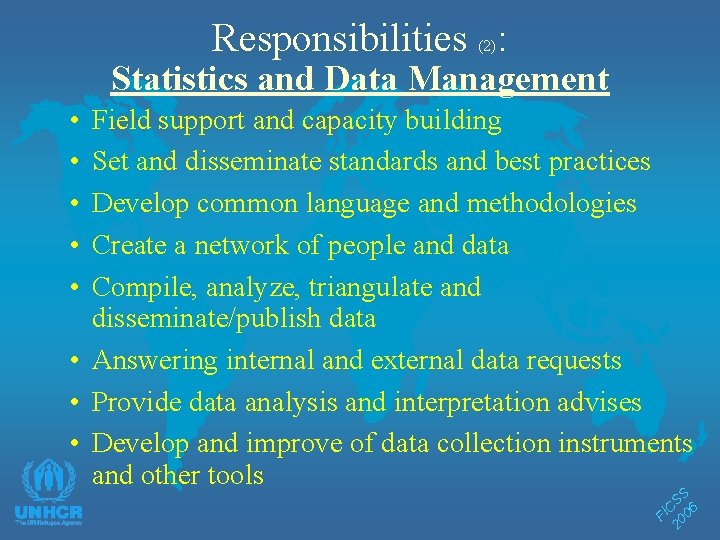
Responsibilities : (2) Statistics and Data Management • • • FI 20 CSS 06 Field support and capacity building Set and disseminate standards and best practices Develop common language and methodologies Create a network of people and data Compile, analyze, triangulate and disseminate/publish data • Answering internal and external data requests • Provide data analysis and interpretation advises • Develop and improve of data collection instruments and other tools
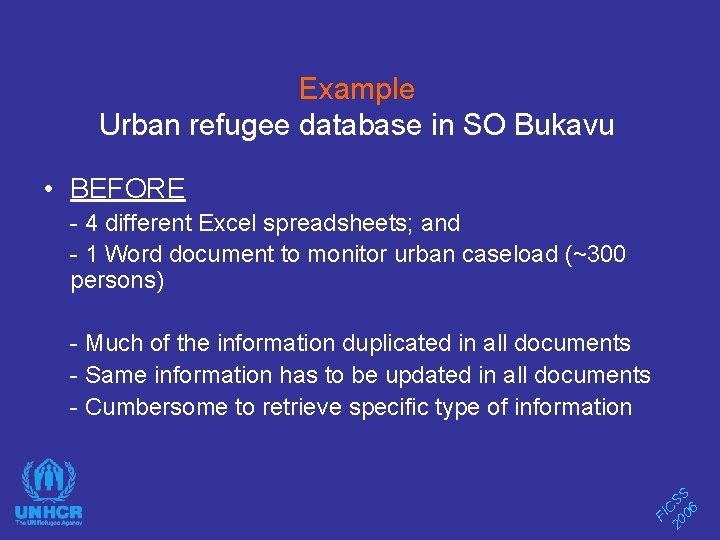
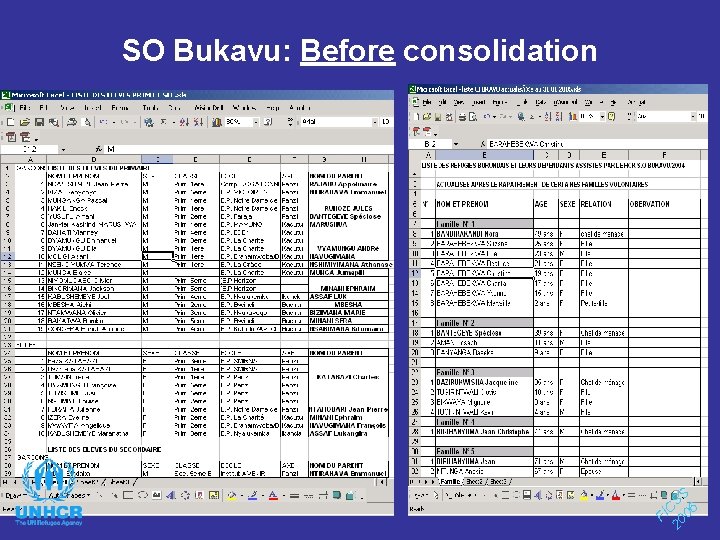
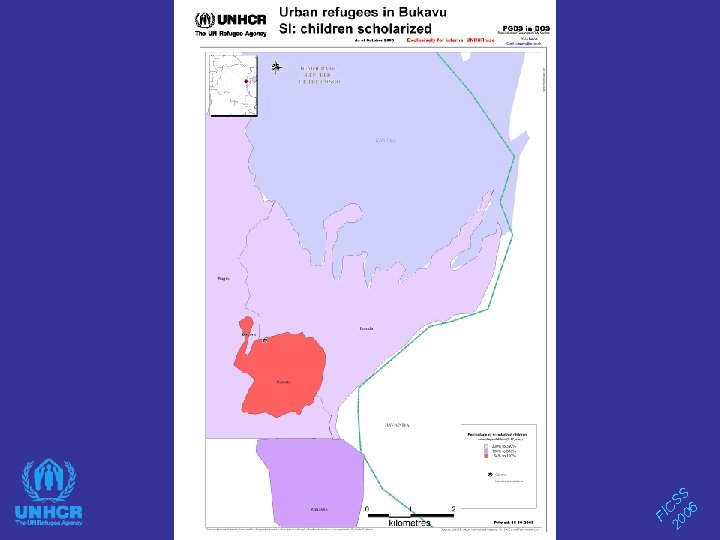
Example Urban refugee database in SO Bukavu • BEFORE - 4 different Excel spreadsheets; and - 1 Word document to monitor urban caseload (~300 persons) FI 20 CSS 06 - Much of the information duplicated in all documents - Same information has to be updated in all documents - Cumbersome to retrieve specific type of information
FI 20 CSS 06 SO Bukavu: Before consolidation
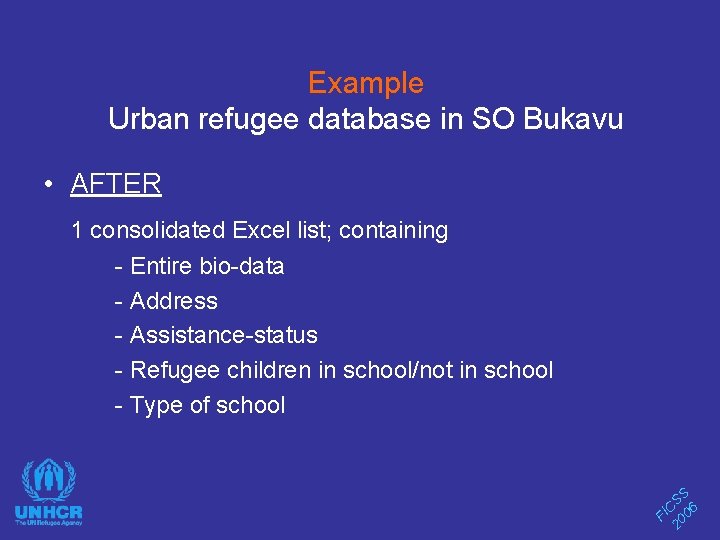
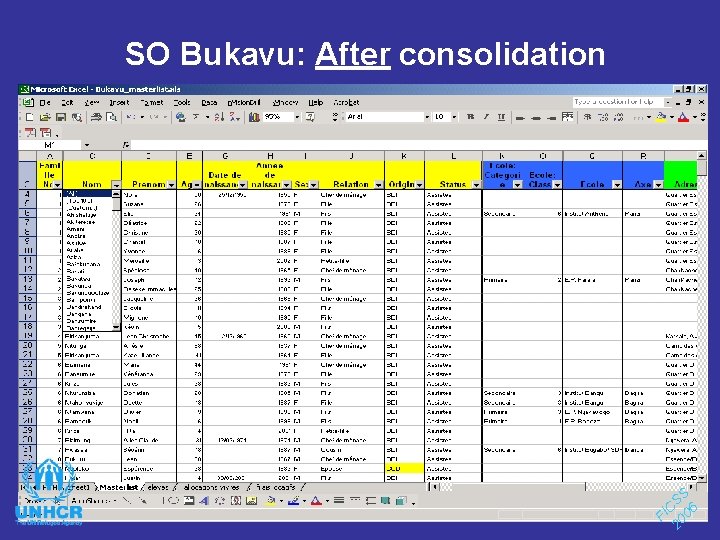
Example Urban refugee database in SO Bukavu • AFTER 1 consolidated Excel list; containing FI 20 CSS 06 - Entire bio-data - Address - Assistance-status - Refugee children in school/not in school - Type of school
FI 20 CSS 06 SO Bukavu: After consolidation
FI 20 CSS 06
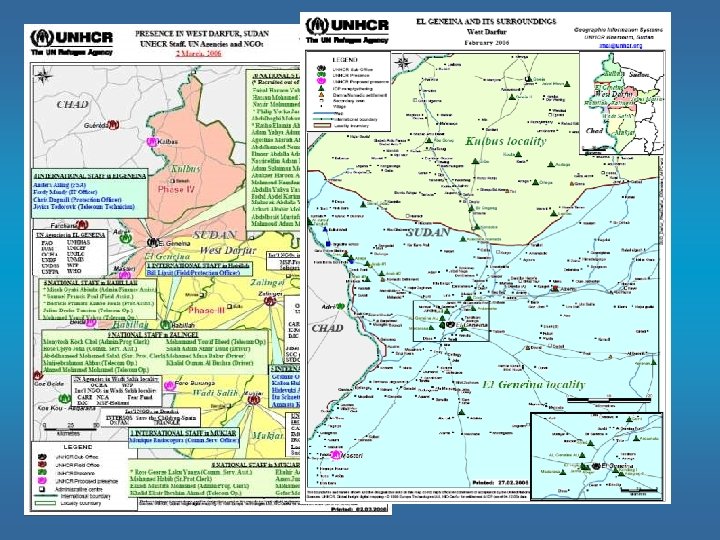
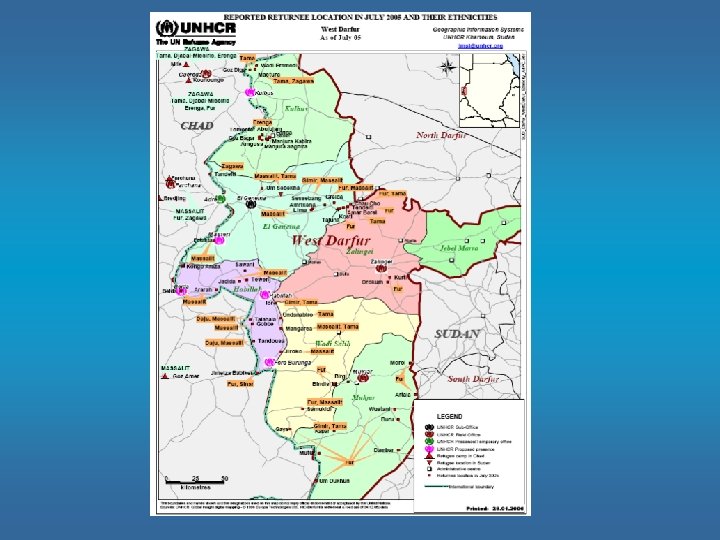
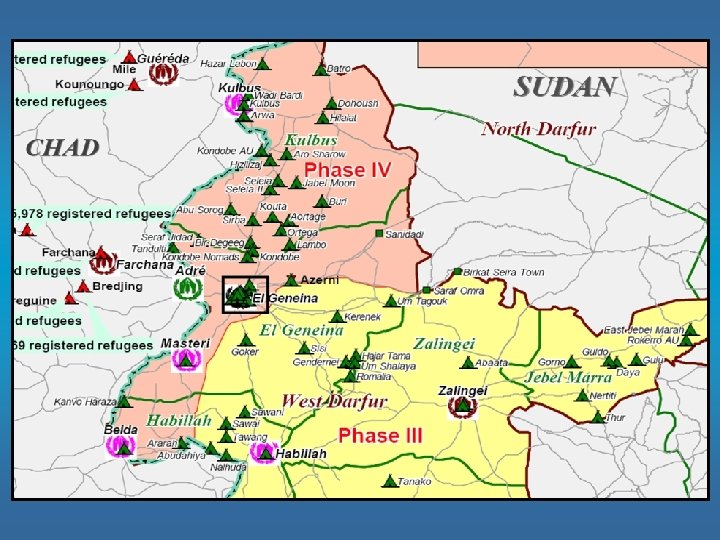
Responsibilities : (3) Geographic Information Systems (GIS) • Support missions • Develop tools in support of registration • Facilitate Camp Coordination / Camp Management • Disseminate specialist information • Participate in publications FI 20 CSS 06 • Coordinate networks of data exchange
Responsibilities : (4) Camp Coordination / Management Refine concept Set and disseminate standards and best practices Develop common language Create a network of NGOs, people and data Support Operations Develop linkages with other IDP clusters Tool development FI 20 CSS 06 • •
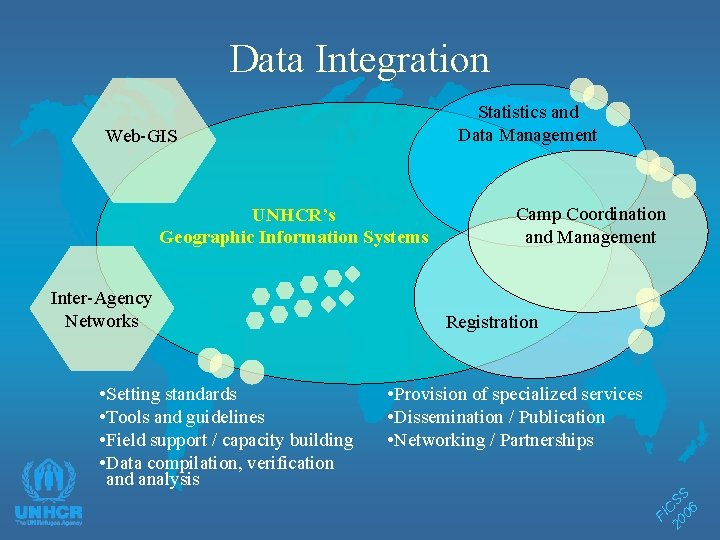
Data Integration Statistics and Data Management Web-GIS UNHCR’s Geographic Information Systems • Setting standards • Tools and guidelines • Field support / capacity building • Data compilation, verification and analysis Registration • Provision of specialized services • Dissemination / Publication • Networking / Partnerships FI 20 CSS 06 Inter-Agency Networks Camp Coordination and Management
CAMP MAPPING AT UNHCR
The case of Lugufu I and II, Tanzania • Use Satellite imagery, GPS points, and information from our partners to map Lugufu • Develop a set of best practices for using satellite imagery • Link existing Pro. Gres/registration data to GIS • Develop a capacity and system for continually updating the maps and databases
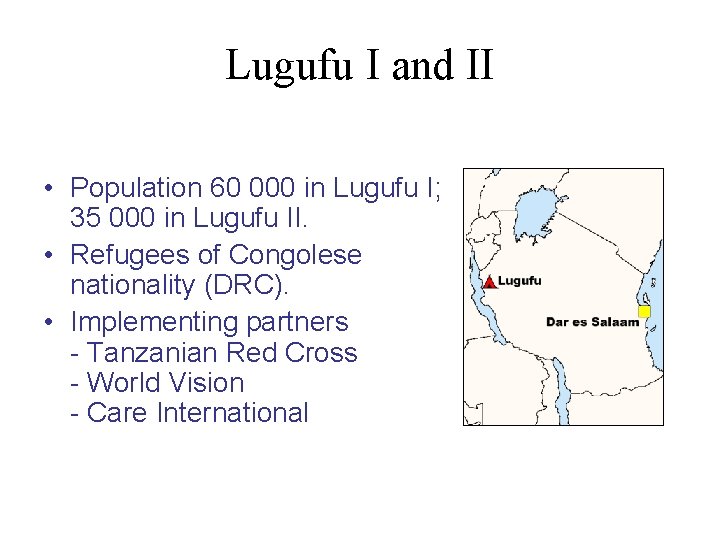
Lugufu I and II • Population 60 000 in Lugufu I; 35 000 in Lugufu II. • Refugees of Congolese nationality (DRC). • Implementing partners - Tanzanian Red Cross - World Vision - Care International
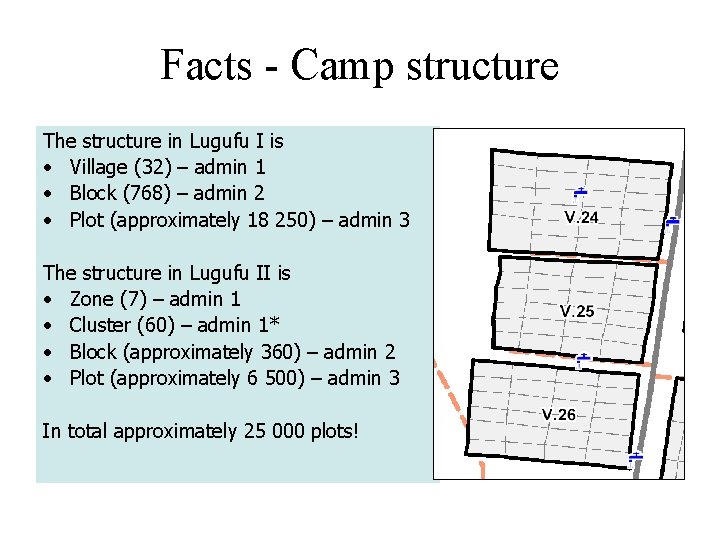
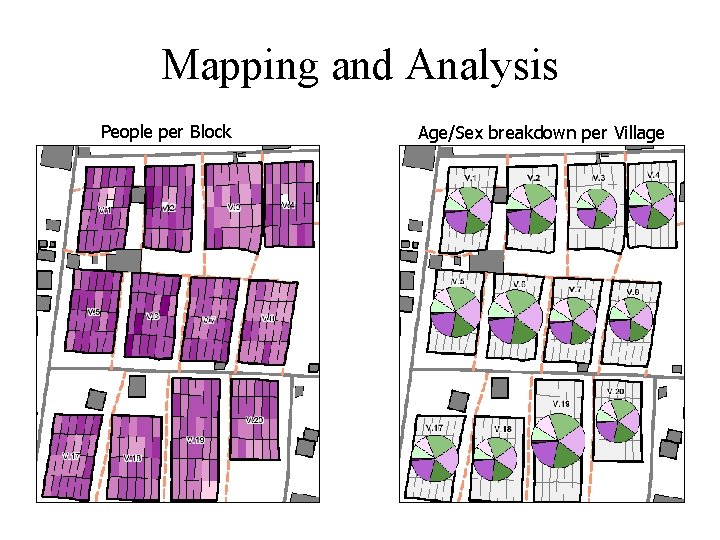
Facts - Camp structure The structure in Lugufu I is • Village (32) – admin 1 • Block (768) – admin 2 • Plot (approximately 18 250) – admin 3 The structure in Lugufu II is • Zone (7) – admin 1 • Cluster (60) – admin 1* • Block (approximately 360) – admin 2 • Plot (approximately 6 500) – admin 3 In total approximately 25 000 plots!
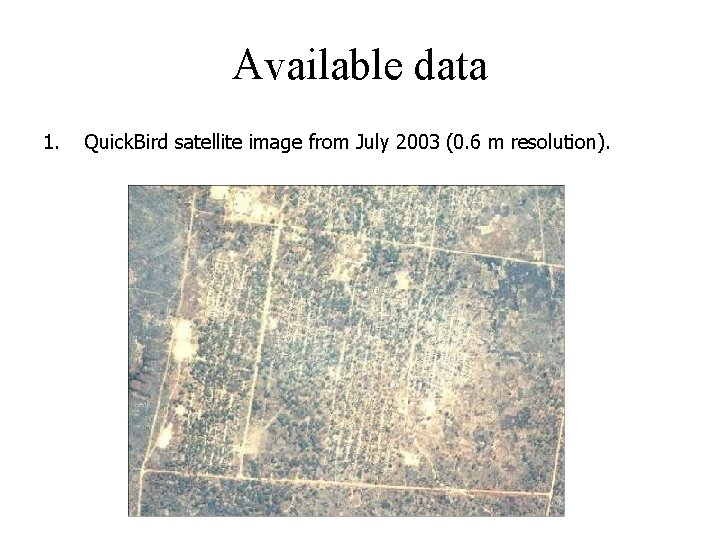
Available data 1. Quick. Bird satellite image from July 2003 (0. 6 m resolution).
Available data 2. 3. World Vision sketches of camp layout. Well organized address system.
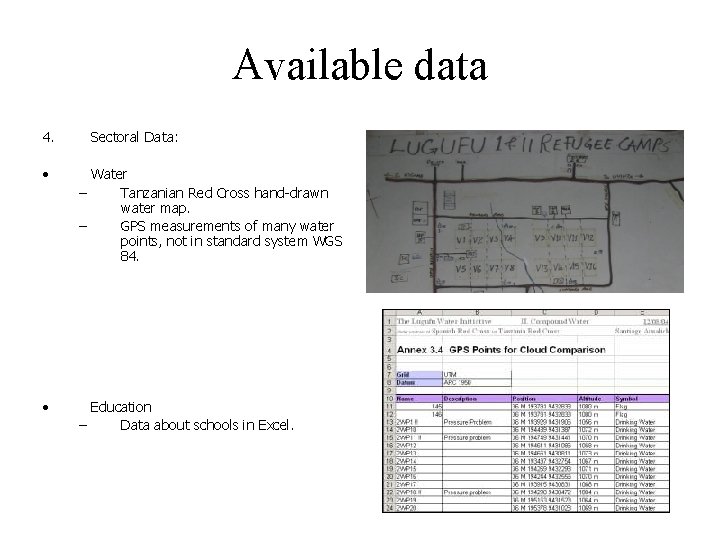
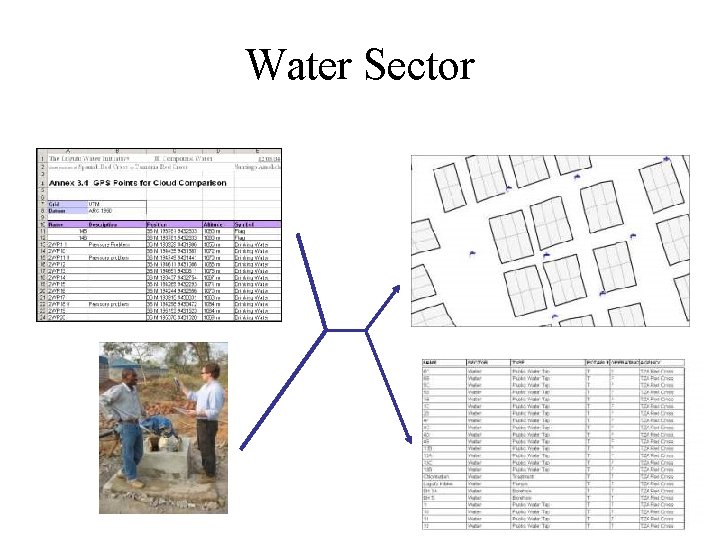
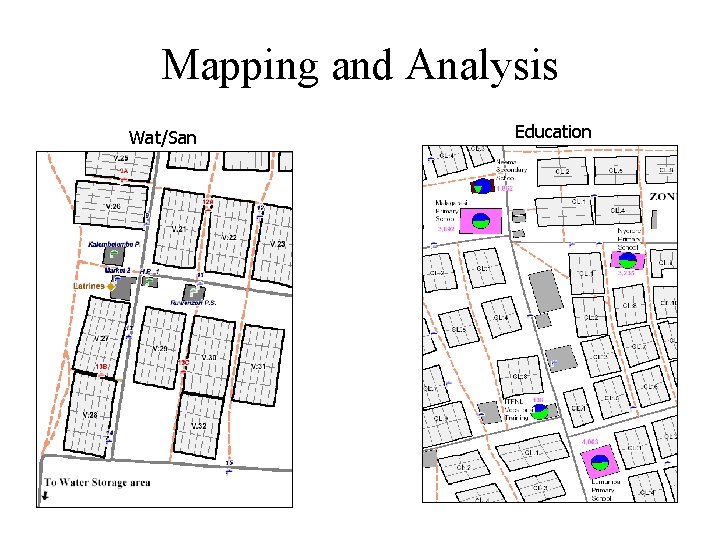
Available data 4. Sectoral Data: • Water – Tanzanian Red Cross hand-drawn water map. – GPS measurements of many water points, not in standard system WGS 84. • Education – Data about schools in Excel.
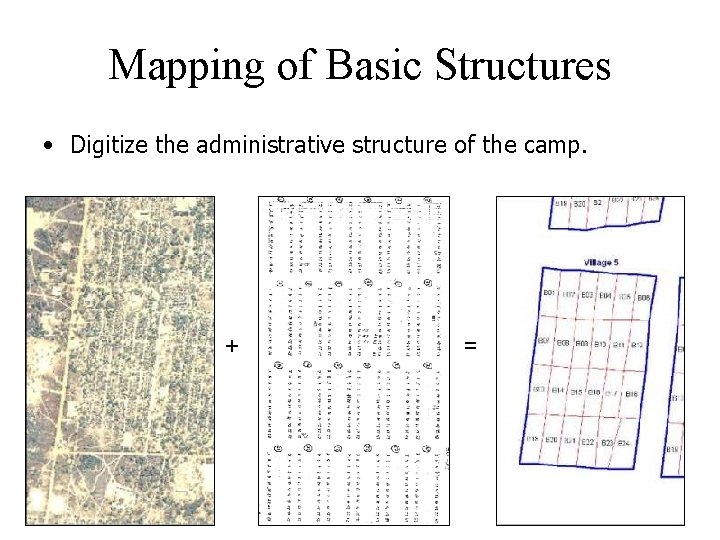
Mapping of Basic Structures • Digitize the administrative structure of the camp. + =
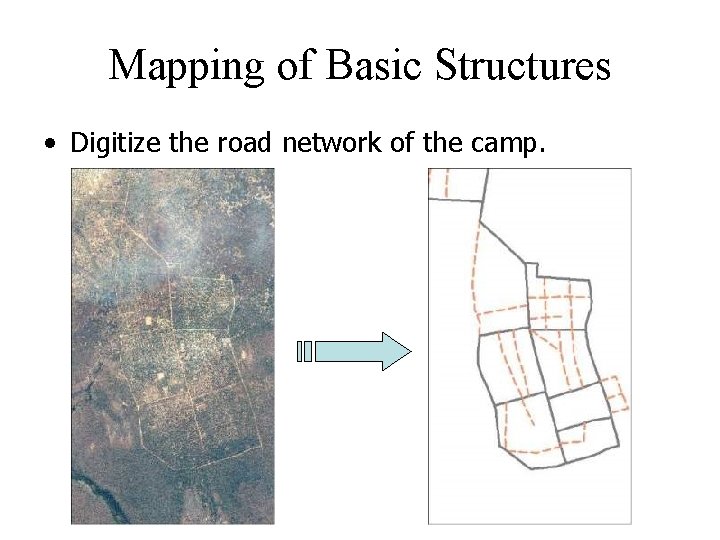
Mapping of Basic Structures • Digitize the road network of the camp.
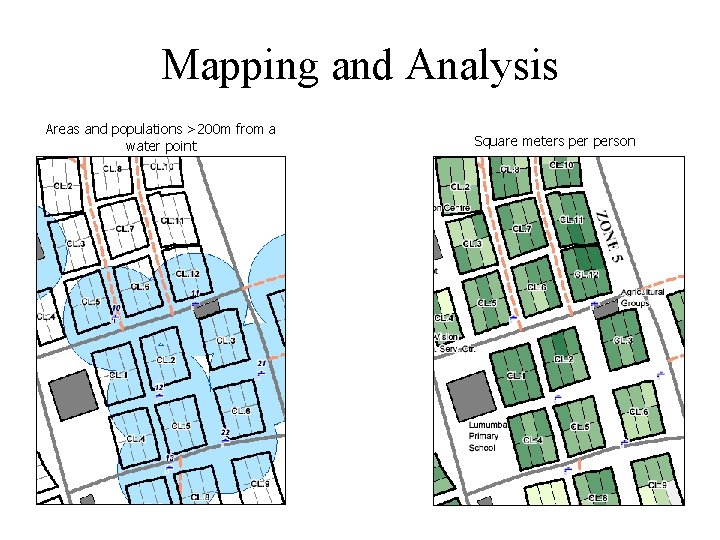
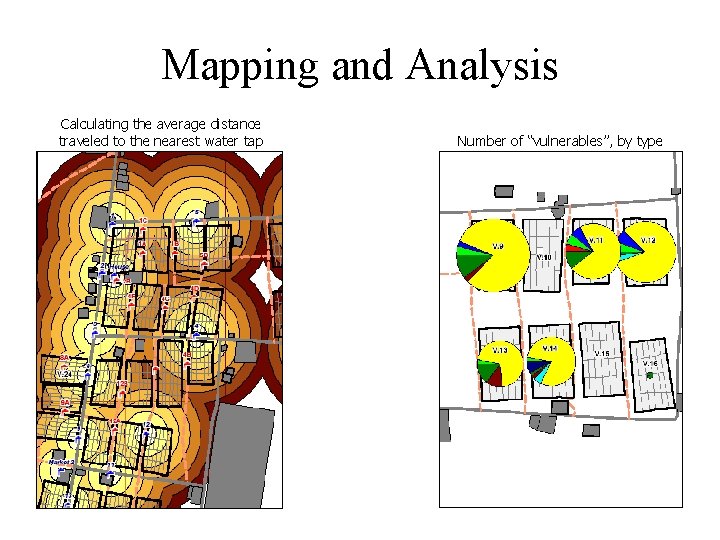
Water Sector
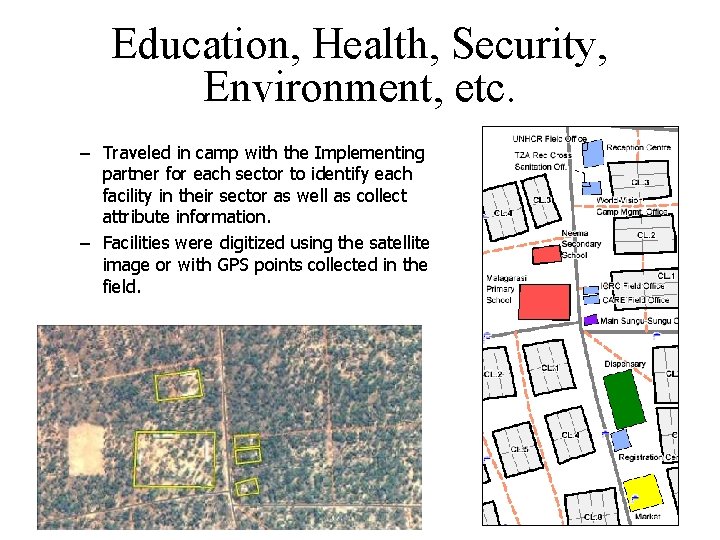
Education, Health, Security, Environment, etc. – Traveled in camp with the Implementing partner for each sector to identify each facility in their sector as well as collect attribute information. – Facilities were digitized using the satellite image or with GPS points collected in the field.
Mapping and Analysis Wat/San Education
Mapping and Analysis People per Block Age/Sex breakdown per Village
Mapping and Analysis Areas and populations >200 m from a water point Square meters person
Mapping and Analysis Calculating the average distance traveled to the nearest water tap Number of “vulnerables”, by type
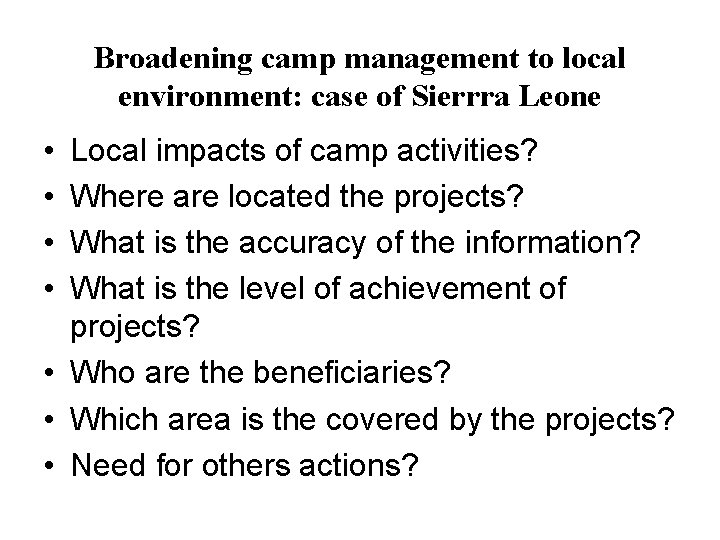
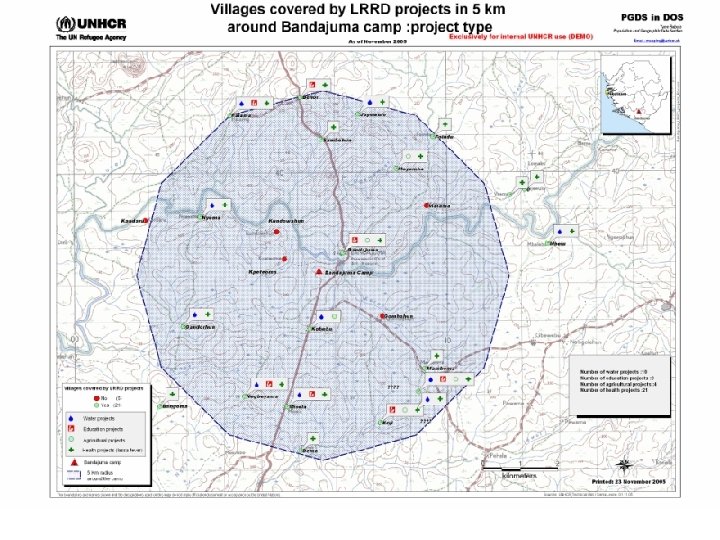
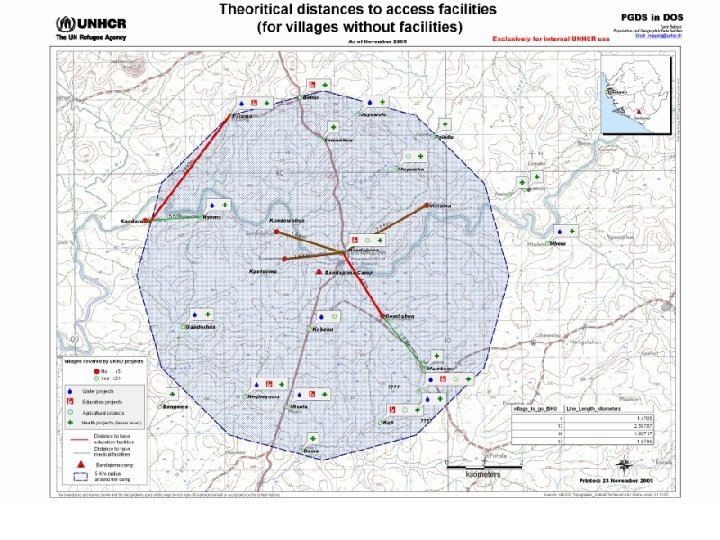
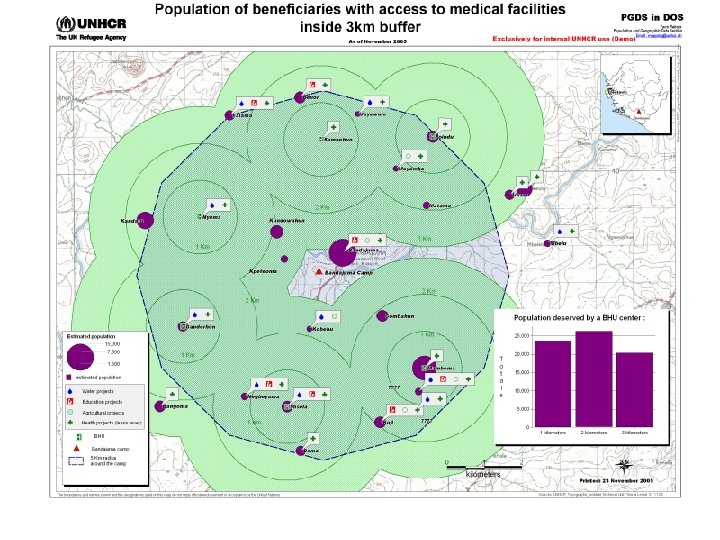
Broadening camp management to local environment: case of Sierrra Leone • • Local impacts of camp activities? Where are located the projects? What is the accuracy of the information? What is the level of achievement of projects? • Who are the beneficiaries? • Which area is the covered by the projects? • Need for others actions?
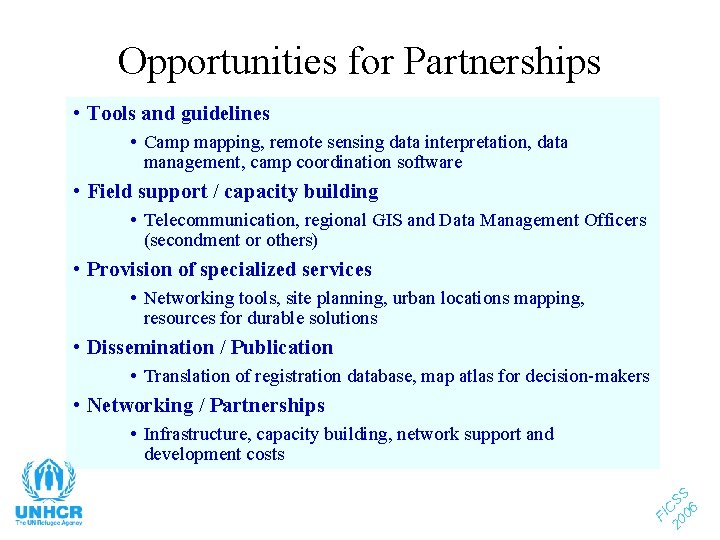
Opportunities for Partnerships • Tools and guidelines • Camp mapping, remote sensing data interpretation, data management, camp coordination software • Field support / capacity building • Telecommunication, regional GIS and Data Management Officers (secondment or others) • Provision of specialized services • Networking tools, site planning, urban locations mapping, resources for durable solutions • Dissemination / Publication • Translation of registration database, map atlas for decision-makers • Networking / Partnerships FI 20 CSS 06 • Infrastructure, capacity building, network support and development costs