
Field Ecology 1 Aquatics 2 Forests Grasslands 3
- Slides: 20
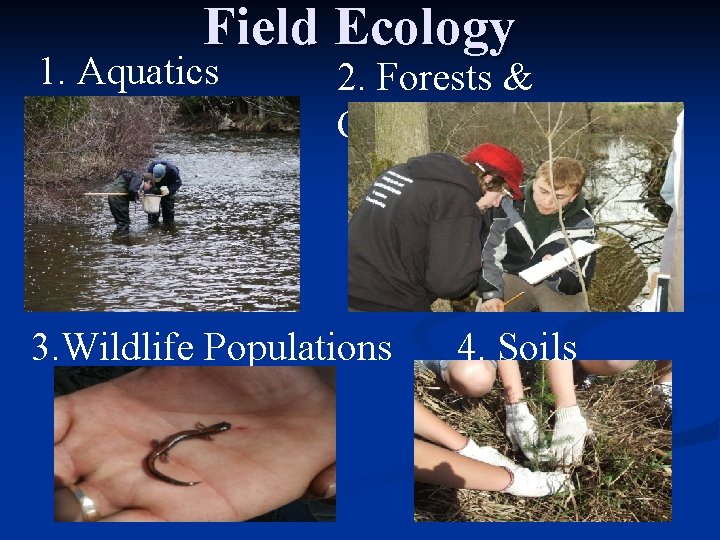
Field Ecology 1. Aquatics 2. Forests & Grasslands 3. Wildlife Populations 4. Soils
1. Aquatics Earth’s Fresh Water Supply n Oceans 97% (Salt Water) n Polar Ice Caps 2% (Fresh Water) n Groundwater 0. 9% (Fresh Water) n Surface Water 0. 1% (Fresh Water)
Uses of Freshwater Ecosystems 1. Domestic (drinking, cleaning, sewage treatment) 2. 3. 4. 5. 6. Crop Irrigation Recreational (fishing, boating, canoeing) Hydro-electricity Industrial Habitats (food chains linked to humans)
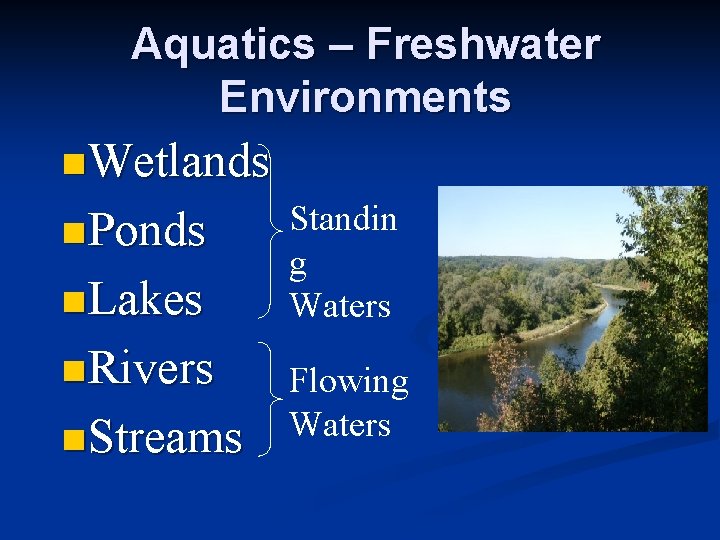
Aquatics – Freshwater Environments n Wetlands n Ponds n Lakes n Rivers n Streams Standin g Waters Flowing Waters
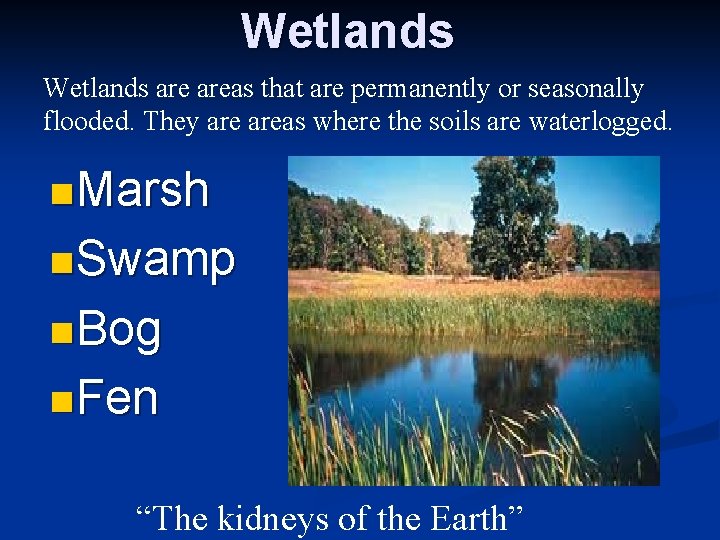
Wetlands are areas that are permanently or seasonally flooded. They areas where the soils are waterlogged. n Marsh n Swamp n Bog n Fen “The kidneys of the Earth”
Characteristics of Wetlands n Transition zone between land water ecosystems n Waterlogged soils n Water tolerant plants n Abundance of life and bio-diversity n Lots of decomposition (swamp gas)
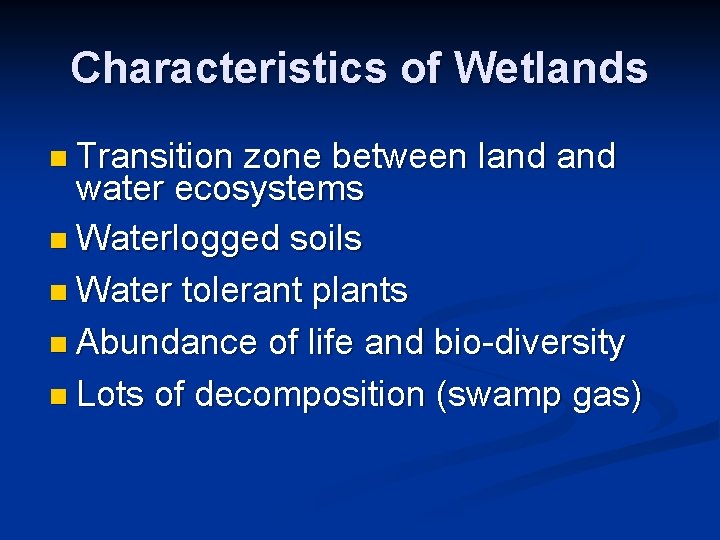
Marsh n n n Shallow, no open expanses of water Dominated by cattails, reeds, grasses, low shrubs Contains islands of soggy land
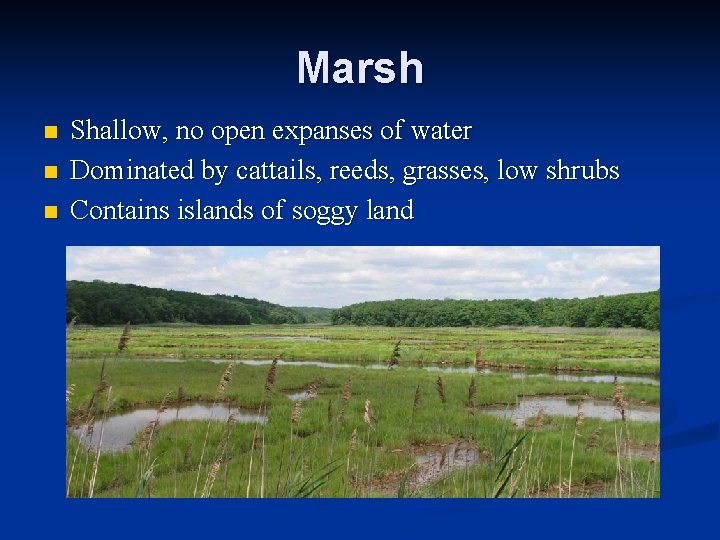
Swamp n Wooded wetland (Black willow, Dogwood, Tall shrubs)
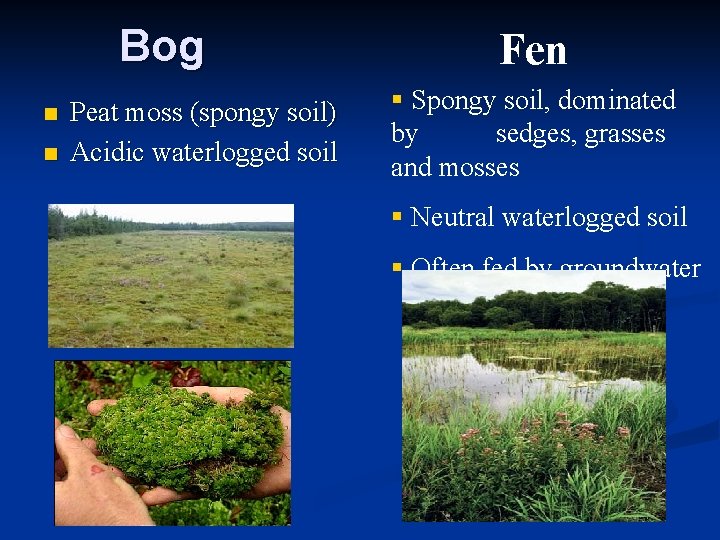
Bog n n Peat moss (spongy soil) Acidic waterlogged soil Fen § Spongy soil, dominated by sedges, grasses and mosses § Neutral waterlogged soil § Often fed by groundwater
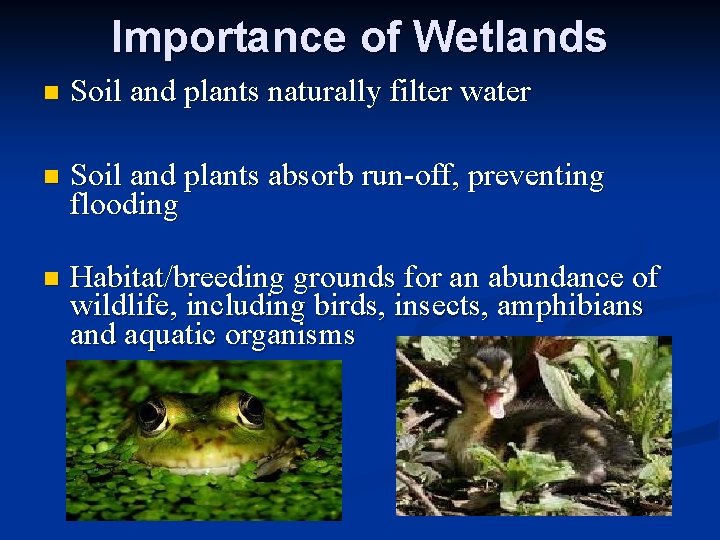
Importance of Wetlands n Soil and plants naturally filter water n Soil and plants absorb run-off, preventing flooding n Habitat/breeding grounds for an abundance of wildlife, including birds, insects, amphibians and aquatic organisms
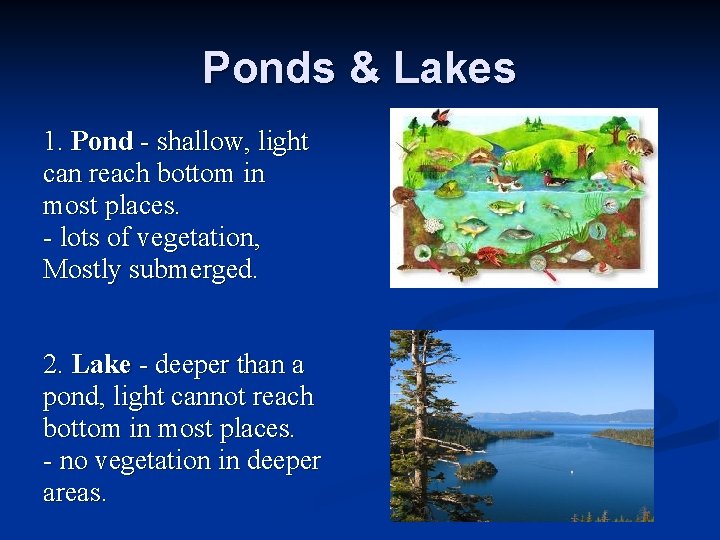
Ponds & Lakes 1. Pond - shallow, light can reach bottom in most places. - lots of vegetation, Mostly submerged. 2. Lake - deeper than a pond, light cannot reach bottom in most places. - no vegetation in deeper areas.
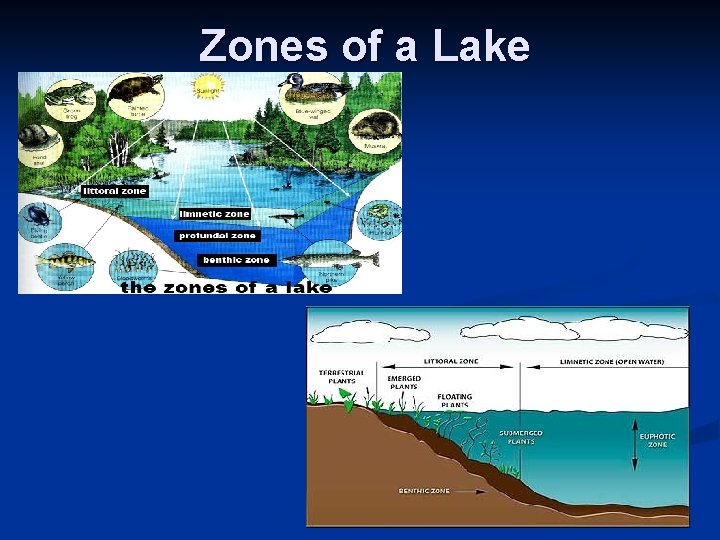
Zones of a Lake
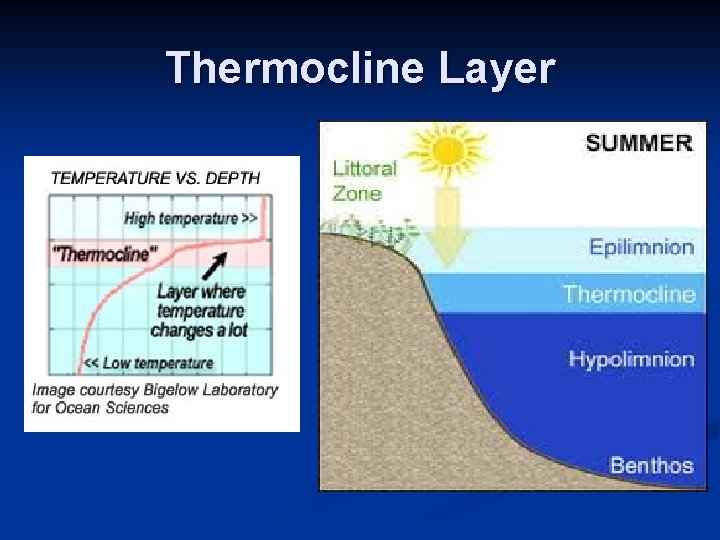
Thermocline Layer
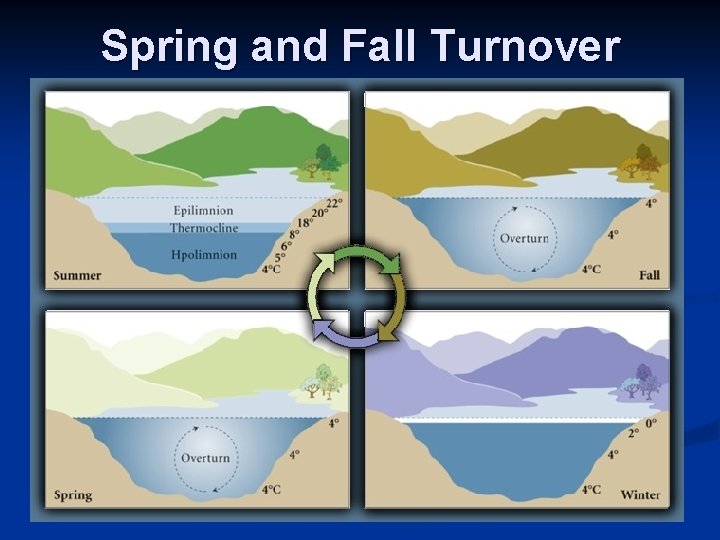
Spring and Fall Turnover
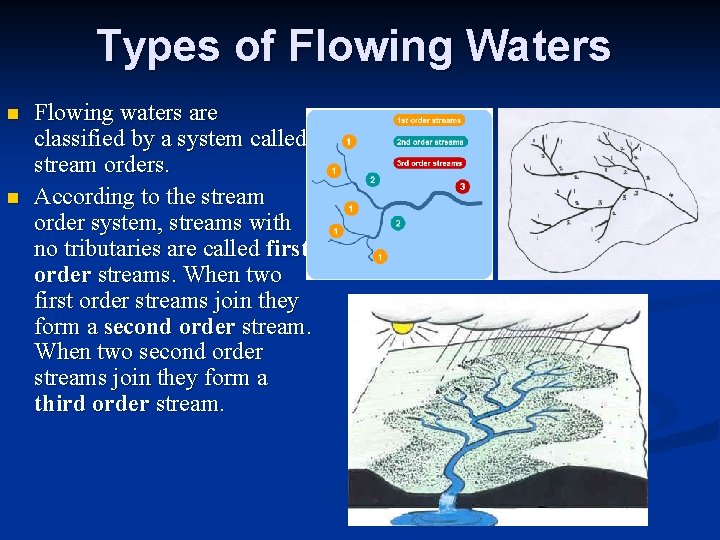
Types of Flowing Waters n n Flowing waters are classified by a system called stream orders. According to the stream order system, streams with no tributaries are called first order streams. When two first order streams join they form a second order stream. When two second order streams join they form a third order stream.
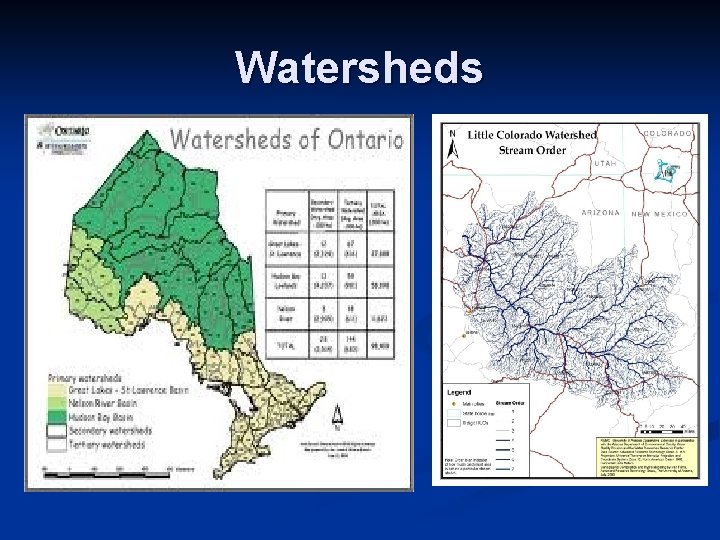
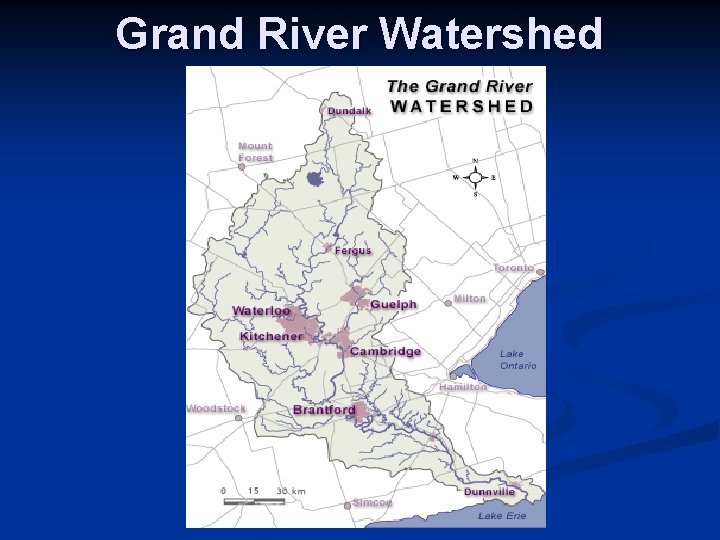
Watersheds
Grand River Watershed
Cold, Low Order Streams Low order streams are often much cooler than higher order streams on the same river system. There are 3 reasons for this: 1. Low order streams often originate in hilly country where the slope is high and therefore the stream speed is high. The resulting turbulence causes evaporation of the water which in turn cools the stream. 2. They are narrow and are often shielded from the heat of the sun by overhanging vegetation.
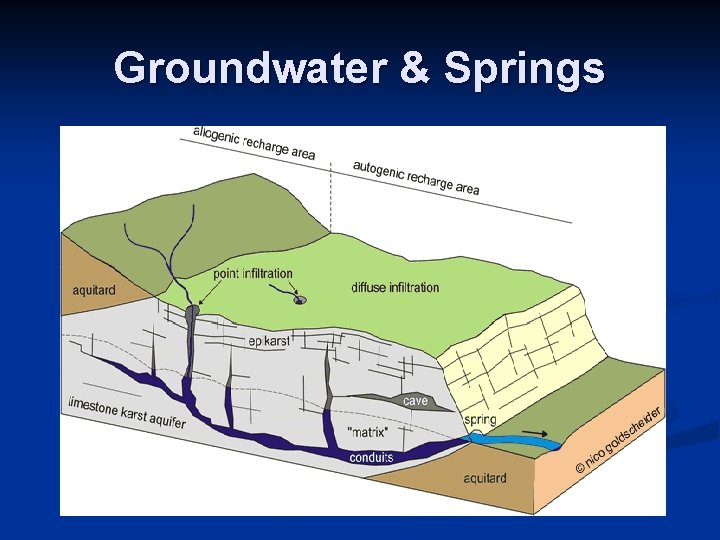
Groundwater & Springs
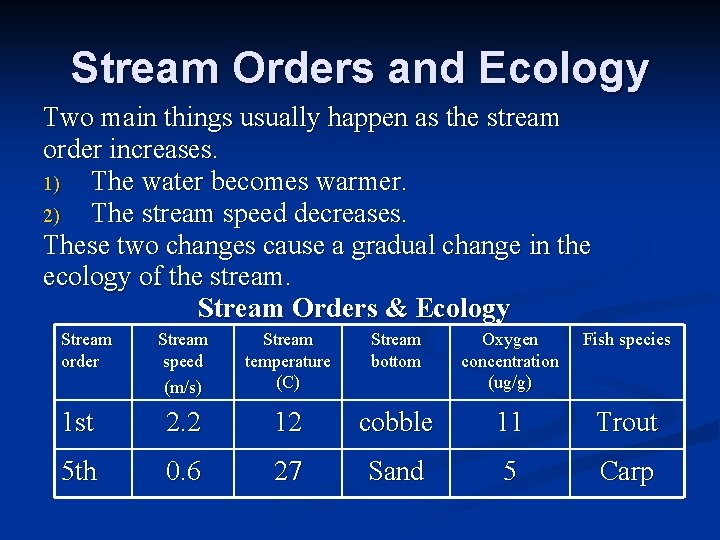
Stream Orders and Ecology Two main things usually happen as the stream order increases. 1) The water becomes warmer. 2) The stream speed decreases. These two changes cause a gradual change in the ecology of the stream. Stream Orders & Ecology Stream order Stream speed (m/s) Stream temperature (C) Stream bottom Oxygen concentration (ug/g) Fish species 1 st 2. 2 12 cobble 11 Trout 5 th 0. 6 27 Sand 5 Carp