
FICTIONAL ELEMENTS A REVIEW The 6 Fictional Elements
- Slides: 17
FICTIONAL ELEMENTS A REVIEW
The 6 Fictional Elements Characters Setting Plot Point of View Theme Mood or Tone
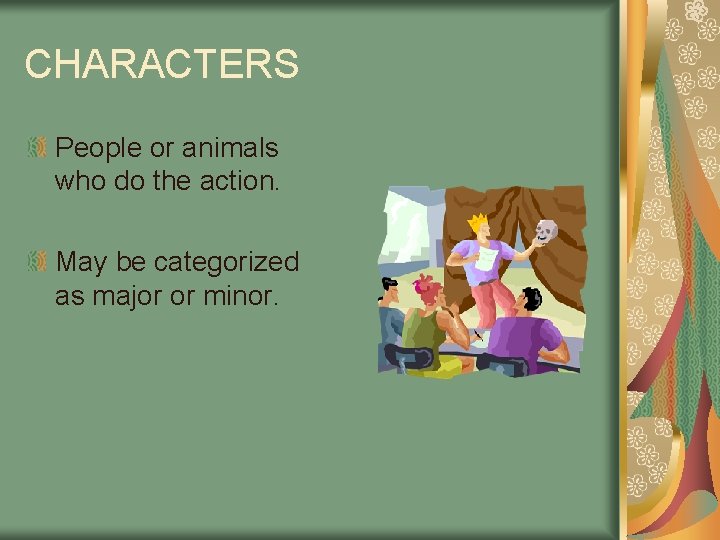
CHARACTERS People or animals who do the action. May be categorized as major or minor.
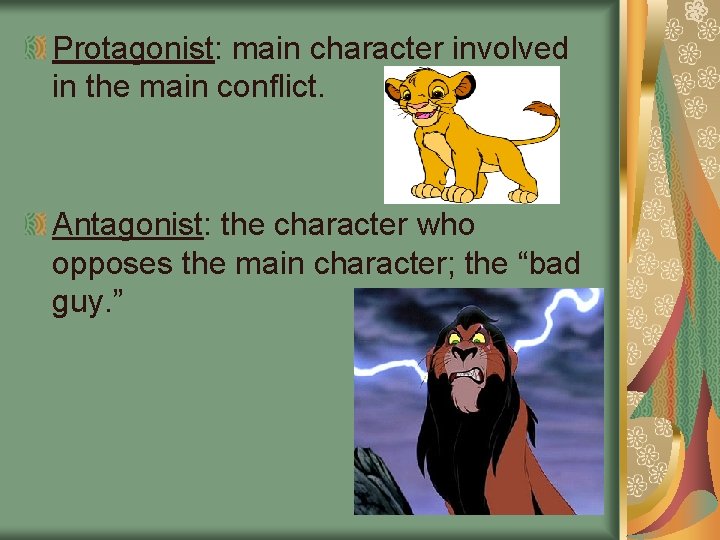
Protagonist: main character involved in the main conflict. Antagonist: the character who opposes the main character; the “bad guy. ”
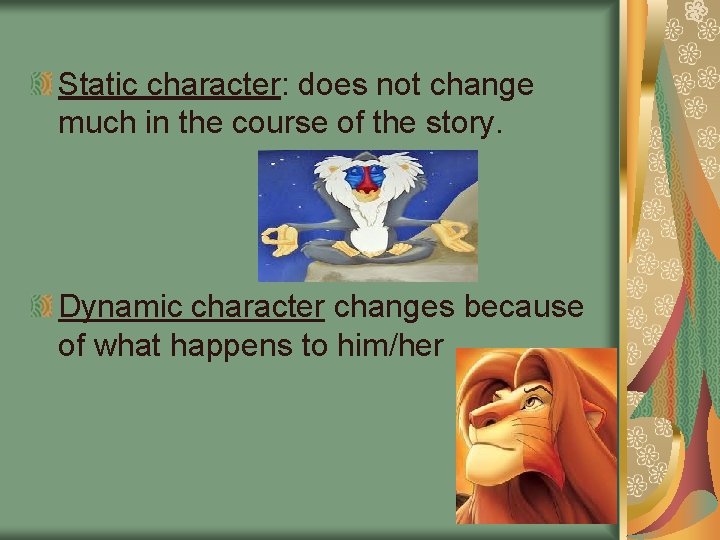
Static character: does not change much in the course of the story. Dynamic character changes because of what happens to him/her
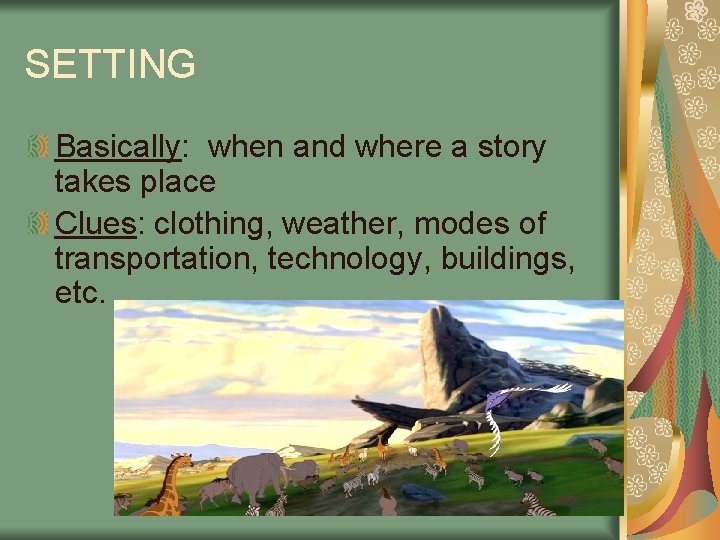
SETTING Basically: when and where a story takes place Clues: clothing, weather, modes of transportation, technology, buildings, etc.
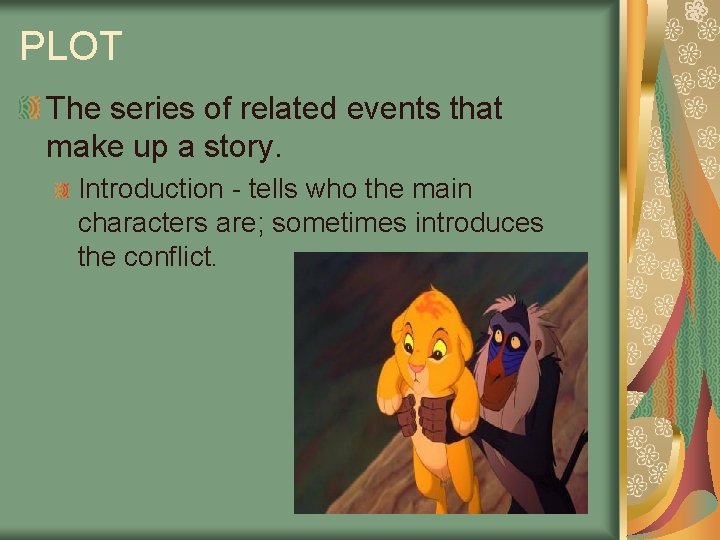
PLOT The series of related events that make up a story. Introduction - tells who the main characters are; sometimes introduces the conflict.
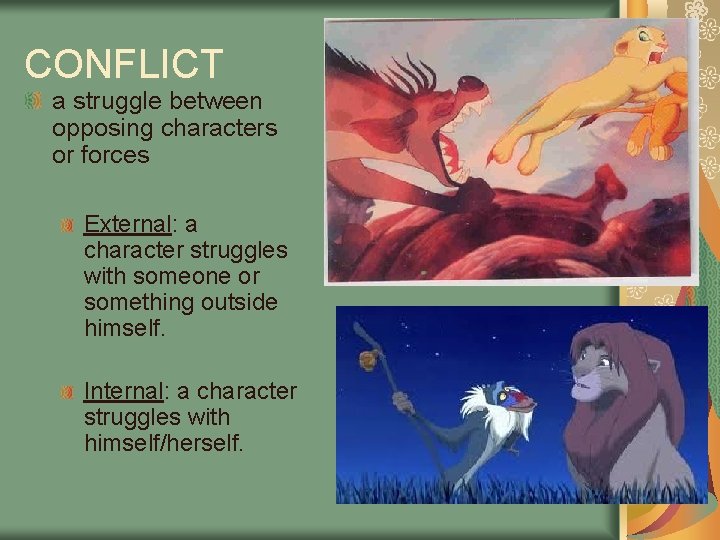
CONFLICT a struggle between opposing characters or forces External: a character struggles with someone or something outside himself. Internal: a character struggles with himself/herself.
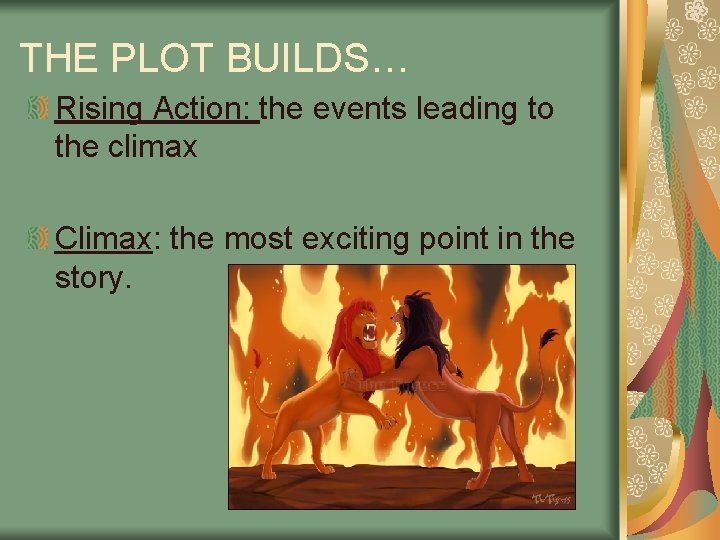
THE PLOT BUILDS… Rising Action: the events leading to the climax Climax: the most exciting point in the story.
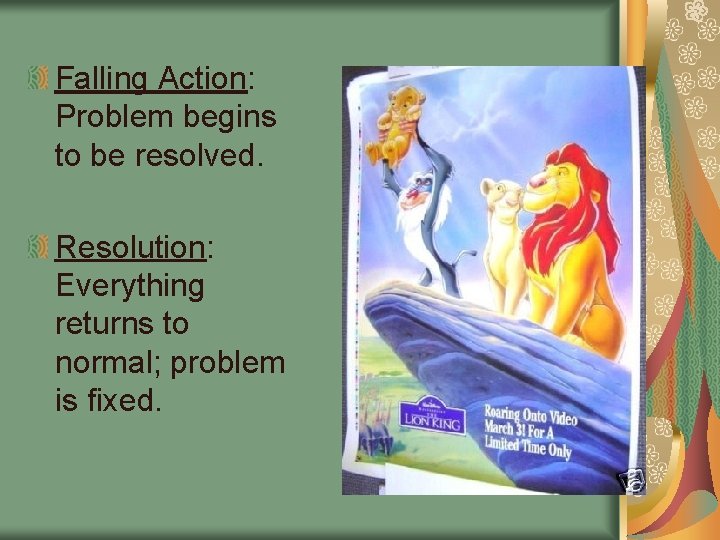
Falling Action: Problem begins to be resolved. Resolution: Everything returns to normal; problem is fixed.
POINT OF VIEW The vantage point from which the story is told Narrator: Person telling the story.
Omniscient Narrator “All Knowing” Knows everything about the characters. Knows the past, present, and future. Knows what is happening everywhere at all times. Does not take part in the story.
First person narrator One of the characters. Reader gets to know this character well. Uses “I” or “Me” We only know things from this character’s side. We do not know “both sides” of the story.
Third person limited narrator The narrator focuses on the thoughts and feelings of only one character. Readers only see through one character’s point of view. Sometimes this character may be unreliable or biased.
TONE and MOOD Mood: The overall feeling of a story. Can be described by one or two adjectives, such as scary, funny, sad. Tone: The attitude with which an author writes.
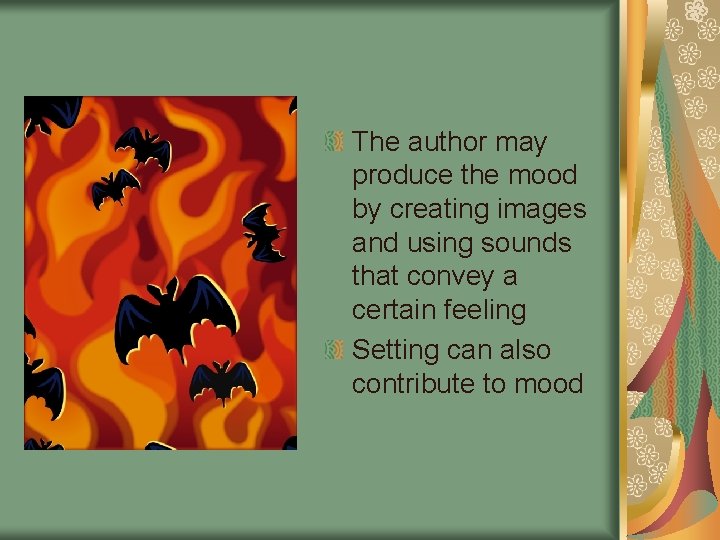
The author may produce the mood by creating images and using sounds that convey a certain feeling Setting can also contribute to mood
THEME General idea or insight about life that a story reveals. Not the same as the subject. The message that the author wishes to convey about the subject.