
FIBRE Unit 2 The 6 Basic Nutrients Carbohydrates
FIBRE Unit 2: The 6 Basic Nutrients - Carbohydrates
Test your fibre i. q. Complete the Fibre IQ Handout!
Fibre i. q. Answers 1. A & C 2. B 3. B 4. C 5. B 6. A & B 7. A 8. A 9. C 10. B &C
FACTS on FIBRE • Fibre, also known as dietary fibre, bulk or roughage, is the plant food that cannot be broken down by the body. • Fibre comes from the part of the plant that gives it structure such as the outer skin, roots, stems, leaves and seeds.
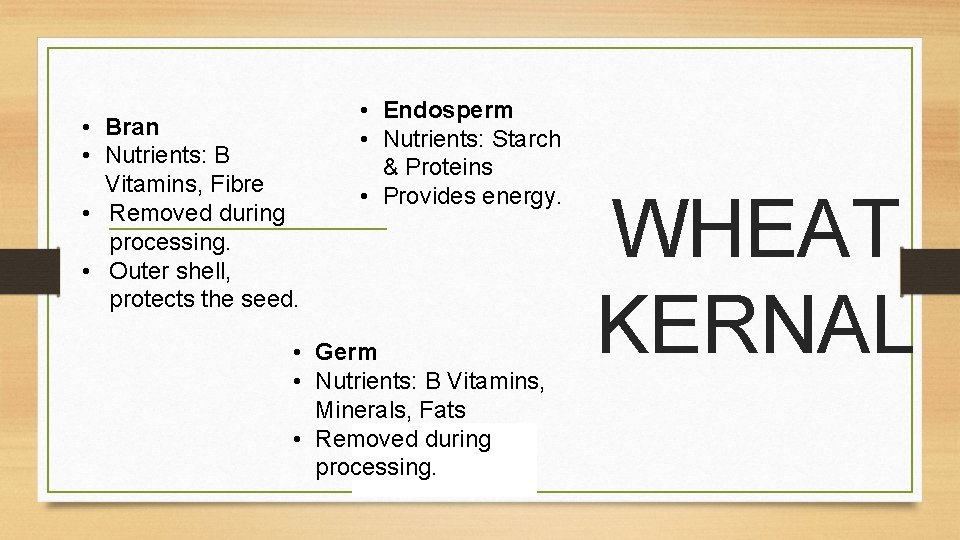
• Bran • Nutrients: B Vitamins, Fibre • Removed during processing. • Outer shell, protects the seed. • Endosperm • Nutrients: Starch & Proteins • Provides energy. • Germ • Nutrients: B Vitamins, Minerals, Fats • Removed during processing. WHEAT KERNAL
WHOLE GRAINS • Provide the benefits of vitamins, minerals, dietary fibre and phytochemicals (natural plant compounds). • Whole Grain is NOT the same as Multi-Grain. • Common types of WHOLE GRAINS: • Brown Rice • Oatmeal - whole, rolled or steal cut • Pearl Barley • Popcorn • Whole Wheat • Wild Rice
WHAT’s MISSING: Refined Grains • Contain ONLY the endosperm. • Nutrient content is reduced by 25%90%. • Many refined foods are “enriched” with some of the nutrients lost in milling. Whole Grain White? ? !!
Two Types of FIBRE INSOLUBLE • Do not dissolve in water. • Helps keep things moving through your digestive system. • Helps prevent constipation, diverticulosis, hemorrhoids and cancer of the colon. SOLUBLE • Dissolves in water and forms a kind of paste to slow down the emptying time of the stomach. • Lowers blood cholesterol, helping to reduce the risk of heart attack and strokes. • Best sources are fruits, vegetables, oat bran and legumes.
Soluble vs Insoluble Fibre http: //youtu. be/Mggn. T 0 OVZwo
How much fibre do you need? • To estimate your fibre needs, take your age and add 5. • Use this formula until age 20. After that aim for 25 -30 grams/day. For most people, that means doubling your current intake.
Side Effects • A HIGH FIBRE DIET often leads to a increase in intestinal gas.
HEALTH CHECK • A high fibre diet is recommended to reduce the risk of the following medical conditions… • • Diverticulosis Colon Cancer Heart Disease Diabetes
Identifying Nutritional Information Chart
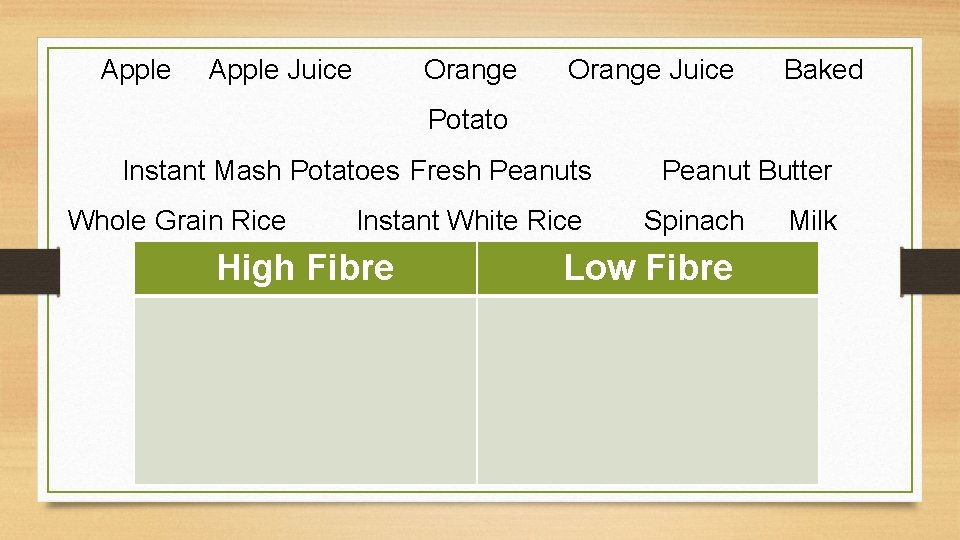
Apple Juice Orange Juice Baked Potato Instant Mash Potatoes Fresh Peanuts Whole Grain Rice Instant White Rice High. Baked Fibre Beans Peanut Butter Spinach Low Fibre Canned Tuna Milk
QUESTIONS 1. What characteristics distinguish high-fibre foods from lower fibre foods? 2. Are there any “rules of thumb” that consumers can use to determine if foods are high or low in fibre? 3. Based on the chart, what conclusions can be drawn about the advances in food technology and the quantity of fibre in food? 4. What actions can consumers take to insure that manufacturers do not eliminate too much fibre from food products?
- Slides: 15