
Fibre to Fabric Fibres To Where do fibres
Fibre to Fabric Fibres To Where do fibres come from? Fabric Where do fibres come from?
What are fibres? Fibres are the fine, hair like structures which are spun together to make yarn. What is yarn? Yarn is made up of many fibres which are spun together
Fibres can be either: Natural Synthetic or Man Made

Natural Fibres Natural fibres come from either plants or animals. There are many natural fibres available. These are the most common:
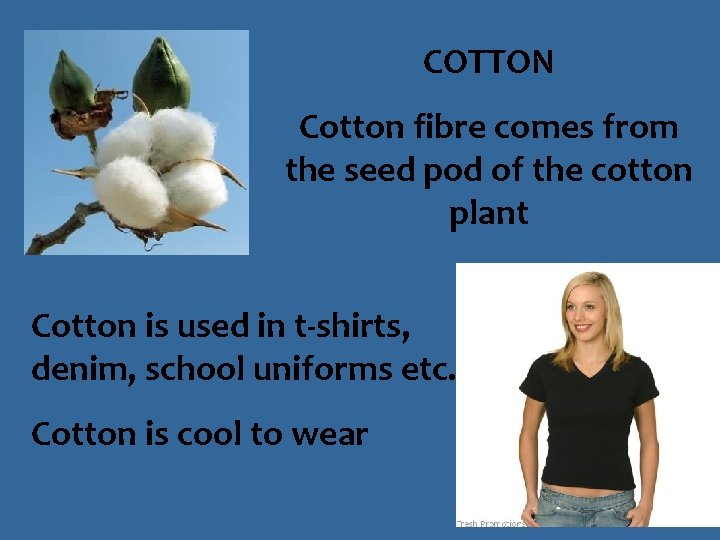
COTTON Cotton fibre comes from the seed pod of the cotton plant Cotton is used in t-shirts, denim, school uniforms etc. Cotton is cool to wear
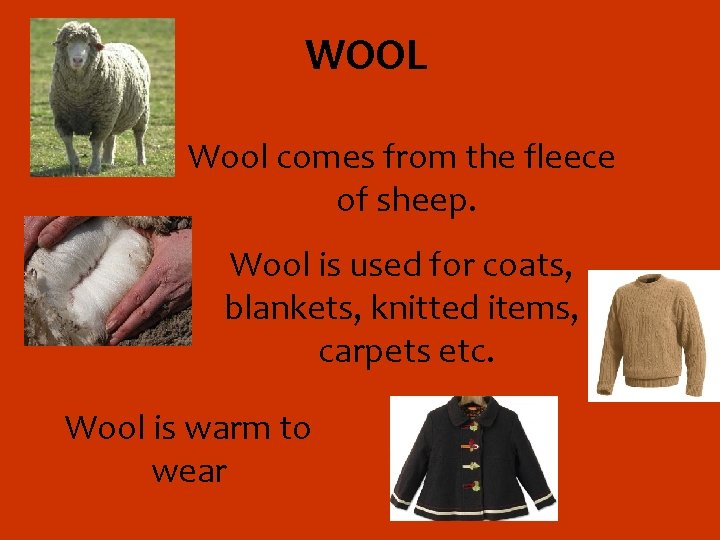
WOOL Wool comes from the fleece of sheep. Wool is used for coats, blankets, knitted items, carpets etc. Wool is warm to wear
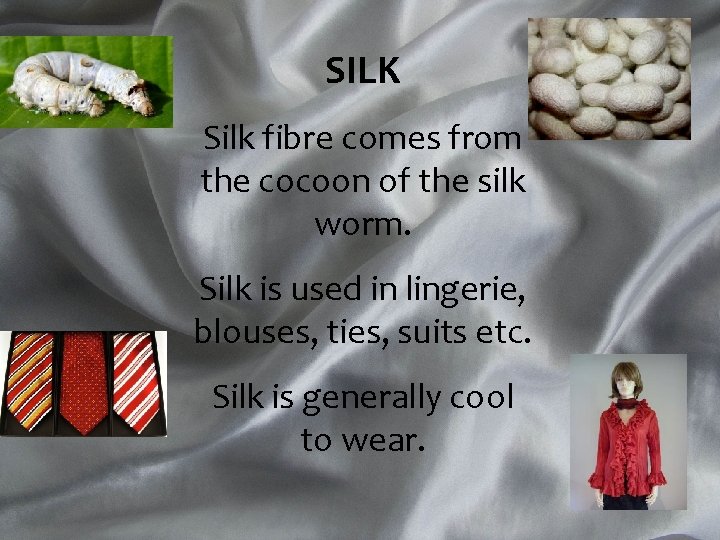
SILK Silk fibre comes from the cocoon of the silk worm. Silk is used in lingerie, blouses, ties, suits etc. Silk is generally cool to wear.
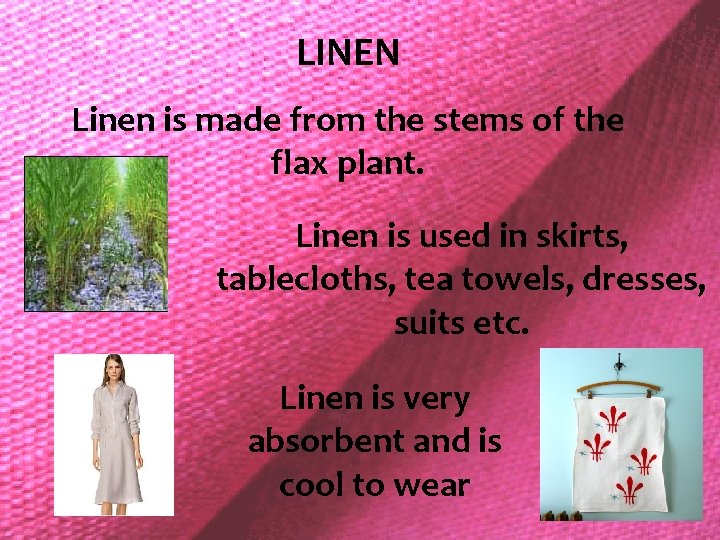
LINEN Linen is made from the stems of the flax plant. Linen is used in skirts, tablecloths, tea towels, dresses, suits etc. Linen is very absorbent and is cool to wear
Generally, natural fibres are strong, absorbent and they are warm Generally, natural fibresor arecool wear. strong andto absorbent. They may be either cool or warm to wear. They have a wide range of uses.
SYNTHETIC FIBRES Synthetic fibres are made entirely from chemicals. There are hundreds of synthetic fibres. Some of the most common ones are:
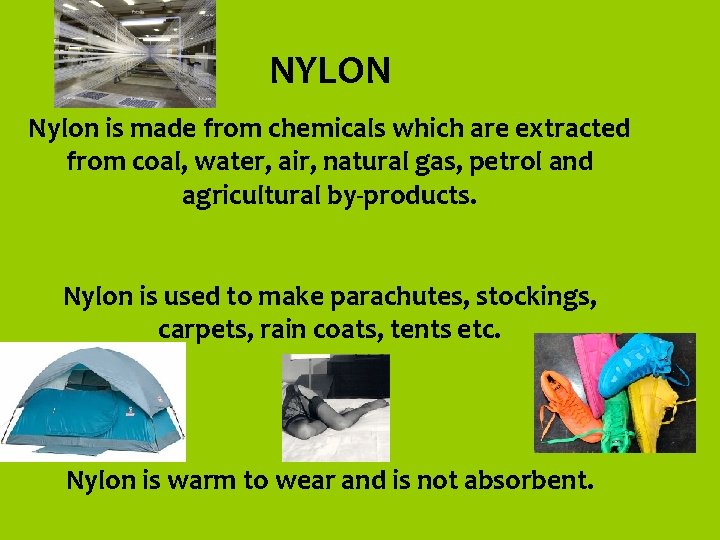
NYLON Nylon is made from chemicals which are extracted from coal, water, air, natural gas, petrol and agricultural by-products. Nylon is used to make parachutes, stockings, carpets, rain coats, tents etc. Nylon is warm to wear and is not absorbent.
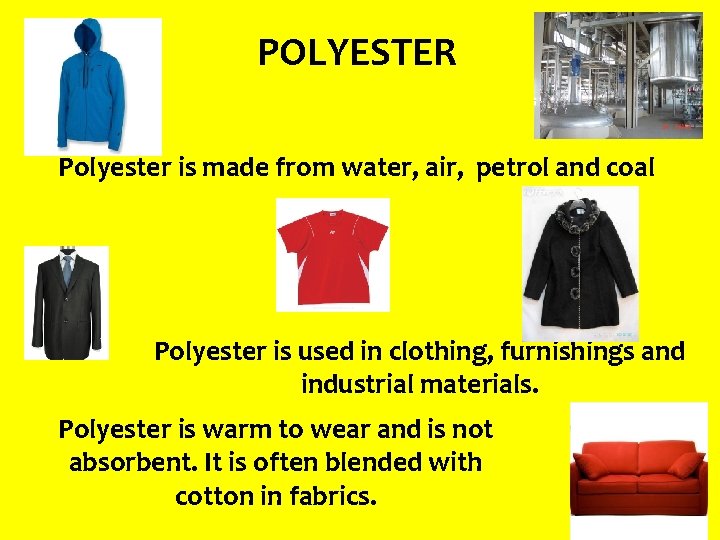
POLYESTER Polyester is made from water, air, petrol and coal Polyester is used in clothing, furnishings and industrial materials. Polyester is warm to wear and is not absorbent. It is often blended with cotton in fabrics.
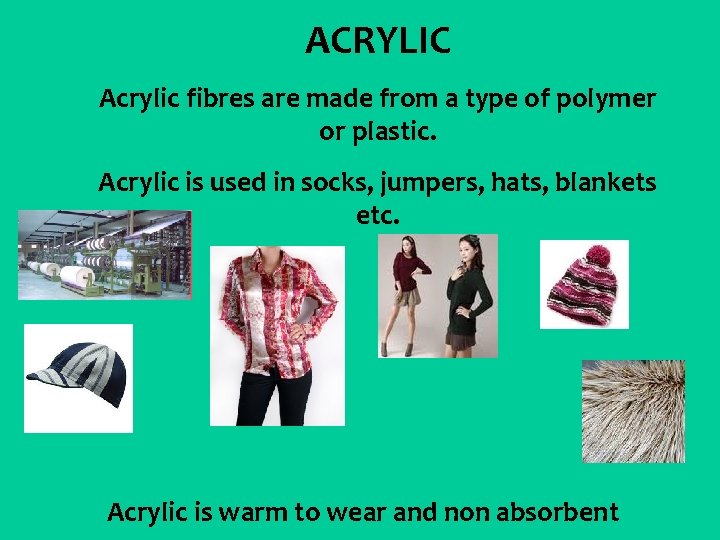
ACRYLIC Acrylic fibres are made from a type of polymer or plastic. Acrylic is used in socks, jumpers, hats, blankets etc. Acrylic is warm to wear and non absorbent
Generally, synthetic fibres are fairly strong, warm to wear, non absorbent and melt at low to medium temperature. They have a wide range of uses.
MAN MADE FIBRES Man made fibres are made from a combination of natural and chemical or synthetic ingredients. One well known made fibre is:
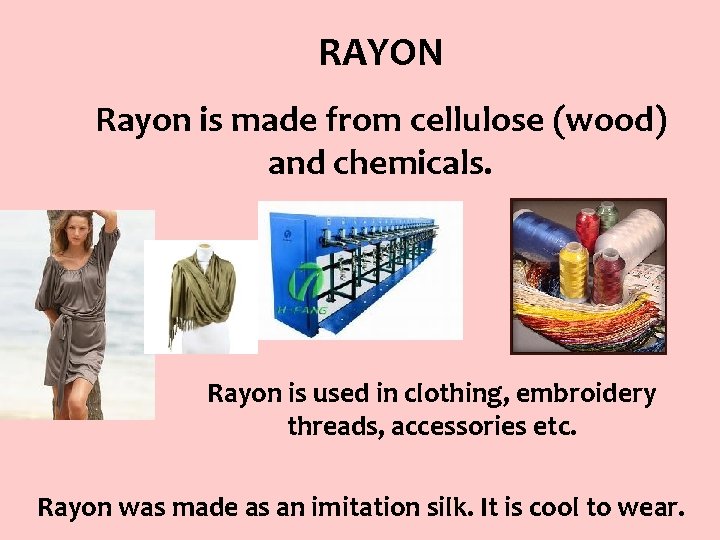
RAYON Rayon is made from cellulose (wood) and chemicals. Rayon is used in clothing, embroidery threads, accessories etc. Rayon was made as an imitation silk. It is cool to wear.
It is very common for different fibres to be combined together into a fabric. Sometimes two or more natural fibres will be combined eg. silk and wool. More commonly a natural and a synthetic will be combined eg. cotton and polyester.
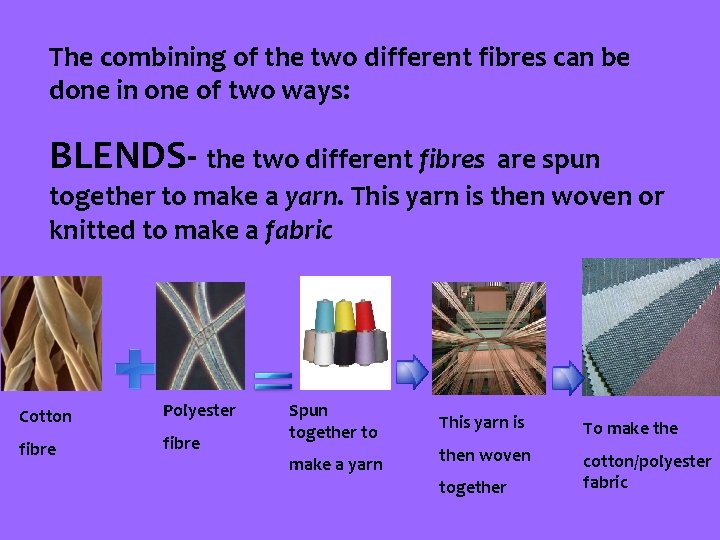
The combining of the two different fibres can be done in one of two ways: BLENDS- the two different fibres are spun together to make a yarn. This yarn is then woven or knitted to make a fabric Cotton Polyester fibre Spun together to make a yarn This yarn is To make then woven cotton/polyester fabric together
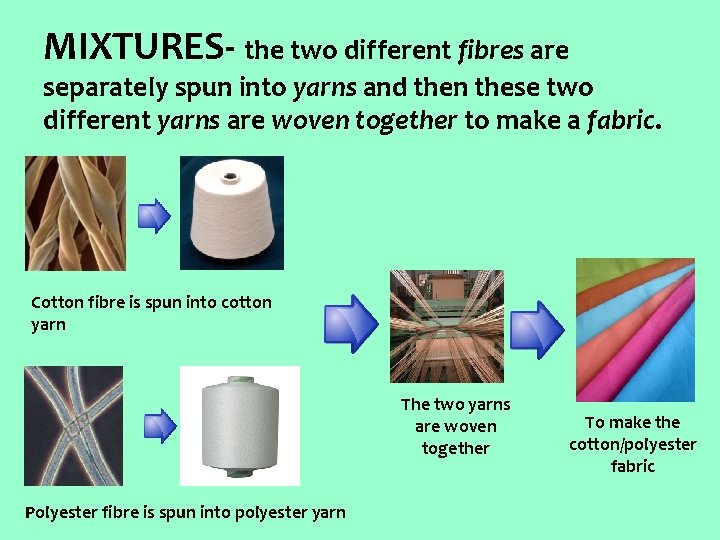
MIXTURES- the two different fibres are separately spun into yarns and then these two different yarns are woven together to make a fabric. Cotton fibre is spun into cotton yarn The two yarns are woven together Polyester fibre is spun into polyester yarn To make the cotton/polyester fabric
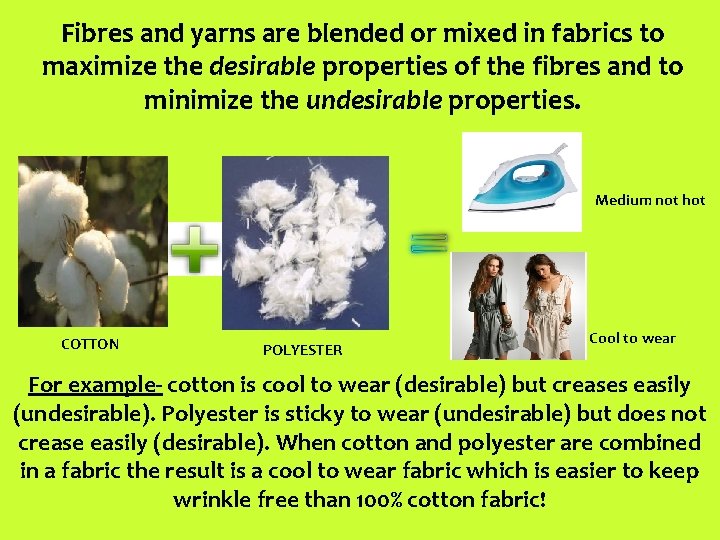
Fibres and yarns are blended or mixed in fabrics to maximize the desirable properties of the fibres and to minimize the undesirable properties. Medium not hot COTTON POLYESTER Cool to wear For example- cotton is cool to wear (desirable) but creases easily (undesirable). Polyester is sticky to wear (undesirable) but does not crease easily (desirable). When cotton and polyester are combined in a fabric the result is a cool to wear fabric which is easier to keep wrinkle free than 100% cotton fabric!
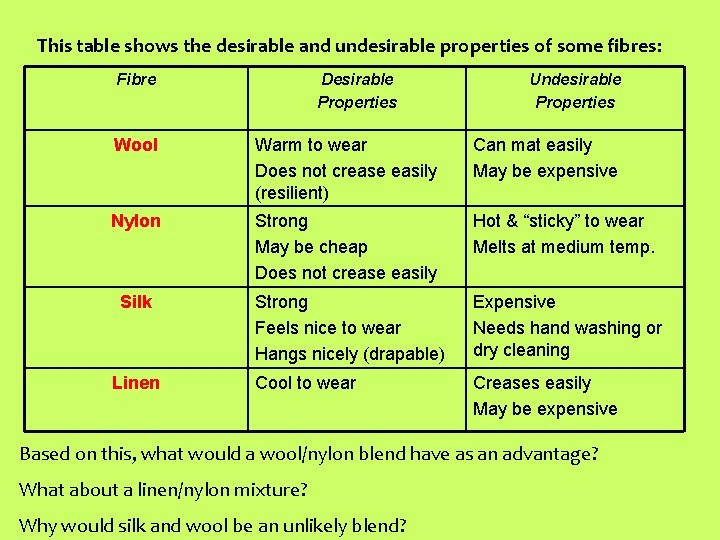
This table shows the desirable and undesirable properties of some fibres: Fibre Desirable Properties Undesirable Properties Wool Warm to wear Does not crease easily (resilient) Can mat easily May be expensive Nylon Strong May be cheap Does not crease easily Hot & “sticky” to wear Melts at medium temp. Silk Strong Feels nice to wear Hangs nicely (drapable) Expensive Needs hand washing or dry cleaning Cool to wear Creases easily May be expensive Linen Based on this, what would a wool/nylon blend have as an advantage? What about a linen/nylon mixture? Why would silk and wool be an unlikely blend?

THE END
- Slides: 22