
FIBRACASA Affordable Houses from Natural Fibre Plastic Composites
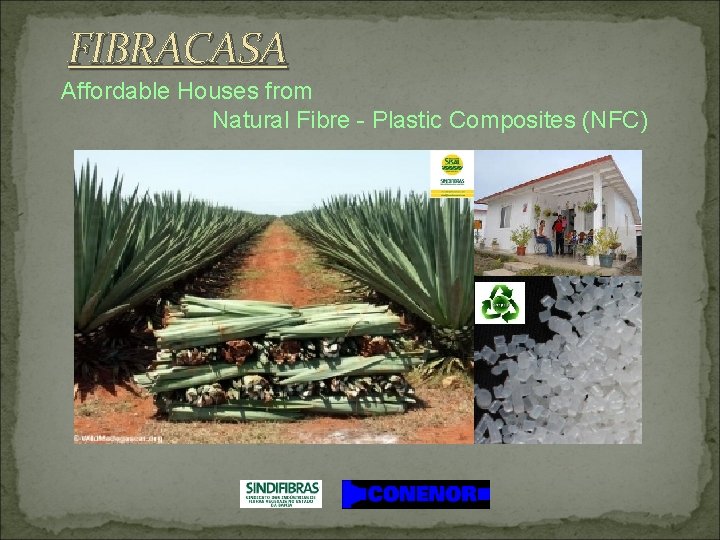
FIBRACASA Affordable Houses from Natural Fibre - Plastic Composites (NFC)
FIBRACASA ( TM by Conenor Ltd) Conenor Ltd, Finland ”Innovative extrusion processes and machinery” • Management driven SME, found in 1995 • Specialized in applied development of natural fibre – plastic composite materials, products and extrusion processes on economy basis from utilisation of industry, forestry and agriculture waste streams • Providing NFC consulting and project management services • Acting on project basis globally • Current main green project ”IRCOW” (see www. ircow. eu) for better recovery of construction and demolition waste in EU • Own Conex®-extrusion equipment and lines for trials, sampling and product development in single and multilayer product structures
FIBRACASA ”Concept for affordable houses from natural fibre and plastic composites (NFC) for the people with low income level in the Third World. ” Have NFC-houses been built yet ? Not really, but something to note yes !
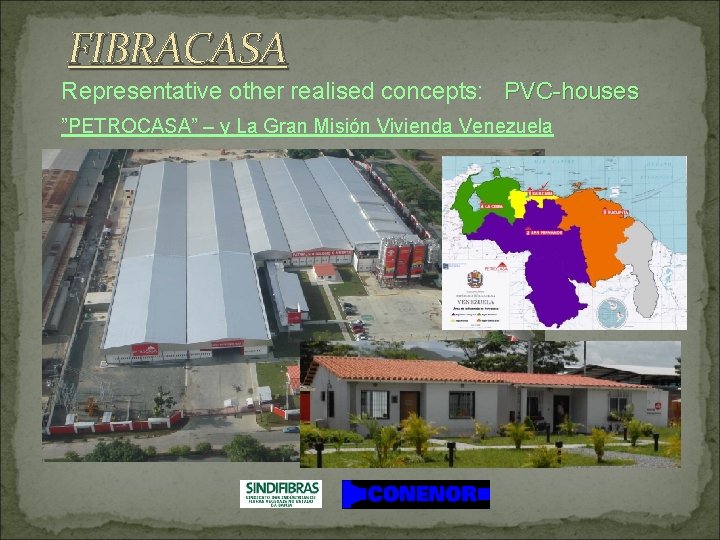
FIBRACASA Representative other realised concepts: PVC-houses ”PETROCASA” – y La Gran Misión Vivienda Venezuela
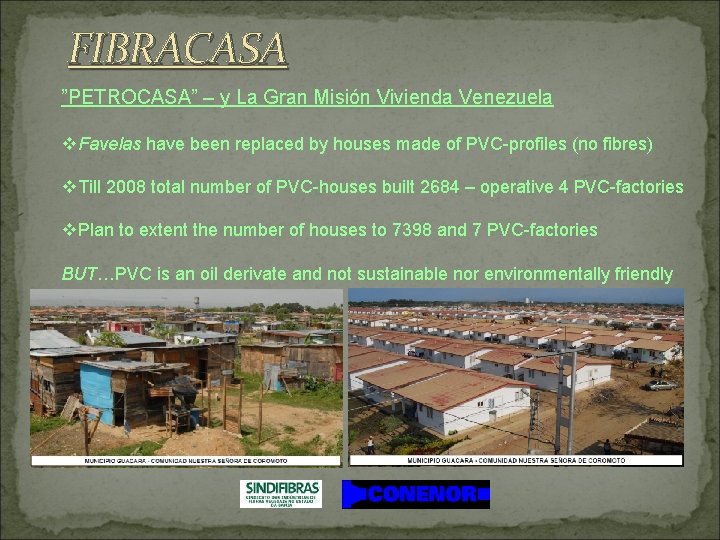
FIBRACASA ”PETROCASA” – y La Gran Misión Vivienda Venezuela v. Favelas have been replaced by houses made of PVC-profiles (no fibres) v. Till 2008 total number of PVC-houses built 2684 – operative 4 PVC-factories v. Plan to extent the number of houses to 7398 and 7 PVC-factories BUT…PVC is an oil derivate and not sustainable nor environmentally friendly
FIBRACASA ”PETROCASA” – y La Gran Misión Vivienda Venezuelan TV-news at You. Tube http: //www. youtube. com/watch? v=CELd. DKPso 9 w
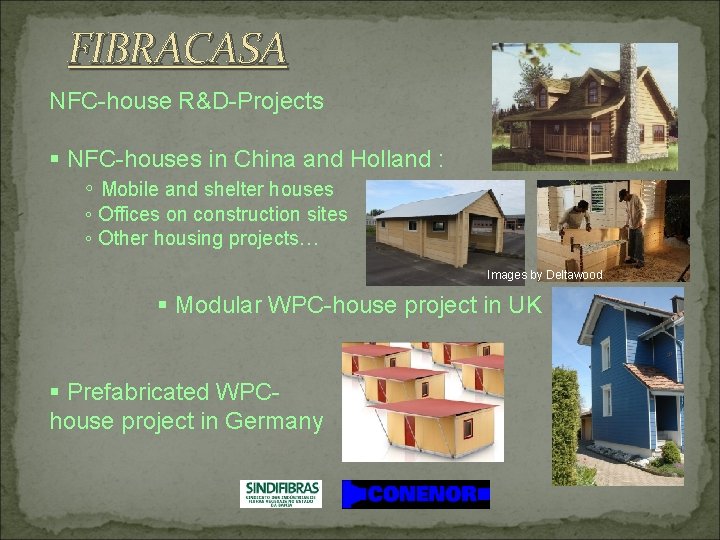
FIBRACASA NFC-house R&D-Projects § NFC-houses in China and Holland : ◦ Mobile and shelter houses ◦ Offices on construction sites ◦ Other housing projects… Images by Deltawood § Modular WPC-house project in UK § Prefabricated WPChouse project in Germany
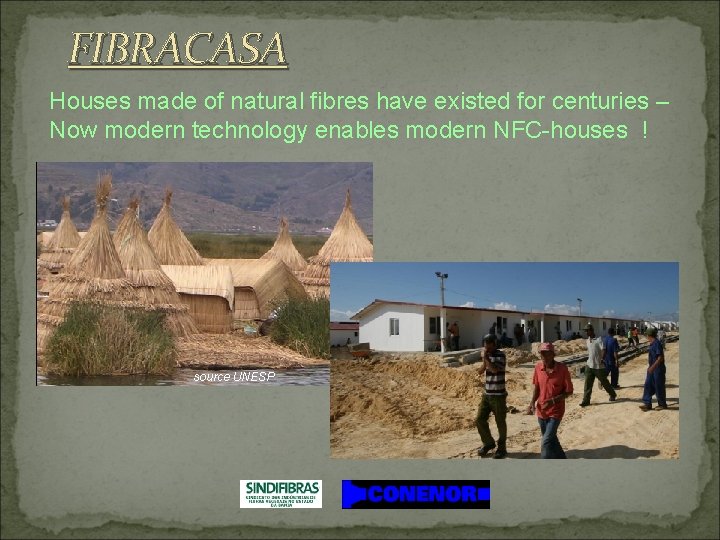
FIBRACASA Houses made of natural fibres have existed for centuries – Now modern technology enables modern NFC-houses ! source UNESP
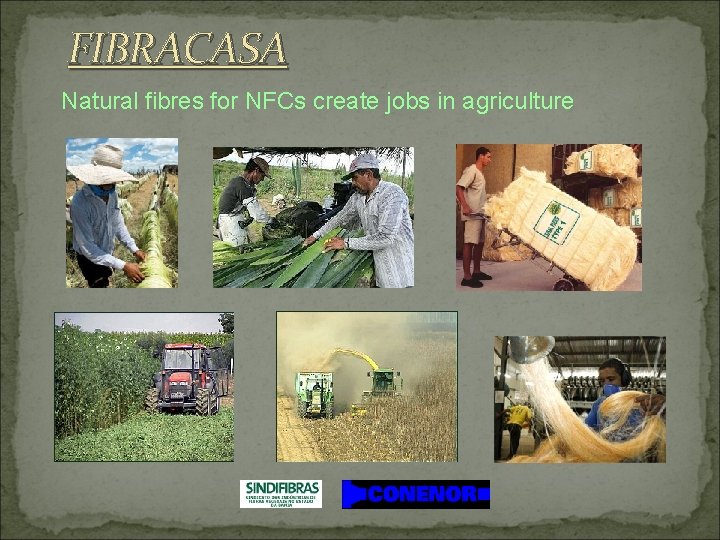
FIBRACASA Natural fibres for NFCs create jobs in agriculture
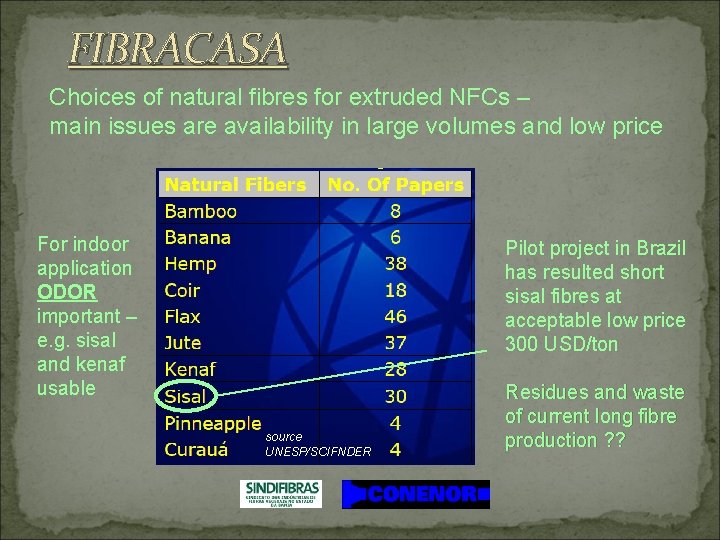
FIBRACASA Choices of natural fibres for extruded NFCs – main issues are availability in large volumes and low price For indoor application ODOR important – e. g. sisal and kenaf usable Pilot project in Brazil has resulted short sisal fibres at acceptable low price 300 USD/ton source UNESP/SCIFNDER Residues and waste of current long fibre production ? ?
FIBRACASA Extruded NFCs are a high volume / low price market for very short fibres L< 10 mm and can utilise lower qualities The Book: O Sisal do Brasil “According to Companhia Nacional de Abastecimento (CONAB) data, Brazil produced 139, 700 tonnes of dry sisal fiber in 2004, which represents just 4% of the harvested sisal leaves. The solid waste produced to decorticate that amount of fiber corresponds to 14% of the leaf, or approximately 489, 000 tonnes a highly significant quantity that merits studies to find a better way of using it. ” o Opportunity to utilise sorted fractions of solid sisal waste to improve significantly the yield of present harvesting ! o Turn ”fibre waste and residues ” of high end industry uses into valuable raw material in low end industry i. e. construction ! o Accept lower grades, more moisture, more dust etc. ? YES !
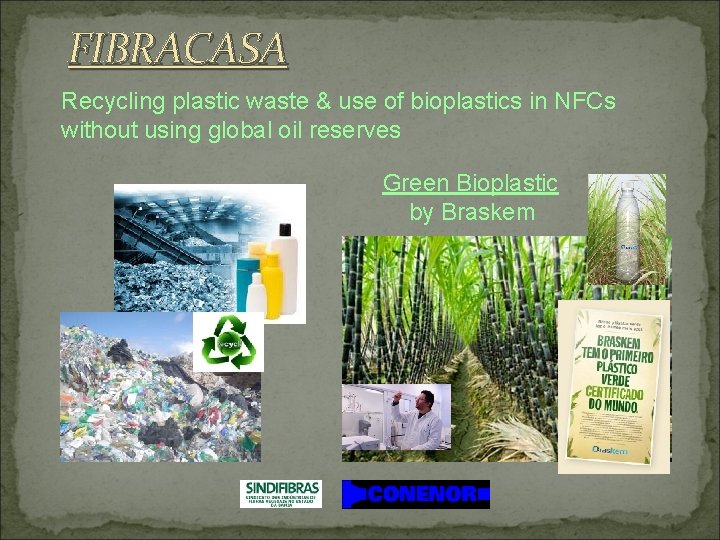
FIBRACASA Recycling plastic waste & use of bioplastics in NFCs without using global oil reserves Green Bioplastic by Braskem
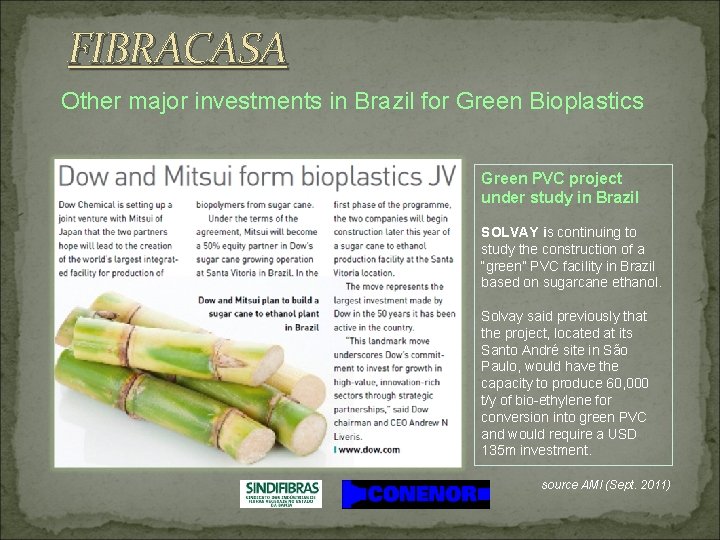
FIBRACASA Other major investments in Brazil for Green Bioplastics Green PVC project under study in Brazil SOLVAY is continuing to study the construction of a “green” PVC facility in Brazil based on sugarcane ethanol. Solvay said previously that the project, located at its Santo André site in São Paulo, would have the capacity to produce 60, 000 t/y of bio-ethylene for conversion into green PVC and would require a USD 135 m investment. source AMI (Sept. 2011)
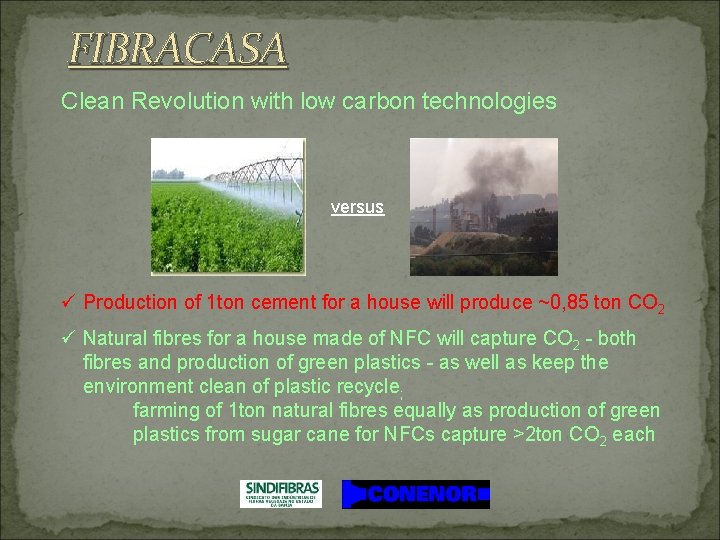
FIBRACASA Clean Revolution with low carbon technologies versus ü Production of 1 ton cement for a house will produce ~0, 85 ton CO 2 ü Natural fibres for a house made of NFC will capture CO 2 - both fibres and production of green plastics - as well as keep the environment clean of plastic recycle; farming of 1 ton natural fibres equally as production of green plastics from sugar cane for NFCs capture >2 ton CO 2 each
FIBRACASA Positive social and economical impacts – locally • Regional development schemes for wellfare – the money invested keeps circulating from hand to hand within the region and helps many people • Building materials produced, fabricated, traded and consumed regionally, environmentally friendly and sustainably • Human living conditions for those with lowest income who need it most • Proper houses provide security and safety and stability in the community • Usage of recycled plastics in volumes cleans the environment from waste • Volume application for natural fibres in housing multiplies the number of jobs in the agricultural sector especially for those with less education • Houses delivered in kits and constructed in short time DIY by family members and with help of friends promote stronger social integrity • Improved sanitary conditions prevent health problems and epidemics
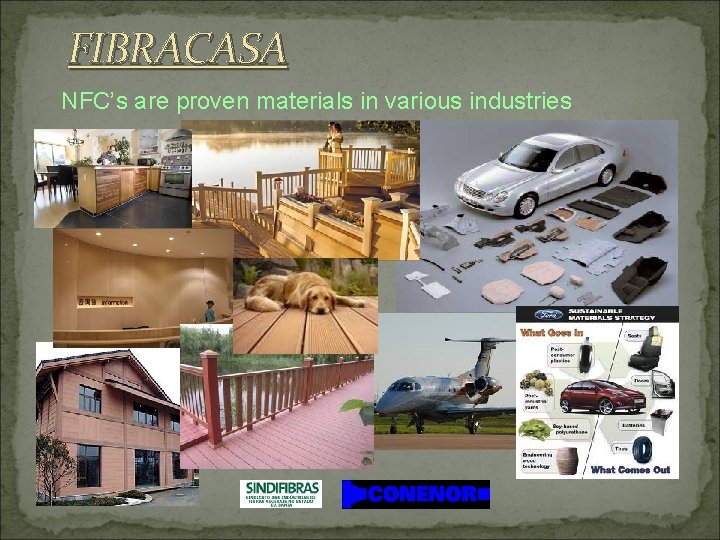
FIBRACASA NFC’s are proven materials in various industries
FIBRACASA Global market of WPCs in housing Global WPC-product tonnage >1 Mton/a and about 4 B$ retail value Till today leading single market has been North-America, largest Trex Corp. with sales >300 M$ China growing fast and catching up North-America, largest GEM with 100 extrusion lines and >50. 000 ton/a capasity European market yet relatively small ca. 150. 000 ton/a but growing Main applications: decking boards building exteriors and interiors fencing & railing miscalleneus replacing chemically treated wood Main materials: wood fibres (and plant fibres) HDPE-plastics (as well as PP and PVC)
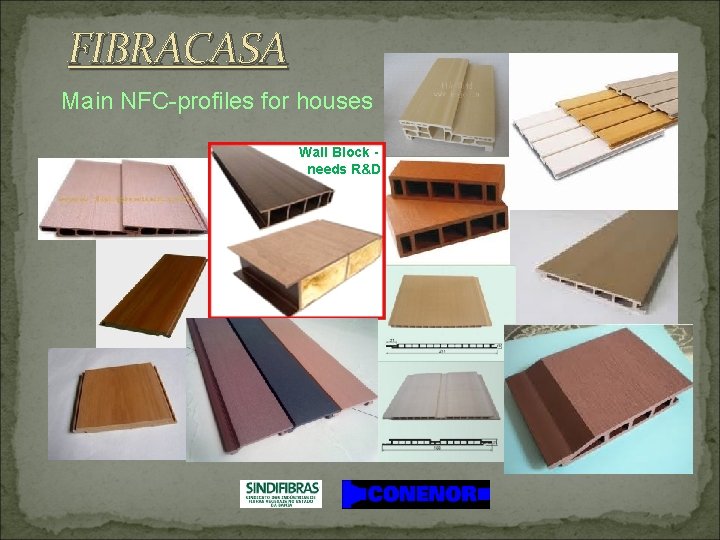
FIBRACASA Main NFC-profiles for houses Wall Block needs R&D
FIBRACASA International standardization of WPCs USA ASTM standards to assess performance of WPCs relative to building code requirements • ASTM D 7031 -04 ”Guide for Evaluating Mechanical and Physical Properties of Woodplastic Composite Products” • ASTM D 7032 -04 ”Specification for Establishing Performance Ratings for Wood-plastic Composite Deck Boards and Guardrail Systems Guards or Handrails” • Construction codes and assessment by International Code Council (ICC-ES) EU Technical Specifications for Wood-Plastic Composites (WPCs) • CEN/TS 15534 -1 ”Test methods for characterisation of materials and products” • CEN/TS 15534 -2 ”Characterization of WPC-materials” • CEN/TS 15534 -3 ”Characterisation of WPC-products” Germany Quality certificate by Qualitätsgemeinschaft Holzwerkstoffe e. V. France AFNOR certification for Marque NF 514 Japan ECOMARK-label according to JIS A 5741 by the Japanese Industrial Standards Committee
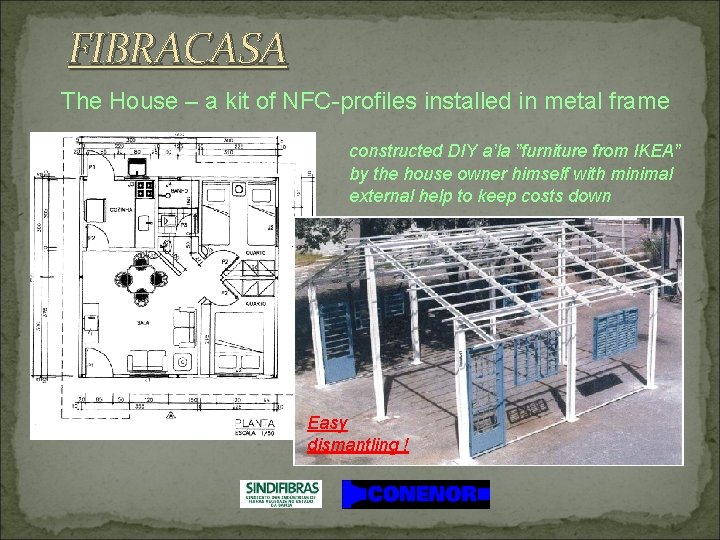
FIBRACASA The House – a kit of NFC-profiles installed in metal frame constructed DIY a’la ”furniture from IKEA” by the house owner himself with minimal external help to keep costs down Easy dismantling !

FIBRACASA Estimated affordable cost of house building materials v A house of 70 m 2 in metal frame is calculated to consist of NFC-profiles in total weight of ~12 tons and each having ~7 tons of natural fibres v NFC-profiles in various shapes are manufactured from low price short fibres in extrusion method and delivered locally at market price roughly 800 €/ton v Metal frame is estimated to be made available at price ~2000 € The house building materials in metal frame and covered with NFC-profiles total price results apprx. 12. 000 €
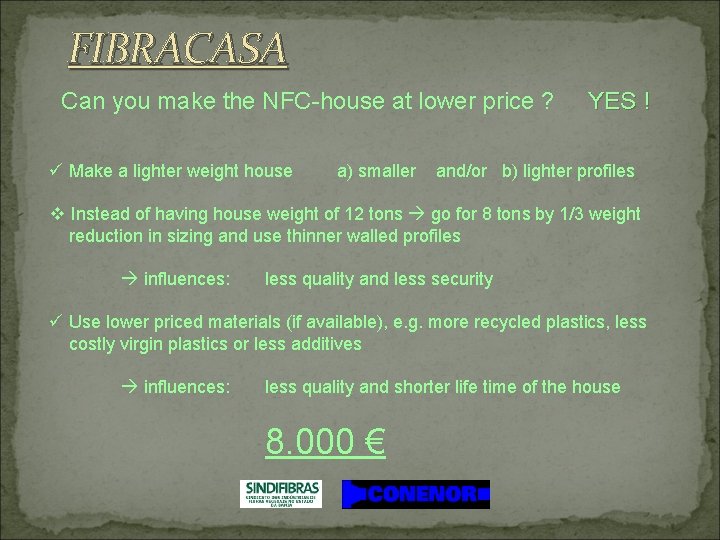
FIBRACASA Can you make the NFC-house at lower price ? ü Make a lighter weight house a) smaller YES ! and/or b) lighter profiles v Instead of having house weight of 12 tons go for 8 tons by 1/3 weight reduction in sizing and use thinner walled profiles influences: less quality and less security ü Use lower priced materials (if available), e. g. more recycled plastics, less costly virgin plastics or less additives influences: less quality and shorter life time of the house 8. 000 €
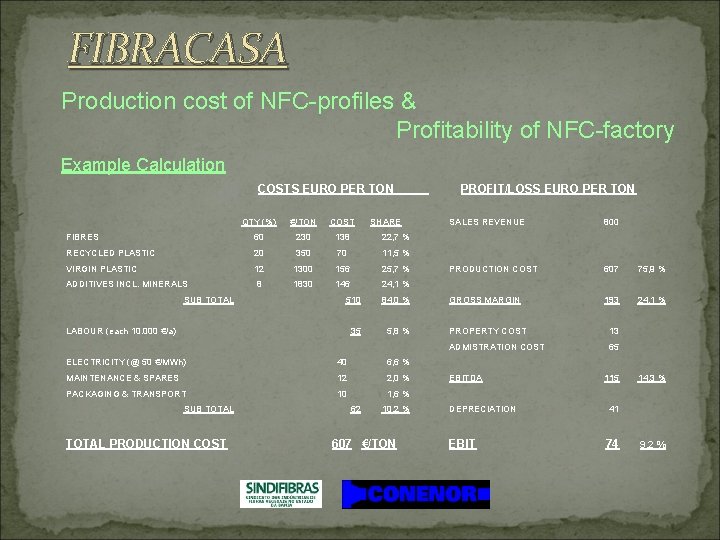
FIBRACASA Production cost of NFC-profiles & Profitability of NFC-factory Example Calculation COSTS EURO PER TON QTY (%) €/TON COST FIBRES 60 230 138 22, 7 % RECYCLED PLASTIC 20 350 70 11, 5 % VIRGIN PLASTIC 12 1300 156 25, 7 % ADDITIVES INCL. MINERALS 8 1830 146 24, 1 % SUB TOTAL SHARE 510 84, 0 % 35 5, 8 % LABOUR (each 10. 000 €/a) ELECTRICITY (@ 50 €/MWh) 40 6, 6 % MAINTENANCE & SPARES 12 2, 0 % PACKAGING & TRANSPORT 10 1, 6 % SUB TOTAL PRODUCTION COST 62 10, 2 % 607 €/TON PROFIT/LOSS EURO PER TON SALES REVENUE 800 PRODUCTION COST 607 75, 9 % GROSS MARGIN 193 24, 1 % PROPERTY COST 13 ADMISTRATION COST 65 EBITDA DEPRECIATION EBIT 115 14, 3 % 41 74 9, 2 %
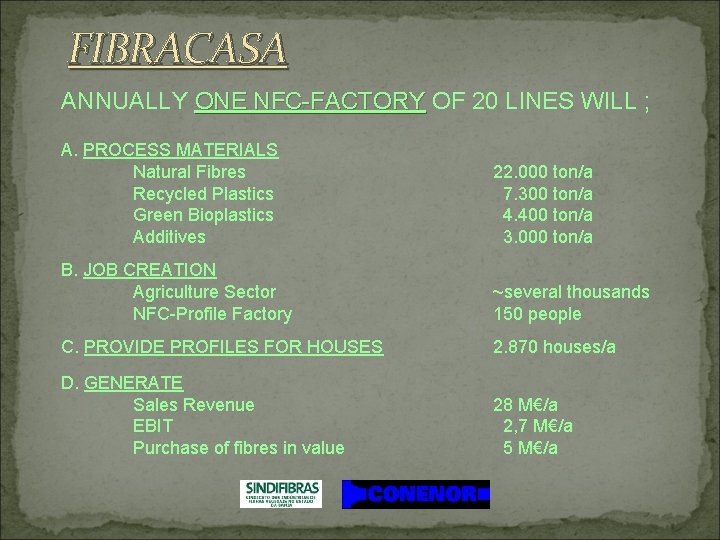
FIBRACASA ANNUALLY ONE NFC-FACTORY OF 20 LINES WILL ; A. PROCESS MATERIALS Natural Fibres Recycled Plastics Green Bioplastics Additives 22. 000 ton/a 7. 300 ton/a 4. 400 ton/a 3. 000 ton/a B. JOB CREATION Agriculture Sector NFC-Profile Factory ~several thousands 150 people C. PROVIDE PROFILES FOR HOUSES 2. 870 houses/a D. GENERATE Sales Revenue EBIT Purchase of fibres in value 28 M€/a 2, 7 M€/a 5 M€/a
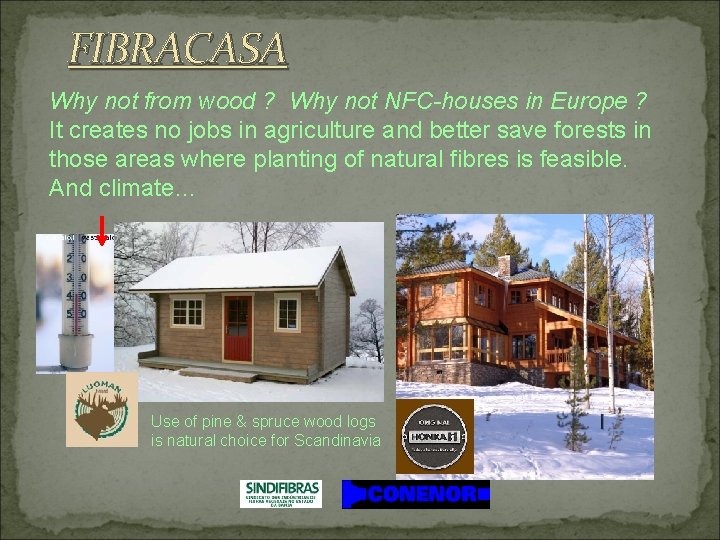
FIBRACASA Why not from wood ? Why not NFC-houses in Europe ? It creates no jobs in agriculture and better save forests in those areas where planting of natural fibres is feasible. And climate… Use of pine & spruce wood logs is natural choice for Scandinavia

FIBRACASA – THE CONCEPT Providing jobs and houses with natural fibres in NFCs - affordable - eco-friendly - sustainable - ethically right Constructing PVC-houses in Venezuela Fotos by PETROCASA
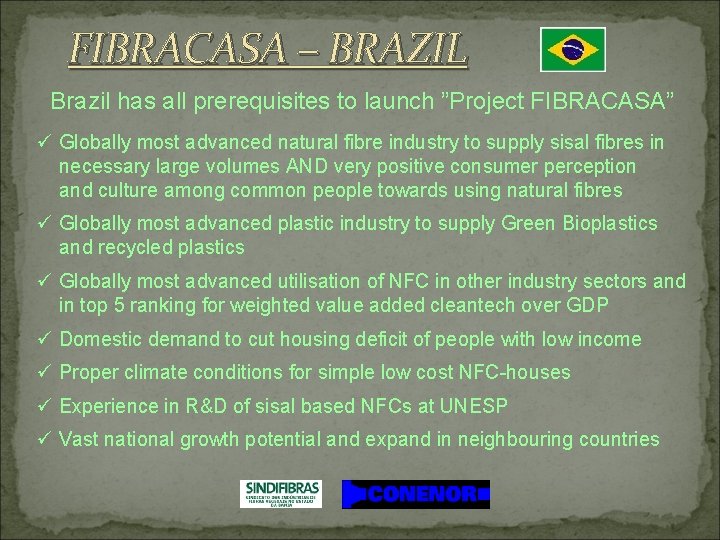
FIBRACASA – BRAZIL Brazil has all prerequisites to launch ”Project FIBRACASA” ü Globally most advanced natural fibre industry to supply sisal fibres in necessary large volumes AND very positive consumer perception and culture among common people towards using natural fibres ü Globally most advanced plastic industry to supply Green Bioplastics and recycled plastics ü Globally most advanced utilisation of NFC in other industry sectors and in top 5 ranking for weighted value added cleantech over GDP ü Domestic demand to cut housing deficit of people with low income ü Proper climate conditions for simple low cost NFC-houses ü Experience in R&D of sisal based NFCs at UNESP ü Vast national growth potential and expand in neighbouring countries
FIBRACASA – BRAZIL What is needed for the Concept to become a real Project and a valuable new industry sector thereafter ? Two key necessities : • national housing policy to support building NFC-houses • assignment of both national and international financing The rest is rational and manageable ! Three project partners are already committed to make it happen and more invited to join…
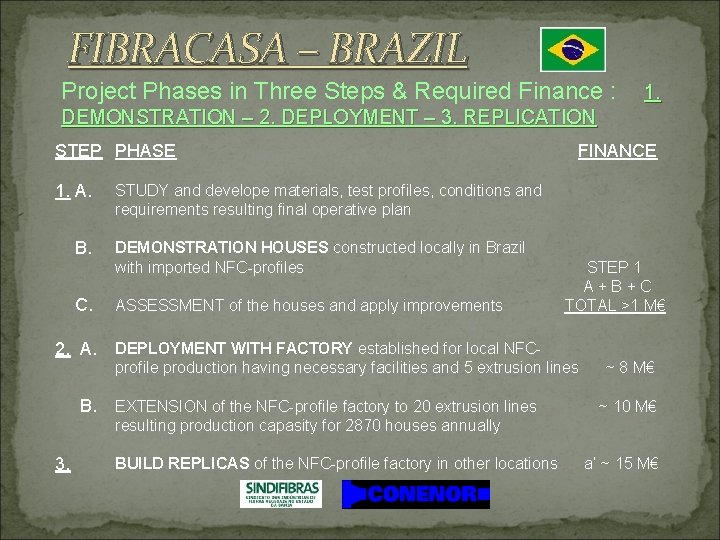
FIBRACASA – BRAZIL Project Phases in Three Steps & Required Finance : 1. DEMONSTRATION – 2. DEPLOYMENT – 3. REPLICATION STEP PHASE 1. A. B. C. 2. A. B. 3. FINANCE STUDY and develope materials, test profiles, conditions and requirements resulting final operative plan DEMONSTRATION HOUSES constructed locally in Brazil with imported NFC-profiles ASSESSMENT of the houses and apply improvements STEP 1 A+B+C TOTAL >1 M€ DEPLOYMENT WITH FACTORY established for local NFCprofile production having necessary facilities and 5 extrusion lines EXTENSION of the NFC-profile factory to 20 extrusion lines resulting production capasity for 2870 houses annually BUILD REPLICAS of the NFC-profile factory in other locations ~ 8 M€ ~ 10 M€ a’ ~ 15 M€
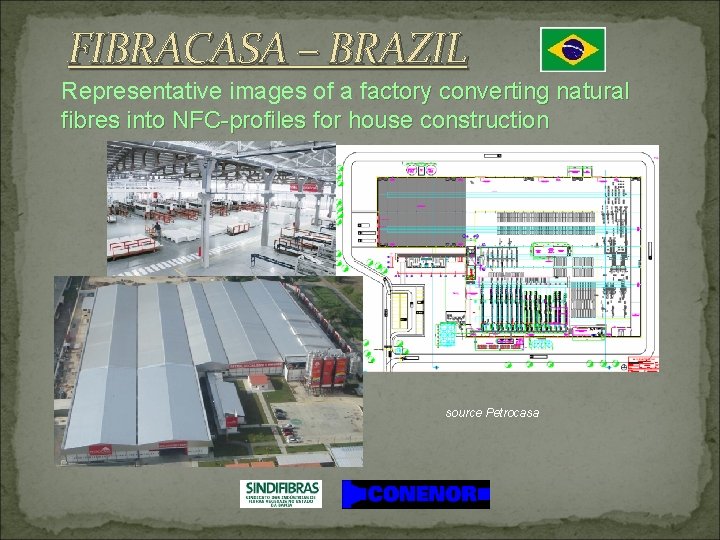
FIBRACASA – BRAZIL Representative images of a factory converting natural fibres into NFC-profiles for house construction source Petrocasa
- Slides: 30