
FHWA Resilience Initiatives Focus on Pavements Southern Plains
- Slides: 34
FHWA Resilience Initiatives & Focus on Pavements Southern Plains Transportation Center April 20, 2021 Elizabeth Habic Sustainable Transportation and Resilience Office of Natural Environment
Overview • • 2 FHWA Approaches to Resilience Studies, Tools and Pilots Pavement-focused Studies Ongoing Resilience Work
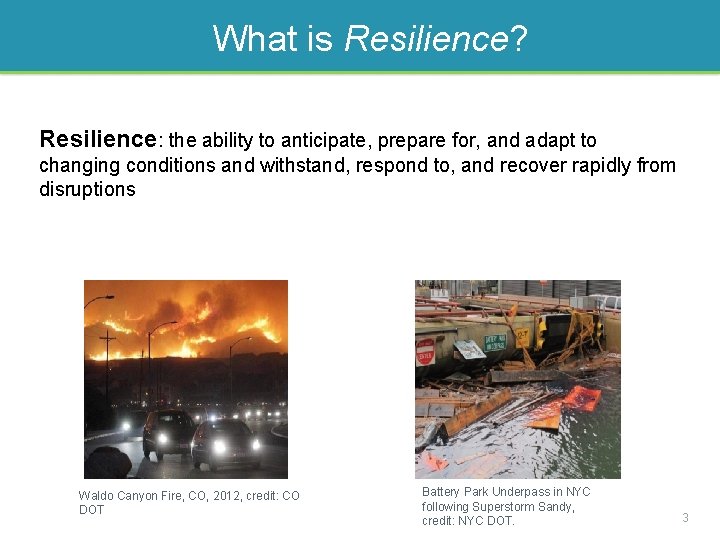
What is Resilience? Resilience: the ability to anticipate, prepare for, and adapt to changing conditions and withstand, respond to, and recover rapidly from disruptions Waldo Canyon Fire, CO, 2012, credit: CO DOT Battery Park Underpass in NYC following Superstorm Sandy, credit: NYC DOT. 3
Why Address Resilience? • Protect public safety and ensure reliability • Reduce life-cycle expenditures • USDOT 2018 -22 Strategic Plan: • “DOT will increase its effectiveness in ensuring that infrastructure is resilient enough to withstand extreme weather” • Promotes durability and resilience as a means to improve safety and performance. 4
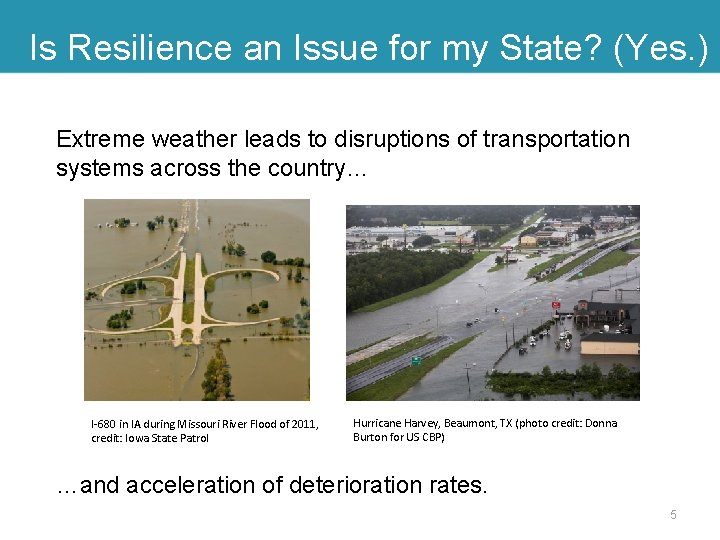
Is Resilience an Issue for my State? (Yes. ) Extreme weather leads to disruptions of transportation systems across the country… I-680 in IA during Missouri River Flood of 2011, credit: Iowa State Patrol Hurricane Harvey, Beaumont, TX (photo credit: Donna Burton for US CBP) …and acceleration of deterioration rates. 5
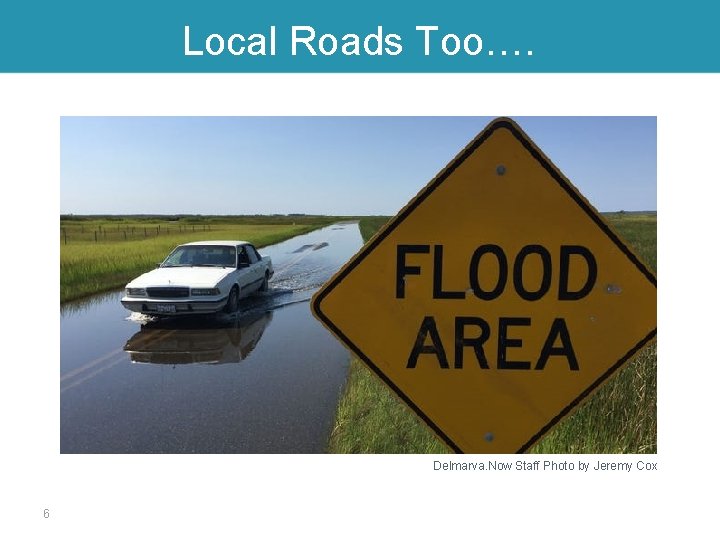
Local Roads Too…. Delmarva. Now Staff Photo by Jeremy Cox 6
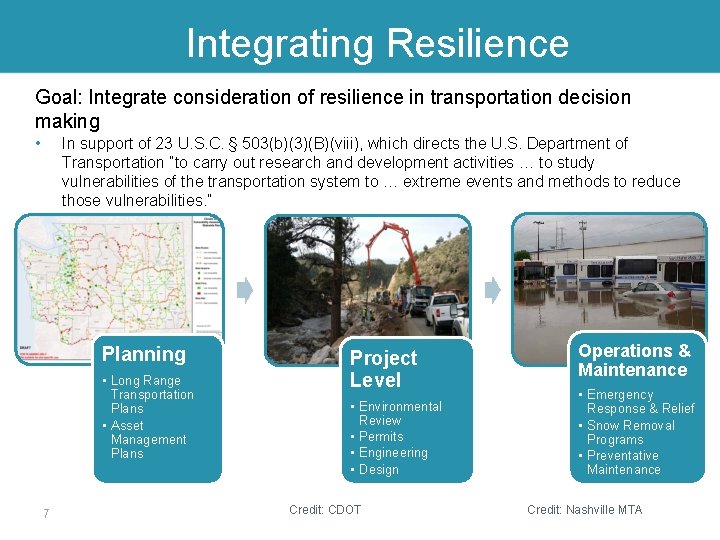
Integrating Resilience Goal: Integrate consideration of resilience in transportation decision making • In support of 23 U. S. C. § 503(b)(3)(B)(viii), which directs the U. S. Department of Transportation “to carry out research and development activities … to study vulnerabilities of the transportation system to … extreme events and methods to reduce those vulnerabilities. ” Planning • Long Range Transportation Plans • Asset Management Plans 7 Project Level • Environmental Review • Permits • Engineering • Design Credit: CDOT Operations & Maintenance • Emergency Response & Relief • Snow Removal Programs • Preventative Maintenance Credit: Nashville MTA
Relevant Weather Variables • Precipitation – averages and extremes • Temperature – high temp, averages, freeze/thaw • Drought conditions • Antecedent moisture 8
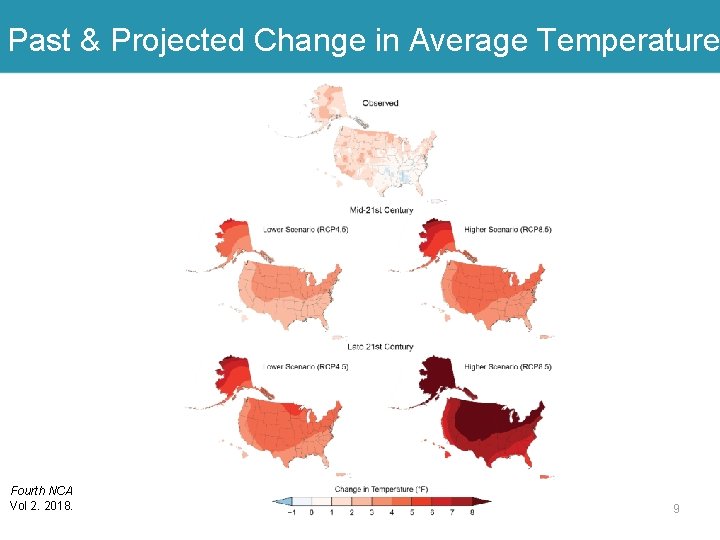
Past & Projected Change in Average Temperature Fourth NCA Vol 2. 2018. 9
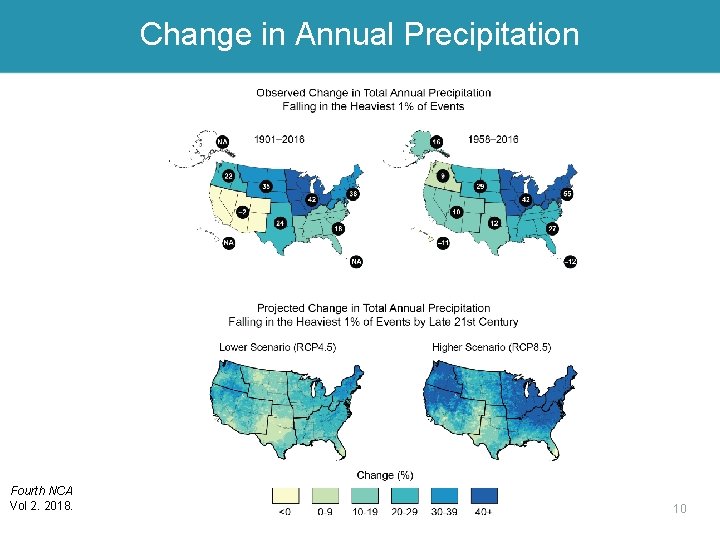
Change in Annual Precipitation Fourth NCA Vol 2. 2018. 10
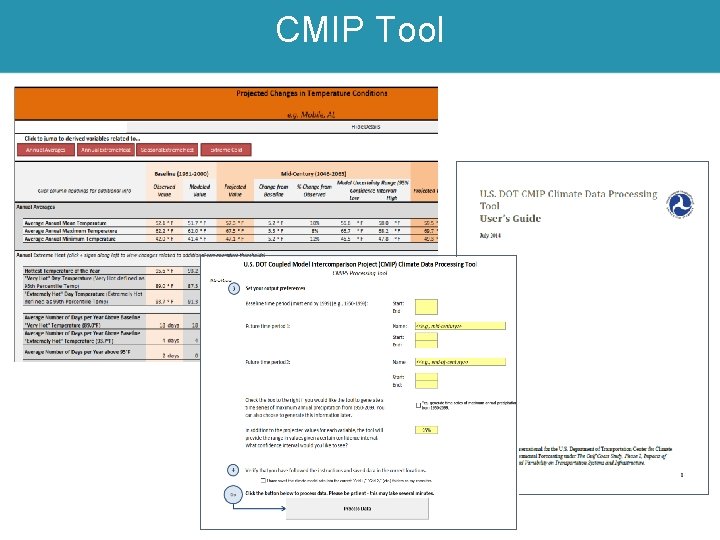
CMIP Tool
What is a “Vulnerability Assessment” A starting point for identifying and assessing resilience concerns and potential adaptation options • Identifies the amount of stress to assets under current and projected conditions. • How might future changes in precipitation, sea levels, temperatures impact your transportation system? Scale – System level vulnerability assessment (city or region) – (Project level) • Preliminary • ADAP 11 -step process is more in depth (more later) 1 2
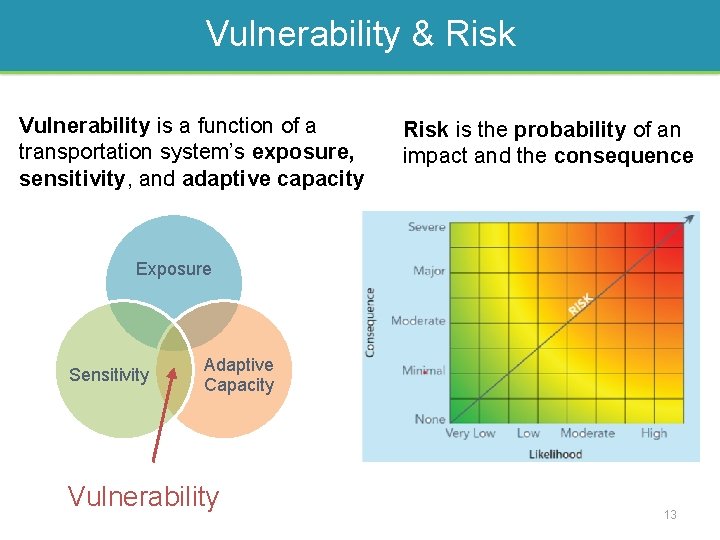
Vulnerability & Risk Vulnerability is a function of a transportation system’s exposure, sensitivity, and adaptive capacity Risk is the probability of an impact and the consequence Exposure Sensitivity Adaptive Capacity Vulnerability 13
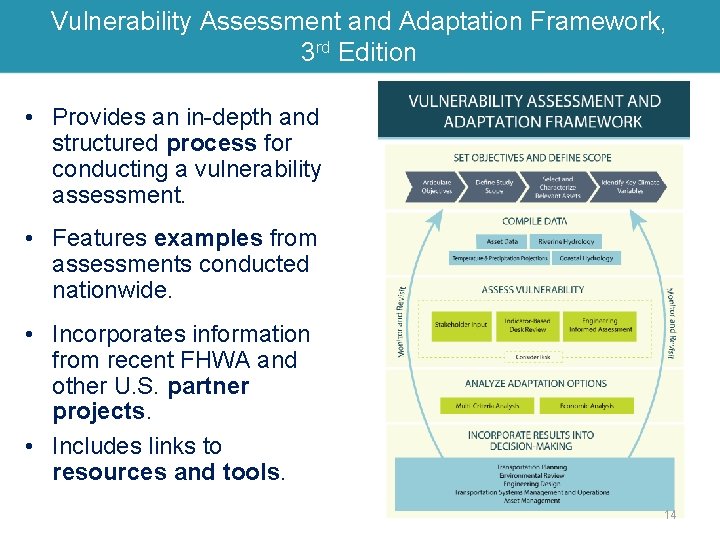
Vulnerability Assessment and Adaptation Framework, 3 rd Edition • Provides an in-depth and structured process for conducting a vulnerability assessment. • Features examples from assessments conducted nationwide. • Incorporates information from recent FHWA and other U. S. partner projects. • Includes links to resources and tools. 14
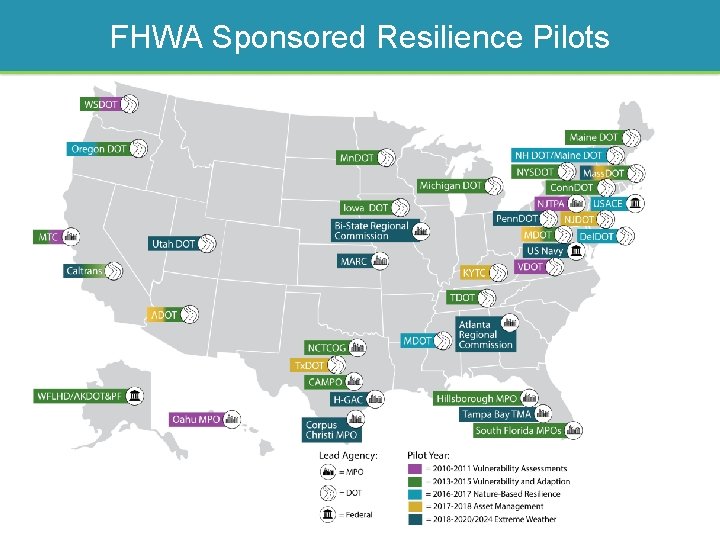
FHWA Sponsored Resilience Pilots
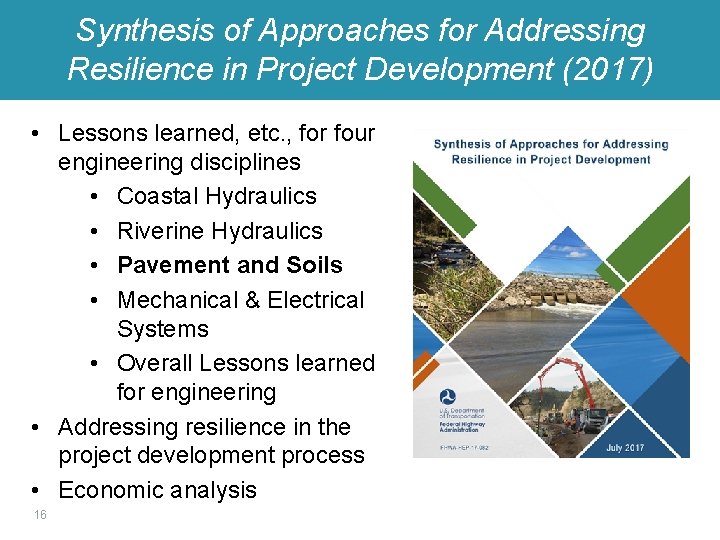
Synthesis of Approaches for Addressing Resilience in Project Development (2017) • Lessons learned, etc. , for four engineering disciplines • Coastal Hydraulics • Riverine Hydraulics • Pavement and Soils • Mechanical & Electrical Systems • Overall Lessons learned for engineering • Addressing resilience in the project development process • Economic analysis 16
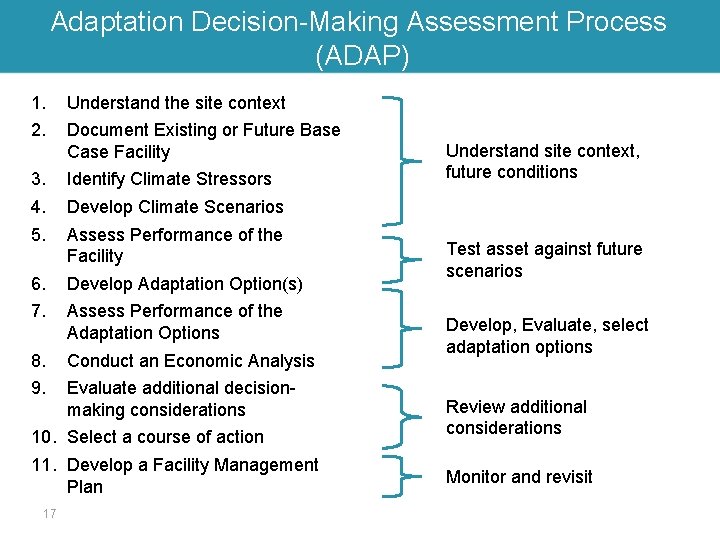
Adaptation Decision-Making Assessment Process (ADAP) 1. 2. Understand the site context Document Existing or Future Base Case Facility 3. 4. 5. Identify Climate Stressors 6. 7. Develop Adaptation Option(s) 8. 9. Conduct an Economic Analysis Develop Climate Scenarios Assess Performance of the Facility Assess Performance of the Adaptation Options Evaluate additional decisionmaking considerations 10. Select a course of action 11. Develop a Facility Management Plan 17 Understand site context, future conditions Test asset against future scenarios Develop, Evaluate, select adaptation options Review additional considerations Monitor and revisit
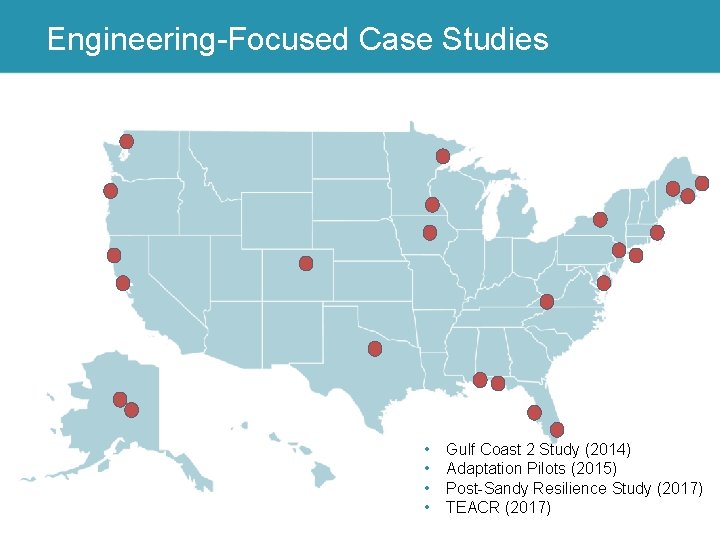
Engineering-Focused Case Studies • • Gulf Coast 2 Study (2014) Adaptation Pilots (2015) Post-Sandy Resilience Study (2017) TEACR (2017)
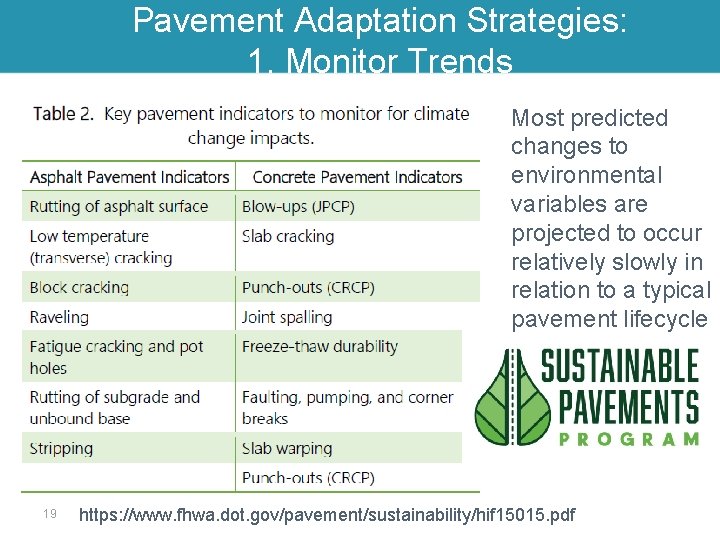
Pavement Adaptation Strategies: 1. Monitor Trends Most predicted changes to environmental variables are projected to occur relatively slowly in relation to a typical pavement lifecycle 19 https: //www. fhwa. dot. gov/pavement/sustainability/hif 15015. pdf
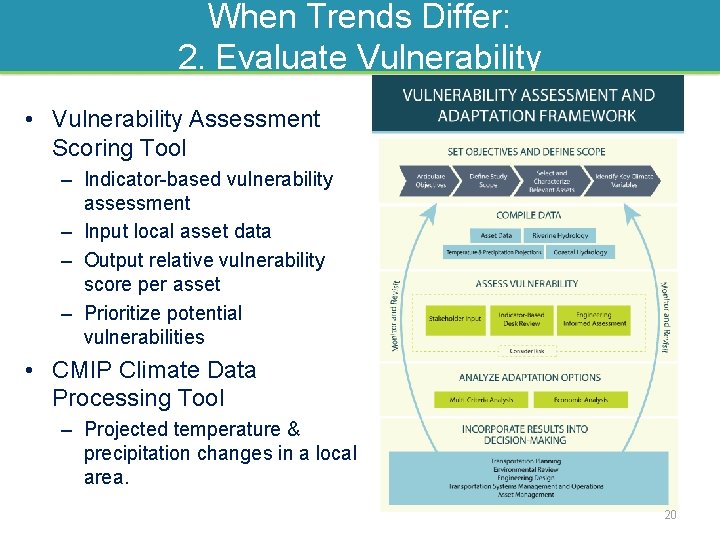
When Trends Differ: 2. Evaluate Vulnerability • Vulnerability Assessment Scoring Tool – Indicator-based vulnerability assessment – Input local asset data – Output relative vulnerability score per asset – Prioritize potential vulnerabilities • CMIP Climate Data Processing Tool – Projected temperature & precipitation changes in a local area. 20
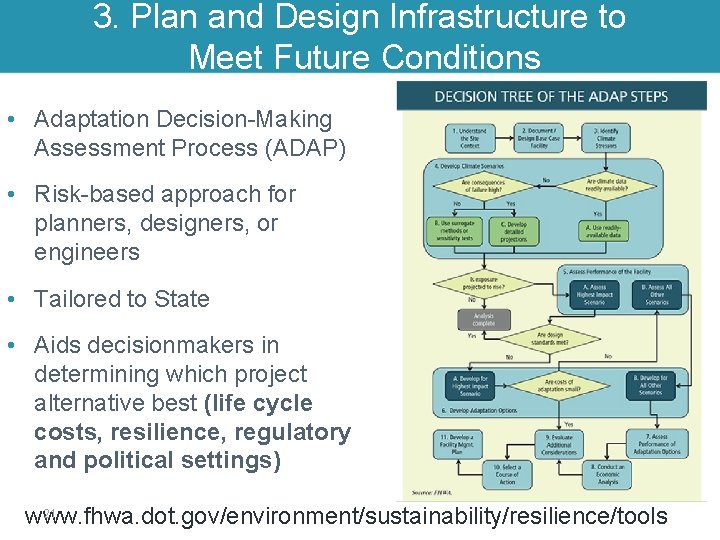
3. Plan and Design Infrastructure to Meet Future Conditions • Adaptation Decision-Making Assessment Process (ADAP) • Risk-based approach for planners, designers, or engineers • Tailored to State • Aids decisionmakers in determining which project alternative best (life cycle costs, resilience, regulatory and political settings) 21 www. fhwa. dot. gov/environment/sustainability/resilience/tools
More Information • Adapted from Pavements Tech Brief • https: //www. fhwa. dot. gov/paveme nt/sustainability/hif 15015. pdf https: //www. fhwa. dot. gov/publications/publicroads/19 autumn/index. cfm 22
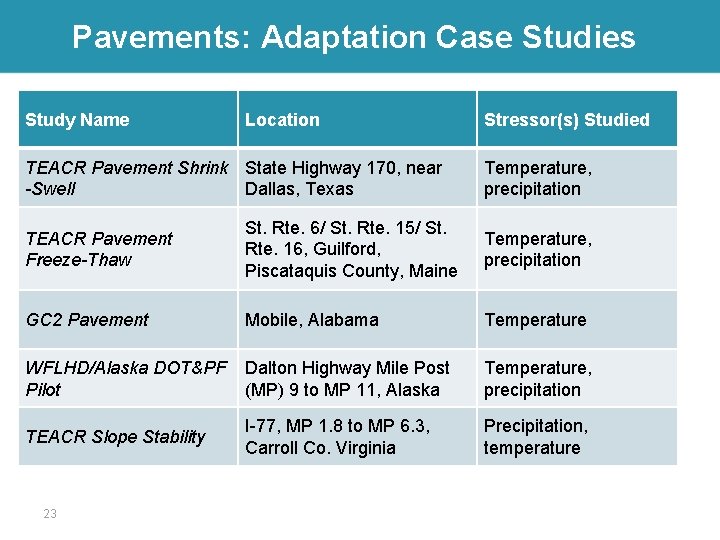
Pavements: Adaptation Case Studies Study Name Location TEACR Pavement Shrink State Highway 170, near -Swell Dallas, Texas Stressor(s) Studied Temperature, precipitation TEACR Pavement Freeze-Thaw St. Rte. 6/ St. Rte. 15/ St. Rte. 16, Guilford, Piscataquis County, Maine Temperature, precipitation GC 2 Pavement Mobile, Alabama Temperature WFLHD/Alaska DOT&PF Pilot Dalton Highway Mile Post (MP) 9 to MP 11, Alaska Temperature, precipitation TEACR Slope Stability I-77, MP 1. 8 to MP 6. 3, Carroll Co. Virginia Precipitation, temperature 23
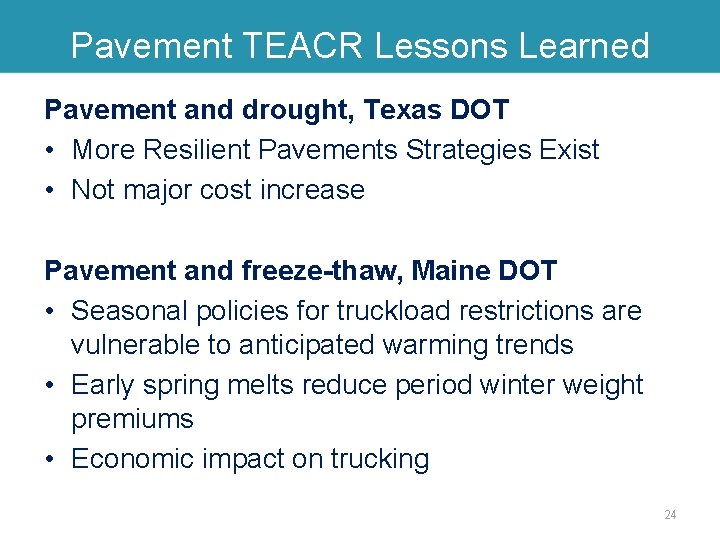
Pavement TEACR Lessons Learned Pavement and drought, Texas DOT • More Resilient Pavements Strategies Exist • Not major cost increase Pavement and freeze-thaw, Maine DOT • Seasonal policies for truckload restrictions are vulnerable to anticipated warming trends • Early spring melts reduce period winter weight premiums • Economic impact on trucking 24
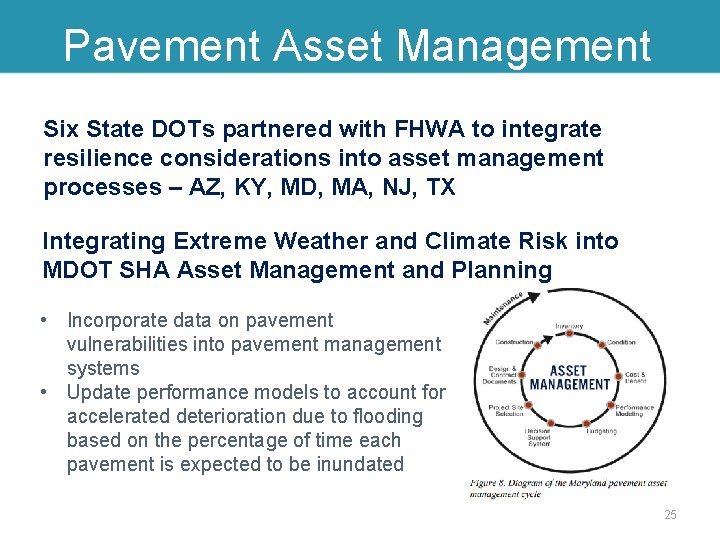
Pavement Asset Management Six State DOTs partnered with FHWA to integrate resilience considerations into asset management processes – AZ, KY, MD, MA, NJ, TX Integrating Extreme Weather and Climate Risk into MDOT SHA Asset Management and Planning • Incorporate data on pavement vulnerabilities into pavement management systems • Update performance models to account for accelerated deterioration due to flooding based on the percentage of time each pavement is expected to be inundated 25
Pavement Resilience Guidebook • Joint Project with Office of Planning, Environment, & Realty • Project Duration: 2018 -2021 ü Literature Review & Gap Analysis ü Peer Exchanges • Convene Technical Review Panel • Develop Guidebook (2021) • Optional, Workshop 26
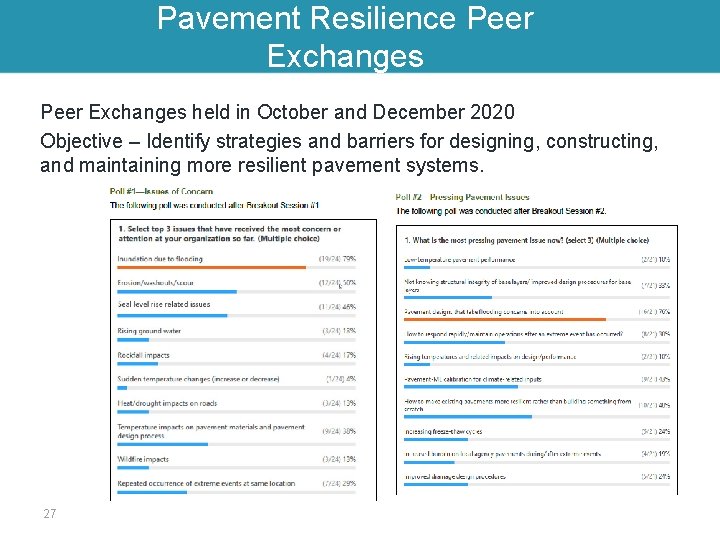
Pavement Resilience Peer Exchanges held in October and December 2020 Objective – Identify strategies and barriers for designing, constructing, and maintaining more resilient pavement systems. 27
Pavement Resilience Guidebook • Identify Specific Approaches through Stakeholder Engagement with Technical Review Panel • Provide Step by Step Information • Scope limited to pavements but must connect to broader issue • Other critical assets • Reference Non-Pavement Specific Strategies 28
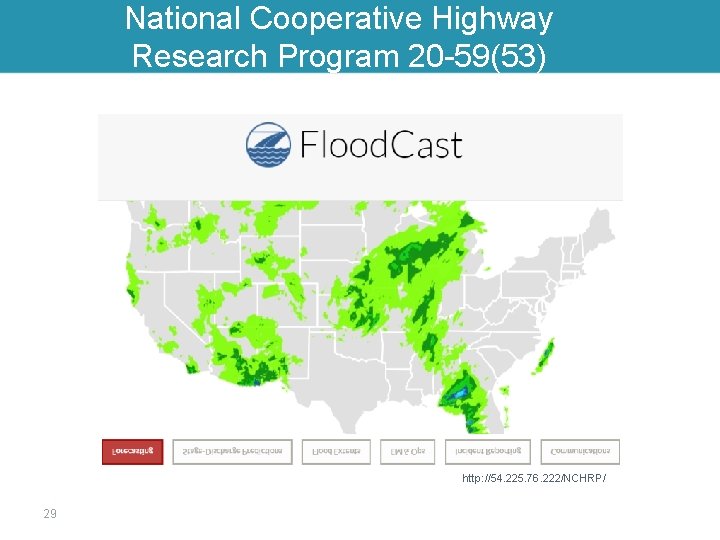
National Cooperative Highway Research Program 20 -59(53) http: //54. 225. 76. 222/NCHRP/ 29
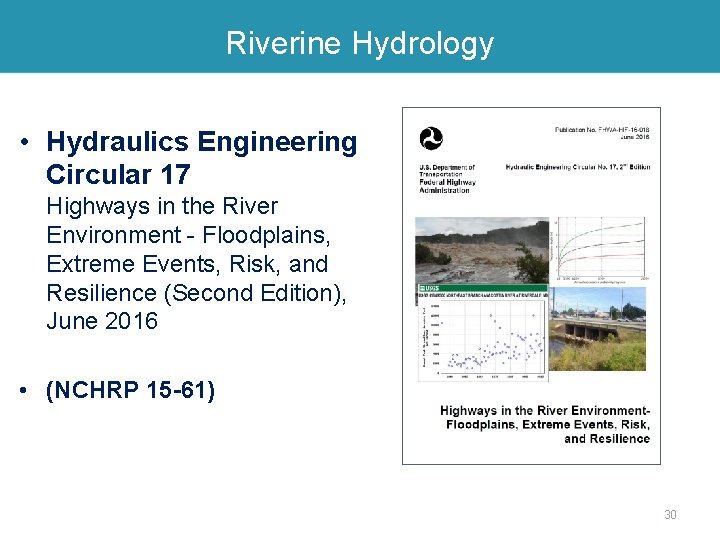
Riverine Hydrology • Hydraulics Engineering Circular 17 Highways in the River Environment - Floodplains, Extreme Events, Risk, and Resilience (Second Edition), June 2016 • (NCHRP 15 -61) 30
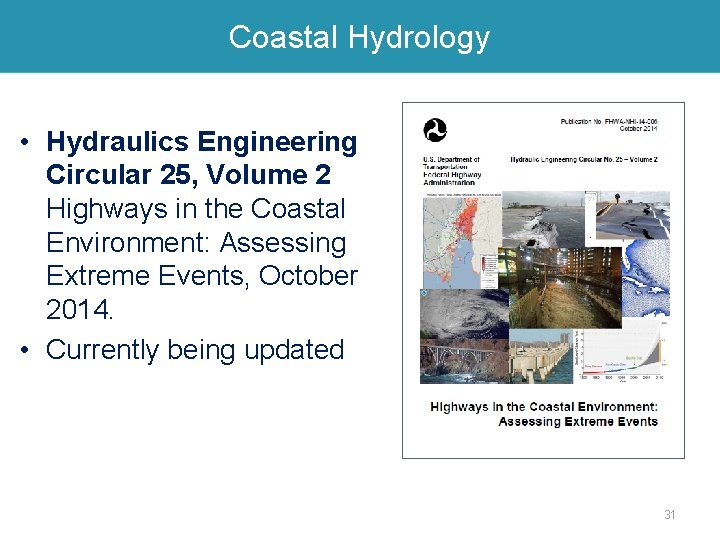
Coastal Hydrology • Hydraulics Engineering Circular 25, Volume 2 Highways in the Coastal Environment: Assessing Extreme Events, October 2014. • Currently being updated 31
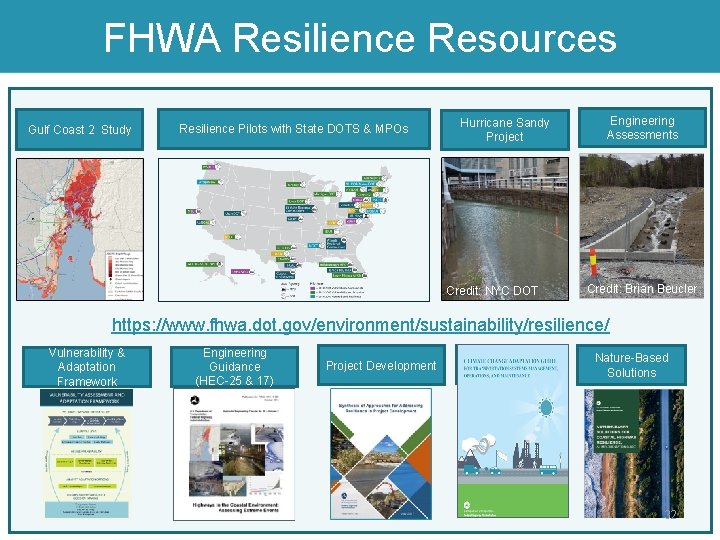
FHWA Resilience Resources Gulf Coast 2 Study Resilience Pilots with State DOTS & MPOs Hurricane Sandy Project Credit: NYC DOT Engineering Assessments Credit: Brian Beucler https: //www. fhwa. dot. gov/environment/sustainability/resilience/ Vulnerability & Adaptation Framework Engineering Guidance (HEC-25 & 17) Project Development Operations & Maintenance Nature-Based Solutions VIMS 32
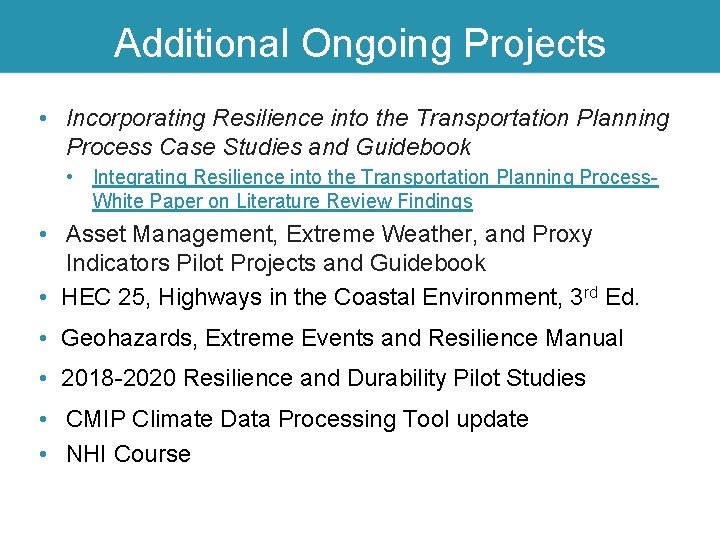
Additional Ongoing Projects • Incorporating Resilience into the Transportation Planning Process Case Studies and Guidebook • Integrating Resilience into the Transportation Planning Process. White Paper on Literature Review Findings • Asset Management, Extreme Weather, and Proxy Indicators Pilot Projects and Guidebook • HEC 25, Highways in the Coastal Environment, 3 rd Ed. • Geohazards, Extreme Events and Resilience Manual • 2018 -2020 Resilience and Durability Pilot Studies • CMIP Climate Data Processing Tool update • NHI Course
THANK YOU! Contact Information: Elizabeth. Habic@dot. gov Website: https: //www. fhwa. dot. gov/environment/sustainability/resilience/ 34