
FGM what you need to know Clinical Evaluation
- Slides: 71
FGM; what you need to know Clinical Evaluation Child Sexual Abuse One Day Advanced Update Stirling Court Hotel, Stirling Friday 29 th September 2017 Susan Kidd
Background New subject to many in audience By it’s very nature, potentially upsetting subject ◦ Violent and degrading act ◦ Normalisation within cultures Likely to be people who are affected by FGM, directly or indirectly in many settings Sources of information and support
Aims Address sensitively and respectfully ◦ Setting a tone for further learning and work ◦ Women/ families affected by FGM must be given Information, care, support Not pity Not stigmatisation
Aims Focus on clinical staff, and FGM related clinical knowledge, skills and responsibilities Illustrative Case Key messages Some pathways and resources
Case Paediatrician at interagency meeting with police and SW and community group in Edinburgh “We believe this 2 yr old girl is at risk of FGM, as her mother has had FGM, and we do not know parent’s views or understanding of the subject”
What is FGM?
World Health Organisation Female Genital Mutilation “…all procedures that intentionally alter or cause injury to the female genital organs for non-medical reasons”
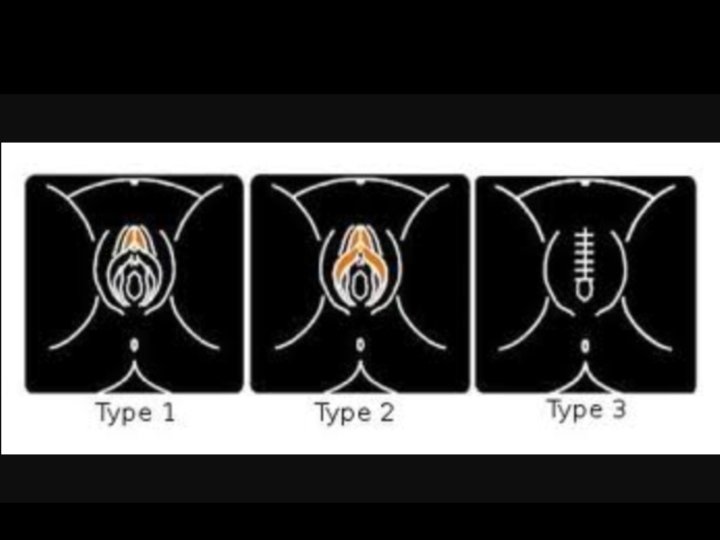
Case “We think the mother has had type 3 FGM”
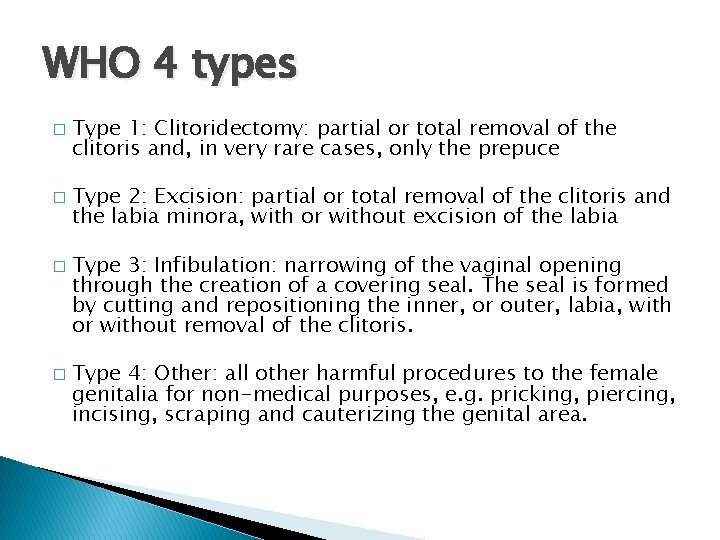
WHO 4 types � � Type 1: Clitoridectomy: partial or total removal of the clitoris and, in very rare cases, only the prepuce Type 2: Excision: partial or total removal of the clitoris and the labia minora, with or without excision of the labia Type 3: Infibulation: narrowing of the vaginal opening through the creation of a covering seal. The seal is formed by cutting and repositioning the inner, or outer, labia, with or without removal of the clitoris. Type 4: Other: all other harmful procedures to the female genitalia for non-medical purposes, e. g. pricking, piercing, incising, scraping and cauterizing the genital area.
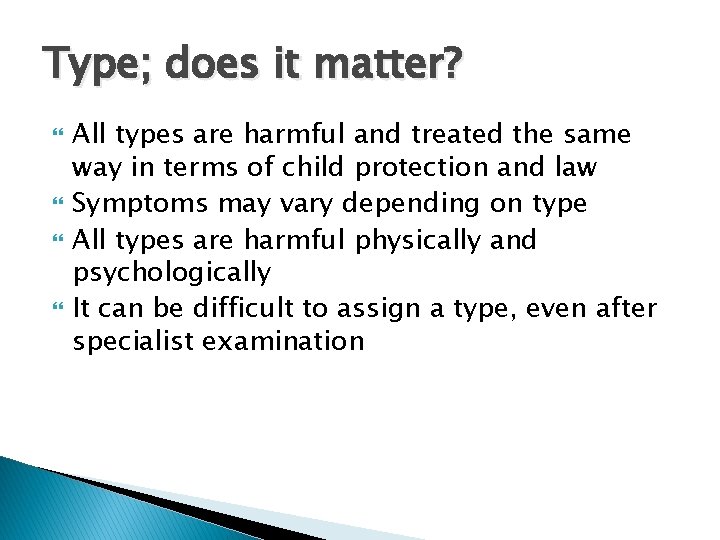
Type; does it matter? All types are harmful and treated the same way in terms of child protection and law Symptoms may vary depending on type All types are harmful physically and psychologically It can be difficult to assign a type, even after specialist examination
Best practice is to describe what you can see, what you cannot seen, what looks normal, what does not. ◦ It may be impossible to categorise by WHO system Don’t panic!
A mother who has had FGM, is regarded as a significant risk indicator for her daughter(s)
Case “The parents are from Somalia, and came to this country via Holland. ”
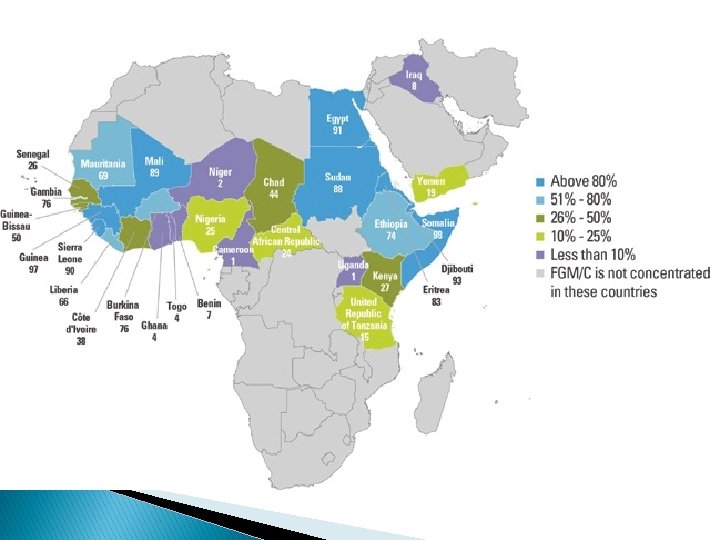
Where is FGM carried out?
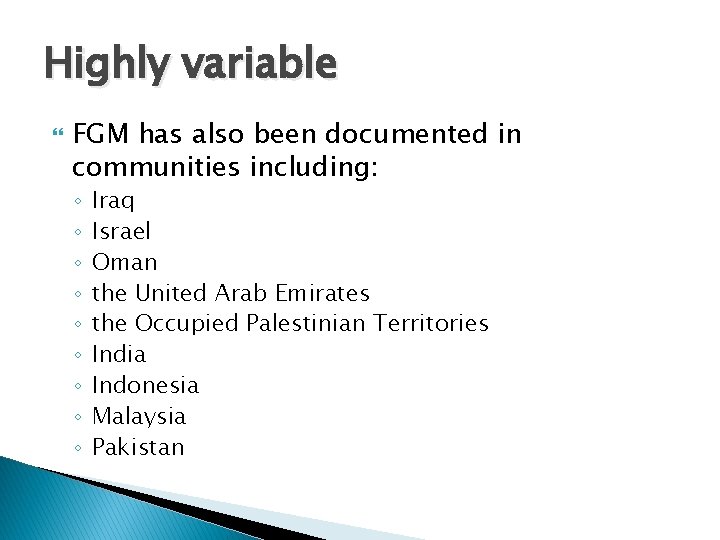
Highly variable FGM has also been documented in communities including: ◦ ◦ ◦ ◦ ◦ Iraq Israel Oman the United Arab Emirates the Occupied Palestinian Territories India Indonesia Malaysia Pakistan
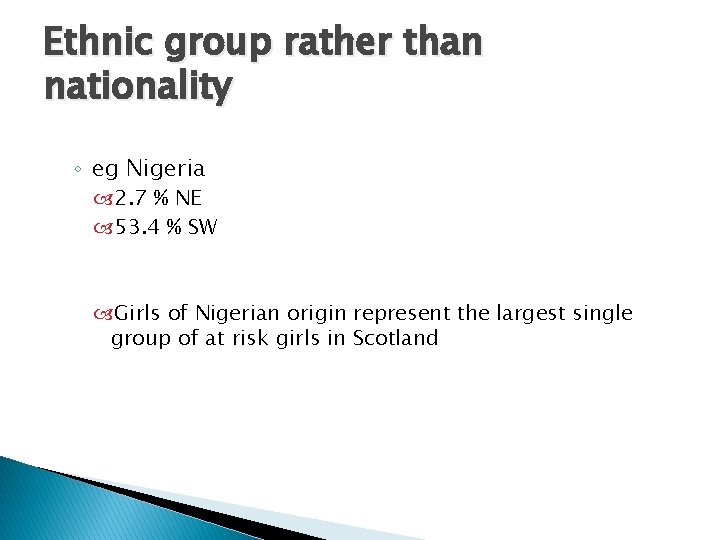
Ethnic group rather than nationality ◦ eg Nigeria 2. 7 % NE 53. 4 % SW Girls of Nigerian origin represent the largest single group of at risk girls in Scotland
So how many at risk girls are there in Lothian? We don’t know for sure. .
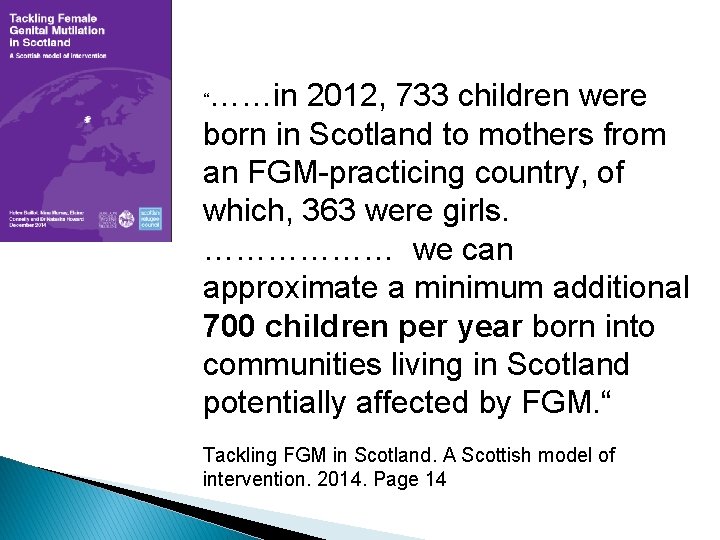
……in 2012, 733 children were born in Scotland to mothers from an FGM-practicing country, of which, 363 were girls. ……………… we can approximate a minimum additional 700 children per year born into communities living in Scotland potentially affected by FGM. “ “ Tackling FGM in Scotland. A Scottish model of intervention. 2014. Page 14
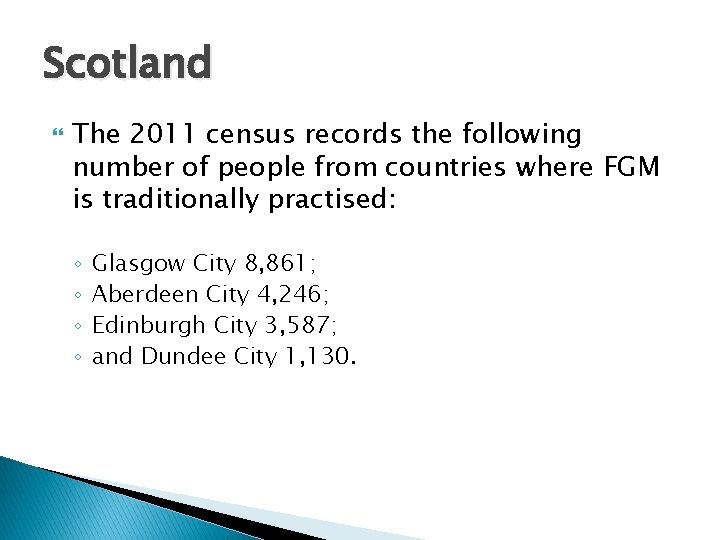
Scotland The 2011 census records the following number of people from countries where FGM is traditionally practised: ◦ ◦ Glasgow City 8, 861; Aberdeen City 4, 246; Edinburgh City 3, 587; and Dundee City 1, 130.
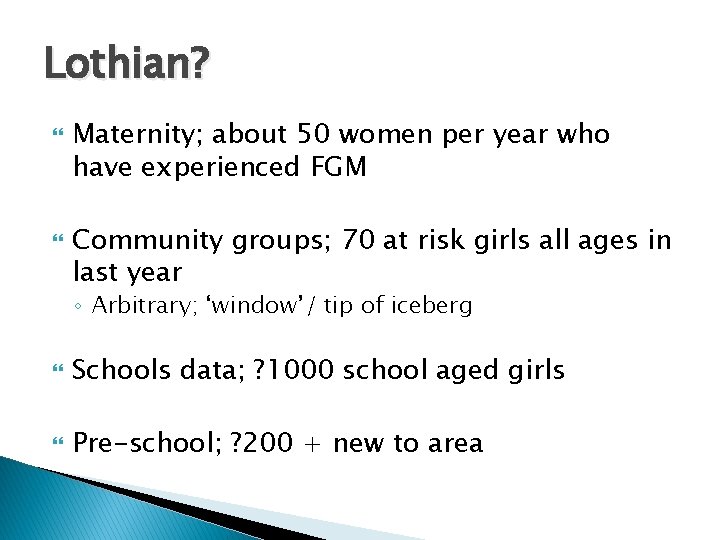
Lothian? Maternity; about 50 women per year who have experienced FGM Community groups; 70 at risk girls all ages in last year ◦ Arbitrary; ‘window’/ tip of iceberg Schools data; ? 1000 school aged girls Pre-school; ? 200 + new to area
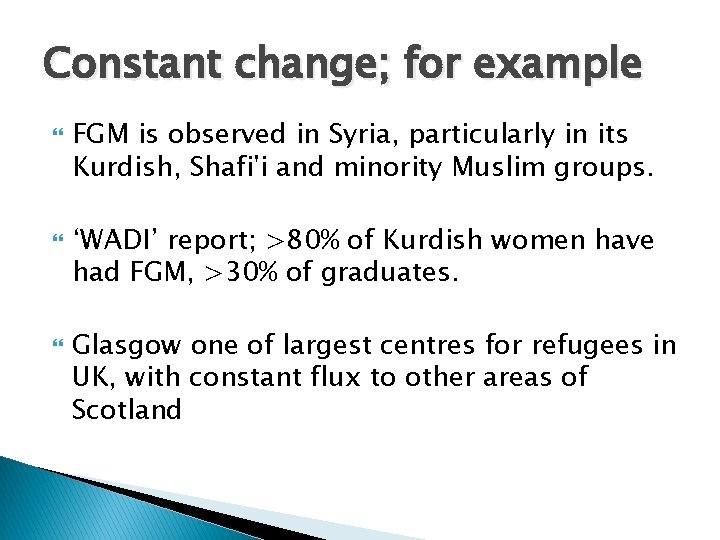
Constant change; for example FGM is observed in Syria, particularly in its Kurdish, Shafi'i and minority Muslim groups. ‘WADI’ report; >80% of Kurdish women have had FGM, >30% of graduates. Glasgow one of largest centres for refugees in UK, with constant flux to other areas of Scotland
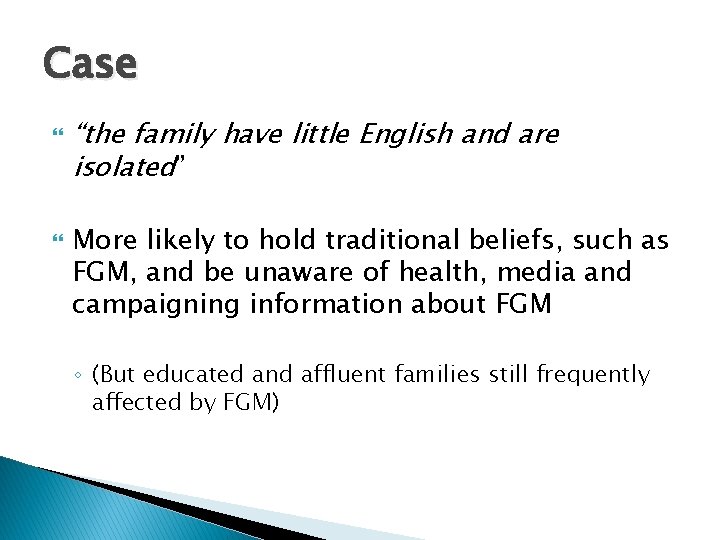
Case “the family have little English and are isolated” More likely to hold traditional beliefs, such as FGM, and be unaware of health, media and campaigning information about FGM ◦ (But educated and affluent families still frequently affected by FGM)
Why is it carried out? Most parents arranging to have FGM carried out on their daughters love them wholeheartedly, have their interests at heart and believe it is the best thing for them. Today’s girls may be the first in hundreds of generations not to have FGM
Do you need to know why FGM is carried out? NO ◦ ◦ ◦ Highly variable Purity/ marriage prospects/ right of passage Complex Ancient origins Emotive Control of sexuality and women’s bodies
What you DO need to know is 1. FGM is child abuse 2. FGM is against the law 3. All health care professionals have a responsibility to be aware and respond appropriately
Why is FGM considered child abuse? “FGM is a violation of a child’s rights and is a child protection issue. It is considered to be a form of gender based violence against women and girls and is managed in accordance with existing child and adult protection structures, policies and procedures. ” . . . child protection is everybody’s job. . .
Acute clinical presentations of FGM � severe pain � emotional and psychological shock ◦ (exacerbated by having to reconcile being subjected to the trauma by loving parents, extended family and friends) � haemorrhage � wound infections, including tetanus and blood borne viruses (including HIV and Hepatitis B and C) � urinary retention � injury to adjacent tissues � fracture or dislocation as a result of restraint � damage to other organs � death.
Later presentations of FGM � � � chronic vaginal and pelvic infections difficulties with menstruation difficulties in passing urine and chronic urine infections renal impairment and possible renal failure damage to the reproductive system, including infertility infibulation cysts, neuromas and keloid scar formation obstetric fistula complications in pregnancy and delay in the second stage of childbirth pain during sex and lack of pleasurable sensation psychological damage, including a number of mental health and psychosexual problems such as low libido, depression, anxiety and sexual dysfunction; flashbacks during pregnancy and childbirth; substance misuse and/or self-harm increased risk of HIV and other sexually transmitted infections death of mother and child during childbirth.
Case “this child is only 2 years old, so we don’t need to worry about child abuse in the form of FGM, as it is usually when the child is about 10 that it is performed”
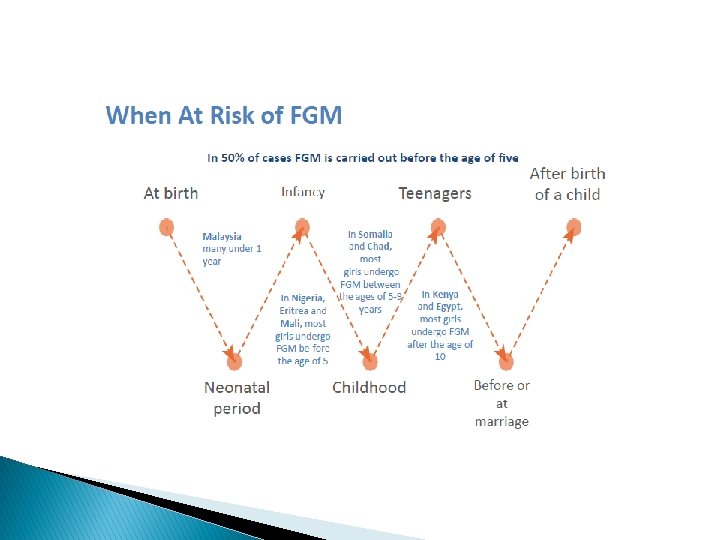
Age There is huge variability in practice;
Traditional age changing due to migration, legal pressure and new patterns of family visiting/ interacting and being ‘opportunistic’.
Risk is a ‘dynamic continuum’ and FGM risk assessment and monitoring for a girl is ‘an ongoing conversation for her whole childhood’.
What does the law say?
The Law in Scotland FGM has been unlawful in Scotland since 1985. The Female Genital Mutilation (Scotland) Act 2005 re-enacted the Prohibition of Female Circumcision Act 1985 and extended protection by making it a criminal offence to have FGM carried out either in Scotland or abroad by giving those offences extra-territorial powers. The Act also increased the penalty on conviction on indictment from 5 to 14 years’ imprisonment.
The Law in Scotland � The Scottish Government has worked collaboratively with the UK Government to close a loophole in the Prohibition of Female Genital Mutilation (Scotland) Act 2005. This will extend the reach of the extra-territorial offences in that Act to habitual (as well as permanent) UK residents. This strengthening of legislation is included in the Serious Crime Act 2015 which received Royal Assent on 03 March 2015 with the provisions for Scotland commencing on 03 May 2015.
England/ rest of UK Mandatory reporting Health and social care data base FGM prevention order BPSU; YES includes Scotland
What are my responsibilities as a health care professional?
All healthcare workers including all nurses, midwives and doctors have a duty of care to girls and women who are at risk of having FGM carried out, or who have already been affected by FGM. The Chief Nursing Officer and Chief Medical Officer for the Scottish Government have written to all healthcare professionals highlighting this obligation and the responsibility to understand act in response to actual and potential FGM. http: //www. sehd. scot. nhs. uk/cmo/CMO(2014)1 9. pdf
A letter from the Chief Nursing Officer/Chief Medical Officer in Scotland was issued in July 2015 to inform health professionals (in Scotland) of the additional resources available to support the delivery of services to people who have had FGM or at risk of FGM. It also provides a reminder to be alert to young girls being taken out of Scotland to have FGM performed - CMO/CNO Letter 2015.
Case No background info from SW or Police files Discussed with HV and GP No health documented previous risk assessment of discussion with family Born out with region HV keen to discuss with mother (alone) without SW initially, in supportive environment Appropriate interpreter arranged and briefed
Discussions; guidance “I see that your family is originally from Somalia. I understand that ‘Gudiniin’ or ‘cutting’ is practiced in some communities from Somalia. Is this something that affects your family? ”. . ‘Have you experienced ‘cutting’?
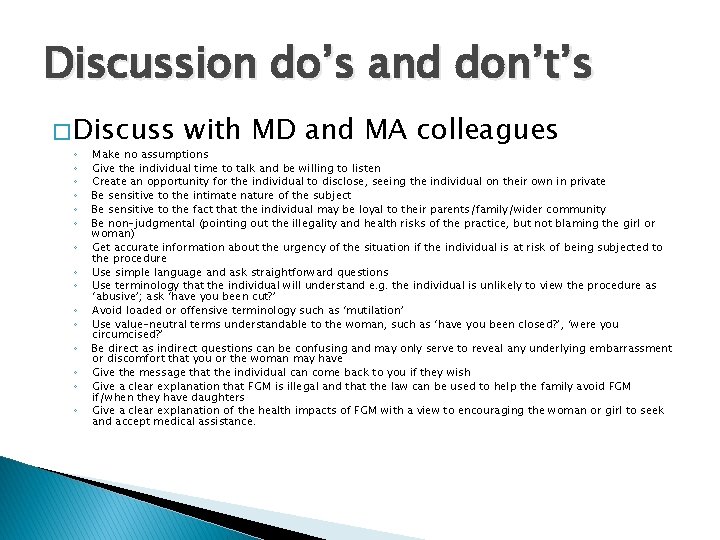
Discussion do’s and don’t’s � Discuss ◦ ◦ ◦ ◦ with MD and MA colleagues Make no assumptions Give the individual time to talk and be willing to listen Create an opportunity for the individual to disclose, seeing the individual on their own in private Be sensitive to the intimate nature of the subject Be sensitive to the fact that the individual may be loyal to their parents/family/wider community Be non-judgmental (pointing out the illegality and health risks of the practice, but not blaming the girl or woman) Get accurate information about the urgency of the situation if the individual is at risk of being subjected to the procedure Use simple language and ask straightforward questions Use terminology that the individual will understand e. g. the individual is unlikely to view the procedure as ‘abusive’; ask ‘have you been cut? ’ Avoid loaded or offensive terminology such as ‘mutilation’ Use value-neutral terms understandable to the woman, such as ‘have you been closed? ’, ‘were you circumcised? ’ Be direct as indirect questions can be confusing and may only serve to reveal any underlying embarrassment or discomfort that you or the woman may have Give the message that the individual can come back to you if they wish Give a clear explanation that FGM is illegal and that the law can be used to help the family avoid FGM if/when they have daughters Give a clear explanation of the health impacts of FGM with a view to encouraging the woman or girl to seek and accept medical assistance.
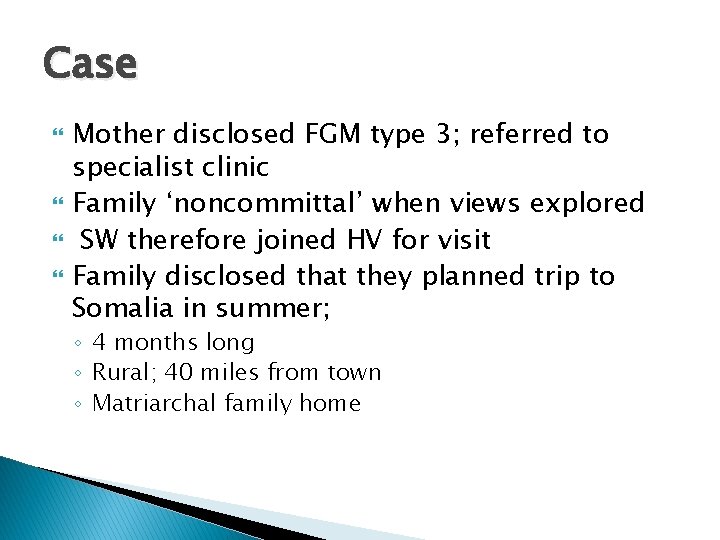
Case Mother disclosed FGM type 3; referred to specialist clinic Family ‘noncommittal’ when views explored SW therefore joined HV for visit Family disclosed that they planned trip to Somalia in summer; ◦ 4 months long ◦ Rural; 40 miles from town ◦ Matriarchal family home
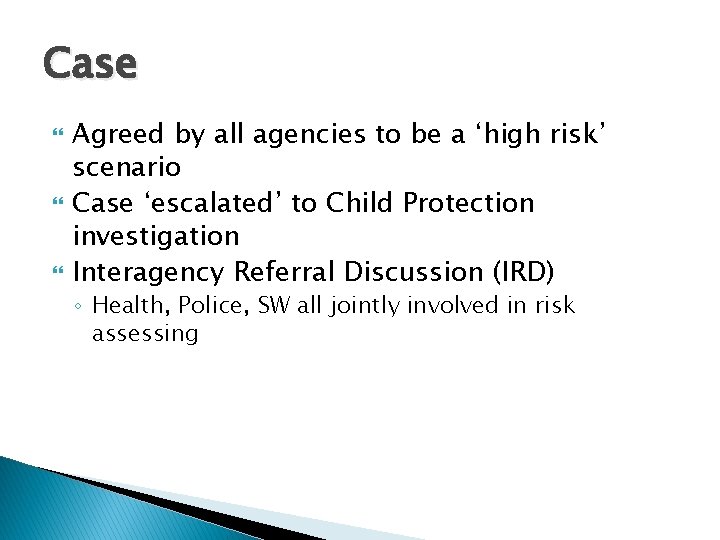
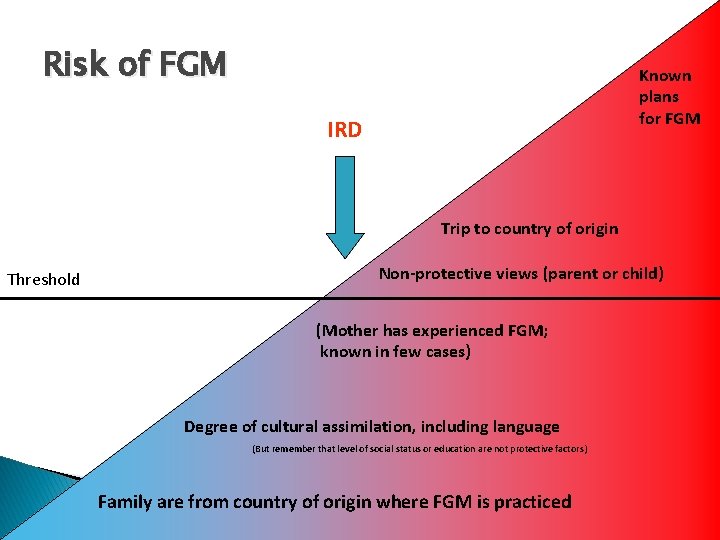
Case Agreed by all agencies to be a ‘high risk’ scenario Case ‘escalated’ to Child Protection investigation Interagency Referral Discussion (IRD) ◦ Health, Police, SW all jointly involved in risk assessing
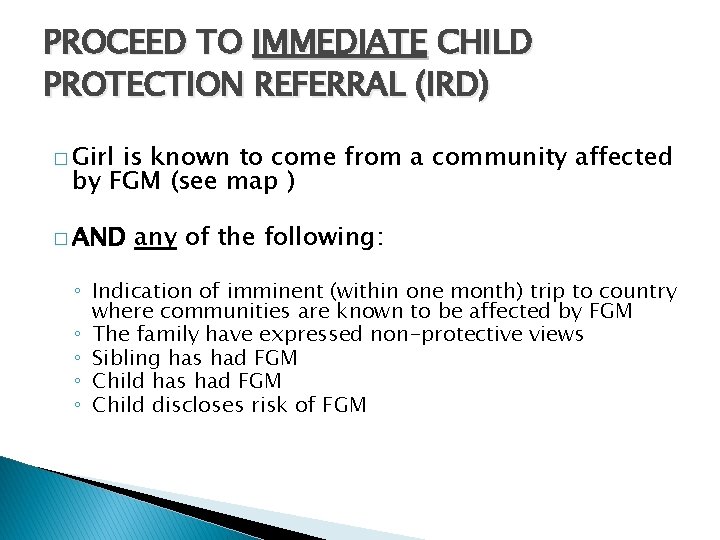
PROCEED TO IMMEDIATE CHILD PROTECTION REFERRAL (IRD) � Girl is known to come from a community affected by FGM (see map ) � AND any of the following: ◦ Indication of imminent (within one month) trip to country where communities are known to be affected by FGM ◦ The family have expressed non-protective views ◦ Sibling has had FGM ◦ Child discloses risk of FGM
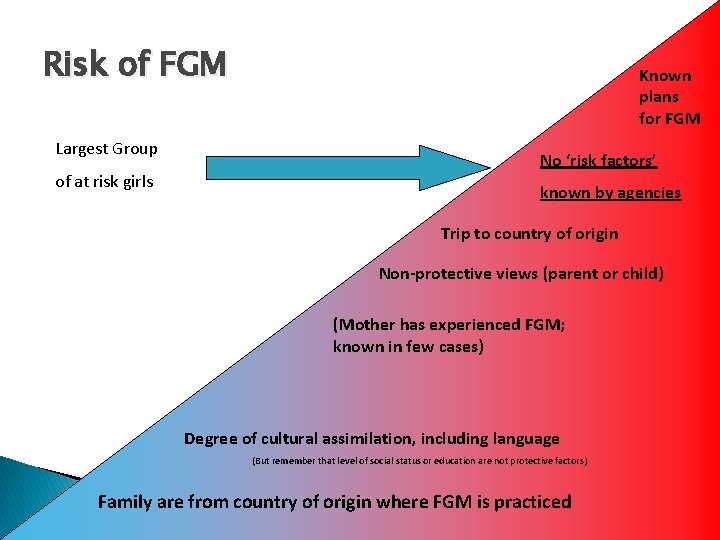
Risk of FGM Largest Group of at risk girls Known plans for FGM No ‘risk factors’ known by agencies Trip to country of origin Non-protective views (parent or child) (Mother has experienced FGM; known in few cases) Degree of cultural assimilation, including language (But remember that level of social status or education are not protective factors) Family are from country of origin where FGM is practiced
Risk of FGM Known plans for FGM IRD Trip to country of origin Threshold Non-protective views (parent or child) (Mother has experienced FGM; known in few cases) Degree of cultural assimilation, including language (But remember that level of social status or education are not protective factors) Family are from country of origin where FGM is practiced
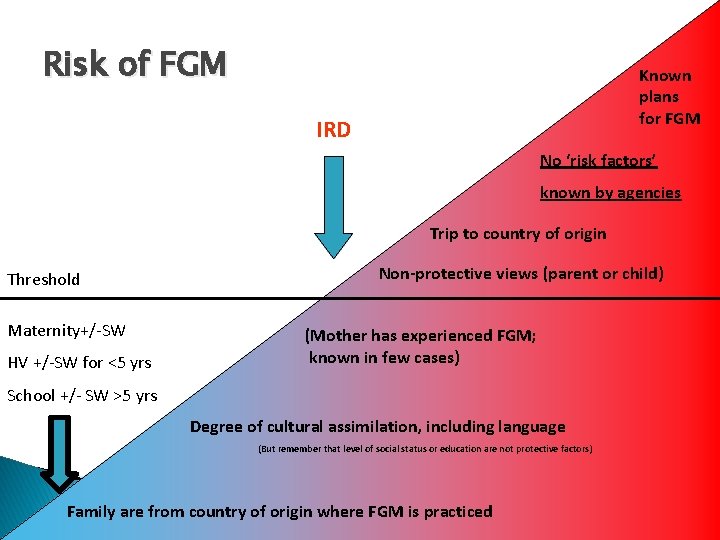
Risk of FGM Known plans for FGM IRD No ‘risk factors’ known by agencies Trip to country of origin Threshold Maternity+/-SW HV +/-SW for <5 yrs Non-protective views (parent or child) (Mother has experienced FGM; known in few cases) School +/- SW >5 yrs Degree of cultural assimilation, including language (But remember that level of social status or education are not protective factors) Family are from country of origin where FGM is practiced
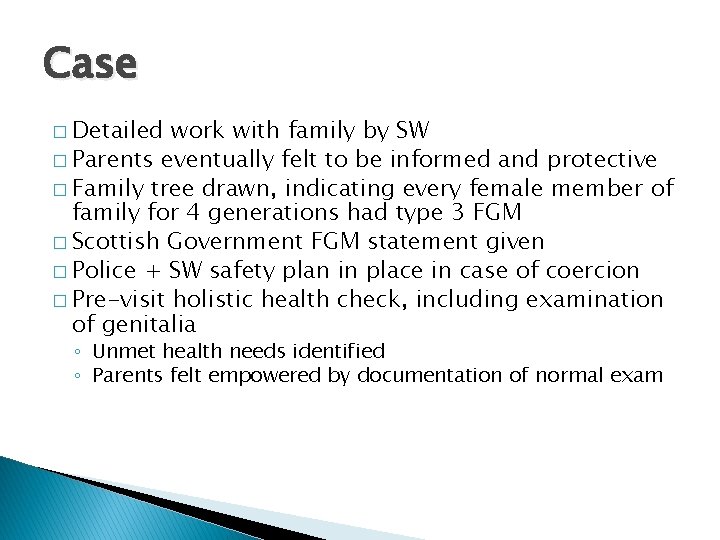
Case � Detailed work with family by SW � Parents eventually felt to be informed and protective � Family tree drawn, indicating every female member of family for 4 generations had type 3 FGM � Scottish Government FGM statement given � Police + SW safety plan in place in case of coercion � Pre-visit holistic health check, including examination of genitalia ◦ Unmet health needs identified ◦ Parents felt empowered by documentation of normal exam
Case Family travelled Delayed return due to ill health See in clinic by CCH on return ◦ ◦ No FGM; examination confirmed All had malaria; referred appropriately Other health referrals; ? TB Parents positive about and grateful for health and SW input; working collaboratively
Key points Vulnerable population Many unmet health needs Mobile ‘Hard to reach’ Little English understood Little contact with (health) services Time consuming detailed work
FGM; clinical pitfalls Normalisation of symptoms ◦ Take detailed systematic history of (GU) symptoms Don’t infer from history the anatomical type Remember BBV risk Examination ◦ Be aware of limitations ◦ Avoid repeated examination ◦ Should be with colposcope (SCAN) in clinic Unless acute pain/ bleeding/ infection etc
Pitfalls; “not like other CP” Single event May happen abroad Risk to associated girls and women Associated honour based crime/ harmful traditional practices Interpreter issues important
Case 2 15 yr old Disclosed to school teacher FGM age 8 Phoned in as CP referral; IRD Seen in CCH clinic at girl’s request Disclosed CSA at clinic FGM type 1 + transection hymen BBV screening negative Referral ‘Meadows’ for trauma work. . ongoing DVD reviewed with adult gynae consultant; ◦ potential for corrective procedure
Medical Assessment of Children 1. Acute symptoms: If a child or woman presents with acute symptoms, she should be examined in the usual way by Accident and Emergency Department or GP professionals, for assessment of need for urgent intervention.
2. Non-acute situation: If there is a non-acute indication for examination, then the situation needs to be weighed up carefully, with an experienced paediatrician involved with decision making. This should be done if it is in the best interests of the child, for example if she has symptoms. It should be done by an experienced paediatrician, in a planned and supportive way, usually in the ‘SCAN’ clinic by the child protection team. Not all girls who have undergone FGM need to be examined.
3. Unnecessary repeated examinations by inexperienced staff should be avoided by careful consideration, discussion and planning.
4. Women with complications of FGM may be seen in the specialist service for women who have had FGM - referral via SCI Gateway F. A. O. Consultant with Special Interest in FGM.
5. Blood Borne Viruses Because FGM is usually carried out in a non-clinical setting, using instruments that have not been sterilised, and which may have been used repeatedly for FGM procedures on other girls, the transmission of Hepatitis B, C and HIV is an appreciable risk. Even if there is lack of clarity about whether to carry out an examination, there should be consideration of a holistic and supportive medical assessment to include blood borne virus screening, exploration of symptoms, and the offer of a supportive examination and evaluation if indicated.
6. Forensic evidence: If you believe that a criminal offence has been committed and FGM carried out, there may be a need for corroborating evidence in the form of a joint paediatric forensic examination. This must be discussed with child protection paediatricians and police, as part of an Interagency Referral Discussion (IRD)
7. A holistic assessment which explores any other medical, support and protection needs of the girl or young woman is offered and appropriate referrals, including mental health, should be made as necessary.
8. Visible evidence of FGM particularly type 4, may be difficult to discern on ‘standard’ or ‘naked eye’ inspection, so specialist examination should always be discussed with the child protection team where there is a concern that FGM has been
Our learning. . . Remember not to ‘gloss over’ detailed inspection of the clitoris and prepuce Remember to palpate any area where you think there has been removal of tissue Remember to liaise with gyn colleagues who know about therapeutic intervention. . .
Interagency Risk Assessment Document (circulated) • • • “Risk Assessment document" was drafted in order to pull together an ‘aid memoir’ cum checklist It also represents a checklist of key information for FGM risk assessment. evaluated during the ‘tests of change’ • (Early Years Collaborative) • • • response to the request for detailed and directive guidance by those professionals working within the agencies and expressed via their representatives at the interagency working group. Covers key police, health and SW info; interagency Mapped to DOH risk framework
Flow charts (circulated) • • clear pathways in place for girls who are at imminent or ‘high’ risk of FGM (IRD) clear pathways for women who may have been affected by FGM, who – present to sexual health and gynaecology services – present to maternity services • • <5 yr girls who are from families from communities who may have been affected by FGM to be addressed by HVs +/- SW School aged girls risks to be assessed jointly by education +/- SW
The future is bright; Have opportunity to make real difference to lives Robust legal and political backing Scotland/Lothian significant but ‘manageable’ numbers of at risk girls
Re-cap; what you need to know; 1. FGM is child abuse 2. FGM is against the law 3. All health care professionals have a responsibility to be aware of FGM risk and respond appropriately 4. Carefully planned, supportive detailed exam with DVD recording, then MD liaison is essential