
Feudalism What is Feudalism Feudalism Power shift from

- Slides: 13
Feudalism
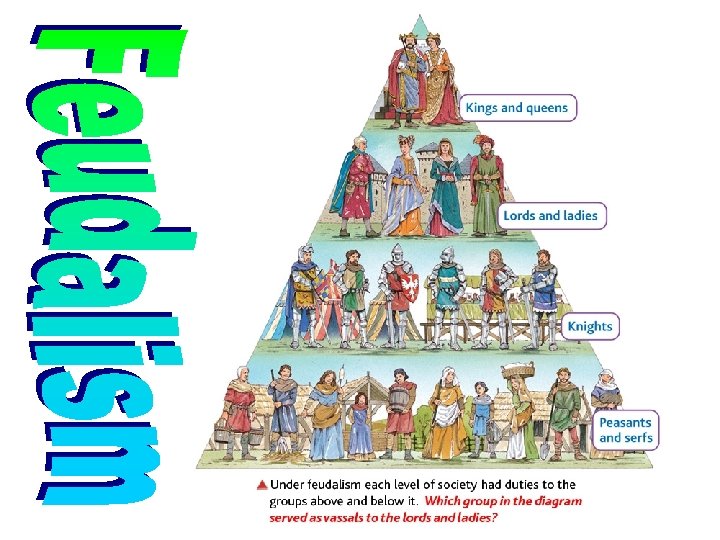
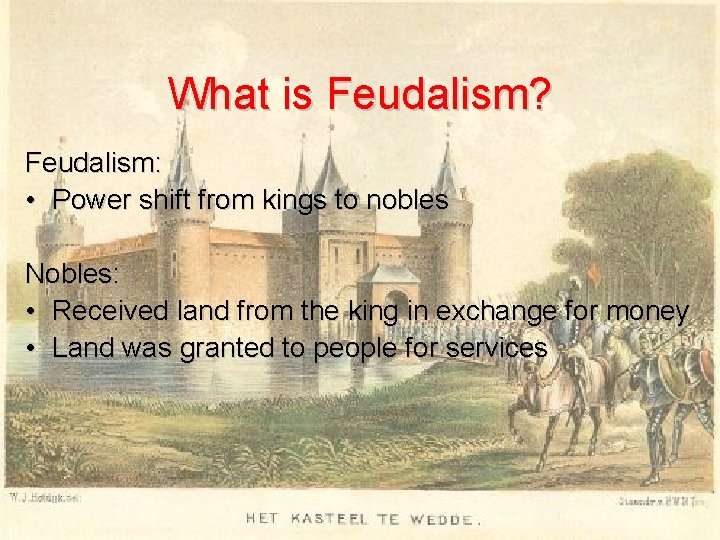
What is Feudalism? Feudalism: • Power shift from kings to nobles Nobles: • Received land from the king in exchange for money • Land was granted to people for services
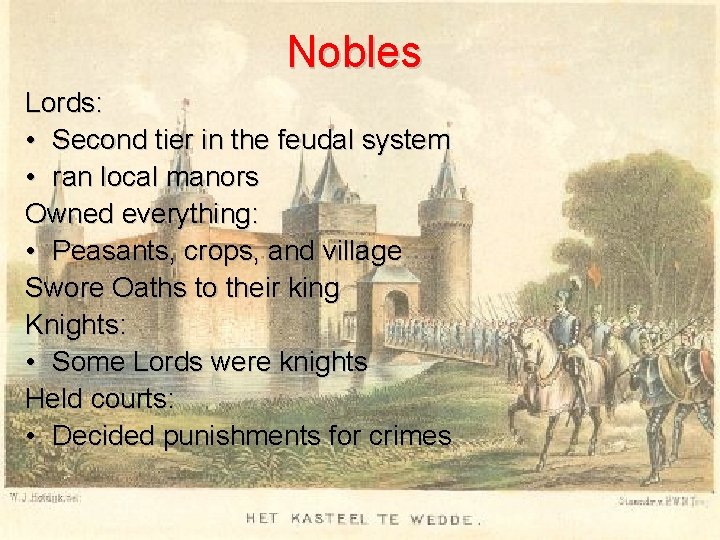
Nobles Lords: • Second tier in the feudal system • ran local manors Owned everything: • Peasants, crops, and village Swore Oaths to their king Knights: • Some Lords were knights Held courts: • Decided punishments for crimes
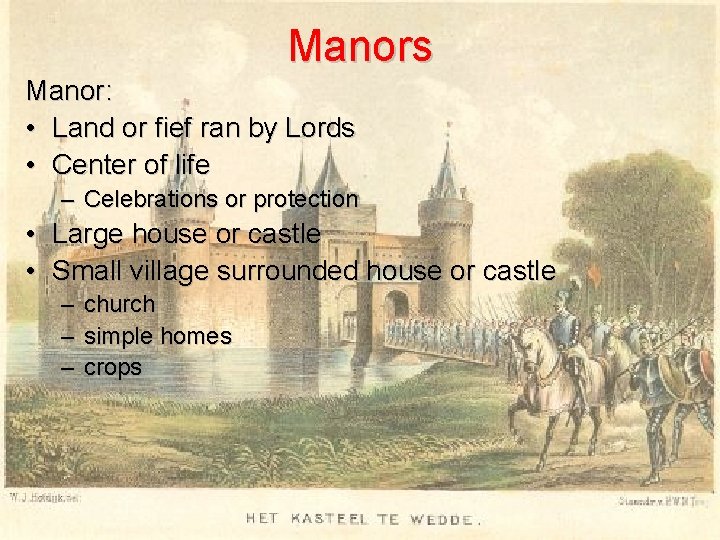
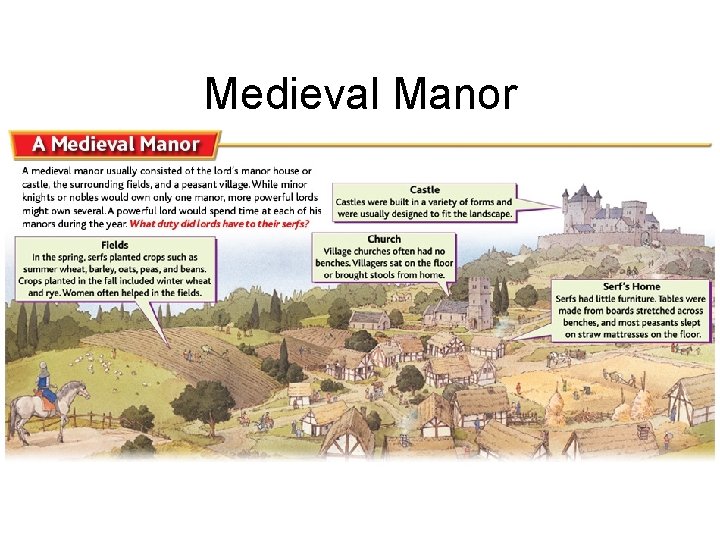
Manors Manor: • Land or fief ran by Lords • Center of life – Celebrations or protection • Large house or castle • Small village surrounded house or castle – – – church simple homes crops
Medieval Manor
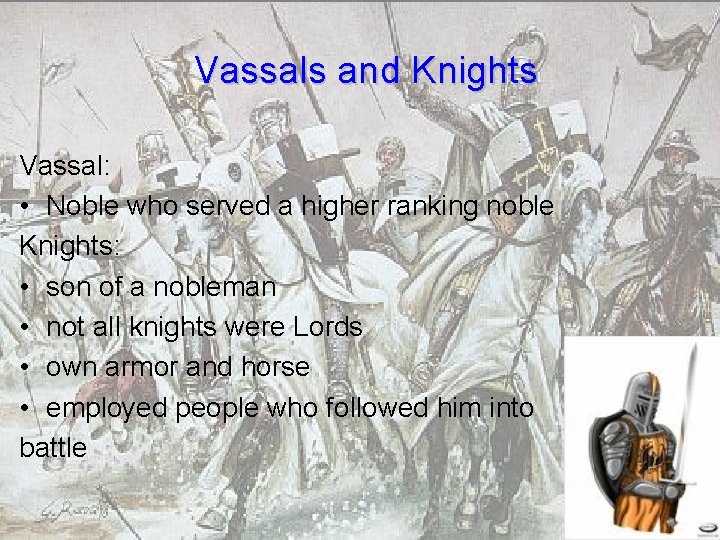
Vassals and Knights Vassal: • Noble who served a higher ranking noble Knights: • son of a nobleman • not all knights were Lords • own armor and horse • employed people who followed him into battle
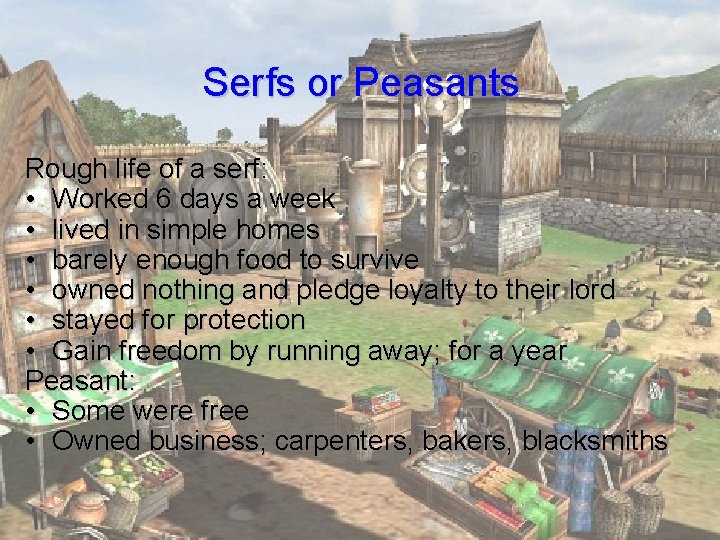
Serfs or Peasants Rough life of a serf: • Worked 6 days a week • lived in simple homes • barely enough food to survive • owned nothing and pledge loyalty to their lord • stayed for protection • Gain freedom by running away; for a year Peasant: • Some were free • Owned business; carpenters, bakers, blacksmiths
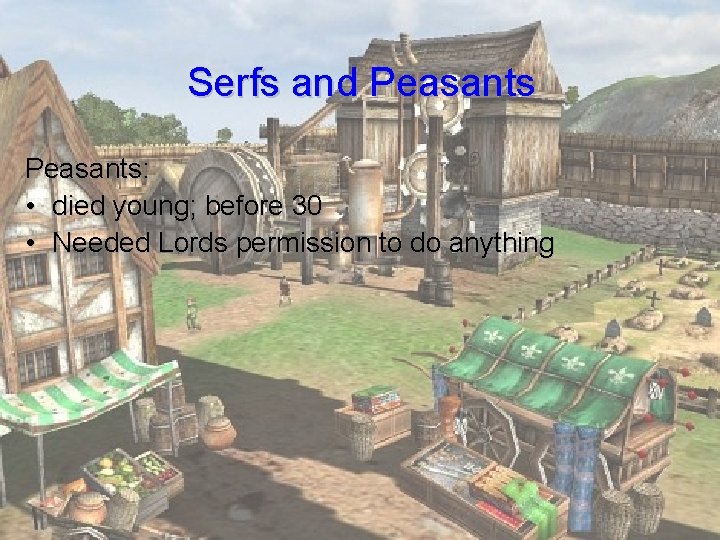
Serfs and Peasants: • died young; before 30 • Needed Lords permission to do anything
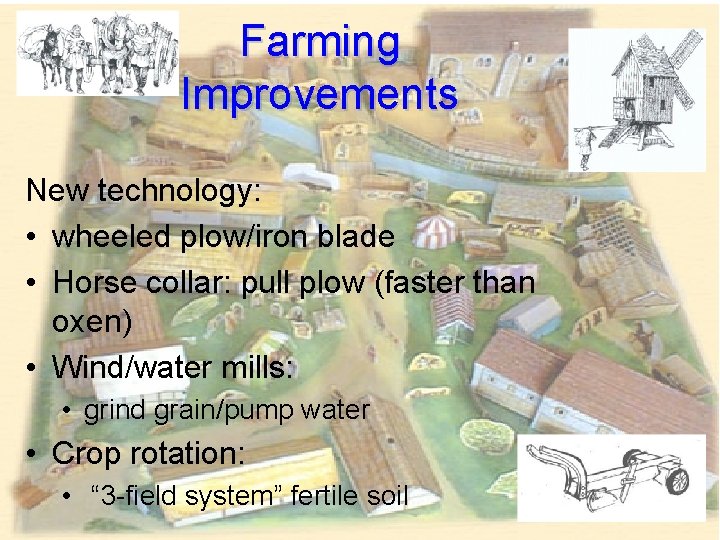
Farming Improvements New technology: • wheeled plow/iron blade • Horse collar: pull plow (faster than oxen) • Wind/water mills: • grind grain/pump water • Crop rotation: • “ 3 -field system” fertile soil
Trade: • almost stopped, • roads in disrepair • lawlessness, • no travel Under feudalism, trade increased • Venice & Flanders: • major trade centers • Bartering(trading things) Trade grew, demand for gold/silver grew
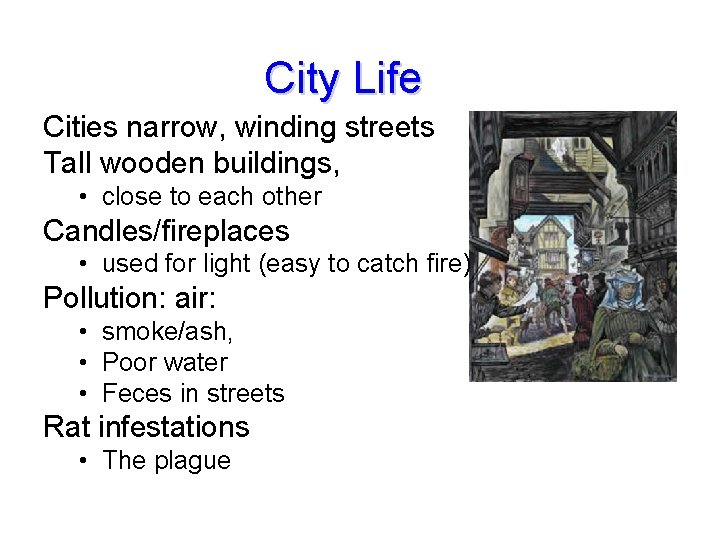
City Life Cities narrow, winding streets Tall wooden buildings, • close to each other Candles/fireplaces • used for light (easy to catch fire) Pollution: air: • smoke/ash, • Poor water • Feces in streets Rat infestations • The plague