
Feudalism and the Rise of the Church Unit

- Slides: 17
Feudalism and the Rise of the Church Unit IV
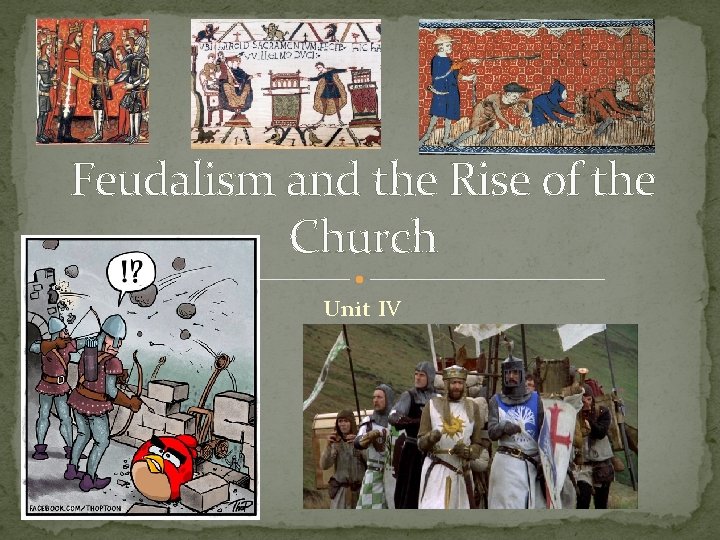
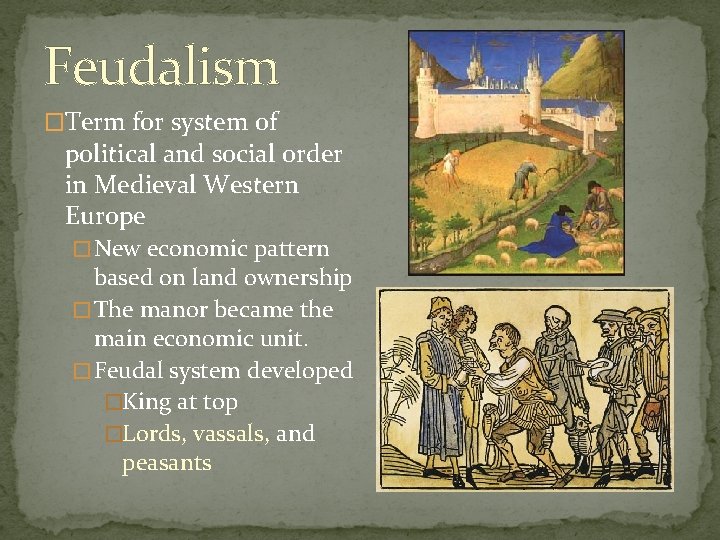
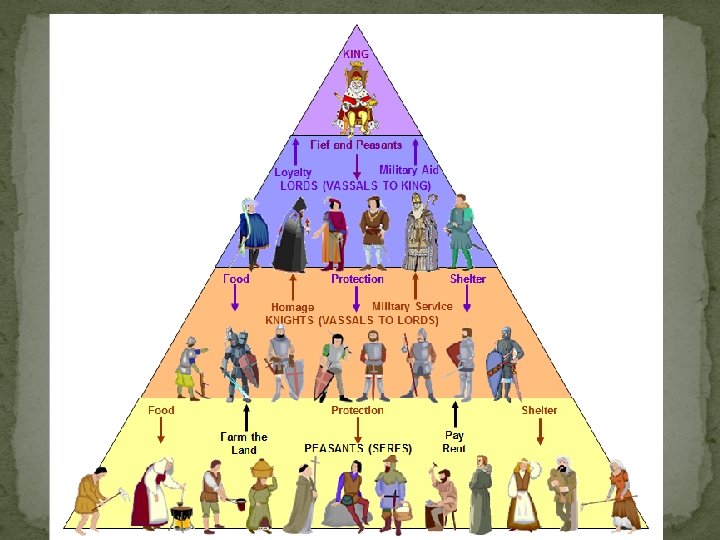
Feudalism �Term for system of political and social order in Medieval Western Europe � New economic pattern based on land ownership � The manor became the main economic unit. � Feudal system developed �King at top �Lords, vassals, and peasants
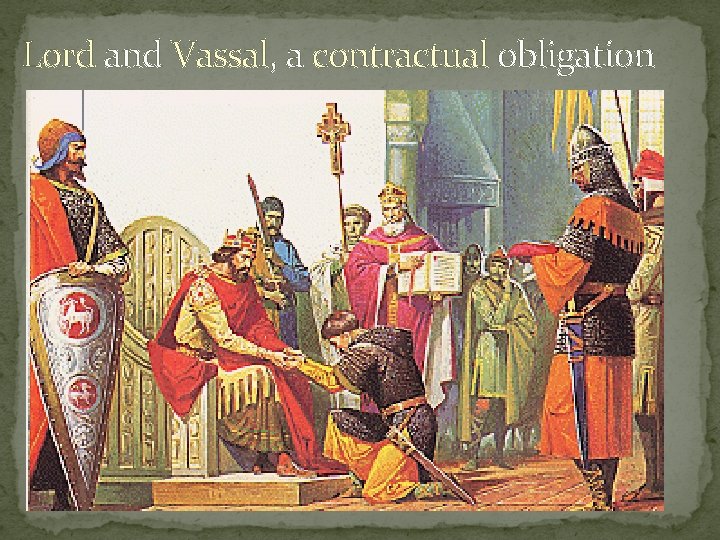
Lord and Vassal, a contractual obligation
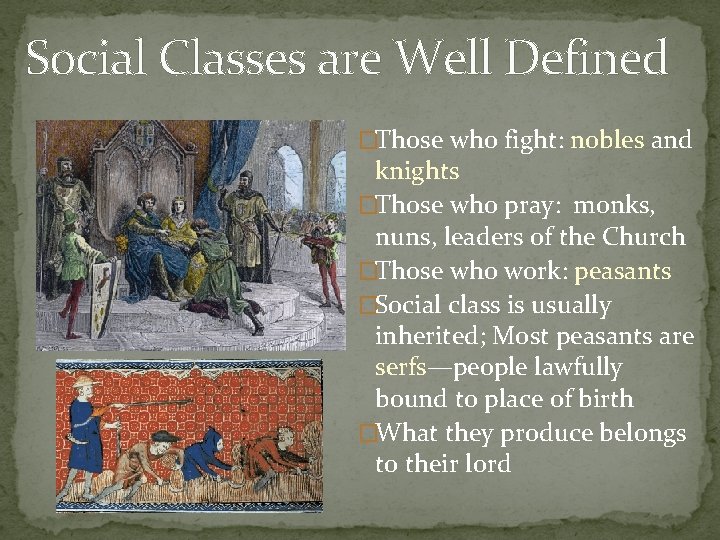
Social Classes are Well Defined �Those who fight: nobles and knights �Those who pray: monks, nuns, leaders of the Church �Those who work: peasants �Social class is usually inherited; Most peasants are serfs—people lawfully bound to place of birth �What they produce belongs to their lord
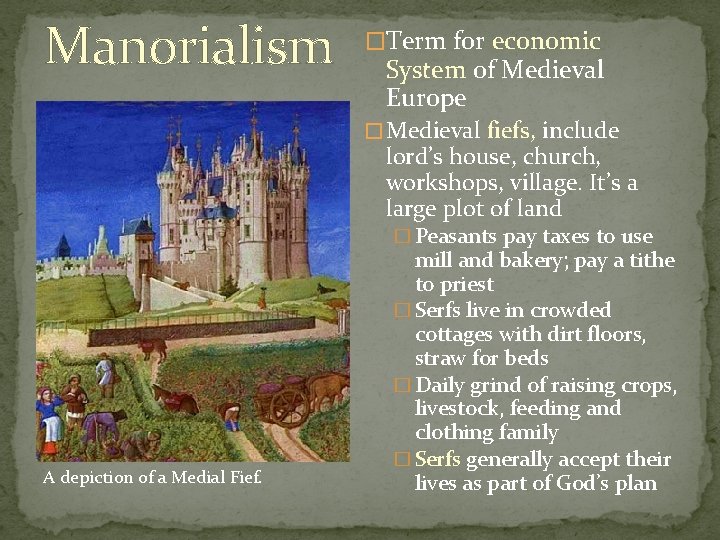
Manorialism �Term for economic System of Medieval Europe � Medieval fiefs, include lord’s house, church, workshops, village. It’s a large plot of land � Peasants pay taxes to use A depiction of a Medial Fief. mill and bakery; pay a tithe to priest � Serfs live in crowded cottages with dirt floors, straw for beds � Daily grind of raising crops, livestock, feeding and clothing family � Serfs generally accept their lives as part of God’s plan
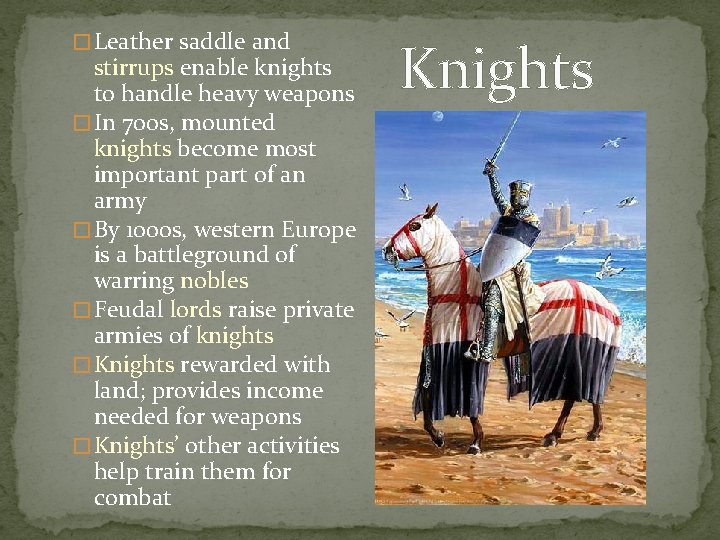
� Leather saddle and stirrups enable knights to handle heavy weapons � In 700 s, mounted knights become most important part of an army � By 1000 s, western Europe is a battleground of warring nobles � Feudal lords raise private armies of knights � Knights rewarded with land; provides income needed for weapons � Knights’ other activities help train them for combat Knights
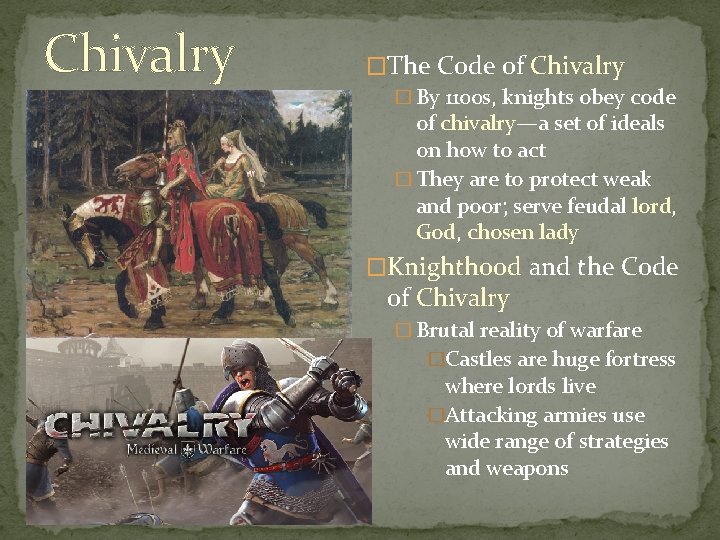
Chivalry �The Code of Chivalry � By 1100 s, knights obey code of chivalry—a set of ideals on how to act � They are to protect weak and poor; serve feudal lord, God, chosen lady �Knighthood and the Code of Chivalry � Brutal reality of warfare �Castles are huge fortress where lords live �Attacking armies use wide range of strategies and weapons
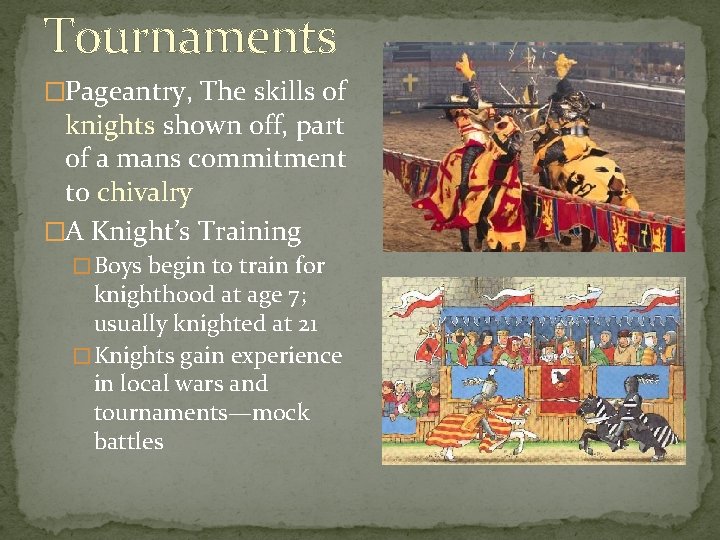
Tournaments �Pageantry, The skills of knights shown off, part of a mans commitment to chivalry �A Knight’s Training � Boys begin to train for knighthood at age 7; usually knighted at 21 � Knights gain experience in local wars and tournaments—mock battles
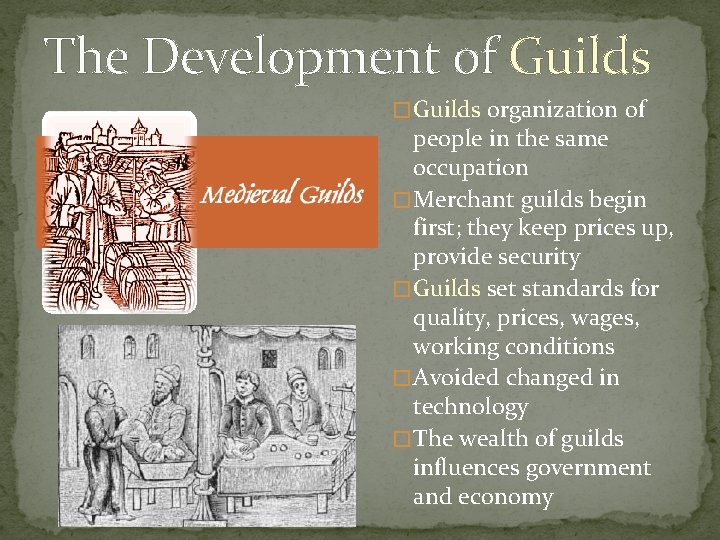
The Development of Guilds � Guilds organization of people in the same occupation � Merchant guilds begin first; they keep prices up, provide security � Guilds set standards for quality, prices, wages, working conditions � Avoided changed in technology � The wealth of guilds influences government and economy
The Commercial Revolution � Trade fairs are held several times a year in towns � Trade routes open to Asia, North Africa, and Byzantine � Merchants develop credit to avoid carrying large sums of money � Merchants play a bigger role in society � Merchants take out loans to purchase goods, and banking grows � Economic changes lead to the growth of cities and of paying jobs
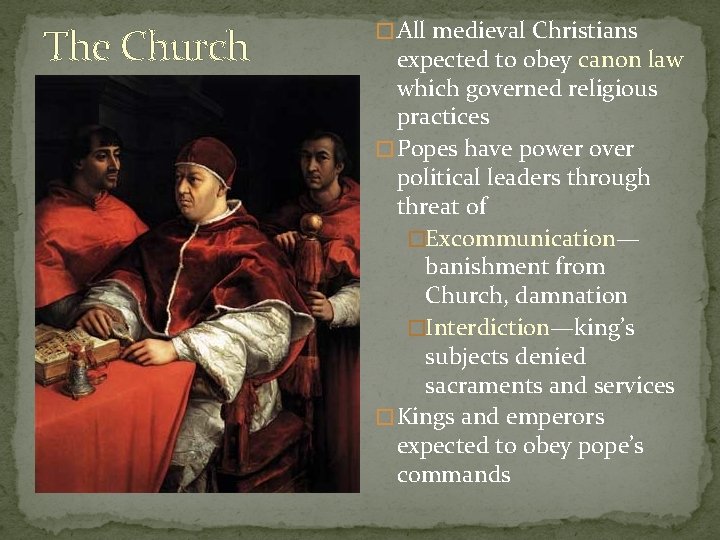
The Church � All medieval Christians expected to obey canon law which governed religious practices � Popes have power over political leaders through threat of �Excommunication— banishment from Church, damnation �Interdiction—king’s subjects denied sacraments and services � Kings and emperors expected to obey pope’s commands
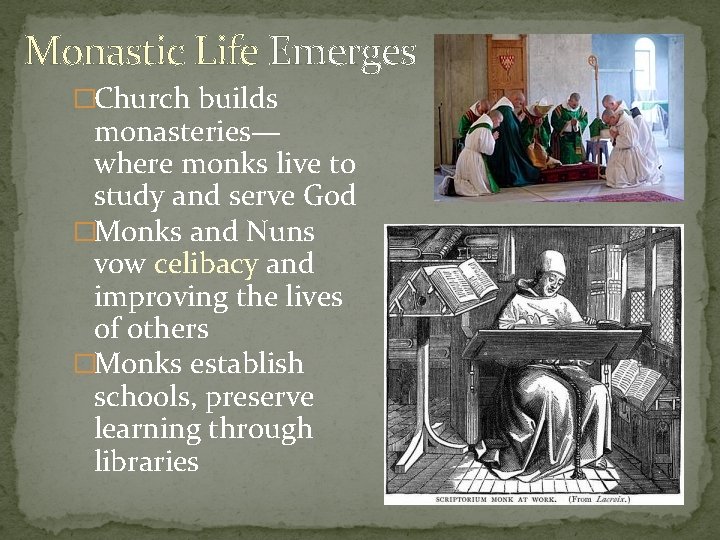
Monastic Life Emerges �Church builds monasteries— where monks live to study and serve God �Monks and Nuns vow celibacy and improving the lives of others �Monks establish schools, preserve learning through libraries
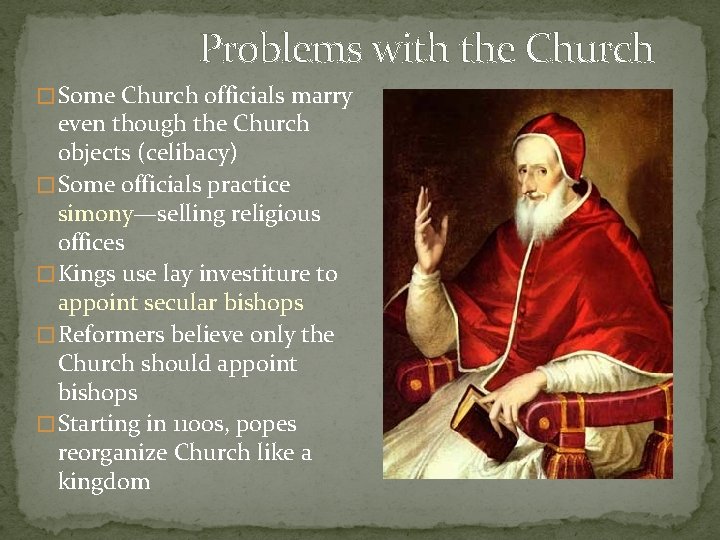
Problems with the Church � Some Church officials marry even though the Church objects (celibacy) � Some officials practice simony—selling religious offices � Kings use lay investiture to appoint secular bishops � Reformers believe only the Church should appoint bishops � Starting in 1100 s, popes reorganize Church like a kingdom
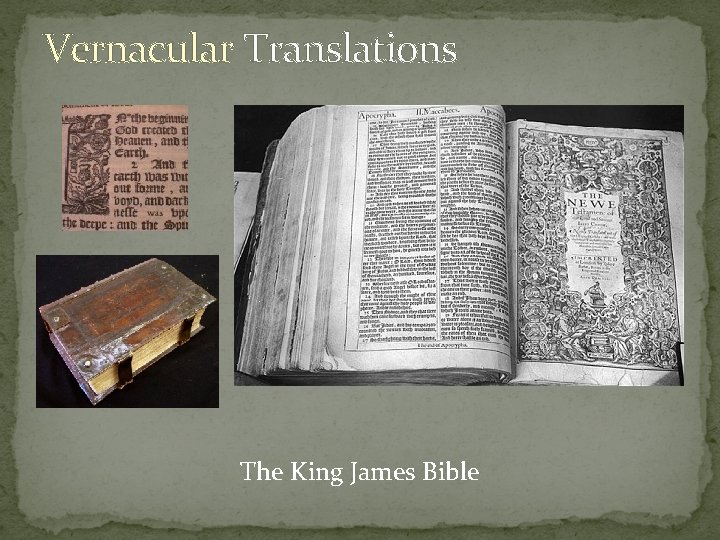
Vernacular Translations The King James Bible
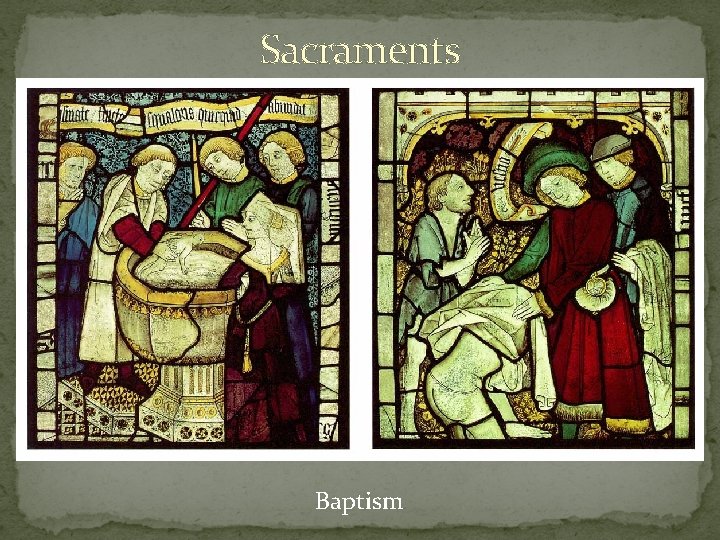
Sacraments Baptism
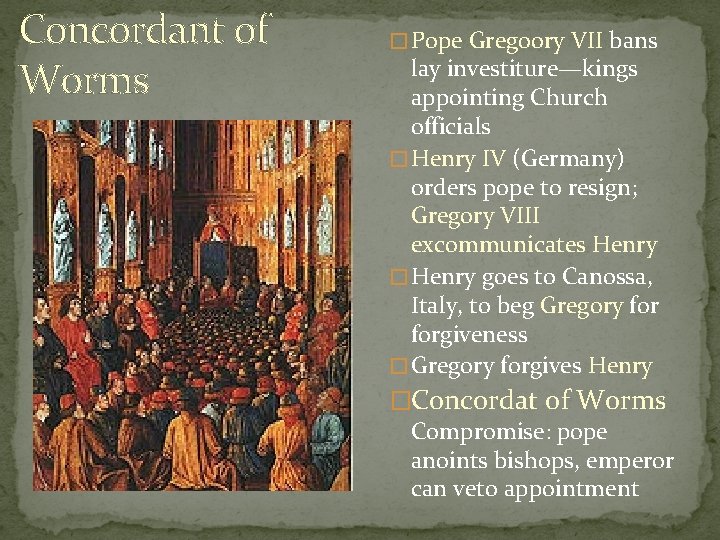
Concordant of Worms � Pope Greg 0 ory VII bans lay investiture—kings appointing Church officials � Henry IV (Germany) orders pope to resign; Gregory VIII excommunicates Henry � Henry goes to Canossa, Italy, to beg Gregory forgiveness � Gregory forgives Henry �Concordat of Worms Compromise: pope anoints bishops, emperor can veto appointment