
Feudal Japan Mr Wilson AP World History Wren
- Slides: 9
Feudal Japan Mr. Wilson AP World History Wren High School
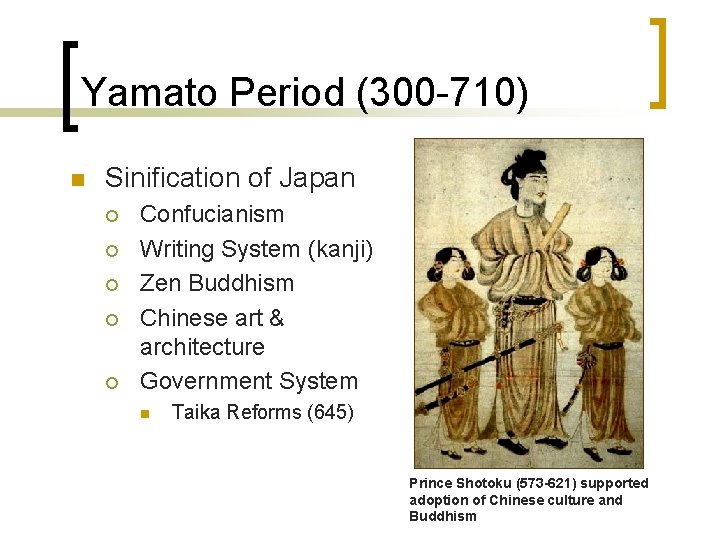
Yamato Period (300 -710) n Sinification of Japan ¡ ¡ ¡ Confucianism Writing System (kanji) Zen Buddhism Chinese art & architecture Government System n Taika Reforms (645) Prince Shotoku (573 -621) supported adoption of Chinese culture and Buddhism
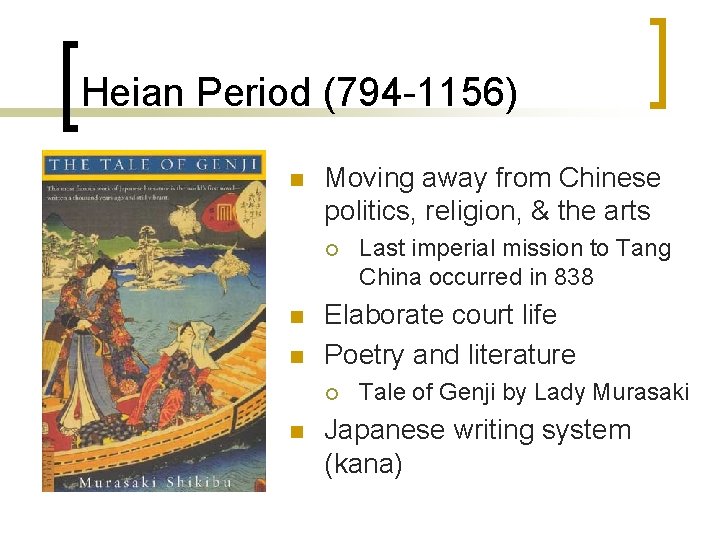
Heian Period (794 -1156) n Moving away from Chinese politics, religion, & the arts ¡ n n Elaborate court life Poetry and literature ¡ n Last imperial mission to Tang China occurred in 838 Tale of Genji by Lady Murasaki Japanese writing system (kana)
Heian Government n Political power was dominated by aristocratic families ¡ n End of period due to the rise of military clans ¡ n Fujiwara clan ruled as regents Minamoto clan, Fujiwara clan, Taira clan, Tachibana clan Gempei Wars (1180 -1185)
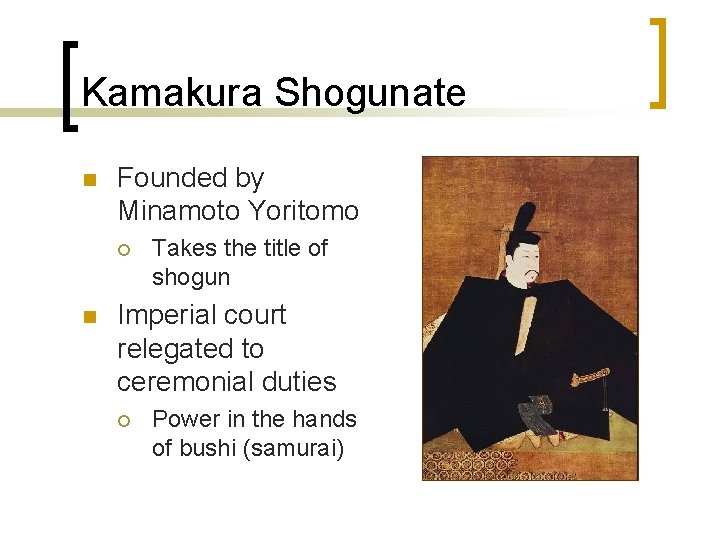
Kamakura Shogunate n Founded by Minamoto Yoritomo ¡ n Takes the title of shogun Imperial court relegated to ceremonial duties ¡ Power in the hands of bushi (samurai)
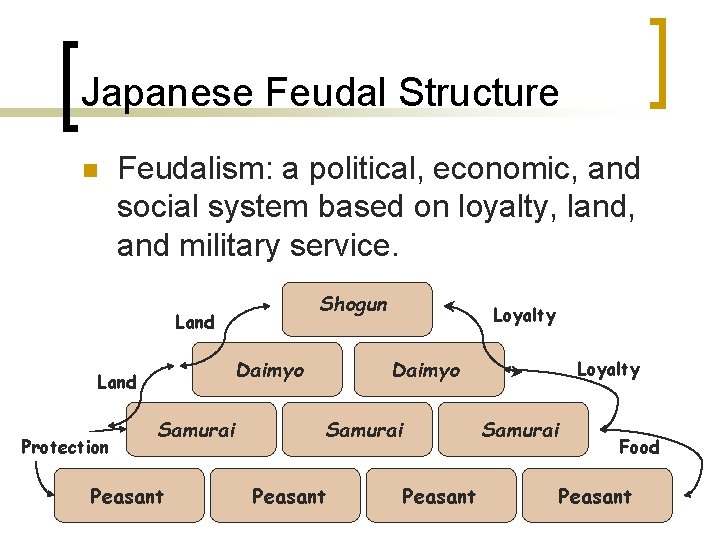
Japanese Feudal Structure n Feudalism: a political, economic, and social system based on loyalty, land, and military service. Shogun Land Daimyo Land Protection Samurai Peasant Loyalty Daimyo Samurai Peasant Loyalty Samurai Peasant Food Peasant
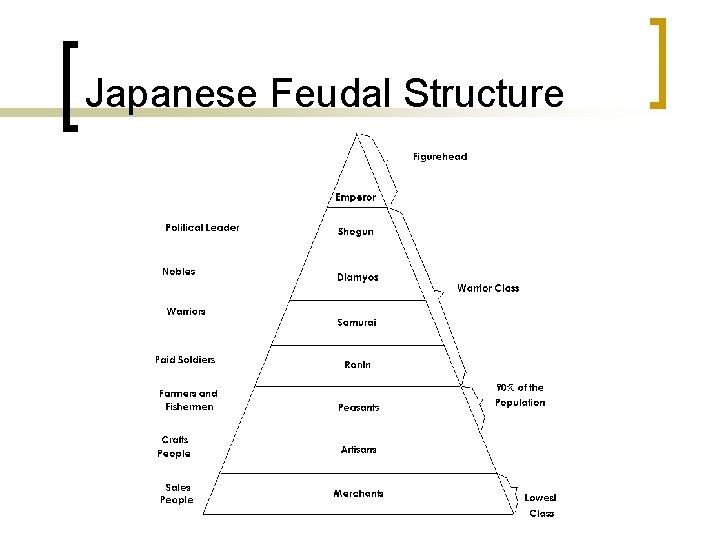
Japanese Feudal Structure
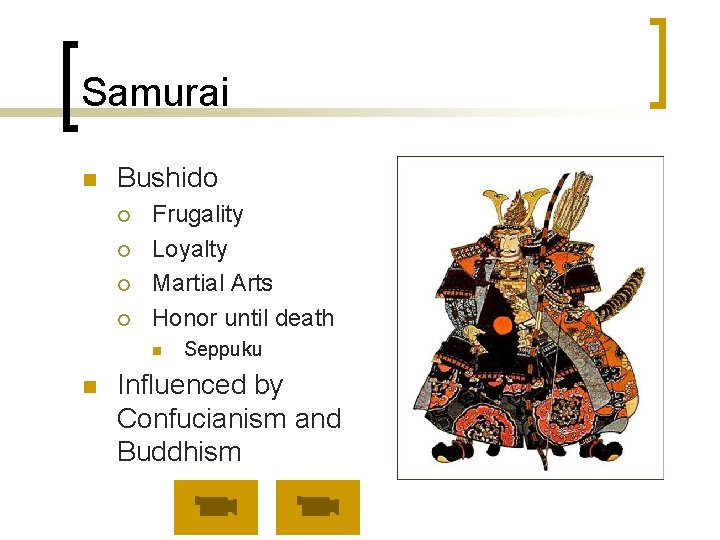
Samurai n Bushido ¡ ¡ Frugality Loyalty Martial Arts Honor until death n n Seppuku Influenced by Confucianism and Buddhism
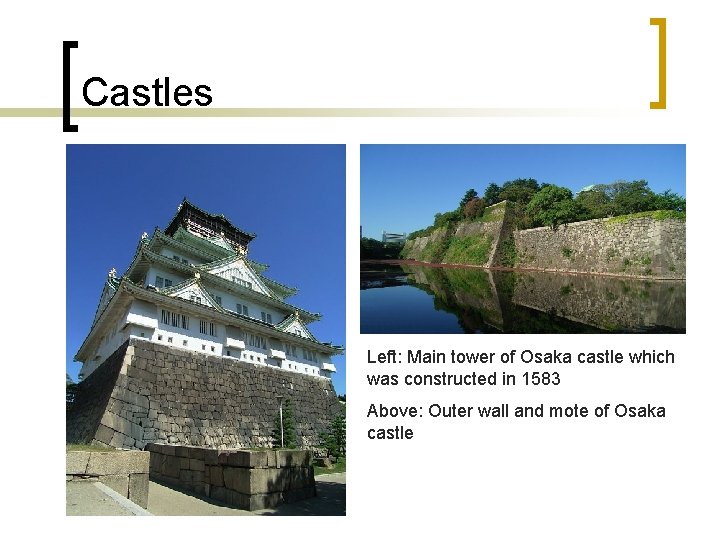
Castles Left: Main tower of Osaka castle which was constructed in 1583 Above: Outer wall and mote of Osaka castle