
Feudal Japan and Chinese Influences Geography of Japan

- Slides: 20
Feudal Japan and Chinese Influences
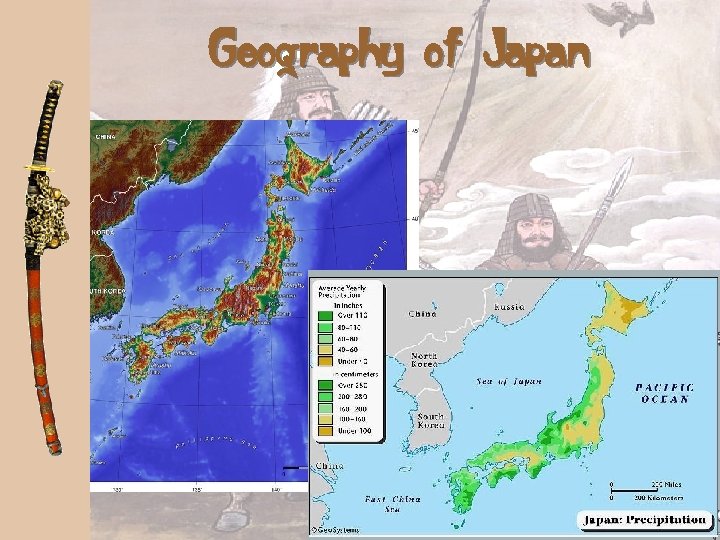
Geography of Japan
Nara Period: 710 -794 (and before) Chinese culture thrives: v Confucianism v Language (kanji characters) v Chinese art & architecture v Government structure (emperor +ministers) v Equal field system
Heian Period: 794 -1185 Period of “Culture” v Japanese syllabic script (kana) v Court literature (The Tale of Genji) v Art and beauty important (ohaguro) v Growth of large estates (Shoen)
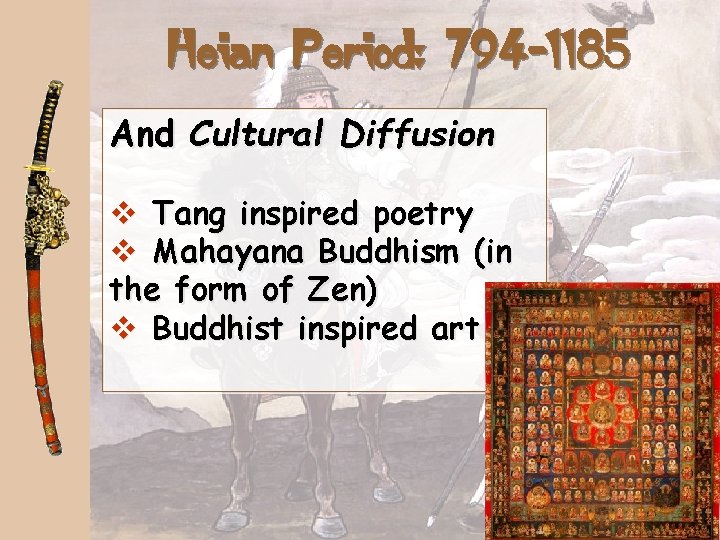
Heian Period: 794 -1185 And Cultural Diffusion v Tang inspired poetry v Mahayana Buddhism (in the form of Zen) v Buddhist inspired art
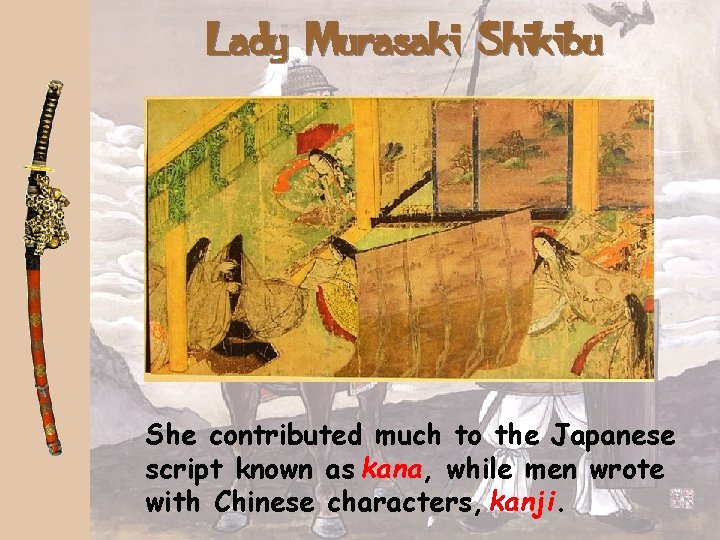
Lady Murasaki Shikibu She contributed much to the Japanese script known as kana, while men wrote with Chinese characters, kanji.
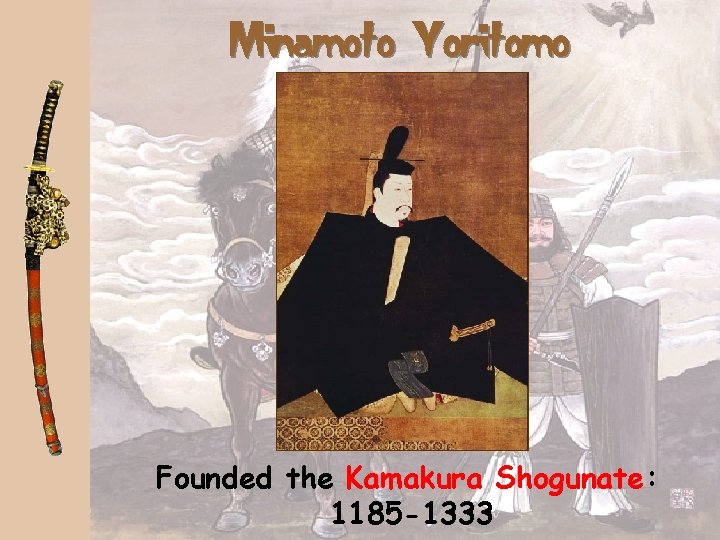
Minamoto Yoritomo Founded the Kamakura Shogunate: 1185 -1333
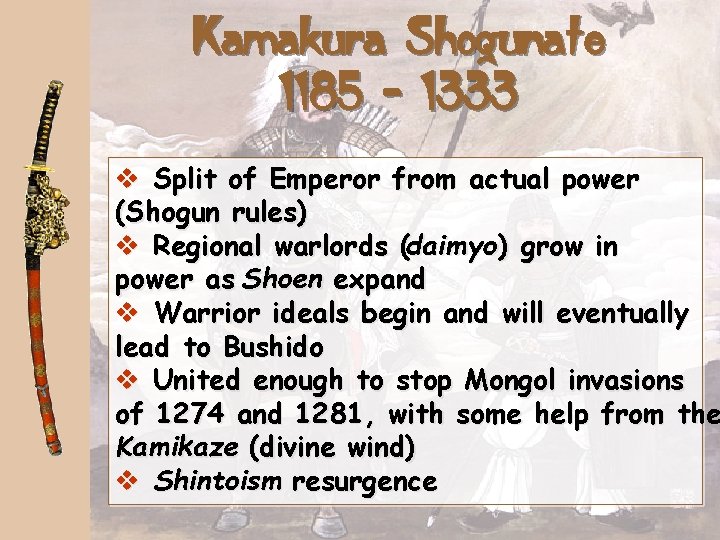
Kamakura Shogunate 1185 - 1333 v Split of Emperor from actual power (Shogun rules) v Regional warlords (daimyo ) grow in power as Shoen expand v Warrior ideals begin and will eventually lead to Bushido v United enough to stop Mongol invasions of 1274 and 1281, with some help from the Kamikaze (divine wind) v Shintoism resurgence
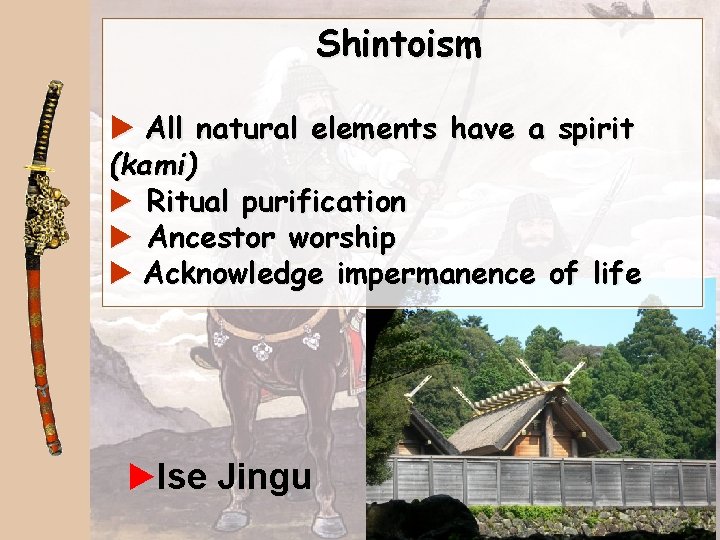
Shintoism a All natural elements have a spirit (kami) a Ritual purification a Ancestor worship a Acknowledge impermanence of life a. Ise Jingu
Ashikaga Shogunate 1333 - 1467 v Daimyo rule in all but name v Warriors become even more important for protecting each shoen v Bushido Code becoming formalized v Onin War (1467 -1477) leads to Sengoku (Age of Warring States)
The Age of the Warring States: (1467 - 1568) v Daimyo’s fought for power with no strong central Shogunate v Castles built on hills in different provinces v Europeans arrive in Japan bringing firearms & Christianity v Fractured control based on clan allegiances
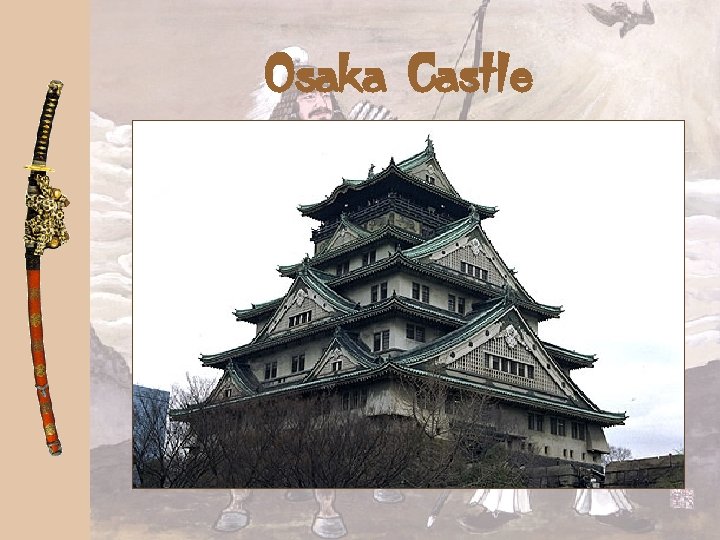
Osaka Castle
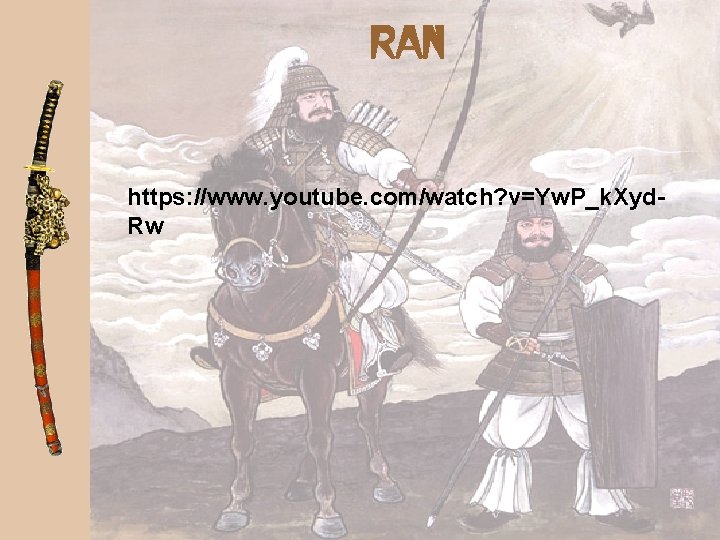
RAN https: //www. youtube. com/watch? v=Yw. P_k. Xyd. Rw
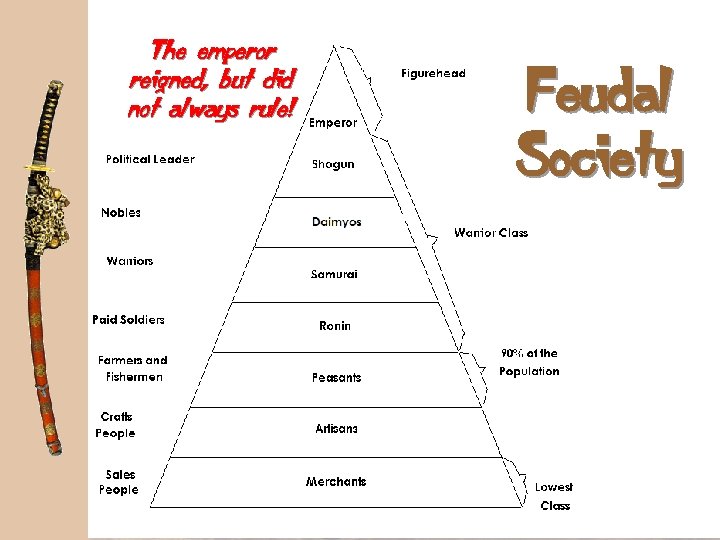
The emperor reigned, but did not always rule! Feudal Society
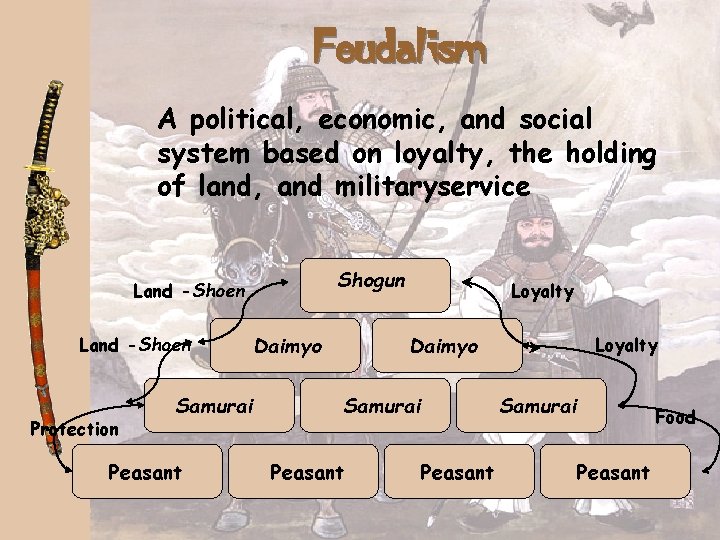
Feudalism A political, economic, and social system based on loyalty, the holding of land, and militaryservice Shogun Land -Shoen Protection Samurai Peasant Daimyo Loyalty Daimyo Samurai Peasant Loyalty Samurai Peasant Food Peasant
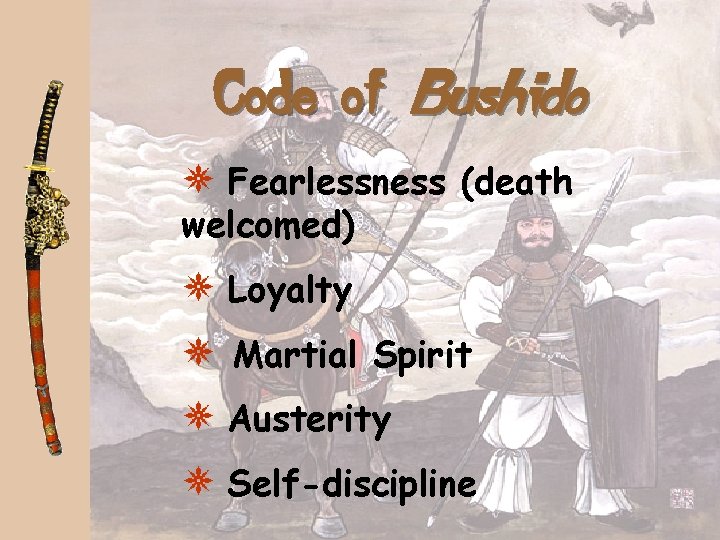
Code of Bushido * Fearlessness (death welcomed) * Loyalty * Martial Spirit * Austerity * Self-discipline
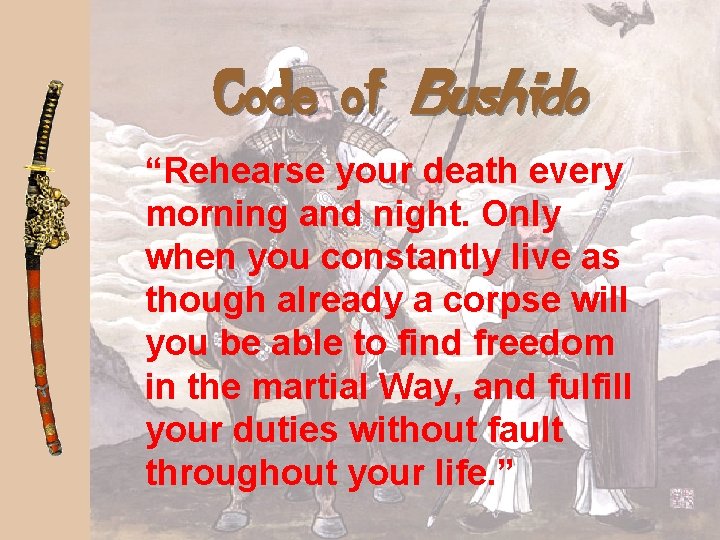
Code of Bushido “Rehearse your death every morning and night. Only when you constantly live as though already a corpse will you be able to find freedom in the martial Way, and fulfill your duties without fault throughout your life. ”
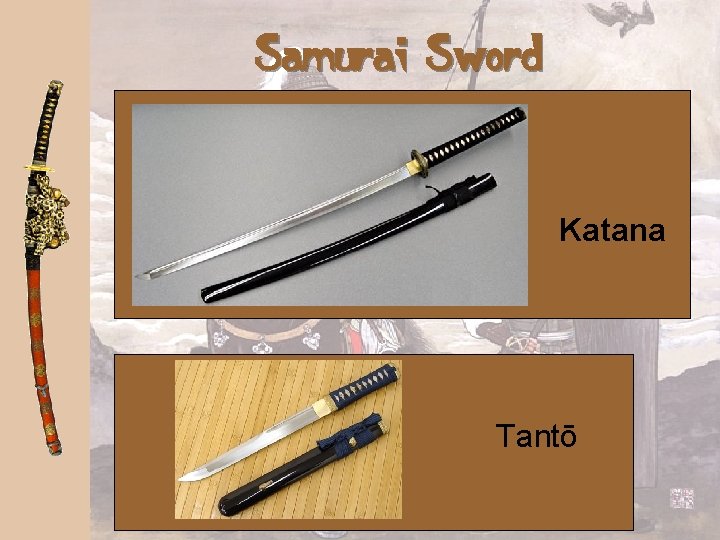
Samurai Sword Katana Tantō
Seppuku: Ritual Suicide It is honorable to die in this way. Kaishaku – his “seconds”