
Fetal distress Definition Fetal distress is defined as
- Slides: 14
Fetal distress
Definition Fetal distress is defined as depletion of oxygen and accumulation of carbon dioxide, leading to a state of “hypoxia and acidosis酸中毒“during intrauterine life
Etiology Ø Maternal factors (1) Microvascular微血管的ischaemia (PIH) (2) Low oxygen carried by RBC(severe anemia) (3) Acute bleeding(placenta previa, placental abruption) (4) Shock and acute infection (5) obstructed of Utero-placental blood flow (局部缺血)
Ø Placenta、umbilical factors: (1) Obstructed of umbilical blood flow (2) Dysfunction of placenta Ø Fetal factors: (1) Malformations of cardiovascular system (2) Intrauterine infection
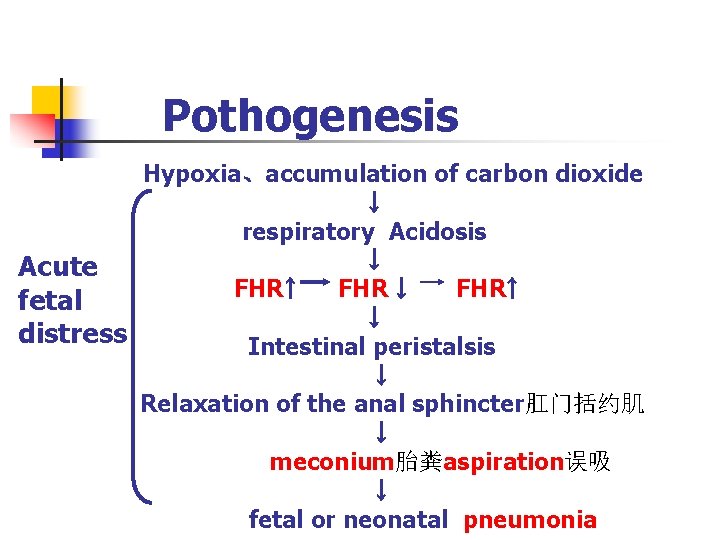
Pothogenesis Hypoxia、accumulation of carbon dioxide ↓ respiratory Acidosis ↓ Acute FHR↑ FHR ↓ FHR↑ fetal ↓ distress Intestinal peristalsis ↓ Relaxation of the anal sphincter肛门括约肌 ↓ meconium胎粪aspiration误吸 ↓ fetal or neonatal pneumonia
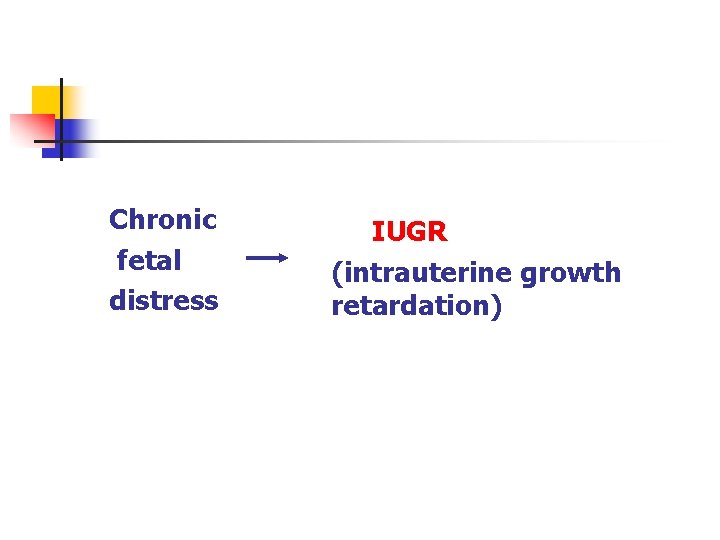
Chronic fetal distress IUGR (intrauterine growth retardation)
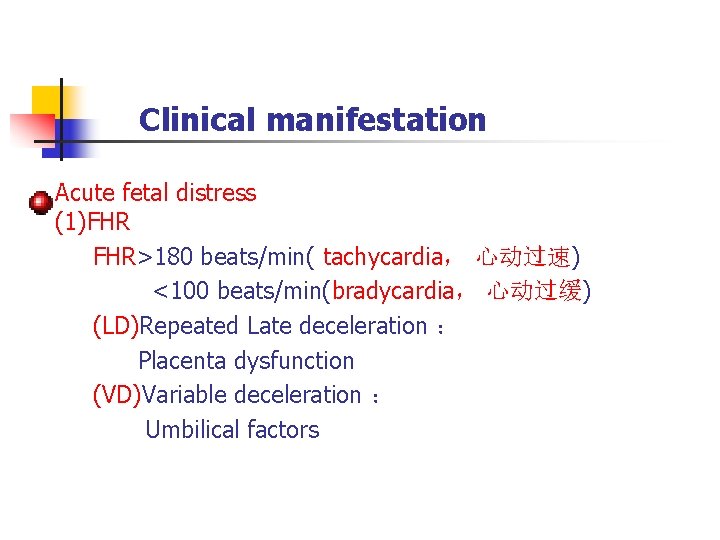
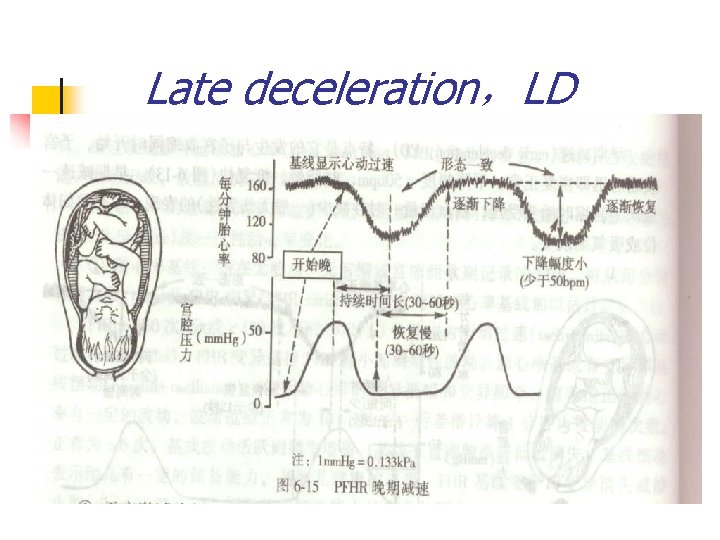
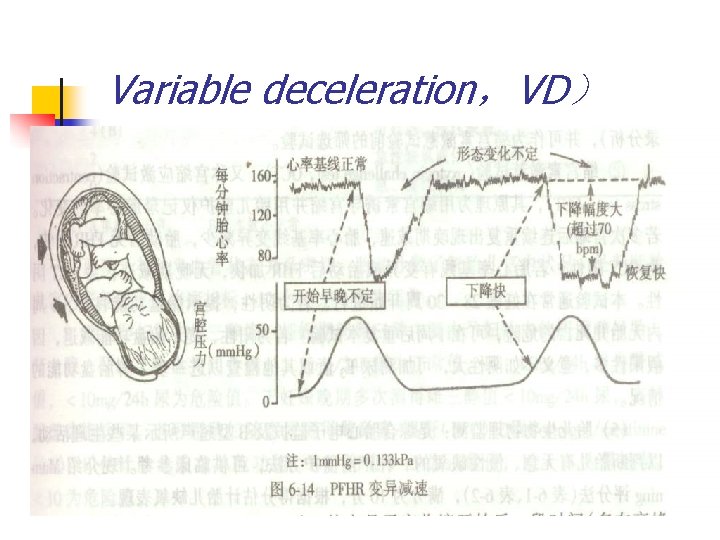
Clinical manifestation Acute fetal distress (1)FHR FHR>180 beats/min( tachycardia, 心动过速) <100 beats/min(bradycardia, 心动过缓) (LD)Repeated Late deceleration : Placenta dysfunction (VD)Variable deceleration : Umbilical factors
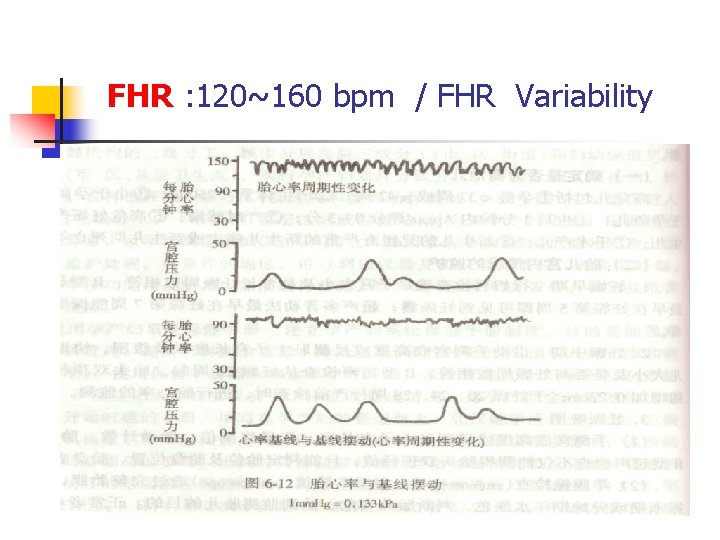
FHR : 120~160 bpm / FHR Variability
Late deceleration,LD
Variable deceleration,VD)
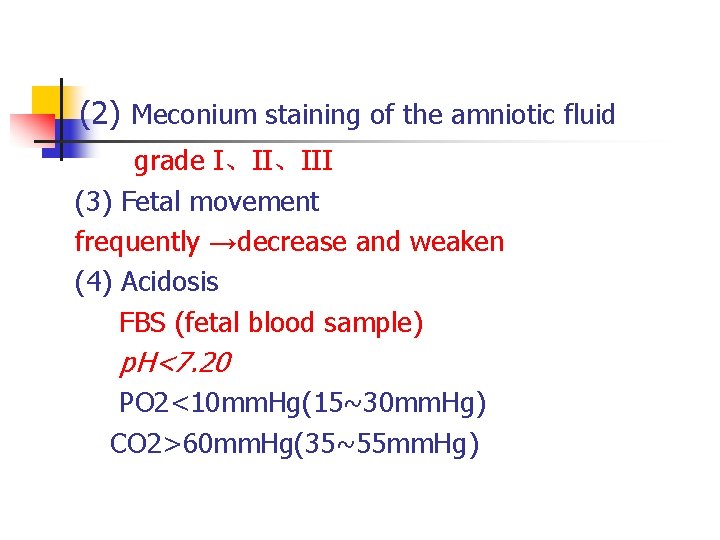
(2) Meconium staining of the amniotic fluid grade I、II、III (3) Fetal movement frequently →decrease and weaken (4) Acidosis FBS (fetal blood sample) p. H<7. 20 PO 2<10 mm. Hg(15~30 mm. Hg) CO 2>60 mm. Hg(35~55 mm. Hg)
Chronic fetal distress placental function (24 h E 3<10 mg or E/C<10) FHR Fetal movement Amnioscopy羊膜镜检查
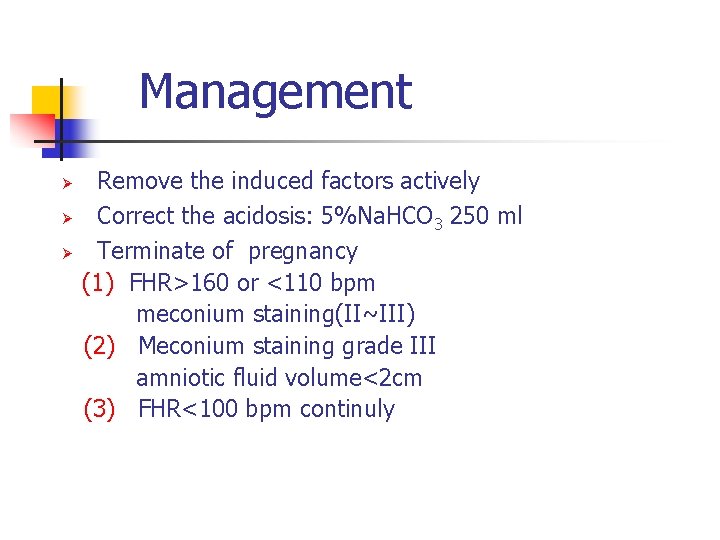
Management Ø Ø Ø Remove the induced factors actively Correct the acidosis: 5%Na. HCO 3 250 ml Terminate of pregnancy (1) FHR>160 or <110 bpm meconium staining(II~III) (2) Meconium staining grade III amniotic fluid volume<2 cm (3) FHR<100 bpm continuly
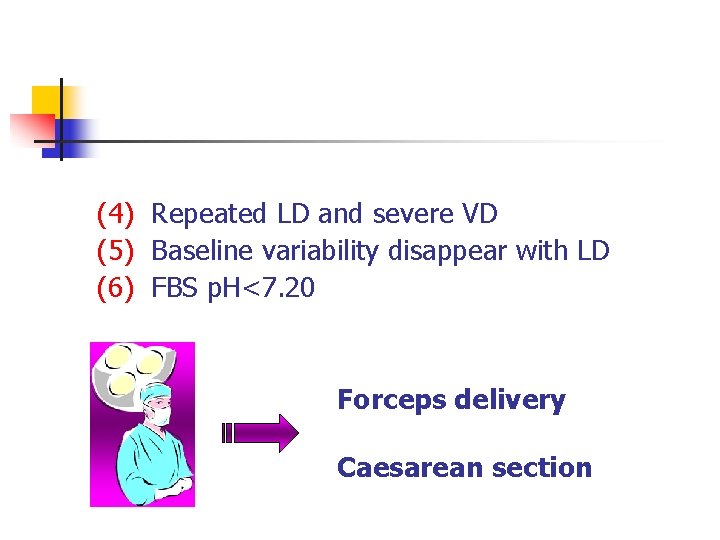
(4) Repeated LD and severe VD (5) Baseline variability disappear with LD (6) FBS p. H<7. 20 Forceps delivery Caesarean section