
Fetal Alcohol Syndrome Presented by Amy Pearce Allison
Fetal Alcohol Syndrome Presented by: Amy Pearce Allison Plummer Laura Piccolo Jenny Pitcavage April 20, 2004
Introduction n What is Fetal Alcohol Syndrome (FAS) FAS is a lifelong preventable set of mental, physical, and neurobehavioral birth defects associated with alcohol consumption during pregnancy n FAS is the leading known preventable cause of mental retardation and birth defects n FAS crosses all socio-economic groups and affects all races n Costs for one FAS child is estimated to be 2 million dollars over a lifetime and it costs American tax payer ~321 million dollars a year n
Some Statistics At least one in every five pregnant women use alcohol and/or other drugs n Each year more than five thousand children are born with FAS n 52% of FAS individuals between ages 12 and 51 will exhibit inappropriate sexual behavior n 60% of FAS individuals will have trouble with the law n

It’s Just a Few Drinks… how does a mother’s drinking affect her unborn child? n n When a pregnant woman drinks alcohol, so does her baby, this occurs through the blood vessels of the placenta. Alcohol, a teratogen, is toxic to fetal development, so when alcohol reaches the growing baby’s blood supply, it interferes with normal development
What Happens When 1 st trimester – is the most critical time because the brain is very sensitive and alcohol consumption cause abnormal features n 2 nd trimester – fetal distress is related to binge drinking and miscarriage is a major risk n 3 rd trimester – is a period when the fetus undergoes rapid and substantial growth and use of alcohol can impair that growth n

Effects of FAS on the Brain n n There is a decrease in the overall size of the brain, which can cause permanent brain damage The basal ganglia, which is involved in motor abilities and cognitive functions, is reduced in volume
More Effects on the Brain The corpus callosum, which is a bundle of nerves connecting the left and right hemispheres, is thinned or completely absent n The cerebellum is reduced which causes learning deficits and balance and coordination deficits n The hippocampus, which is involved with memory, is effected negatively with it’s volume being reduced n
Physical Characteristics n n n n Abnormally small head and eyes Low nasal bridge Flat mid-face Short nose Thin upper lip Short in size Underweight Deformed fingers and toes
Pictures of FAS Individuals
Warning Signs Look for these in your child…. n Has difficulty playing independently n Has problems going to sleep n Has eating difficulties n Over/under-reacts to pain n Easily distracted n Noticeably talks too much n Has difficulty keeping or making friends
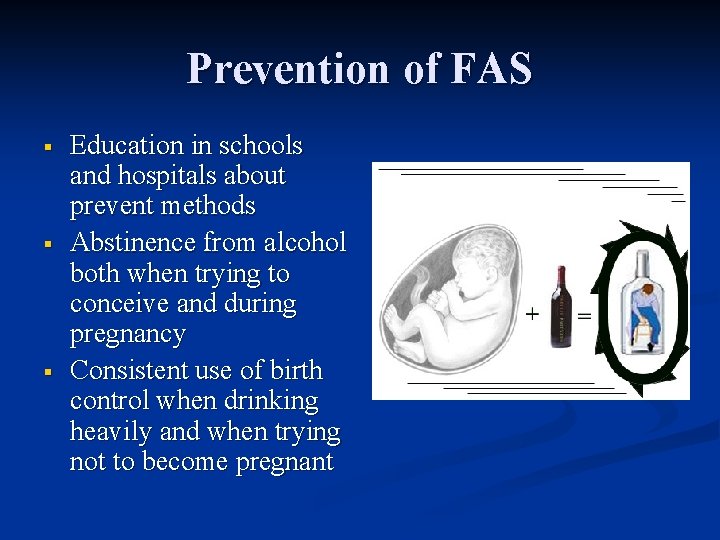
Prevention of FAS § § § Education in schools and hospitals about prevent methods Abstinence from alcohol both when trying to conceive and during pregnancy Consistent use of birth control when drinking heavily and when trying not to become pregnant
Dealing with FAS There are no specific treatments for FAS and the effects are mostly permanent n Prevention, abstaining from alcohol, is the best method for dealing with FAS n Children with FAS need supportive and understanding environments and many need special education because of learning disabilities and deficits n
The End
- Slides: 13