
Fetal Alcohol Effects Do you think Is it



- Slides: 29
Fetal Alcohol Effects
Do you think… Is it OK for a pregnant woman to drink alcohol?
Do you think… What if it is only 1 drink, or occasionally?
Teratogen An agent that causes malformation in an embryo
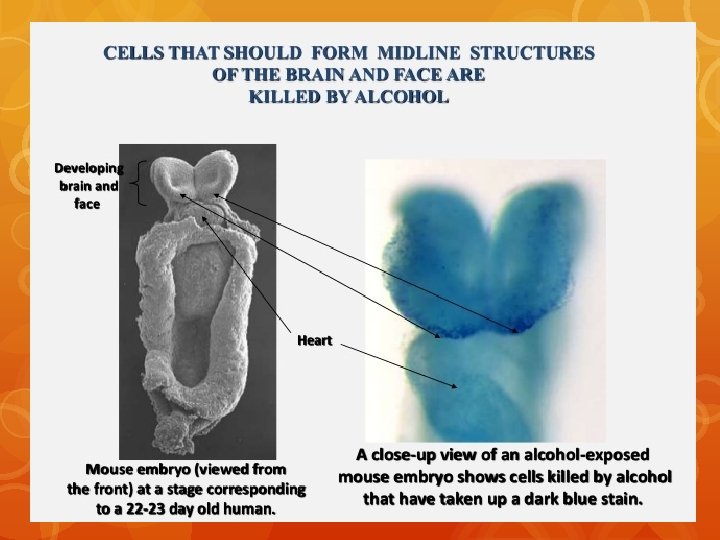
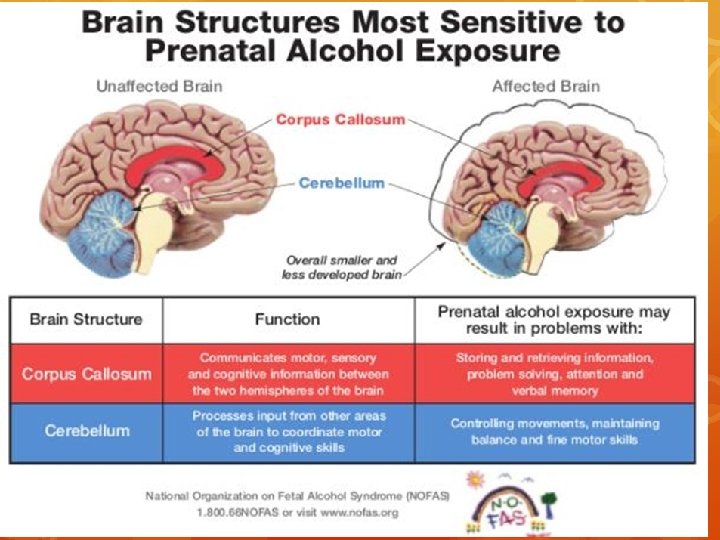
How does alcohol affect the developing brain? Alcohol is a teratogen. The area that is affected the most by alcohol is the nervous system. Damage can occur in various regions of the brain. The areas that might be affected by alcohol exposure depend on which areas are developing at the time the alcohol is consumed. Since the brain and the central nervous system are developing throughout the entire pregnancy, the baby's brain is always vulnerable to damage from alcohol exposure.
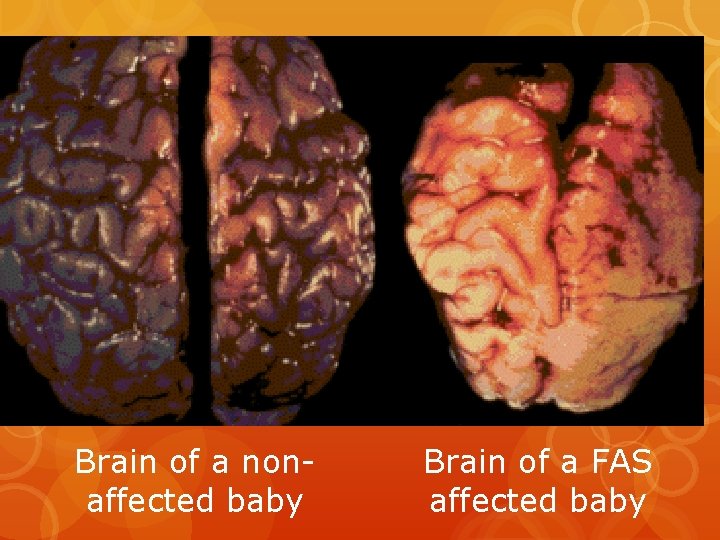
Brain of a nonaffected baby Brain of a FAS affected baby
Alcohol Exposure During Stages of Pregnancy 1. During the first trimester, alcohol interferes with the migration and organization of brain cells. 2. Heavy drinking during the second trimester, particularly from the 10 th to 20 th week after conception, seems to cause more clinical features of FAS than at other times during pregnancy. 3. During the third trimester, the hippocampus is greatly affected, which leads to problems with encoding visual and auditory information (reading and math). From the College of Cognitive and Linguistic Sciences at Brown University, Providence, RI.
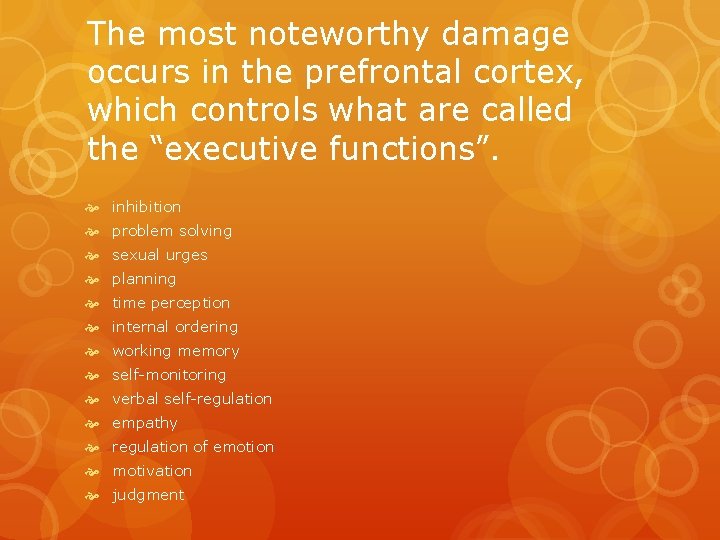
The most noteworthy damage occurs in the prefrontal cortex, which controls what are called the “executive functions”. inhibition problem solving sexual urges planning time perception internal ordering working memory self-monitoring verbal self-regulation empathy regulation of emotion motivation judgment
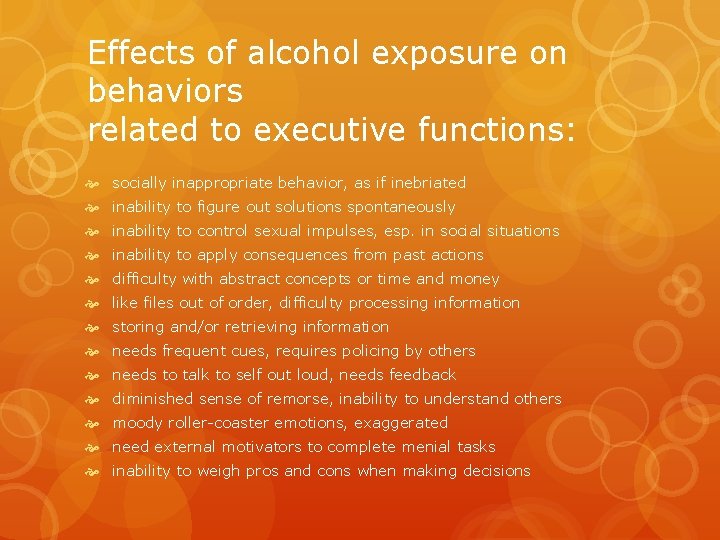
Effects of alcohol exposure on behaviors related to executive functions: socially inappropriate behavior, as if inebriated inability to figure out solutions spontaneously inability to control sexual impulses, esp. in social situations inability to apply consequences from past actions difficulty with abstract concepts or time and money like files out of order, difficulty processing information storing and/or retrieving information needs frequent cues, requires policing by others needs to talk to self out loud, needs feedback diminished sense of remorse, inability to understand others moody roller-coaster emotions, exaggerated need external motivators to complete menial tasks inability to weigh pros and cons when making decisions
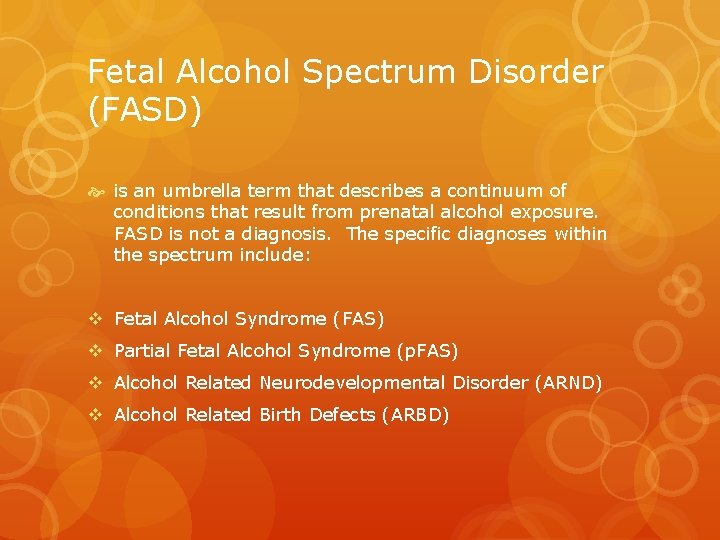
Fetal Alcohol Spectrum Disorder (FASD) is an umbrella term that describes a continuum of conditions that result from prenatal alcohol exposure. FASD is not a diagnosis. The specific diagnoses within the spectrum include: v Fetal Alcohol Syndrome (FAS) v Partial Fetal Alcohol Syndrome (p. FAS) v Alcohol Related Neurodevelopmental Disorder (ARND) v Alcohol Related Birth Defects (ARBD)
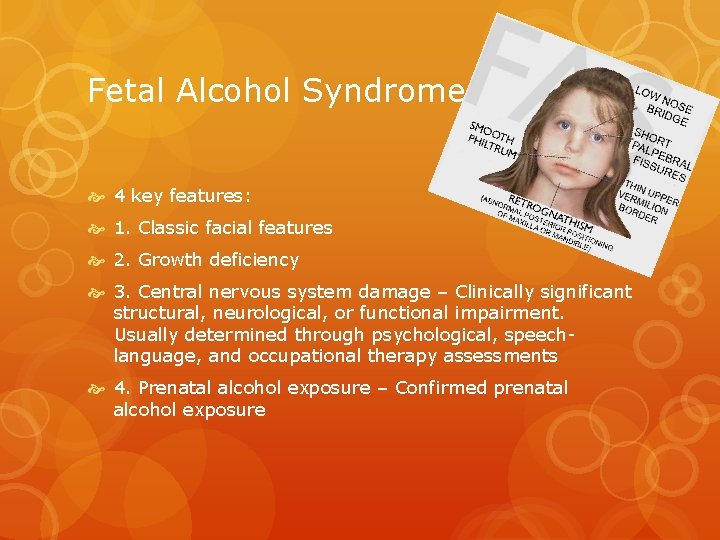
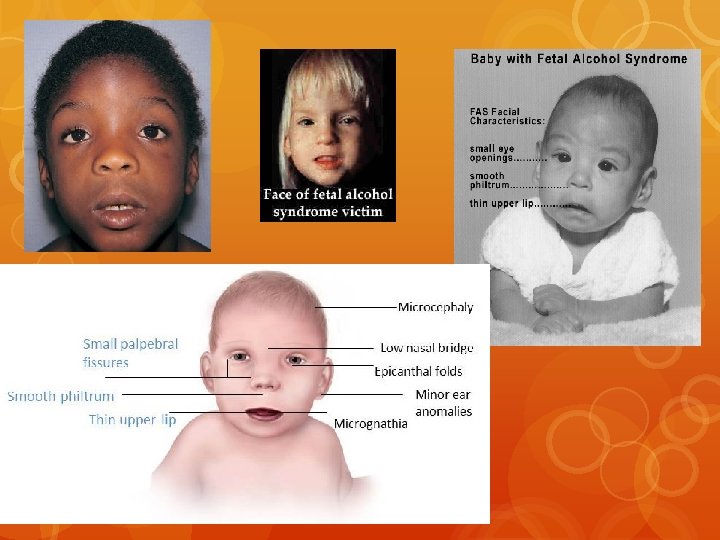
Fetal Alcohol Syndrome 4 key features: 1. Classic facial features 2. Growth deficiency 3. Central nervous system damage – Clinically significant structural, neurological, or functional impairment. Usually determined through psychological, speechlanguage, and occupational therapy assessments 4. Prenatal alcohol exposure – Confirmed prenatal alcohol exposure
Partial Fetal Alcohol Syndrome (p. FAS) These individuals have the same functional disabilities but "look" less like FAS.
"Alcohol causes more neurological damage to the developing baby than any other substance. " Institute of Medicine report to Congress
What if they only drink a little? Children do not need to have full FAS to have significant difficulties due to prenatal exposure to alcohol. According to research, even light drinking (average onequarter ounce of absolute alcohol daily) can have adverse effects on the child's verbal language and comprehension skills. Studies show that children of mothers who drank but who do not have a diagnosis of FAS have many of the same neurological abnormalities as children who have been diagnosed with full FAS.
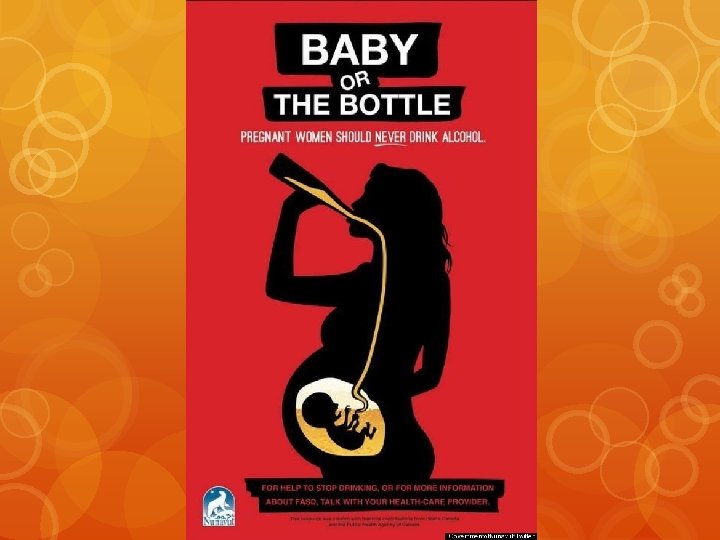
No amount of alcohol during pregnancy has been proven safe.
Birth Mother Story Why do some people continue to drink while pregnant?
Project
Egg The egg shell represents the mother’s body. It has been removed by soaking the egg in vinegar for 24 hours. This allows us to see the membrane, which represents the placenta and amniotic sac. Remember, the placenta is where nutrients and wastes are exchanged between the mother and the fetus. The white and yolk are representative of the amniotic fluid and the unborn baby.
Add eggs into 3 different glasses. Along with eggs, add: Glass 1 “Control” Glass 2 Alcohol Glass 3 Water & dye Water Leave eggs in glasses for 2 -4 days, and then “open” to evaluate results.
What do you think will happen?
101 reasons to abstain from alcohol during pregnancy *********** two eyes one nose two ears ten toes ************ ten fingers one sweet mouth two arms for hugging two strong legs to run two feet to walk on in the sun one spine straight and strong two hands to hold all day long ***************************************** 20 baby teeth for a beautiful smile 32 permanent teeth after a while one heart to beat steady & strong two lungs to sing a nursery song one good liver, healthy as a horse, two first words “Mama & Dada” said over and over, of course. ********************************************* 2 frontal lobes for impulse control 1 corpus callosum to process it all 2 healthy parents to care for this child 1 precious little spirit so tender & mild 1 first step towards independence, as we nurture, protect, guide and love this wee precious gift sent from above. ************************************************ Drinking in pregnancy may cause birth defects, brain damage © 2004 Teresa Kellerman & Cathy St. Peter, www. fasstar. com ************************
Results
Results Glass 1 Water Glass 2 Alcohol Glass 3 Water & dye Control Remember, the effects of any harmful substance are exaggerated because the fetus is so small. Shows how substance penetrate the placenta and amniotic fluid to reach the fetus.
Evaluate How do the results compare to your hypothesis?
Extended Lesson The alcohol-soaked egg can be placed into a glass filled with water to demonstrate that even if the conditions change (for example, the mother stops drinking), the effects of the alcohol on the egg cannot be reversed.