
Fertilization Part 2 Prevention of Polyspermy Gilbert Chapter
Fertilization: Part 2: Prevention of Polyspermy Gilbert - Chapter 7 pp. 187 -192
Today’s Objectives • Identify the following important components of the process of fertilization: gametes, spermatogonia, acrosome, flagellum, tubulin, oocyte, pronuclei, vitelline membrane, zona pellucida, resting membrane potential, capacitation, cortical granule reaction • Identify the structure of an oocyte • Recognize the harm of polyspermy – Describe various ways that polyspermy is inhibited • Recognize that fertilization is species-specific
Fertilization: 4 major events • Sperm and egg make contact and must recognize each other as the same species • ONE (and only one) sperm enters egg • Fusion of the genetic material • Activation of egg to begin development
Polyspermy • Monospermy is the norm – Restores the diploid chromosome number – Sperm centriole becomes the mitotic spindle • Polyspermy is disastrous – Results in triploid nucleus – Multiple mitotic spindles form
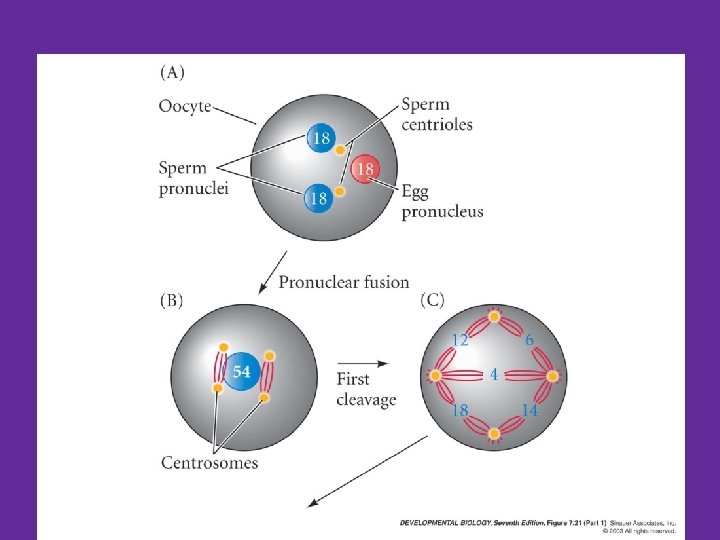
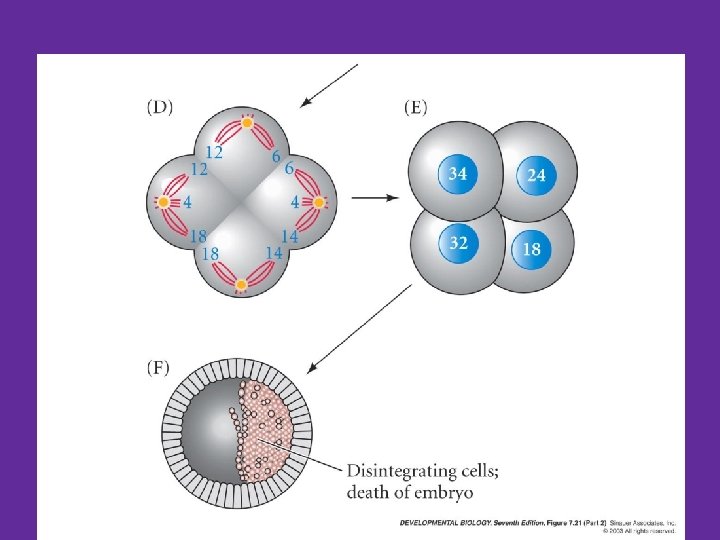
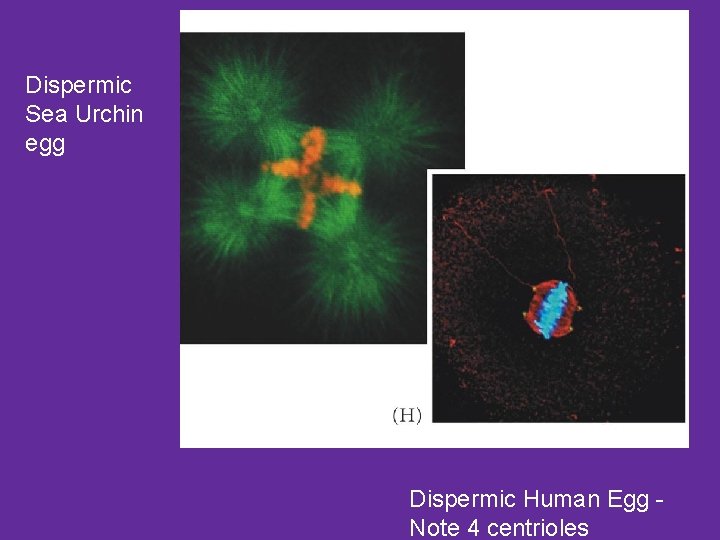
Dispermic Sea Urchin egg Dispermic Human Egg Note 4 centrioles
Prevention of Polyspermy • Usually done by preventing multiple sperm from entering the egg • Sea Urchins have 2 mechanisms: – Fast Block • Involves a change in egg cell membrane potential – Slow Block • Involves exocytosis of the cortical granules in the egg
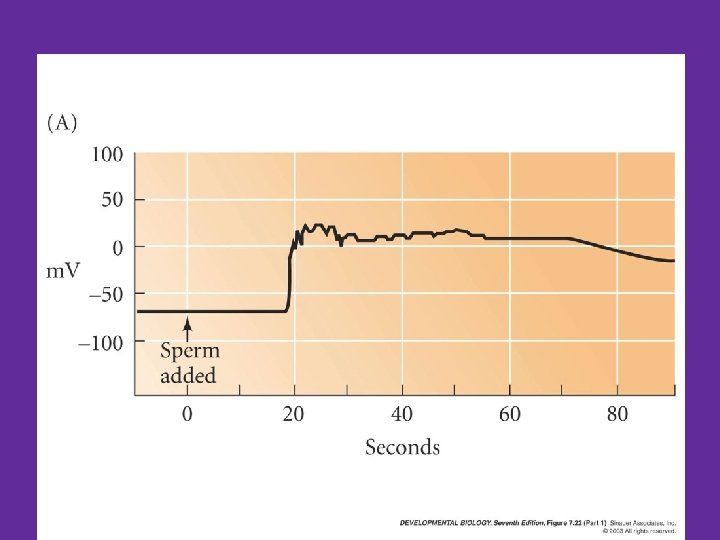
Fast Block to Polyspermy (Sea Urchin model) • The egg has a different ionic concentration from the seawater in which it exists • Egg has lower sodium ion concentration; higher potassium concentration • This is maintained by sodium/potassium pumps in the egg cell membrane • The difference in charge across the egg membrane can be measured as -70 m. V and is called the resting membrane potential
• Sodium-Potassium Pump – Pumps Sodium Out of cell – Pumps Potassium Into Cell
Fast Block to Polyspermy (Sea Urchin model) • 1 -3 seconds after first sperm binds, the membrane potential shifts to +20 m. V • Sperm can no longer fuse to the egg • Experimental evidence - Polyspermy can occur if*: – Eggs are supplied with an electrical current that keeps charge at -70 m. V – Fertilization occurs in water with a low sodium ion concentration *Jaffe 1976
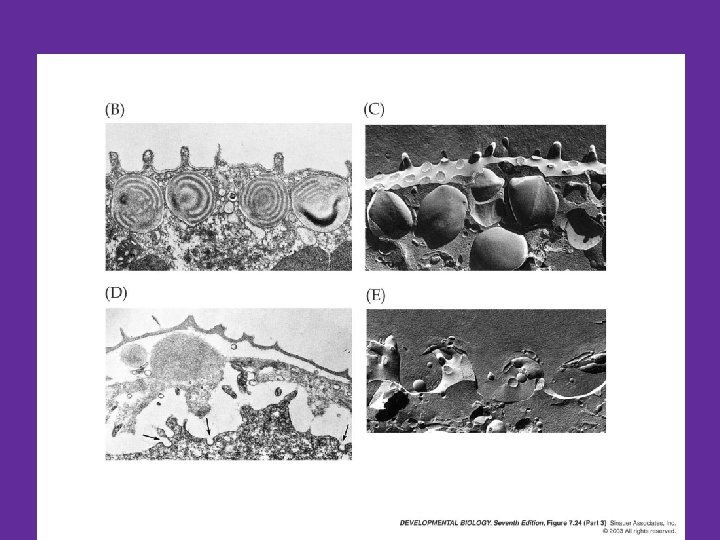
Slow Block to Polyspermy Sea urchin model • Slower, mechanical, permanent block • Occurs about a minute after sperm-egg fusion • Upon sperm entry cortical granules fuse with the cell membrane and release several molecules
Cortical Granule Molecues • Cortical granule serine protease – Releases vitelline membrane from its anchors to the cell membrane – Clips off bindin molecules • Mucopolysaccharides – Cause osmotic gradient – Water rushes into space between vitelline envelope – Vitelline envelope expands (lifts) and becomes the fertilization envelope • Peroxidase – Hardens the fertilization envelope • Hyaline – Forms a coating around the egg, protects during early embryonic development
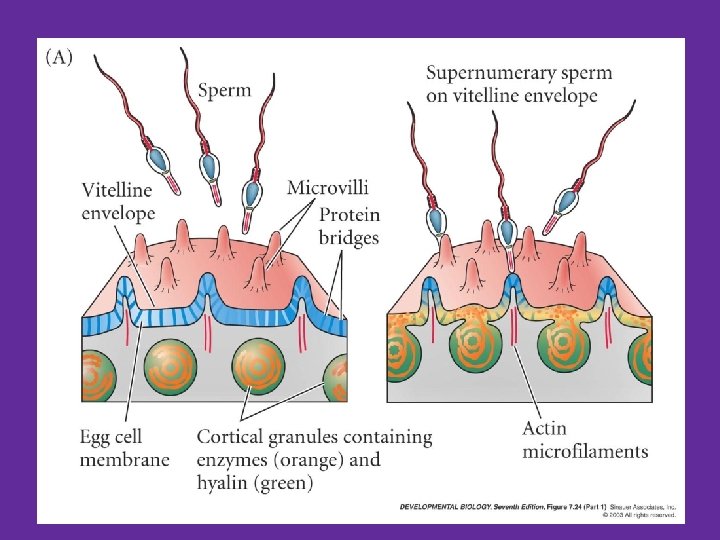
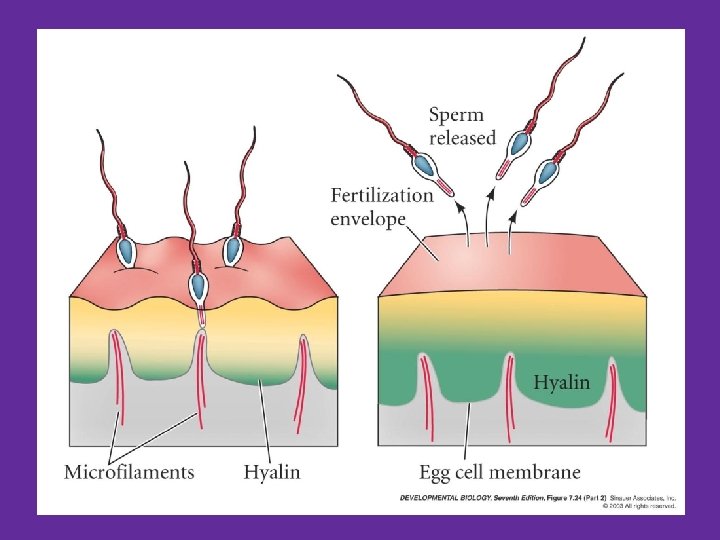
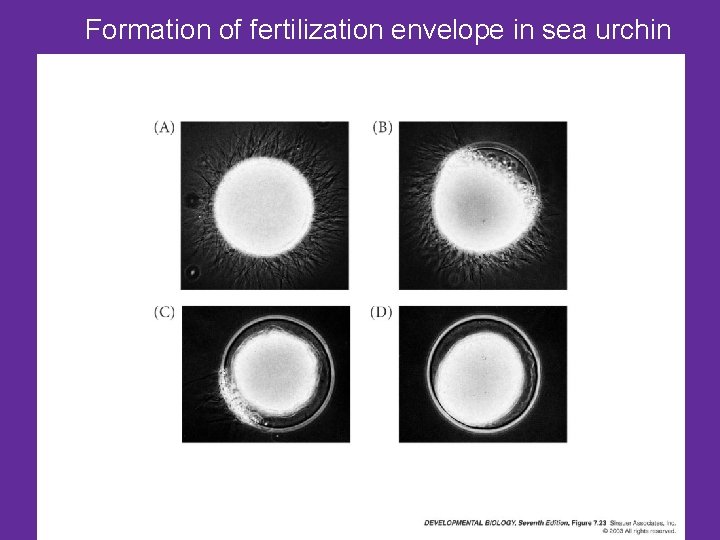
Formation of fertilization envelope in sea urchin
Mammalian Cortical Granule Reaction • Does not form a fertilization envelope • Does modify Zona Pellucida so sperm cannot bind • In mice, cortical granules cleave an essential portion of the ZP 3 molecule
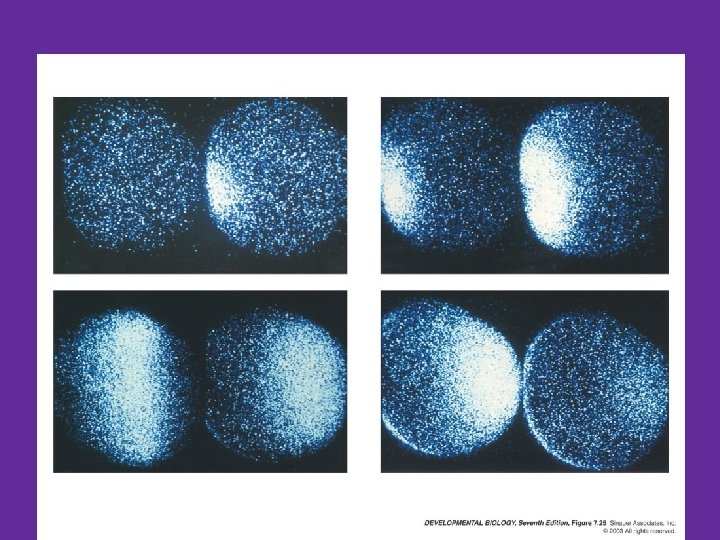
Calcium and the Cortical Granule Reaction • Upon fertilization, intracellular concentration of Calcium ion in the egg increases • This is necessary for the fusion of cortical granules with the cell membrane • Calcium comes not from outside the egg, but from inside the egg itself • The fusion begins near the site of sperm entry and continues in a wave across the egg • A similar wave of calcium ion release can be observed
Calcium experiments - Ca 2+ is directly responsible for cortical reaction • A 23187 is a calcium ionophore – Transports Ca 2+ across lipid membranes • Placing sea urchin embryos in sea water containing A 23187 results in cortical granule reaction & fertilization envelope to rise (without presence of sperm) • If Ca 2+ chelator is injected into egg, no cortical reaction occurs
Fertilization: 4 major events • Sperm and egg make contact and must recognize each other as the same species • ONE (and only one) sperm enters egg • Fusion of the genetic material • Activation of egg to begin development
- Slides: 23