
Fertilization and Development Sexual Reproduction The joining of
- Slides: 15
Fertilization and Development
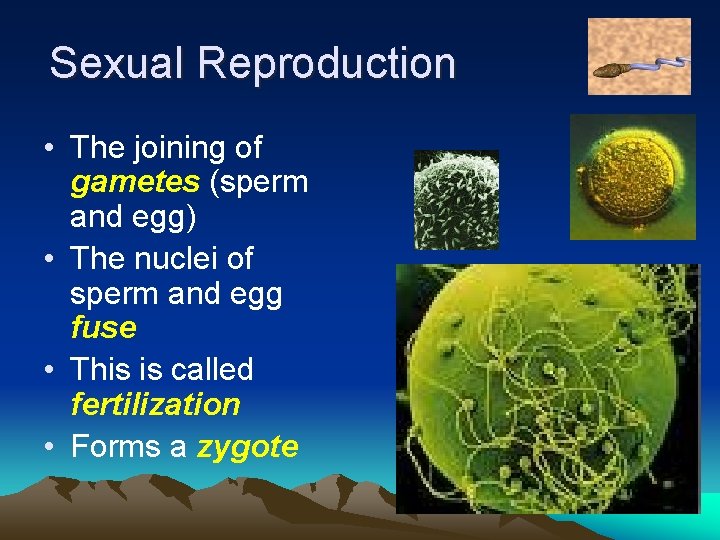
Sexual Reproduction • The joining of gametes (sperm and egg) • The nuclei of sperm and egg fuse • This is called fertilization • Forms a zygote
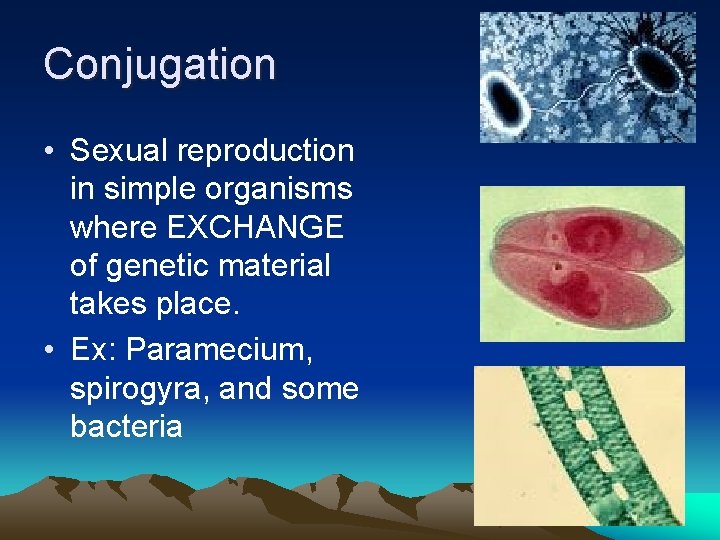
Conjugation • Sexual reproduction in simple organisms where EXCHANGE of genetic material takes place. • Ex: Paramecium, spirogyra, and some bacteria
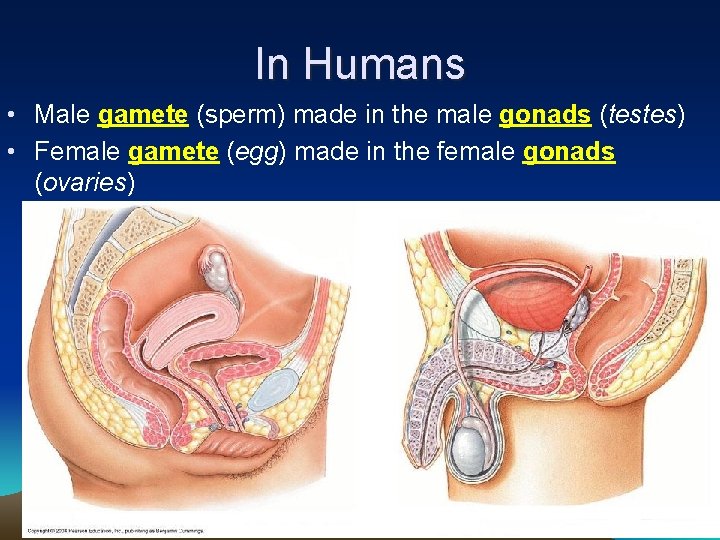
In Humans • Male gamete (sperm) made in the male gonads (testes) • Female gamete (egg) made in the female gonads (ovaries)
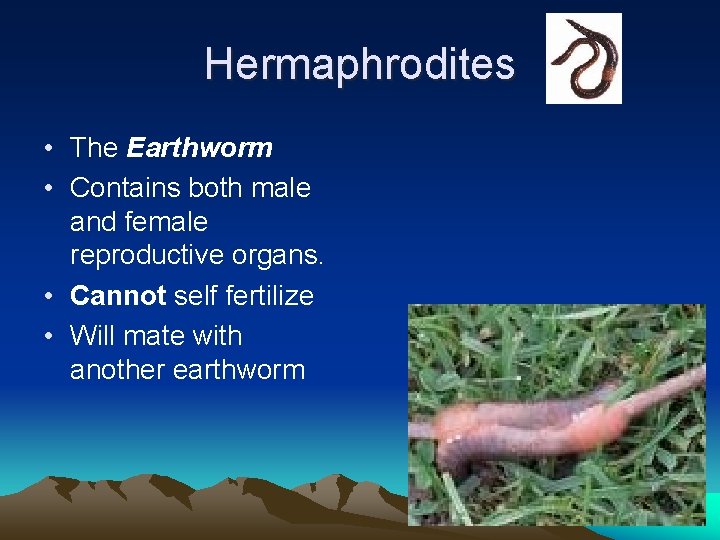
Hermaphrodites • The Earthworm • Contains both male and female reproductive organs. • Cannot self fertilize • Will mate with another earthworm
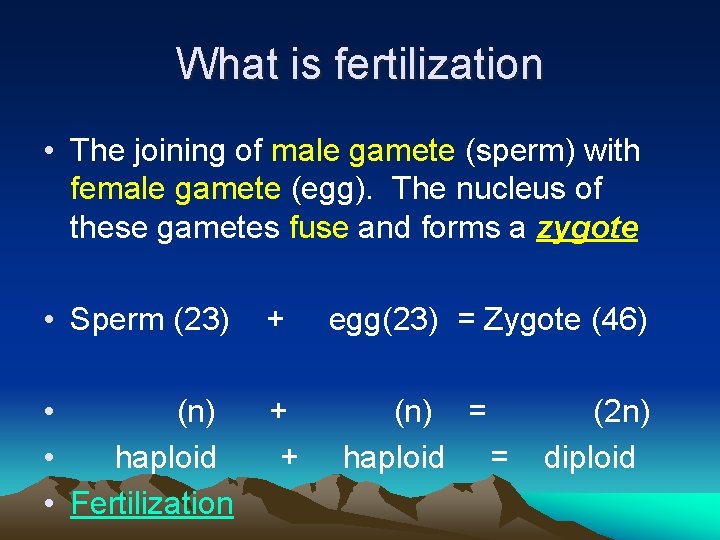
What is fertilization • The joining of male gamete (sperm) with female gamete (egg). The nucleus of these gametes fuse and forms a zygote • Sperm (23) + • (n) • haploid • Fertilization + + egg(23) = Zygote (46) (n) = haploid = (2 n) diploid
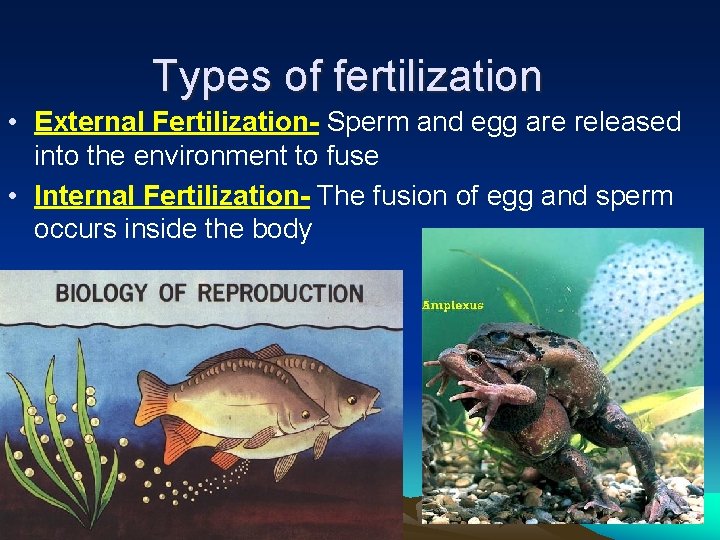
Types of fertilization • External Fertilization- Sperm and egg are released into the environment to fuse • Internal Fertilization- The fusion of egg and sperm occurs inside the body
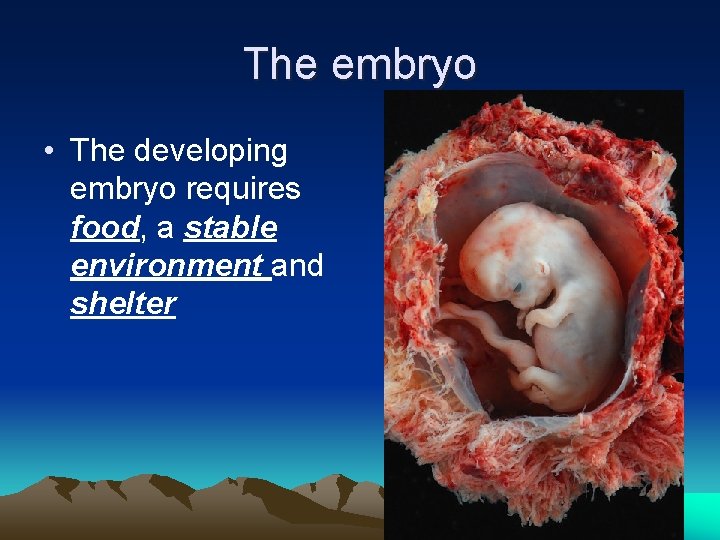
The embryo • The developing embryo requires food, a stable environment and shelter
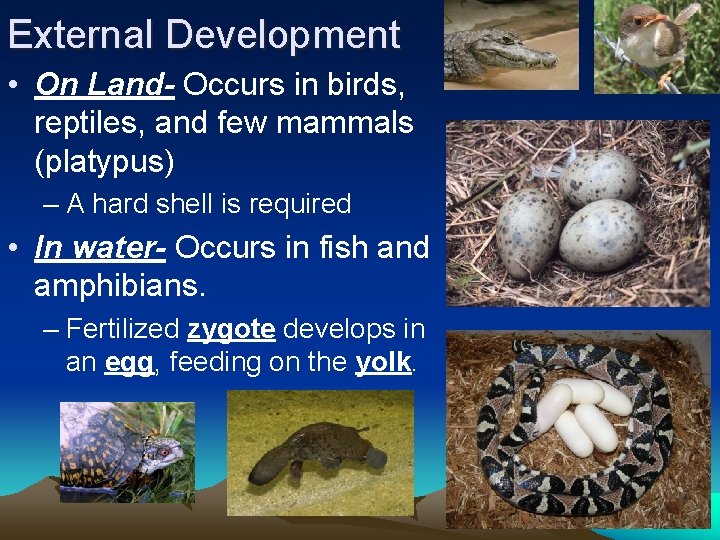
External Development • On Land- Occurs in birds, reptiles, and few mammals (platypus) – A hard shell is required • In water- Occurs in fish and amphibians. – Fertilized zygote develops in an egg, feeding on the yolk.
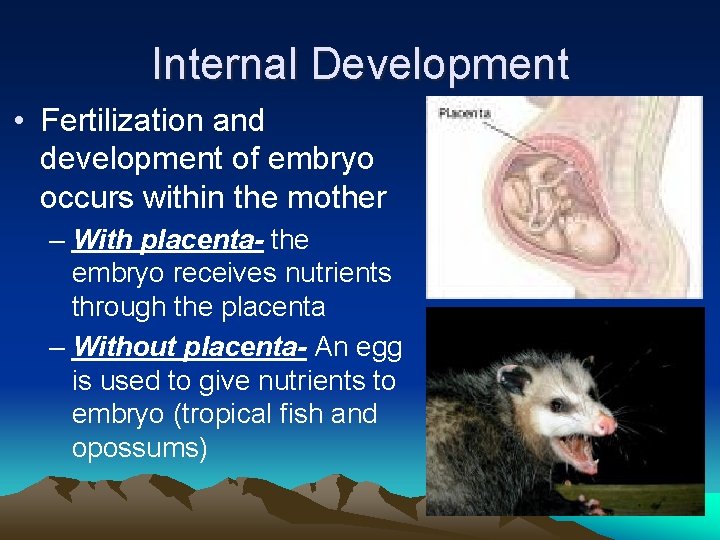
Internal Development • Fertilization and development of embryo occurs within the mother – With placenta- the embryo receives nutrients through the placenta – Without placenta- An egg is used to give nutrients to embryo (tropical fish and opossums)
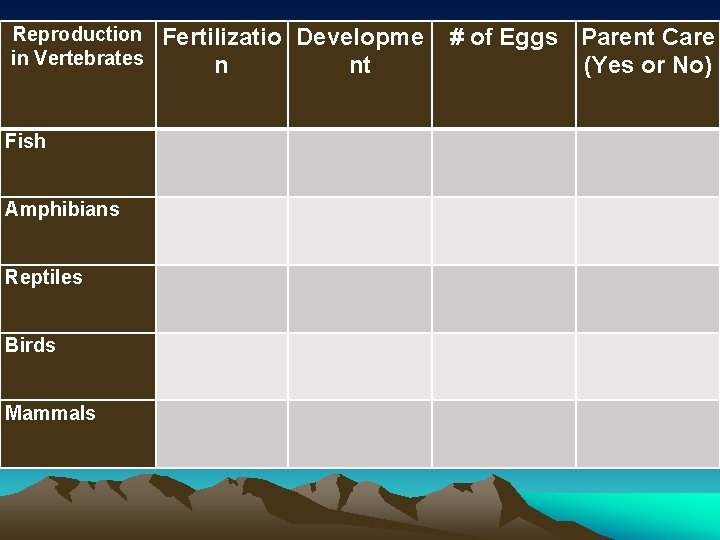
Reproduction in Vertebrates Fish Amphibians Reptiles Birds Mammals Fertilizatio Developme n nt Chart # of Eggs Parent Care (Yes or No)
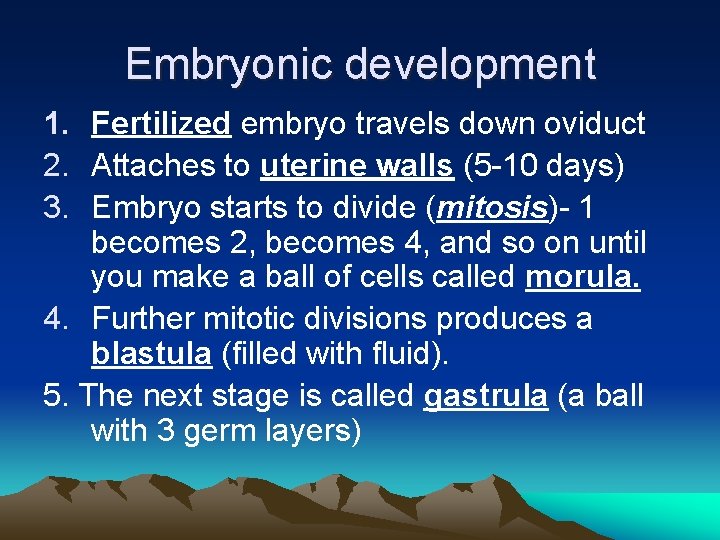
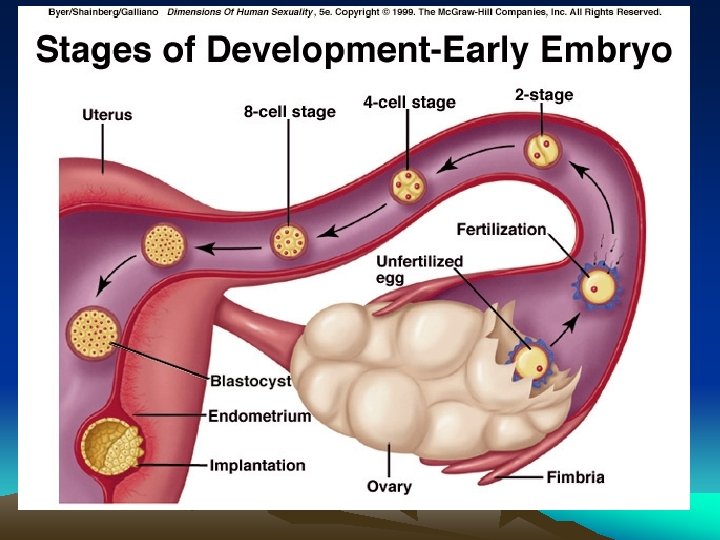
Embryonic development 1. Fertilized embryo travels down oviduct 2. Attaches to uterine walls (5 -10 days) 3. Embryo starts to divide (mitosis)- 1 becomes 2, becomes 4, and so on until you make a ball of cells called morula. 4. Further mitotic divisions produces a blastula (filled with fluid). 5. The next stage is called gastrula (a ball with 3 germ layers)
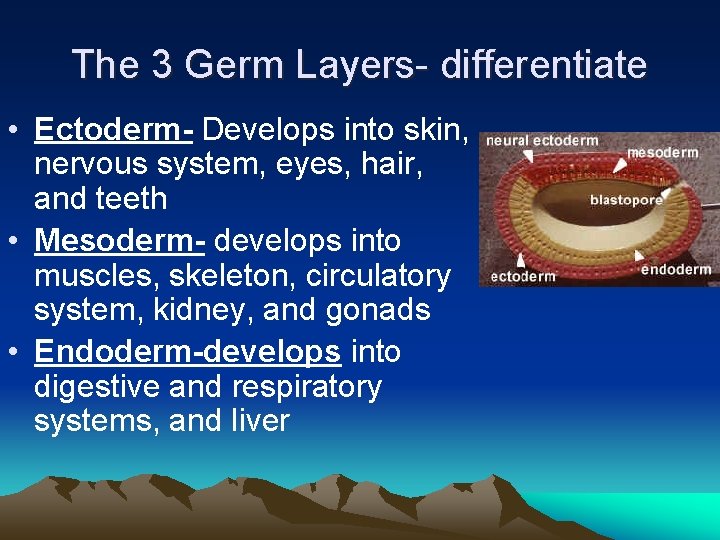
The 3 Germ Layers- differentiate • Ectoderm- Develops into skin, nervous system, eyes, hair, and teeth • Mesoderm- develops into muscles, skeleton, circulatory system, kidney, and gonads • Endoderm-develops into digestive and respiratory systems, and liver