
Ferrara 27 Settembre 2014 Camera di Commercio Largo

Ferrara 27 Settembre 2014 Camera di Commercio, Largo Castello Epidemiologia della malattia da reflusso gastro-esofageo: una prospettiva globale Prof. Rocco Maurizio Zagari Università di Bologna
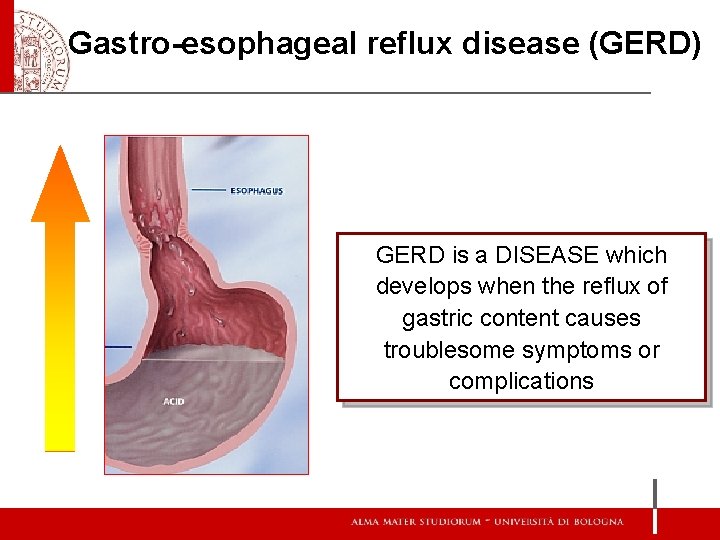
Gastro-esophageal reflux disease (GERD) GERD is a DISEASE which develops when the reflux of gastric content causes troublesome symptoms or complications
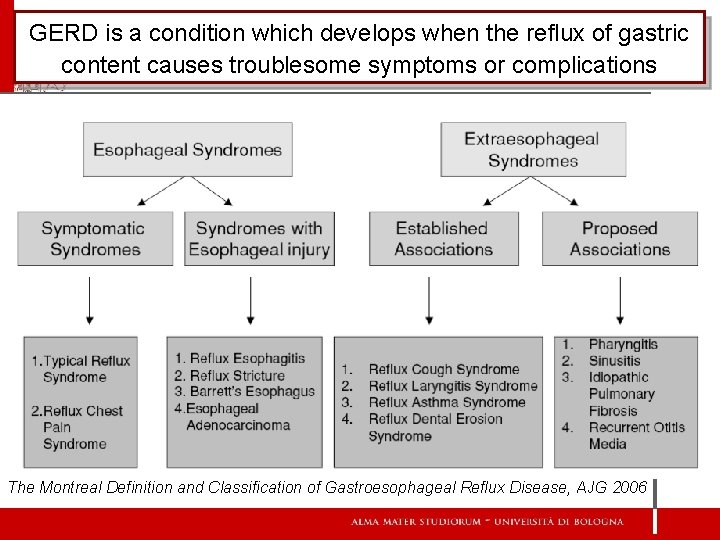
GERD is a condition which develops when the reflux of gastric content causes troublesome symptoms or complications The Montreal Definition and Classification of Gastroesophageal Reflux Disease, AJG 2006
Gastroesofageal Reflux Disease A major public health concern • A global chronic disease • Costly, with a significant negative impact on quality of life • Associated with esophageal adenocarcinoma • Epidemiology of GERD: not an easy task • Few well designed epidemiological studies in the general population
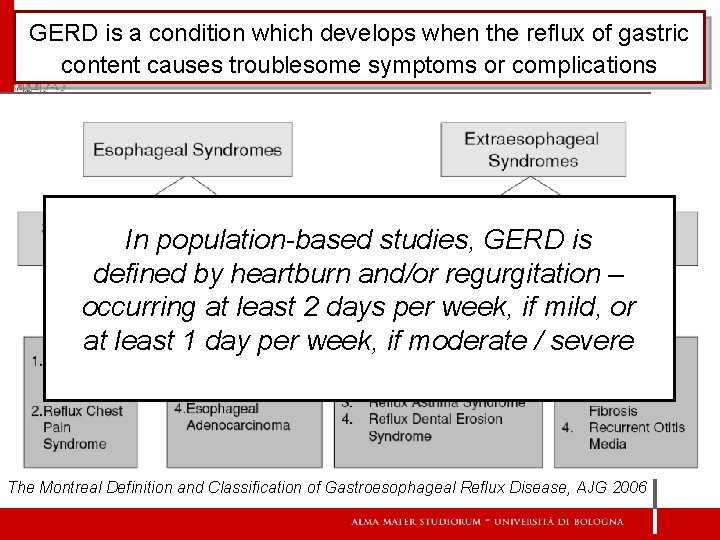
GERD is a condition which develops when the reflux of gastric content causes troublesome symptoms or complications In population-based studies, GERD is defined by heartburn and/or regurgitation – occurring at least 2 days per week, if mild, or at least 1 day per week, if moderate / severe The Montreal Definition and Classification of Gastroesophageal Reflux Disease, AJG 2006
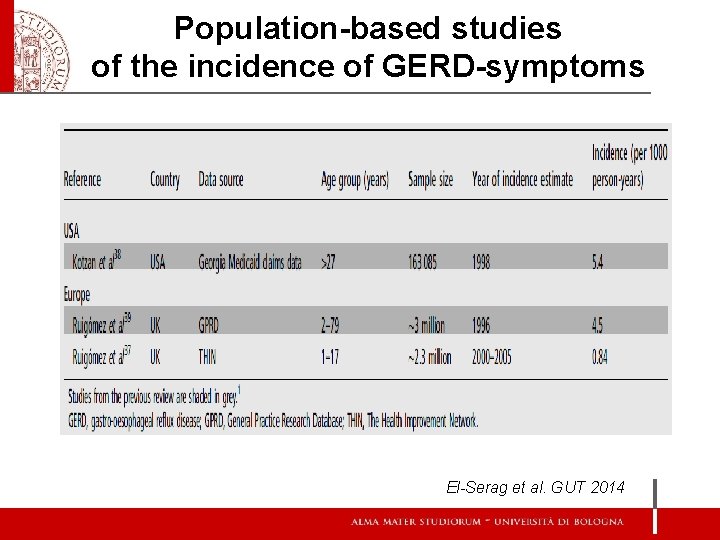
Population-based studies of the incidence of GERD-symptoms El-Serag et al. GUT 2014
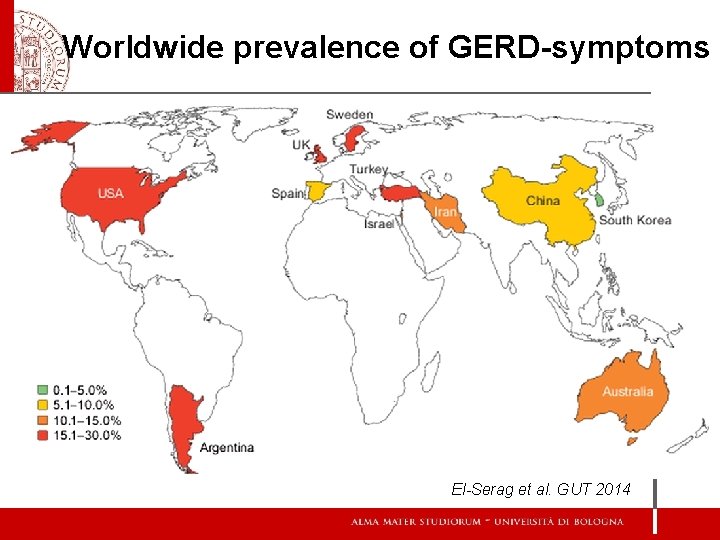
Worldwide prevalence of GERD-symptoms El-Serag et al. GUT 2014
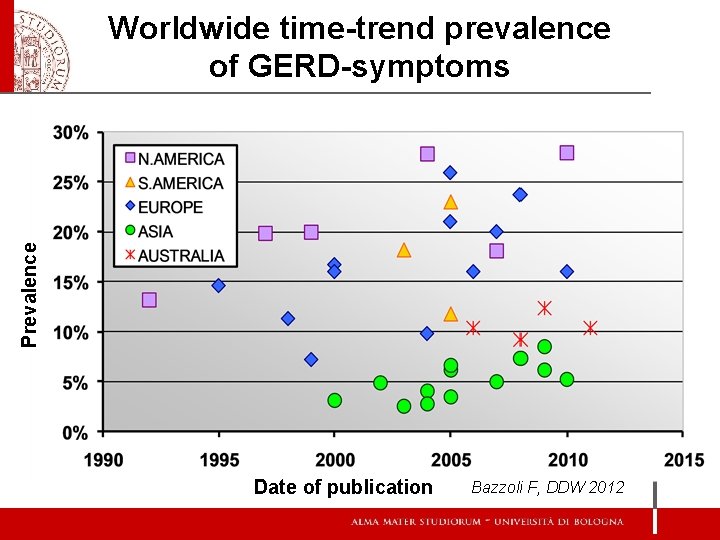
Prevalence Worldwide time-trend prevalence of GERD-symptoms Date of publication Bazzoli F, DDW 2012
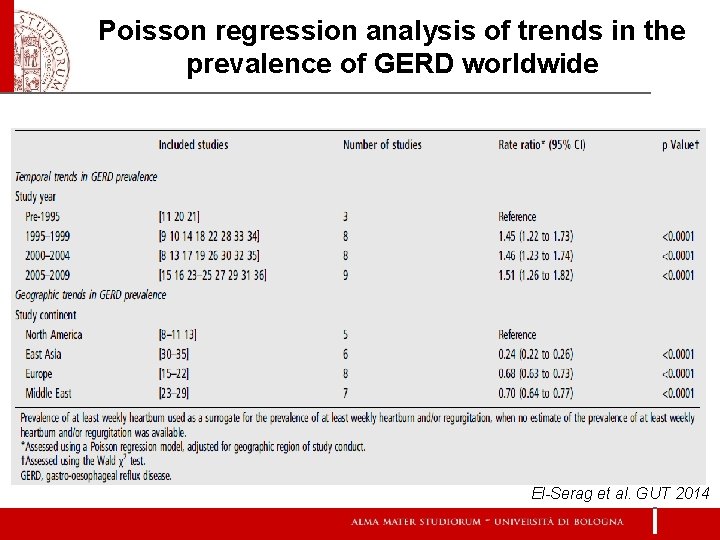
Poisson regression analysis of trends in the prevalence of GERD worldwide El-Serag et al. GUT 2014
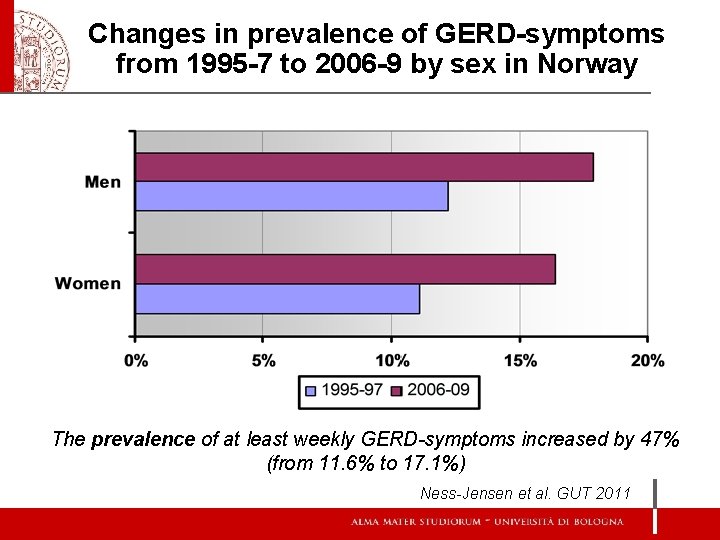
Changes in prevalence of GERD-symptoms from 1995 -7 to 2006 -9 by sex in Norway The prevalence of at least weekly GERD-symptoms increased by 47% (from 11. 6% to 17. 1%) Ness-Jensen et al. GUT 2011
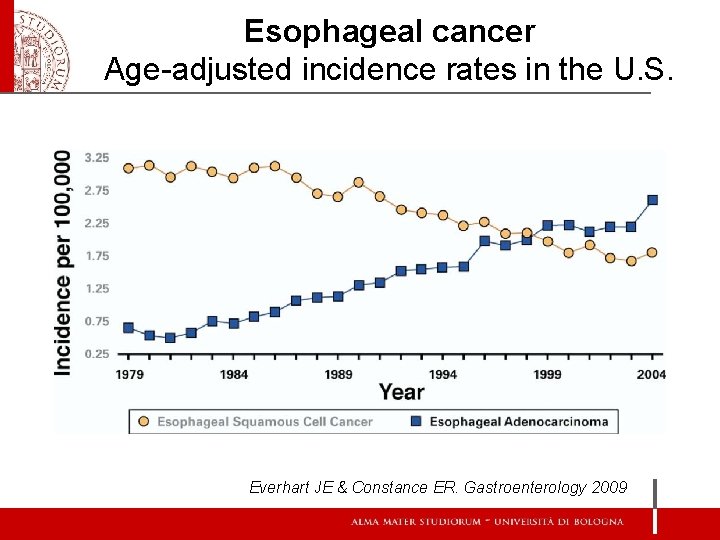
Esophageal cancer Age-adjusted incidence rates in the U. S. Everhart JE & Constance ER. Gastroenterology 2009
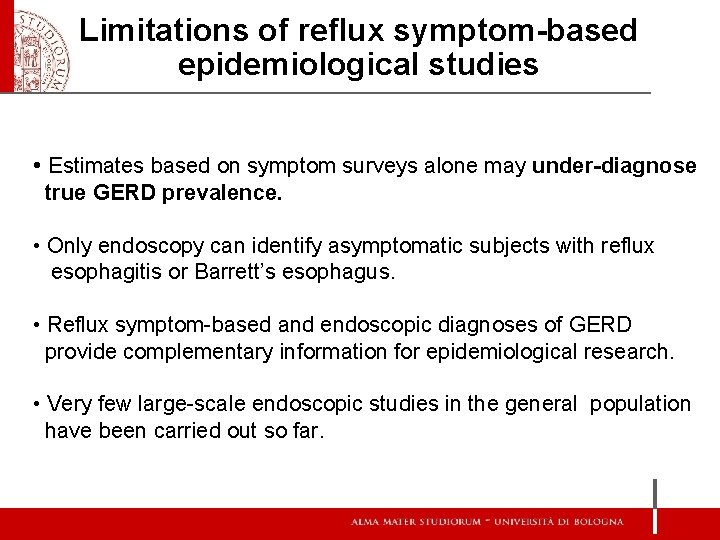
Limitations of reflux symptom-based epidemiological studies • Estimates based on symptom surveys alone may under-diagnose true GERD prevalence. • Only endoscopy can identify asymptomatic subjects with reflux esophagitis or Barrett’s esophagus. • Reflux symptom-based and endoscopic diagnoses of GERD provide complementary information for epidemiological research. • Very few large-scale endoscopic studies in the general population have been carried out so far.
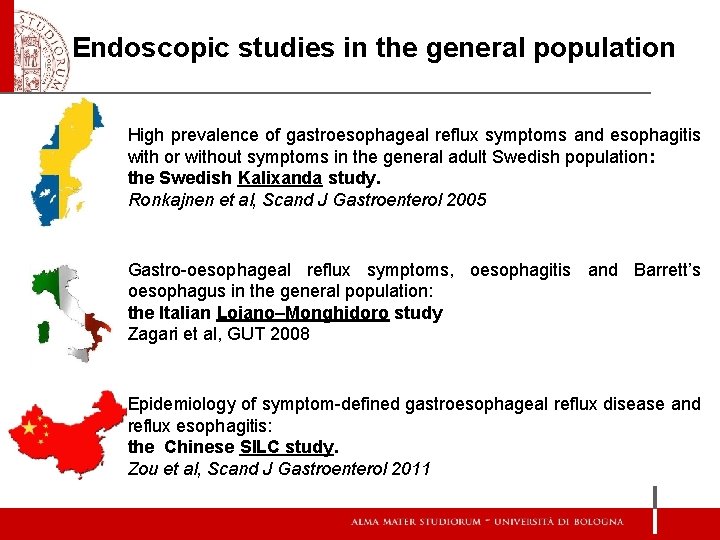
Endoscopic studies in the general population High prevalence of gastroesophageal reflux symptoms and esophagitis with or without symptoms in the general adult Swedish population: the Swedish Kalixanda study. Ronkajnen et al, Scand J Gastroenterol 2005 Gastro-oesophageal reflux symptoms, oesophagitis and Barrett’s oesophagus in the general population: the Italian Loiano–Monghidoro study Zagari et al, GUT 2008 Epidemiology of symptom-defined gastroesophageal reflux disease and reflux esophagitis: the Chinese SILC study. Zou et al, Scand J Gastroenterol 2011
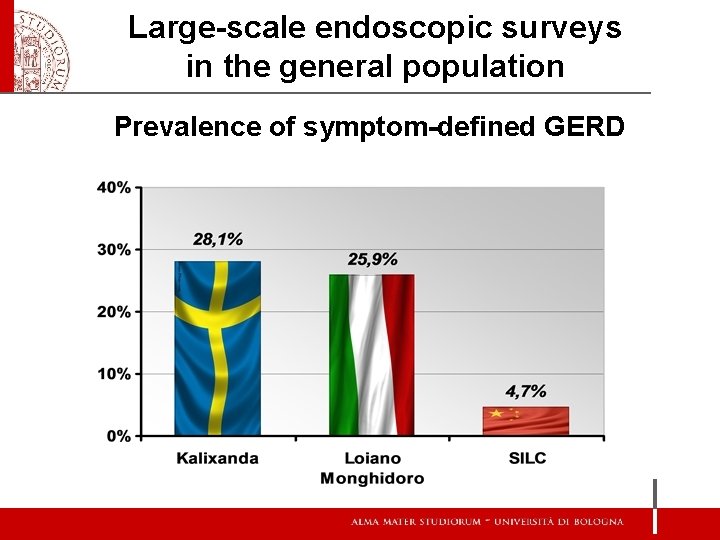
Large-scale endoscopic surveys in the general population Prevalence of symptom-defined GERD
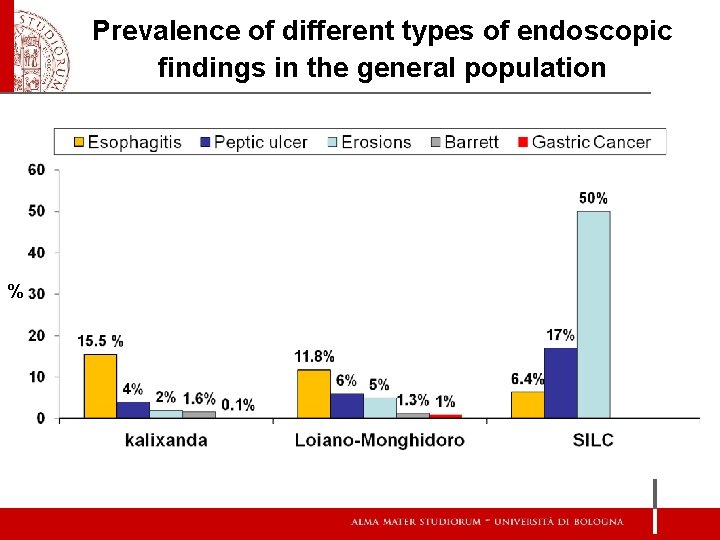
Prevalence of different types of endoscopic findings in the general population %
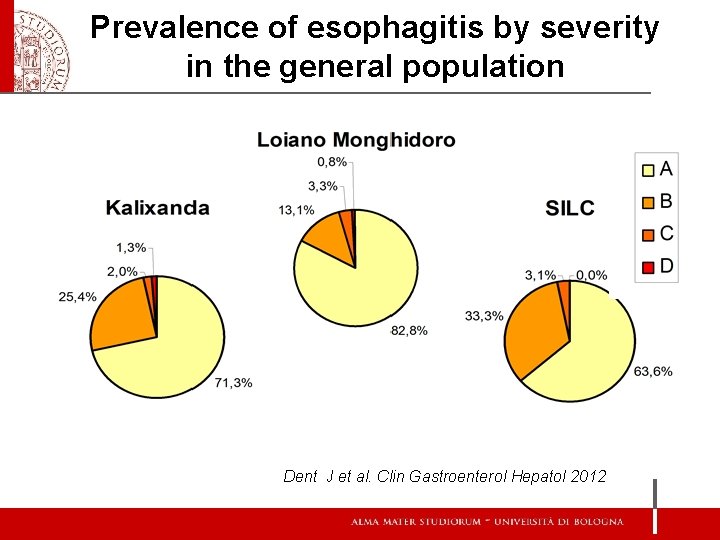
Prevalence of esophagitis by severity in the general population Dent J et al. Clin Gastroenterol Hepatol 2012
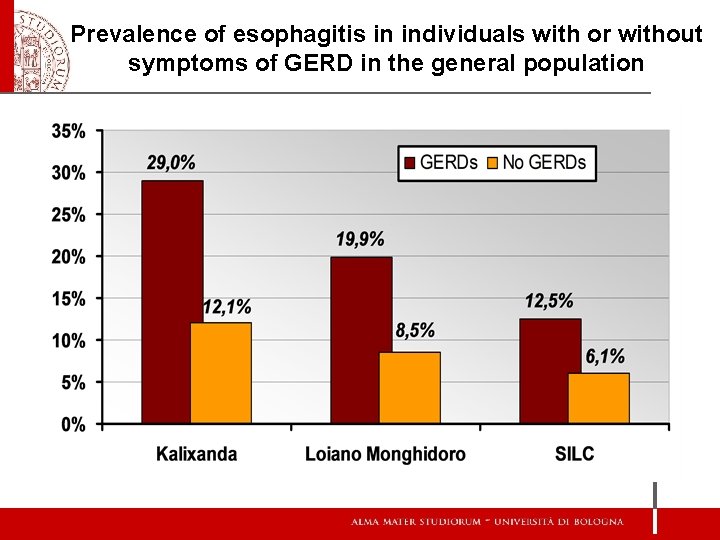
Prevalence of esophagitis in individuals with or without symptoms of GERD in the general population
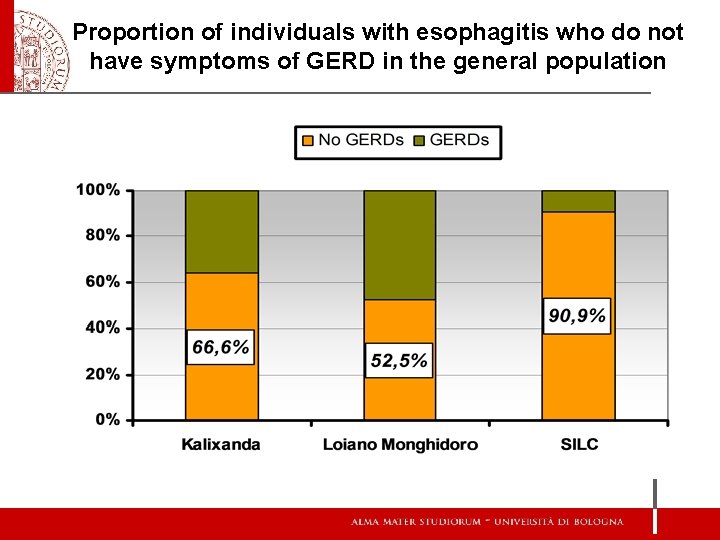
Proportion of individuals with esophagitis who do not have symptoms of GERD in the general population
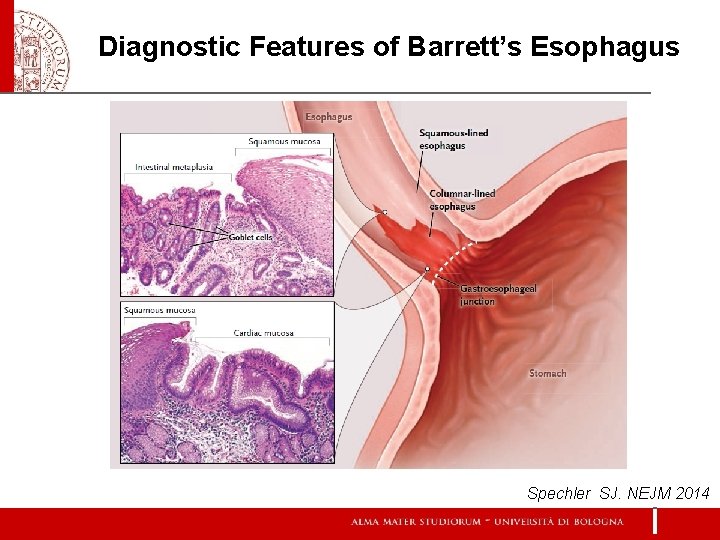
Diagnostic Features of Barrett’s Esophagus Spechler SJ. NEJM 2014
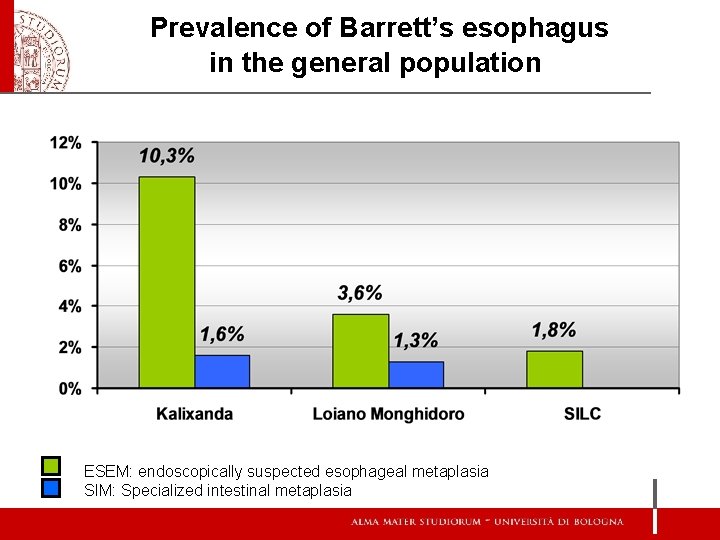
Prevalence of Barrett’s esophagus in the general population ESEM: endoscopically suspected esophageal metaplasia SIM: Specialized intestinal metaplasia
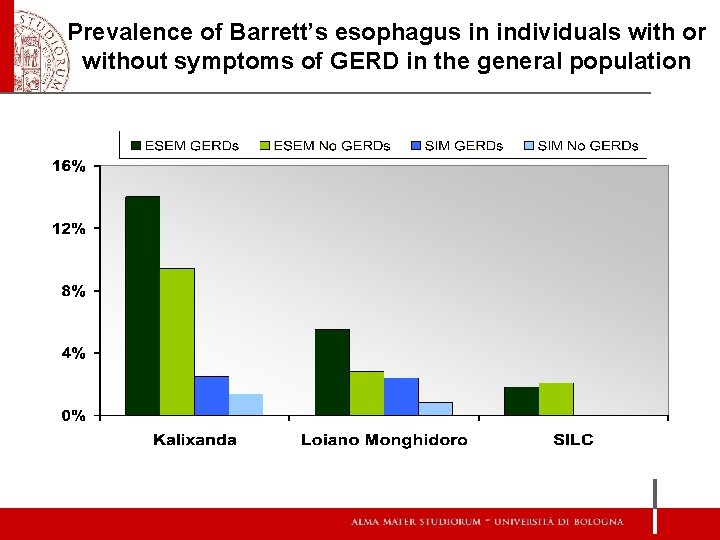
Prevalence of Barrett’s esophagus in individuals with or without symptoms of GERD in the general population
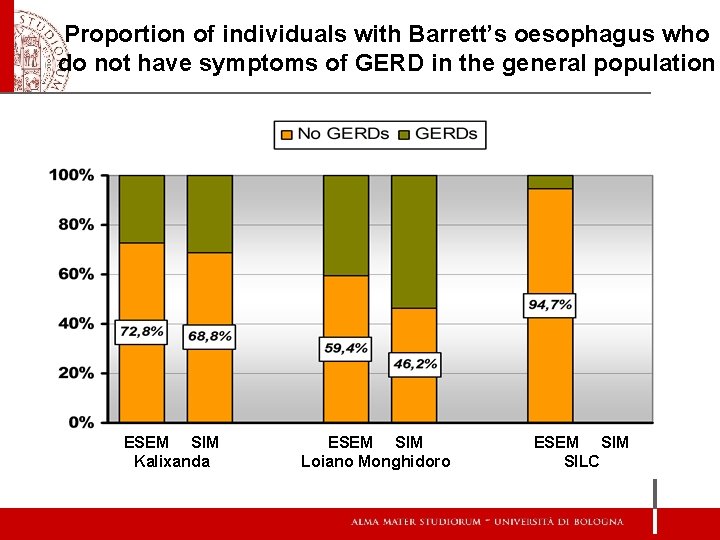
Proportion of individuals with Barrett’s oesophagus who do not have symptoms of GERD in the general population ESEM SIM Kalixanda ESEM SIM Loiano Monghidoro ESEM SILC
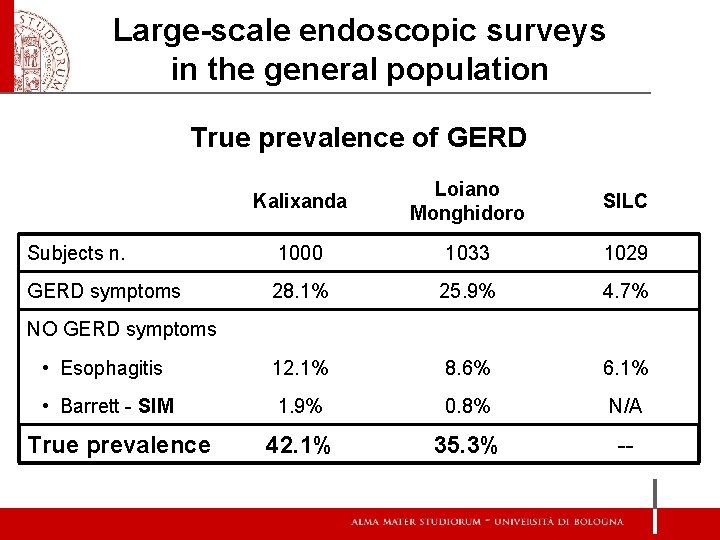
Large-scale endoscopic surveys in the general population True prevalence of GERD Kalixanda Loiano Monghidoro SILC 1000 1033 1029 28. 1% 25. 9% 4. 7% • Esophagitis 12. 1% 8. 6% 6. 1% • Barrett - SIM 1. 9% 0. 8% N/A 42. 1% 35. 3% -- Subjects n. GERD symptoms NO GERD symptoms True prevalence
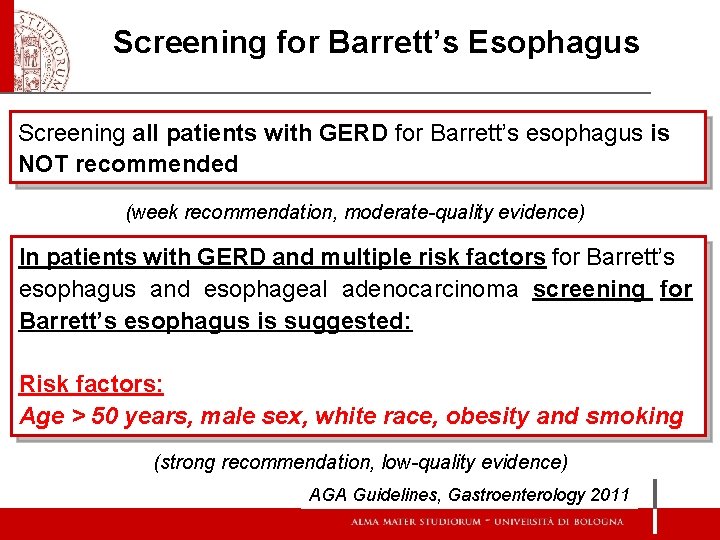
Screening for Barrett’s Esophagus Screening all patients with GERD for Barrett’s esophagus is NOT recommended (week recommendation, moderate-quality evidence) In patients with GERD and multiple risk factors for Barrett’s esophagus and esophageal adenocarcinoma screening for Barrett’s esophagus is suggested: Risk factors: Age > 50 years, male sex, white race, obesity and smoking (strong recommendation, low-quality evidence) AGA Guidelines, Gastroenterology 2011
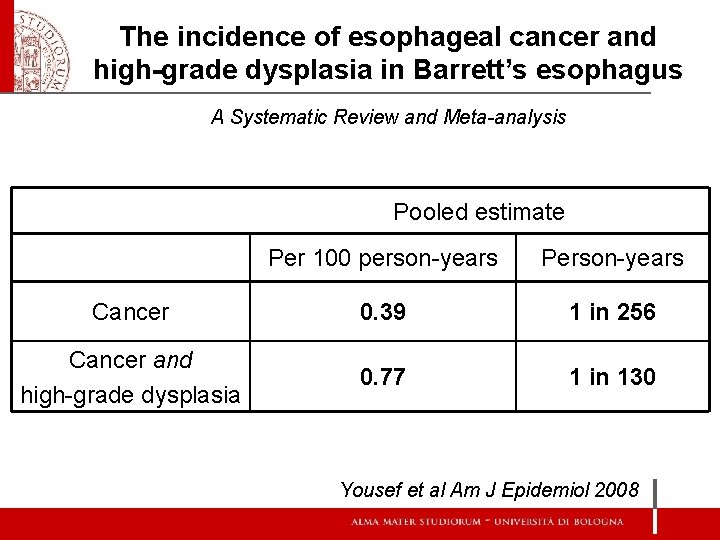
The incidence of esophageal cancer and high-grade dysplasia in Barrett’s esophagus A Systematic Review and Meta-analysis Pooled estimate Per 100 person-years Person-years Cancer 0. 39 1 in 256 Cancer and high-grade dysplasia 0. 77 1 in 130 Yousef et al Am J Epidemiol 2008
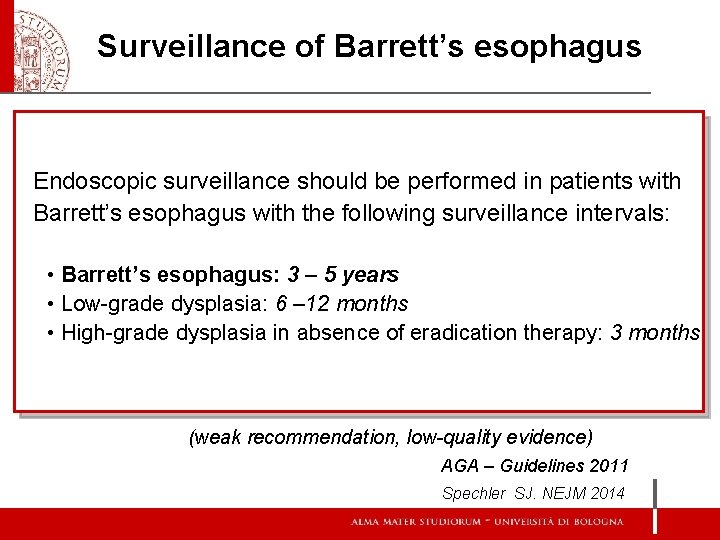
Surveillance of Barrett’s esophagus Endoscopic surveillance should be performed in patients with Barrett’s esophagus with the following surveillance intervals: • Barrett’s esophagus: 3 – 5 years • Low-grade dysplasia: 6 – 12 months • High-grade dysplasia in absence of eradication therapy: 3 months (weak recommendation, low-quality evidence) AGA – Guidelines 2011 Spechler SJ. NEJM 2014
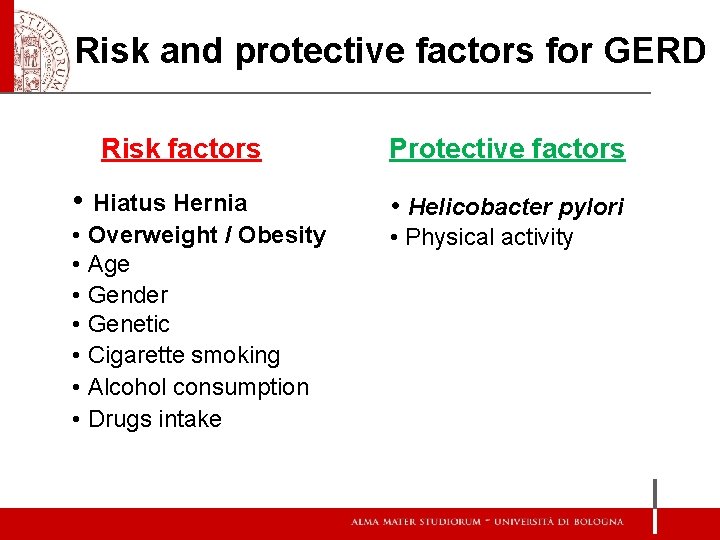
Risk and protective factors for GERD Risk factors • Hiatus Hernia • Overweight / Obesity • Age • Gender • Genetic • Cigarette smoking • Alcohol consumption • Drugs intake Protective factors • Helicobacter pylori • Physical activity
Hiatus hernia and GERD in endoscopic-based population studies Hiatus Hernia is significantly associated with an increased risk of: • Frequent reflux symptoms • Esophagitis • Barrett’s esophagus Ronkainen et al. Scand J Gastroenterol 2005 Ronkainen et al. Gastroenterology 2005 Zagari et al. GUT 2008
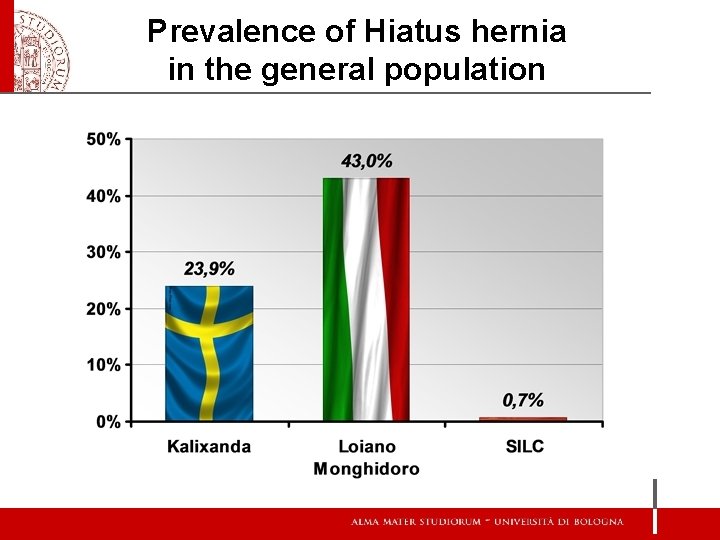
Prevalence of Hiatus hernia in the general population
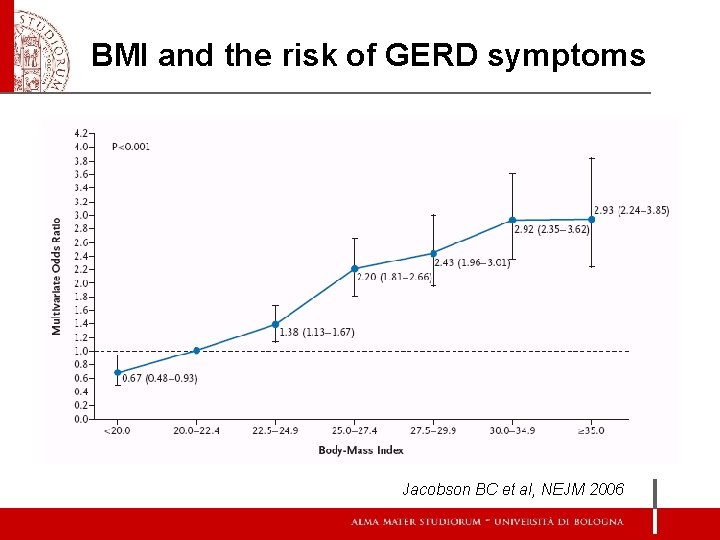
BMI and the risk of GERD symptoms Jacobson BC et al, NEJM 2006
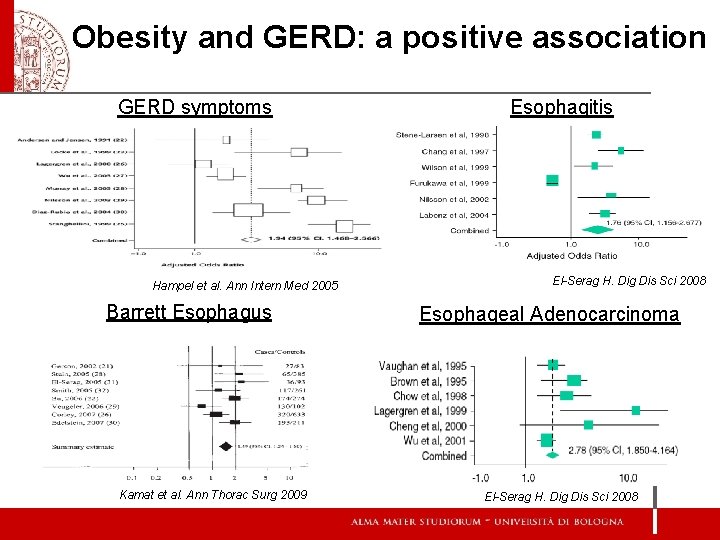
Obesity and GERD: a positive association GERD symptoms Hampel et al. Ann Intern Med 2005 Barrett Esophagus Kamat et al. Ann Thorac Surg 2009 Esophagitis El-Serag H. Dig Dis Sci 2008 Esophageal Adenocarcinoma El-Serag H. Dig Dis Sci 2008
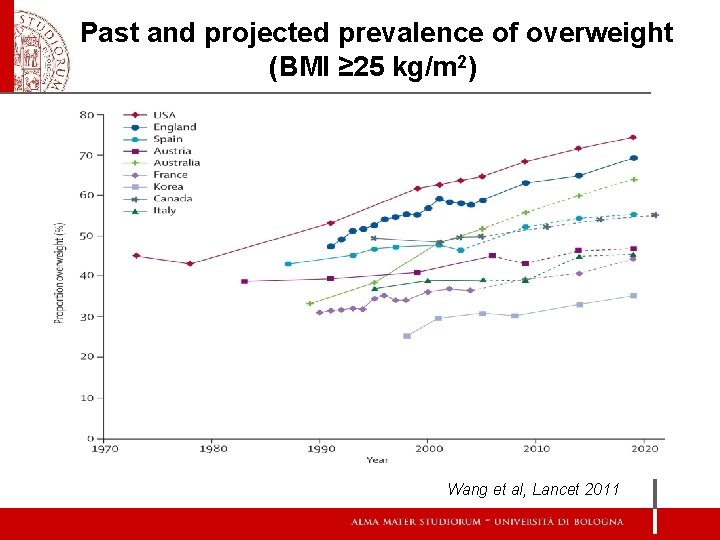
Past and projected prevalence of overweight (BMI ≥ 25 kg/m 2) Wang et al, Lancet 2011
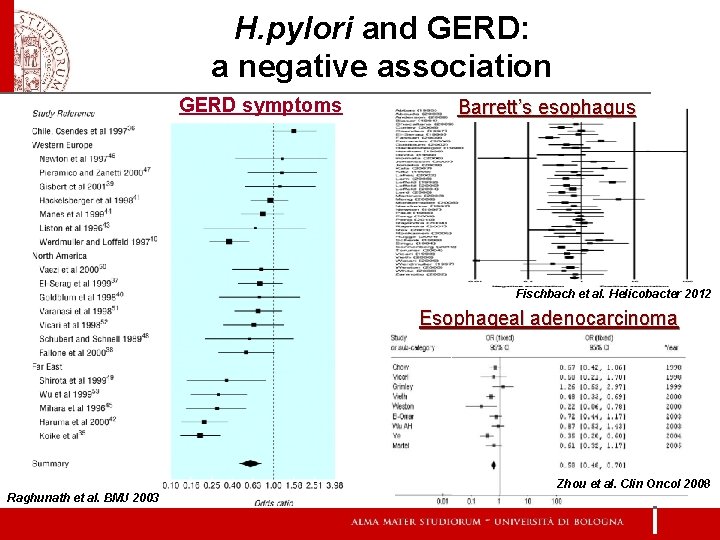
H. pylori and GERD: a negative association GERD symptoms Barrett’s esophagus Fischbach et al. Helicobacter 2012 Esophageal adenocarcinoma Zhou et al. Clin Oncol 2008 Raghunath et al. BMJ 2003
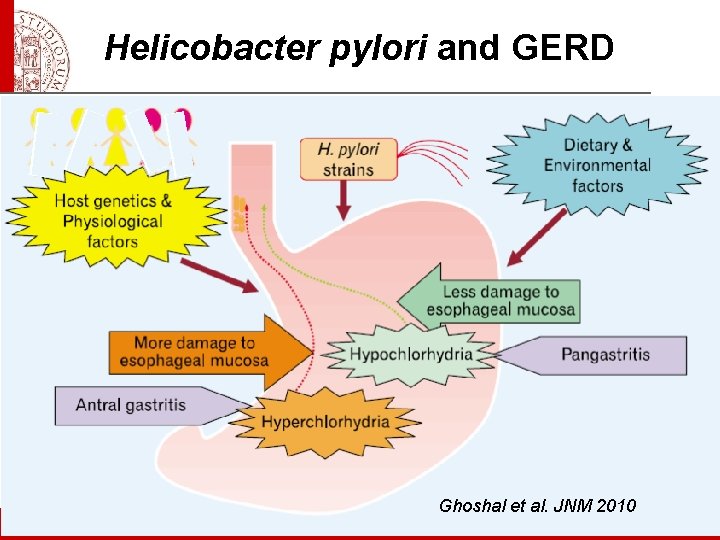
Helicobacter pylori and GERD Ghoshal et al. JNM 2010
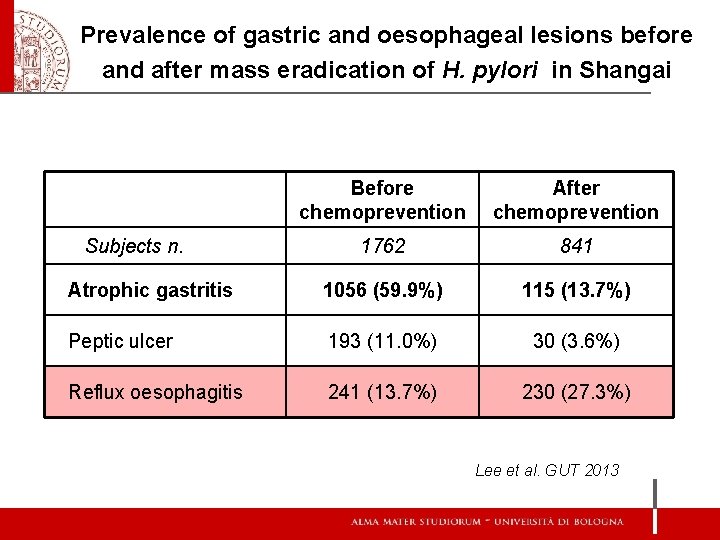
Prevalence of gastric and oesophageal lesions before and after mass eradication of H. pylori in Shangai Before chemoprevention After chemoprevention 1762 841 Atrophic gastritis 1056 (59. 9%) 115 (13. 7%) Peptic ulcer 193 (11. 0%) 30 (3. 6%) Reflux oesophagitis 241 (13. 7%) 230 (27. 3%) Subjects n. Lee et al. GUT 2013
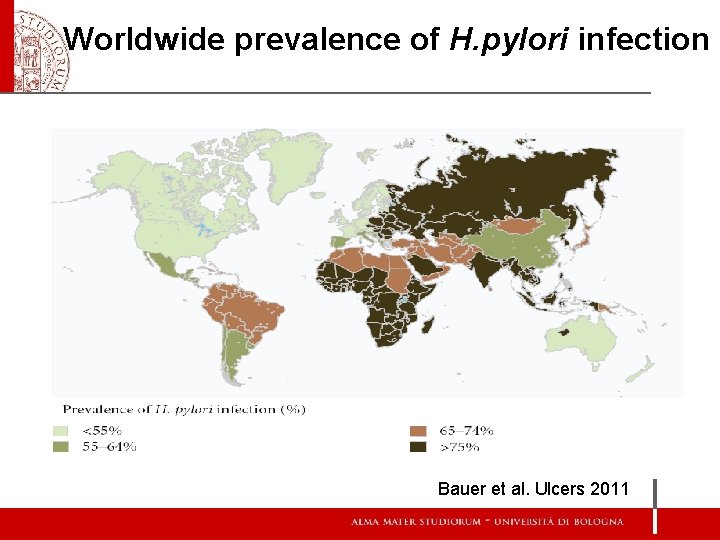
Worldwide prevalence of H. pylori infection Bauer et al. Ulcers 2011
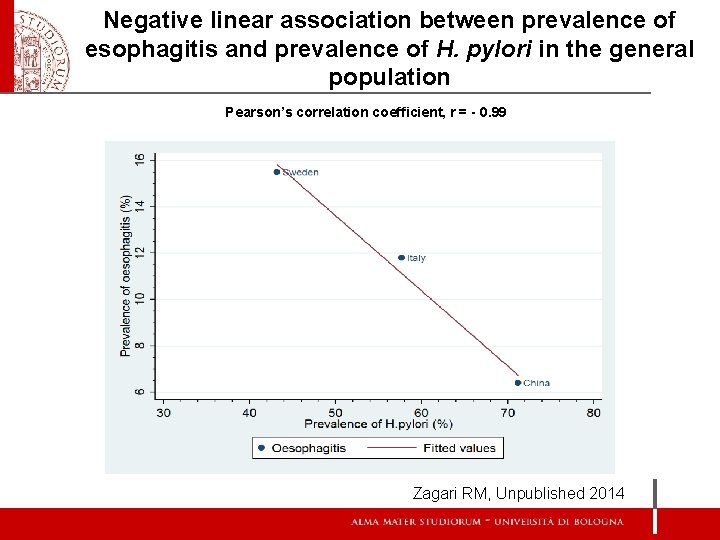
Negative linear association between prevalence of esophagitis and prevalence of H. pylori in the general population Pearson’s correlation coefficient, r = - 0. 99 Zagari RM, Unpublished 2014
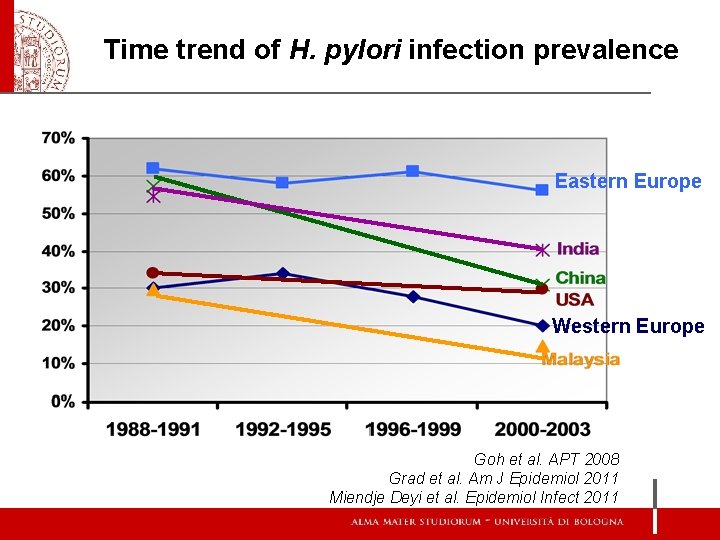
Time trend of H. pylori infection prevalence Eastern Europe Western Europe Goh et al. APT 2008 Grad et al. Am J Epidemiol 2011 Miendje Deyi et al. Epidemiol Infect 2011
Conclusions • In USA and Europe GERD seems to be an “endemic disease” with a prevalence of about 30 -40% in the general population. • The prevalence of GERD is still increasing in western countries and it is now clearly rising also in Asia • A substantial proportion of subjects with esophagitis or Barrett’s esophagus are free of GERD symptoms. • The changing epidemiology of GERD correlates with changing epidemiology of the most important associated factors, such as obesity and Helicobacter pylori.
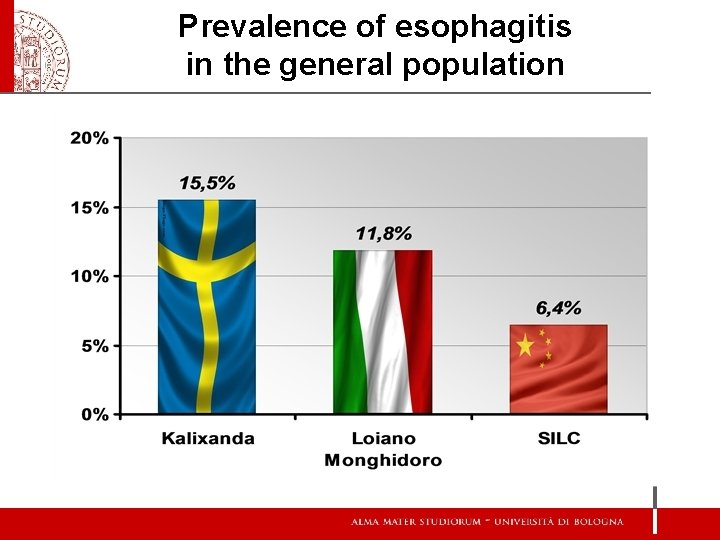
Prevalence of esophagitis in the general population
- Slides: 40