
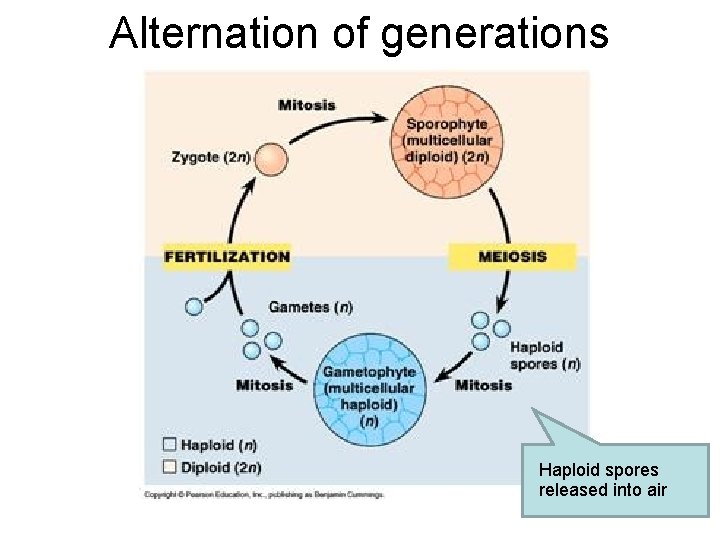
Ferns Alternation of generations Zygote created from egg


- Slides: 28
Ferns
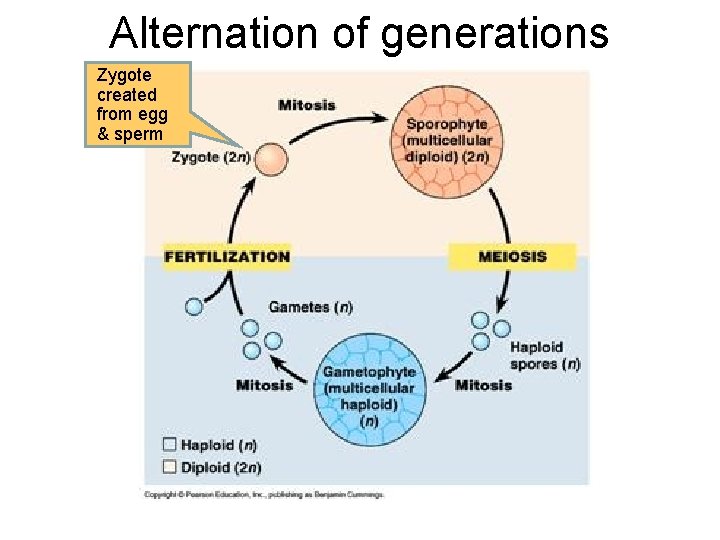
Alternation of generations Zygote created from egg & sperm
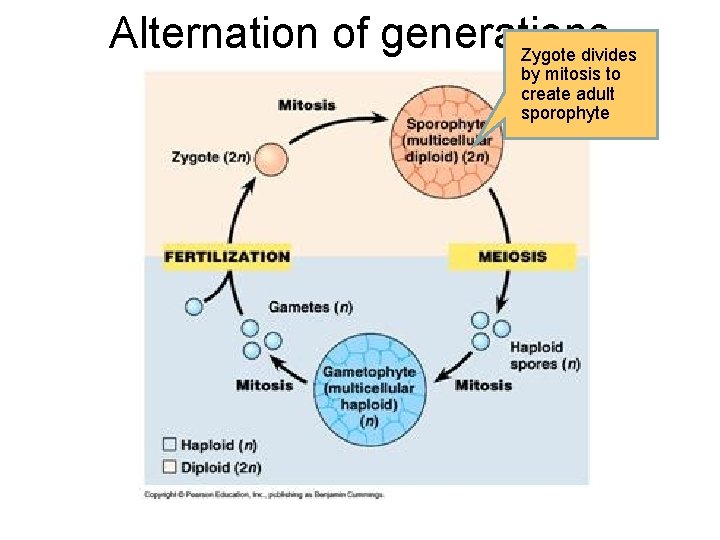
Alternation of generations Zygote divides by mitosis to create adult sporophyte
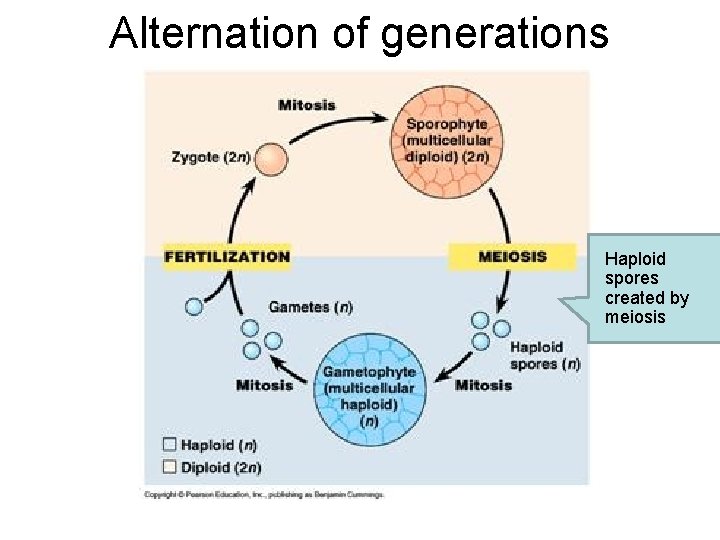
Alternation of generations Haploid spores created by meiosis
Alternation of generations Haploid spores released into air
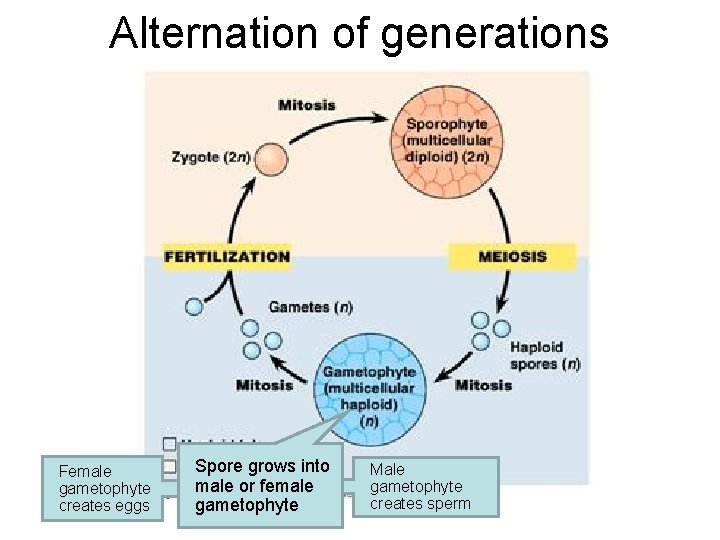
Alternation of generations Female gametophyte creates eggs Spore grows into male or female gametophyte Male gametophyte creates sperm
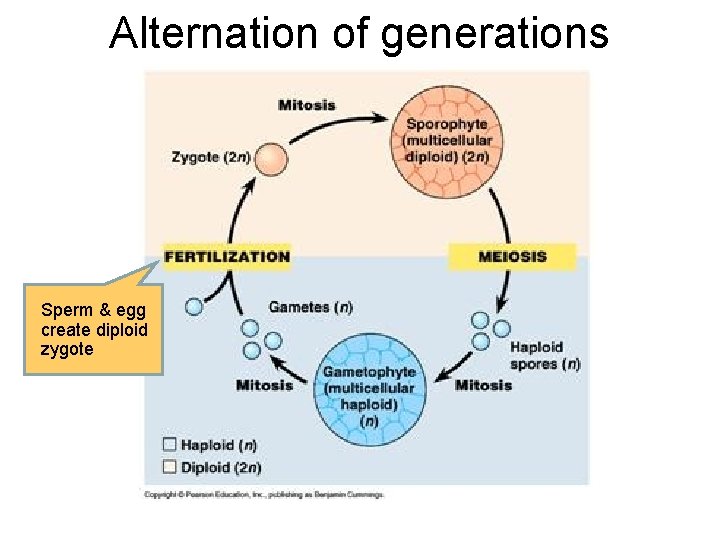
Alternation of generations Sperm & egg create diploid zygote
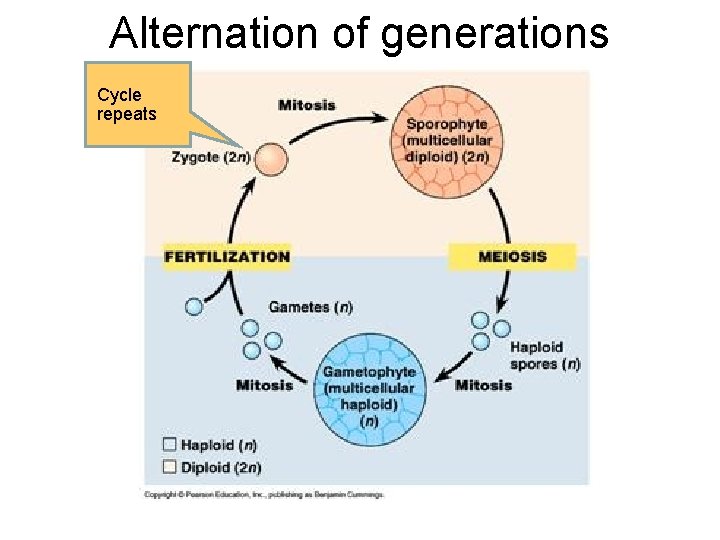
Alternation of generations Cycle repeats
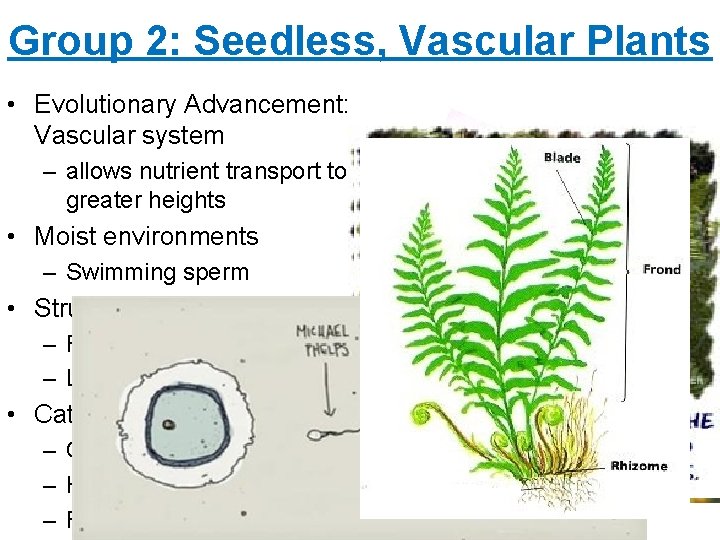
Group 2: Seedless, Vascular Plants • Evolutionary Advancement: Vascular system – allows nutrient transport to greater heights • Moist environments – Swimming sperm glucose • Structure: – Rhizoids = primitive roots – Leaves = fronds • Categories: – Club mosses – Horsetails – Ferns water
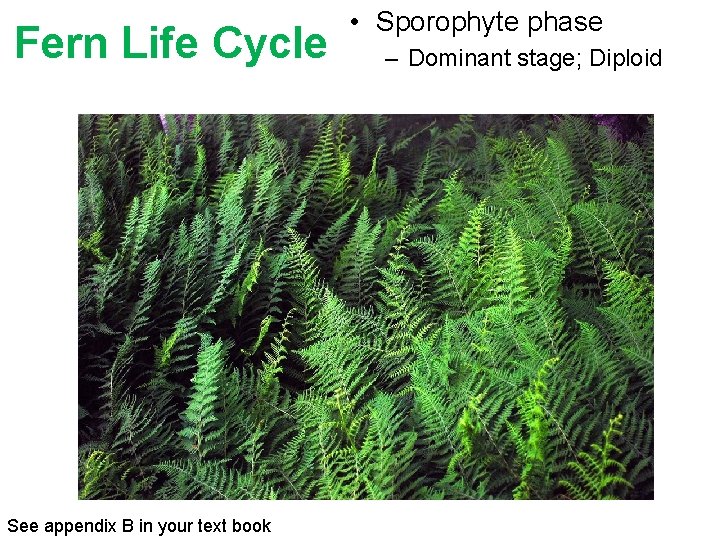
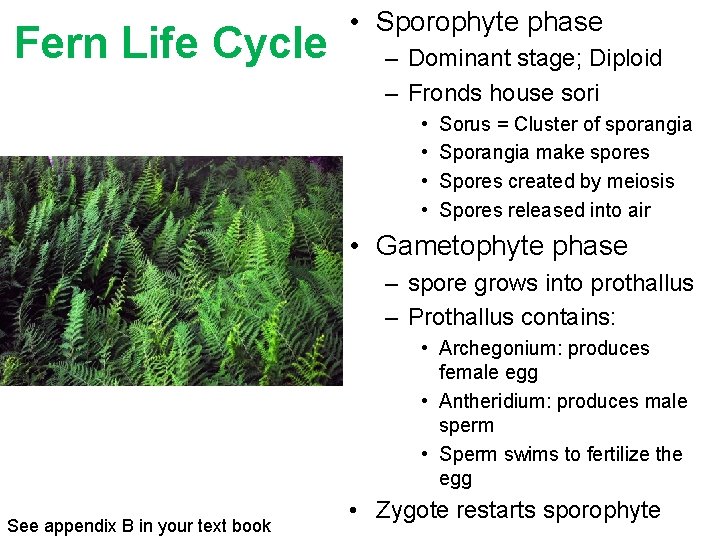
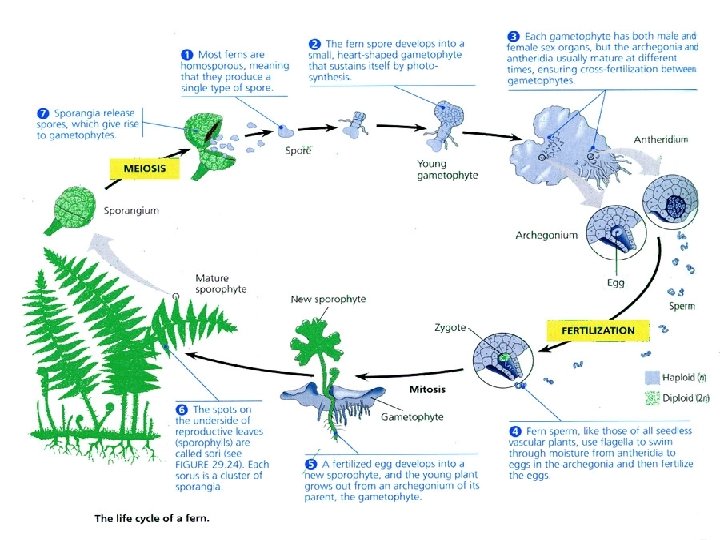
Fern Life Cycle See appendix B in your text book • Sporophyte phase – Dominant stage; Diploid
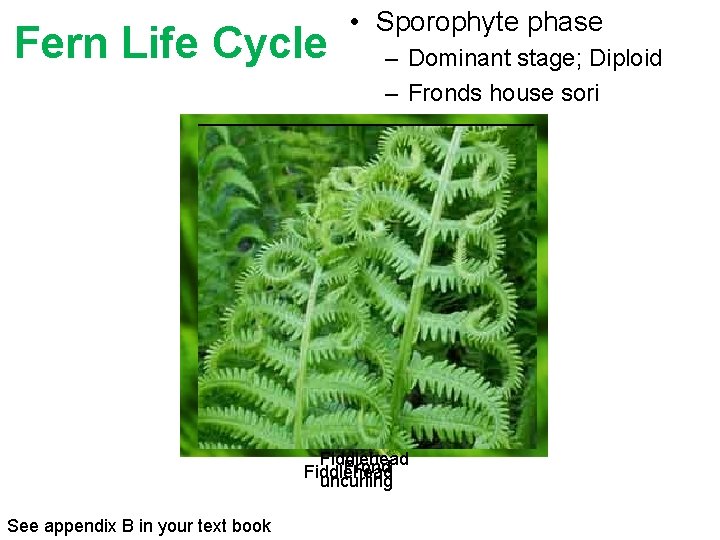
Fern Life Cycle • Sporophyte phase – Dominant stage; Diploid – Fronds house sori Fiddlehead Frond Fiddlehead uncurling See appendix B in your text book
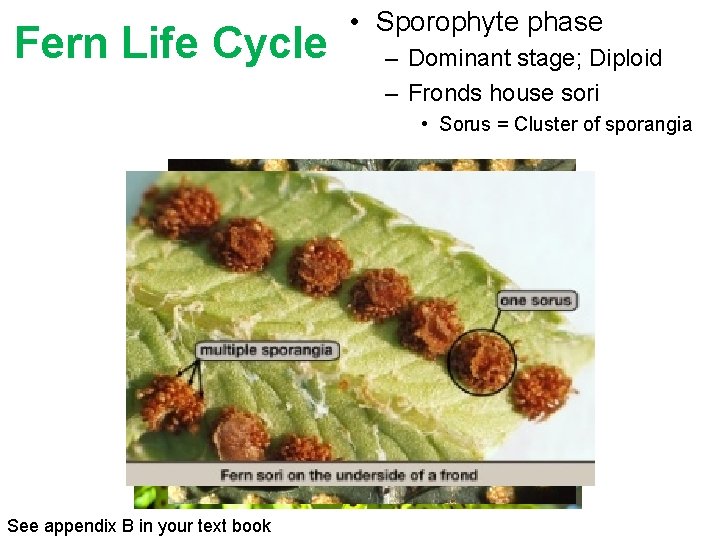
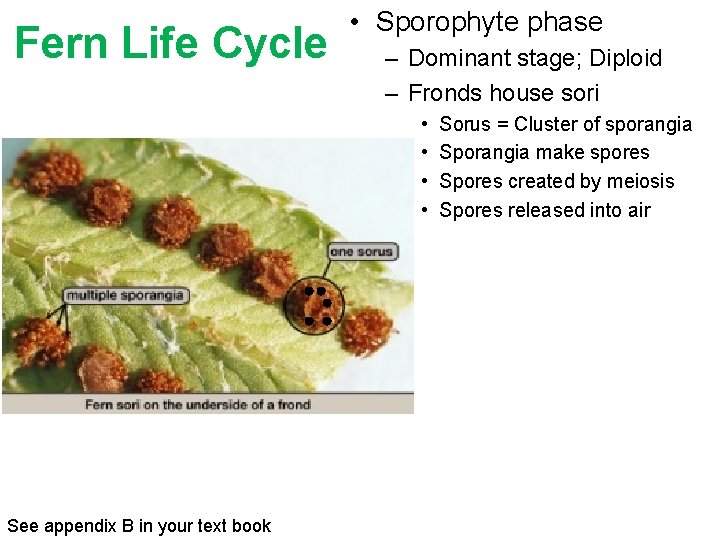
Fern Life Cycle • Sporophyte phase – Dominant stage; Diploid – Fronds house sori • Sorus = Cluster of sporangia See appendix B in your text book
Fern Life Cycle • Sporophyte phase – Dominant stage; Diploid – Fronds house sori • • See appendix B in your text book Sorus = Cluster of sporangia Sporangia make spores Spores created by meiosis Spores released into air
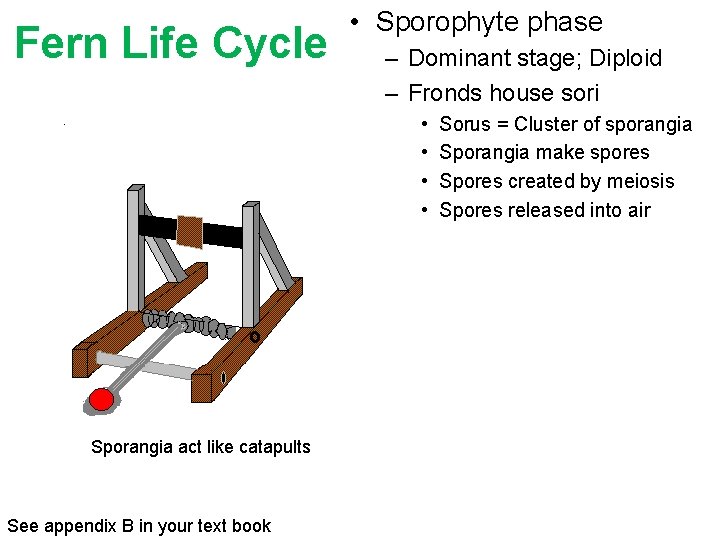
Fern Life Cycle • Sporophyte phase – Dominant stage; Diploid – Fronds house sori • • Sporangia act like catapults See appendix B in your text book Sorus = Cluster of sporangia Sporangia make spores Spores created by meiosis Spores released into air
Fern Life Cycle • Sporophyte phase – Dominant stage; Diploid – Fronds house sori • • Sporangia act like catapults See appendix B in your text book Sorus = Cluster of sporangia Sporangia make spores Spores created by meiosis Spores released into air
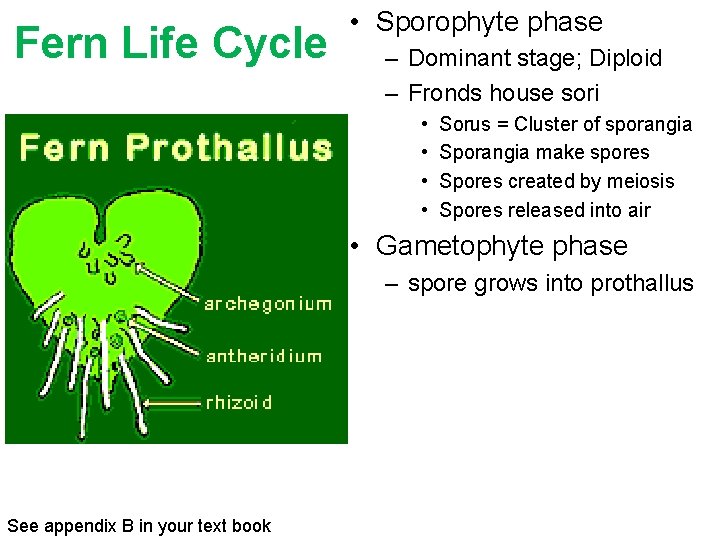
Fern Life Cycle • Sporophyte phase – Dominant stage; Diploid – Fronds house sori • • Sorus = Cluster of sporangia Sporangia make spores Spores created by meiosis Spores released into air • Gametophyte phase – spore grows into prothallus See appendix B in your text book
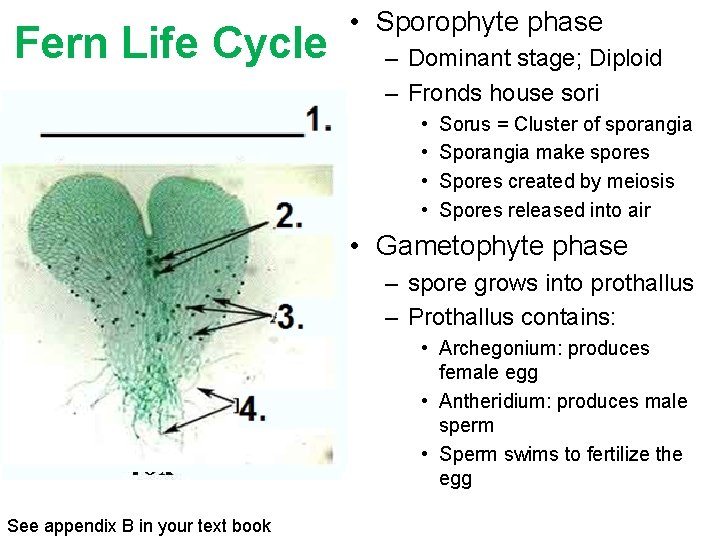
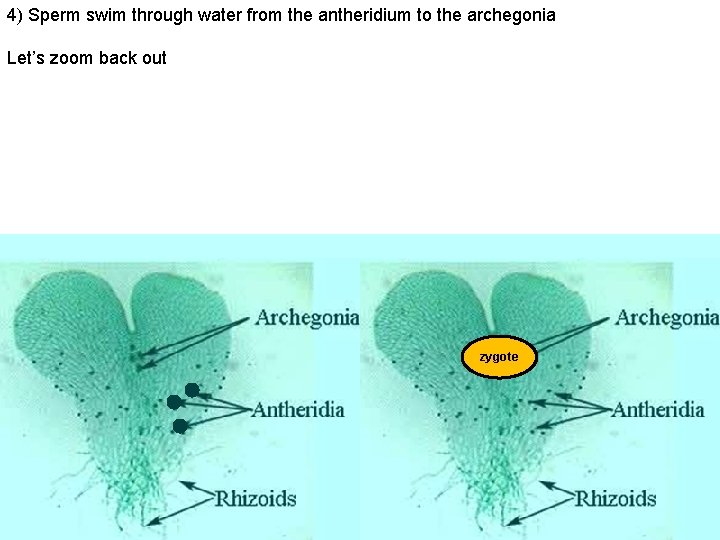
Fern Life Cycle • Sporophyte phase – Dominant stage; Diploid – Fronds house sori • • Sorus = Cluster of sporangia Sporangia make spores Spores created by meiosis Spores released into air • Gametophyte phase – spore grows into prothallus – Prothallus contains: • Archegonium: produces female egg • Antheridium: produces male sperm • Sperm swims to fertilize the egg See appendix B in your text book
Fern Life Cycle • Sporophyte phase – Dominant stage; Diploid – Fronds house sori • • Sorus = Cluster of sporangia Sporangia make spores Spores created by meiosis Spores released into air • Gametophyte phase – spore grows into prothallus – Prothallus contains: • Archegonium: produces female egg • Antheridium: produces male sperm • Sperm swims to fertilize the egg See appendix B in your text book • Zygote restarts sporophyte
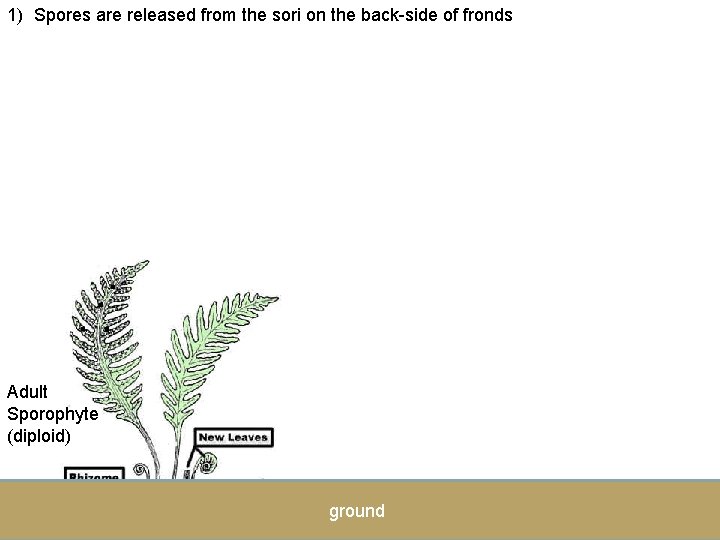
1) Spores are released from the sori on the back-side of fronds . . Adult Sporophyte (diploid) ground
2) Haploid spores land in the soil ground
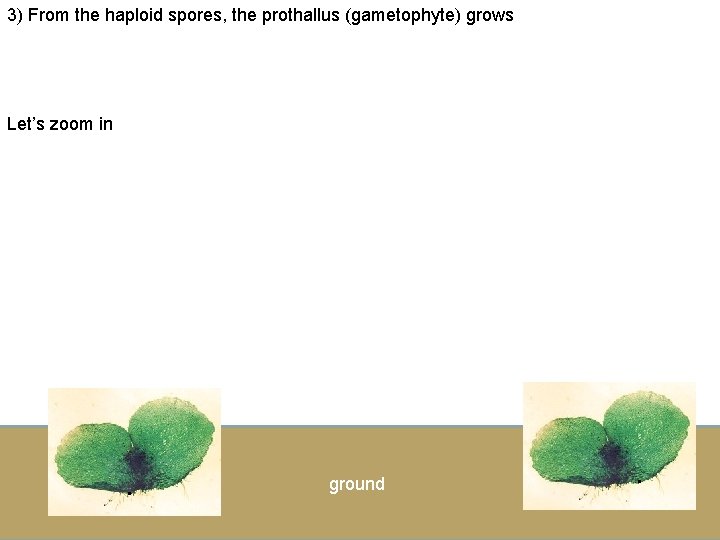
3) From the haploid spores, the prothallus (gametophyte) grows Let’s zoom in . ground .
4) Sperm swim through water from the antheridium to the archegonia Let’s zoom back out zygote
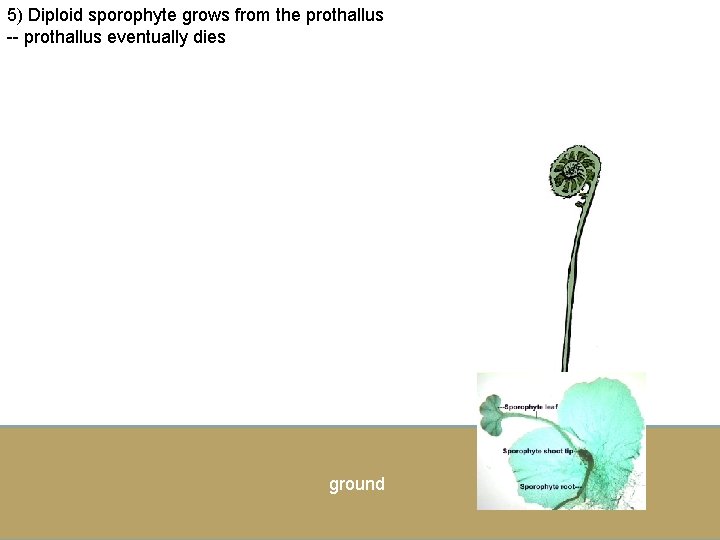
5) Diploid sporophyte grows from the prothallus -- prothallus eventually dies ground
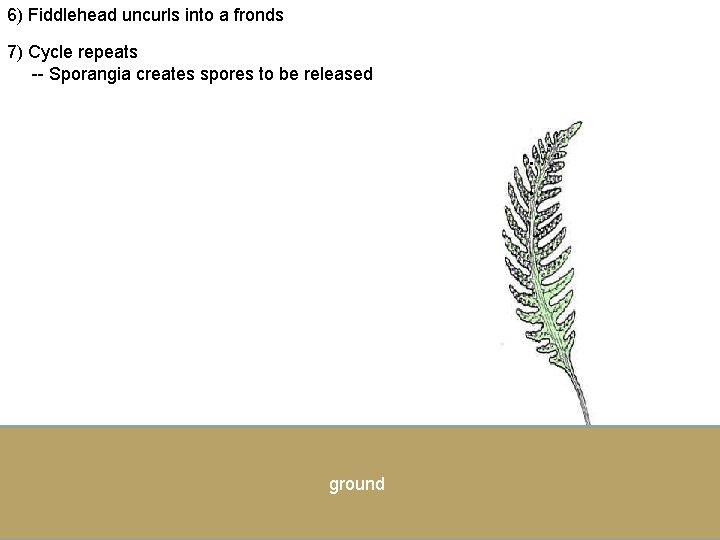
6) Fiddlehead uncurls into a fronds 7) Cycle repeats -- Sporangia creates spores to be released . . . ground .
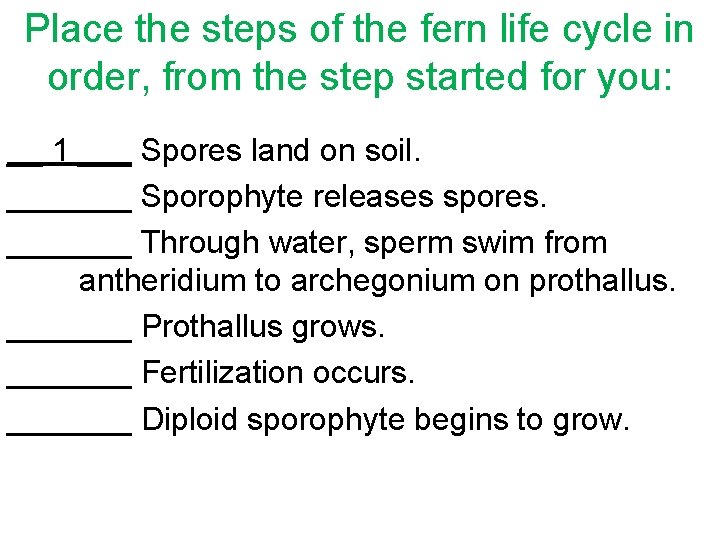
Place the steps of the fern life cycle in order, from the step started for you: __ 1 ___ Spores land on soil. _______ Sporophyte releases spores. _______ Through water, sperm swim from antheridium to archegonium on prothallus. _______ Prothallus grows. _______ Fertilization occurs. _______ Diploid sporophyte begins to grow.